

Synopsis
Covers the whole plot, including the ending.
- Difficulty
- Easy
- Pacing
- Fast
- Mood
- Adventurous, Romantic, Heroic, Swashbuckling
- Read it if
- You love classic swashbuckling adventures, tales of masked heroes, and stories set in romanticized Old California, with a strong emphasis on justice and chivalry.
- Skip it if
- You prefer gritty realism, morally ambiguous characters, or complex, introspective narratives over straightforward heroic escapism.
The Mark of Zorro Plot Summary
Covers the whole plot, including the ending.
Don Diego's Return and the Plight of California
Don Diego Vega, a young hidalgo, returns to El Pueblo de Nuestra Señora la Reina de los Ángeles after several years of study in Spain. He finds his California under the rule of Governor Alvarado and his henchman, Captain Ramon. The native population and poor settlers are exploited, haciendas are seized, and justice is forgotten. His father, Don Alejandro Vega, a respected but aging caballero, expresses his frustration and helplessness, wishing for a champion to rise against the oppressors. Don Diego, however, acts uninterested, adopting the persona of a dandy, much to his father's disappointment and the disdain of the local gentry, including Lolita Pulido.
The First Appearance of Zorro
Soon after Don Diego's return, a masked rider, clad in black and known as Zorro (Spanish for 'fox'), begins to terrorize the corrupt officials and military. Zorro's first acts include rescuing a native man from Captain Ramon's cruelty, publicly humiliating Sergeant Gonzales, and leaving his 'Z' mark carved with his sword. These acts spread fear among the oppressors and hope among the oppressed. Governor Alvarado and Captain Ramon are angry, vowing to capture the outlaw, while the common people begin to whisper about a savior. Don Diego, as a dandy, expresses fear and admiration for Zorro, further cementing his cover.
Lolita Pulido's Desperate Situation
The noble Pulido family, once wealthy, falls into financial ruin due to Governor Alvarado's policies and Captain Ramon's extortion. Don Carlos Pulido and his wife, Doña Catalina, face losing their hacienda and living in poverty. Their daughter, Lolita Pulido, is pressured by her family to marry either Don Diego Vega, whose family is wealthy, or Captain Ramon, who wants her. Lolita dislikes both options; she finds Don Diego insipid and Captain Ramon repulsive. Her heart secretly yearns for Zorro, whom she admires for his courage and sense of justice, though she has never met him.
Zorro's Interventions and Growing Legend
Zorro's actions grow. He raids the Governor's treasury to return stolen money to the poor, humiliates Captain Ramon multiple times, and protects innocent individuals from the army's abuses. He uses his wit, agility, and swordsmanship to outsmart his pursuers, often leaving them tied up or publicly shamed. His actions inspire the local peons and natives to believe that justice is possible. Sergeant Gonzales, despite his humiliation, respects Zorro's skill. Meanwhile, Don Diego maintains his effeminate facade, even fainting when danger is near, further diverting suspicion.
The Duel with Captain Ramon and the Pulido's Plea
Zorro fights Captain Ramon, defeating him but sparing his life, further angering the captain. The Pulido family, desperate, approaches Don Diego Vega, hoping he will marry Lolita and save them from destitution. Don Diego, playing his part, hesitantly agrees, much to Lolita's dismay. She finds him unappealing and openly expresses her disdain for his lack of courage. Don Diego, however, sees this as an opportunity to get closer to the family and protect them, while maintaining his secret identity.
The Trap at the Pulido Hacienda
Governor Alvarado and Captain Ramon plan to capture Zorro. They announce a ball at the Pulido hacienda, knowing that Zorro, the protector of the innocent, will likely appear. They station soldiers strategically and plan to ambush him. Don Diego, aware of the trap, attends the ball as a dandy, observing the arrangements. Lolita, still disgusted by Don Diego, feels drawn to the danger and excitement surrounding Zorro, further solidifying her admiration for the masked hero.
Zorro's Daring Appearance and Escape
During the ball, Zorro makes a dramatic appearance, leaping into the hacienda amidst the festivities. He confronts Captain Ramon and Governor Alvarado, engages in sword fights with multiple soldiers, showing his skill. He speaks privately with Lolita, confessing his admiration for her and hinting at his true identity, further captivating her heart. After creating a diversion, he makes an escape, leaving the authorities frustrated and humiliated once more. Don Diego, of course, acts terrified throughout the ordeal, hiding and trembling, maintaining his cover.
The Arrests and the Call to Arms
Angry at Zorro's defiance, Governor Alvarado and Captain Ramon begin arresting prominent hidalgos, including Don Alejandro Vega and Don Carlos Pulido, accusing them of complicity with Zorro. They are imprisoned and threatened with execution. This act pushes the oppressed population to their breaking point. Zorro, seeing the danger to his father and the Pulidos, realizes it's time to move beyond individual acts of heroism and instigate a larger rebellion. He sends messages to the peons and natives, urging them to rise up against their oppressors and meet him at a designated location.
The Confrontation at the Barracks
Zorro, having gathered a determined force of peons and natives, launches an assault on the barracks where the hidalgos are held. He leads the charge, fighting alongside his army. During the chaos, Zorro confronts Captain Ramon in a sword duel. Zorro's skill prevails, and he disarms and subdues Ramon, though he again chooses not to kill him. The prisoners are freed, and the rebellion gains momentum, overwhelming the remaining soldiers loyal to Alvarado.
The Unmasking and the New Governor
With Captain Ramon defeated and Governor Alvarado's power crumbling, Zorro gathers the assembled crowd. He removes his mask, revealing himself to be Don Diego Vega. The revelation shocks everyone, especially Don Alejandro and Lolita, who now understand his earlier 'cowardice' was a ruse. Don Diego explains his reasons for fighting for justice. Soon after, a new, benevolent governor arrives from Spain, having been informed of Alvarado's corruption. Don Diego is praised as a hero, and the future of California looks brighter, with justice and peace restored.
Love and a Future for California
With his identity revealed and the corrupt regime overthrown, Don Diego Vega is no longer the dandy but a revered hero. Lolita Pulido, who once scorned him, now sees him with new eyes, filled with admiration and love. She realizes that the brave, Zorro was always beneath the surface of the seemingly uninterested nobleman. Don Diego and Lolita declare their love for each other, and their impending marriage promises a union that symbolizes the new era of justice and prosperity for California. The story concludes with the promise of a peaceful future under a fair government, with Zorro's legacy as a champion of the oppressed established.
Principal Figures
Don Diego Vega (Zorro)
Protagonist
The masked avenger who fights for justice in Old California.
Don Diego Vega is the central protagonist, a young hidalgo who returns to California from Spain. He adopts a dual identity: publicly, he is a foppish, effeminate dandy, seemingly uninterested in politics or justice, much to the dismay of his father and the scorn of Lolita Pulido. Secretly, he is Zorro, a masterful swordsman, equestrian, and strategist who fights against the tyrannical rule of Governor Alvarado and Captain Ramon. He is intelligent, quick-witted, and deeply committed to justice, using his disguise to gather information and protect his loved ones. His feigned weakness is a brilliant ruse to divert suspicion.
Relationships: Don Alejandro Vega (Son, whose 'cowardice' disappoints his father); Lolita Pulido (Love interest, initially scorns Don Diego, but falls for Zorro); Captain Ramon (Arch-nemesis)
Lolita Pulido
Supporting
A beautiful noblewoman who scorns Don Diego but admires Zorro.
Lolita Pulido is a beautiful and spirited young noblewoman from a once-wealthy family now facing ruin. She is pressured by her parents to marry for financial security, either the foppish Don Diego Vega or the brutish Captain Ramon. She despises Don Diego for his apparent lack of courage and finds Captain Ramon repulsive. Her heart is captured by the mysterious Zorro, whom she idealizes for his bravery, sense of justice, and romantic allure. She is initially blinded by Don Diego's disguise, unable to see the hero beneath the facade.
Relationships: Don Diego Vega (Love interest, initially despises his dandy persona); Captain Ramon (Unwanted suitor); Don Carlos Pulido (Father)
Captain Ramon
Antagonist
The cruel and brutal military officer, Zorro's primary adversary.
Captain Ramon is the primary antagonist, a cruel and arrogant military officer serving under Governor Alvarado. He is known for his brutality, arbitrary arrests, and exploitation of the native population and poor settlers. He desires Lolita Pulido and relentlessly pursues Zorro, driven by personal humiliation and a desire for power. Ramon is a skilled swordsman but lacks Zorro's wit and moral compass, making him ultimately inferior. His repeated defeats at Zorro's hands fuel his rage and obsession.
Relationships: Don Diego Vega (Zorro) (Arch-nemesis); Governor Alvarado (Subordinate and accomplice in corruption); Lolita Pulido (Object of his unwanted affection)
Don Alejandro Vega
Supporting
Don Diego's respected but disillusioned father.
Don Alejandro Vega is Don Diego's father, a wealthy and respected hidalgo who is deeply concerned by the corruption and oppression in California. He longs for a champion to rise against the tyrannical rule but feels helpless due to his age and the overwhelming power of the governor. He is initially disappointed and frustrated by his son's seemingly effeminate and cowardly behavior, unable to fathom that Don Diego is the very hero he wishes for. His arrest spurs Zorro to take more drastic action.
Relationships: Don Diego Vega (Father, initially disappointed by his son's facade); Governor Alvarado (Opponent of his corrupt rule)
Sergeant Gonzales
Supporting
A boisterous and somewhat dim-witted soldier, often humiliated by Zorro.
Sergeant Gonzales is a burly, good-natured but somewhat dim-witted soldier under Captain Ramon's command. He is frequently the target of Zorro's pranks and humiliations, often found tied up, stripped of his uniform, or publicly shamed. Despite his repeated failures to capture Zorro, he harbors a grudging admiration for the masked avenger's skill and daring. He is less malicious than Ramon, serving more as comic relief and a foil for Zorro's cleverness.
Relationships: Don Diego Vega (Zorro) (Frequent victim of Zorro's pranks and admirer of his skill); Captain Ramon (Subordinate)
Governor Alvarado
Antagonist
The corrupt and tyrannical governor of California.
Governor Alvarado is the overarching antagonist, the corrupt ruler of California whose policies enable and encourage the exploitation of the populace. He is a figurehead of tyranny, driven by greed and a desire to maintain his power. He relies on Captain Ramon's brutality to enforce his will and is constantly frustrated by Zorro's ability to defy his authority. He represents the systemic corruption that Zorro fights against.
Relationships: Captain Ramon (Superior, who relies on Ramon's brutality); Don Diego Vega (Zorro) (Target of Zorro's rebellion)
Bernardo
Supporting
Don Diego's loyal, mute servant and confidante.
Bernardo is Don Diego's loyal servant, who is mute and often pretends to be deaf as well. This allows him to gather information discreetly without arousing suspicion, making him an invaluable ally to Zorro. He is privy to Don Diego's secret identity and assists him in many of his exploits, often acting as a messenger or scout. Bernardo's loyalty and quiet competence are crucial to Zorro's success.
Relationships: Don Diego Vega (Zorro) (Loyal servant and confidante)
Don Carlos Pulido
Supporting
Lolita's father, a proud hidalgo facing financial ruin.
Don Carlos Pulido is Lolita's father and Doña Catalina's husband. He is a proud hidalgo who, due to the corrupt policies of Governor Alvarado, has fallen on hard times and faces financial ruin. He desperately tries to secure his family's future, even if it means pressuring Lolita into an undesirable marriage. He represents the plight of the once-respected noble families under the oppressive regime. He is eventually arrested by Alvarado.
Relationships: Lolita Pulido (Father); Doña Catalina Pulido (Husband)
Doña Catalina Pulido
Supporting
Lolita's mother, concerned for her family's social standing and financial security.
Doña Catalina Pulido is Lolita's mother and Don Carlos's wife. She shares her husband's concerns about their family's declining fortunes and is equally keen to see Lolita marry well to restore their status. She is more pragmatic than Don Carlos, willing to consider the options of marriage to either Don Diego or Captain Ramon, despite her daughter's objections, for the sake of survival. She is a worried mother trying to navigate a harsh social and political landscape.
Relationships: Lolita Pulido (Mother); Don Carlos Pulido (Wife)
Themes & Insights
Justice vs. Tyranny
The novel's central theme is the struggle between the oppressive rule of Governor Alvarado and Captain Ramon, and the fight for justice championed by Zorro. The book shows the suffering of the native population and poor settlers under the regime, including abuses of power, arbitrary arrests, and economic exploitation. Zorro is a symbol of hope, enacting swift and often humiliating justice against the oppressors, inspiring the downtrodden and leading to a rebellion that restores fairness to California. His actions show that even against great odds, a stand for justice can win.
“He was a phantom, an avenger, a champion of the oppressed, and the mark he left was the symbol of their hope.”
Identity and Deception
Don Diego Vega's dual identity as the dandy and the masked Zorro is a core part of the story, exploring identity and deception. Don Diego acts weak and uninterested to deflect suspicion, allowing Zorro to operate freely. This deception shows the power of appearances and how one's true character can be hidden. Lolita Pulido's initial disdain for Don Diego and her admiration for Zorro underscore this theme, as she falls in love with the hero while not knowing his true identity, only to reconcile these two aspects at the story's climax.
“The mask was not merely a disguise; it was a release, a permit to be the man he truly was, a man of fire and steel.”
The Power of a Symbol
Zorro and his 'Z' mark, is a powerful symbol throughout the novel. Initially, Zorro is a lone individual, but his daring acts and the 'Z' he leaves behind quickly make him a legend and a rallying cry for the oppressed. The symbol instills fear in the corrupt officials and ignites hope in the common people. It represents resistance, courage, and the promise of retribution, showing how a single symbol can unite a populace and inspire a movement for change against an entrenched power structure.
“The 'Z' carved by a rapier's point was more than a letter; it was a challenge, a promise, and a curse to the tyrants of California.”
Love and Chivalry
The theme of love and chivalry is in Zorro's relationship with Lolita Pulido. While Lolita initially scorns Don Diego, she is captivated by Zorro's bravery, charm, and his acts of protection towards her family. Zorro is the classic chivalric hero, fighting for justice and defending the honor of the innocent, particularly Lolita. His romantic gestures, daring rescues, and whispered confessions of admiration win her heart, proving that true love responds to courage and integrity, rather than superficial charm or wealth. Their eventual union symbolizes the triumph of virtue and true heroism.
“Her heart, though she knew it not, was already given to the masked rider, to the spirit of daring and justice he represented.”
Plot Devices & Literary Techniques
The Secret Identity
Don Diego Vega's disguise as the foppish dandy to hide his true persona as Zorro.
The secret identity is the most crucial plot device. Don Diego Vega deliberately cultivates an effeminate, cowardly, and disinterested public persona to deflect any suspicion that he could be the daring Zorro. This allows him to move freely, gather information, and interact with both the oppressors and the oppressed without revealing his true intentions. It creates dramatic irony, as characters like Lolita and Don Alejandro are initially disappointed in Don Diego while simultaneously admiring Zorro. The unmasking is the story's climax, revealing the depth of his sacrifice and cleverness.
The Mark of Zorro ('Z')
Zorro's signature 'Z' carved by his rapier.
The 'Mark of Zorro' is a powerful symbol and a recurring plot device. Zorro frequently leaves his distinctive 'Z' carved with his rapier on walls, uniforms, or even the faces of his defeated enemies. This mark serves multiple functions: it acts as a calling card, a taunt to the authorities, and a sign of hope and defiance for the oppressed. It transforms Zorro from a mere individual into a legend, a symbol that unites the common people and fuels their belief in a coming justice. It's a constant reminder of his presence and effectiveness.
Dramatic Irony
The audience's awareness of Don Diego's dual identity, while characters remain ignorant.
Dramatic irony is heavily employed throughout the narrative. The reader is aware from early on that Don Diego Vega and Zorro are one and the same, while most of the characters in the story remain ignorant. This creates tension and humor, especially in scenes where Don Diego's 'cowardice' is openly mocked by characters who simultaneously praise Zorro. It allows the audience to appreciate Don Diego's cleverness and the effectiveness of his disguise, enhancing the narrative's engagement and building anticipation for the eventual unmasking.
The Incompetent Authorities
The portrayal of the military and government as largely inept and easily outwitted.
The incompetence of the authorities, particularly Sergeant Gonzales and the general soldiers, serves as a recurring plot device to highlight Zorro's superior skill and intellect. Despite their numbers and official power, the military is consistently outsmarted, humiliated, and defeated by Zorro. This device not only provides comic relief but also makes Zorro's victories more believable and satisfying, emphasizing that courage and cleverness can overcome brute force and corruption, even when the odds are stacked against the hero.
The Mark of Zorro Quotes
“He was a man of mystery, a figment of the night, a shadow that struck and vanished.”
“The poor have no law but their own despair.”
“It is not the sword, but the spirit behind it that counts.”
“A mask can hide a face, but it cannot hide a heart.”
“Fear is a poor master, but a good servant.”
“To laugh at danger is to conquer it.”
“The greatest trick the devil ever pulled was convincing the world he didn't exist.”
“The weak must ever look to the strong for justice.”
“Chivalry is not dead, merely sleeping.”
“It is better to die on one's feet than to live on one's knees.”
“The world needs a hero, even if it doesn't know it yet.”
“A man's true worth is not in his titles, but in his deeds.”
“One must sometimes play the fool to outwit the wise.”
“The mark of Zorro was not just a letter, but a symbol of hope.”
Quiz
10 questions on the plot and the characters. Each answer comes with a short explanation.
Question 1
What is Don Diego Vega's secret identity?
- The Scarlet Pimpernel
- The Lone Ranger
- Zorro
- El Diablo
Show answer
C. Zorro Don Diego Vega, a seemingly foppish nobleman, secretly dons the mask of Zorro to fight injustice in California.
Question 2
What symbol does Zorro famously leave behind to mark his presence?
- A rose
- A 'Z' carved with his sword
- A black feather
- A silver bullet
Show answer
B. A 'Z' carved with his sword Zorro's signature mark is a 'Z' that he carves with his sword, often on the faces of his defeated foes or on walls, symbolizing his defiance.
Question 3
Who is the corrupt official responsible for the oppression in Old California?
- Captain Ramon
- Sergeant Gonzales
- The Governor
- Don Alejandro Vega
Show answer
C. The Governor The book describes the 'corrupt governor and his army' as the primary source of oppression, with Zorro rising to challenge his tyrannical rule.
Question 4
What is Don Diego Vega's public persona designed to be?
- A brave soldier
- A devout priest
- A lazy, effeminate fop
- A shrewd businessman
Show answer
C. A lazy, effeminate fop Don Diego cultivates a public image of a pampered, unmanly fop to divert suspicion from his true identity as the agile and courageous Zorro.
Question 5
What is the primary motivation for Zorro's actions?
- Personal revenge against Captain Ramon
- To gain wealth and power
- To fight injustice and protect the oppressed
- To impress Lolita Pulido
Show answer
C. To fight injustice and protect the oppressed The book explicitly states Zorro is a 'champion of freedom' who defies the tyrant's might, fighting on behalf of pillaged missions, abused peasants, and persecuted innocents.
Question 6
Which skill is Zorro most renowned for, besides his swordsmanship?
- His horsemanship
- His deadly marksmanship
- His disguise abilities
- His strategic planning
Show answer
B. His deadly marksmanship The description highlights Zorro as both a 'demon swordsman' and a 'deadly marksman,' indicating his proficiency with firearms or other projectile weapons.
Question 7
What is the historical setting of 'The Mark of Zorro'?
- Colonial Mexico during the revolution
- Old California in a bygone era of haciendas and caballeros
- The American Wild West during the gold rush
- 18th-century Spain under a tyrannical king
Show answer
B. Old California in a bygone era of haciendas and caballeros The book's synopsis clearly states the setting as 'Old California, in a bygone era of sprawling haciendas and haughty caballeros.'
Question 8
How does Zorro typically interact with the common people he aims to protect?
- He avoids direct contact to maintain his mystique.
- He often appears to them as a rescuer, inspiring hope and sometimes laughter.
- He demands tribute from them in exchange for protection.
- He organizes them into a rebel army.
Show answer
B. He often appears to them as a rescuer, inspiring hope and sometimes laughter. The description mentions him as 'the laughing outlaw Zorro,' suggesting a persona that, while defying authority, also brings a sense of hope and perhaps even amusement to those he helps.
Question 9
What is a central theme explored through Don Diego's dual identity?
- The conflict between personal ambition and family duty.
- The idea that true strength can be hidden behind a facade of weakness.
- The struggle between religious faith and secular power.
- The inevitability of societal change through violent revolution.
Show answer
B. The idea that true strength can be hidden behind a facade of weakness. Don Diego's feigned effeminacy as a nobleman, contrasted with Zorro's prowess, highlights the theme that outward appearances can be deceiving and that heroism can emerge from unexpected places.
Question 10
How does Zorro primarily challenge the 'tyrant's might'?
- Through political speeches and public rallies.
- By leading a large-scale peasant rebellion.
- Through direct, often confrontational, individual acts of defiance and skilled combat.
- By secretly funding a resistance movement.
Show answer
C. Through direct, often confrontational, individual acts of defiance and skilled combat. The description emphasizes Zorro as a 'deadly marksman and a demon swordsman' whose 'flashing blade leaves behind . . .' He directly confronts the oppressors through his combat skills and individual acts.
The Mark of Zorro FAQ
What is 'The Mark of Zorro' about?
'The Mark of Zorro' is about Don Diego Vega, a wealthy young nobleman in early 19th-century Spanish California, who secretly adopts the masked identity of Zorro to fight against the corrupt Governor Alvarado and his tyrannical regime. Zorro defends the oppressed peons and friars, using his wit, sword-fighting prowess, and iconic 'Z' mark to challenge injustice.
Why should I read 'The Mark of Zorro'?
You should read 'The Mark of Zorro' for its classic tale of a swashbuckling hero, its thrilling action sequences, and its timeless themes of justice and rebellion against tyranny. It's a foundational story that has inspired countless adaptations, offering a vibrant look at a bygone era of Old California with a compelling dual-identity protagonist.
What is the background/setting of 'The Mark of Zorro'?
The story is set in early 19th-century Spanish California, specifically around Los Angeles, during a period when the region was under the rule of a corrupt governor. The setting features sprawling haciendas, missions, and dusty roads, painting a picture of a society where the wealthy elite often exploited native peasants and the common folk.
What are the most memorable quotes?
While the novel is more known for its action and character, memorable lines often revolve around Zorro's daring and Don Diego's feigned effeminacy. Phrases like 'The mark of Zorro!' echo his signature act, and Don Diego's frequent sighs and declarations of being 'too delicate' provide ironic humor.
What writing style does Johnston McCulley use?
Johnston McCulley employs a straightforward, action-oriented writing style characteristic of pulp fiction from the early 20th century. The prose is direct, focusing on plot progression, dramatic encounters, and vivid descriptions of sword fights and chases, maintaining a fast pace suitable for adventure.
What minor details add significant meaning?
The detail of Don Diego's feigned effeminacy and disinterest in worldly affairs is crucial; it not only provides a perfect disguise for his Zorro persona but also highlights the societal expectations of a nobleman versus the true nature of a hero. His exaggerated sighs and fainting spells brilliantly deflect suspicion.
What are some subtle foreshadowing moments?
Early descriptions of Don Diego's fencing skills, often dismissed as mere hobbies for a dandy, subtly foreshadow his true capabilities as Zorro. Additionally, the initial disregard for his intelligence by characters like Captain Ramon and Governor Alvarado sets them up for Zorro's eventual outwitting of them.
What unexpected character connections exist?
The most significant unexpected connection is Zorro's romantic interest in Lolita Pulido, who despises Don Diego for his apparent cowardice but is captivated by Zorro's bravery. This creates a compelling love triangle where the same man exists as two opposing figures in her eyes, unbeknownst to her.
What are unspoken character motivations?
Beyond fighting corruption, Don Diego's motivation for becoming Zorro includes a deep-seated sense of familial honor and a desire to prove his worth, especially to his father, Don Alejandro, who is initially disappointed by his son's perceived weakness. He also seeks to win Lolita's respect, albeit in his masked identity.
What psychological complexities do characters exhibit?
Don Diego exhibits complex psychological duality, constantly balancing his public persona as a foppish nobleman with his secret identity as a fearless avenger. This requires immense self-control and strategic deception, hinting at the mental toll and exhilaration of living a double life.
What are the major emotional turning points?
A major emotional turning point is when Lolita Pulido's family faces ruin and she is forced to consider marrying Captain Ramon to save them, which deeply affects both Don Diego and Zorro. Another is when Don Alejandro expresses his profound disappointment in Don Diego, pushing Zorro to act more boldly to restore justice and, indirectly, his father's pride.
How do relationship dynamics evolve?
The relationship between Don Diego and Lolita evolves from her initial disdain for him to a reluctant acceptance, while her admiration for Zorro grows into love. The dynamic between Don Diego and his father, Don Alejandro, shifts from disappointment to eventual pride, especially once Zorro's true identity is revealed and understood.
Which parts remain ambiguous or open-ended?
While the immediate conflict with Governor Alvarado is resolved, the long-term political stability of California is somewhat open-ended. The story primarily focuses on Zorro's initial triumph, leaving room for future challenges to the justice he helps establish, as seen in subsequent Zorro adventures.
What are controversial scenes or decisions?
One 'controversial' aspect for some readers might be Zorro's non-lethal approach, often preferring to humiliate or disarm his opponents rather than kill them, even when facing truly villainous characters like Captain Ramon. This moral stance, while heroic, can sometimes feel at odds with the severity of the injustices being fought, though it establishes his iconic character.
'The Mark of Zorro' ending explained: how it ends & what it means
The novel concludes with Zorro exposing Governor Alvarado's corruption and defeating Captain Ramon in a climactic sword fight. Don Diego reveals his identity as Zorro to Lolita Pulido and his father, Don Alejandro, winning both her love and his father's respect. The ending signifies the triumph of justice, the power of a hero's dual identity, and the restoration of order to California, securing a future for the oppressed.
About the author

Johnston McCulley was an American author known for his contributions to the adventure fiction genre in the early 20th century. He is best known for creating the character Zorro in his story "The Mark of Zorro," which has inspired numerous adaptations in various media. McCulley's works often feature themes of heroism and justice.
Similar books
- The Scarlet Pimpernel
Emmuska Orczy
4.1 (124k) average on GoodreadsHistorical FictionFeatures a masked hero with a secret identity who rescues aristocrats from the French Revolution, similar to Zorro's fight against oppression.
- The Three Musketeers
Alexandre Dumas
4.1 (274k) average on GoodreadsHistorical FictionA classic adventure novel with heroic sword fights, camaraderie, and a fight against political intrigue and injustice.
- Ivanhoe
Walter Scott
3.8 (87k) average on GoodreadsHistorical FictionHistorical romance set in medieval England with a disguised hero, chivalry, and a struggle against tyranny.
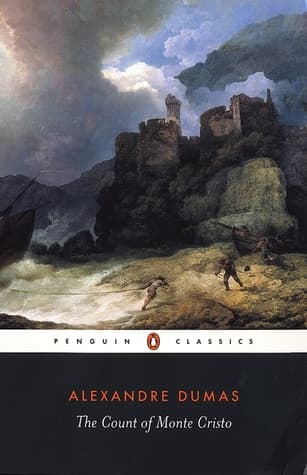
- The Count of Monte Cristo
Alexandre Dumas
4.3 (746k) average on GoodreadsHistorical FictionWhile both feature a wronged individual seeking justice through an alter ego, Dumas's novel offers a far more complex psychological portrait of its protagonist, Edmond Dantès, and delves deeper into themes of fate, forgiveness, and the corrupting influence of power. Its plot is more intricate, spanning decades and multiple settings, compared to McCulley's more focused narrative.
- To Kill a Mockingbird
Harper Lee
4.3 (4.5M) average on GoodreadsHistorical FictionIn the 1930s Jim Crow South, Harper Lee writes about racial injustice, moral growth, and the quiet courage of a lawyer father, Atticus Finch, as seen through his young daughter's eyes.
- The Great Gatsby
F. Scott Fitzgerald
3.9 (3.8M) average on GoodreadsHistorical FictionIn the opulent Roaring Twenties, a mysterious millionaire's lavish parties hide his desperate, tragic pursuit of a lost love, exposing the emptiness within the American Dream.




Enjoyed the summary?
A summary gives you the shape of the book. The book itself has the detail, the examples and the voice.
Find The Mark of Zorro on AmazonAs an Amazon Associate, BookBrief earns from qualifying purchases. How we're funded