
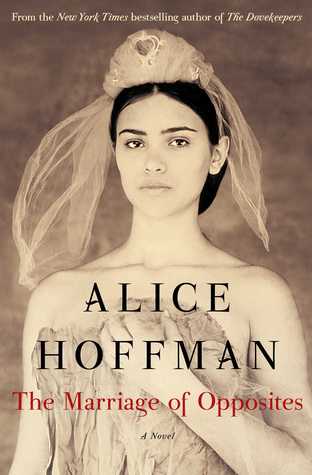
Synopsis
Covers the whole plot, including the ending.
- Difficulty
- Easy
- Pacing
- Moderate
- Mood
- Romantic, Evocative, Rebellious, Historical
- Read it if
- You enjoy historical fiction with strong female protagonists, forbidden romance, and rich cultural settings, especially stories that highlight the lives of real historical figures.
- Skip it if
- You prefer fast-paced thrillers or stories without a significant focus on family dynamics and societal constraints.
The Marriage of Opposites Plot Summary
Covers the whole plot, including the ending.
Rachel's Unconventional Childhood in St. Thomas
Rachel Pomie Petit Pomié, born into a Sephardic Jewish family on St. Thomas in the early 1800s, is an unconventional child. Her mother, Clemence, a refugee from the Inquisition, is strict and disapproves of Rachel's wild nature and red hair, believing it means a difficult spirit. Rachel finds solace and understanding in the island's culture, especially through her bond with the family's maid, Adelle, and Adelle's daughter, Jestine, who becomes Rachel's lifelong friend. Rachel's father, Frederic, a kind but somewhat ineffective merchant, tries to lessen his wife's severity. Despite her community's rules, Rachel dreams of a life beyond St. Thomas, particularly in Paris, and often defies expectations, preferring to explore the island's hidden corners and listen to the local women's stories.
A Marriage of Convenience to Isaac Pissarro
As Rachel grows into a young woman, her father's business faces financial difficulties. To prevent ruin, a marriage is arranged between Rachel and Isaac Pissarro, a wealthy, much older widower from a prominent Jewish family in St. Thomas. Isaac is kind and respectable, but Rachel feels no love for him, seeing the marriage as a duty and a sacrifice. She moves into his grand house, becoming a stepmother to his three children: Julie, Leon, and Clara. Though she performs her wifely duties, Rachel struggles with the limits of her new life, feeling trapped and unfulfilled. She finds some comfort in her friendship with Jestine, who continues to be her confidante, and in the small acts of defiance she manages within her restricted existence.
Isaac's Death and the Arrival of Fréderick
Several years into her marriage, Isaac Pissarro falls ill and dies suddenly, leaving Rachel a widow at a young age. His death, while sorrowful, also brings Rachel an unexpected sense of freedom. Soon after, Isaac's nephew, Fréderick Pissarro, arrives from France to help settle the estate and manage the family business. Fréderick is handsome, charming, and close in age to Rachel, a stark contrast to her late husband. There is an immediate, undeniable attraction between them, despite the societal taboos against a widow marrying her deceased husband's nephew. Fréderick, initially dismissive of St. Thomas, quickly becomes captivated by Rachel's spirit and the island's unique charm, leading to a blossoming, yet forbidden, romance.
The Scandalous Affair and Community Outcry
Rachel and Fréderick begin a passionate, secret love affair. Their relationship, however, violates Jewish law, which forbids a man from marrying his deceased uncle's wife. When their affair becomes public, it causes a scandal within the Jewish community of St. Thomas. Rachel's mother, Clemence, is particularly outraged and shamed. The synagogue elders, led by Rabbi Hayyim, condemn their union. Despite the intense pressure and the threat of excommunication, Rachel and Fréderick refuse to deny their love. They are excommunicated from the synagogue, ostracized by many, and forced to marry in a civil ceremony, further showing their defiance against tradition and family expectations.
Life as Outcasts and the Birth of Camille
After their excommunication, Rachel and Fréderick face social isolation but remain devoted to each other. They continue to run Isaac's business, which Fréderick manages well. Over the years, they have many children together, including their son, Jacob-Abraham-Camille, known as Camille. Rachel, now a mother of many, including her stepchildren, embraces her role with fierce protectiveness. She recognizes a unique sensitivity and artistic inclination in Camille from a young age, often seeing him sketching and observing the world with intense focus. Despite the hardships, Rachel finds happiness in her unconventional family, cherishing her bond with Fréderick and her children, particularly Camille, who embodies her own artistic and independent spirit.
Camille's Artistic Calling and Departure for Paris
As Camille grows, his artistic talent is clear. He spends his days drawing the landscapes, people, and daily life of St. Thomas, often neglecting his duties in the family business. Rachel, though proud, worries about his future, understanding the difficulties of an artist's life. Fréderick, initially wanting Camille to follow in the family trade, eventually recognizes his son's dedication to art. With the encouragement of a visiting Danish painter, Fritz Melbye, Camille decides to leave St. Thomas to study art in Paris, a city Rachel had long dreamed of but never reached. His departure is bittersweet for Rachel, who fears losing him to the wider world but also understands he must go to fulfill his artistic destiny.
Rachel's Later Years and Reconciliation
Many years pass, and Rachel, now an elderly woman, continues to live in St. Thomas with Fréderick. The sting of excommunication has faded somewhat, and the community, having seen their enduring love and respectable lives, slowly begins to accept them again. Rachel's children, including Camille, who has found success as a painter in Paris, visit when they can. Her stepchildren also maintain a connection, and her bond with Jestine remains strong. Rachel reflects on her life, realizing the impact her choices had on her family, particularly on Camille, whose artistic vision was shaped by his unconventional upbringing and the complex world of St. Thomas. She finds quiet satisfaction in her defiance and the rich life she built on her own terms.
Camille's Return and His Mother's Legacy
Camille Pissarro, now an established artist, returns to St. Thomas periodically to visit his aging parents. During these visits, he continues to paint the island, his work reflecting an understanding of its light, colors, and people. He sees his mother, Rachel, not just as a parent but as a powerful, enduring figure whose strength and unconventional spirit directly influenced his own artistic path. Rachel, in turn, takes pride in her son's achievements, recognizing that his art is a result of the life she chose and the beauty she found in defiance. Her story, once scandalous, becomes a legacy of courage, love, and the power of individual will against societal constraints, ultimately helping to birth a revolutionary artistic movement.
The Marriage of Opposites Characters
Rachel Pomie Petit Pomié Pissarro
Protagonist
A fiery, independent woman who defies societal and religious norms to follow her heart.
Rachel is the central character, a strong-willed, red-haired woman born into a Sephardic Jewish family on St. Thomas. From a young age, she resists the strictures of her mother, Clemence, and the conservative community, finding solace in the island's natural beauty and the wisdom of local women like Adelle and Jestine. She is pragmatic, passionate, and fiercely protective of her loved ones. Her arranged marriage to Isaac Pissarro initially stifles her, but his death allows her to embrace a forbidden love with his nephew, Fréderick, leading to excommunication but also profound happiness. Rachel's unconventional life and resilient spirit deeply influence her son, Camille, the future painter.
Relationships: Clemence Pomié (Strained mother-daughter relationship, marked by disapproval and misunderstanding); Frederic Pomié (Affectionate but distant father-daughter relationship); Jestine (Lifelong best friend and confidante); Isaac Pissarro (Husband in an arranged, loveless marriage); Fréderick Pissarro (Passionate, forbidden love and husband); Camille Pissarro (Devoted mother-son bond, recognizing his artistic talent)
Fréderick Pissarro
Supporting/Love Interest
Isaac's younger nephew, whose arrival from France sparks a passionate, forbidden love with Rachel.
Fréderick is initially presented as a sophisticated Frenchman, somewhat dismissive of St. Thomas. However, he quickly falls deeply in love with Rachel, drawn to her strength, beauty, and independent spirit. He is willing to defy societal and religious norms, including excommunication, to be with her. Fréderick proves to be a capable businessman, managing the family affairs after Isaac's death, and a devoted husband and father. He is supportive of Camille's artistic ambitions, despite initial reservations, and shares a deep, enduring bond with Rachel.
Relationships: Rachel Pissarro (Passionate, forbidden, and enduring love; husband); Isaac Pissarro (Deceased uncle, whose estate he manages); Camille Pissarro (Father to the artist, supportive of his talent)
Clemence Pomié
Supporting/Antagonist
Rachel's strict, religiously devout mother, who struggles to accept her daughter's unconventional choices.
Clemence is Rachel's mother, a formidable and devout Sephardic Jew who fled the Inquisition. She is deeply concerned with appearances, religious law, and maintaining the family's honor within the community. Clemence views Rachel's red hair and rebellious nature as a curse and a sign of trouble, often clashing with her daughter. She is profoundly shamed and angered by Rachel's affair and marriage to Fréderick, leading to their excommunication. Despite her harshness, her actions stem from a deep-seated fear and a desire to protect her family's standing, though she eventually finds a grudging acceptance of Rachel's life.
Relationships: Rachel Pissarro (Strained, often adversarial mother-daughter relationship); Frederic Pomié (Husband, whom she dominates to some extent)
Jestine
Supporting
Rachel's lifelong friend and confidante, who offers unwavering loyalty and practical wisdom.
Jestine is the daughter of Adelle, Rachel's family maid, and becomes Rachel's closest and most enduring friend. She is a woman of color, grounded, practical, and possesses a quiet strength. Jestine provides Rachel with unwavering support, advice, and a non-judgmental ear throughout all of Rachel's life, from her rebellious childhood to her scandalous marriage. She embodies the local island wisdom and provides a stark contrast to the rigid societal norms Rachel battles, representing unconditional acceptance and friendship.
Relationships: Rachel Pissarro (Lifelong best friend and confidante); Adelle (Daughter to Rachel's family maid)
Camille Pissarro (Jacob-Abraham-Camille)
Supporting
Rachel's son, who becomes a renowned Impressionist painter, deeply influenced by his mother and St. Thomas.
Camille is Rachel and Fréderick's son, who later becomes the famous French Impressionist painter. From a young age, he displays a sensitive nature and a keen artistic eye, often sketching his surroundings. He is deeply influenced by the vibrant colors, light, and diverse culture of St. Thomas, and by his mother's unconventional spirit. Though he leaves for Paris to pursue his art, his roots on the island and his mother's story remain a profound source of inspiration. His journey embodies the legacy of Rachel's defiance and creativity.
Relationships: Rachel Pissarro (Son, deeply influenced by her spirit); Fréderick Pissarro (Son, whose artistic ambitions he supports)
Isaac Pissarro
Supporting
Rachel's first husband, a kind but much older widower, whose death paves the way for her true love.
Isaac is Rachel's first husband, a wealthy and respected widower in the Jewish community of St. Thomas. He is significantly older than Rachel and already has three children when they marry in an arranged union to save Rachel's father's business. Isaac is a kind and honorable man, but there is no romantic love between him and Rachel. His death, while mourned, ultimately frees Rachel from a life of duty and allows her to pursue her own desires, becoming a pivotal turning point in her story.
Relationships: Rachel Pissarro (Husband in an arranged marriage); Fréderick Pissarro (Nephew)
Adelle
Supporting
The family's maid and Jestine's mother, who nurtures Rachel's wild spirit with wisdom and care.
Adelle is the Pomié family's maid and Jestine's mother. She is a woman of color who possesses a deep understanding of the island's natural world and its spiritual traditions. Unlike Clemence, Adelle sees and appreciates Rachel's unique spirit, offering her comfort, stories, and a sense of belonging. She provides a maternal figure who truly understands Rachel, fostering her imagination and resilience. Adelle's presence highlights the cultural blend of St. Thomas and the different forms of wisdom available to Rachel.
Relationships: Rachel Pissarro (Nurturing figure and confidante); Jestine (Mother)
Rabbi Hayyim
Mentioned/Antagonist
The rigid leader of the Jewish community who excommunicates Rachel and Fréderick.
Rabbi Hayyim represents the strict adherence to religious law and tradition within the Jewish community of St. Thomas. He is the leading voice in condemning Rachel and Fréderick's marriage as incestuous and forbidden. His decision to excommunicate them highlights the severe consequences of defying community rules and serves as a major obstacle Rachel must overcome. While not a deeply developed character, he symbolizes the societal forces Rachel battles.
Relationships: Rachel Pissarro (Religious authority who condemns her)
The Marriage of Opposites Themes
Identity and Self-Discovery
The novel explores Rachel's journey to create her own identity against her strict religious upbringing and the culture of St. Thomas. From a young age, Rachel rejects the expectations placed upon her, shown by her red hair and rebellious spirit. Her self-discovery ends with her courageous decision to pursue a forbidden love, defining herself by her own heart, not by societal rules. This theme is mirrored in Camille's journey to embrace his artistic identity despite parental expectations for him to join the family business.
“She was a woman who understood that the only way to be free was to make her own rules.”
Forbidden Love and Defiance
The central theme is Rachel and Fréderick's passionate, taboo love, which defies religious law and societal norms. Their relationship, considered incestuous by the Jewish community, leads to their excommunication and ostracization. Despite the severe consequences, they choose to prioritize their love, showing courage and resilience. This defiance is not just romantic but a broader statement about personal freedom and the right to choose one's own path, even when it means sacrificing social acceptance.
“Love was not a gentle feeling; it was a storm, and you had to be willing to drown in it.”
The Power of Place and Culture
St. Thomas is a character in the novel, its mix of Caribbean mysticism, European colonial influence, and Sephardic Jewish tradition shaping the lives of its inhabitants. The island's beauty, local customs, and diverse population influence Rachel's worldview and, subsequently, Camille's artistic vision. The magical realism woven into the narrative reflects the island's spiritual essence, showing how an environment can nurture or challenge one's identity and destiny.
“The island taught you that there were other ways to see, other ways to believe.”
Family Legacy and Inheritance
The novel examines family inheritance, not just of wealth or business, but of spirit, talent, and trauma. Rachel inherits both the resilience of her Inquisition-survivor mother and a rebellious streak. Her defiance and artistic sensibility are then passed down to her son, Camille, who inherits her unique way of seeing the world and transforms it into art. The narrative explores how past generations' choices and struggles shape the destinies of those who follow, creating a lineage of creativity and independence.
“A child always carries the history of her parents, whether she knows it or not.”
Motherhood and Artistic Inspiration
Rachel's journey as a mother is tied to Camille's artistic development. She recognizes and nurtures his talent from a young age, understanding his unique way of observing the world. Her own life, filled with passion, defiance, and a deep connection to the island, becomes an inspiration for Camille. The novel suggests that the artist's eye is often inherited or fostered, and that the mother's lived experience can be a source of creativity for her child.
“She saw the world as a canvas, and her son, she knew, would paint it with his own heart.”
Plot Devices & Literary Techniques
Magical Realism
Subtle integration of magical elements into the realistic setting of St. Thomas.
Alice Hoffman weaves subtle elements of magical realism throughout the narrative. This manifests in characters having prophetic dreams, an intuitive understanding of nature, and the belief in island spirits or omens. For example, Rachel's red hair is seen as a sign of her wildness, and the island's flora and fauna often seem to reflect or influence human emotions. This device enhances the atmosphere of St. Thomas, blurring the lines between the tangible and the mystical, and reflecting the unique cultural beliefs that shape Rachel's world and perception.
Historical Context as Catalyst
The specific historical setting of St. Thomas in the 1800s drives the plot's conflicts and character development.
The novel is firmly rooted in the historical context of St. Thomas in the early 19th century, a melting pot of cultures (Sephardic Jewish, Danish colonial, African Caribbean). This setting is crucial for understanding the rigid religious laws, societal expectations, and the unique challenges faced by the characters. The threat of the Inquisition still lingers in the minds of the Jewish refugees, influencing Clemence's strictness. The island's remote nature and diverse population also provide the space for Rachel's unconventional life to unfold and for Camille's artistic vision to be nurtured, highlighting how specific historical circumstances can both constrain and liberate.
Foil Characters
Characters whose contrasting traits highlight the protagonist's qualities.
The novel effectively uses foil characters to illuminate Rachel's personality and choices. Her mother, Clemence, with her strict adherence to tradition and fear of scandal, acts as a direct foil to Rachel's rebellious and passionate nature. Similarly, Jestine, Rachel's lifelong friend, serves as a grounded, loyal counterpoint, offering unconditional acceptance that contrasts with the judgment Rachel faces from the wider community. These contrasts emphasize Rachel's unique strength, independence, and the depth of her defiance.
Symbolism of Red Hair
Rachel's red hair symbolizes her rebellious spirit and unconventional nature.
Rachel's red hair is a recurring symbol throughout the novel. From childhood, it is viewed by her mother as a mark of a difficult, wild, and even cursed spirit. In the context of her conservative Jewish community, it sets her apart and is often associated with her defiance and passion. It represents her inherent difference and her refusal to conform to societal expectations. The red hair becomes an outward manifestation of her internal fire and her destiny to live a life less ordinary, ultimately becoming a source of pride rather than shame.
The Marriage of Opposites Quotes
“We are all born with a map inside us, and it is our job to follow it.”
“Love is not a choice. It is a force of nature, as strong as the wind, as relentless as the tide.”
“In every family there is a secret, and in every secret there is a story.”
“Art is not what you see, but what you make others see.”
“The past is a ghost that haunts us, but it is also the foundation upon which we build our future.”
“To be a woman is to be a warrior in a world that does not always see your strength.”
“Sometimes the most beautiful things are born from the darkest places.”
“A marriage of opposites is not a battle, but a dance.”
“The island does not forget. It holds our stories in its soil and in its sea.”
“We paint not to capture the world, but to set it free.”
“In love, there are no rules, only risks.”
“A mother's love is a compass that guides you home, no matter how far you wander.”
“The colors of the Caribbean are not just seen; they are felt in the soul.”
“To create is to breathe life into the silent spaces of the world.”
Quiz
10 questions on the plot and the characters. Each answer comes with a short explanation.
Question 1
What is the primary setting of 'The Marriage of Opposites'?
- Paris, France
- St. Thomas in the Caribbean
- Amsterdam, Netherlands
- New York City, USA
Show answer
B. St. Thomas in the Caribbean The story is primarily set on the tropical island of St. Thomas in the early 1800s, where Rachel grows up dreaming of Paris but lives within a small refugee Jewish community.
Question 2
Who is the historical figure that Rachel's son becomes in the novel?
- Vincent van Gogh
- Claude Monet
- Camille Pissarro
- Paul Cézanne
Show answer
C. Camille Pissarro Rachel's favorite son grows up to become Camille Pissarro, known as the Father of Impressionism, which is a central historical element of the book.
Question 3
Why is Rachel married off to a widower early in the story?
- To escape political persecution
- To save her father's business
- Because she fell in love with him
- To fulfill a family prophecy
Show answer
B. To save her father's business Rachel's marriage is arranged to a widower with three children as a practical measure to rescue her father's failing business, reflecting the constraints placed on her life.
Question 4
What is the name of Rachel's lifelong friend, who is the daughter of her maid Adelle?
- Frédérique
- Jestine
- Camille
- Esther
Show answer
B. Jestine Jestine is the daughter of the maid Adelle and becomes Rachel's deep, lifelong friend, providing emotional support throughout her struggles.
Question 5
How does Rachel's mother generally view her daughter's behavior?
- As a model of obedience
- With pride and admiration
- As difficult and rule-breaking
- With indifference
Show answer
C. As difficult and rule-breaking Rachel's mother, a pillar of their Jewish community, never forgives her for being a 'difficult girl' who refuses to live by the rules, creating tension in their relationship.
Question 6
What event triggers Fréderick's arrival in St. Thomas from France?
- Rachel's father's death
- The sudden death of Rachel's husband
- A business opportunity
- An invitation from Rachel
Show answer
B. The sudden death of Rachel's husband Fréderick, the handsome nephew of Rachel's husband, comes from France to settle the estate after her husband dies suddenly, leading to their passionate affair.
Question 7
Which theme is most prominently explored through Rachel's defiance in the novel?
- The inevitability of fate
- The power of artistic expression
- The struggle for personal freedom against societal constraints
- The importance of religious conformity
Show answer
C. The struggle for personal freedom against societal constraints Rachel's journey highlights her fight for personal freedom and love against the strict rules of her family and community, central to the book's themes of defiance and passion.
Question 8
What is the background of the Jewish community in St. Thomas where Rachel grows up?
- They are native to the island for centuries
- They are refugees who escaped the Spanish Inquisition
- They are converts from Christianity
- They are wealthy merchants from England
Show answer
B. They are refugees who escaped the Spanish Inquisition The community consists of Jews who fled the Inquisition, seeking refuge on St. Thomas, which shapes their insular and rule-bound society that Rachel rebels against.
Question 9
How does Adelle, the maid, influence Rachel's life?
- By teaching her household duties
- By arranging her marriage
- By believing in her strengths and providing emotional support
- By discouraging her dreams of Paris
Show answer
C. By believing in her strengths and providing emotional support Adelle's belief in Rachel's strengths serves as a salvation for Rachel, offering crucial support in a household where her mother is critical, highlighting the role of mentorship and kindness.
Question 10
What broader historical movement is connected to the novel through Camille Pissarro?
- The Renaissance
- Impressionism
- Romanticism
- Cubism
Show answer
B. Impressionism Camille Pissarro is historically known as a key figure in the Impressionist movement, and the novel ties Rachel's personal story to this artistic legacy, enriching the historical context.
The Marriage of Opposites FAQ
What is 'The Marriage of Opposites' about?
The novel follows Rachel, a Jewish woman on St. Thomas in the early 1800s, who is forced into a marriage to save her father's business. After her husband's death, she begins a scandalous affair with his nephew Fréderick, defying social norms and ultimately becoming the mother of painter Camille Pissarro, the Father of Impressionism.
Why should I read 'The Marriage of Opposites'?
It offers a rich historical fiction narrative blending forbidden romance, cultural conflict, and artistic legacy. Readers interested in strong female protagonists, Jewish diaspora history, and the origins of Impressionism will find it compelling, with Hoffman's lyrical prose bringing 19th-century St. Thomas and Paris to life.
What is the background/setting of 'The Marriage of Opposites'?
Set primarily on the tropical island of St. Thomas in the early 1800s, it depicts a small refugee community of Sephardic Jews who escaped the Inquisition. Later parts shift to Paris, reflecting Rachel's dreams and her son Camille's artistic development in the burgeoning Impressionist movement.
What are the most memorable quotes from the book?
Key quotes include Rachel's reflections like 'I had been waiting for my life to begin' and Adelle's wisdom such as 'There are some things we know without being told.' These capture themes of longing, intuition, and defiance against societal constraints.
What writing style does Alice Hoffman use in this book?
Hoffman employs lyrical, magical realist prose with vivid sensory details, evoking the lushness of St. Thomas and the emotional intensity of Rachel's journey. The narrative blends historical fact with imaginative storytelling, focusing on character interiority and symbolic elements like color and nature.
What minor details add significant meaning in the story?
Small details like the color red in Rachel's clothing symbolizing passion and rebellion, or Adelle's herbal remedies representing hidden knowledge and female empowerment, enrich the themes. The recurring imagery of moths and light foreshadows Camille's future as a painter captivated by illumination.
What are some subtle foreshadowing moments?
Early scenes where Rachel stares at the sea dreaming of Paris hint at her eventual connection to France through Fréderick and Camille. Adelle's predictions about Rachel's 'great son' subtly foreshadow Camille's artistic legacy long before his birth.
What unexpected character connections exist?
Rachel's deep bond with Jestine, her maid Adelle's daughter, creates a parallel family dynamic that challenges racial and class divisions. The link between Rachel's stifled creativity and Camille's explosive artistic success reveals how maternal influence shapes generational talent.
What are Rachel's unspoken motivations?
Beneath her rebellious surface, Rachel is driven by a deep-seated desire for autonomy and creative expression, which she channels into her relationship with Fréderick and support for Camille. Her initial compliance with an arranged marriage masks a fierce determination to reclaim her life narrative.
What psychological complexities do characters exhibit?
Rachel grapples with guilt over scandalizing her community while pursuing passion, embodying the conflict between duty and desire. Fréderick's willingness to risk his inheritance for love shows a vulnerability contrasting with his outward confidence, and Camille's artistic struggles reflect a search for identity amid parental legacy.
What are the major emotional turning points?
Key moments include Rachel's forced marriage to Isaac, which crushes her spirit; Fréderick's arrival reigniting her passion; the birth of Camille, symbolizing hope; and the family's move to Paris, representing hard-won freedom and artistic awakening.
How do relationship dynamics evolve?
Rachel's relationship with her mother shifts from antagonism to strained understanding as both women navigate loss. Her bond with Fréderick transforms from illicit passion to a enduring partnership against societal scorn, while her connection with Camille evolves from maternal protection to mutual artistic inspiration.
Which parts remain ambiguous or open-ended?
The novel leaves ambiguous whether Rachel's sacrifices truly brought her happiness or merely exchanged one set of constraints for another. The impact of the scandal on Jestine's life is not fully resolved, inviting reflection on the costs of rebellion for those in marginalized positions.
What are controversial scenes or decisions?
Rachel's affair with Fréderick, her husband's nephew, sparks outrage in their Jewish community, seen as a betrayal of religious and social norms. Her decision to prioritize this love over familial duty remains divisive, highlighting tensions between individual desire and collective responsibility.
'The Marriage of Opposites' ending explained: how it ends & what it means
The story concludes with Rachel in Paris, witnessing Camille's growing success as a painter. This ending symbolizes the fruition of her dreams through her son's art, suggesting that her defiance and passion ultimately forged a legacy of creativity and freedom, marrying her tropical origins with European modernity.
How does the title 'The Marriage of Opposites' reflect the story's themes?
The title refers literally to Rachel and Fréderick's union across age and scandal, but also metaphorically to the blending of opposites: tradition and rebellion, St. Thomas and Paris, Jewish identity and artistic innovation. It underscores how conflict and fusion drive both personal and historical transformation.
About the author

Alice Hoffman is a celebrated American novelist known for her magical realism and explorations of family, love, and loss. Her notable works include the bestselling 'Practical Magic' series, 'The Museum of Extraordinary Things,' and 'The Rules of Magic.' Hoffman's poignant storytelling and vivid imagery have earned her widespread critical acclaim and a dedicated readership.
Similar books
- The Dovekeepers
Alice Hoffman
4.0 (67k) average on GoodreadsHistorical FictionShares Hoffman's lyrical prose, focus on strong women, and historical setting.
- Island Beneath the Sea
Isabel Allende
4.1 (33k) average on GoodreadsHistorical FictionFeatures a strong female protagonist in a Caribbean setting during a tumultuous historical period.
- Girl with a Pearl Earring
Tracy Chevalier
3.9 (627k) average on GoodreadsHistorical FictionHistorical fiction centered around an artist and the muse who inspired them.
- The Other Boleyn Girl
Philippa Gregory
4.1 (456k) average on GoodreadsHistorical FictionGregory's work often focuses on high-stakes political intrigue and direct engagement with documented historical events, sometimes at the expense of deeper psychological exploration. Hoffman prioritizes interior lives and emotional landscapes, making personal struggles feel universal.
- Wolf Hall
Hilary Mantel
3.9 (166k) average on GoodreadsLiterary FictionMantel's trilogy offers unparalleled historical detail and a profound examination of power with dense, rigorous prose. Hoffman's style is more lyrical and accessible, focusing on intimate human drama and less-documented historical corners over grand political narratives.
- To Kill a Mockingbird
Harper Lee
4.3 (4.5M) average on GoodreadsHistorical FictionIn the 1930s Jim Crow South, Harper Lee writes about racial injustice, moral growth, and the quiet courage of a lawyer father, Atticus Finch, as seen through his young daughter's eyes.



Enjoyed the summary?
A summary gives you the shape of the book. The book itself has the detail, the examples and the voice.
Find The Marriage of Opposites on AmazonAs an Amazon Associate, BookBrief earns from qualifying purchases. How we're funded