

Core Idea
- Difficulty
- Medium
- Read it if
- You are a scientifically-minded individual grappling with humanity's place in the universe, the future of our species, and the conflict between scientific understanding and traditional philosophy/religion.
- Skip it if
- You are looking for a spiritual guide based on specific religious doctrines, or you prefer philosophical arguments that do not heavily rely on evolutionary biology and scientific materialism.
Key Takeaways from The Meaning of Human Existence
The Self-Asphyxiation of the Anthropocene
Humanity's unchecked dominance threatens its own survival.
Wilson argues that humanity has entered a dangerous 'Anthropocene Epoch' where our technology has outpaced our collective wisdom. We are the dominant species, changing the planet in new ways, yet our tribalism and short-term thinking cause environmental harm and social instability. This imbalance, between our advanced abilities and our basic impulses, creates a cycle of self-destruction. Our rapid resource use and biodiversity loss are not just outside threats; they are signs of an internal conflict between our biological past and our cultural evolution. The meaning of our existence, then, involves our responsibility to manage this era without causing our own downfall.
“We have created a Star Wars civilization, with Stone Age emotions, medieval institutions, and godlike technology.”
In the book: Wilson repeatedly cites the rapid decline in biodiversity and the acceleration of climate change as direct consequences of human activity, framing them as existential threats that our current social and political structures are failing to address effectively.
Try this: Recognize the inherent conflict between short-term self-interest and long-term planetary health. Advocate for policies and personal choices that prioritize ecological sustainability and global cooperation over immediate gratification or nationalistic concerns.
Related ideas: anthropocene, environmental-ethics, human-impact
The Dual Nature of Human Existence
We are products of both biological evolution and cultural evolution, a constant tension.
Wilson suggests that human existence is defined by two main forces: the slow, deep currents of biological evolution that shaped our instincts and traits, and the fast, accelerating forces of cultural evolution that define our societies, technologies, and beliefs. Our 'Stone Age emotions' are a legacy of our biological past, suited for small-group survival, while our 'godlike technology' comes from our cultural ingenuity. This tension explains much of human behavior, from our capacity for kindness to our tendency for conflict. Understanding this dual inheritance is key to navigating the future, as it highlights the challenges in balancing our ancient biological drives with the demands of a complex, modern world.
“The human mind is a product of genetic evolution, but human culture is a product of memetic evolution, and the two are often at odds.”
In the book: He draws on sociobiology, explaining how behaviors like tribalism, kinship selection, and even certain aesthetic preferences have deep evolutionary roots, while simultaneously acknowledging the profound impact of language, tools, and shared narratives in shaping human societies.
Try this: When analyzing human behavior or societal issues, consider both the deep biological predispositions and the powerful cultural overlays. Avoid simplistic explanations that attribute everything solely to 'nature' or 'nurture,' but rather seek the interaction between the two.
Related ideas: bio-cultural-evolution, nature-vs-nurture, sociobiology
The Illusory Nature of Free Will
Our choices are constrained by a complex interplay of genetics and environment.
Wilson questions the traditional idea of absolute free will, suggesting instead that our choices and behaviors come from a mix of genetic traits and environmental influences. While we feel like we make conscious decisions, these decisions are limited by our brain's biology, shaped by millions of years of evolution, and the specific cultural and social settings we live in. This does not completely deny individual responsibility, but it places it within a more deterministic framework. Understanding these limits can lead to greater empathy and a more nuanced approach to moral and legal systems, recognizing that 'choice' often results from forces beyond immediate conscious control.
“Free will, as it is commonly understood, is an illusion. We are not entirely free, but neither are we entirely determined.”
In the book: He refers to findings in neuroscience and behavioral genetics that show how much of our personality, intelligence, and even predispositions to certain behaviors are influenced by our genes and early developmental experiences, long before conscious 'choice' comes into play.
Try this: Cultivate a deeper understanding of the forces that shape your own and others' behaviors. Practice empathy by recognizing that people's actions are often a product of complex, interwoven factors rather than purely arbitrary choices. Focus on shaping environments and understanding underlying motivations rather than solely judging outcomes.
Related ideas: determinism, neuroscience, behavioral-genetics
The Evolutionary Roots of Religion
Religion is a product of our need for meaning, community, and an understanding of the unknown.
Wilson sees religion not as divine revelation, but as a powerful and widespread cultural phenomenon with deep evolutionary roots. He argues that the human tendency for storytelling, ritual, and belief in a higher power offered important advantages in early human societies. It fostered social unity, provided comfort in uncertain times, and enforced moral codes. While traditional religions may face challenges from science, the underlying human need for meaning and belonging remains. Wilson suggests that science itself, by offering a grand story of the universe and humanity's place in it, can satisfy this inherent spiritual longing, providing a new kind of 'sacred' understanding based on empirical truth.
“The high priests of the future will be scientists, and the temples will be laboratories.”
In the book: He discusses how religious practices often align with evolutionary strategies for group survival, such as shared myths reinforcing social bonds and rituals providing comfort and reducing anxiety, drawing parallels between ancient tribal religions and modern faiths.
Try this: Approach discussions about religion with an understanding of its deep evolutionary and psychological functions, rather than solely as a question of literal truth. Seek meaning and connection through scientific understanding, community engagement, and a sense of wonder for the natural world, even if traditional religious frameworks don't resonate.
Related ideas: evolutionary-psychology, atheism, meaning-making
Biodiversity as the Ultimate Treasure
The richness of life is irreplaceable and fundamental to our survival and well-being.
Wilson strongly argues that biodiversity is not just an aesthetic preference but the basic foundation of all life, including human existence. Every species, no matter how small, plays a part in the complex web of ecosystems that give us clean air, water, food, and medicine. The increasing rate of species extinction, caused by human activity, means an irreversible loss of genetic information and ecological stability, threatening the planet's very life support systems. He stresses that preserving biodiversity is not charity, but self-preservation—a moral duty for our long-term survival.
“The greatest gift of the Earth is the diversity of life.”
In the book: He details various examples of how specific species contribute to ecosystem services, such as pollinators for crops, microbes for soil fertility, and diverse plant life for pharmaceutical discoveries. He also provides stark statistics on current extinction rates compared to historical averages.
Try this: Support conservation efforts, choose sustainable products, reduce your ecological footprint, and educate others about the critical importance of biodiversity. View the natural world as an invaluable asset to be protected, not merely a resource to be exploited.
Related ideas: conservation, ecosystem-services, extinction-crisis
The Promise and Peril of Genetic Engineering
Redesigning human nature presents humanity's greatest moral dilemma.
Wilson identifies genetic engineering as the ultimate frontier and the most significant moral challenge humanity has ever faced. While it offers exciting possibilities for curing diseases and improving human abilities, it also presents an unprecedented risk of fundamentally changing what it means to be human. This could create new inequalities and unforeseen biological consequences. He warns against arrogance, reminding us that natural selection, though imperfect, has refined the human species over millions of years. Changing our basic genetic makeup without deep ethical consideration could lead to a future where humanity loses its connection to its evolutionary past and its inherent value.
“We are about to abandon natural selection by redesigning biology and human nature as we wish them.”
In the book: He refers to the rapidly advancing fields of CRISPR and gene editing, discussing the potential to eliminate genetic diseases but also the slippery slope of 'designer babies' and altering human intelligence or physical traits without fully understanding the long-term implications.
Try this: Engage in informed discussions about the ethics of genetic engineering. Advocate for robust ethical guidelines and public discourse to ensure that advancements in biotechnology are used responsibly and for the benefit of all humanity, not just a select few.
Related ideas: genetic-engineering, bioethics, human-enhancement
The Unity of Knowledge (Consilience)
All fields of knowledge are ultimately interconnected and explainable through scientific inquiry.
Wilson advocates for 'consilience,' the idea that all fields of knowledge, from natural sciences to humanities, are connected and can be unified under a scientific framework. He believes that subjects traditionally explored by philosophy, religion, or art can be understood through a scientific lens, revealing deeper truths about human nature and the universe. This unity of knowledge offers a more complete and accurate understanding of our existence, bridging artificial divides between disciplines and promoting a more holistic intellectual pursuit. It suggests that the 'meaning' we seek can be found through rigorous, interdisciplinary investigation.
“The greatest enterprise of the mind has always been and always will be the attempt to connect the sciences with the humanities.”
In the book: He illustrates how understanding biology and evolutionary psychology can inform our understanding of art, morality, and social structures, thereby demonstrating how seemingly disparate fields can be linked through underlying scientific principles.
Try this: Cultivate an interdisciplinary mindset. Seek connections between different fields of study and be open to applying scientific reasoning to areas traditionally considered outside its purview. Avoid intellectual silos and embrace a holistic approach to understanding the world.
Related ideas: consilience, interdisciplinary-study, scientific-humanism
The Search for Meaning in a Material World
Meaning is not given, but discovered through understanding our origins and purpose.
Wilson addresses the question of 'meaning' in a universe he sees as material and governed by natural laws. He argues that meaning is not given to us by an external deity or destiny, but rather comes from our understanding of our evolutionary journey, our place in the cosmos, and our responsibility to the planet and future generations. The meaning of human existence lies in our unique capacity for self-awareness, our ability to explore the universe, and our moral duty to preserve life's diversity. This scientific worldview, far from being bleak, offers a profound and inspiring purpose: to understand, protect, and thoughtfully guide the future of life on Earth.
“We are a product of blind physical forces, yet we are capable of creating meaning and purpose.”
In the book: He contrasts traditional religious answers to 'why' with the scientific narrative of cosmic and biological evolution, arguing that the latter, while challenging to anthropocentric views, offers a deeper, more empirically verifiable form of meaning through knowledge and stewardship.
Try this: Actively seek knowledge about the universe and humanity's place within it. Embrace a sense of stewardship for the planet and future generations as a core component of your personal purpose. Find meaning in contributing to the advancement of knowledge and the well-being of the biosphere.
Related ideas: existentialism, secular-humanism, cosmic-perspective
Our Unique Place in the Cosmos
Humanity's intelligence and capacity for self-reflection are extraordinary, if not unique.
While emphasizing our biological origins and connection to all life, Wilson concludes that humanity holds a special, if not unique, position in the known universe. Our intelligence, capacity for abstract thought, complex language, and ability to reflect on our existence sets us apart. This uniqueness gives us great power and responsibility. We are the only species known to consciously ponder the 'meaning' of existence and to profoundly alter the planet's course. This 'specialness' is not a divine right, but an evolutionary gift that demands careful stewardship and a deep understanding of our capabilities and limits.
“Humanity holds a special position in the known universe.”
In the book: He contrasts human cognitive abilities with those of even highly intelligent animals, highlighting our capacity for cumulative culture, scientific inquiry, and philosophical speculation as uniquely developed traits. He also touches on the Fermi Paradox and the lack of evidence for other intelligent life.
Try this: Recognize the extraordinary privilege and responsibility that comes with human intelligence. Use your capacity for reason and empathy to contribute positively to the world, striving to understand and improve both human society and our relationship with the natural environment.
Related ideas: anthropic-principle, human-exceptionalism, cognitive-evolution
The Prudent Path Forward: A Call for Eremitic Ethics
We must embrace a long-term, ethical vision for humanity's future.
Wilson's main message is a call for humanity to adopt an 'eremitic ethic'—a long-term, carefully considered moral framework for guiding our future. Given our unprecedented power to reshape life and the planet, we face moral dilemmas far greater than those of past eras. Abandoning natural selection through genetic engineering, or irreversibly harming the biosphere, would be a betrayal of our evolutionary heritage and future generations. The wise path forward requires us to combine scientific knowledge with a deep sense of ethical responsibility, making decisions that prioritize the planet's health and the long-term flourishing of all life, rather than giving in to short-sighted desires or technological arrogance.
“The greatest moral dilemma since God stayed the hand of Abraham is now upon us.”
In the book: He frames the choice to genetically engineer humanity or to allow mass extinction as a moral test equivalent to Abraham's sacrifice, underscoring the gravity of our current decisions and the need for profound ethical reflection.
Try this: Adopt a long-term perspective in your decisions, considering the impact on future generations and the entire biosphere. Advocate for ethical governance in science and technology, and support leaders and policies that prioritize sustainability and responsible innovation.
Related ideas: future-ethics, longtermism, environmental-stewardship
The Meaning of Human Existence Quotes
“We are a product of the laws of physics, to be sure, but also of the laws of biology. This is the grandest story ever told.”
“The brain is a machine, a glorious machine, but a machine nonetheless.”
“Humanity has a time horizon, an expiration date. We are not immortal.”
“The real problem of humanity is the following: We have Paleolithic emotions, medieval institutions and godlike technology.”
“To be human is to be a work in progress, a partially completed puzzle.”
“We are drowning in information while starving for wisdom.”
“The greatest challenge to humanity is not economic or political, but rather the failure to understand our own biological nature.”
“Biology is the key to human nature, and science is the only way to unlock it.”
“The human mind is a device for survival and reproduction, and reason is just one of its tools.”
“Our tribal instincts, once essential for survival, now threaten our very existence.”
“The meaning of human existence is not a matter of divine revelation, but of scientific understanding.”
“We are a species that invents stories to make sense of a universe that doesn't care.”
“The greatest danger to our planet is the belief that someone else will save it.”
“To understand ourselves, we must understand the world that made us.”
Quiz
10 questions on the main ideas. Each answer comes with a short explanation.
Question 1
According to Wilson in 'The Meaning of Human Existence,' what is the primary distinction he emphasizes between humans and other species, even while acknowledging similar evolutionary paths?
- Humans possess a superior physical strength and endurance.
- Humans have developed complex cultural creations like a poet's sonnet, unlike the instinctual creations of other species.
- Humans are the only species capable of tool use.
- Humans exhibit altruism, which is entirely absent in all other species.
Show answer
B. Humans have developed complex cultural creations like a poet's sonnet, unlike the instinctual creations of other species. Wilson highlights that while humans and spiders evolved similarly, the human capacity for creating something like a poet's sonnet is 'wholly different' from a spider's web, emphasizing complex cultural and intellectual creations as a key differentiator.
Question 2
Wilson's 'Anthropocene Epoch,' which he began examining in 'The Social Conquest of Earth,' refers to what aspect of human impact?
- The period when humans first developed agriculture.
- The era of humanity's unprecedented domination and alteration of the biosphere.
- The historical period marked by the rise of complex human societies.
- The epoch defined by humanity's spiritual and philosophical awakening.
Show answer
B. The era of humanity's unprecedented domination and alteration of the biosphere. The text describes 'The Social Conquest of Earth' as 'a sweeping account of the human rise to domination of the biosphere,' indicating the Anthropocene Epoch concerns humanity's profound impact on the planet.
Question 3
What is the 'greatest moral dilemma' Wilson suggests humanity now faces due to advances in science and technology?
- The challenge of interstellar travel and colonization.
- The potential abandonment of natural selection by redesigning biology and human nature.
- The ethical implications of artificial intelligence achieving sentience.
- The problem of global resource depletion and overpopulation.
Show answer
B. The potential abandonment of natural selection by redesigning biology and human nature. Wilson 'soberly concludes that advances in science and technology bring us our greatest moral dilemma since God stayed the hand of Abraham' due to the alarm that 'we are about to abandon natural selection by redesigning biology and human nature as we wish them.'
Question 4
Wilson's approach in 'The Meaning of Human Existence' is described as bridging which two major fields to address existential questions?
- Economics and Political Science
- Art History and Literature
- Science and Philosophy
- Theology and Anthropology
Show answer
C. Science and Philosophy The text states Wilson 'takes his readers on a journey, in the process bridging science and philosophy to create a twenty-first-century treatise on human existence.'
Question 5
How does Wilson propose humanity can begin to systematically approach questions about our place in the cosmos and the meaning of intelligent life?
- Through exclusive reliance on ancient religious texts and spiritual revelations.
- By developing advanced mathematical models without empirical data.
- By leveraging our current knowledge of the universe and ourselves in a testable way.
- Through philosophical introspection devoid of scientific input.
Show answer
C. By leveraging our current knowledge of the universe and ourselves in a testable way. Wilson posits that 'we, as a species, now know enough about the universe and ourselves that we can begin to approach questions about our place in the cosmos and the meaning of intelligent life in a systematic, indeed, in a testable way.'
Question 6
What criticism was Wilson once associated with, before presenting his more expansive theories in 'The Meaning of Human Existence'?
- An overly optimistic view of human nature and societal progress.
- A purely mechanistic view of human life and an overreliance on genetic predetermination.
- A lack of engagement with the natural sciences in his philosophical works.
- An exclusive focus on individual psychology rather than species-level analysis.
Show answer
B. A purely mechanistic view of human life and an overreliance on genetic predetermination. The text states Wilson was 'Once criticized for a purely mechanistic view of human life and an overreliance on genetic predetermination,' but 'presents in The Meaning of Human Existence his most expansive and advanced theories.'
Question 7
Which of the following topics is NOT explicitly mentioned as being addressed by Wilson in 'The Meaning of Human Existence'?
- 'The Riddle of the Human Species'
- 'The Ethics of Genetic Engineering'
- 'Religion'
- 'The Collapse of Biodiversity'
Show answer
B. 'The Ethics of Genetic Engineering' While genetic engineering is related to the moral dilemma Wilson discusses, the text specifically lists 'The Riddle of the Human Species,' 'Free Will,' 'Religion,' 'The Collapse of Biodiversity,' and 'Portrait of E.T.' as topics Wilson explicates, but not 'The Ethics of Genetic Engineering' as a chapter title or direct topic.
Question 8
The phrase 'Nietzsche once called 'the rainbow colors' around the outer edges of knowledge and imagination' is used by Wilson to describe his search for meaning in what context?
- The scientific method's limitations in understanding quantum physics.
- The complex aesthetic qualities of natural phenomena.
- The pursuit of existential questions that lie beyond conventional scientific or philosophical boundaries.
- The diverse cultural interpretations of human history.
Show answer
C. The pursuit of existential questions that lie beyond conventional scientific or philosophical boundaries. Wilson is 'Searching for meaning in what Nietzsche once called 'the rainbow colors' around the outer edges of knowledge and imagination,' implying an exploration of profound, perhaps elusive, existential questions at the frontiers of understanding.
Question 9
Despite his scientific background and previous criticisms, what ultimate position does Wilson take regarding humanity's place in the known universe?
- He believes humanity is insignificant and indistinguishable from other species in the grand cosmic scheme.
- He argues that humanity's existence is a random anomaly with no inherent meaning.
- He concludes that humanity holds a special position in the known universe.
- He suggests humanity's future is predetermined by genetic factors alone, negating any special place.
Show answer
C. He concludes that humanity holds a special position in the known universe. The text explicitly states, 'Wilson does indeed believe that humanity holds a special position in the known universe,' despite his scientific approach and past criticisms.
Question 10
In the context of the book's overarching theme, what does Wilson mean by stating that 'The human epoch that began in biological evolution and passed into pre-, then recorded, history is now more than ever before in our hands'?
- Humanity has achieved complete control over natural disasters and geological processes.
- Humanity's future trajectory, including its biological and cultural evolution, is now largely determined by human choices and actions.
- The study of human history has become an entirely subjective and malleable narrative.
- Our understanding of human origins is complete, leaving no further questions to answer.
Show answer
B. Humanity's future trajectory, including its biological and cultural evolution, is now largely determined by human choices and actions. This statement signifies that humanity has reached a point where its destiny and evolution are increasingly within its own control, particularly given the subsequent discussion of redesigning biology and human nature, implying agency over our own future.
The Meaning of Human Existence FAQ
What is the central question Edward O. Wilson addresses in 'The Meaning of Human Existence'?
Wilson grapples with fundamental existential questions such as how humanity originated, why our species exists, and whether we have a special place or destiny in the universe. He aims to bridge science and philosophy to provide a systematic understanding of human existence.
Does 'The Meaning of Human Existence' offer a purely scientific view, or does it incorporate philosophy?
The book explicitly aims to bridge science and philosophy, creating a twenty-first-century treatise on human existence. Wilson integrates scientific understanding with philosophical inquiry to explore the meaning of intelligent life.
What is the 'Anthropocene Epoch' and how does Wilson discuss it in this book?
The Anthropocene Epoch refers to the current geological age, viewed as the period during which human activity has been the dominant influence on climate and the environment. Wilson continues his examination of this epoch, arguing that humanity now possesses enough knowledge to systematically approach questions about our cosmic place.
How does Wilson reconcile a mechanistic view of life with the unique aspects of human creativity, like a poet's sonnet?
While acknowledging that humans and spiders evolved similarly, Wilson presents advanced theories on the sovereignty of human life, recognizing that human creativity and expression, like a poet's sonnet, are profoundly different from a spider's web, despite shared evolutionary roots.
Does Edward O. Wilson believe humanity holds a special position in the universe?
Yes, Wilson does believe that humanity holds a special position in the known universe. He explores this through chapters discussing 'The Riddle of the Human Species' and other topics, ultimately concluding that our epoch is now more than ever in our hands.
How does 'The Meaning of Human Existence' differ from Wilson's earlier work, 'The Social Conquest of Earth'?
While 'The Social Conquest of Earth' provided a sweeping account of humanity's rise to domination of the biosphere, 'The Meaning of Human Existence' delves more deeply into philosophical questions about our place in the cosmos and the meaning of intelligent life, building upon the foundation laid by the earlier work.
What moral dilemma does Wilson highlight regarding advances in science and technology?
Wilson soberly concludes that scientific and technological advances bring humanity its greatest moral dilemma since God stayed the hand of Abraham. He is alarmed that we are on the verge of abandoning natural selection by redesigning biology and human nature as we wish them.
Does 'Free Will' work, according to Wilson's perspective in the book?
The book includes a section titled 'Free Will,' indicating that Wilson directly addresses this concept. While the exact conclusion requires reading the book, he integrates scientific and philosophical perspectives to explore its nature within human existence.
What is Wilson's view on 'Religion' in 'The Meaning of Human Existence'?
Wilson dedicates a section to 'Religion,' suggesting he examines its role and meaning within the context of human existence. He likely approaches it from an evolutionary and sociobiological perspective, as is characteristic of his work.
About the author

Edward O. Wilson was an American biologist, naturalist, and author known for his work in the fields of ecology and sociobiology. His notable books include "The Meaning of Human Existence," which explores the biological basis of human life, and "On Human Nature," which examines the interplay between biology and culture. Wilson's contributions to science have earned him significant recognition, including two Pulitzer Prizes.
Similar books
- Sapiens: A Brief History of Humankind
Yuval Noah Harari
4.4 (502k) average on GoodreadsPsychologyExplores the broad sweep of human history and intelligence from an evolutionary perspective, touching on similar themes of human impact.
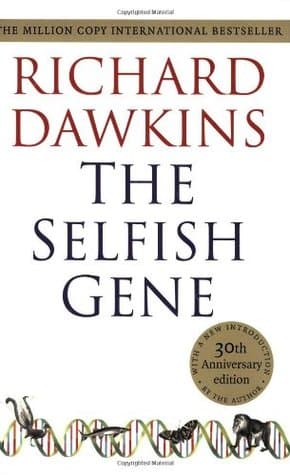
- The Selfish Gene
Richard Dawkins
4.1 (140k) average on GoodreadsPsychologyDiscusses the evolutionary underpinnings of human behavior and existence, though with a primary focus on genetics.
- The Perks of Being a Wallflower
Stephen Chbosky
4.2 (1.3M) average on GoodreadsPsychologyThrough letters, a shy high school freshman learns to navigate first love, trauma, and self-discovery, stepping off the sidelines and into life.
- Eleanor Oliphant Is Completely Fine
Gail Honeyman
4.3 (708k) average on GoodreadsLiterary FictionA lonely woman's structured life changes when an IT guy and an elderly man help her learn to open her heart.
- One Flew Over the Cuckoo's Nest
Ken Kesey
4.2 (631k) average on GoodreadsPsychologyIn a mind-bending asylum, the boisterous Randle McMurphy wages a defiant war against the tyrannical Nurse Ratched, inspiring his fellow inmates, including the seemingly catatonic Chief Bromden, to reclaim their lost humanity.
- The Bell Jar
Sylvia Plath
4.0 (591k) average on GoodreadsPsychologyIn the suffocating grip of 1950s expectations, a brilliant young woman's descent into mental illness is painted with such vivid, internal clarity that her 'insanity' feels terrifyingly rational and inevitable.





Enjoyed the summary?
A summary gives you the shape of the book. The book itself has the detail, the examples and the voice.
Find The Meaning of Human Existence on AmazonAs an Amazon Associate, BookBrief earns from qualifying purchases. How we're funded