
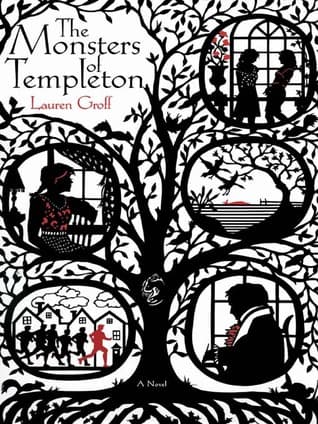
Synopsis
Covers the whole plot, including the ending.
- Difficulty
- Medium
- Pacing
- Moderate
- Mood
- Introspective, mysterious, historical, slightly whimsical, family-focused
The Monsters of Templeton Plot Summary
Covers the whole plot, including the ending.
Return to Templeton and a Monster's Demise
Willie Upton, a graduate student, leaves Stanford after a bad affair with her married archaeology professor. She goes back to her childhood home in Templeton, New York, where her religious mother, Vi, still lives. When Willie arrives, the fifty-foot body of a monster appears in Lake Glimmerglass. This event makes the quiet town chaotic, drawing media and scientists. Willie is dealing with her personal shame and the spectacle of a dead cryptid, which seems to reflect the secrets she is about to find about her family and the town.
The Lie About Her Father
Soon after Willie returns, her mother, Vi, tells her a shocking truth: the story Willie always heard about her father is false. Vi had said Willie's father was an unnamed man from a California commune, a story that let her avoid talking about him. Now, Vi admits Willie's real father was from Templeton. This news shatters Willie's understanding of herself, pushing her to uncover the truth. The revelation is especially unsettling given Willie's recent professional failure, making her search for personal truth even more urgent.
The First Clue: A Name and a Grave
With her mother's reluctant confession, Willie starts her investigation. Her first clue is a cryptic remark from Vi, mentioning 'Samuel.' Willie uses her research skills to look through local historical records, genealogies, and the Templeton family's archives, kept in the town's historical society and their old mansion. She soon finds a gravestone with the name Samuel and a birth date matching hers, confirming his existence and connection to the town. This discovery pulls Willie deeper into the interconnected histories of Templeton's founding families.
Digging into the Past: The Templetons
Willie's research quickly leads her to the Templeton family, the town's founders, whose history is tied to her own. She examines historical documents: letters, diaries, newspaper clippings, and official records. These sources show generations of Templetons, their goals, quirks, scandals, and contributions to the town. Through these, Willie meets figures like Marmaduke Templeton, the stern patriarch; his daughter, Elizabeth, a talented but troubled artist; and other descendants whose lives feature passion, betrayal, and hidden truths. Each find adds to the mystery of her parentage.
Elizabeth Templeton's Artistic Torment
Among her ancestors, Willie is drawn to Elizabeth Templeton, a talented 19th-century artist. Elizabeth's letters and journals show a passionate, often tormented, life. She struggled against her era's social norms, wanted artistic freedom, and experienced personal losses and unrequited love. Her writings describe a secret affair with an enslaved man, unconventional art, and eventual mental decline. Willie feels a connection with Elizabeth, seeing echoes of her own struggles with expectations and desires in her ancestor's story.
The Cooper Connection and a Shared Ancestor
As Willie continues her search, she learns that her biological father, Samuel, is not directly a Templeton by name, but a descendant of the Cooper family. The Coopers were also early Templeton settlers and often married Templetons. This adds another layer to her lineage, linking her to two of the town's founding families. She learns about the relationships, rivalries, and alliances between these families over generations, realizing her own existence is the result of centuries of intertwined destinies, secrets, and sometimes forbidden loves that shaped Templeton.
The Mystery of the Monster and Town Lore
While investigating her personal history, Willie also looks into the history and stories about the Lake Glimmerglass monster, a local legend for centuries. She reads historical accounts, newspaper articles, and personal stories about sightings and theories. The monster, she learns, has appeared often in the town's history, usually during times of big change. Willie starts to see the monster as a symbol of the town's hidden depths, its unresolved past, and the mysterious forces that shaped its people, reflecting her own family's 'monsters' of secrets.
Vi's Reluctance and the Weight of the Past
Throughout Willie's investigation, her mother, Vi, remains puzzling and often frustrating. Vi started the truth-seeking by revealing the lie about Willie's father, but she often resists giving more details, offering only hints or evasions. Her reluctance comes from wanting to protect Willie, but also from her own complicated relationship with the Templeton family's past and painful memories. Vi's Christian faith and her efforts to distance herself from her ancestors' 'sins' also contribute to her resistance, creating tension between mother and daughter as Willie seeks answers.
Uncovering Samuel's Story
Through historical records, stories from older town residents, and eventually, more direct revelations from Vi, Willie pieces together her father Samuel's story. She learns about his character, his situation, and his relationship with Vi. Samuel was a complex figure, connected to Templeton but also carrying his own burdens. Their relationship was one of forbidden love and hard choices, set against the changing social landscape of the 1960s and the lasting influence of the Templeton family's expectations and secrets.
The Full Truth Revealed
As Willie gathers the last pieces of her family puzzle, the full truth of her parentage and its connection to the Templeton family becomes clear. She learns Samuel's full identity and his lineage within the Cooper/Templeton families, as well as the circumstances of his relationship with Vi and why it was kept secret. This revelation explains the long-held family secrets, Vi's evasiveness, and places Willie firmly within Templeton's sprawling, often scandalous, history. The truth is complex, full of human flaws, passions, and the enduring power of family bonds and social pressures.
Reconciling Past and Present
With the truth of her parentage uncovered, Willie begins to reconcile her past and present. She deals with the implications of her lineage, understanding she is a product of centuries of Templeton history, both good and bad. This understanding shifts her self-perception, moving her from feeling rootless and disgraced to having a new sense of belonging and identity. She accepts her family's complexities, seeing patterns and echoes of their lives in her own. The journey, though sometimes painful, leads her to a more complete understanding of herself and her place in the world.
The Monster's Legacy and Willie's Future
As the initial excitement about the Lake Glimmerglass monster dies down, its end becomes another part of the town's legends. Willie, having navigated her personal and family mysteries, looks to her future. She has found the truth about her father and has come to terms with her recent past and professional setbacks. Exploring her ancestry has given her a deeper understanding of human nature and the lasting power of stories. She carries her ancestors' legacy, both known and forgotten, realizing that Templeton's 'monsters' are as much about human secrets and desires as they are about mythical creatures.
Principal Figures
Willie Upton
Protagonist
A disgraced archaeology student searching for her true lineage.
Willie is a sharp, intelligent, and somewhat cynical graduate student in archaeology who returns to Templeton in disgrace after an affair with her married professor. She is driven by an academic curiosity that serves her well in her personal quest to uncover the truth about her father, a quest initiated by her mother's confession. Willie is initially rootless and feels like an outsider, but her journey into her family's history ultimately anchors her. She possesses a keen eye for detail and a persistent spirit, using her professional skills to navigate the labyrinthine records of her ancestors. She is both vulnerable and resilient, capable of deep self-reflection and growth.
Relationships: Vi Upton (daughter-mother); Samuel (daughter-father); Marmaduke Templeton (descendant-ancestor); Elizabeth Templeton (descendant-ancestor)
Vi Upton
Supporting
Willie's eccentric, born-again Baptist mother, holding onto family secrets.
Vi is Willie's mother, a former hippie who has embraced born-again Christianity. She is a complex character: loving but often evasive, deeply religious yet burdened by a past she struggles to reconcile with her present faith. Vi is the catalyst for Willie's quest, revealing the lie about her father, but then becomes a source of frustration due to her reluctance to share the full truth. She is fiercely independent and protective, deeply rooted in Templeton despite her attempts to transcend its influence. Her struggle with faith and family history represents a generational conflict and the enduring power of secrets.
Relationships: Willie Upton (mother-daughter); Samuel (lover/partner)
Samuel
Supporting
Willie's biological father, whose identity is a central mystery.
Samuel is Willie's biological father, a man from Templeton whose identity and story become the central mystery Willie seeks to solve. Though he is deceased in the present timeline, his presence is felt through the historical records and the memories of those who knew him. He represents the living embodiment of the Templeton family's intertwined histories and secrets. His relationship with Vi and the circumstances surrounding Willie's birth are crucial to understanding the novel's themes of lineage, forbidden love, and the impact of the past on the present. He is a key figure whose life provides the ultimate answer to Willie's search for identity.
Relationships: Willie Upton (father-daughter); Vi Upton (lover/partner); Cooper Family (descendant)
Marmaduke Templeton
Supporting
The stern, puritanical patriarch and founder of Templeton.
Marmaduke Templeton is the formidable and puritanical patriarch who founded Templeton, New York, in the 18th century. His strict moral code and ambition shaped the town and its early inhabitants. He is a symbol of the rigid societal expectations and religious fervor that permeated early American history. His journals and letters, discovered by Willie, reveal a complex man driven by both piety and a desire for control and legacy. His actions and beliefs cast a long shadow over generations of his descendants, influencing their choices and often creating the very secrets Willie is trying to unravel. He embodies the foundational 'monster' of patriarchal authority.
Relationships: Elizabeth Templeton (father-daughter); Willie Upton (ancestor-descendant)
Elizabeth Templeton
Supporting
A passionate 19th-century artist and Willie's ancestor, whose life mirrors Willie's struggles.
Elizabeth Templeton is a gifted and rebellious artist from the 19th century, a direct ancestor of Willie. Her letters and diaries provide a significant portion of the historical narrative, revealing her struggles against societal conventions, her artistic aspirations, and her secret, tragic love affair with an enslaved man. Elizabeth's story is one of suppressed passion, creativity, and eventual mental decline, offering a poignant parallel to Willie's own challenges with love and societal expectations. Willie feels a strong kinship with Elizabeth, seeing echoes of her own life in her ancestor's defiance and heartbreak, making her a crucial link in understanding the family's emotional legacy.
Relationships: Marmaduke Templeton (daughter-father); Willie Upton (ancestor-descendant)
The Lake Glimmerglass Monster
Antagonist/Symbolic
A mythical creature whose sudden death sparks the novel's events and symbolizes hidden truths.
The monster of Lake Glimmerglass is a cryptid, a legendary creature akin to Nessie, whose fifty-foot corpse surfaces at the novel's opening. While not a character in the traditional sense, it acts as a significant symbolic presence and plot catalyst. Its sudden appearance and death draw media attention to Templeton and symbolically mirror the surfacing of long-buried family secrets. The monster represents the mysterious, the unknown, and the 'monstrous' truths hidden beneath the surface of the seemingly placid town and its founding families. It is a physical manifestation of the unresolved past and the 'monsters' within human nature.
Professor George
Supporting
Willie's married archaeology professor and former lover.
Professor George is Willie's former archaeology professor and the married man with whom she had a disastrous affair, leading to her academic disgrace and return to Templeton. Although he appears only briefly in Willie's memories and as a source of her shame, his actions significantly impact the novel's initial premise. He represents the immediate catalyst for Willie's flight home and her subsequent quest for identity. His role highlights themes of moral ambiguity, professional ethics, and the consequences of personal choices, setting the stage for Willie's deeper introspection.
Relationships: Willie Upton (former lover/professor-student)
Themes & Insights
The Weight of History and Ancestry
The novel explores how the past, especially family history, shapes individual lives and communities. Willie's journey directly confronts centuries of her ancestors' choices, secrets, and legacies. Templeton itself is a living record of its founders' influence, with every building and legend tied to the past. The book shows that history is not just facts but a force that continues to influence the present, often revealing patterns of behavior, love, and loss that repeat across generations. Willie's acceptance of her lineage is an acceptance of her family's story.
“The past is not dead. It's not even past.”
Identity and Belonging
At its heart, 'The Monsters of Templeton' is a search for identity. Willie, feeling rootless and disgraced, tries to find out who her father was, which helps her understand who she is. Her search for a biological father expands into a deeper understanding of her ancestral lineage, connecting her to generations of Templetons and Coopers. This new knowledge gives her a sense of belonging to a place and history she felt detached from. The novel suggests that true identity is not just personal but deeply linked to one's heritage and the stories that came before them, offering an anchor in a chaotic world.
“Who was I if not the daughter of a commune phantom? Who was I if I was the daughter of someone from this town, this very specific, historical, monstrous town?”
Secrets and Lies
Secrets and lies drive the story, both in the present and in historical accounts. Vi's initial lie about Willie's father starts the plot, but as Willie investigates, she finds many hidden truths within the Templeton family: forbidden loves, illegitimate children, social wrongs, and suppressed desires. These secrets, held for generations, shaped destinies and created complex relationships. The novel shows how secrets can distort personal stories and create 'monsters' within families, but also the freedom that comes from revealing them.
“The secrets, I thought, were like the lake itself: deep, dark, and holding something monstrous below the surface.”
The Nature of Monsters (Literal and Figurative)
The 'monsters' in the title work on several levels. Literally, there is the fifty-foot body of the Lake Glimmerglass monster, a cryptid that fascinates the public. Figuratively, the 'monsters' are the hidden, often uncomfortable truths in the Templeton family's history: moral failings, cruelties, social injustices (like slavery), and forbidden passions. These human 'monsters' are more impactful than the mythical creature, showing the darker parts of human nature and society. The novel suggests that true monstrosity often lies not in mythical beasts but in the secrets and moral compromises people make.
“The real monsters, I was learning, were not in the lake, but in the pages of these old books, in the lives of my ancestors.”
Love, Loss, and Forbidden Relationships
Love and loss are central to both Willie's current story and her ancestors' historical narratives. The novel explores various kinds of love: romantic, familial, and obsessive. Willie's own bad affair sets the stage for her return, while historical documents reveal many passionate, often forbidden, relationships. Elizabeth Templeton's tragic love for an enslaved man, and the secret love between Vi and Samuel, highlight the social barriers and personal sacrifices made for love. The repeating theme is that love, in its many forms, is a powerful and lasting force, often leading to both joy and devastating loss, shaping destinies across generations.
“Love, like history, does not die. It only changes its shape.”
Plot Devices & Literary Techniques
Epistolary Narrative
The use of letters, journals, and other documents to tell the historical story.
A significant portion of the historical narrative is conveyed through an epistolary style, utilizing letters, journal entries, newspaper clippings, editorials, and other archival documents. This device allows the reader to directly access the voices and perspectives of Willie's ancestors, offering an intimate and multifaceted view of their lives and the events that shaped them. It mirrors Willie's own archaeological process of sifting through primary sources, immersing the reader in her research and lending authenticity to her discoveries. This method also creates a sense of immediacy and allows for multiple, sometimes conflicting, interpretations of past events.
Parallel Narratives
Interweaving Willie's contemporary quest with the historical accounts of her ancestors.
The novel employs parallel narratives, alternating between Willie's present-day investigation into her parentage and the unfolding historical stories of her Templeton ancestors. These two timelines are not merely sequential but often echo each other thematically and structurally. Willie's personal struggles and discoveries often find resonance in the lives of her ancestors, creating a rich tapestry of interconnected experiences. This device highlights the cyclical nature of family patterns, the enduring influence of the past on the present, and allows for a deeper exploration of themes like identity, secrets, and love across different eras.
The Monster as Symbol
The Lake Glimmerglass monster acts as a catalyst and a metaphor for hidden truths.
The fifty-foot corpse of the Lake Glimmerglass monster serves as a powerful symbol and a key plot device. Its sudden appearance literally brings the town into the spotlight, mirroring the exposure of the Templeton family's long-buried secrets. Symbolically, the monster represents the 'monstrous' truths lurking beneath the surface of respectability – the hidden scandals, moral failings, and dark histories that the town and family have tried to conceal. Its existence, and then its death, acts as a catalyst for Willie's deeper investigation, urging her to confront the unknown and the uncomfortable aspects of her own lineage and the town's past.
Archaeological Metaphor
Willie's professional skills are applied to her personal quest for her family's past.
Given Willie's background as an archaeology student, the process of uncovering her family's history is framed as a metaphorical archaeological dig. She sifts through layers of historical documents, piecing together fragments of information like an archaeologist reconstructs a site from artifacts. This device provides a structural framework for her investigation, emphasizing the meticulous nature of her search and the interpretive skills required. It also highlights the idea that personal and familial histories, much like ancient civilizations, are complex, layered, and require careful excavation to truly understand, revealing how the past informs the present.
Quiz
10 questions on the plot and the characters. Each answer comes with a short explanation.
Question 1
What is the name of the town where the story is primarily set?
- Templeton
- Lake Glimmerglass
- New York
- Upton
Show answer
A. Templeton The story is primarily set in Templeton, New York, which is the ancestral home of Willie Upton.
Question 2
What event triggers the main plot of the novel?
- Willie Upton's return to Templeton
- The surfacing of a monster's corpse in Lake Glimmerglass
- Willie discovering her father's true identity
- Her mother revealing a lie about her father
Show answer
B. The surfacing of a monster's corpse in Lake Glimmerglass The novel begins with the dramatic event of a monster's corpse surfacing in Lake Glimmerglass, which coincides with Willie's return and changes the town.
Question 3
What is Willie Upton's profession or field of study?
- History
- Archeology
- Journalism
- Mythology
Show answer
B. Archeology Willie Upton uses her archaeological skills to investigate the secrets of her family and the town.
Question 4
Why does Willie Upton return to Templeton?
- To search for her father
- To escape a disastrous affair with her professor
- To uncover family secrets
- To investigate the monster in the lake
Show answer
B. To escape a disastrous affair with her professor Willie returns to her ancestral home in Templeton to hide in the wake of a disastrous affair with her married archeology professor.
Question 5
What lie does Willie discover about her father?
- He was not her biological father
- He was a famous monster hunter
- He was not from a free-love commune as she was told
- He died before she was born
Show answer
C. He was not from a free-love commune as she was told Willie learns that the story her mother told her about her father being from a free-love commune was a lie; he was someone else entirely from Templeton.
Question 6
How does the novel reveal the town's and family's secrets?
- Through interviews with town elders
- Through Willie's direct observations
- Through letters, editorials, and journal entries
- Through supernatural encounters with ghosts
Show answer
C. Through letters, editorials, and journal entries The secrets are revealed through various historical documents like letters, editorials, and journal entries, which bring the past to life.
Question 7
What is the genre blend of 'The Monsters of Templeton'?
- Science Fiction, Romance, Thriller
- Literary Fiction, Fantasy, Historical Fiction, Mystery
- Horror, Gothic, Young Adult
- Contemporary, Romance, Suspense
Show answer
B. Literary Fiction, Fantasy, Historical Fiction, Mystery The novel is described as a blend of literary fiction, fantasy, historical fiction, and mystery.
Question 8
Who is Vi in the novel?
- Willie's archeology professor
- Willie's deceased grandmother
- Willie's mother
- A town historian
Show answer
C. Willie's mother Vi is Willie Upton's mother, who still lives in the ancestral home in Templeton.
Question 9
What does the surfacing of the monster's corpse symbolize or cause in the town?
- The town's eventual destruction
- A shift in the town's perception of its own history
- A change in the fabric of the quiet, picture-perfect town
- The immediate start of Willie's investigation
Show answer
C. A change in the fabric of the quiet, picture-perfect town The monster's death is described as changing the fabric of the quiet, picture-perfect town, initiating the unraveling of its secrets.
Question 10
What is the core theme of 'The Monsters of Templeton' as suggested by the synopsis?
- The dangers of academic affairs
- The supernatural power of monsters
- How a town holds the secrets of a family
- The difficulty of finding one's father
Show answer
C. How a town holds the secrets of a family The synopsis explicitly states that the novel is at its core 'a tale of how one town holds the secrets of a family.'
The Monsters of Templeton FAQ
What is The Monsters of Templeton about?
The Monsters of Templeton is a literary novel that blends contemporary fiction with elements of fantasy, historical fiction, and mystery. It follows Willie Upton as she returns to her ancestral home in Templeton, New York, seeking refuge after a personal scandal, only to uncover deep family secrets and a town's hidden history.
Who is the main character in The Monsters of Templeton?
The main character is Willie Upton, an archaeologist who returns to her family's hometown of Templeton after a disastrous affair. She uses her skills to investigate her own family's past and the mysteries surrounding her lineage.
What is the significance of the monster in the book?
The surfacing of a 'monster' in Lake Glimmerglass acts as a catalyst for change in Templeton. It coincides with Willie's return and seems to awaken the town's buried secrets, blurring the lines between the past and the present.
What genres does The Monsters of Templeton fall into?
The novel is a rich blend of literary fiction, fantasy, historical fiction, and mystery. It incorporates elements of ghost stories and family sagas within its narrative.
How does the book explore family secrets?
Willie's investigation into her father's identity unearths generations of family secrets in Templeton. The narrative uses historical documents like letters and journals to reveal these hidden truths and how they connect to the present.
Is The Monsters of Templeton a supernatural story?
While the title and the appearance of a monster suggest supernatural elements, the book is more grounded in the uncovering of historical truths and family mysteries. The 'monsters' can be interpreted metaphorically as the hidden darkness within the town and its inhabitants.
What is the setting of The Monsters of Templeton?
The primary setting is Templeton, New York, a fictional town with a long family history for Willie. The narrative also spans two centuries, incorporating historical settings within the town's past.
What is the role of historical documents in the novel?
Letters, editorials, and journal entries from past generations are crucial to uncovering the truth in The Monsters of Templeton. These historical artifacts allow the voices of the dead to speak, revealing the town's and the family's hidden stories.
How does The Monsters of Templeton compare to other historical mysteries?
This novel offers a unique blend of genres, weaving a personal quest for identity with a larger historical mystery. Unlike traditional historical mysteries, it incorporates fantastical elements and a strong focus on the psychological and familial aspects of its characters.
What does Willie Upton learn about her father?
Willie discovers that the story her mother told her about her father being from a free-love commune was a lie. Her father was actually someone from Templeton, and her investigation into this revelation uncovers deeper family secrets.
About the author

Lauren Groff is an American author known for her fiction, including the novels "Fates and Furies" and "The Monsters of Templeton." Her work often explores themes of relationships and the complexities of human experience. Groff has received various accolades for her writing, including being a finalist for the National Book Award.
Similar books
- Middlesex
Jeffrey Eugenides
4.0 (581k) average on GoodreadsLiterary FictionBoth "The Monsters of Templeton" and "Middlesex" are sprawling, multi-generational sagas that explore the impact of inherited traits and historical events on an individual's identity. Eugenides' novel traces the journey of Cal, an intersex individual, back through his Greek immigrant family's history, revealing the genetic and cultural threads that shaped him. Groff's Willie also delves into her lineage, albeit in a more mythic and local American context, seeking to understand her connection to the town and its monster. Both authors employ a rich, often humorous, and deeply empathetic narrative voice, and both are adept at creating a vivid sense of place and time across different eras. While Eugenides' focus is on a specific genetic condition and the immigrant experience, Groff's broader scope encompasses American foundational myths, religious fervor, and the persistent power of local legends.
- The Old Man and the Sea
Ernest Hemingway
3.8 (831k) average on GoodreadsLiterary FictionA Cuban fisherman's long struggle with a giant marlin becomes a story of endurance and dignity, now retold for young adults with illustrations, phonetic guides, and writing prompts in Traditional Chinese.
- One Hundred Years of Solitude
Gabriel García Márquez
4.1 (753k) average on GoodreadsLiterary FictionThrough the multi-generational story of the Buendía family, a mythical town deals with the repeating patterns of time, love, and solitude, as the extraordinary mixes with the ordinary.
- The Goldfinch
Donna Tartt
3.9 (720k) average on GoodreadsLiterary FictionHaunted by a tragic explosion and clutching a stolen Dutch masterpiece, a young orphan navigates the opulent drawing rooms of New York and the gritty underbelly of the art world, desperately seeking connection and redemption amidst a life spiraling into crime and obsession.
- Little Fires Everywhere
Celeste Ng
4.1 (713k) average on GoodreadsLiterary FictionIn Shaker Heights, an artist and her daughter move in, and their free-spirited lives clash with a rule-bound matriarch, revealing hidden conflicts beneath a perfect surface.
- Eleanor Oliphant Is Completely Fine
Gail Honeyman
4.3 (708k) average on GoodreadsLiterary FictionA lonely woman's structured life changes when an IT guy and an elderly man help her learn to open her heart.





Enjoyed the summary?
A summary gives you the shape of the book. The book itself has the detail, the examples and the voice.
Find The Monsters of Templeton on AmazonAs an Amazon Associate, BookBrief earns from qualifying purchases. How we're funded