
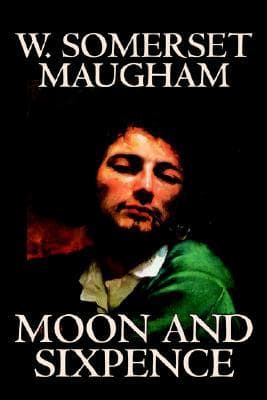
Synopsis
Covers the whole plot, including the ending.
- Difficulty
- Medium
- Pacing
- Moderate
- Mood
- Philosophical, Dark, Reflective, Unsettling
- Read it if
- You are fascinated by the intersection of genius, morality, and the sacrifices demanded by art, especially if you enjoy character studies of complex, amoral figures.
- Skip it if
- You prefer characters with clear moral compasses or narratives that offer redemptive arcs.
The Moon and Sixpence Plot Summary
Covers the whole plot, including the ending.
The Narrator's Introduction to Strickland
The unnamed narrator, a young writer in London, first meets Charles Strickland. Strickland is a seemingly unremarkable, middle-aged stockbroker, married with two children, living a comfortable, conventional life. The narrator often visits Mrs. Strickland's salon, where she hosts artistic circles. Strickland is usually silent and seems indifferent to the intellectual discussions. The narrator observes him as a man of habit, with nothing in his behavior hinting at the extraordinary path he will soon take, making his later change surprising to those who knew him.
Strickland Abandons His Family
One day, Mrs. Strickland tells the narrator that Charles has left her, supposedly for another woman, and gone to Paris. Devastated, Mrs. Strickland asks the narrator to go to Paris and persuade Charles to return, believing he is infatuated and will come to his senses. The narrator, feeling a sense of duty, agrees. This sudden departure shatters the Strickland family's comfortable lives and creates scandal in their social circle, leaving Mrs. Strickland to face financial hardship and social ostracism.
The Truth Revealed in Paris
The narrator finds Strickland living in squalid conditions in a cheap Paris hotel. When confronted, Strickland reveals the truth: there is no other woman. He left his family solely to pursue his overwhelming desire to paint, a passion he had suppressed his entire life. He confesses that he finds his family and former life meaningless and a hindrance to his art. Strickland shows no remorse for the pain he caused, displaying a brutal honesty and indifference that disturbs the narrator. He is entirely consumed by his need to create art, even if it means destroying everything else.
Strickland's Artistic Dedication
In Paris, Strickland lives in extreme poverty, often hungry and facing physical hardship. He is dedicated to his art, painting constantly with intense focus. He shows no interest in social conventions, material comforts, or others' opinions. He attends art classes but ignores academic instruction, preferring his own path. His work, which the narrator finds crude and unsettling at this stage, reflects a raw, untamed vision. He prioritizes his artistic expression above all else, showing a primal commitment to his creative impulse, alienating anyone who cannot understand his single-mindedness.
Dirk Stroeve's Benevolence
Dirk Stroeve, a Dutch painter in Paris and an acquaintance of the narrator, is known for his kindness and mediocre talent. He finds Strickland gravely ill with tuberculosis and near death in his freezing room. Despite his wife Blanche's strong objections, Stroeve brings Strickland into his home, providing warmth, food, and medical care. Stroeve, despite his own artistic limits, sees greatness in Strickland's work and feels compassion for the suffering artist, even though Strickland treats him with contempt.
Blanche Stroeve's Infatuation
While recovering in the Stroeves' home, Blanche Stroeve, initially repulsed by Strickland, falls under his strange, powerful influence. She becomes infatuated with him, despite his cruel and indifferent manner. Strickland treats her with disdain and uses her for his physical needs, showing no affection. This develops into a passionate, destructive affair, as Blanche sacrifices her marriage and reputation for a man who cares nothing for her beyond his immediate desires. Her infatuation appears both pathetic and inevitable, given Strickland's overwhelming presence.
The Tragic Aftermath for Blanche
After Strickland recovers and loses interest in Blanche, he callously abandons her, leaving her heartbroken. He returns to his solitary life and painting, unconcerned with the consequences. Blanche, devastated by his rejection and the ruin of her life with Dirk, commits suicide. Her death shows Strickland's destructive power and his lack of empathy, highlighting the human cost of his single-minded art. Dirk Stroeve is left broken, mourning his wife and friend.
Strickland's Departure for Tahiti
Following the scandal and tragedy of Blanche's death, Strickland leaves Paris and eventually Europe. He sails for Tahiti, driven by an urge to find a new environment and artistic inspiration. He feels dissatisfaction with European society and its limits, seeking a more primitive existence where he can fully express his creative spirit. This journey marks a turning point, as he sheds the last parts of his former life and embraces a world more aligned with his untamed artistic vision, foreshadowing his most important work.
Life in Tahiti
In Tahiti, Strickland finds a simple, free life that influences his art. He lives among the native people, adopting their customs. He marries a young Tahitian woman named Ata, who loves him and provides a stable, undemanding home life. He continues to paint with intense dedication, finding inspiration in the vibrant colors, exotic landscapes, and sensuality of the island. This period allows him to fully immerse himself in his art, free from European judgments, leading to prolific and revolutionary creation.
The Final Illness and Masterpiece
Years later, the narrator learns that Strickland has contracted leprosy, which gradually blinds him. Despite his deteriorating health and the horror of his disease, Strickland continues to paint with superhuman drive. In his final years, blind and suffering, he creates his greatest work: murals covering the entire interior of his hut, depicting the Tahitian landscape and people with unprecedented power. This work, unseen by the outside world, becomes the culmination of his artistic journey, showing his genius in the face of immense suffering.
The Destruction of the Masterpiece
As Strickland dies from leprosy, he makes Ata promise to burn his hut, with all his murals, immediately after his death. Ata, despite her love and awe for his work, carries out his final wish. The narrator learns this from Dr. Coutras, who attended Strickland in his final days. This act of destruction symbolizes Strickland's indifference to recognition, emphasizing that his art was solely for himself and his inner vision, not for the world's admiration. The masterpiece is lost to humanity, existing only in memory.
Reflections on Genius and Morality
The narrator, having pieced together Strickland's life, reflects on artistic genius and conventional morality. He considers the paradox of Strickland's cruelty and his artistic vision. The narrator concludes that Strickland was driven by an irresistible force, and that conventional societal rules did not apply to him. His life serves as a meditation on the sacrifices true art demands and the truth that genius can exist independently of, and even despite, personal depravity. The narrator ponders whether the world is better for having had such a genius, despite the pain he inflicted.
Principal Figures
Charles Strickland
Protagonist
A middle-aged stockbroker who abandons his conventional life to become a painter.
Strickland is a man of immense artistic genius, but also one of profound selfishness, cruelty, and indifference to others. He is driven by an overwhelming, almost primal, need to create art, suppressing this desire for decades before it erupts and consumes him entirely. He rejects societal norms, material comforts, and personal relationships, viewing them as hindrances to his artistic pursuit. He possesses a brutal honesty and a complete lack of empathy, treating those who love or help him with contempt. His art, initially crude, evolves into a powerful, revolutionary expression of his inner world, particularly in Tahiti.
Relationships: Mrs. Strickland (Wife, abandoned and financially ruined); Narrator (Acquaintance, observer, and occasional helper); Dirk Stroeve (Benevolent friend, whom Strickland exploits and betrays); Blanche Stroeve (Lover, whom Strickland uses and abandons, leading to her suicide); Ata (Devoted Tahitian wife, who cares for him in his final illness)
The Narrator
Supporting
An aspiring writer who observes and chronicles Strickland's life.
The unnamed narrator serves as the primary lens through which the reader experiences Strickland's story. He is a thoughtful, somewhat conventional, and morally sensitive young man who acts as an intermediary between Strickland's unconventional world and the reader's understanding. Initially, he is perplexed and appalled by Strickland's actions, but as he gathers more information, he develops a complex, albeit often uncomfortable, admiration for Strickland's artistic genius. He represents the voice of societal judgment and human empathy, struggling to reconcile these with the raw power of artistic creation.
Relationships: Charles Strickland (Subject of his inquiry and fascination); Mrs. Strickland (Acquaintance, initially sympathetic to her plight); Dirk Stroeve (Friend, whose kindness he admires)
Mrs. Strickland
Supporting
Strickland's conventional and socially ambitious wife, whom he abandons.
Mrs. Strickland is a woman who embodies conventional middle-class respectability and social ambition. She cultivates a literary salon and prides herself on her connections to artists and writers, though her appreciation for art is largely superficial. She is deeply humiliated and financially devastated by Charles's abandonment, initially believing he has run off with another woman. She represents the societal norms and expectations that Strickland so vehemently rejects, and her suffering highlights the human cost of his artistic pursuit. Despite her initial pain, she eventually recovers and rebuilds her social standing.
Relationships: Charles Strickland (Husband, who abandons her); Narrator (Acquaintance, whom she tasks with finding Charles)
Dirk Stroeve
Supporting
A kind, mediocre Dutch painter living in Paris, who befriends Strickland.
Dirk Stroeve is characterized by his boundless kindness, generosity, and naive optimism. He is a painter of limited talent, but possesses a genuine love for art and a profound capacity for empathy. Despite Strickland's constant insults and contempt, Stroeve selflessly takes him in when he is gravely ill, saving his life. His compassion and lack of self-preservation make him a tragic figure, as his kindness is repaid with betrayal and the destruction of his family. He serves as a foil to Strickland, representing conventional human decency and artistic mediocrity against Strickland's monstrous genius.
Relationships: Charles Strickland (Benevolent friend, whom Strickland betrays and abuses); Blanche Stroeve (Devoted husband, whose wife is seduced by Strickland); Narrator (Friend, who admires his kindness)
Blanche Stroeve
Supporting
Dirk Stroeve's wife, who falls tragically in love with Strickland.
Blanche Stroeve is initially presented as a somewhat cold and reserved woman, who strongly objects to her husband bringing the ill Strickland into their home. However, she gradually succumbs to Strickland's strange, raw power and becomes deeply infatuated with him. Her love for Strickland is passionate and self-destructive, leading her to betray her kind husband and sacrifice her own life and reputation. She represents the destructive allure of unconventional genius and the vulnerability of human emotion in the face of overwhelming, indifferent passion. Her tragic fate underscores the profound human cost of Strickland's artistic path.
Relationships: Dirk Stroeve (Wife, whom she betrays); Charles Strickland (Lover, who callously abandons her)
Ata
Supporting
Strickland's devoted Tahitian wife.
Ata is a young, beautiful, and simple Tahitian woman who marries Strickland in Tahiti. She loves him unconditionally and provides him with a stable, undemanding domestic life, without questioning his artistic obsessions or his often-gruff demeanor. She represents a connection to a more primitive, uncorrupted way of life that Strickland seeks, and her devotion allows him the freedom and peace to create his greatest works. Her ultimate act of love and obedience is to fulfill his dying wish to burn his final masterpiece, demonstrating her complete acceptance of his unique nature and his art's ultimate purpose.
Relationships: Charles Strickland (Devoted wife)
Dr. Coutras
Supporting
A French doctor in Tahiti who attends to Strickland in his final illness.
Dr. Coutras is a kind and cultured French doctor living in Tahiti. He attends to Strickland during his final illness, leprosy, and provides the narrator with crucial details about Strickland's last years and the creation of his ultimate masterpiece. He is one of the few individuals who recognizes the profound genius of Strickland's work, even though he is also aware of his difficult personality. His account helps to corroborate the narrator's understanding of Strickland's final, most powerful artistic period and the tragic destruction of his greatest work, providing an external, credible perspective.
Relationships: Charles Strickland (Attending physician and admirer of his art); Narrator (Informant about Strickland's final years)
Themes & Insights
The Nature of Artistic Genius
The novel explores the idea that true artistic genius is an overwhelming force that goes beyond conventional morality and societal expectations. Strickland's single-minded devotion to his art, his willingness to sacrifice everything for it, and his indifference to the suffering he causes, all point to art as an uncontrollable force. His journey from a conventional life to a primitive existence in Tahiti suggests that genius often needs a break from civilization to fully appear. The destruction of his final masterpiece also implies that true art is created for its own sake, not for public acclaim.
“I can't help it. I am just a channel, and these things flow through me.”
The Conflict Between Art and Conventional Life
A central theme is the conflict between artistic creation and the expectations of a conventional, moral life. Strickland's abandonment of his family, his rejection of social norms, and his embrace of poverty are direct results of his choice to prioritize art. The suffering of Mrs. Strickland, Dirk, and Blanche highlights the destructive impact of this choice on those who try to connect with him or conventional values. The novel suggests that artistic vision often requires sacrificing worldly comfort and human connection, and that these two realms cannot coexist.
“The artist is a man who is not quite at home in this world.”
The Cost of Genius
The novel details the human cost of transcendent artistic genius. Strickland's pursuit of his vision leaves many lives ruined: his wife and children are abandoned, Dirk Stroeve's kindness is exploited, and Blanche Stroeve is driven to suicide. Even Strickland himself suffers greatly, enduring poverty, illness, and social ostracism. The destruction of his greatest masterpiece, burned at his command, further emphasizes the destructive nature of his creative fire. The narrative forces the reader to weigh the value of such art against the suffering it causes.
“It is not a pretty story, but it is the story of a genius.”
The Search for Meaning and Freedom
Strickland's journey is a quest for meaning and freedom, a rejection of European society's superficiality. He constantly seeks an environment where he can be authentic in his artistic expression. His move to Paris, then his escape to the raw beauty of Tahiti, symbolizes this search for a place where his inner force can flourish without compromise. In Tahiti, he finds a primitive existence and a connection to nature that allows him to create his most important work, suggesting that true liberation for an artist may lie beyond civilization.
“I must paint. I can't help myself. I want to paint the sun and the moon and the stars.”
Plot Devices & Literary Techniques
First-Person Narrator (Observer)
An unnamed writer who collects accounts and offers reflections on Strickland's life.
The use of an unnamed, somewhat detached first-person narrator allows Maugham to present Strickland's story with a degree of objectivity, while also providing moral commentary and personal reflections. The narrator acts as an investigative journalist, piecing together Strickland's life from various witnesses, which creates a sense of realism and allows for multiple perspectives on a complex character. This device also ensures that Strickland's most extreme acts and motivations are filtered through a more conventional moral lens, making his genius and cruelty all the more striking and challenging to the reader's judgment.
Foil Characters
Characters whose traits contrast sharply with Strickland's to highlight his unique nature.
Maugham uses several characters as foils to accentuate Strickland's unique qualities. Mrs. Strickland's conventionality and social ambition highlight Strickland's disdain for societal norms. Dirk Stroeve's boundless kindness, artistic mediocrity, and emotional vulnerability starkly contrast with Strickland's brutal indifference, genius, and emotional detachment. These foils serve to emphasize the extremity of Strickland's character, making his genius and his amorality stand out more vividly against the backdrop of ordinary human decency and artistic talent.
The Unseen Masterpiece
Strickland's greatest work, painted in his hut, is intentionally destroyed before being seen by the world.
The revelation that Strickland's final, greatest work—a series of murals covering the entire interior of his Tahitian hut—is deliberately destroyed by Ata at his command is a powerful plot device. This act symbolizes Strickland's ultimate indifference to public recognition, critical acclaim, or artistic legacy. It reinforces the idea that his art was purely for himself, an internal necessity, rather than a commodity for the world. The unseen masterpiece elevates Strickland's genius to a mythical status, making it even more profound and mysterious, as its power is only hinted at through the awe-struck accounts of those who briefly glimpsed it.
Episodic Structure
The narrative unfolds through a series of distinct episodes and encounters in different locations.
The novel's episodic structure, moving from London to Paris and then to Tahiti, mirrors Strickland's own restless journey and his progressive shedding of societal layers. Each episode, often presented as a distinct memory or recounted anecdote by the narrator, reveals another facet of Strickland's character and artistic development. This structure allows Maugham to explore different stages of Strickland's artistic life and the impact he has on various individuals, building a comprehensive, albeit fragmented, portrait of a complex genius through a series of vivid, interconnected vignettes.
The Moon and Sixpence Quotes
“I can't paint and I won't paint. I'm a painter. I'm not a writer. I'm not a philosopher. I'm a painter.”
“The artist is a man who is willing to take a chance.”
“It is a funny thing about life, if you refuse to accept anything but the best, you very often get it.”
“He was a man who had to paint as a bird has to sing.”
“We are not the masters of our fates.”
“The world is a comedy to those who think, a tragedy to those who feel.”
“To my mind the only object of the personal and intimate relations of life is to be free.”
“It is not the business of the artist to be a moralist.”
“He had no small talk. He was incapable of it. He was incapable of hypocrisy.”
“The greatest tragedy of life is not that men perish, but that they cease to love.”
“The ordinary man is a raw material that the artist works upon.”
“Money is the sixth sense without which you cannot make a complete use of the other five.”
“He was an artist, and he had to live. He had to be free.”
“Passion is the enemy of peace.”
Quiz
10 questions on the plot and the characters. Each answer comes with a short explanation.
Question 1
What is Charles Strickland's profession before he abandons his family to pursue art?
- A lawyer
- A banker
- A doctor
- A merchant
Show answer
B. A banker Charles Strickland is introduced as a 'staid banker, a man of wealth and privilege' before his dramatic life change.
Question 2
Which city does Strickland first move to after leaving London?
- Rome
- Berlin
- Paris
- New York
Show answer
C. Paris After leaving London, Strickland moves to Paris to begin his life as an artist, living in poverty.
Question 3
What is the ultimate fate of Strickland's final, greatest paintings in Tahiti?
- They are shipped to a gallery in Paris.
- They are destroyed by his wife after his death.
- They are sold to a wealthy collector.
- They are preserved in a local museum.
Show answer
B. They are destroyed by his wife after his death. Strickland instructs his Tahitian wife, Ata, to burn his final, most significant works in their hut after his death due to leprosy.
Question 4
Which character attempts to help Strickland financially and is subsequently betrayed by him?
- Mrs. Strickland
- Dirk Stroeve
- The narrator (Maugham)
- Captain Brunot
Show answer
B. Dirk Stroeve Dirk Stroeve, a Dutch painter, takes Strickland into his home and cares for him when Strickland is ill, only for Strickland to seduce Stroeve's wife, Blanche.
Question 5
What physical ailment does Strickland suffer from in Tahiti before his death?
- Tuberculosis
- Malaria
- Leprosy
- Blindness
Show answer
C. Leprosy Strickland contracts leprosy in Tahiti, which eventually leads to his death.
Question 6
The title 'The Moon and Sixpence' is generally interpreted to represent what contrast?
- Wealth versus poverty
- Artistic ideals versus material concerns
- Love versus indifference
- European culture versus Tahitian culture
Show answer
B. Artistic ideals versus material concerns The 'moon' often symbolizes the unattainable, lofty ideals of art and creativity, while the 'sixpence' represents the mundane, material realities of life and conventional success that Strickland abandons.
Question 7
What is the narrator's primary role in the story?
- Strickland's closest friend
- An objective observer and chronicler of Strickland's life
- Strickland's art dealer
- A rival painter
Show answer
B. An objective observer and chronicler of Strickland's life The narrator, often identified with Maugham himself, acts as a detached observer who gathers information and attempts to understand Strickland's enigmatic character and genius.
Question 8
How does Blanche Stroeve die?
- She leaves Dirk and lives a long life elsewhere.
- She commits suicide after being abandoned by Strickland.
- She dies of a tropical disease in Tahiti.
- She is killed in an accident.
Show answer
B. She commits suicide after being abandoned by Strickland. Blanche Stroeve, deeply affected by Strickland's cruel rejection after she leaves her husband for him, takes her own life.
Question 9
Which real-life artist is Charles Strickland's character largely based upon?
- Vincent van Gogh
- Claude Monet
- Paul Gauguin
- Henri Matisse
Show answer
C. Paul Gauguin The novel is explicitly stated to be 'based on the life of Paul Gauguin,' an artist known for abandoning his conventional life to paint in Tahiti.
Question 10
What is the central theme explored by Strickland's character and actions?
- The importance of family values and social responsibility.
- The conflict between conventional morality and the relentless pursuit of artistic genius.
- The fleeting nature of fame and fortune.
- The beauty of nature and its influence on the human spirit.
Show answer
B. The conflict between conventional morality and the relentless pursuit of artistic genius. Strickland embodies the extreme sacrifices and disregard for societal norms and personal relationships that Maugham explores as the 'cost' of transcendent artistic genius.
The Moon and Sixpence FAQ
What is the central conflict driving Charles Strickland's actions throughout the novel?
The central conflict stems from Charles Strickland's overwhelming, almost demonic, compulsion to create art, which clashes violently with societal expectations, personal relationships, and conventional morality. This inner artistic drive supersedes all other human considerations, leading him to abandon his family and disregard the suffering of others in pursuit of his vision.
How does Strickland's sudden departure from London impact his wife, Amy Strickland, and their children?
Strickland's abrupt abandonment leaves Amy Strickland in a state of shock, destitution, and social disgrace. She is forced to rely on the charity of friends and eventually opens a boarding house to support herself and their two children, demonstrating the immediate and profound destructive impact of his artistic call on his family's stability.
Who is Dirk Stroeve, and what role does he play in Strickland's life in Paris?
Dirk Stroeve is a Dutch painter, genuinely kind-hearted but artistically mediocre, who admires Strickland's genius despite his abrasive personality. Stroeve provides Strickland with shelter and financial support when he is destitute and ill in Paris, becoming a selfless benefactor and enduring much abuse in the process.
What tragic event occurs involving Blanche Stroeve, and how does Strickland react to it?
Blanche Stroeve, Dirk's wife, falls in love with Strickland after he recovers from illness in their home, and subsequently leaves Dirk for him. When Strickland abandons her after she serves her purpose for him, Blanche commits suicide, a tragedy to which Strickland reacts with utter indifference, viewing it as an inconvenience rather than a human loss.
Where does Strickland ultimately end up, and what is his final artistic masterpiece?
Strickland eventually travels to Tahiti, embracing a primitive lifestyle among the natives. There, he finds his ultimate inspiration and creates a series of stunning frescoes on the walls of his hut, depicting the lush Tahitian landscape and its people, a masterpiece tragically destroyed after his death.
What is the significance of the novel's title, 'The Moon and Sixpence'?
The title refers to the common idiom for someone so engrossed in looking at the moon (representing lofty, unattainable ideals or artistic genius) that they fail to see the sixpence at their feet (representing practical, everyday realities and material concerns). It perfectly encapsulates Strickland's complete disregard for worldly matters in pursuit of his artistic vision.
How does the narrator's relationship with Strickland evolve throughout the story, and what is the narrator's ultimate assessment of him?
The narrator initially finds Strickland repulsive and perplexing but becomes increasingly fascinated by his single-minded pursuit of art. Over time, the narrator develops a complex understanding, acknowledging Strickland's cruelty but ultimately viewing him as a force of nature, a 'monster' whose genius transcends conventional moral judgment.
What specific details about Strickland's final years in Tahiti suggest a profound transformation in his artistic expression?
In Tahiti, Strickland sheds the last vestiges of European society, embracing a primal existence. His art moves beyond conventional painting, culminating in the monumental frescoes on his hut, using vibrant colors and raw, untamed energy. This environment allows him to achieve a spiritual and artistic freedom previously unattainable.
How does Maugham use the character of Dirk Stroeve to highlight the nature of artistic genius versus mere talent?
Dirk Stroeve possesses talent and a deep appreciation for art, but lacks the internal fire and unique vision that defines genius. His kindness and conventional life contrast sharply with Strickland's destructive intensity, serving as a foil to emphasize the extraordinary, almost inhuman, quality of Strickland's creative impulse.
Analyze Strickland's psychological state: Is he a sociopath, or is his cruelty a byproduct of his artistic obsession?
Strickland exhibits traits often associated with sociopathy, such as a lack of empathy, indifference to the suffering of others, and manipulative behavior. However, the novel suggests his cruelty is less a deliberate malice and more an extreme manifestation of his singular artistic obsession, where human relationships become secondary, almost irrelevant, to his creative drive, making him a complex figure rather than a purely evil one.
How does Strickland's pursuit of art align with or deviate from Maslow's hierarchy of needs, particularly self-actualization?
Strickland entirely subverts Maslow's hierarchy; he prioritizes self-actualization (his art) over basic physiological needs, safety, love, and esteem. He willingly foregoes comfort, social acceptance, and human connection, demonstrating an extreme, almost pathological, drive where the 'peak' of self-actualization is divorced from all foundational human needs.
Discuss the psychological impact of Strickland's abandonment on Amy Strickland. How does she cope?
Amy Strickland initially experiences profound humiliation, grief, and financial despair. She copes by demonstrating remarkable resilience, transforming from a dependent wife into an independent woman who manages a successful boarding house. Her survival showcases a strength she might not have discovered had Strickland remained, illustrating an unintended consequence of his cruelty.
What psychological allure does Strickland hold for others, despite his repulsive character, particularly for women like Blanche Stroeve and Ata?
Strickland possesses an undeniable, almost primal, magnetism rooted in his unwavering authenticity, raw power, and complete lack of pretense, which women like Blanche Stroeve and Ata find compelling. His single-minded pursuit of his vision, even if destructive, can be seen as a form of intense, unfiltered passion that contrasts sharply with the compromises of conventional life, drawing those who seek a similar intensity.
Does Maugham ultimately condone or condemn Strickland's actions, or does he present a more nuanced perspective on artistic genius?
Maugham offers a highly nuanced perspective, neither entirely condoning nor condemning Strickland. He portrays the destructive human cost of Strickland's genius but also conveys a profound admiration for the purity and power of his artistic vision. The novel explores the idea that transcendent genius operates on a different moral plane, suggesting it might be an amoral force of nature rather than subject to conventional ethical judgments.
How does the novel challenge conventional notions of success, morality, and happiness?
The novel radically challenges conventional success (Strickland dies poor and unknown), morality (his actions are reprehensible by societal standards), and happiness (he finds his greatest joy in isolation and suffering for his art). It suggests that true fulfillment, for some, lies outside the prescribed paths of society, in a relentless, often brutal, pursuit of an inner truth or vision.
To what extent is 'The Moon and Sixpence' a critique of bourgeois society and its limitations on individual expression?
The novel strongly critiques bourgeois society by presenting Strickland's initial life as a banker as stifling and meaningless, directly contrasting it with his liberated, albeit destructive, artistic life. It implies that conventional society, with its emphasis on wealth, reputation, and social niceties, actively suppresses genuine passion and individual expression, forcing unique spirits into rebellion.
Is Strickland's final masterpiece, the frescoes, more significant because it was destroyed, or would it have been equally powerful if preserved?
The destruction of the frescoes is crucial to their symbolic power. It reinforces the idea that Strickland's art was not for public consumption or lasting fame, but purely for his own expression, a testament to his absolute detachment from worldly recognition. Its ephemeral nature elevates it, making it a pure, untainted manifestation of genius, rather than a commodity.
How does the narrator's role as an observer, rather than a direct participant, influence the novel's thematic exploration of genius?
The narrator's detached, observational role allows for a more objective and analytical exploration of Strickland's genius. By not being a victim or direct beneficiary of Strickland's actions, the narrator can dissect his motivations and impact with a degree of intellectual curiosity that a more involved character could not, offering the reader a balanced, albeit complex, perspective on the artist's nature.
About the author

William Somerset Maugham was an English writer, known for his plays, novels and short stories. Born in Paris, where he spent his first ten years, Maugham was schooled in England and went to a German university. He became a medical student in London and qualified as a physician in 1897. He never practised medicine, and became a full-time writer. His first novel, Liza of Lambeth (1897), a study of life in the slums, attracted attention, but it was as a playwright that he first achieved national celebrity. By 1908 he had four plays running at once in the West End of London. He wrote his 32nd and last play in 1933, after which he abandoned the theatre and concentrated on novels and short stories.
Similar books
- A Portrait of the Artist as a Young Man
James Joyce
3.6 (128k) average on GoodreadsLiterary FictionExamines the development of an artist's consciousness and the rejection of societal norms for artistic pursuit.
- The Picture of Dorian Gray
Oscar Wilde
4.1 (966k) average on GoodreadsFantasyExplores themes of artistic creation, morality, and the darker side of human nature.
- To the Lighthouse
Virginia Woolf
3.8 (133k) average on GoodreadsLiterary FictionWoolf's novel explores the creative process through subtle nuances of perception, memory, and subjective experience, particularly with Lily Briscoe's painting. Maugham's work presents a more direct and often brutal depiction of the artist as an outsider driven by an uncontrollable force, less concerned with the fleeting nature of inspiration and more with the stark moral dilemmas of genius.
- The Old Man and the Sea
Ernest Hemingway
3.8 (831k) average on GoodreadsLiterary FictionA Cuban fisherman's long struggle with a giant marlin becomes a story of endurance and dignity, now retold for young adults with illustrations, phonetic guides, and writing prompts in Traditional Chinese.
- One Hundred Years of Solitude
Gabriel García Márquez
4.1 (753k) average on GoodreadsLiterary FictionThrough the multi-generational story of the Buendía family, a mythical town deals with the repeating patterns of time, love, and solitude, as the extraordinary mixes with the ordinary.
- The Goldfinch
Donna Tartt
3.9 (720k) average on GoodreadsLiterary FictionHaunted by a tragic explosion and clutching a stolen Dutch masterpiece, a young orphan navigates the opulent drawing rooms of New York and the gritty underbelly of the art world, desperately seeking connection and redemption amidst a life spiraling into crime and obsession.




Enjoyed the summary?
A summary gives you the shape of the book. The book itself has the detail, the examples and the voice.
Find The Moon and Sixpence on AmazonAs an Amazon Associate, BookBrief earns from qualifying purchases. How we're funded