
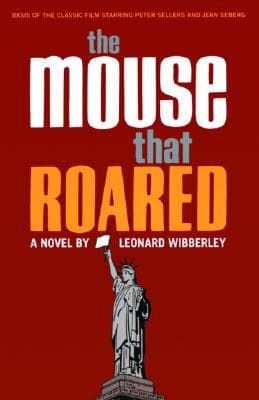
Synopsis
Covers the whole plot, including the ending.
- Difficulty
- Easy
- Pacing
- Moderate
- Mood
- Humorous, Witty, Whimsical, Satirical
- Read it if
- You enjoy satirical political comedies, stories about underdogs accidentally succeeding, and charming, lighthearted science fiction.
- Skip it if
- You prefer serious, gritty realism or complex, hard sci-fi narratives.
The Mouse That Roared Plot Summary
Covers the whole plot, including the ending.
A Duchy in Decline
The small, isolated European Duchy of Grand Fenwick, a medieval remnant with 6,000 people, faces severe financial trouble. Its only export, Pinot Grand Fenwick wine, loses sales to a cheap American copy called 'Grand Fenwick' California wine. This economic crisis threatens to bankrupt the Duchy and impoverish its citizens. Gloriana XII, the young Duchess, is worried but has no clear answer. Her Prime Minister, Count Mountjoy, suggests a desperate plan: declare war on the United States, lose quickly, and then receive generous American foreign aid, like that given to post-war Germany and Japan.
The Declaration of War
After much discussion and a unanimous vote from the Duchy's Parliament, Gloriana XII reluctantly agrees to Count Mountjoy's bold plan. The Duchy sends a formal declaration of war to the United States. To lead their 'invasion,' the Grand Fenwick army consists of twenty longbowmen, led by Tully Bascomb, the eager but naive Field Marshal and Chief Forester. The plan is simple: sail to New York, surrender immediately upon arrival, and then wait for American generosity. The longbowmen, with their traditional weapons and medieval armor, set sail on a small ship, unaware of the true difficulties of international conflict.
An Unforeseen Landing
Tully Bascomb and his small army arrive in New York Harbor, expecting to meet overwhelming American military power. To their surprise, the city seems empty. They land unopposed and march through the quiet streets, puzzled by the lack of resistance. Unbeknownst to them, the city is having an air raid drill, causing everyone to take shelter. This timing creates a strange atmosphere for the Fenwickians, who see the silence as either complete disinterest or a strategic move by the Americans. They continue their march, growing more confused by the lack of confrontation.
The Q-Bomb and Dr. Kokintz
During their confused exploration of deserted New York, Tully Bascomb and his men find a scientific laboratory. Inside, they discover Dr. Alfred Kokintz, a smart but odd American physicist, and his new weapon: the Q-bomb (Quadium bomb). This bomb is far more powerful than any existing atomic weapon, able to destroy an entire continent. Dr. Kokintz, surprised by the intruders, is taken prisoner along with his powerful invention. The Fenwickians, still thinking they are just fulfilling their mission to surrender, have no idea of the immense power they have accidentally captured.
A War Won by Accident
With Dr. Kokintz and the Q-bomb, Tully Bascomb and his men return to their ship. American authorities, initially confused by the disappearance of Dr. Kokintz and the Q-bomb, eventually realize that the tiny Duchy of Grand Fenwick is responsible. The world is shocked that a small, medieval nation has somehow 'defeated' the United States and captured the most powerful weapon ever made. Grand Fenwick, which planned to lose the war, now finds itself in the unique position of having won. The original plan for foreign aid through defeat is now completely reversed.
Global Panic and Diplomatic Crisis
News of Grand Fenwick's capture of the Q-bomb sends shockwaves globally. Major world powers, especially the United States and the Soviet Union, panic. The idea of such a powerful weapon in the hands of a small, unsophisticated nation, or potentially falling into the wrong hands, is terrifying. Diplomatic efforts begin immediately, with nations scrambling to understand Grand Fenwick's intentions and to secure the Q-bomb. Duchess Gloriana XII, at first happy about her country's unexpected 'victory,' soon realizes the huge and dangerous responsibility that has fallen on her small Duchy.
The Duchess's Dilemma
Back in Grand Fenwick, Gloriana XII faces a major crisis. She holds the most powerful weapon in the world, giving her tiny Duchy immense, though accidental, influence over global powers. She is advised by Count Mountjoy and Tully Bascomb, who, despite their earlier naivete, now understand the seriousness of their situation. The Duchess realizes that simply returning the bomb is not enough; she must use this chance to ensure the long-term safety and prosperity of Grand Fenwick and, perhaps, the world. She starts to form a plan that goes beyond her original financial goals.
The Fenwick Solution
Duchess Gloriana XII, showing surprising wisdom and bravery, calls representatives from the world's major powers to Grand Fenwick. She proposes a radical solution: Grand Fenwick will return the Q-bomb only if all nuclear nations agree to disarm their own weapons and place the Q-bomb under international control. She argues that such a weapon makes all others useless and that true peace can only come from complete disarmament. Her proposal meets skepticism and resistance from the major powers, who do not want to give up their strategic advantages.
Tully's Stand
As talks fail, Tully Bascomb, who has grown much in confidence and understanding of world affairs, takes a firm stand. He refuses to hand over the Q-bomb unless a binding international disarmament agreement is reached. He sees the Q-bomb not as a weapon of destruction, but as a tool to force the world's great powers to face the absurdity and danger of their arms race. His firmness, combined with the genuine fear of what might happen if the Q-bomb were released or fell into less careful hands, puts great pressure on the United States and the Soviet Union.
A New World Order
Under unexpected pressure from Grand Fenwick, the major world powers, including the United States and the Soviet Union, are forced to rethink their positions. The sheer terror of the Q-bomb, along with Gloriana XII's steady resolve and Tully Bascomb's principled stand, ultimately leads to a breakthrough. They reluctantly agree to Grand Fenwick's terms: a global disarmament treaty is signed, and the Q-bomb is placed under international control, ensuring no single nation can use its destructive power. Grand Fenwick, the 'mouse that roared,' has accidentally started an era of global peace and disarmament, securing its own future in the process.
Principal Figures
Gloriana XII
Protagonist
The young, inexperienced Duchess of Grand Fenwick.
Gloriana XII is the youthful and initially rather naive ruler of the Duchy of Grand Fenwick. She inherited the throne and is deeply devoted to her people, but lacks practical experience in governance and international affairs. She is gentle and well-intentioned, often overwhelmed by the responsibilities of her position. Her initial decision to go to war is driven purely by a desperate desire to save her Duchy from economic ruin. She embodies the innocence and moral compass of Grand Fenwick.
Relationships: Count Mountjoy (Prime Minister and advisor); Tully Bascomb (Field Marshal and trusted subordinate)
Tully Bascomb
Protagonist
The enthusiastic and naive Field Marshal of Grand Fenwick.
Tully Bascomb is the Chief Forester and the appointed Field Marshal of Grand Fenwick's army. He is a man of simple pleasures and deep loyalty, possessing a childlike enthusiasm and a strong sense of duty, albeit often misguided. He is incredibly naive about the modern world and warfare, leading his longbowmen with an antiquated sense of chivalry. His lack of sophistication is ironically what allows him to stumble into extraordinary circumstances, including the capture of the Q-bomb. He is the heart of the Fenwickian expedition.
Relationships: Gloriana XII (Loyal subject and military leader); Count Mountjoy (Colleague in government)
Count Mountjoy
Supporting
The pragmatic and cunning Prime Minister of Grand Fenwick.
Count Mountjoy is the long-serving Prime Minister of Grand Fenwick and Gloriana XII's primary advisor. He is a shrewd and practical politician, often the voice of reason or, in this case, audacious desperation. It is his cynical understanding of international relations and American foreign aid policies that leads to the initial plan of declaring war. He is less concerned with moral implications and more with practical outcomes for the Duchy. He represents the political cunning needed to navigate the crisis.
Relationships: Gloriana XII (Prime Minister and chief advisor); Tully Bascomb (Colleague in government)
Dr. Alfred Kokintz
Supporting
The brilliant but eccentric American scientist who invented the Q-bomb.
Dr. Alfred Kokintz is the genius behind the devastating Q-bomb. He is deeply engrossed in his scientific work, often oblivious to the world outside his laboratory. While a brilliant physicist, he is socially awkward and somewhat detached from the ethical implications of his creations. His capture by Tully Bascomb's longbowmen is a pivotal moment in the story, as it provides Grand Fenwick with its unexpected leverage. He represents the unintended consequences of scientific advancement without moral oversight.
Relationships: Tully Bascomb (Captor/Captive, later collaborators for peace)
The Longbowmen
Supporting
Grand Fenwick's twenty-man army.
The twenty longbowmen form the entirety of Grand Fenwick's armed forces. They are simple, loyal citizens, accustomed to their traditional ways and completely out of touch with modern warfare. They follow Tully Bascomb's orders without question, armed with their medieval longbows and dressed in antiquated armor. Their innocent, almost comedic, presence highlights the absurdity of the conflict and their accidental victory. They represent the 'mouse' aspect of the 'mouse that roared' metaphor.
Relationships: Tully Bascomb (Commander and leader)
President of the United States
Mentioned
The leader of the most powerful nation, taken by surprise.
The President of the United States is a character who primarily functions as a representation of American power and its initial bewilderment and later diplomatic struggle. He is a figure of authority who must grapple with the unprecedented situation of being 'defeated' by a tiny duchy and having the Q-bomb captured. His reactions drive much of the international crisis and negotiations.
Themes & Insights
The Absurdity of War and Power Politics
The novel satirizes the illogical and often silly nature of international relations and military power. Grand Fenwick's plan to declare war and lose to gain aid, and their accidental victory, shows how arbitrary and self-serving global power dynamics can be. The image of longbowmen 'defeating' a superpower by sheer chance highlights the book's comedic criticism of modern warfare and diplomatic posturing. The focus on economic gain through defeat, rather than conquest, reverses traditional war stories.
“It was the first war in history in which a nation had gone to war with the express purpose of being defeated.”
The Power of the Underdog
A main theme is that even the smallest and most seemingly unimportant entity can greatly affect the world. Grand Fenwick, a duchy of 6,000 people, manages to humble the greatest superpowers through a series of unlikely events. This theme celebrates the unexpected strength and moral clarity that can come from those who are underestimated. It suggests that true power is not always about military might or economic dominance, but can also come from unique situations, moral conviction, and a bit of luck.
“The mouse that roared had, by accident, brought the lions of the world to heel.”
Moral Responsibility of Scientific Advancement
The discovery and capture of the Q-bomb adds a serious ethical layer to the story. Dr. Kokintz, the bomb's creator, is at first unaware of the implications of his invention. Grand Fenwick, through Duchess Gloriana and Tully Bascomb, must face the huge moral responsibility that comes with having such destructive power. The novel argues that scientific progress, especially in weaponry, must be guided by strong ethical considerations and a global view to prevent disaster. The Q-bomb becomes a symbol of humanity's ability to destroy itself.
“A weapon that could destroy a continent was no longer a weapon of war, but of universal suicide.”
Disarmament and Global Peace
Ultimately, the novel supports global disarmament as the way to lasting peace. Gloriana XII's radical proposal to trade the Q-bomb for universal nuclear disarmament is the peak of this theme. The story suggests that weapons of mass destruction make all nations vulnerable and that true security lies in getting rid of them, not in having more. Grand Fenwick's accidental victory provides a unique point of influence to force the world's powers to face this uncomfortable truth and move towards a more peaceful, cooperative future.
“For the first time, all the great powers were united by a common fear, and that fear was the only thing that could make them truly disarm.”
Plot Devices & Literary Techniques
Dramatic Irony
The audience knows more than the characters, creating humor and tension.
The entire premise of Grand Fenwick's war plan is built on dramatic irony. The audience knows that their intention is to lose and gain aid, while the American public and government are initially unaware of this cynical motive. More significantly, the air raid drill that clears New York City is a prime example; the Fenwickians believe the city is deserted due to American fear or disinterest, while the audience knows the true, mundane reason. This creates comedic effect and highlights the characters' naiveté.
Coincidence and Serendipity
Unlikely chance events drive the plot and lead to unexpected outcomes.
The plot is heavily reliant on a series of extraordinary coincidences. The air raid drill in New York allowing Tully's unopposed landing, and his subsequent accidental discovery and capture of Dr. Kokintz and the Q-bomb, are pivotal examples. These chance occurrences transform Grand Fenwick's intended defeat into an accidental victory, completely subverting their original plan and setting the stage for the global crisis. The story uses these coincidences to propel the narrative and emphasize the unpredictable nature of events.
Satire
The use of humor, irony, exaggeration, or ridicule to expose and criticize folly and vice.
The entire novel is a work of political and social satire. It ridicules the absurdity of Cold War politics, the arms race, and the self-serving nature of international relations. The image of a medieval army with longbows 'defeating' a modern superpower, the cynical plan to lose a war for profit, and the subsequent global panic over a tiny duchy holding the ultimate weapon, all serve to mock the follies of the powerful and the serious issues of the day through a comedic lens. It's a lighthearted but pointed critique.
MacGuffin (The Q-Bomb)
An object or device in a story which serves merely as a trigger for the plot.
The Q-bomb functions as the primary MacGuffin in the story. Its specific scientific properties are less important than its immense power and its role as the catalyst for the entire global crisis. Its capture by Grand Fenwick is the event that forces the world's superpowers to act and drives the plot towards the disarmament negotiations. The Q-bomb itself isn't deeply explored; its significance lies in what it represents and the actions it compels the characters and nations to take.
The Mouse That Roared Quotes
“The Grand Fenwickian Declaration of War was probably the politest declaration of war in the history of the world.”
“It was a situation which, in the language of the diplomatists, was 'fraught with peril,' and in the language of everyone else, was 'a mess.'”
“The only way to get aid from America these days is to declare war on them and lose.”
“The weapon, which had been designed to destroy the world, became the instrument of its salvation.”
“It is a strange thing that the world can be saved by a handful of men from a duchy you could put in your pocket.”
“When you are a small nation, you have to be clever, because you cannot be strong.”
“The world was not ready for a weapon that could destroy it. It was too childish, too prone to tantrums.”
“War, as Grand Fenwick was about to discover, was a far more complicated business than simply sending a letter.”
“The greatest danger lay not in the bomb itself, but in the fear it engendered.”
“They had come to conquer, but they had stayed to be conquered by the sheer, overwhelming generosity of the Americans.”
“It was a matter of national pride, and national pride, as everyone knows, is a very dangerous thing.”
“The world was tired of being frightened. It wanted to be safe, even if safety came from the most unlikely quarter.”
“The smaller the nation, the louder its roar, sometimes.”
“He had invented a weapon that could destroy the world, and in doing so, had created the means for its salvation.”
Quiz
10 questions on the plot and the characters. Each answer comes with a short explanation.
Question 1
What is the name of the tiny Duchy that decides to declare war on the United States?
- Grand Fenwick
- Little Puddleton
- Smallville
- Tinyburg
Show answer
A. Grand Fenwick The tiny Duchy in the story is named Grand Fenwick, and its unique approach to foreign policy drives the plot.
Question 2
What is the primary reason Grand Fenwick decides to declare war on the United States?
- To conquer American territory
- To gain foreign aid after losing the war
- To protest American foreign policy
- To showcase their military might
Show answer
B. To gain foreign aid after losing the war Grand Fenwick's plan was to declare war, lose quickly, and then receive generous foreign aid from the U.S., a common practice for post-war reconstruction.
Question 3
Who is the Prime Minister of Grand Fenwick at the beginning of the story?
- Count Basie
- Rupert Mountjoy
- David Benter
- Tully Bascomb
Show answer
B. Rupert Mountjoy Rupert Mountjoy serves as the Prime Minister of Grand Fenwick and is instrumental in devising the war strategy.
Question 4
What is the name of the powerful weapon Grand Fenwick accidentally captures from the U.S.?
- The Q-Bomb
- The Alpha Device
- The Omega Weapon
- The Fenwick Fissionator
Show answer
A. The Q-Bomb The Q-Bomb is a devastating weapon that the Fenwickian invasion force stumbles upon and captures, completely derailing their original plan to lose the war.
Question 5
Who leads the Grand Fenwick invasion force to New York?
- Duchess Gloriana
- Professor Kokintz
- Tully Bascomb
- David Benter
Show answer
C. Tully Bascomb Tully Bascomb, a forest ranger and veteran, is reluctantly put in charge of the Grand Fenwick invasion force, which consists of only 20 longbowmen.
Question 6
What is the primary economic product that Grand Fenwick is famous for, which is facing an economic downturn?
- Fine wines
- Hand-stitched clothing
- Pinot Grand Fenwick, a local wine
- Artisanal cheeses
Show answer
C. Pinot Grand Fenwick, a local wine Grand Fenwick's economy is largely dependent on its unique Pinot Grand Fenwick wine, which is being undercut by an American imitation.
Question 7
What is the initial reaction of the New York City populace and authorities to the Grand Fenwick invasion force?
- They immediately surrender in fear.
- They mistake the invaders for costumed revelers or a publicity stunt.
- They launch a full-scale military counter-attack.
- They ignore them completely.
Show answer
B. They mistake the invaders for costumed revelers or a publicity stunt. Due to the small, anachronistic appearance of the Fenwickian army, New Yorkers initially dismiss them as part of a parade or performance.
Question 8
What major thematic irony is central to the plot of 'The Mouse That Roared'?
- The idea that small nations are inherently more peaceful than large ones.
- That by trying to lose a war, Grand Fenwick accidentally 'wins' and gains unprecedented power.
- That advanced technology is ultimately less powerful than traditional weaponry.
- The futility of all warfare, regardless of scale.
Show answer
B. That by trying to lose a war, Grand Fenwick accidentally 'wins' and gains unprecedented power. The core irony is that Grand Fenwick's attempt to lose a war for economic gain backfires spectacularly when they accidentally capture the Q-Bomb, making them a world power.
Question 9
What is the eventual resolution regarding the Q-Bomb and nuclear disarmament efforts at the end of the book?
- Grand Fenwick uses the Q-Bomb to establish global dominance.
- The Q-Bomb is returned to the U.S. without any international consequences.
- Grand Fenwick leverages the Q-Bomb to force a global disarmament conference and ensure peace.
- The Q-Bomb accidentally detonates, destroying Grand Fenwick.
Show answer
C. Grand Fenwick leverages the Q-Bomb to force a global disarmament conference and ensure peace. Grand Fenwick, under Duchess Gloriana, uses its temporary possession of the Q-Bomb to convene a world conference and demand nuclear disarmament, ultimately leading to a more peaceful resolution.
Question 10
Which character is the American scientist responsible for the Q-Bomb, who is also captured by the Fenwickians?
- Dr. Strangelove
- Professor Kokintz
- Dr. Oppenheimer
- Dr. Einstein
Show answer
B. Professor Kokintz Professor Kokintz is the brilliant but somewhat eccentric scientist who developed the Q-Bomb and is accidentally captured along with his creation by Tully Bascomb's forces.
The Mouse That Roared FAQ
What is the core premise of 'The Mouse That Roared'?
The Duchy of Grand Fenwick, facing economic collapse due to dwindling sales of its sole export, Pinot Grand Fenwick, devises a desperate plan: declare war on the United States, suffer a quick defeat, and then benefit from generous American foreign aid. This seemingly foolproof strategy is spearheaded by the eccentric Prime Minister, Count Mountjoy, and the young Duchess Gloriana XII.
Who are the key figures in the Grand Fenwickian invasion force?
The invasion force consists of twenty longbowmen, led by the intrepid Tully Bascomb, the commander of the Grand Fenwickian army. Accompanying him are Sergeant Willcox and other loyal, if somewhat anachronistic, soldiers, all armed with medieval weaponry and a deep sense of national duty.
What unexpected turn of events occurs during Grand Fenwick's 'invasion' of the United States?
Upon arriving in New York, the Grand Fenwickian force finds the city deserted due to a civil defense drill. They stumble upon Professor Kokintz and his Q-bomb, a weapon of unimaginable destructive power, which they inadvertently capture. This transforms their planned defeat into an accidental victory, creating a global crisis.
How does the capture of the Q-bomb change the international political landscape?
Grand Fenwick, now possessing the world's most powerful weapon, becomes an unexpected superpower. The United States and other major nations are forced to negotiate with the tiny duchy, completely upending traditional power dynamics and highlighting the absurdity of nuclear deterrence.
What is the ultimate resolution of the Q-bomb crisis and Grand Fenwick's newfound power?
Under the guidance of Duchess Gloriana and Tully Bascomb, Grand Fenwick proposes a solution: all nations must surrender their Q-bombs to Grand Fenwick, who will act as a neutral custodian. This leads to a global disarmament treaty, with Grand Fenwick becoming the unlikely guarantor of world peace, albeit with the original Q-bomb still in their possession, hidden away.
What is the significance of the Pinot Grand Fenwick wine to the duchy's economy and identity?
Pinot Grand Fenwick is the duchy's sole export and the foundation of its economy. Its declining sales due to cheap American imitations directly trigger the desperate war plan. The wine symbolizes Grand Fenwick's unique, artisanal heritage, contrasted with the mass-produced goods of larger nations.
How does the author use the character of Professor Kokintz to further the plot's themes?
Professor Kokintz, the brilliant but naive inventor of the Q-bomb, represents the scientific community's detachment from the political and moral implications of their creations. His capture by Grand Fenwick puts the immense power of his invention into the hands of those least expected to wield it, forcing a re-evaluation of its purpose and control.
What is the subtle role of the 'civil defense drill' in New York City?
The civil defense drill is a crucial plot device that empties New York, allowing the Grand Fenwickian invasion force to succeed entirely by accident. It satirizes the constant state of Cold War preparedness and the irony of a powerful nation being 'defeated' by its own elaborate safety measures, paving the way for the Q-bomb's discovery.
Are there any deeper historical or political allusions embedded in the narrative beyond the Cold War?
While primarily a Cold War satire, the book also subtly touches on themes of colonial power dynamics and the struggle of small nations against larger ones, echoing historical precedents where seemingly insignificant states have influenced global events. Grand Fenwick's anachronistic military also evokes a romanticized past clashing with modern warfare.
How does Duchess Gloriana XII's character evolve throughout the crisis?
Initially a somewhat sheltered and traditional monarch, Duchess Gloriana XII demonstrates remarkable intelligence, courage, and moral clarity as the crisis unfolds. She quickly grasps the gravity of the Q-bomb situation and uses her position to advocate for global disarmament, proving to be a wise and effective leader despite her youth.
What psychological pressures does Tully Bascomb face as the leader of the invasion?
Tully Bascomb experiences a profound shift from expecting a glorious defeat to accidentally achieving a world-altering victory. He grapples with the immense responsibility of possessing the Q-bomb, the fear of international repercussions, and the moral dilemma of using such power. His simple, honorable nature is tested by extraordinary circumstances.
How does the book explore the psychology of fear and power in international relations?
The narrative vividly portrays how fear of the Q-bomb drives the actions of major powers, forcing them to negotiate with Grand Fenwick. It demonstrates how ultimate destructive power, even in the hands of a benign entity, can command respect and alter global dynamics, highlighting the paradoxical nature of nuclear deterrence.
What does the book suggest about the human capacity for both absurdity and wisdom?
The story is a testament to human absurdity, from Grand Fenwick's ridiculous war plan to the irony of a nuclear drill facilitating a medieval invasion. Yet, it also showcases wisdom through characters like Gloriana and Tully, who, despite their humble origins, find a moral solution to a global crisis, suggesting that common sense can prevail over complex geopolitical machinations.
Is 'The Mouse That Roared' primarily a satire, or does it offer serious commentary on international politics?
While undoubtedly a brilliant satire, the book offers profound and serious commentary on the absurdity and dangers of Cold War nuclear politics. It uses humor to expose the irrationality of the arms race, the disproportionate power of large nations, and the potential for catastrophe, making its message enduringly relevant.
What is the central irony of Grand Fenwick's 'victory'?
The central irony is that Grand Fenwick achieves its greatest success by failing at its original goal. They intended to lose the war to gain aid, but by accidentally winning and capturing the Q-bomb, they gain unprecedented power and influence, forcing the world to listen to their terms for peace.
How does the book challenge conventional notions of strength and weakness in global affairs?
The book completely upends conventional notions by showing how a tiny, militarily insignificant duchy can become the most powerful nation on Earth by possessing the ultimate weapon. It suggests that true strength is not just military might, but also moral authority and the ability to find innovative solutions to complex problems.
What is the enduring message of 'The Mouse That Roared' regarding nuclear weapons and disarmament?
The enduring message is a strong plea for nuclear disarmament and the recognition that ultimate weapons of mass destruction are too dangerous for any single nation to possess. It suggests that a neutral, benevolent custodian, even a small one like Grand Fenwick, might be the only way to ensure global peace in the face of such destructive power.
How does the novel's ending, with Grand Fenwick holding the Q-bomb, contribute to its overall thematic message?
The ending, with Grand Fenwick as the sole possessor and custodian of the Q-bomb, is a nuanced one. It suggests that while global disarmament is achievable, the threat of ultimate destruction still exists, merely relocated. It implies that true peace relies not just on eliminating weapons, but on trust and the moral character of those who hold power, however small they may be.
About the author
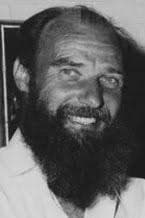
Leonard Wibberley was a writer known for his satirical fiction. He is best known for his novel "The Mouse That Roared," which humorously explores the themes of war and diplomacy. Wibberley's works often blend political commentary with absurdity, reflecting his unique perspective on contemporary issues.
Similar books
- Catch-22
Joseph Heller
4.0 (723k) average on GoodreadsHistorical FictionFeatures a similar dark humor and satirical critique of bureaucracy and war, though 'Mouse' is much lighter.
- 1984
George Orwell
4.2 (3.1M) average on GoodreadsPoliticsIn a future where surveillance and thought control are absolute, a man's search for truth clashes with the Party, showing that hope can be a form of rebellion.
- Animal Farm
George Orwell
4.0 (2.7M) average on GoodreadsPoliticsA farm animals' rebellion against humans turns into a pig-led dictatorship, showing how power corrupts and revolutionary ideals are betrayed.
- Freakonomics: A Rogue Economist Explores the Hidden Side of Everything
Steven D. Levitt
4.0 (709k) average on GoodreadsBusinessThis book uses economic principles to reveal the surprising incentives behind everything from drug dealing and real estate to cheating teachers and the decline of crime.
- I Am Malala: The Story of the Girl Who Stood Up for Education and Was Shot by the Taliban
Malala Yousafzai
4.1 (419k) average on GoodreadsPoliticsA teenage girl from a Taliban-controlled valley refuses to give up her books, becoming a global voice for education even after an assassination attempt.
- Atlas Shrugged
Ayn Rand
3.7 (354k) average on GoodreadsPoliticsIn a dystopian America where innovators vanish, a brilliant heiress races to uncover the truth behind the disappearing industrialists and the enigmatic John Galt, who vows to stop the world's progress.






Enjoyed the summary?
A summary gives you the shape of the book. The book itself has the detail, the examples and the voice.
Find The Mouse That Roared on AmazonAs an Amazon Associate, BookBrief earns from qualifying purchases. How we're funded