
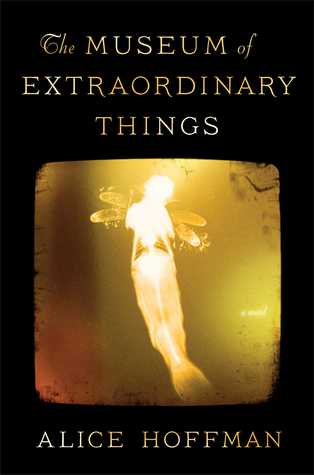
Synopsis
Covers the whole plot, including the ending.
- Difficulty
- Medium
- Pacing
- Moderate
- Mood
- Atmospheric, Melancholy, Romantic, Mysterious, Darkly Enchanting
- Read it if
- You enjoy atmospheric historical fiction with elements of magical realism, a touch of mystery, and a unique romance set against the backdrop of early 20th-century New York City.
- Skip it if
- You prefer fast-paced thrillers or strict historical accuracy without any fantastical elements.
The Museum of Extraordinary Things Plot Summary
Covers the whole plot, including the ending.
Coralie's Unusual Childhood and the Museum
Coralie Sardie is raised by her strict father, Professor Sardie, in his Coney Island 'Museum of Extraordinary Things.' From a young age, Coralie performs as a mermaid, spending hours in cold water, developing webbed fingers and toes from her father's training. She lives in isolation, with only her father and the other 'exhibits'—like the Wolfman, the Butterfly Girl, and her governess, Miss Pauline—for company. Her father's focus on the unusual and his desire to profit from human oddities shape Coralie's life, limiting her understanding of the outside world and giving her a deep sense of being an outsider.
Eddie Cohen's Escape and New Calling
Eddie Cohen, born Ezekiel, is a young Russian Jewish immigrant living in Manhattan's Lower East Side. Feeling trapped by his traditional upbringing and his father's tailoring business, Eddie wants a life beyond his community. He secretly loves photography, seeing it as a way to show the truth and beauty of the world. One night, after an argument with his father, Eddie leaves home, taking only his camera. He begins to explore the city, using his camera to document the lives of working people and the varied, often harsh, realities of New York City.
A Chance Encounter in the Woods
During one of her rare trips outside the museum, Coralie goes into the woods near the Hudson River. There, she meets Eddie Cohen, who is photographing the moonlit trees. This meeting is important; Coralie, with her unusual look and sheltered life, is intrigued by Eddie's artistic eye and directness. Eddie, in turn, is drawn to Coralie's beauty and mystery, feeling a connection with her. This first, brief meeting sparks a mutual interest, hinting at a bond that crosses their different worlds.
The Triangle Shirtwaist Factory Fire
The Triangle Shirtwaist Factory fire breaks out, burning the building and trapping hundreds of young immigrant women. Eddie Cohen happens to see the terrible event from a distance and is deeply affected by the tragedy. He uses his camera to document the aftermath, capturing the sadness, loss, and strength of the city's people. This experience strengthens his commitment to using photography for truth and social comment. The fire also sets the stage for a mystery, as a young woman named Lena is reported missing, not among the identified dead or injured.
The Search for Lena and Coralie's Secret Mission
Driven by a sense of fairness and a personal tie to the immigrant community, Eddie begins to investigate Lena's disappearance. Lena worked at the Triangle Shirtwaist Factory, and her body was not found. His search leads him through the city's hidden areas, connecting him with various people, including Lena's family and friends. Meanwhile, Coralie is forced by her father to help with his illegal activities, which involve getting bodies from the river for a doctor's anatomical studies. This secret work exposes Coralie to death and further isolates her, while also giving her an unusual understanding of the city's hidden ways.
Unraveling the Mystery of Lena
As Eddie looks deeper into Lena's disappearance, he learns she was active in union organizing, working for better conditions for factory girls. He finds that Lena was a strong and brave young woman, not easily scared. His investigation suggests her disappearance might be more than just from the fire, possibly involving foul play or an attempt to silence her. He gathers clues that point to a deliberate act, not just an accident, raising the stakes of his search.
Coralie's Growing Disobedience and Connection to Eddie
Coralie, increasingly limited by her father's control and disturbed by his morally questionable actions, begins to subtly resist. She is drawn to Eddie's passion and honesty, and their paths continue to cross. Their meetings become more frequent and close, with Eddie sharing his photographs and his search for truth, and Coralie showing parts of her lonely, unusual life. Their growing romance gives Coralie a sense of freedom and a link to a world outside the museum, encouraging her to question her father's authority more directly.
Professor Sardie's Dark Secrets Revealed
Eddie's investigation eventually uncovers a shocking truth: Professor Sardie, Coralie's father, is involved in Lena's disappearance. Lena, after escaping the fire, found Sardie and his partners committing a crime. Sardie, fearing exposure, took Lena and later disposed of her body in the river, using his knowledge of the waterways and his illegal connections to hide his actions. This discovery puts Coralie in a difficult position, forcing her to face the true nature of her father's evil.
Confrontation and Betrayal
With the truth, Coralie confronts her father about his role in Lena's death. The confrontation is tense and emotional. Professor Sardie tries to manipulate Coralie as he always has. He denies his involvement or tries to justify his actions, but Coralie, now brave because of her love for Eddie and her desire for justice, refuses to be swayed. This direct challenge to his authority pushes Professor Sardie to his limits, creating a dangerous situation for Coralie and threatening to expose all his secrets.
The Museum's Demise and Coralie's Choice
As the truth about Professor Sardie's crimes comes out, the Museum of Extraordinary Things faces its end. The fantastical world Coralie has always known begins to fall apart. Coralie must make a choice: stay loyal to her father and the only life she's known, or embrace a future with Eddie, one built on truth, love, and a life outside the shadows. This decision marks her final break from her father's influence and her full acceptance of her own will and identity. The museum, a symbol of her confinement, is destroyed by a storm.
A New Beginning for Coralie and Eddie
After the museum's destruction and Professor Sardie's downfall, Coralie and Eddie begin a new life together. Coralie, finally free from her father's control, uses her unique swimming abilities not for performance but for a real connection with nature. Eddie continues his photography, documenting ordinary people and finding beauty in everyday life. Their love story ends in a shared future where they find acceptance and belonging in each other, celebrating their unique qualities and finding strength in their unusual partnership. They combine the magical and the real, finding their place in a changing world.
The Museum of Extraordinary Things Characters
Coralie Sardie
Protagonist
The 'Mermaid' of the Museum of Extraordinary Things, seeking freedom and connection.
Coralie is a young woman raised in extreme isolation by her controlling father, Professor Sardie. Trained from childhood to be a 'mermaid' for his Coney Island museum, she develops webbed fingers and toes, making her truly extraordinary. She is an exceptional swimmer, feeling most at home in the water. Coralie is initially naive and sheltered but possesses an innate resilience, a deep yearning for a life beyond her father's bizarre world, and a profound empathy for others. Her experiences, both within the museum and her secret river excursions, shape her unique perspective on life and death.
Relationships: Professor Sardie (Controlling father, oppressor); Eddie Cohen (Love interest, liberator); Miss Pauline (Devoted governess, mother figure)
Eddie Cohen
Protagonist/Love Interest
A passionate Russian immigrant photographer who champions truth and justice.
Eddie, born Ezekiel, is a young Russian Jewish immigrant who flees his strict Orthodox community in the Lower East Side to pursue his passion for photography. He is an idealist, driven by a desire to capture truth and beauty, particularly the lives of the working class and marginalized. Eddie is courageous, tenacious, and possesses a strong moral compass, leading him to investigate the disappearance of Lena. He is captivated by Coralie's unique spirit and becomes her anchor to the outside world, offering her love and a path to freedom.
Relationships: Coralie Sardie (Love interest, kindred spirit); Lena (Missing person he investigates, symbolic of injustice); His Father (Estranged, represents his past life)
Professor Sardie
Antagonist
Coralie's manipulative and morally corrupt father, impresario of the museum.
Professor Sardie is Coralie's father and the proprietor of The Museum of Extraordinary Things. He is a sinister and controlling figure, obsessed with collecting and displaying human oddities for profit. He manipulates Coralie from childhood, physically altering her and exploiting her for his show. Sardie is driven by a warped sense of ambition and a profound lack of empathy, viewing people as objects to be controlled and exhibited. His dark secrets and involvement in Lena's disappearance reveal the true extent of his depravity.
Relationships: Coralie Sardie (Controlling father, exploiter); Miss Pauline (Employee, accomplice (reluctantly))
Miss Pauline
Supporting
Coralie's devoted governess and reluctant accomplice to Professor Sardie.
Miss Pauline is Coralie's governess and a permanent fixture in the Museum of Extraordinary Things. She is fiercely devoted to Coralie, offering her the only genuine affection and maternal care she receives. Despite her loyalty to Coralie, Miss Pauline is also an accomplice to Professor Sardie's schemes, albeit often reluctantly and with a heavy conscience. She represents the moral ambiguity of those living under Sardie's influence, torn between her love for Coralie and her fear or obligation to the Professor.
Relationships: Coralie Sardie (Caretaker, mother figure); Professor Sardie (Employer, source of fear)
Lena
Mentioned
A young, missing factory worker whose disappearance drives much of the plot.
Lena is a young immigrant woman who worked at the Triangle Shirtwaist Factory. Though she is missing and never appears alive in the story, her disappearance is central to the plot's mystery. She is depicted as a spirited and brave union organizer, symbolizing the plight of working-class women and the fight for justice. Her fate is intertwined with Professor Sardie's illicit activities, and her story motivates Eddie's investigation and ultimately exposes the Professor's crimes.
Relationships: Eddie Cohen (Subject of his investigation); Professor Sardie (Her killer)
The Wolfman
Supporting
A gentle performer in the museum, a silent friend to Coralie.
The Wolfman is one of the 'extraordinary' performers in Professor Sardie's museum. Despite his imposing appearance, he is a gentle and kind soul, often serving as a silent, empathetic presence for Coralie. He represents the humanity and vulnerability of those exploited by Sardie, and his quiet dignity offers a contrast to the Professor's cruelty. He is one of the few individuals within Coralie's confined world who treats her with genuine care and understanding.
Relationships: Coralie Sardie (Fellow performer, friend); Professor Sardie (Exploiter)
The Butterfly Girl
Supporting
Another performer in the museum, symbolizing fragile beauty.
The Butterfly Girl is another of Professor Sardie's exhibits, a young woman with a delicate, almost ethereal presence. She embodies a fragile beauty, contrasting with the more grotesque exhibits. Her story highlights the various ways people are exploited and packaged for public consumption. She is part of Coralie's insular world, sharing the experience of being an 'extraordinary thing' under Sardie's control.
Relationships: Coralie Sardie (Fellow performer); Professor Sardie (Exploiter)
Mrs. Cohen
Supporting
Eddie's mother, who struggles with his departure from the family.
Mrs. Cohen is Eddie's mother, a traditional Jewish woman who loves her son but is deeply distressed by his rebellion against their family's religious and cultural expectations. She represents the pain and conflict caused by Eddie's pursuit of an independent life, and her longing for his return highlights the ties he broke to forge his own path. She is a figure of quiet suffering and enduring maternal love.
Relationships: Eddie Cohen (Mother); Mr. Cohen (Wife)
Mr. Cohen
Supporting
Eddie's strict, traditional father, a tailor who wants Eddie to follow in his footsteps.
Mr. Cohen is Eddie's traditional, Orthodox Jewish father, a tailor who expects his son to adhere to their religious customs and take over the family business. He is stern and unyielding, representing the patriarchal authority and traditional values that Eddie rebels against. His relationship with Eddie is strained and marked by a generational and cultural divide, but his actions stem from a desire to provide a secure future for his son within the confines of their community.
Relationships: Eddie Cohen (Father); Mrs. Cohen (Husband)
The Museum of Extraordinary Things Themes
The Nature of Beauty and Abnormality
The novel questions common ideas of beauty and abnormality. Coralie's webbed fingers and her father's 'extraordinary things' are shown as both strange sights and sources of unique beauty and strength. The book suggests that what society calls 'abnormal' can be a deep source of strength and identity, especially for Coralie, whose 'mermaid' qualities help her navigate the world in unique ways. This theme appears in Eddie's photography, which finds beauty in the unusual and marginalized, contrasting with Professor Sardie's exploitative view. The story reclaims the word 'extraordinary' from its negative meanings.
“Extraordinary things are always true.”
Freedom vs. Confinement
This theme is key to both Coralie's and Eddie's stories. Coralie is physically and emotionally trapped by her father and the museum, wanting a life beyond its walls. Her swimming is a form of escape and freedom. Eddie, similarly, feels confined by his traditional upbringing and actively seeks freedom through his art and independent life. The Triangle Shirtwaist Factory fire clearly shows the deadly confinement faced by working women. The struggle for freedom—from society, family control, or literal entrapment—drives many characters' actions and desires, ending in Coralie's freedom.
“She had been born of the water and belonged to no one but herself.”
The Power of Storytelling and Photography
The novel explores how stories, both real and made up, shape how people see things. Professor Sardie creates complex, often cruel, stories for his exhibits, controlling how they are viewed. In contrast, Eddie uses photography to tell the truth, capturing the raw reality of New York City and giving a voice to the voiceless, especially after the Triangle Shirtwaist fire and during his investigation into Lena's disappearance. His camera serves as a witness, documenting both beauty and unfairness. The story itself is a form of storytelling, putting together different lives to reveal a larger truth, highlighting the responsibility in shaping narratives.
“He understood that a photograph was a way to stop time, to capture a moment, to tell a story without words.”
Love and Connection in a Harsh World
Amidst the harsh realities of early 20th-century New York, the novel highlights the power of love and real human connection. Coralie, isolated and used, finds comfort and strength in her growing relationship with Eddie. Their love crosses their very different backgrounds, offering both characters a sense of belonging and acceptance. This theme contrasts with the manipulative relationships created by Professor Sardie. The strong bond between Coralie and Eddie offers hope and resilience, allowing them to overcome difficulties and create a new life together, celebrating their unique identities.
“Love, like magic, was always there, waiting to be found.”
Social Justice and Inequality
The novel clearly shows the social inequalities and injustices common in early 20th-century New York. The struggles of immigrant factory workers, especially young women, are shown through the Triangle Shirtwaist Factory fire and Lena's story. Eddie's dedication to investigating Lena's disappearance and documenting the lives of working people emphasizes a commitment to social justice. The use of the 'extraordinary things' in Sardie's museum also points to a broader theme of people being treated as objects and denied their dignity. The story advocates for empathy and for giving a voice to those society ignores.
“Some tragedies were so immense they swallowed up the truth.”
Plot Devices & Literary Techniques
The Museum of Extraordinary Things
A central setting symbolizing exploitation, otherness, and a contained world.
The museum functions as both a physical setting and a powerful symbol. It represents Coralie's confinement and her father's exploitative nature, a place where people's unique qualities are commodified rather than celebrated. It embodies the theme of what society deems 'extraordinary' or 'abnormal,' showcasing the public's fascination with the grotesque. Its eventual destruction by a storm symbolizes Coralie's liberation and the end of her father's reign, allowing for a new beginning outside its dark shadow.
Coralie's Webbed Fingers and Toes
A physical manifestation of Coralie's uniqueness and her father's manipulation.
Coralie's webbed digits are a key symbol of her 'mermaid' identity, directly resulting from her father's cruel training. They are both a mark of her exploitation and a source of her extraordinary swimming ability. These physical traits set her apart, making her an 'other' but also connecting her profoundly to the water, where she finds freedom and a sense of self. They represent the blurred line between natural difference and unnatural alteration, and ultimately become a part of her embraced identity.
Eddie's Camera and Photographs
A tool for truth-telling, social commentary, and capturing beauty.
Eddie's camera is more than just an object; it is an extension of his character and his moral compass. It allows him to document the harsh realities of immigrant life, the devastation of the Triangle Shirtwaist fire, and the hidden truths behind Lena's disappearance. His photographs serve as evidence, social commentary, and a means of preserving moments of beauty and sorrow. They symbolize the power of art to reveal truth and give voice to the marginalized, contrasting sharply with the staged illusions of Professor Sardie's museum.
The Hudson River / Coney Island Waters
Symbolic spaces representing freedom, mystery, and the flow of life and death.
The waters of the Hudson River and Coney Island serve as significant symbolic spaces. For Coralie, the ocean and river are places of profound freedom, where she feels most at home and where her unique abilities truly shine. They also hold darker connotations, as the river is where her father disposes of bodies and where Lena's fate is sealed. The waters represent the mysterious, the untamed, and the cyclical nature of life and death, constantly flowing and changing, much like the lives of the characters themselves.
The Triangle Shirtwaist Factory Fire
A historical event serving as a catalyst for plot and a symbol of social injustice.
The Triangle Shirtwaist Factory fire is a real historical event that anchors the novel in a specific time and place. It acts as a major plot catalyst, prompting Eddie's investigation into Lena's disappearance and setting in motion the unraveling of Professor Sardie's secrets. Beyond its plot function, the fire symbolizes the devastating social injustices faced by working-class immigrants in early 20th-century New York, highlighting themes of exploitation, dangerous working conditions, and the struggle for labor rights. It injects a sense of grim reality into the more fantastical elements of the story.
The Museum of Extraordinary Things Quotes
“There are some things in this world that are not meant to be changed.”
“Every life has a story, and every story has a secret.”
“The world was full of magic, but you had to know where to look for it.”
“Sometimes the things we fear are the very things that set us free.”
“It was impossible to be lonely when you had a city full of stories.”
“Love was a dangerous thing, a force that could destroy as easily as it could create.”
“The past was a ghost that haunted every street corner, every brick building.”
“Even in the darkest places, there was always a spark of hope.”
“Some people were meant to be extraordinary, and others were meant to watch them shine.”
“There was a language in the silence, if you only knew how to listen.”
“The city was a living, breathing creature, with its own heart and soul.”
“Beauty was in the eye of the beholder, but sometimes, the beholder needed a little help seeing it.”
“Sometimes, the greatest escape was not from a place, but into another's heart.”
“Every person carried their own museum of extraordinary things inside them.”
Quiz
10 questions on the plot and the characters. Each answer comes with a short explanation.
Question 1
What is Coralie Sardie's specific act in her father's Museum of Extraordinary Things?
- The Butterfly Girl
- The Wolfman
- The Mermaid
- The Turtle Whisperer
Show answer
C. The Mermaid Coralie Sardie is an exceptional swimmer and performs as the Mermaid in her father's museum.
Question 2
What is Eddie Cohen's profession before he becomes embroiled in the mystery?
- Fisherman
- Tailor's apprentice
- Museum impresario
- Coney Island barker
Show answer
B. Tailor's apprentice Eddie Cohen is a Russian immigrant who ran away from his job as a tailor's apprentice.
Question 3
What significant historical event does Eddie Cohen photograph, leading him into the mystery?
- The Great Chicago Fire
- The San Francisco Earthquake
- The Triangle Shirtwaist Factory fire
- The sinking of the Titanic
Show answer
C. The Triangle Shirtwaist Factory fire Eddie photographs the devastation on the streets of New York following the infamous Triangle Shirtwaist Factory fire, which is central to the mystery.
Question 4
Where does Coralie Sardie first encounter Eddie Cohen?
- On the Coney Island boardwalk
- Inside The Museum of Extraordinary Things
- In the woods off the Hudson River
- In the Lower East Side Orthodox community
Show answer
C. In the woods off the Hudson River Coralie stumbles upon Eddie taking pictures of moonlit trees in the woods off the Hudson River.
Question 5
What is the primary reason Eddie Cohen ran away from his family and community?
- To pursue a career as a tailor
- To escape his father's Lower East Side Orthodox community and his tailoring apprenticeship
- To join the circus
- To become a professional swimmer
Show answer
B. To escape his father's Lower East Side Orthodox community and his tailoring apprenticeship Eddie ran away from his father's Lower East Side Orthodox community and his job as a tailor's apprentice.
Question 6
Besides Coralie, which of these is explicitly mentioned as a performer in The Museum of Extraordinary Things?
- The Strongman
- The Fire-Eater
- The Wolfman
- The Bearded Lady
Show answer
C. The Wolfman The text states Coralie appears alongside performers like the Wolfman, the Butterfly Girl, and a one-hundred-year-old turtle.
Question 7
What is the key element that draws Coralie and Eddie together?
- Their shared love for Coney Island's attractions
- Eddie's involvement in the mystery surrounding a young woman's disappearance, which ignites Coralie's heart
- Their mutual desire to escape New York City
- Coralie's admiration for Eddie's tailoring skills
Show answer
B. Eddie's involvement in the mystery surrounding a young woman's disappearance, which ignites Coralie's heart When Eddie becomes embroiled in the suspicious mystery behind a young woman’s disappearance, it ignites the heart of Coralie.
Question 8
What is the primary characteristic that makes Coralie 'extraordinary' in her father's eyes and allows her to perform as the Mermaid?
- Her beautiful singing voice
- Her ability to hold her breath for an extremely long time
- Her exceptional swimming ability
- Her unusual physical appearance
Show answer
C. Her exceptional swimming ability Coralie is described as 'an exceptional swimmer,' which is why she appears as the Mermaid.
Question 9
The setting of the Museum of Extraordinary Things on the Coney Island boardwalk implies what about its intended audience and atmosphere?
- It caters to an exclusive, elite clientele seeking high culture.
- It is a somber, educational institution focused on scientific anomalies.
- It is a popular, thrilling attraction for the masses, often associated with entertainment and spectacle.
- It serves as a clandestine meeting place for secret societies.
Show answer
C. It is a popular, thrilling attraction for the masses, often associated with entertainment and spectacle. The museum is on the Coney Island boardwalk, a place known for popular entertainment and thrills, and it 'thrills the masses.'
Question 10
The narrative suggests a thematic contrast between Coralie's world and Eddie's initial world. What is this contrast?
- Coralie's world of rural solitude vs. Eddie's urban bustle.
- Coralie's world of the extraordinary and spectacle vs. Eddie's world of mundane tradition and reality.
- Coralie's world of poverty vs. Eddie's world of wealth.
- Coralie's world of freedom vs. Eddie's world of strict rules and laws.
Show answer
B. Coralie's world of the extraordinary and spectacle vs. Eddie's world of mundane tradition and reality. Coralie is immersed in a world of 'extraordinary things' and 'freak shows,' while Eddie comes from a 'Lower East Side Orthodox community' and a 'tailor's apprentice' job, representing a more traditional, perhaps mundane, reality.
The Museum of Extraordinary Things FAQ
What is the central premise of 'The Museum of Extraordinary Things'?
The novel intertwines the lives of Coralie Sardie, a 'mermaid' in her father's Coney Island freak show, and Eddie Cohen, a Russian immigrant photographer. Their paths cross amidst the vibrant, often dark, backdrop of early 20th-century New York, exploring themes of belonging, identity, and the search for truth and love.
Who is Coralie Sardie and what is her role in the Museum?
Coralie Sardie is the protagonist, an exceptional swimmer whose webbed hands and feet lead her sinister father to exploit her as the 'Mermaid' in his Coney Island museum. She performs daily, holding her breath for extended periods, and longs for a life beyond the confines of the museum and her father's control.
Who is Eddie Cohen and what drives him?
Eddie Cohen is a young Russian Jewish immigrant who has abandoned his family's Orthodox community and a tailor's apprenticeship to pursue his passion for photography. He is driven by a desire to capture the world's beauty and harsh realities, eventually becoming entangled in the mystery of the Triangle Shirtwaist Factory fire.
How does the Triangle Shirtwaist Factory fire impact the plot?
The infamous Triangle Shirtwaist Factory fire serves as a pivotal event, drawing Eddie into a mystery when he photographs its aftermath and becomes involved in the search for a missing young woman, Beatrice. The fire highlights the social injustices of the era and connects Eddie's narrative with the broader struggles of immigrants and the working class.
What is the nature of Coralie and Eddie's relationship?
Coralie and Eddie's relationship is a central romance, blossoming from an unlikely encounter in the woods. Their connection is built on a shared sense of being outsiders and a mutual understanding of loneliness and longing, offering each other solace and a path towards self-discovery and freedom.
What is the significance of Coralie's webbed hands and feet beyond her performance?
Coralie's webbed hands and feet are not merely a physical anomaly for her 'Mermaid' act; they symbolize her unique connection to water, her otherness, and ultimately, her strength and resilience. They also represent the very thing her father exploits, making her eventual embracing of them a powerful act of self-acceptance.
How does Eddie's photography evolve throughout the story?
Eddie's photography evolves from capturing the serene beauty of moonlit trees to documenting the raw, often brutal, realities of New York City life, particularly after the Triangle Shirtwaist Factory fire. His camera becomes a tool for truth-telling and social commentary, reflecting his growing awareness and commitment to justice.
Are there any magical realism elements beyond Coralie's physical traits?
Yes, beyond Coralie's 'mermaid' physiology, the novel subtly weaves in elements of magical realism. This includes the enduring, almost mythical presence of the one-hundred-year-old turtle, the pervasive sense of fate and destiny, and the heightened, almost fantastical descriptions of nature and human emotion, characteristic of Alice Hoffman's style.
What is the symbolic meaning of the 'Museum of Extraordinary Things' itself?
The 'Museum of Extraordinary Things' symbolizes society's fascination with the unusual and its willingness to exploit perceived differences for entertainment. It also represents a cage for Coralie, a place where identity is manufactured and freedom is denied, making her escape from it a literal and metaphorical liberation.
How does Coralie's relationship with her father, Sardie, shape her psychology?
Coralie's relationship with her tyrannical father, Sardie, profoundly shapes her psychology, instilling in her a deep sense of fear, isolation, and a longing for freedom and genuine affection. His manipulation and control lead her to repress her true self, making her journey of self-discovery a rebellion against his influence.
What psychological impact does Eddie's abandonment of his family have on him?
Eddie's abandonment of his Orthodox Jewish family and community leaves him with a lingering sense of guilt and displacement, driving his search for belonging and purpose outside traditional bounds. This internal conflict fuels his artistic pursuits and his empathy for other outsiders, including Coralie.
How do Coralie and Eddie find strength in their perceived 'otherness'?
Coralie and Eddie both find strength by embracing their perceived 'otherness.' Coralie's webbed hands, initially a source of exploitation, become a symbol of her unique identity and connection to nature. Eddie's outsider status as a photographer allows him to observe and document truths that others overlook, turning his detachment into a powerful tool.
What role does memory play in the characters' understanding of themselves and their past?
Memory plays a crucial role, particularly for Eddie, whose past with his family and community shapes his present choices and moral compass. For Coralie, memories of her isolated childhood and her father's control are catalysts for her desire for a different future. The novel suggests that understanding and confronting one's past is essential for true freedom.
Is Coralie's 'mermaid' identity a literal or metaphorical representation?
Coralie's 'mermaid' identity can be interpreted as both literal and metaphorical. While her webbed hands and feet are a physical reality within the story's magical realism, her 'mermaid' persona also metaphorically represents her innate connection to water, her ethereal beauty, and her confinement, much like a mythical creature trapped between worlds.
How does the novel comment on the immigrant experience in early 20th-century New York?
The novel offers a poignant commentary on the immigrant experience through Eddie's story and the broader context of the Lower East Side. It explores themes of cultural assimilation, the struggle for economic survival, the tension between tradition and modernity, and the search for identity in a new, often unforgiving, land.
What is the author's message about beauty and monstrosity?
Alice Hoffman challenges conventional notions of beauty and monstrosity. Coralie, with her 'unusual' features, is exploited but ultimately beautiful and strong. Conversely, characters like Sardie, who appear outwardly 'normal,' are revealed to be truly monstrous in their actions. The novel suggests that true monstrosity lies in cruelty and exploitation, not in physical difference.
Does the ending offer a definitive resolution for all characters, or is it open to interpretation?
The ending provides a hopeful resolution for Coralie and Eddie, suggesting they find love and a measure of freedom together. However, some aspects, particularly the lingering effects of the past and the ultimate fate of other minor characters, are left with a degree of ambiguity, allowing for interpretation about the enduring impact of their experiences.
How does the Coney Island setting contribute to the novel's atmosphere and themes?
Coney Island, with its blend of dazzling spectacle and underlying seediness, serves as a rich backdrop. It enhances the novel's atmosphere of wonder, illusion, and exploitation. It highlights themes of performance, hidden realities, and the allure of the extraordinary, contrasting sharply with the grittier realities of the city.
About the author

Alice Hoffman is a celebrated American novelist known for her magical realism and explorations of family, love, and loss. Her notable works include the bestselling 'Practical Magic' series, 'The Museum of Extraordinary Things,' and 'The Rules of Magic.' Hoffman's poignant storytelling and vivid imagery have earned her widespread critical acclaim and a dedicated readership.
Similar books
- The Night Circus
Erin Morgenstern
4.0 (685k) average on GoodreadsFantasyShares a magical, atmospheric setting and a central romance within an unusual, captivating world.
- Water for Elephants
Sara Gruen
4.1 (1.4M) average on GoodreadsHistorical FictionFeatures a historical setting with a unique performance troupe, romance, and a sense of otherworldliness.
- The Golem and the Jinni
Helene Wecker
4.1 (102k) average on GoodreadsFantasyExplores immigrant experiences in historical New York City with interwoven fantasy elements and a focus on unusual characters.
- Ragtime
E.L. Doctorow
3.9 (38k) average on GoodreadsLiterary FictionBoth novels blend historical events and figures with fictional narratives and a touch of the extraordinary. Hoffman shares Doctorow's ability to immerse readers in a specific historical period and explore societal changes through interconnected character stories, though Hoffman leans more heavily into overt magical realism.
- Geek Love
Katherine Dunn
4.0 (60k) average on GoodreadsLiterary FictionBoth books feature characters with unusual physical attributes raised in 'freak show' environments. However, Hoffman's approach is more romantic and less grotesque, focusing on Coralie's search for belonging and love, whereas Dunn delves into darker themes of manipulation, family loyalty, and the human desire for abnormality.
- Harry Potter and the Sorcerer's Stone
J.K. Rowling
4.5 (7M) average on GoodreadsFantasyRescued from a miserable life under the stairs, an orphaned boy discovers he's a wizard destined for a magical school, where he uncovers a dangerous secret tied to the dark wizard who murdered his parents.



Enjoyed the summary?
A summary gives you the shape of the book. The book itself has the detail, the examples and the voice.
Find The Museum of Extraordinary Things on AmazonAs an Amazon Associate, BookBrief earns from qualifying purchases. How we're funded