
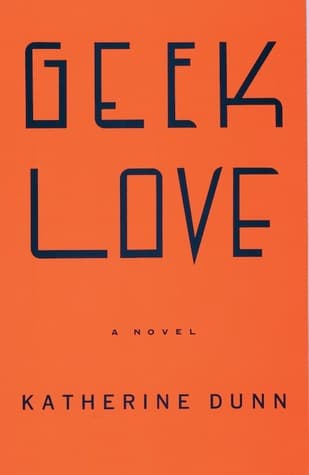
Synopsis
Covers the whole plot, including the ending.
- Difficulty
- Medium
- Pacing
- Moderate
- Mood
- Dark, Provocative, Unsettling, Peculiar, Thought-provoking
- Read it if
- You enjoy dark, unconventional literary fiction that explores themes of family, identity, and the grotesque with a unique and provocative voice.
- Skip it if
- You are sensitive to disturbing imagery, themes of body modification, or find morally ambiguous characters and settings off-putting.
Geek Love Plot Summary
Covers the whole plot, including the ending.
The Binewski Family: A Peculiar Genesis
Olympia 'Oly' Binewski, an albino hunchback dwarf, begins her story from a trailer park, telling of her family's unusual history. Her parents, Aloysius and Crystal Lil Binewski, committed carnies, deliberately bred their children to be 'freaks' for their traveling show, Binewski's Carnival Fabulon. They did this by taking various substances during Crystal Lil's pregnancies, including amphetamines, arsenic, and radioisotopes. Oly describes her siblings: Arturo the Aquaboy, born with flippers; Iphy and Elly, conjoined twins; and Chick, who seems normal but has a mysterious, unsettling power. Oly herself is a result of this intentional genetic engineering, serving as the family's historian and a main performer.
Arturo's Rise to Power
As the Binewski children grow up, Arturo, the Aquaboy, with his charming and manipulative personality, quickly becomes the show's star and the dominant figure among his siblings. His act involves submerging himself in a tank, holding his breath for an unusually long time. He starts to demand more control over the carnival's operations, subtly undermining his parents' authority. His ambition is vast, and he sees the carnival as his own kingdom. Oly, despite her physical limits, is very loyal to Arturo, often acting as his confidante and helper, even as she sees his cruelty and desire for power.
The Rise of 'Arturism' and the Chardins
Arturo's fame goes beyond the usual carnival audience, attracting a group of devoted followers called the 'Chardins.' These individuals, inspired by Arturo's unique body and his belief in embracing one's 'true self,' begin to willingly amputate their own limbs, thinking it brings them closer to Arturo's ideal of purity. This cult-like devotion raises Arturo to a god-like status among his followers, further boosting his ego and control. The Binewski family, especially Aloysius and Crystal Lil, are initially bothered by this extreme fanaticism but ultimately accept it because of the financial gains and increased fame it brings to the carnival.
The Binewski Family's Decline and Internal Strife
As the carnival's novelty fades and outside pressures increase, the Binewski's Carnival Fabulon faces financial trouble. The family must make hard choices, including selling some of their unique acts and even their own blood for money. This difficult period worsens the already tense relationships within the family. Arturo's harsh rule becomes more obvious, leading to open defiance from his parents and resentment from Iphy and Elly. Oly, always loyal to Arturo, finds herself caught in the middle, torn between her family and her brother's increasingly troubling plans.
Chick's Mysterious Powers and Growing Influence
Chick, the youngest and outwardly 'normal' Binewski child, has a hidden and terrifying power: telekinesis. At first, his abilities are subtle, moving small objects, but as he gets older, his control grows stronger and more destructive. He can move objects with his mind, often with terrible results. This power makes him both feared and a valuable asset to Arturo, who tries to use Chick's abilities for his own purposes. Chick's presence adds an unpredictable danger to the already unstable family dynamic, as his powers are largely uncontrolled and driven by his emotions.
The Betrayal and Arturo's Reckoning
Arturo's desire for power peaks, ending in a terrible betrayal against his own family. He plans to use Chick's powers for a dangerous performance, which goes very wrong. In a shocking turn, Arturo is responsible for the death of Iphy and Elly, the conjoined twins, a tragedy that breaks the family. This event is a turning point, showing the true extent of Arturo's depravity and forcing the remaining Binewskis to confront his harsh rule. Oly, devastated by the loss of her sisters, finally begins to question her strong loyalty to Arturo.
Oly's Escape and New Life
After her sisters' tragic death, Oly, disappointed and heartbroken, decides to leave the Binewski's Carnival Fabulon. She seeks a life away from the constant chaos and manipulation, trying to fit into 'normal' society. She finds work, tries to start new relationships, and even attempts to adopt a child, aiming for some sense of normalcy. However, her unique experiences and psychological scars from her upbringing make it impossible for her to truly escape her past. Memories of her family and Arturo's lasting influence continue to shape her views and choices.
The Return to the Carnival and Confrontation
Despite her attempts to build a new life, Oly is inevitably drawn back to the carnival. She learns of Arturo's continued existence and his weakened state, feeling a complex mix of resentment and lingering attachment. Her return brings her face-to-face with the remnants of her family and the rundown carnival. This reunion forces her to confront the unresolved trauma of her past, especially her complicated relationship with Arturo. She deals with feelings of guilt, love, and hatred, looking for some closure for the tragedies that happened.
The Legacy of 'Arturism' and the Chardins' Revenge
Even after Arturo's fall, the 'Arturism' cult, specifically the Chardins, still exists, though in a more scattered and vengeful form. They believe Arturo was wronged and want to punish those they hold responsible for his downfall. This fanaticism poses a threat to Oly and the remaining Binewskis, as the Chardins' devotion turns into a desire for revenge. Oly must navigate this dangerous situation, understanding that the results of Arturo's actions go far beyond the family itself, threatening anyone connected to him.
The Final Reckoning and Oly's Acceptance
In a final confrontation, Oly faces the ultimate results of her family's past and her own choices. She must take a firm stand against the remaining threats and finally confront Arturo's legacy directly. This final moment forces her to fully accept her identity as a Binewski, embracing both the beauty and horror of her unique heritage. Through this, Oly finds peace, understanding that while she cannot escape her origins, she can define her own future. She becomes the true inheritor and chronicler of the Binewski family's extraordinary, twisted story.
Principal Figures
Olympia 'Oly' Binewski
Protagonist
The albino hunchback dwarf narrator and chronicler of the Binewski family.
Oly is the primary narrator, an albino hunchback dwarf with a deep, complex love for her family, particularly her brother Arturo. She is intelligent, observant, and possesses a keen, often cynical, wit. Despite her physical deformities, she sees herself as a crucial part of the Binewski legacy, initially acting as Arturo's devoted confidante and later as the family's historian. Her self-perception is heavily intertwined with her 'freakishness,' which she embraces as an inherent part of her identity, rather than a disability.
Relationships: Arturo Binewski (Deeply devoted sister, later disillusioned and resentful); Crystal Lil Binewski (Daughter, often overshadowed by Arturo); Aloysius Binewski (Daughter, with a more distant relationship than with her mother); Iphy and Elly Binewski (Sisterly bond, mourns their loss deeply); Chick Binewski (Sister, intrigued and wary of his powers)
Arturo Binewski
Antagonist
The charismatic, manipulative Aquaboy with flippers for limbs.
Arturo is the star of the Binewski show, born with flippers and gills, performing as the 'Aquaboy.' He is intensely charismatic, intelligent, and profoundly manipulative, with a megalomaniac ambition that drives him to control everything and everyone around him. He exploits his unique biology and the devotion of his followers to build a cult of personality, 'Arturism.' Despite his charm, he is ruthless, cruel, and ultimately destructive, viewing people as tools to achieve his own twisted vision of greatness. His self-proclaimed divinity makes him incredibly dangerous.
Relationships: Olympia Binewski (His most devoted follower and confidante, whom he often manipulates); Crystal Lil Binewski (Son, often clashes with her over control of the carnival); Aloysius Binewski (Son, constantly vying for power and respect); Iphy and Elly Binewski (Brothers, ultimately responsible for their deaths); Chick Binewski (Brother, whom he attempts to exploit for his powers)
Crystal Lil Binewski
Supporting
The matriarch of the Binewski family, who intentionally bred her children to be 'freaks.'
Crystal Lil is the formidable matriarch of the Binewski family, a former trapeze artist who, along with her husband, conceived the idea of breeding 'freak' children to sustain their carnival. She is practical, resilient, and fiercely protective of her family, though her methods are unconventional and morally ambiguous. She possesses a certain earthy wisdom and a deep understanding of the carnival world. While she loves her children, her ambition for the carnival often overrides traditional maternal instincts, making her both a loving mother and a calculating showman.
Relationships: Aloysius Binewski (Husband and partner in their unique family enterprise); Arturo Binewski (Son, whom she both admires and struggles to control); Olympia Binewski (Daughter, with whom she shares a more traditional maternal bond); Iphy and Elly Binewski (Daughters, deeply mourns their loss); Chick Binewski (Son, protective of his unique nature)
Aloysius Binewski
Supporting
The patriarch of the Binewski family and owner of the carnival.
Aloysius is the patriarch of the Binewski family and the owner of the Binewski's Carnival Fabulon. He is a pragmatic and somewhat gruff man, but deeply committed to the carnival and his family's unique way of life. He shares Crystal Lil's vision for their 'freak' children and is proud of their creations. While he sometimes struggles to assert his authority, especially against Arturo, he remains a steady, if often bewildered, presence in the family. He represents the traditional carny spirit, valuing showmanship and the spectacle of the extraordinary.
Relationships: Crystal Lil Binewski (Wife and business partner); Arturo Binewski (Son, with whom he has a strained, competitive relationship); Olympia Binewski (Daughter); Iphy and Elly Binewski (Daughters); Chick Binewski (Son)
Iphy and Elly Binewski
Supporting
The beautiful, conjoined Siamese twins.
Iphy and Elly are the conjoined Siamese twins, described as beautiful and graceful. They share a physical bond and a unique, often playful, dynamic. Their act in the carnival relies on their synchronized movements and ethereal beauty. Despite their physical connection, they possess distinct personalities, though their individual identities are often subsumed into their shared existence. They represent a different facet of 'freakishness' – one that is aesthetically pleasing and captivating, in contrast to Arturo's more grotesque presentation. Their tragic fate highlights the dangers within the family.
Relationships: Arturo Binewski (Brothers, tragically victims of his ambition); Olympia Binewski (Sisters, Oly deeply mourns their loss)
Chick Binewski
Supporting
The outwardly normal, yet telekinetic, youngest Binewski child.
Chick is the youngest Binewski child, born seemingly 'normal' without visible deformities. However, he possesses the terrifying and uncontrollable power of telekinesis. His powers manifest subtly at first, then grow in strength and destructive capability, often reflecting his emotional state. He is quiet, enigmatic, and often overlooked, which makes his hidden power even more unsettling. Chick represents the idea that 'normalcy' can be a facade for something far more extraordinary and dangerous, challenging the family's definition of a 'freak.'
Relationships: Arturo Binewski (Brother, whom Arturo attempts to exploit); Olympia Binewski (Sister, wary of his powers)
Miss Lick
Supporting
A former Binewski performer who reappears in Oly's later life.
Miss Lick is a former carnival performer who had a brief, complex relationship with the Binewski family. She reappears in Oly's life after Oly leaves the carnival, representing a connection to her past that Oly both craves and fears. Miss Lick is a survivor, street-smart and cynical, offering Oly a glimpse into a world outside the family's immediate orbit, yet still steeped in its unique culture. Her presence forces Oly to confront the enduring legacy of her carnival upbringing.
Relationships: Olympia Binewski (Acquaintance from the carnival, later a complex confidante)
The Chardins
Supporting
Arturo's fanatical cult followers who voluntarily amputate their limbs.
The Chardins are a group of devoted, fanatical followers of Arturo, named after a fictional French philosopher. They are 'norms' who, inspired by Arturo's philosophy of embracing one's true self, voluntarily undergo amputations to emulate him and achieve a perceived state of spiritual purity. They are a manifestation of extreme devotion and the dangers of cult mentality, blurring the lines between admiration and self-destruction. Their presence highlights the broader societal impact of the Binewski's existence and Arturo's manipulative power.
Relationships: Arturo Binewski (Fanatical disciples and adherents to his cult, 'Arturism')
Themes & Insights
The Nature of 'Normal' vs. 'Freakish'
The novel constantly challenges and blurs the lines between what society calls 'normal' and 'freakish.' The Binewskis, who are intentionally 'freaks,' often show more genuine emotion and complex morals than the 'norms' they meet. The Chardins, 'norms' who mutilate themselves to become 'freaks,' further complicate this difference, suggesting that 'freakishness' can be a choice or even an ideal. Oly's struggle to live a 'normal' life outside the carnival shows how deeply her identity is tied to being 'other,' and how superficial societal definitions can be. The book suggests that true 'freakishness' might be in conformity or hidden malice, rather than outward appearance, as seen with the seemingly normal Chick.
“What is normal? ... Is it normal to be like everyone else? To have no identity of your own? Is it normal to be a clone, a copy, a shadow? Or is it normal to be yourself, to be unique, to be a freak?”
Family, Love, and Loyalty
Despite their unusual origins and internal conflicts, the Binewski family shares a fierce, if twisted, sense of love and loyalty. Their love often shows through protection and shared identity, even when Arturo is cruel. Oly's strong devotion to Arturo, even after his terrible acts, shows this complex loyalty. The novel explores how family bonds, no matter how dysfunctional, can be incredibly strong and lasting, shaping individual identities deeply. The 'us against the world' mindset of the carnival family reinforces this theme, showing how their unique situation creates an unbreakable, if sometimes destructive, connection.
“We were not normal, but we were family. And in our world, that was all that mattered.”
Identity and Self-Acceptance
The characters in Geek Love deal with their identities, both chosen and defined by others. Oly, as a self-aware 'freak,' ultimately accepts and even embraces her unique body and role as historian. Arturo creates an identity as a god-like figure, demanding complete acceptance and devotion. The Chardins seek identity through physical change, believing it brings them closer to an ideal. The novel suggests that true self-acceptance comes not from fitting into societal norms, but from understanding and embracing one's true self, however 'freakish' that may seem to others. The struggle to match one's inner self with outside perception is key to many characters' journeys.
“I am a freak. And I am proud of it. It's who I am, it's what I am, it's what I'll always be.”
The Corrupting Influence of Power
Arturo's story clearly shows how power corrupts. His charisma and unique appearance first make him a loved performer, but as he gains more control over the carnival and inspires a cult following, his ambition turns into a desire for absolute power and extreme cruelty. He uses his power to manipulate, exploit, and ultimately destroy those around him, including his own family. The Chardins' blind devotion further empowers him, showing how unchecked admiration can fuel a tyrant. The novel serves as a warning about the dangers of absolute power and how easily it can lead to moral decay and destructive behavior.
“Power is a drug. It's intoxicating, addictive, and it will destroy you.”
The Spectacle of Human Suffering and Exploitation
The entire idea of the Binewski's Carnival Fabulon is built on the spectacle and exploitation of human 'oddities.' The parents intentionally create their children to be exhibits, turning their deformities into a source of income and entertainment. This theme explores the ethics of profiting from physical differences and the audience's gaze. The novel highlights the fine line between fascination and exploitation, and how the 'freaks' themselves often become part of their own objectification. The Chardins' self-mutilation for Arturo also relates to this, as they willingly turn their bodies into a spectacle out of devotion, showing a different kind of exploitation.
“We were not just freaks; we were a spectacle. A living, breathing testament to the extraordinary.”
Plot Devices & Literary Techniques
First-Person Narrative (Unreliable Narrator)
The story is told from the subjective perspective of Oly, an albino hunchback dwarf.
Oly's first-person narration provides an intimate, often biased, view of the Binewski family and the carnival world. As a participant and observer, her perspective is deeply colored by her love for her family, particularly Arturo, and her own unique experiences. This makes her an unreliable narrator, as her emotions, loyalties, and physical limitations shape what she chooses to reveal and how she interprets events. The reader must constantly question her objectivity, adding layers of complexity to the story and encouraging a critical engagement with the narrative. Her unique voice is central to the novel's tone and thematic exploration.
Foreshadowing
Hints and clues about future events, particularly tragic ones, are scattered throughout the narrative.
The novel employs extensive foreshadowing, often subtly hinting at the tragic fates of characters, particularly Iphy and Elly, and the eventual downfall of Arturo. Oly's narrative voice frequently alludes to past events as if they have already happened, creating a sense of impending doom and inevitability. For example, her descriptions of Arturo's growing megalomania and Chick's uncontrolled powers subtly prepare the reader for the devastating consequences that unfold. This device builds suspense and allows the reader to anticipate, and dread, the unfolding tragedies, deepening the emotional impact of the plot twists.
Symbolism of the Carnival
The carnival serves as a microcosm of society and a symbol of the Binewski family's unique identity.
The Binewski's Carnival Fabulon is more than just a setting; it is a powerful symbol. It represents the family's identity, their livelihood, and their self-contained world, which operates by its own rules, distinct from 'normal' society. The carnival itself is a place of spectacle, illusion, and the grotesque, mirroring the internal dynamics and moral ambiguities of the Binewski family. It symbolizes the idea that life itself can be a performance, and that what appears 'freakish' on the outside often holds profound truths. Its eventual decline reflects the family's unraveling, and its enduring legacy for Oly represents her inescapable heritage.
Grotesque and Body Horror
The novel uses exaggerated and often disturbing physical descriptions to evoke strong emotional and psychological responses.
The novel heavily utilizes grotesque imagery and body horror, particularly in the descriptions of the Binewski family members and the Chardins' self-mutilations. These descriptions are not merely for shock value; they serve to highlight the themes of 'normalcy' and 'freakishness,' forcing the reader to confront their own preconceptions about beauty, deformity, and the human body. The physical 'abnormalities' are central to the characters' identities and their interactions with the world, making the grotesque a fundamental element of the novel's aesthetic and thematic exploration. It challenges the reader to find humanity and beauty in what might initially be perceived as repulsive.
Geek Love Quotes
“We are all of us, in some way, getting ready for something.”
“Every time someone new is born, it's a miracle. And every time someone new is born into a circus, it's a double miracle.”
“I was born a albino, but I grew into my own kind of freak.”
“Normal is a setting on a washing machine. With us, there is no normal.”
“The world has a way of weeding out the odd ones, if they don't find a way to weed themselves in.”
“Love is just a chemical, no matter what they say.”
“People don't want to be normal. They want to be special. They want to be freaks.”
“My father always said there's two kinds of people in the world: the ones that make it happen and the ones that watch it happen.”
“We were not just a family; we were a business. And a very successful one at that.”
“The real trick is to find a way to make your liabilities your assets.”
“Some secrets are like that: they don't stay buried. They just fester.”
“The world is a stage, and we are merely players. But some of us have better costumes.”
“It's not about being beautiful or ugly. It's about being memorable.”
“There are no mistakes, only lessons. And some lessons are harder than others.”
Quiz
10 questions on the plot and the characters. Each answer comes with a short explanation.
Question 1
What is the primary method by which Al and Crystal Lil Binewski produce their 'human oddities' children?
- They adopt children with existing physical deformities from various orphanages.
- They use a combination of amphetamine, arsenic, and radioisotopes during pregnancy.
- They selectively breed within their extended family, focusing on recessive traits.
- They perform surgical alterations on their children after birth to create unique features.
Show answer
B. They use a combination of amphetamine, arsenic, and radioisotopes during pregnancy. The Binewskis deliberately consume amphetamines, arsenic, and radioisotopes during Crystal Lil's pregnancies to induce the birth of their 'freak' children, as detailed in the book's synopsis and narrative.
Question 2
Which Binewski child is known as 'Aquaboy' due to his flippers for limbs?
- Chick
- Oly
- Arturo
- Iphy
Show answer
C. Arturo Arturo is the Binewski son known as Aquaboy, distinguished by his flippers and his ambitious, often tyrannical, personality.
Question 3
Who is the narrator of 'Geek Love'?
- Arturo the Aquaboy
- Crystal Lil Binewski
- Oly, the albino hunchback
- Chick, the outwardly normal child
Show answer
C. Oly, the albino hunchback The story is narrated by Oly, the albino hunchback daughter, who provides an introspective and often cynical account of her family's life.
Question 4
What is the name of the cult that forms around Arturo, centered on the idea of amputation and physical 'perfection'?
- The Aquaboy Disciples
- The Binewski Brigade
- The Chrysalids
- The Mutilated Messiahs
Show answer
C. The Chrysalids Arturo inspires a cult known as 'The Chrysalids,' whose members voluntarily undergo amputations, believing it will bring them closer to a new form of beauty and spiritual enlightenment, mirroring Arturo's own physical state.
Question 5
What unique, non-physical 'gift' does Chick possess that makes him both precious and dangerous to the family?
- He has the ability to perfectly mimic any sound or voice he hears.
- He can communicate telepathically with animals and influence their behavior.
- He possesses telekinetic abilities, able to move objects with his mind.
- He has precognitive visions, seeing glimpses of the future.
Show answer
C. He possesses telekinetic abilities, able to move objects with his mind. Chick, the outwardly normal child, possesses powerful telekinetic abilities, which he often uses to manipulate objects and people, making him a formidable and unpredictable force within the family.
Question 6
What is the primary motivation behind the Binewski parents' decision to breed their own 'freaks'?
- A scientific curiosity to understand genetic mutations.
- A desire to create a unique and successful carnival act to ensure their family's livelihood and legacy.
- A belief that physical abnormalities bring spiritual enlightenment.
- Rebellion against societal norms and a wish to shock the public.
Show answer
B. A desire to create a unique and successful carnival act to ensure their family's livelihood and legacy. Al and Crystal Lil's primary motivation is to create a truly unique and compelling carnival act. They believe that 'breeding their own' ensures a steady supply of genuine 'freaks' for their show, guaranteeing their family's financial stability and continuing their carny legacy.
Question 7
What is the ultimate fate of Arturo, the Aquaboy, in the narrative?
- He leaves the carnival to become a successful mainstream performer.
- He is killed by his own followers in a ritualistic sacrifice.
- He is accidentally killed by Chick's telekinetic powers during a performance.
- He is intentionally killed by Oly to protect her daughter Miranda from his influence.
Show answer
D. He is intentionally killed by Oly to protect her daughter Miranda from his influence. Arturo is ultimately killed by Oly. Fearing his manipulative influence over her daughter Miranda and seeking to prevent Miranda from being sacrificed to 'The Chrysalids,' Oly intentionally drowns him.
Question 8
What significant event leads to the Binewski carnival's decline and eventual disbandment?
- A series of government regulations making 'freak shows' illegal.
- A devastating fire that destroys most of their equipment and animals.
- The death of Crystal Lil and Al, leaving the children without leadership.
- The scandal and public outrage surrounding Arturo's cult, 'The Chrysalids,' and his subsequent death.
Show answer
D. The scandal and public outrage surrounding Arturo's cult, 'The Chrysalids,' and his subsequent death. The public scandal and legal repercussions following the formation of Arturo's cult, 'The Chrysalids,' and the discovery of the amputations, combined with Arturo's death, severely damage the Binewski's reputation and lead to the carnival's decline and eventual breakup.
Question 9
What is the central theme explored through the Binewski family's existence and their interactions with the 'normals'?
- The pursuit of wealth and material possessions.
- The arbitrary nature of 'normalcy' and 'freakishness,' and the human desire for belonging and acceptance.
- The dangers of unchecked scientific experimentation.
- The corruption of power and the downfall of tyrannical leaders.
Show answer
B. The arbitrary nature of 'normalcy' and 'freakishness,' and the human desire for belonging and acceptance. A core theme of 'Geek Love' is the exploration of what constitutes 'normal' versus 'freakish.' The Binewskis, despite their physical differences, form a cohesive family unit, often highlighting the hypocrisy and cruelties of the so-called 'normal' world, and underscoring the universal human need for connection and identity.
Question 10
What is the relationship between Oly and Miranda at the end of the book?
- Miranda is Oly's biological daughter, born with her own unique deformity.
- Miranda is Oly's adopted daughter, whom Oly is trying to protect from the Binewski legacy.
- Miranda is Oly's estranged sister, who returns to reconcile with the family.
- Miranda is Oly's imaginary friend, a manifestation of her loneliness.
Show answer
B. Miranda is Oly's adopted daughter, whom Oly is trying to protect from the Binewski legacy. Miranda is Oly's adopted daughter, a 'normal' child whom Oly is fiercely protective of. Oly's actions, particularly Arturo's murder, are driven by her desire to save Miranda from the destructive aspects of the Binewski family and the 'freak' lifestyle.
Geek Love FAQ
What is the core premise of 'Geek Love'?
The novel centers on the Binewski family, a carny clan whose parents deliberately breed their children to be 'freaks' for their traveling carnival act. Through various genetic manipulations, they produce unique offspring like Arturo the Aquaboy, Siamese twins Iphy and Elly, and the albino hunchback narrator, Oly.
Who is Oly and what is her role in the story?
Oly is the albino hunchbacked narrator and protagonist of 'Geek Love'. She is deeply observant and often feels overlooked, yet she possesses a profound understanding of her family's complex dynamics and the allure of their 'freakish' existence, making her an unreliable but insightful guide.
Who is Arturo the Aquaboy and what are his ambitions?
Arturo is Oly's older brother, born with flippers instead of limbs, and is the star attraction of the Binewski carnival. He is a charismatic and manipulative figure with a messianic complex, aiming to establish a cult of 'Arturism' where people voluntarily amputate their limbs to emulate him.
What is the significance of Chick in the Binewski family?
Chick is the youngest Binewski child, born seemingly 'normal' but possessing a mysterious, potentially supernatural ability to make objects appear and disappear. He is the family's most cherished and feared secret, representing both their greatest pride and their most dangerous asset due to his unpredictable powers.
What is the 'Chrystalis' and how does it relate to Arturo's ideology?
The 'Chrystalis' is Arturo's fanatical cult, which preaches voluntary amputation as a path to spiritual enlightenment and belonging. Followers of the Chrystalis believe that by sacrificing their limbs, they can achieve a higher state of being, mirroring Arturo's own physical 'perfection' as the Aquaboy.
What is the underlying connection between the Binewski family and the concept of 'normalcy'?
The Binewskis intentionally subvert traditional notions of normalcy, finding beauty and purpose in their 'freakishness.' Their existence challenges the reader to question what constitutes normal and abnormal, suggesting that 'normal' can be just as, if not more, confining and unnatural than their self-created identities.
How does Oly's internal conflict regarding her 'normal' daughter, Miranda, reflect the novel's themes?
Oly's struggle with Miranda's normalcy highlights her deep-seated belief that true belonging and love are found within the 'freak' community. She fears Miranda will be an outsider in her own family, demonstrating the Binewski's inverted value system where being 'different' is the norm and being 'normal' is the anomaly.
What role do the Siamese twins, Iphy and Elly, play beyond their physical uniqueness?
Iphy and Elly represent a complex duality of unity and individuality. Their shared body forces an intimacy that is both comforting and suffocating, and their distinct personalities often clash, embodying the internal conflicts and rivalries present within the larger Binewski family dynamic.
How does the novel explore the concept of beauty?
The novel radically redefines beauty, presenting the Binewski 'freaks' as paragons of a unique aesthetic. Their physical differences are not presented as deformities but as intentional, celebrated forms of art and identity, challenging conventional standards and suggesting beauty is subjective and culturally constructed.
What is the significance of the carnival setting for the Binewski family's story?
The carnival provides a natural habitat and a stage for the Binewski family, allowing them to monetize and celebrate their unique existences. It creates a space where the 'freakish' is admired, and the outside world is viewed as the true spectacle, reinforcing their self-contained and inverted social order.
How does Oly's narrative voice contribute to the novel's unsettling atmosphere?
Oly's detached yet deeply personal narration, combined with her matter-of-fact descriptions of the grotesque and her internal justifications for her family's actions, creates a disorienting and unsettling effect. Her perspective normalizes the abnormal, forcing the reader to confront their own biases and discomfort.
What might be the symbolic meaning of Chick's mysterious abilities?
Chick's ability to create and destroy objects could symbolize the family's ultimate control over their own reality and identity, or perhaps the chaotic, unpredictable nature of genetic manipulation. He represents a raw, untamed power that defies explanation, hinting at the fantastical elements within their otherwise grounded existence.
Is there a deeper meaning to the parents' decision to breed 'freaks'?
Beyond financial gain, the parents' actions can be interpreted as a radical form of self-expression and control, an act of creation in defiance of societal norms. It's a statement that they will define their own legacy and beauty, rather than conforming to external expectations of family and success.
How does the theme of sibling rivalry manifest within the Binewski family?
Sibling rivalry is a central driver of the plot, particularly between Arturo and Oly. Arturo's megalomania and Oly's simmering resentment, alongside the twins' internal struggles, highlight the fierce competition for parental affection, spotlight attention, and control within their insular and competitive family unit.
What is the significance of the arsenic and other substances used by the parents?
The use of arsenic, amphetamines, and radioisotopes by the parents underscores their extreme dedication and scientific, almost alchemical, approach to creating their 'family art.' These substances symbolize their willingness to push boundaries and embrace dangerous methods to achieve their desired genetic outcomes.
What is the 'Alif' and how does it connect to the family's past?
The 'Alif' is a secret, hidden room or space within the carnival where the family keeps a preserved, revered 'original freak' or a relic of their lineage. It represents the historical foundation of their identity and the deep, almost religious, reverence they hold for their unique heritage and the 'freak' tradition.
How does the novel critique societal perceptions of disability?
'Geek Love' challenges the pity and revulsion often associated with disability by portraying the Binewski children as powerful, self-possessed, and even enviable. Their 'disabilities' are reframed as unique abilities and sources of identity, compelling readers to question their own preconceived notions and prejudices.
What is the ultimate fate or revelation surrounding Chick?
Chick's fate is tragic and ambiguous; he is eventually killed by Arturo, who fears his power and the threat he poses to his own dominance. His death reveals the destructive potential of sibling rivalry and the family's willingness to eliminate even their most precious members for control.
How does Oly's physical appearance reflect her inner self?
Oly's albino skin and hunchback physically mark her as an outsider even within her own family of 'freaks,' mirroring her internal feelings of being overlooked and less spectacular than her siblings. However, her unique perspective and keen observation skills are her true strengths, allowing her to see truths others miss.
About the author

Katherine Dunn was an American author known for her unique blend of fiction and dark themes. Her most notable work, "Geek Love," explores the lives of a family of circus performers with physical abnormalities. Dunn's writing often delves into the complexities of identity and the human condition.
Similar books
- The Master And Margarita
Mikhail Bulgakov
4.3 (243k) average on GoodreadsFantasyFeatures satirical, magical realism with a cast of bizarre and unforgettable characters.
- Tenth of December
George Saunders
4.0 (62k) average on GoodreadsLiterary FictionExplores the absurdities and profundities of human nature through distinct, often marginalized characters.
- Something Wicked This Way Comes
Ray Bradbury
3.9 (100k) average on GoodreadsFantasyDeals with the dark, seductive nature of a mysterious carnival and its impact on a small town.
- Fingersmith
Sarah Waters
4.0 (81k) average on GoodreadsHistorical FictionFingersmith shares a focus on marginalized characters and the manipulation of identity, particularly within Victorian societal constraints. Both novels feature intricate plots of betrayal and self-discovery. However, Waters' novel is a historical fiction thriller, grounded in a realistic (albeit heightened) world, while Geek Love leans heavily into the fantastical and surreal with its genetically engineered 'freaks.' Waters explores class, gender, and sexuality within a plausible historical framework, whereas Dunn pushes the boundaries of biological possibility to explore the essence of humanity itself.
- The Old Man and the Sea
Ernest Hemingway
3.8 (831k) average on GoodreadsLiterary FictionA Cuban fisherman's long struggle with a giant marlin becomes a story of endurance and dignity, now retold for young adults with illustrations, phonetic guides, and writing prompts in Traditional Chinese.
- One Hundred Years of Solitude
Gabriel García Márquez
4.1 (753k) average on GoodreadsLiterary FictionThrough the multi-generational story of the Buendía family, a mythical town deals with the repeating patterns of time, love, and solitude, as the extraordinary mixes with the ordinary.




Enjoyed the summary?
A summary gives you the shape of the book. The book itself has the detail, the examples and the voice.
Find Geek Love on AmazonAs an Amazon Associate, BookBrief earns from qualifying purchases. How we're funded