

Synopsis
Covers the whole plot, including the ending.
- Difficulty
- Medium
- Pacing
- Moderate
- Mood
- Mysterious, Suspenseful, Atmospheric, Melancholy, Introspective
The Mystery of Edwin Drood Plot Summary
Covers the whole plot, including the ending.
The Dawn of a Double Life
The novel opens in a London opium den, where John Jasper, choirmaster of Cloisterham Cathedral, is in a drug-induced stupor. He has vivid, disturbing hallucinations. His inner conflict and the contrast between his secret life and public image are clear. He is later seen back in Cloisterham, appearing to be a pillar of the community, preparing for his nephew, Edwin Drood, to arrive. This initial contrast sets up the story's themes of deception and hidden motives. Jasper's obsession with his nephew's fiancée, Rosa Bud, is hinted at, adding to his character's psychological depth.
Cloisterham's Quiet Life and Engaged Troubles
Edwin Drood arrives in Cloisterham to visit his uncle John Jasper and his fiancée, Rosa Bud, a student at Miss Twinkleton's Seminary. Their engagement, arranged by their late fathers, is one of duty, not true affection. Both Edwin and Rosa are young, somewhat immature, and increasingly uncomfortable with marrying each other. They confide in each other about their mutual indifference and decide to break off their engagement, agreeing to remain friends. This decision frees them but creates potential problems, especially given Jasper's feelings for Rosa.
The Arrival of the Landless Twins
Two new characters, Neville and Helena Landless, arrive in Cloisterham from Ceylon for their education. Neville is a passionate, somewhat temperamental young man. Helena is his fiercely protective and intelligent twin sister. Neville studies with Reverend Septimus Crisparkle, and Helena joins Rosa at Miss Twinkleton's. Neville quickly becomes infatuated with Rosa. This, combined with his fiery personality and Edwin's condescending attitude, causes immediate tension between the two young men. Their first meeting at a dinner party hosted by Jasper results in a heated argument, hinting at future conflict and making Neville a potential suspect.
A Christmas Eve of Ill Omen
As Christmas Eve approaches, John Jasper arranges a reconciliation dinner between Edwin Drood and Neville Landless. Despite initial tension, the two young men seem to make amends. Edwin even gives Neville a valuable ring as a sign of their renewed friendship. Later that evening, Edwin and Jasper are seen together, with Edwin preparing to leave Cloisterham. A severe storm rages, adding an ominous mood to the night. Edwin is last seen with his uncle, establishing a timeline for his disappearance. The storm provides a dramatic background to the coming mystery, obscuring events and adding to the sense of foreboding.
The Disappearance
The morning after Christmas Eve, Edwin Drood is gone. His rooms are empty, with no trace of him. A search begins, leading to the discovery of some of his personal items, including his watch and a scarf, near the weir by the river. This suggests foul play. The town is alarmed and confused. John Jasper, despite his outward grief, is immediately suspected by some, given his known jealousy and previous public argument with Neville Landless. The mystery deepens because no body is found, leaving open the question of whether Edwin is dead or just missing.
Suspicion Falls on Neville
Because of his public quarrel with Edwin and his known temper, Neville Landless quickly becomes the main suspect in Edwin Drood's disappearance. He is arrested and questioned by the local authorities, led by the pompous Mayor Sapsea. Despite circumstantial evidence and public opinion, there is no direct proof connecting Neville to Edwin's disappearance or death. With help from Reverend Crisparkle and his sister Helena, Neville is eventually released. However, suspicion still hangs over him, forcing him to leave Cloisterham to continue his studies elsewhere.
Jasper's Obsession and Rosa's Fear
After Edwin's disappearance, John Jasper's dark obsession with Rosa Bud becomes more obvious and disturbing. He tells her his feelings, expressing a possessive, controlling love that frightens Rosa deeply. She is repulsed by his intensity and veiled threats, especially since she suspects he was involved in Edwin's fate. Rosa confides her fears in Helena Landless, who becomes her protector. Jasper's pursuit adds another layer of menace to the story, showing his manipulative nature and further establishing him as the main antagonist, even without definitive proof of his guilt regarding Edwin.
The Arrival of Datchery
A new character, a white-haired, elderly gentleman named Dick Datchery, arrives in Cloisterham and finds lodging. He presents himself as an idle, curious person with no particular goal, but he soon observes John Jasper with an unsettling intensity. Datchery's true identity and motives are mysterious, leading readers to wonder if he is a detective, a disguised character from earlier in the novel, or someone else. His presence introduces a new investigative element to the plot, suggesting that Edwin's disappearance is not forgotten and that someone is actively seeking the truth, possibly closing in on the culprit.
The Opium Woman's Return
The old woman who runs the opium den in London, where Jasper was first seen, comes to Cloisterham. She is a mysterious, gaunt figure, and she clearly recognizes Jasper from his visits to her establishment. Her arrival in the quiet cathedral town creates a sense of foreboding and suggests that Jasper's secret life is about to be exposed. She seems to know or suspect something about Jasper's darker activities. Her presence indicates a possible confrontation or revelation about his double life and his connection to Edwin's disappearance. Her pursuit of Jasper adds pressure to his increasingly difficult situation.
Unfinished Business
The novel ends abruptly with Datchery still watching Jasper, the opium woman circling Jasper, and Rosa still under the threat of Jasper. The mystery of Edwin Drood's disappearance remains unsolved, and the identities of several key figures, including Datchery, are unclear. Dickens's sudden death left the story incomplete, leaving readers with many questions: Is Edwin Drood truly dead? Is John Jasper the murderer? Who is Datchery? The unfinished novel has led to centuries of speculation and theories, making it one of history's most famous literary puzzles.
Principal Figures
John Jasper
Antagonist
The choirmaster with a sinister secret life.
John Jasper is the choirmaster of Cloisterham Cathedral and Edwin Drood's uncle. Outwardly respectable and artistic, he leads a secret life frequenting opium dens, where he experiences disturbing hallucinations. He is deeply, possessively, and unhealthily in love with Rosa Bud, his nephew's fiancée, a fact he conceals until Edwin's disappearance. Jasper is manipulative, cunning, and capable of extreme duplicity, using his position and charm to mask his dark intentions and potentially murderous jealousy. His internal conflict between his public persona and his private vices drives much of the novel's psychological tension.
Relationships: Edwin Drood (Nephew; rival for Rosa's affection); Rosa Bud (Obsessive, unrequited love interest); The Opium Woman (Client; source of his addiction)
Edwin Drood
Protagonist
The young man whose disappearance is the central mystery.
Edwin Drood is a young, somewhat impetuous and carefree orphan, betrothed to Rosa Bud by their late fathers. He is intended to become an engineer in Egypt. While generally good-natured, he can be a bit condescending and thoughtless, particularly in his initial interactions with Neville Landless. He and Rosa mutually agree to break off their engagement, remaining friends. His sudden and unexplained disappearance on Christmas Eve forms the core mystery of the novel, making him the catalyst for the entire plot, though his character is less developed than others due to his early exit from the narrative.
Relationships: John Jasper (Uncle; guardian); Rosa Bud (Fiancée (later ex-fiancée and friend)); Neville Landless (Initial rival; later reconciled)
Rosa Bud
Supporting
The innocent young woman at the center of Jasper's obsession.
Rosa Bud is a beautiful and sensitive orphan, a student at Miss Twinkleton's Seminary. She is initially engaged to Edwin Drood, but they mutually agree to part ways as friends. After Edwin's disappearance, she becomes the object of John Jasper's terrifying and possessive affection. Rosa is gentle but possesses an inner strength, particularly in her defiance of Jasper and her refusal to succumb to his advances. She represents innocence and vulnerability threatened by the darker forces at play in Cloisterham, finding solace and protection in Helena Landless and Reverend Crisparkle.
Relationships: Edwin Drood (Fiancée (later ex-fiancée and friend)); John Jasper (Object of his obsession; fearful of him); Helena Landless (Close friend and protector)
Neville Landless
Supporting
The hot-tempered twin from Ceylon, initially a prime suspect.
Neville Landless is a passionate, quick-tempered young man from Ceylon, sent to Cloisterham for his education under the Reverend Septimus Crisparkle. He is fiercely devoted to his twin sister, Helena. Neville is prone to outbursts of anger, particularly when provoked, which makes him an easy target for suspicion after Edwin Drood's disappearance. He develops a crush on Rosa Bud, further complicating his relationship with Edwin. Despite his volatile nature, he is fundamentally good-hearted and genuinely seeks to improve himself, suffering unjustly from the accusations against him.
Relationships: Helena Landless (Twin sister; fiercely protective); Edwin Drood (Initial rival; later reconciled); Reverend Septimus Crisparkle (Tutor; protector)
Helena Landless
Supporting
Neville's intelligent and fiercely loyal twin sister.
Helena Landless is Neville's twin sister, also from Ceylon, and a student at Miss Twinkleton's. She is strong-willed, intelligent, and fiercely loyal, particularly to her brother and later to Rosa Bud. Helena possesses a remarkable calmness and perceptiveness, often seeing through the facades of others, including Jasper. She acts as a protector and confidante to Rosa, and her unwavering belief in Neville's innocence makes her a significant figure in seeking justice. Her character embodies resilience and quiet strength, standing in stark contrast to the more conventional Victorian female roles.
Relationships: Neville Landless (Twin sister; fiercely protective); Rosa Bud (Close friend; confidante); Reverend Septimus Crisparkle (Supporter; friend)
Reverend Septimus Crisparkle
Supporting
The kind-hearted Minor Canon who tutors Neville.
The Reverend Septimus Crisparkle is a Minor Canon of Cloisterham Cathedral, a kind, good-natured, and somewhat naive clergyman. He takes Neville Landless under his wing as a student and acts as a moral compass and supportive figure for many characters. Despite his gentle nature, he demonstrates firmness when necessary, particularly in defending Neville from unjust accusations. He is a source of comfort and practical assistance for Rosa and Helena, embodying Christian charity and unwavering belief in justice. His earnestness provides a contrast to the duplicity of other characters.
Relationships: Neville Landless (Tutor; protector); Helena Landless (Friend; supporter); Rosa Bud (Confidante; supporter)
Dick Datchery
Supporting
The mysterious white-haired stranger investigating Jasper.
Dick Datchery is a mysterious, white-haired gentleman who arrives in Cloisterham and takes lodgings, presenting himself as a leisurely bachelor. However, he quickly begins to observe John Jasper with an unusual intensity and purpose, suggesting he is investigating Edwin Drood's disappearance. His true identity is one of the novel's central unsolved mysteries, with many theories postulating that he is a disguised character from earlier in the story (such as Bazzard or even Edwin Drood himself). Datchery represents the active pursuit of justice and the uncovering of truth, acting as a direct counterpoint to Jasper's hidden life.
Relationships: John Jasper (Target of investigation)
The Opium Woman
Supporting
The proprietor of the opium den, connected to Jasper's secret life.
The Opium Woman is a gaunt, mysterious figure who runs the opium den in London, where John Jasper frequently indulges his addiction. She recognizes Jasper and seems to possess some hidden knowledge or suspicion about his darker activities. Her later appearance in Cloisterham, following Jasper, signifies the potential unraveling of his secret life and adds a layer of eerie foreboding to the narrative. She is a symbol of Jasper's hidden vices and the dangerous consequences of his double life, acting as a silent, yet potent, threat to his carefully constructed facade.
Relationships: John Jasper (Client; holds knowledge about him)
Mr. Sapsea
Supporting
The pompous, self-important Mayor of Cloisterham.
Mr. Sapsea is the mayor of Cloisterham, a conceited and self-important auctioneer who believes himself to be a man of great wisdom and consequence. He is characterized by his verbose pronouncements and his inflated sense of his own importance, often to comic effect. Sapsea plays a role in the initial investigation of Edwin Drood's disappearance, though his efforts are largely misguided and driven by a desire for public recognition rather than genuine insight. He is a satirical representation of provincial pomposity and incompetence within the local authority.
Themes & Insights
The Duality of Human Nature
This theme explores the contrast between public appearance and private reality, especially in John Jasper. He shows a respectable, artistic face as choirmaster, while secretly using opium and having dark, obsessive desires. The novel examines the psychological depth of this duality, suggesting that even seemingly upright people can hide a sinister side. This theme extends to the quiet, seemingly peaceful town of Cloisterham, which hides violence and deceit beneath its calm exterior.
“And now a light broke in upon him. What was that which was always coming and going in the Cloisterham streets, and which he had always been half conscious of and half unconscious of, without ever having been able to fix it? It was the shadow of himself.”
Obsession and Unrequited Love
The destructive power of unrequited love and obsessive desire is a main theme, mostly seen in John Jasper's fixation on Rosa Bud. His love is not gentle or selfless, but possessive, jealous, and terrifying. This obsession drives his actions, possibly leading him to murder. The novel explores how intense, unchecked desires can corrupt someone and threaten those around them. Rosa's fear and disgust show the sinister nature of Jasper's 'love.'
“He knew that he was a man of a wild and passionate nature; but he had never known how wild and passionate until he saw her.”
Justice and Investigation
The novel is a mystery, so the pursuit of justice and the investigation process are key themes. After Edwin Drood disappears, various characters, both official and unofficial, try to find the truth. The initial investigation is hindered by circumstantial evidence and public prejudice, leading to Neville Landless being wrongly suspected. Dick Datchery's later arrival suggests a more deliberate way to uncover the truth, representing the ongoing human need for resolution and accountability, even when facing deception.
“There was a air of mystery in the place which was not lost on him, and which he was evidently disposed to take his time in unravelling.”
The Burden of the Past
The past greatly influences the present in the novel. The arranged engagement between Edwin and Rosa, a legacy from their fathers, shapes their initial relationship. More deeply, Neville and Helena Landless, from Ceylon, carry their past experiences and cultural differences, which cause misunderstandings and prejudice in Cloisterham. John Jasper's own past, especially his secret opium addiction, directly affects his current actions. The novel suggests that past events and hidden histories inevitably shape current realities and future outcomes.
“The past, he knew, was not to be undone; but the future, with a little care, might be shaped anew.”
Plot Devices & Literary Techniques
Unreliable Narrator/Perspective
The narrative often focuses on characters' internal states and biases.
While not strictly an unreliable first-person narrator, the novel frequently delves into the subjective experiences and perceptions of its characters, particularly John Jasper's drug-fueled visions. This creates ambiguity and allows for multiple interpretations of events. The reader is often presented with what characters believe or suspect, rather than definitive facts, contributing to the mystery. This device encourages the reader to question motives and outcomes, making them an active participant in unraveling the 'mystery' rather than a passive recipient of information.
The MacGuffin (Edwin Drood's Disappearance)
The central, unresolved mystery that drives the plot.
Edwin Drood's disappearance serves as the primary MacGuffin of the novel. It is the central event that propels the plot forward, creating conflict, drawing characters together, and initiating various lines of inquiry. The 'mystery' of what happened to Edwin is not fully resolved within the unfinished text, making it a classic MacGuffin—an object or event that is crucially important to the plot, but whose specific nature or resolution is less significant than its effect on the characters and the narrative structure. It exists to motivate the characters and sustain the suspense.
The Double Life
Characters leading secret, contrasting existences.
The concept of a double life is a significant plot device, most prominently embodied by John Jasper. His respectable public persona as choirmaster sharply contrasts with his secret addiction to opium and his dark, obsessive inner world. This duality generates suspense and intrigue, as the reader is constantly aware of the hidden dangers lurking beneath the surface of Cloisterham's seemingly tranquil society. The device highlights themes of hypocrisy and deception, making the 'respectable' characters potentially the most dangerous, and complicating the identification of true villains.
Foreshadowing and Ominous Atmosphere
Hints of future events and a pervading sense of dread.
Dickens masterfully uses foreshadowing and creates an ominous atmosphere from the very beginning. Jasper's opium-induced visions, the stormy Christmas Eve, and the initial quarrel between Edwin and Neville all serve to hint at the tragic events to come. The descriptions of Cloisterham, while picturesque, often carry an undertone of decay and hidden secrets. This device builds suspense and creates a sense of dread, preparing the reader for the inevitable disappearance and the subsequent investigation, making the eventual mystery feel both shocking and somehow predestined.
Quiz
10 questions on the plot and the characters. Each answer comes with a short explanation.
Question 1
What is the primary genre of "The Mystery of Edwin Drood"?
- Romance
- Mystery
- Science Fiction
- Comedy
Show answer
B. Mystery The text explicitly states that the book is a 'Mystery'.
Question 2
Who is the author of "The Mystery of Edwin Drood"?
- David Paroissien
- Samuel Luke Fildes
- Charles Dickens
- John Jasper
Show answer
C. Charles Dickens The text clearly identifies Charles Dickens as the author of the novel.
Question 3
What event marks the disappearance of Edwin Drood?
- On New Year's Eve during a blizzard.
- On Christmas Eve during a storm.
- On his birthday in foggy weather.
- On Easter Monday in heavy rain.
Show answer
B. On Christmas Eve during a storm. The text states that Edwin disappears 'in the middle of a storm on Christmas Eve'.
Question 4
Who is Edwin Drood contracted to marry?
- Mrs. Sapsea
- Rosa Bud
- Helena Landless
- Agnes Wickfield
Show answer
B. Rosa Bud The novel's synopsis mentions that 'Edwin is contracted to marry orphan Rosa Bud'.
Question 5
Which character is suspected of being the killer of Edwin Drood, due to jealousy?
- Mr. Grewgious
- Crisparkle
- John Jasper
- Durdles
Show answer
C. John Jasper The text states that 'suspicion that his jealous uncle John Jasper, madly in love with Rosa, is the killer'.
Question 6
What is the name of the sleepy cathedral town where the story is set?
- London
- Dullborough
- Greshamsbury
- Cloisterham
Show answer
D. Cloisterham The text mentions 'the dark opium dens of the sleepy cathedral town of Cloisterham'.
Question 7
What substance is mentioned in relation to John Jasper's 'drug-fuelled fantasy life'?
- Laudanum
- Cocaine
- Morphine
- Absinthe
Show answer
A. Laudanum The text mentions 'dark opium dens' and 'drug-fuelled fantasy life', and an appendix on 'opium use in the nineteenth century', strongly implying opium or its derivatives like laudanum.
Question 8
Why is the novel "The Mystery of Edwin Drood" considered unique in Dickens's bibliography?
- It is his only historical novel.
- It was written in collaboration with another author.
- It was unfinished at the time of his death.
- It is the only novel without a clear protagonist.
Show answer
C. It was unfinished at the time of his death. The text states, 'Dickens died before completing The Mystery of Edwin Drood, leaving its tantalising mystery unsolved'.
Question 9
What additional materials are included in the Penguin Classics edition of "The Mystery of Edwin Drood"?
- A complete sequel written by another author.
- An introduction, chronology, notes, original illustrations, and appendices.
- A film adaptation script.
- A glossary of Victorian slang.
Show answer
B. An introduction, chronology, notes, original illustrations, and appendices. The text lists: 'an introduction by David Paroissien, discussing the novel's ending, with a chronology, notes, original illustrations by Samuel Luke Fildes, appendices on opium use in the nineteenth century, the 'Sapsea Fragment' and Dickens's plans for the story's conclusion.'
Question 10
The 'Sapsea Fragment' mentioned in the edition refers to what?
- A piece of Edwin Drood's diary.
- A draft of a chapter that was later removed.
- A piece of Dickens's writing related to the novel's potential conclusion.
- A legal document concerning the Drood estate.
Show answer
C. A piece of Dickens's writing related to the novel's potential conclusion. The text lists 'the 'Sapsea Fragment' and Dickens's plans for the story's conclusion' as appendices, indicating it's related to the author's intentions for the story.
The Mystery of Edwin Drood FAQ
What is The Mystery of Edwin Drood about?
The Mystery of Edwin Drood is Charles Dickens's final, unfinished novel. It follows the disappearance of Edwin Drood, who is engaged to Rosa Bud. Suspicion falls on his uncle, John Jasper, who is secretly in love with Rosa and a user of opium.
Who is the main suspect in Edwin Drood's disappearance?
The primary suspect is Edwin's uncle, John Jasper. Jasper is the choirmaster in Cloisterham and is consumed by a secret, obsessive love for Rosa Bud, Edwin's fiancée.
Why is The Mystery of Edwin Drood unfinished?
Charles Dickens died before he could complete the novel. This has left the central mystery of Edwin Drood's fate unsolved and has led to much speculation and debate among readers and critics.
What are some of the key themes in The Mystery of Edwin Drood?
Key themes include obsession, jealousy, the duality of human nature (respectable appearance vs. dark inner life), addiction (specifically to opium), and duty versus affection in relationships.
What is the significance of opium in the novel?
Opium plays a significant role, particularly in the character of John Jasper. His opium use fuels his fantasies and likely contributes to his disturbed mental state and potential actions surrounding Edwin's disappearance.
Where does the story of The Mystery of Edwin Drood take place?
The novel is primarily set in the sleepy cathedral town of Cloisterham, England. The dark opium dens of the town also feature as a setting, highlighting the contrast between outward respectability and hidden vice.
What is the 'Sapsea Fragment' mentioned in the edition?
The 'Sapsea Fragment' is an additional piece of writing by Dickens that provides further insight into his planned story. It helps readers and critics understand Dickens's intentions for the novel's direction before his death.
How does the unfinished nature of the book affect the reading experience?
The unfinished nature makes the reading experience uniquely engaging, turning the reader into a detective trying to piece together the clues and imagine possible resolutions. It sparks ongoing discussion and interpretation.
Who edited this Penguin Classics edition of The Mystery of Edwin Drood?
This Penguin Classics edition is edited with an introduction by David Paroissien. His introduction discusses the novel's ending and provides context for readers.
What other Charles Dickens novels are similar to The Mystery of Edwin Drood?
If you enjoy the atmospheric mystery and complex characters of The Mystery of Edwin Drood, you might also like Dickens's 'Little Dorrit,' which is also available in Penguin Classics. Many of his other novels also feature intricate plots and social commentary.
About the author
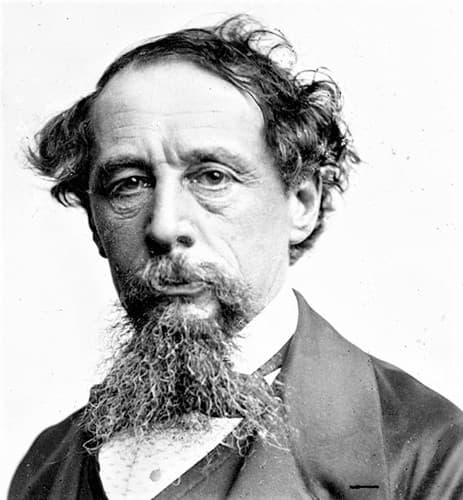
Charles John Huffam Dickens was an English writer and social critic who created some of the world's best-known fictional characters and is regarded by many as the greatest novelist of the Victorian era. His works enjoyed unprecedented popularity during his lifetime and, by the 20th century, critics and scholars had recognised him as a literary genius. His novels and short stories are widely read today.
Similar books
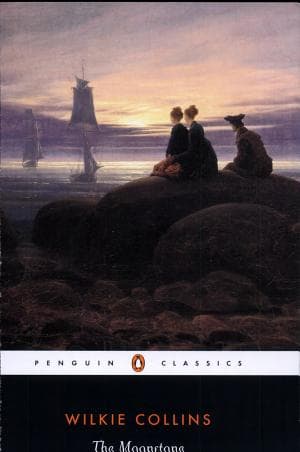
- The Moonstone
Wilkie Collins
3.9 (79k) average on GoodreadsHistorical FictionBoth Drood and The Moonstone are foundational works in the Victorian mystery genre. While Drood leans into psychological suspense and a more ambiguous, character-driven mystery, The Moonstone is a more conventional 'whodunit' with a clearer investigative structure and multiple narrators piecing together clues. Collins's novel offers a complete, satisfying resolution to its central theft, whereas Drood's enduring appeal lies in its tantalizing incompleteness and the endless theories it provokes. The Moonstone is arguably more of a pure detective novel, while Drood blends mystery with Dickens's signature character study and social observation.
- To Kill a Mockingbird
Harper Lee
4.3 (4.5M) average on GoodreadsHistorical FictionIn the 1930s Jim Crow South, Harper Lee writes about racial injustice, moral growth, and the quiet courage of a lawyer father, Atticus Finch, as seen through his young daughter's eyes.
- The Great Gatsby
F. Scott Fitzgerald
3.9 (3.8M) average on GoodreadsHistorical FictionIn the opulent Roaring Twenties, a mysterious millionaire's lavish parties hide his desperate, tragic pursuit of a lost love, exposing the emptiness within the American Dream.
- Pride and Prejudice
Jane Austen
4.3 (3M) average on GoodreadsHistorical FictionIn a society focused on status and money, Elizabeth Bennet navigates love and pride, challenging Mr. Darcy and social expectations to find true affection.
- Angels & Demons
Dan Brown
3.9 (2.7M) average on GoodreadsThrillerA Harvard symbologist races through Rome's ancient sites, deciphering cryptic clues to unmask the Illuminati and stop a vengeful plot to destroy the Vatican with a stolen antimatter weapon.
- The Kite Runner
Khaled Hosseini
4.3 (2.4M) average on GoodreadsHistorical FictionIn pre-Taliban Afghanistan, a wealthy boy's betrayal of his servant's son during a kite-running tournament starts a lifelong journey for amends as his country collapses.





Enjoyed the summary?
A summary gives you the shape of the book. The book itself has the detail, the examples and the voice.
Find The Mystery of Edwin Drood on AmazonAs an Amazon Associate, BookBrief earns from qualifying purchases. How we're funded