

Synopsis
Covers the whole plot, including the ending.
- Difficulty
- Medium
- Pacing
- Moderate
- Mood
- Thought-provoking, Reflective, Historical
- Read it if
- You are interested in the historical context and philosophical underpinnings of civil disobedience, or want a concise, character-driven exploration of Thoreau's life and ideas.
- Skip it if
- You prefer fast-paced action or a more traditional narrative structure without frequent flashbacks.
The Night Thoreau Spent in Jail Plot Summary
Covers the whole plot, including the ending.
The Arrest
The play starts with Henry David Thoreau, a young philosopher and naturalist, being arrested by Sam Staples, the local tax collector and constable, for refusing to pay his poll tax. It is July 1846 in Concord, Massachusetts. Thoreau, discussing government and individual conscience with his mentor, Ralph Waldo Emerson, is taken to the Concord jail. His refusal is a protest against the Mexican-American War and slavery, which he believes his tax money would support. Emerson, though he agrees with Thoreau's ideas, believes in working within the system and is upset by Thoreau's act. Staples, while doing his job, shows some respect for Thoreau, recognizing his intelligence even if he disagrees with his methods.
A Night in Jail
Inside the jail, Thoreau is put in a cell with Bailey, a kind but uneducated man arrested for arson. Thoreau immediately talks to Bailey, trying to teach him and understand his view. He sees other prisoners, including a simple Irishman and a man named Williams, who cares more about practical things than principles. This night helps shape Thoreau's philosophy, as he deals with the real effects of his civil disobedience. He finds unexpected friendship and a chance to test his ideas against human experience, all while keeping his intellectual and moral stand against unfair laws.
Flashbacks to Walden Pond
Throughout the night, Thoreau thinks about his life at Walden Pond, shown in flashbacks. These scenes show him building his cabin, watching nature, and having deep talks with friends and family, especially his brother, John. These memories show his commitment to living a simple, self-sufficient life, free from society's expectations and material things. He remembers the joy of learning and his strong connection with nature. These flashbacks explain the philosophical basis of his protest, emphasizing his belief in individual truth and living intentionally.
The Influence of John Thoreau
A large part of Thoreau's flashbacks focuses on his relationship with his brother, John. Their intellectual and spiritual bond is clear, as they share dreams of opening a school and discuss deep philosophical questions. John's early death from tetanus greatly affects Henry, shaping his view of the world and making him more committed to living a life of purpose and honesty. The memory of John always reminds him of how short life is and how important it is to stick to one's principles. Their shared experiences, especially their decision to refuse to pay the church tax, hint at Henry's later act of civil disobedience.
The Schoolhouse Incident
One important flashback shows Henry and John as teachers. They started a progressive school where they used new teaching methods, valuing discussion and understanding over memorization and physical punishment. However, their refusal to use physical discipline, like whipping, on their students, as was common then, leads to a conflict with the school board. This principled stand, shared by both brothers, forces them to resign. This event further strengthens Henry's belief in the importance of individual conscience and his willingness to defy unfair authority, preparing him for his later civil disobedience.
Emerson's Visit
Ralph Waldo Emerson visits Thoreau in jail, showing concern and trying to understand Henry's reasons. Their talk is a rich philosophical debate about freedom, responsibility, and the individual's role in society. Emerson asks, famously, 'Henry, what are you doing in there?' to which Thoreau replies, 'Waldo, what are you doing out there?' This exchange shows their different ways of approaching social change. Emerson believes in intellectual influence and slow reform, while Thoreau wants direct action and moral purity. Despite their disagreements, there is deep mutual respect between them, showing the intellectual excitement of the Transcendentalist movement.
Lydian's Concern
Lydian Emerson, Ralph Waldo Emerson's wife, also visits Thoreau, bringing him food and showing real concern for him. She represents a more practical and caring view, worried about the real effects of Thoreau's actions. While she admires his spirit, she also fears for his future and how his defiance might affect his life and reputation. Her visit adds human warmth and concern to the strict jail setting, emphasizing the personal cost of Thoreau's principles. She tries to persuade him to compromise, but Thoreau remains firm in his beliefs.
The Unexpected Release
To Thoreau's surprise and slight annoyance, he is released from jail the next morning. His aunt, or another anonymous person, has paid his poll tax. This act, while freeing him, also frustrates him, as it weakens the full impact of his protest. He wanted to continue his stand, to show the state's powerlessness against a truly principled individual. His release highlights the tension between individual will and societal intervention, and the difficulty of maintaining a pure protest when well-meaning people interfere. He returns to Walden Pond, his resolve unchanged.
Legacy and Influence
The play ends by emphasizing the lasting impact of Thoreau's night in jail and his essay, 'Civil Disobedience.' Although his immediate protest was cut short, his ideas would greatly influence future generations of activists, including Mahatma Gandhi and Martin Luther King Jr. The final scenes and narration suggest that while Thoreau's act might have seemed small and ineffective at the time, its philosophical meaning grew. The play shows the power of individual conscience to make change, even if the impact is not immediate or directly seen by the protester, establishing his place as a pioneer of nonviolent resistance.
The Power of One
Throughout his time in jail and his thoughts afterward, Thoreau's core belief in the power of the individual conscience against an unfair state is strengthened. He argues that true freedom comes from following one's moral compass, even if it means breaking the law. His interactions with other inmates, his mentor Emerson, and his own memories all contribute to a deeper understanding of his commitment. He recognizes that while his act may seem small, it is a necessary step toward a more just society, where individuals are not just parts of a government machine but moral agents responsible for their own actions and the actions of their government.
The Night Thoreau Spent in Jail Characters
Henry David Thoreau
Protagonist
A transcendentalist philosopher, naturalist, and advocate for civil disobedience.
Thoreau is a man of profound intellect, unwavering principles, and deep connection to nature. He values truth, simplicity, and individual conscience above all else. His refusal to pay his poll tax stems from a moral objection to the Mexican-American War and slavery, embodying his belief that one must not be an agent of injustice. He is articulate, passionate, and sometimes perceived as stubborn or aloof, but possesses a deep sensitivity, particularly regarding his late brother, John. He seeks to live deliberately and challenges societal norms through both his lifestyle and his political actions.
Relationships: Ralph Waldo Emerson (Mentor and intellectual sparring partner; a complex blend of admiration and disagreement.); John Thoreau (Beloved brother, intellectual companion, and moral inspiration; their bond is central to Henry's character.); Sam Staples (Local constable and tax collector; represents the law, but respects Thoreau's intellect.); Bailey (Cellmate; an uneducated man with whom Thoreau attempts to share his philosophy.)
Ralph Waldo Emerson
Supporting
A renowned transcendentalist philosopher and Thoreau's mentor.
Emerson is a respected intellectual figure, a leader of the Transcendentalist movement, and Thoreau's friend and mentor. He shares many of Thoreau's philosophical ideals but differs in his approach to social change, advocating for intellectual influence and gradual reform rather than direct civil disobedience. He is concerned for Thoreau's well-being and reputation, and their interactions highlight the tension between theory and practice. Emerson represents the more established, cautious wing of Transcendentalism, believing that change comes from within society's existing structures.
Relationships: Henry David Thoreau (Mentee and friend; a relationship marked by deep respect but also intellectual and practical divergence.); Lydian Emerson (Wife; a supportive partner who shares his concerns for Thoreau.)
John Thoreau
Supporting (flashback)
Henry's beloved brother and intellectual confidant, deceased before the main events.
John Thoreau is depicted primarily through Henry's vivid flashbacks and memories. He was Henry's closest companion, intellectual equal, and a significant moral influence. John shared Henry's progressive views, particularly on education and social justice, and their bond was profound. His premature death deeply affected Henry, reinforcing Henry's commitment to living a meaningful life guided by principle. John represents a lost ideal and a constant source of inspiration for Henry's philosophical and ethical stands, including their joint refusal to pay church taxes.
Relationships: Henry David Thoreau (Brother and soulmate; their bond is the most significant personal relationship in Henry's life.)
Sam Staples
Supporting
Concord's tax collector and constable.
Sam Staples is a pragmatic, duty-bound man who represents the practical arm of the law in Concord. While he carries out his duties, arresting Thoreau for non-payment of taxes, he is not portrayed as malicious. He shows a degree of respect for Thoreau's intelligence and character, even if he doesn't fully understand or agree with his philosophical motivations. Staples is a good-natured individual trying to navigate the complexities of his small-town responsibilities, and his interactions with Thoreau highlight the clash between abstract ideals and everyday realities.
Relationships: Henry David Thoreau (Arrested and jailed Thoreau; a professional relationship tempered by a degree of mutual respect.)
Bailey
Supporting
Thoreau's uneducated cellmate, arrested for arson.
Bailey is a simple, good-hearted man from a poor background, arrested for arson. He serves as a foil to Thoreau, representing the common, uneducated citizen who is more concerned with immediate survival and practicalities than with abstract philosophical principles. Despite his lack of formal education, Bailey possesses an innate kindness and a willingness to listen, even if he doesn't fully grasp Thoreau's complex ideas. His presence in the cell allows Thoreau to reflect on the universal human condition and the accessibility of his message to all people.
Relationships: Henry David Thoreau (Cellmate; Thoreau attempts to educate and understand him.)
Lydian Emerson
Supporting
Ralph Waldo Emerson's wife, a kind and pragmatic woman.
Lydian Emerson is portrayed as a caring and practical woman, deeply concerned for Thoreau's well-being. She visits him in jail, bringing comfort and sustenance, and expresses her worries about the consequences of his actions. She represents a nurturing, maternal perspective, grounded in the realities of everyday life, contrasting with the more abstract philosophical discussions of her husband and Thoreau. Her concern highlights the personal and social costs of civil disobedience, offering a different dimension to the play's exploration of principles.
Relationships: Henry David Thoreau (Friend; shows maternal concern for his welfare.); Ralph Waldo Emerson (Husband; shares his concerns but expresses them differently.)
Williams
Mentioned
Another inmate in the jail.
Williams is another inmate in the Concord jail, representing the average citizen who is imprisoned for more conventional crimes. His presence further illustrates the diverse population of a jail and provides Thoreau with more examples of human nature. He is less open to Thoreau's philosophical musings than Bailey, highlighting the varying receptiveness of individuals to radical ideas.
Relationships: Henry David Thoreau (Fellow inmate; a brief, observational interaction.)
The Irishman
Mentioned
A simple-minded inmate.
The Irishman is a minor character, a simple-minded inmate whom Thoreau observes in jail. He adds to the tapestry of characters within the jail, further illustrating the varied lives and circumstances of those incarcerated. His presence allows Thoreau to reflect on different forms of human experience and the universality of certain conditions, even if the Irishman himself is not a participant in the philosophical debates.
Relationships: Henry David Thoreau (Fellow inmate; observed by Thoreau.)
The Night Thoreau Spent in Jail Themes
Civil Disobedience and Individual Conscience
The main theme of the play is the individual's moral duty to defy unfair laws. Thoreau's refusal to pay his poll tax is a direct act of civil disobedience, coming from his belief that one must not support injustice (like the Mexican-American War or slavery). His famous line, 'If the law is of such a nature that it requires you to be an agent of injustice to another, then I say, break the law,' sums this up. The play explores the inner struggle and outer effects of putting one's conscience before state power, showing how a single act of defiance can have an impact far beyond its immediate moment.
“If the law is of such a nature that it requires you to be an agent of injustice to another, then I say, break the law.”
The Role of Government vs. The Individual
The play examines the tension between the power of the state and the freedom and moral responsibility of the individual. Thoreau argues for a government that governs least, believing that individuals should decide what is right and wrong. His imprisonment shows the state's power to force compliance, but his strong spirit questions that power's right when it conflicts with basic moral principles. The debate between Thoreau and Emerson further shows this theme, with Emerson supporting slow reform within the system and Thoreau demanding immediate, principled resistance.
“That government is best which governs least.”
Simplicity and Nature
Thoreau's life at Walden Pond, shown in flashbacks, emphasizes his commitment to simplicity, self-reliance, and a deep connection with nature. These values are not just an aesthetic choice but a philosophical stand against society's materialistic and corrupting influences. His time in nature helps him develop a clear mind and an independent spirit, which are essential for his acts of civil disobedience. The natural world offers comfort, inspiration, and a model for authentic living, contrasting sharply with the artificiality and injustice of human institutions.
“I went to the woods because I wished to live deliberately, to front only the essential facts of life.”
Education and Enlightenment
The theme of education appears through Thoreau's past as a teacher and his attempts to engage his cellmate, Bailey, in philosophical discussion. Thoreau believes in encouraging independent thought and critical reasoning, rather than memorization or blind obedience. His progressive teaching methods, which led to his resignation, and his efforts to enlighten Bailey, show his commitment to intellectual growth and the power of ideas to change individuals and society. He sees education as a tool for freedom, enabling people to find truth and act according to their conscience.
“What is the use of a house if you haven't got a tolerable planet to put it on?”
The Power of One
Despite the seemingly small scale of Thoreau's protest (one man, one night in jail, one paid tax), the play emphasizes the lasting impact of individual action based on principle. Thoreau's act, at first dismissed by some, becomes a basic inspiration for future movements of nonviolent resistance worldwide. The play suggests that while immediate results may be hard to see, the moral integrity of one person can start a spark that leads to widespread change. It champions the idea that one person, standing firm on their beliefs, can make a difference.
“The only obligation which I have a right to assume is to do at any time what I think right.”
Plot Devices & Literary Techniques
Flashbacks
Scenes from Thoreau's past that illuminate his character and philosophy.
Flashbacks are extensively used to provide context for Thoreau's present actions and beliefs. These scenes depict his life at Walden Pond, his relationship with his brother John, and their shared experiences of challenging authority, such as their progressive school and refusal to pay church taxes. These non-linear sequences enrich the audience's understanding of Thoreau's motivations, demonstrating the depth of his philosophical convictions and the personal experiences that shaped his commitment to civil disobedience. They reveal the intellectual and emotional foundations of his principled stand.
Philosophical Dialogue
Extended conversations that explore complex ideas and character motivations.
The play is rich in philosophical dialogue, particularly between Thoreau and Emerson, and between Thoreau and his cellmate, Bailey. These dialogues are not merely expositional but are central to the play's exploration of its themes. They allow for the direct articulation of competing ideologies regarding government, individual freedom, and social responsibility. Through these conversations, the audience gains insight into the nuances of Transcendentalist thought and the practical application of Thoreau's radical ideas, making the abstract accessible and dramatic.
Foil Characters
Characters who highlight the protagonist's traits through contrast.
Several characters serve as foils to Thoreau, emphasizing different aspects of his personality and philosophy. Ralph Waldo Emerson, while sharing many ideals, contrasts with Thoreau's direct action by advocating for gradual, intellectual change. Sam Staples, the pragmatic constable, represents the practical, duty-bound citizen, highlighting Thoreau's principled defiance. Bailey, the uneducated cellmate, allows Thoreau to demonstrate his commitment to education and the universality of human experience, while also showcasing the gap between abstract thought and everyday struggle. These characters illuminate Thoreau's unique position and the challenges he faces.
Symbolism of the Jail Cell
The physical space of the jail cell representing both confinement and freedom.
The jail cell itself is a powerful symbol. Physically, it represents confinement and the state's attempt to suppress individual freedom. However, for Thoreau, it paradoxically becomes a space of profound freedom and clarity. He feels freer inside, knowing he has acted according to his conscience, than he would be 'outside' if it meant compromising his principles. The cell becomes a stage for his intellectual and moral triumph, proving that true freedom is an internal state not dictated by external circumstances. It symbolizes the resilience of the human spirit against institutional oppression.
The Night Thoreau Spent in Jail Quotes
“If a man does not keep pace with his companions, perhaps it is because he hears a different drummer. Let him step to the music which he hears, however measured or far away.”
“The only obligation which I have a right to assume is to do at any time what I think right.”
“I was not designed to be a part of any machine. I am a man, not a cog.”
“It is not so important that many should be as good as you, as that there be some absolute goodness somewhere; for that will leaven the whole lump.”
“I went to the woods because I wished to live deliberately, to front only the essential facts of life, and see if I could not learn what it had to teach, and not, when I came to die, discover that I had not lived.”
“Disobedience is the true foundation of liberty. The obedient must be slaves.”
“Any man more right than his neighbors constitutes a majority of one.”
“The government is best which governs least.”
“The mass of men lead lives of quiet desperation.”
“Our life is frittered away by detail. Simplify, simplify.”
“It's not what you look at that matters, it's what you see.”
“I do not wish to be any more of a man than I am, but I do wish to be a better man than I am.”
“Under a government which imprisons any unjustly, the true place for a just man is also a prison.”
Quiz
10 questions on the plot and the characters. Each answer comes with a short explanation.
Question 1
Why did Henry David Thoreau refuse to pay his poll tax, leading to his imprisonment?
- He believed the tax money was being used to fund a new library he disagreed with.
- He was protesting the United States government's involvement in the Mexican-American War and slavery.
- He was unable to afford the tax due to his minimalist lifestyle.
- He wanted to draw attention to the poor conditions of the local jail.
Show answer
B. He was protesting the United States government's involvement in the Mexican-American War and slavery. Thoreau refused to pay his poll tax as a protest against the government's support of slavery and its war with Mexico, which he considered unjust.
Question 2
Who visits Thoreau in his jail cell and tries to persuade him to pay the tax?
- Ralph Waldo Emerson
- Edward Emerson
- Waldo Emerson
- Deacon Ball
Show answer
A. Ralph Waldo Emerson Ralph Waldo Emerson, Thoreau's friend and mentor, visits him in jail and questions his actions, suggesting he could do more good outside of prison.
Question 3
What is the primary theme explored through Thoreau's actions and philosophy in the play?
- The importance of economic prosperity and individual wealth.
- The necessity of blind obedience to all laws for societal order.
- The power of individual conscience and civil disobedience against unjust laws.
- The superiority of government authority over personal ethics.
Show answer
C. The power of individual conscience and civil disobedience against unjust laws. The play profoundly explores the theme of civil disobedience, emphasizing Thoreau's belief that individuals have a moral obligation to resist unjust laws.
Question 4
What significant event occurs that ultimately leads to Thoreau's release from jail?
- He agrees to pay the tax under protest.
- His friend, Aunt Sally, pays the tax on his behalf.
- The Mexican-American War ends, making his protest irrelevant.
- The town sheriff decides to pardon him.
Show answer
B. His friend, Aunt Sally, pays the tax on his behalf. Thoreau is released from jail when his Aunt Sally (or a friend, depending on the specific adaptation, but commonly Aunt Sally) pays his outstanding tax, much to his chagrin.
Question 5
Which historical figure, a young boy in the play, is significantly influenced by Thoreau's ideas during his time in jail?
- Deacon Ball
- Edward Emerson
- Waldo Emerson
- Bailey
Show answer
D. Bailey Bailey, the young jailer's assistant, is deeply affected by Thoreau's philosophical discussions and his principled stand, representing the future generation inspired by his ideas.
Question 6
Thoreau famously states, 'If the law is of such a nature that it requires you to be an agent of injustice to another, then I say, break the law.' This quote directly relates to which core philosophical concept?
- Utilitarianism
- Transcendentalism
- Civil Disobedience
- Social Contract Theory
Show answer
C. Civil Disobedience This quote is a direct articulation of the principle of Civil Disobedience, advocating for resistance to unjust laws based on individual moral conscience.
Question 7
What is the broader implication of Thoreau's act of civil disobedience, as suggested by the play's historical context?
- That individual actions rarely have a lasting impact on society.
- That peaceful protest can inspire future movements for social justice.
- That governmental power is absolute and unchallengeable.
- That personal suffering is the only true measure of conviction.
Show answer
B. That peaceful protest can inspire future movements for social justice. The play frames Thoreau's act as a foundational moment for peaceful protest, influencing later figures like Gandhi and Martin Luther King Jr., highlighting the lasting impact of individual conscience on social justice movements.
Question 8
During his night in jail, Thoreau engages in a philosophical debate with the jailer. What is the jailer's primary argument against Thoreau's actions?
- That Thoreau is wasting his time and talent by being imprisoned.
- That laws, even imperfect ones, must be obeyed for the sake of order and stability.
- That Thoreau's protest is ineffective because he is only one man.
- That the Mexican-American War is a just and necessary conflict.
Show answer
B. That laws, even imperfect ones, must be obeyed for the sake of order and stability. The jailer, representing the conventional view, argues for the necessity of obeying laws to maintain societal order, even if those laws are flawed, directly contrasting Thoreau's stance on individual conscience.
Question 9
How does Thoreau view the concept of 'majority rule' in the context of moral decisions?
- He believes the majority's decision is always morally correct.
- He argues that the majority is often wrong and individuals must follow their own conscience.
- He thinks majority rule is important for practical matters but not moral ones.
- He advocates for a system where only the wisest individuals make decisions.
Show answer
B. He argues that the majority is often wrong and individuals must follow their own conscience. Thoreau strongly criticizes the idea that the majority's opinion dictates moral truth, asserting that individual conscience must be the ultimate guide, even against popular or governmental decree.
Question 10
The play suggests that Thoreau's night in jail was not a failure but a triumph of spirit. What aspect of his experience best supports this interpretation?
- He successfully convinced the town to end the Mexican-American War.
- He found inner peace and solitude, which was his ultimate goal.
- His act became a powerful symbol of resistance and inspired future generations.
- He used his time to write a widely published book about his experience.
Show answer
C. His act became a powerful symbol of resistance and inspired future generations. Although his immediate goal of stopping the war wasn't achieved, Thoreau's act of civil disobedience became a powerful and enduring symbol of moral resistance, inspiring countless individuals and movements in the future, thus representing a triumph of spirit.
The Night Thoreau Spent in Jail FAQ
What is the central historical event depicted in 'The Night Thoreau Spent in Jail'?
The play centers on Henry David Thoreau's refusal to pay his poll tax in 1846, an act of civil disobedience protesting the Mexican-American War and slavery. This decision led to his brief imprisonment in the Concord jail, an event that profoundly influenced his later essay, 'Civil Disobedience.'
Who is Waldo (Ralph Waldo Emerson) and what is his relationship with Thoreau in the play?
Waldo is Ralph Waldo Emerson, Thoreau's mentor, friend, and fellow Transcendentalist. Their relationship is complex, characterized by mutual respect but also intellectual tension, as Emerson embodies a more contemplative, less directly activist approach to philosophy compared to Thoreau's radical direct action.
What is the significance of the character of Bailey in the play?
Bailey is the jailer, a pragmatic and somewhat cynical figure who represents the practical, law-abiding world that Thoreau challenges. He serves as a foil to Thoreau's idealism, questioning the effectiveness and common sense of his protest, yet ultimately showing a grudging respect.
How does the play portray Thoreau's reasons for refusing to pay taxes?
Thoreau refuses to pay taxes because he believes the government is using tax money to fund the Mexican-American War, which he views as an unjust land grab, and to support the institution of slavery. He argues that paying taxes would make him complicit in these immoral acts.
What role does Lydian Emerson play in the narrative?
Lydian Emerson is Ralph Waldo Emerson's wife, a kind and supportive figure who often acts as a mediator between Thoreau and Emerson. She represents a more nurturing perspective, trying to understand and support Thoreau's convictions while also managing the practicalities of his protest.
Are there any characters in the play who are entirely fictional, or are they all based on historical figures?
While most main characters like Thoreau, Emerson, and Lydian are historical, some characters like Bailey, the jailer, and Sam Staples (the tax collector) are dramatized versions or composites, embodying roles rather than being strictly biographical portrayals. The play takes liberties for dramatic effect.
How does the play subtly hint at Thoreau's later work beyond 'Civil Disobedience'?
The play emphasizes Thoreau's deep connection to nature, his meticulous observations, and his desire to live simply and deliberately, foreshadowing his later work like 'Walden.' His discussions about truth and self-reliance also lay the groundwork for his broader philosophical contributions.
What is the significance of the scene where Thoreau teaches the children?
This scene highlights Thoreau's role as an educator and his belief in nurturing independent thought and a connection to the natural world in young minds. It underscores his desire to inspire change not just through protest, but also through direct engagement and teaching.
How does Thoreau's imprisonment affect his personal understanding of freedom and societal obligation?
Thoreau's time in jail solidifies his conviction that true freedom lies in moral integrity and adherence to one's conscience, even if it means defying the state. He realizes that physical confinement cannot imprison his mind or spirit, reinforcing his belief in individual moral sovereignty.
What psychological motivations drive Emerson's initial reluctance to support Thoreau's direct action?
Emerson, while sympathetic to Thoreau's ideals, is psychologically driven by a more intellectual and less confrontational approach to societal change. He fears that direct action like Thoreau's could be counterproductive, preferring the power of ideas and moral persuasion over civil disobedience, which he sees as potentially disruptive.
How does the play explore the psychological burden of being an 'agent of injustice'?
Through Thoreau, the play explores the profound psychological distress of complicity. He feels that by paying taxes that fund an unjust war and slavery, he would be an active participant in evil, leading to a deep moral injury and a loss of self-respect. His protest is an act of self-preservation.
What is the play's stance on the effectiveness of individual protest versus collective action?
The play primarily champions individual protest, showcasing Thoreau's singular act as a powerful moral statement that can inspire others and prick the conscience of society. While it doesn't explicitly negate collective action, its focus remains on the profound impact of one person's moral courage.
How does the play interpret the meaning of 'breaking the law' for a higher moral purpose?
The play interprets 'breaking the law' not as an act of anarchy, but as a solemn moral imperative when the law itself is unjust. It argues that a higher moral law, dictated by individual conscience, supersedes human-made statutes, making civil disobedience a duty rather than a crime in such circumstances.
In what ways does the play suggest Thoreau's ideas are still relevant today?
The play suggests Thoreau's ideas remain relevant through its exploration of themes like government overreach, unjust wars, environmental responsibility, and the individual's role in challenging societal wrongs. His call for moral integrity and conscientious objection resonates with contemporary struggles for justice.
Does the play ultimately portray Thoreau as a hero or a flawed idealist?
The play largely portrays Thoreau as a heroic figure, a man of unwavering principle and moral courage. While some characters like Bailey and even Emerson question his practicality, the narrative ultimately celebrates his idealism as a necessary force for challenging injustice, making him a flawed but ultimately admirable hero.
What is the significance of the anecdote about the 'bug in the table' that Thoreau shares?
The 'bug in the table' anecdote, where a living insect emerges from an old table, symbolizes the latent life and potential for awakening that exists even in seemingly dead or dormant things. It reflects Thoreau's belief in rebirth, the enduring power of nature, and the unexpected emergence of truth or consciousness.
How does the play use humor to lighten its philosophical themes?
The play uses humor, particularly through the exchanges between Thoreau and Bailey, to make complex philosophical ideas more accessible and engaging. Bailey's down-to-earth skepticism and Thoreau's dry wit create moments of levity that humanize the characters and prevent the play from becoming overly didactic.
What is the dramatic purpose of the dream sequence Thoreau experiences in jail?
The dream sequence serves to externalize Thoreau's internal struggles and the broader implications of his protest. It allows for a surreal exploration of the consequences of his actions and the societal forces he is challenging, adding a layer of psychological depth to his experience.
About the author

Jerome Lawrence was an American playwright and author known for his contributions to theater and literature. He co-wrote the play "Inherit the Wind," which explores themes of science and religion, and "The Night Thoreau Spent in Jail," a dramatic interpretation of the life of Henry David Thoreau. His works often delve into social issues and individual conscience.
Similar books
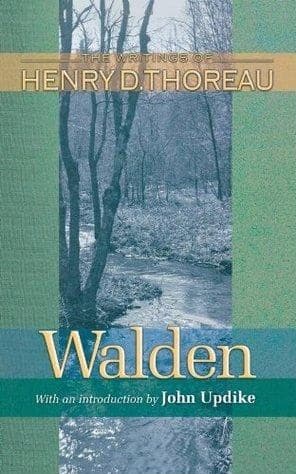
- Walden
Henry David Thoreau
3.8 (158k) average on GoodreadsBiographyDirectly related to Thoreau's philosophy and life experiences.
- A Man for All Seasons
Robert Bolt
3.9 (11k) average on GoodreadsHistorical FictionExplores the conflict between individual conscience and state power through a historical figure.
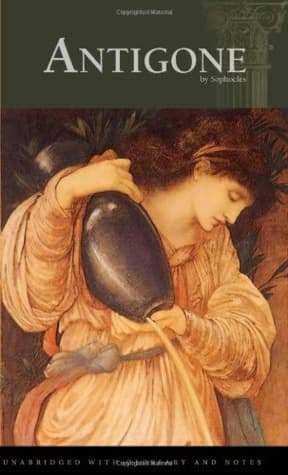
- Antigone
Sophocles
3.8 (17k) average on GoodreadsFictionA classic play centered on the theme of defying unjust laws for moral principles.
- To Kill a Mockingbird
Harper Lee
4.3 (4.5M) average on GoodreadsHistorical FictionIn the 1930s Jim Crow South, Harper Lee writes about racial injustice, moral growth, and the quiet courage of a lawyer father, Atticus Finch, as seen through his young daughter's eyes.
- The Great Gatsby
F. Scott Fitzgerald
3.9 (3.8M) average on GoodreadsHistorical FictionIn the opulent Roaring Twenties, a mysterious millionaire's lavish parties hide his desperate, tragic pursuit of a lost love, exposing the emptiness within the American Dream.
- Pride and Prejudice
Jane Austen
4.3 (3M) average on GoodreadsHistorical FictionIn a society focused on status and money, Elizabeth Bennet navigates love and pride, challenging Mr. Darcy and social expectations to find true affection.




Enjoyed the summary?
A summary gives you the shape of the book. The book itself has the detail, the examples and the voice.
Find The Night Thoreau Spent in Jail on AmazonAs an Amazon Associate, BookBrief earns from qualifying purchases. How we're funded