

Synopsis
Covers the whole plot, including the ending.
- Difficulty
- Medium
- Pacing
- Moderate
- Mood
- Somber, Reflective, Suspenseful, Heartbreaking
- Read it if
- You're looking for a poignant, dual-timeline historical fiction that explores the impact of WWII on personal lives and national memory, with a focus on France.
- Skip it if
- You prefer light-hearted reads or are not interested in stories dealing with the Holocaust and its aftermath.
Sarah's Key Plot Summary
Covers the whole plot, including the ending.
The Roundup
On July 16, 1942, ten-year-old Sarah Starzynski wakes to police at her family's Paris apartment door. Before the French gendarmes can take them, Sarah quickly hides her four-year-old brother, Michel, in a secret cupboard. She tells him it's a game and promises to return for him. She locks the door, keeping the key. Sarah and her parents, Wladyslaw and Rywka, are then taken from their home as part of the Vel' d'Hiv' roundup, an operation where French police arrested thousands of Jewish families. They are transported to the Vélodrome d'Hiver, an indoor cycling arena, where they are held in terrible, crowded conditions with thousands of other Jews.
The Vel' d'Hiv' and Drancy
At the Vel' d'Hiv', Sarah sees the suffering of thousands, including her own family. The conditions are brutal: no food, little water, and overflowing toilets. She is troubled by the secret of Michel locked in the cupboard, a burden that grows each day. After several difficult days, Sarah and her family are transported by train to the Beaune-la-Rolande internment camp. Her parents try to protect her, but the reality of their situation, and Michel's fate, weighs heavily on Sarah. She is determined to escape and return for her brother, holding the key as her only hope.
Escape and a Promise
While at Beaune-la-Rolande, Sarah becomes friends with Rachel, another young girl. When the children are separated from their parents, Sarah, driven by her need to rescue Michel, plans an escape with Rachel. They manage to get past the guards and flee the camp. Tired and scared, they walk for days, eventually collapsing near a farm. An elderly couple, Jules and Geneviève Dufaure, find them and, despite the risks, decide to shelter them. Sarah tells them about Michel, and Jules promises to help her return to Paris to find him.
The Return to Paris
Jules Dufaure, keeping his promise, takes Sarah back to Paris under cover of darkness. They arrive at her old apartment building, where Sarah, trembling, unlocks the cupboard. Inside, they find Michel's small, lifeless body. He had died days earlier, starved and dehydrated, still holding his teddy bear. The terrible discovery devastates Sarah, leaving her with deep guilt and trauma. Jules and Geneviève, heartbroken by what they've seen, decide to keep Sarah with them, protecting her and raising her as their own daughter, hoping to help her heal from the tragedy.
Julia's Assignment
In May 2002, American journalist Julia Jarmond, living in Paris, is assigned by her magazine to write an article commemorating the 60th anniversary of the Vel' d'Hiv' roundup. Julia, married to Frenchman Bertrand Tézac and with a daughter, Zoé, is initially surprised by her own lack of knowledge of the event, and the widespread silence around it in France. Her research leads her to the apartment building in the Marais district that her husband's family is renovating, the same building where Sarah and her family lived. This coincidence sparks a deeper, more personal interest in the story.
Uncovering the Past
As Julia explores historical records and interviews survivors, she learns about the fate of the Jewish families arrested during the Vel' d'Hiv'. She discovers that the apartment her in-laws are renovating was indeed the Starzynski family's home. Further investigation reveals a shocking truth: Bertrand's paternal grandparents, Edouard and Mamé Tézac, moved into the apartment with their son, Bertrand's father, just days after the Starzynskis were removed. This revelation creates a moral dilemma for Julia, forcing her to confront her own family's involvement in France's dark past.
The Tézac Family Secret
Julia confronts Bertrand and his elderly father, Édouard Tézac, about their family's connection to the Starzynskis. Édouard initially tries to avoid the subject, but eventually, under Julia's questioning, he reveals that he and his parents did move into the apartment shortly after the roundup. He admits to knowing about the boy in the cupboard, having heard a faint scratching sound, but his father, out of fear and involvement, prevented him from investigating. This confession is a devastating blow to Julia, showing the deep-seated denial and the traumatic legacy of the war within her own family.
Sarah's Later Life
Driven by her journalistic integrity and a growing emotional connection to Sarah's story, Julia continues her search. She learns that Sarah, after being raised by the Dufaures, eventually left France. Through diligent research and a genealogist, Julia discovers that Sarah emigrated to America, married, and had a son named William. Sarah changed her name to Julia Dufaure, adopting the name of her adoptive mother. This discovery gives Julia a new purpose, a desire to find Sarah and understand her full story, especially how her past affected her adult life.
A Difficult Pregnancy and Marital Strain
Amidst her intense research into Sarah's past, Julia discovers she is unexpectedly pregnant. This news strains her already fragile marriage with Bertrand, who does not want another child. Bertrand's increasing emotional distance and his discomfort with Julia's focus on the Vel' d'Hiv' further highlight the growing distance between them. Julia realizes that her life in Paris, and her marriage, are not as fulfilling as she once believed. The past's secrets are not only affecting her work but also forcing her to reevaluate her present and future.
Meeting William
Julia travels to America, determined to find Sarah. She eventually locates Sarah's son, William Rainsferd, who is initially hesitant to discuss his mother's past. William reveals that his mother, Sarah, carried the trauma of Michel's death and the Vel' d'Hiv' throughout her life. He explains that Sarah eventually committed suicide, unable to fully escape the guilt and grief that haunted her. William shares a letter Sarah wrote before her death, confirming her identity and the lasting mark her childhood ordeal left on her. This meeting gives Julia the closure she sought, though it is tragic.
New Beginnings
After her trip to America, Julia makes the difficult decision to leave Bertrand and their life in Paris. She recognizes that their marriage is beyond repair and that she needs to live a life true to herself. Julia moves to New York with her daughter, Zoé, and gives birth to her new baby, whom she names Sarah, in honor of Sarah Starzynski. This act symbolizes Julia's commitment to acknowledging the past and her hope for a future free from denial. She finds peace and purpose in her new life, embracing motherhood and her newfound independence.
A Glimmer of Hope
Several years later, Julia, now a single mother living in New York, meets William Rainsferd again. They share a quiet moment, reflecting on Sarah's life and legacy. William sees strength and resilience in Julia, and in her daughter, Sarah. The meeting shows healing and connection, demonstrating that while the past is painful, acknowledging it can lead to understanding and a deeper human bond. Julia's journey has changed her, allowing her to confront historical injustice and find personal redemption.
Sarah's Key Characters
Sarah Starzynski
Protagonist
A ten-year-old Jewish girl who endures the Vel' d'Hiv' roundup and the tragic death of her brother.
Sarah is a spirited and fiercely protective ten-year-old at the beginning of the novel. Her defining act is locking her younger brother, Michel, in a cupboard to save him from arrest, a decision that haunts her for the rest of her life. She is driven by an unwavering determination to return for Michel, which fuels her escape from the internment camp. Sarah is a symbol of the innocent victims of the Holocaust and the enduring trauma carried by survivors. Her guilt and grief over Michel's death become an inescapable part of her identity.
Relationships: Michel Starzynski (Younger brother, whom she tries to protect, leading to his tragic death.); Wladyslaw & Rywka Starzynski (Her loving parents, separated from her during the roundup.); Jules & Geneviève Dufaure (Adoptive parents who shelter and raise her after her escape.); William Rainsferd (Her son, who only later understands the depth of his mother's past.)
Julia Jarmond
Co-Protagonist
An American journalist living in Paris who uncovers the truth about the Vel' d'Hiv' and Sarah's story.
Julia is a curious and empathetic American journalist assigned to write about the Vel' d'Hiv' roundup. Initially ignorant of this dark chapter in French history, her investigation quickly becomes a personal quest as she discovers a connection between Sarah's past and her own husband's family. Julia is driven by a strong sense of justice and a need to uncover the truth, even when it creates conflict in her personal life. She is a modern woman grappling with historical trauma and its contemporary echoes, leading her to reevaluate her marriage, identity, and place in France.
Relationships: Bertrand Tézac (Her French husband, whose family is unknowingly connected to Sarah's past, leading to marital strain.); Zoé Tézac (Her daughter, for whom she wants to build an honest future.); William Rainsferd (Sarah's son, with whom she develops a bond through their shared connection to Sarah.); Édouard Tézac (Her father-in-law, who holds a crucial secret about the apartment.)
Michel Starzynski
Supporting
Sarah's four-year-old brother, who tragically dies locked in a cupboard.
Michel is Sarah's innocent younger brother, whom she hides in a secret cupboard before their family's arrest. His small, trusting nature makes his death all the more tragic, serving as the central catalyst for Sarah's lifelong guilt and trauma. Michel represents the ultimate vulnerability of children during wartime and the devastating consequences of the roundup. His fate is the core secret that links Sarah's past to Julia's present, driving the narrative's emotional intensity.
Relationships: Sarah Starzynski (Older sister, who tries to protect him, leading to his accidental death.); Wladyslaw & Rywka Starzynski (His parents, unaware of his fate until much later.)
Bertrand Tézac
Supporting
Julia's French husband, whose family history is intertwined with Sarah's.
Bertrand is Julia's French husband, a man who initially embodies the French collective amnesia regarding the Vel' d'Hiv'. He is uncomfortable with Julia's intense investigation into the past, especially as it begins to implicate his own family. Bertrand represents the segment of French society that preferred to forget or deny uncomfortable historical truths. His discomfort, and later his evasiveness, highlight the generational divide in confronting national guilt. His reluctance to engage with the past ultimately contributes to the breakdown of his marriage with Julia.
Relationships: Julia Jarmond (His American wife, whose pursuit of truth strains their marriage.); Zoé Tézac (His daughter.); Édouard Tézac (His father, who holds a secret about the Starzynski apartment.)
Jules Dufaure
Supporting
A compassionate farmer who shelters Sarah after her escape and helps her return to Paris.
Jules Dufaure is an elderly French farmer who, along with his wife Geneviève, takes in Sarah after her escape from Beaune-la-Rolande. He is a man of quiet courage and deep humanity, risking his own safety to protect a Jewish child during the war. Jules makes a solemn promise to Sarah to help her find Michel, and he fulfills it, bearing witness to the tragic discovery in the apartment. He and Geneviève become Sarah's adoptive parents, offering her a haven of love and stability amidst her profound trauma.
Relationships: Sarah Starzynski (Protector and adoptive father figure.); Geneviève Dufaure (His loving wife and Sarah's adoptive mother.)
Geneviève Dufaure
Supporting
Jules's wife, who helps shelter and raise Sarah.
Geneviève Dufaure is Jules's kind and nurturing wife. She, like her husband, demonstrates immense bravery and compassion by taking Sarah into their home. Geneviève provides the emotional support and maternal care that Sarah desperately needs after the loss of her family and the trauma of Michel's death. She represents the quiet heroism of ordinary people who chose humanity over complicity during a dark period of history. Her enduring love helps Sarah find some semblance of a normal life, even as the past continues to haunt her.
Relationships: Sarah Starzynski (Nurturing adoptive mother figure.); Jules Dufaure (Her compassionate husband.)
William Rainsferd
Supporting
Sarah's adult son, who gradually learns the truth about his mother's past.
William Rainsferd is Sarah's son, an American living an ordinary life, initially unaware of the full extent of his mother's traumatic past. When Julia contacts him, he is forced to confront the hidden history that shaped his mother's life and ultimately led to her suicide. William represents the second generation, inheriting the unspoken burdens of their parents' experiences. His journey is one of gradual understanding and acceptance, as he pieces together his mother's identity and the reasons for her lifelong sadness.
Relationships: Sarah Starzynski (His mother, whose hidden past he must come to terms with.); Julia Jarmond (The journalist who helps him uncover his mother's story, forming a bond with him.)
Édouard Tézac
Supporting
Bertrand's father, who witnessed the Starzynskis' arrest and the presence of Michel in the apartment.
Édouard Tézac is Julia's elderly father-in-law, a child during the war who moved into the Starzynski apartment with his parents shortly after the roundup. He carries the heavy secret of having heard Michel's cries from the cupboard but being prevented by his own father from intervening. Édouard represents the generation that was directly complicit or knew of the atrocities but remained silent, often out of fear or self-preservation. His confession to Julia is a pivotal moment, revealing the depth of denial and the personal cost of historical silence.
Relationships: Julia Jarmond (His daughter-in-law, to whom he finally confesses his secret.); Bertrand Tézac (His son, who is largely unaware of the full extent of his father's past.)
Sarah's Key Themes
The Weight of History and Memory
The novel explores how historical events, especially the Vel' d'Hiv' roundup, continue to affect individuals and societies decades later. Sarah's entire life is shaped by the trauma of her past and the guilt over Michel's death, showing how memory can be a constant burden. Julia's journey highlights the importance of confronting uncomfortable historical truths, showing how collective forgetting (as seen in France's initial denial of its role in the roundup) can continue injustice and create personal and societal divisions. The book argues that memory, however painful, is essential for healing and moving forward, as seen when Julia names her daughter Sarah.
“History, in general, is a record of what's happened in the past. But in France, history is a record of what's been forgotten.”
Guilt and Responsibility
Guilt is a central theme, appearing in many characters. Sarah carries the overwhelming guilt of locking Michel in the cupboard, believing she caused his death, which haunts her until her own death. Édouard Tézac lives with the guilt of having heard Michel's cries but doing nothing, showing the moral compromises made during wartime. Julia, while not directly responsible, feels a moral responsibility to uncover the truth and give voice to Sarah's story, acknowledging her husband's family's involvement. The novel questions individual and collective responsibility in the face of atrocity and the burden of silence.
“She had survived. But survival itself felt like a betrayal.”
Identity and Belonging
The novel examines how traumatic experiences shape identity and the search for belonging. Sarah, after her escape and the loss of her family, struggles to create a new identity, eventually leaving France and changing her name. Despite her new life, she can never truly escape her past, feeling a deep sense of not belonging anywhere. Julia, an American living in France, also grapples with her identity as she uncovers the uncomfortable truths of her adopted country and her husband's family. Her journey ultimately leads her to redefine her sense of self and where she truly belongs, choosing New York and a new life aligned with her values.
“She was an American in Paris, but was she French? She didn't know anymore.”
The Power of Secrets and Silence
Secrets and silence are strong forces throughout the narrative, both in historical and personal contexts. The French government's long-standing silence and denial about its role in the Vel' d'Hiv' allowed a painful truth to fester. Personally, Sarah's secret about Michel, and the Tézac family's secret about the apartment, create deep wounds that affect generations. The novel shows how secrets, even those meant to protect or to forget, inevitably surface and can be destructive. Julia's quest breaks that silence, believing that only by speaking the truth can healing begin, even if it brings pain.
“The silence was the worst. The silence was the killer.”
Plot Devices & Literary Techniques
Dual Narrative Structure
Alternating chapters between Sarah's past and Julia's present.
The novel employs a dual narrative, meticulously weaving together Sarah's harrowing experiences in 1942 with Julia's investigative journey in 2002. This structure allows the reader to simultaneously witness the historical event as it unfolds and its reverberating impact decades later. The alternating perspectives build suspense, gradually revealing the connections between the two storylines and intensifying the emotional resonance of the past on the present. It highlights the enduring nature of trauma and the long shadow of history.
The Key
A physical object symbolizing Sarah's guilt, responsibility, and an unbreakable link to her past.
The key to the cupboard where Michel is hidden is a powerful and recurring symbol. Initially, it represents Sarah's hope and promise to return for her brother. After Michel's death, it transforms into a heavy symbol of her guilt, responsibility, and the irreversible tragedy. Sarah keeps the key her entire life, a tangible reminder of her trauma. For Julia, the discovery of the key in her research (or the symbolic understanding of its significance) becomes a driving force, representing the unlocking of a hidden truth and the connection between the two women.
The Apartment
A physical space that connects the past and present, embodying historical displacement and moral complicity.
The apartment on the rue de Saintonge serves as a crucial plot device, literally linking Sarah's past with Julia's present. It is the Starzynskis' home, then immediately occupied by the Tézac family, symbolizing the displacement of Jewish families during the war. The apartment holds the tragic secret of Michel's death, making it a place of both profound suffering and unwitting complicity. Its renovation by Bertrand and Julia underscores the idea of uncovering hidden histories and the difficulty of escaping the past, even in a physical space.
The Vel' d'Hiv' Roundup
A specific historical event serving as the catalyst for the entire narrative.
The Vel' d'Hiv' roundup is not just a historical backdrop but the central inciting incident for both Sarah's ordeal and Julia's investigation. Its historical reality grounds the fiction in a verifiable tragedy, lending authenticity and weight to the personal stories. The event itself, and France's historical denial of its complicity, provides the overarching thematic framework for the novel's exploration of memory, guilt, and national identity. It's the point from which all subsequent plotlines diverge and eventually reconnect.
Sarah's Key Quotes
“The Vel' d'Hiv was a French police operation. Not German. People need to know that. It was carried out by the French themselves.”
“I promised him I'd come back. I promised.”
“She had to know. For Michel. For her. For all of them.”
“How could a child be so utterly alone in the world?”
“Sometimes, the past just won't let go.”
“The key was like a tiny, heavy weight in her hand, a burden and a hope.”
“It was not a story of victims and executioners, but of people, ordinary people, caught in an extraordinary horror.”
“Some secrets are meant to be unearthed, no matter how painful.”
“The silence was worse than any scream.”
“History, she had learned, was not just about dates and events, but about the lives it shaped and sometimes shattered.”
“She was not just telling Sarah's story; she was living a part of it.”
“The past is never really past, is it? It just waits for you to catch up.”
“Sometimes, the only way to move forward is to look back, really look back, and acknowledge what happened.”
“Every life leaves a trace, a ripple in time.”
Quiz
10 questions on the plot and the characters. Each answer comes with a short explanation.
Question 1
What is the primary reason Sarah locks her younger brother, Michel, in the cupboard?
- She wants to play a game of hide-and-seek with him.
- She believes they will be back home within a few hours and he will be safe there.
- She is angry at him and wants to punish him.
- She is told by her parents to hide him from the police.
Show answer
B. She believes they will be back home within a few hours and he will be safe there. Sarah locks Michel in their favorite hiding place, thinking she will be back within a few hours to retrieve him, believing he would be safe from the police.
Question 2
In what year does Julia Jarmond begin her investigation into the Vel' d'Hiv' roundup?
- 1942
- 1962
- 2002
- 2012
Show answer
C. 2002 Julia begins her investigation in May 2002, on the sixtieth anniversary of the Vel' d'Hiv' roundup.
Question 3
What is Julia Jarmond's profession?
- Historian
- Teacher
- Journalist
- Librarian
Show answer
C. Journalist Julia Jarmond is an American journalist asked by her Paris-based American magazine to write an article about the Vel' d'Hiv' roundup.
Question 4
What specific historical event is central to both Sarah's story and Julia's investigation?
- The Normandy Landings
- The Liberation of Paris
- The Vel' d'Hiv' roundup
- The Fall of France
Show answer
C. The Vel' d'Hiv' roundup The Vel' d'Hiv' roundup is the notorious act of French collaboration with the Nazis that leads to Sarah's arrest and is the subject of Julia's article.
Question 5
How long has Julia Jarmond lived in Paris by the time she starts her investigation?
- Less than 5 years
- Around 10 years
- Nearly twenty-five years
- Over 30 years
Show answer
C. Nearly twenty-five years The front flap states that Julia has lived in Paris for nearly twenty-five years, married a Frenchman.
Question 6
What is Julia's initial reaction to learning about the Vel' d'Hiv' roundup?
- She is indifferent, as she already knew about it.
- She is shocked by her ignorance and the silence surrounding it.
- She is excited by the opportunity to break a new story.
- She is angry at the French government for covering it up.
Show answer
B. She is shocked by her ignorance and the silence surrounding it. Julia is shocked both by her ignorance about the event and the silence that still surrounds it.
Question 7
What personal connection does Julia discover during her investigation?
- She finds out Sarah was a distant relative of her husband.
- She learns that Sarah was the previous owner of her current apartment.
- She realizes Sarah was a childhood friend of her mother-in-law.
- She discovers Sarah was a famous historical figure she admired.
Show answer
B. She learns that Sarah was the previous owner of her current apartment. The blurb indicates Julia 'stumbles onto a trail of long-hidden family secrets that connects her to Sarah', specifically implying a connection to the apartment Sarah's family lived in.
Question 8
Beyond the historical event, what personal aspects of her life does Julia begin to reevaluate as she investigates Sarah's past?
- Her career choices and financial stability.
- Her relationship with her parents and siblings.
- Her place in France, her marriage, and her life.
- Her physical health and future retirement plans.
Show answer
C. Her place in France, her marriage, and her life. As Julia probes into Sarah's past, she begins to question her own place in France and to reevaluate her marriage and her life.
Question 9
What overarching theme does the author, Tatiana de Rosnay, aim to reveal through the narrative, according to the front flap?
- The resilience of the human spirit in times of war.
- The importance of international cooperation during crises.
- The taboos and denial surrounding a painful episode in French history.
- The complexities of journalistic ethics.
Show answer
C. The taboos and denial surrounding a painful episode in French history. Tatiana de Rosnay 'reveals the taboos and denial surrounding this painful episode in French history' by writing about the fate of her country with 'pitiless clarity'.
Question 10
Where were Sarah and her family initially taken after their arrest in the Vel' d'Hiv' roundup?
- Directly to concentration camps in Germany.
- To a local police station for immediate processing.
- Shut in at the Vel' d'Hiv' before being moved to camps.
- To a temporary holding facility in the countryside.
Show answer
C. Shut in at the Vel' d'Hiv' before being moved to camps. Julia retraces the girl's ordeal, 'from the terrible days spent shut in at the Vel' d'Hiv' to the camps and beyond.'
Sarah's Key FAQ
What is the central historical event depicted in 'Sarah's Key'?
The novel centers on the Vel' d'Hiv' roundup, a mass arrest of Jewish families in Paris on July 16-17, 1942, carried out by French police under Nazi orders. Ten-year-old Sarah Starzynski and her family are among those arrested, highlighting France's complicity in the Holocaust.
What is Sarah's main motivation for locking her brother Michel in the cupboard?
Sarah locks her four-year-old brother, Michel, in their secret cupboard before the police arrive, believing it's a temporary measure to protect him from the initial roundup. She clutches the key, fully intending to return for him within hours, unaware of the horrific fate awaiting her family.
Who is Julia Jarmond and what is her role in the story?
Julia Jarmond is an American journalist living in Paris in 2002, tasked with writing an article about the Vel' d'Hiv's 60th anniversary. Her investigation into the historical event leads her to uncover a personal connection to Sarah's story, intertwining her present-day life with the past.
How does Julia's personal life become intertwined with her investigation?
Julia discovers that the apartment her French husband's family inherited belonged to the Starzynski family, Sarah's family, before the war. This revelation creates a profound personal link to the tragedy, forcing her to confront her in-laws' past and the secrets they've kept.
What happens to Sarah immediately after her arrest and separation from her parents?
After her family's arrest, Sarah is taken to the Vel' d'Hiv' stadium with thousands of other Jews, where conditions are squalid and brutal. She is later transported to the Beaune-la-Rolande internment camp, where she is eventually separated from her parents, who are sent to Auschwitz.
What is the significance of the key Sarah carries throughout her ordeal?
The key symbolizes Sarah's unwavering hope and responsibility to her brother, Michel, whom she locked in the cupboard. It represents her desperate promise to return for him and becomes a tangible link to her past and the driving force behind her escape.
How do the Dufaure family help Sarah, and what is their motivation?
The Dufaure family, particularly Jules and Geneviève, hide Sarah after she escapes from the camp, risking their own lives to protect her. Their motivation stems from a deep sense of humanity and moral obligation, as they are appalled by the atrocities committed against the Jews.
What is the fate of Michel, Sarah's younger brother?
Michel is found dead in the cupboard by the Dufaures when they are given the keys to the apartment, having starved to death after Sarah's family was arrested. This tragic discovery fuels Sarah's lifelong guilt and trauma.
How does Bertrand, Julia's husband, react to her investigation and the family secrets?
Bertrand is initially dismissive and resistant to Julia's investigation, preferring to maintain the family's long-held silence about the apartment's past. He becomes increasingly uncomfortable and hostile as Julia uncovers the truth, highlighting his own denial and complicity in keeping the secrets.
How does Sarah's experience of trauma manifest in her adult life?
Sarah, as an adult, is haunted by the guilt of Michel's death and the atrocities she witnessed. She lives a life marked by emotional distance and a profound inability to fully connect, evident in her strained relationships and her eventual decision to end her own life.
What psychological impact does Julia's discovery have on her identity and marriage?
Julia's discovery of her connection to Sarah's story profoundly challenges her sense of self and her comfortable Parisian life. It forces her to confront the moral compromises within her marriage to Bertrand and the unspoken truths of French history, leading to a reevaluation of her values and future.
How does the novel explore the concept of generational trauma?
The novel demonstrates generational trauma through Sarah's lifelong suffering and its impact on her son, William, who grapples with his mother's unspoken pain. It also shows how the secrets kept by Bertrand's family affect their own descendants, creating a legacy of denial and unresolved guilt.
Why does Sarah ultimately choose to take her own life?
Sarah's suicide is portrayed as the culmination of a lifetime burdened by immense guilt over Michel's death and the unresolved trauma of the Holocaust. Despite building a new life, she never truly escapes the past, and the weight of her memories becomes unbearable, leading to her tragic end.
What is the novel's stance on French collaboration during WWII?
The novel offers a critical and unsparing portrayal of French collaboration during WWII, particularly through the Vel' d'Hiv' roundup, which was executed by French police. It highlights the widespread denial and silence surrounding this dark period in French history, forcing readers to confront the nation's complicity.
How does the author use the dual narrative structure to enhance the story?
The dual narrative, alternating between Sarah's past and Julia's present, effectively juxtaposes the historical horror with its contemporary reverberations. This structure allows the reader to experience the unfolding tragedy firsthand while simultaneously exploring its long-term impact and the enduring quest for truth and remembrance.
What message does the ending, particularly Julia's decision regarding her unborn child, convey?
Julia's decision to keep her unborn child, despite her marriage ending, symbolizes a commitment to a future free from the past's secrets and a conscious choice for hope and truth. It suggests breaking cycles of denial and embracing a new beginning, informed by the lessons of history.
How does William, Sarah's son, contribute to Julia's understanding of Sarah?
William provides Julia with crucial insights into Sarah's adult life and her enduring pain, filling in the gaps of Sarah's story after her escape. His own struggle to understand his mother's distant nature and eventual suicide helps Julia piece together the full tragedy of Sarah's existence.
What is the significance of the novel's title, 'Sarah's Key'?
The title refers literally to the key Sarah carries for Michel, symbolizing her promise and burden. Metaphorically, it represents the key to unlocking hidden histories, buried truths, and the collective memory of the Vel' d'Hiv' roundup, which Julia's investigation ultimately uncovers.
About the author
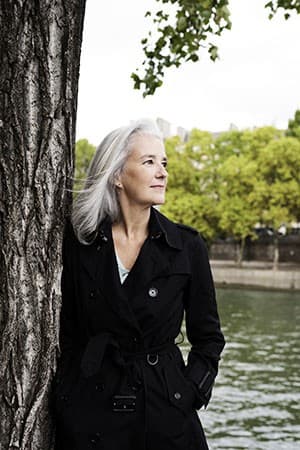
Tatiana de Rosnay is a French author known for her fiction, particularly her novel "Sarah's Key," which explores themes of memory and loss during the Holocaust. Another notable work, "A Secret Kept," delves into family secrets and the complexities of relationships. Her writing often reflects her French heritage and personal experiences.
Similar books
- The Nightingale
Kristin Hannah
4.6 (698k) average on GoodreadsHistorical FictionDual narrative set during WWII in occupied France, focusing on female resilience and difficult choices.
- All the Light We Cannot See
Anthony Doerr
4.3 (1M) average on GoodreadsHistorical FictionWWII setting with intertwined narratives, exploring the impact of war on children and hidden connections.
- The Book Thief
Markus Zusak
4.4 (1.8M) average on GoodreadsHistorical FictionFeatures a young protagonist navigating the horrors of WWII, with themes of loss and hidden humanity.
- To Kill a Mockingbird
Harper Lee
4.3 (4.5M) average on GoodreadsHistorical FictionIn the 1930s Jim Crow South, Harper Lee writes about racial injustice, moral growth, and the quiet courage of a lawyer father, Atticus Finch, as seen through his young daughter's eyes.
- The Great Gatsby
F. Scott Fitzgerald
3.9 (3.8M) average on GoodreadsHistorical FictionIn the opulent Roaring Twenties, a mysterious millionaire's lavish parties hide his desperate, tragic pursuit of a lost love, exposing the emptiness within the American Dream.
- Pride and Prejudice
Jane Austen
4.3 (3M) average on GoodreadsHistorical FictionIn a society focused on status and money, Elizabeth Bennet navigates love and pride, challenging Mr. Darcy and social expectations to find true affection.






Enjoyed the summary?
A summary gives you the shape of the book. The book itself has the detail, the examples and the voice.
Find Sarah's Key on AmazonAs an Amazon Associate, BookBrief earns from qualifying purchases. How we're funded