
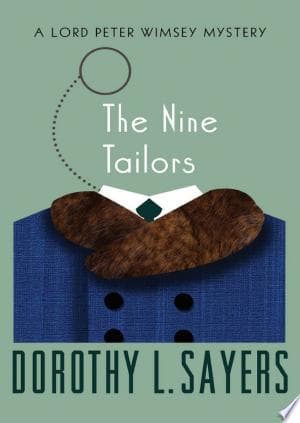
Synopsis
Covers the whole plot, including the ending.
- Difficulty
- Medium
- Pacing
- Moderate
- Mood
- Atmospheric, Intellectual, Intriguing, Traditional
- Read it if
- You enjoy classic British mysteries with intricate plots, a strong sense of place, and a focus on specialized knowledge like bell-ringing.
- Skip it if
- You prefer fast-paced thrillers or find detailed descriptions of niche hobbies tedious.
The Nine Tailors Plot Summary
Covers the whole plot, including the ending.
A New Year's Eve Detour
On New Year's Eve, Lord Peter Wimsey and his valet, Bunter, crash their car in a snowstorm in the Fens. They find help at the nearby village of Fenchurch St. Paul, taken in by Rector Reverend Theodore Venables and his wife, Agnes. Wimsey, a musician, is interested in the church's old bells and the local 'change-ringing' tradition. He is asked to join the bell-ringers for a nine-hour marathon peal to welcome the New Year, replacing a sick ringer. This entry into village life sets the stage for the mysteries.
The Nine Tailors Peal
Wimsey, using the name 'Death Bredon,' joins the Fenchurch St. Paul bell-ringers for their New Year's peal. The group includes the Rector, Mr. Ezra Wilderspin (tower captain), Mr. Silas Mellard, Mr. Jim Thoday, and Mr. Alf Donnington. Wimsey quickly learns the complex patterns and physical demands of change-ringing, a core part of the village's identity. During the long night, he learns about the history of the bells, especially the 'Nine Tailors,' and the close-knit bell-ringing community. The experience is both tiring and mentally engaging, forming a temporary bond between Wimsey and the villagers.
A Stranger's Burial
Soon after New Year's, an old woman named Mrs. Agnes Twitterton dies. During her burial, an unknown man is also interred in her grave. His face is badly disfigured, making identification hard. The villagers are puzzled, and the local police, including Superintendent Blundell, start an investigation. Wimsey, still in Fenchurch St. Paul after his bell-ringing, becomes curious. The strange burial, along with the village's isolated nature, suggests deeper secrets beneath the quiet community.
The Identity Revealed
Through careful investigation, including dental records and clothing, the disfigured body is identified as Reuben Garrett, a local man. Garrett had been a known jewel thief who disappeared years ago after stealing the Lady Thorpe emeralds. His sudden reappearance and mysterious death, plus his burial in Mrs. Twitterton's grave, raise many questions. The villagers are shocked, as Garrett's past is a sensitive topic, and his return seems to reopen old wounds and suspicions.
The Lady Thorpe Emeralds
The investigation into Reuben Garrett's death quickly connects to the unsolved theft of the Lady Thorpe emeralds, which happened almost two decades earlier. Garrett was suspected of the crime but was never caught, and the jewels were never found. The theft had hurt the Thorpe family and cast a long shadow over Fenchurch St. Paul. Wimsey learns that Mrs. Twitterton, in whose grave Garrett was found, was once Garrett's wife, a fact she had kept secret. This link suggests the emeralds might still be hidden nearby, and Garrett's death could be related to their location or the original crime.
Flashbacks to the Past
Wimsey looks into the history of the Lady Thorpe emeralds theft, interviewing villagers and putting together events from nineteen years prior. He learns about the Thorpe family, their decline after the theft, and the suspicions that fell on various people, including the bell-ringers. The theft had caused much disagreement and distrust in the community, with accusations and broken friendships. Wimsey discovers how Reuben Garrett, then known as 'Potty Peake,' was involved with Mrs. Twitterton (then Mary Thoday, Jim Thoday's sister) and how his disappearance left many questions, hinting at a carefully planned crime.
The Rector's Confession
As Wimsey's investigation continues, Reverend Theodore Venables reveals a part of his past. He confesses that he was the original 'Potty Peake' – the man accused of the jewel theft who then disappeared. The man found in the grave was not the original 'Potty Peake' (Venables), but Reuben Garrett, a different man who had taken the 'Potty Peake' identity to escape the law after the theft. Venables had been trying to make up for his past by becoming a clergyman and serving the community, carrying the secret burden of the theft and his true identity. He admits to hitting Garrett, believing him to be an intruder in the church on the night of the peal, accidentally causing his death.
The Secret of the Bells
Wimsey, with Bunter's help, carefully reconstructs the events leading to Reuben Garrett's death. He discovers that Garrett, who had returned to Fenchurch St. Paul to get the emeralds he had hidden, had a stroke while hiding in the bell tower during the New Year's peal. The loud sound and vibration of the 'Nine Tailors' bells, ringing for hours nearby, worsened his condition and killed him. The Rector's earlier confession about hitting Garrett was a lie, driven by his guilt and fear of his past being revealed. The bells, a symbol of the village, had become an accidental tool of justice.
The Emeralds' Discovery
After understanding Garrett's true death, the focus returns to the missing Lady Thorpe emeralds. Wimsey realizes that Garrett, a skilled craftsman, would have hidden the jewels somewhere clever and secure. He deduces that Garrett must have used his knowledge of the church's mechanics. After a thorough search, Bunter finds the emeralds hidden inside the church clock's mechanism, specifically within the counter-weights. The jewels had been cleverly hidden for nineteen years, found only through Lord Peter Wimsey's careful deduction, ending the long-standing mystery.
Consequences and Resolution
With the truth about Reuben Garrett's death and the emeralds' location revealed, the villagers of Fenchurch St. Paul must process the complex web of lies, secrets, and sadness. Reverend Venables is cleared of murder, though his past identity and involvement in the jewel theft remain a heavy burden. The Thorpe family finally gets some closure, and the emeralds are returned. Wimsey, having uncovered the village's dark history, leaves Fenchurch St. Paul with Bunter, leaving the community to heal and come to terms with its past. The bells continue to ring, now carrying the weight of a newly understood history.
The Nine Tailors Characters
Lord Peter Wimsey
Protagonist
A witty, aristocratic amateur detective with a passion for bells and justice.
Lord Peter Wimsey is an intelligent, aristocratic, and highly perceptive amateur detective. He possesses a keen analytical mind, an encyclopedic knowledge of various subjects (including campanology), and a sharp wit. Despite his privileged background, he is deeply empathetic and driven by a strong sense of justice. He is meticulous in his investigations, often observing subtle details that others miss, and has a remarkable ability to connect disparate pieces of information. His charm and unassuming demeanor allow him to gain the trust of those he questions, even in close-knit communities.
Relationships: Bunter (Devoted valet and indispensable assistant); Reverend Theodore Venables (Acquaintance and later, a confessor); The Bell-Ringers (Temporary colleagues and subjects of investigation)
Bunter
Supporting
Lord Peter Wimsey's loyal and highly capable manservant.
Bunter is Lord Peter Wimsey's impeccably efficient and discreet valet. Beyond his duties as a personal attendant, he is a skilled photographer, an astute observer, and a reliable assistant in Wimsey's investigations. He possesses a calm demeanor, unwavering loyalty, and a practical intelligence that complements Wimsey's more theoretical approach. Bunter often anticipates Wimsey's needs and provides crucial support, from managing logistical details to assisting with evidence collection, proving invaluable to the detective's success.
Relationships: Lord Peter Wimsey (Employer and close confidant); Reverend Theodore Venables (Acquaintance through Wimsey)
Reverend Theodore Venables
Supporting
The Rector of Fenchurch St. Paul, burdened by a hidden past.
Reverend Theodore Venables is the kindly, but deeply troubled, Rector of Fenchurch St. Paul. He is a dedicated and respected member of the community, known for his passion for bell-ringing and his pastoral care. However, he harbors a profound secret: he is actually 'Potty Peake,' the man believed to have committed the Lady Thorpe emeralds theft years ago. His life is an ongoing penance, and his fear of exposure drives many of his actions. He is a complex character, a good man who has made a terrible mistake and lives with its consequences.
Relationships: Agnes Venables (Wife); Lord Peter Wimsey (Host and later, confessor); Reuben Garrett (Victim (initially believed to be so by Venables))
Agnes Venables
Supporting
The Rector's wife, a kind and supportive presence in the rectory.
Agnes Venables is the Rector's wife, a warm and hospitable woman who provides comfort and domestic stability. She is unaware of her husband's true past and supports him wholeheartedly in his role as Rector. She embodies the traditional, nurturing figure within the village, offering hospitality to Wimsey and Bunter and maintaining the peace of the rectory. Her innocence and genuine kindness serve as a contrast to the dark secrets that gradually surface in the village.
Relationships: Reverend Theodore Venables (Husband); Lord Peter Wimsey (Hostess)
Reuben Garrett (aka 'Potty Peake')
Victim/Antagonist (posthumous)
A notorious jewel thief whose disfigured body is found in the churchyard.
Reuben Garrett is the disfigured corpse found in Mrs. Twitterton's grave. He was a skilled craftsman and mechanic, but also a notorious jewel thief who had committed the Lady Thorpe emeralds theft nineteen years prior. After the theft, he disappeared, leaving behind a trail of suspicion and a ruined reputation for the man who was wrongly identified as 'Potty Peake' (the Rector). Garrett is driven by greed and a desire to retrieve his hidden loot. His past actions are the catalyst for the entire mystery, and his unexpected return to Fenchurch St. Paul ultimately leads to his death.
Relationships: Mary Thoday (later Mrs. Twitterton) (Former wife); Reverend Theodore Venables (The man whose identity he stole for a time)
Mrs. Agnes Twitterton (née Mary Thoday)
Supporting/Victim
An elderly villager whose death and burial reveal a long-kept secret.
Mrs. Agnes Twitterton is an elderly woman whose death and subsequent burial become the initial catalyst for the mystery. It is revealed that she was formerly Mary Thoday, sister to Jim Thoday, and had been secretly married to Reuben Garrett ('Potty Peake') before his disappearance. She lived a life of quiet resignation, carrying the burden of her husband's criminal past and the village's collective memory of the theft. Her death, coupled with the discovery of Garrett's body in her grave, unravels the complex history of the Lady Thorpe emeralds.
Relationships: Reuben Garrett (Former husband); Jim Thoday (Brother)
Ezra Wilderspin
Supporting
The experienced and respected tower captain of the Fenchurch St. Paul bell-ringers.
Ezra Wilderspin is the tower captain and a seasoned bell-ringer in Fenchurch St. Paul. He is deeply knowledgeable about the art of campanology and takes great pride in the church's bells. He is a stern but fair leader of the bell-ringing team, upholding tradition and precision. Ezra represents the steadfast, traditional heart of the village, and his dedication to the bells is unwavering. He provides Wimsey with much of the technical information about the bells and their history, crucial to understanding the unique environment of Garrett's death.
Relationships: The Bell-Ringers (Leader and colleague); Lord Peter Wimsey (Temporary colleague)
Superintendent Blundell
Supporting
The local police superintendent investigating the mysterious death.
Superintendent Blundell is the local police officer in charge of the investigation into the mysterious death in Fenchurch St. Paul. He is a competent and diligent professional, though perhaps initially overwhelmed by the complexity and the historical layers of the case. He works collaboratively with Lord Peter Wimsey, respecting Wimsey's abilities while maintaining his professional duties. Blundell represents the official arm of justice, providing a contrast to Wimsey's amateur sleuthing and ensuring that legal procedures are followed.
Relationships: Lord Peter Wimsey (Collaborator); Reverend Theodore Venables (Subject of investigation)
The Nine Tailors Themes
The Weight of the Past
The novel shows how past events, like the Lady Thorpe emeralds theft and Reuben Garrett's disappearance, still affect the lives of Fenchurch St. Paul villagers. Secrets linger for almost two decades, shaping relationships, causing guilt (as with Reverend Venables), and creating suspicion. Garrett's body being found literally unearths a past the community tried to bury, forcing everyone to face old conflicts and moral compromises. The bells themselves, old and lasting, constantly remind them of history and tradition, showing how deeply rooted the past is in the village's identity.
“For nineteen years the bells had been silent on the subject of this buried shame, and now, suddenly, they had spoken.”
Justice and Atonement
Justice is a central theme, not just legal punishment. Reverend Venables's life is a long act of making up for his past role in the jewel theft, even though he was not the main culprit. He seeks redemption through service, carrying his secret burden. Garrett's death, though accidental, can be seen as a form of justice, as he dies in the place where he tried to get his stolen goods. Wimsey's role is to solve a crime and bring moral clarity to a situation where legal guilt mixes with complex personal histories and motivations, leading to closure for the community.
“The bells had taken a hand in the matter, and the bells were older than justice, or even than vengeance.”
The Power of Community and Secrecy
Fenchurch St. Paul is a close, isolated community where everyone knows everyone, but secrets can be kept for decades. The villagers' loyalty, suspicion, and shared history create a complex social structure. The bell-ringing team is a small example of this community, united by tradition and shared effort. While this closeness offers support, it also allows lies and misunderstandings to continue, such as Mrs. Twitterton's hidden past or the true identity of 'Potty Peake.' Wimsey's arrival, as an outsider, is needed to break these patterns and uncover truths the community has kept hidden.
“Every village is a little world, and its history is the history of the world.”
The Nature of Identity
The novel explores how identity can change, be stolen, and be redefined. Reverend Venables lives under a false identity for nineteen years, leaving his past as 'Potty Peake' to become a respected clergyman. In contrast, Reuben Garrett takes on the 'Potty Peake' identity to avoid capture after the theft, further burdening Venables. The disfigured state of Garrett's body initially makes identification impossible, showing how physical appearance can hide true identity. Wimsey's investigation uncovers these layers of assumed and hidden identities, revealing the true selves and pasts of the characters, and the impact these deceptions have had on their lives and the community.
“A man may change his name, but he cannot change his past.”
The Beauty and Danger of Order
The complex art of change-ringing bells represents both beauty and potential danger. The mathematical precision and ordered chaos of the bells are central to the village's identity and provide a framework for the New Year's peal. However, this very order and its powerful physical presence become an accidental cause of death for Reuben Garrett. The bells, representing tradition and harmony, also have a destructive force when experienced under extreme conditions. This dual nature reflects the novel's broader look at how seemingly harmless parts of life can hide dangers or lead to unexpected tragedies.
“The bells were not merely noise; they were a language, and a terrible one.”
Plot Devices & Literary Techniques
The Unidentified Corpse
A disfigured body whose identity is unknown provides the initial mystery.
The discovery of a disfigured, unidentified corpse buried in Mrs. Twitterton's grave is the primary inciting incident. This classic mystery trope immediately raises questions of 'who is he?' and 'how did he die?', drawing Wimsey into the investigation. The lack of immediate identification allows for the gradual revelation of the body's true identity (Reuben Garrett) and his connection to the long-unsolved Lady Thorpe emeralds theft, thus linking the present crime to a deep-seated historical mystery. The disfigurement itself serves to obscure the truth and heighten the intrigue.
The Closed Circle Mystery
The crime occurs within a small, isolated community, limiting the suspect pool.
Fenchurch St. Paul is a remote village in the Fens, a setting that creates a 'closed circle' environment. This isolation means that most suspects are known to each other, and their interactions and shared histories are crucial to solving the crime. The limited number of outsiders (Wimsey and Bunter) and the strong community ties create a rich tapestry of relationships, secrets, and grudges that Wimsey must navigate. This device allows for an intense focus on character psychology and the impact of historical events on a confined group of people.
Red Herring (Reverend Venables's Confession)
A false confession diverts attention from the true cause of death.
Reverend Venables's confession that he struck Reuben Garrett, believing him to be an intruder, and potentially caused his death, serves as a significant red herring. This confession, driven by guilt over his past identity as 'Potty Peake' and a genuine belief in his culpability, misdirects both the police and the reader. It provides a plausible, human explanation for the death, allowing Wimsey to dig deeper and discover the more unusual and ironic true cause of Garrett's demise – the bells themselves. This device highlights the complexities of guilt and the hidden truths beneath apparent facts.
The Inanimate Witness/Instrument (The Bells)
The church bells are central to the plot, both as a setting and as the instrument of death.
The church bells of Fenchurch St. Paul, particularly the 'Nine Tailors,' are not merely background but active participants in the plot. They are the setting for Garrett's death, the source of the unique sound that killed him, and the hiding place for the emeralds. Their ancient nature, complex mechanics, and powerful sound are meticulously described, immersing the reader in the world of campanology. The bells act as an 'inanimate witness,' holding the key to the mystery, and ultimately serve as the ironic instrument of justice, making them a unique and integral plot device.
The Nine Tailors Quotes
“For the bells are the voice of the Church; they are themselves a part of the Church, and they speak to the living and the dead.”
“He knew that the only way to get on with people was to assume that they were reasonably intelligent and well-intentioned, until proved otherwise.”
“The great bell gave out a deep, sonorous boom, as though the very earth had sighed.”
“It was not a question of what he knew, but of what he didn't know, and what he couldn't find out.”
“The dead man, it seemed, had been a person of no importance whatsoever, except to the parish.”
“There's nothing like a good honest bit of work to clear the cobwebs out of your head.”
“The village, like all villages, had its own peculiar rhythm, its own unspoken rules and customs.”
“He had a rooted objection to anything that interfered with the smooth running of the universe, or at any rate, of his immediate corner of it.”
“The sound of the bells, when properly rung, was a thing of almost terrifying beauty.”
“It's astonishing how much one can overlook when one isn't looking for anything in particular.”
“Every man has his own private universe, and when it crashes, it crashes for him alone.”
“The past, after all, is never truly past; it merely waits for its moment to re-emerge.”
“He felt a sudden, almost physical pang of regret for all the things he had not known, and could now never know.”
“The great art of life is to make a bad job look like a good one.”
Quiz
10 questions on the plot and the characters. Each answer comes with a short explanation.
Question 1
What is the primary reason Lord Peter Wimsey and Bunter end up in Fenchurch St. Paul?
- They were invited by the rector for a New Year's celebration.
- Their car got stuck in a ditch after making a wrong turn.
- Lord Peter was investigating a case that led him to the village.
- They were on their way to another destination and stopped for gas.
Show answer
B. Their car got stuck in a ditch after making a wrong turn. Lord Peter and Bunter's journey to Fenchurch St. Paul begins with an accidental wrong turn and their car landing in a ditch, forcing them to seek assistance at the nearest church.
Question 2
What ancient art form do Lord Peter and the villagers engage in to welcome the New Year?
- Morris dancing
- Carol singing
- Bell-ringing
- A card game tournament
Show answer
C. Bell-ringing The core social activity that introduces Lord Peter to the village's traditions is the New Year's Eve bell-ringing marathon.
Question 3
What is the duration of the bell-ringing marathon planned by the rector and his friends?
- Three hours
- Six hours
- Nine hours
- Twelve hours
Show answer
C. Nine hours The rector and his friends plan a '9-hour marathon session' of bell-ringing to welcome the New Year.
Question 4
Which specific crime from decades past is connected to the present-day events in Fenchurch St. Paul?
- A kidnapping
- A forgery ring
- A jewel theft
- An arson attack
Show answer
C. A jewel theft The synopsis explicitly mentions 'a decades-old jewel theft' as a key element of the village's dark past that intertwines with the current mysteries.
Question 5
What specific physical state is the corpse Lord Peter encounters in the village?
- Buried in a shallow grave
- Found floating in a river
- Mutilated
- Poisoned but otherwise intact
Show answer
C. Mutilated The synopsis states that Lord Peter encounters 'a mutilated corpse,' indicating a specific and gruesome detail about the victim.
Question 6
What does the phrase 'bells toll for the dead' signify in the context of the book's setting?
- The villagers have a unique funeral tradition.
- The ancient chimes are literally causing deaths.
- The village's bell-ringing tradition is intertwined with a history of death and unresolved crimes.
- It's a metaphor for the slow passage of time in the village.
Show answer
C. The village's bell-ringing tradition is intertwined with a history of death and unresolved crimes. The phrase 'bells toll for the dead' in the synopsis, combined with the mention of the 'ancient chimes never seem to stop' and the dark past, suggests a deep connection between the bell-ringing and the ongoing deaths and mysteries.
Question 7
What characteristic of the East Anglian landscape is highlighted as contributing to Wimsey's initial predicament?
- Its dense forests
- Its mountainous terrain
- Its wild, flatlands
- Its crowded urban areas
Show answer
C. Its wild, flatlands The synopsis explicitly states that Lord Peter and Bunter are 'halfway across the wild flatlands of East Anglia' when they make a wrong turn, directly linking the landscape to their predicament.
Question 8
How does the 'cheerful exterior' of the village society contrast with its reality, as discovered by Lord Peter?
- It hides a secret society of bell-ringers.
- It conceals a dark, deadly past involving murder and old crimes.
- The villagers are secretly planning a rebellion.
- The cheerful exterior is a façade for financial hardship.
Show answer
B. It conceals a dark, deadly past involving murder and old crimes. The synopsis states that the 'cheerful exterior hides a dark, deadly past,' which is then elaborated upon with mentions of murder, a mutilated corpse, and a decades-old jewel theft.
Question 9
What is the significance of the 'mathematical complexities' mentioned in relation to bell-ringing?
- It implies that only highly educated individuals can participate.
- It suggests the bell-ringing itself might be a clue to the mystery.
- It's a red herring to distract from the real crimes.
- It's a detail to emphasize the historical accuracy of the book.
Show answer
B. It suggests the bell-ringing itself might be a clue to the mystery. In a Lord Peter Wimsey mystery, complex details like 'mathematical complexities' in a central activity are often integral to the puzzle and serve as clues or a framework for the investigation, rather than being mere background information.
Question 10
Considering this is the 11th book in the series, what does the provided information suggest about reading order for new readers?
- It is essential to read the previous 10 books first.
- It is recommended to read the books in any order.
- This book serves as a prequel to the rest of the series.
- Only dedicated fans of the series will understand the plot.
Show answer
B. It is recommended to read the books in any order. The synopsis explicitly states: 'The Nine Tailors is the 11th book in the Lord Peter Wimsey Mysteries, but you may enjoy the series by reading the books in any order.'
The Nine Tailors FAQ
What is the primary setting of 'The Nine Tailors' and how does it influence the plot?
'The Nine Tailors' is set in the isolated, marshy fens of East Anglia, specifically the village of Fenchurch St. Paul. The unique geography, with its ditches, causeways, and the ever-present threat of flooding, directly impacts the investigation, hindering travel and concealing evidence, while the ancient church and its bells are central to both the community and the crimes.
How does Lord Peter Wimsey initially become involved in the mystery?
Lord Peter Wimsey and his manservant Bunter accidentally drive their car into a ditch during a New Year's Eve journey through the fens. They seek help at Fenchurch St. Paul's rectory, where the rector, Reverend Venables, invites Lord Peter to join the bell-ringing team for a nine-hour peal, inadvertently placing him at the heart of the community and its hidden secrets.
What is the significance of bell-ringing in the novel?
Bell-ringing, specifically change ringing, is a core element of the novel, serving as both a plot device and a thematic metaphor. The intricate mathematical patterns of the 'Nine Tailors' peal are crucial to the eventual solution of the murder, and the bells themselves symbolize the village's deep traditions, its history, and the relentless passage of time and justice.
Who is the initial victim discovered in the churchyard, and what is unusual about their body?
The initial victim is discovered in the churchyard, buried in the grave of Lady Thorpe. The body is later identified as that of a man named "Gaudy" (later known to be William Thoday), and it is significantly mutilated, with the face unrecognizable and the hands removed, complicating identification and suggesting a deliberate effort to conceal identity.
What past crime is central to the unfolding events in Fenchurch St. Paul?
The central past crime is a jewel theft that occurred approximately 20 years prior at Thorpe Manor, involving an emerald necklace belonging to Lady Thorpe. This theft led to the wrongful conviction of Jim Thoday and the subsequent tragic deaths of others connected to the crime, setting the stage for the present-day murders and their intricate motives.
How does the bell-ringing peal 'The Nine Tailors' directly contribute to the murder investigation?
The specific peal 'The Nine Tailors' plays a critical role in the murder. The victim, William Thoday, was found dead in the belfry, having been trapped there during an exceptionally long and loud peal. The prolonged exposure to the overwhelming sound vibrations, combined with his existing heart condition, directly caused his death, making the bells themselves an unwitting instrument of murder.
What is the true identity of the man known as 'Gaudy' and how is it revealed?
The man initially known as 'Gaudy' is revealed to be William Thoday, brother of Jim Thoday. His true identity is uncovered through subtle clues, including his distinctive facial features, which are pieced together despite the mutilation, and the testimony of those who knew him, confirming his connection to the Thorpe jewel theft.
What specific 'hidden detail' about the belfry contributes to the unique nature of William Thoday's death?
A crucial hidden detail is the specific acoustic properties of the belfry and the immense, prolonged sound pressure generated by a nine-hour peal of the heavy bells. This intense sonic environment, combined with the belfry's enclosed space, created a lethal condition for someone with a weak heart, making the sound itself the weapon.
How does the character of Hilary Thorpe connect the past jewel theft to the present-day events?
Hilary Thorpe, Lady Thorpe's daughter and the rector's stepdaughter, is a direct link to the past. Her knowledge of her mother's emerald necklace and its theft, combined with her later discovery of Jim Thoday's innocence and the true culprits, fuels her desire for justice, leading her to take desperate measures that trigger the current chain of events.
Discuss the psychological impact of the fens' isolation on the villagers of Fenchurch St. Paul.
The isolation of the fens fosters a close-knit, insular community in Fenchurch St. Paul, where secrets are fiercely guarded and outsiders are viewed with suspicion. This environment cultivates a deep sense of local loyalty and a collective memory of past injustices, influencing the villagers' reluctance to share information and their readiness to take justice into their own hands.
How does Lord Peter Wimsey's experience as a bell-ringer affect his understanding of the crime?
Lord Peter's participation in bell-ringing provides him with an immersive, visceral understanding of the physical and mental demands of the art, as well as the unique acoustic environment of the belfry. This personal experience allows him to grasp the specifics of William Thoday's death by sound and to appreciate the intricate timing and patterns that were crucial to the crime's execution.
Analyze the psychological motivations behind Hilary Thorpe's actions regarding the jewels and the family's past.
Hilary Thorpe is driven by a profound sense of injustice and a desire to clear Jim Thoday's name, whom she believes was wrongly convicted. Her actions, including the retrieval of the jewels, stem from a deep-seated need for atonement for her family's past complicity and a desperate attempt to restore moral order, even if it means resorting to unconventional and dangerous methods.
How does the novel explore themes of justice versus retribution?
'The Nine Tailors' deeply explores the tension between formal legal justice and personal retribution. While Lord Peter seeks to uncover facts and apply the law, many villagers, particularly Hilary Thorpe, are motivated by a desire for vengeance for past wrongs. The novel questions whether the law always serves true justice, especially when past crimes have gone unpunished.
What is the symbolic significance of the recurring motif of water and flooding in the novel?
Water and flooding are powerful symbols throughout the novel, representing both literal danger and metaphorical cleansing or erasure. The ever-present threat of the fen floods mirrors the way past secrets rise to the surface, and the ultimate devastating flood at the climax serves as a catalyst for revelation and a final, almost Biblical, judgment upon the community and its hidden sins.
How does the character of Reverend Venables embody the moral complexities of the community?
Reverend Venables, as the rector, represents the spiritual and moral center of Fenchurch St. Paul, yet he is also deeply entangled in its secrets. His initial reluctance to fully cooperate with Lord Peter and his quiet complicity in certain actions highlight the moral compromises made within the community to protect its own, blurring the lines between pastoral duty and tacit acceptance of local justice.
In what ways does 'The Nine Tailors' challenge or uphold traditional mystery tropes?
'The Nine Tailors' challenges traditional mystery tropes by making the 'weapon' an abstract force (sound) and the motive deeply rooted in decades-old, complex family histories rather than a simple, immediate gain. It upholds tropes through Lord Peter's brilliant deduction and the systematic unraveling of clues, but its unique setting and the technicality of bell-ringing add a distinctive intellectual layer.
What is the ultimate fate of the stolen emerald necklace, and what does this signify?
The stolen emerald necklace is eventually recovered, but its journey is fraught with further complications, including its temporary re-burial. Its fate signifies the enduring legacy of the past crime and how greed and deceit can continue to cause suffering over generations, ultimately returning to its rightful place but not without leaving a trail of death and sorrow.
How does the novel's ending resolve the various mysteries and character arcs?
The novel's ending resolves the murder of William Thoday by revealing the method (bell sound) and the motive (revenge for the jewel theft). The fate of the jewels is settled, and the roles of characters like Hilary Thorpe and the rector are clarified. While the criminal case is closed, the ending leaves a lingering sense of the enduring impact of past sins and the harsh, unforgiving nature of the fen landscape.
About the author
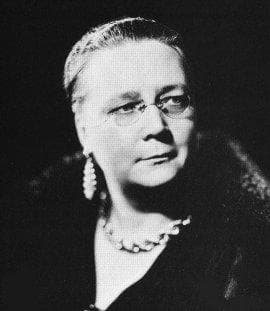
Dorothy Leigh Sayers was an English crime writer and poet. She was also a student of classical and modern languages.
Similar books
- Gaudy Night
Dorothy L. Sayers
4.2 (23k) average on GoodreadsHistorical FictionAnother Lord Peter Wimsey mystery with a strong intellectual puzzle and atmospheric setting.
- THE MURDER OF ROGER ACKROYD
Agatha Christie
4.2 (153k) average on GoodreadsThrillerThe Murder of Roger Ackroyd (1926) offers a stark contrast in its approach to mystery. Christie's novel is celebrated for its shocking twist and focus on psychological misdirection, maintaining a relentless pace and prioritizing plot efficiency. Unlike Sayers' detailed exploration of a specific craft, Christie's narrative is lean, with clues subtly woven into character interactions and dialogue. While both are Golden Age classics, Christie aims for broad accessibility and a rapid, surprising reveal, whereas Sayers provides a more intellectual, atmospheric, and technically specific journey, demanding greater reader engagement with its unique subject matter.
- To Kill a Mockingbird
Harper Lee
4.3 (4.5M) average on GoodreadsHistorical FictionIn the 1930s Jim Crow South, Harper Lee writes about racial injustice, moral growth, and the quiet courage of a lawyer father, Atticus Finch, as seen through his young daughter's eyes.
- The Great Gatsby
F. Scott Fitzgerald
3.9 (3.8M) average on GoodreadsHistorical FictionIn the opulent Roaring Twenties, a mysterious millionaire's lavish parties hide his desperate, tragic pursuit of a lost love, exposing the emptiness within the American Dream.
- Pride and Prejudice
Jane Austen
4.3 (3M) average on GoodreadsHistorical FictionIn a society focused on status and money, Elizabeth Bennet navigates love and pride, challenging Mr. Darcy and social expectations to find true affection.
- Angels & Demons
Dan Brown
3.9 (2.7M) average on GoodreadsThrillerA Harvard symbologist races through Rome's ancient sites, deciphering cryptic clues to unmask the Illuminati and stop a vengeful plot to destroy the Vatican with a stolen antimatter weapon.




Enjoyed the summary?
A summary gives you the shape of the book. The book itself has the detail, the examples and the voice.
Find The Nine Tailors on AmazonAs an Amazon Associate, BookBrief earns from qualifying purchases. How we're funded