
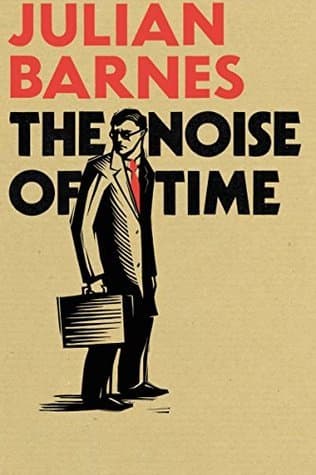
Synopsis
Covers the whole plot, including the ending.
- Difficulty
- Medium
- Pacing
- Slow
- Mood
- Reflective, Somber, Philosophical, Tense, Atmospheric
- Read it if
- You are fascinated by the intersection of art, politics, and personal integrity under totalitarian regimes, or if you appreciate deep character studies of historical figures.
- Skip it if
- You prefer fast-paced plots with clear external conflicts and resolutions, or if you dislike introspective narratives focused on internal struggle and philosophical questions.
The Noise of Time Plot Summary
Covers the whole plot, including the ending.
On the Landing: 1936
In 1936, Dmitri Shostakovich waits on the landing outside his Leningrad apartment, a small suitcase packed, expecting the NKVD. He has been called to the Big House (secret police headquarters) for questioning, but he thinks it is a trick; they will arrest him at home. He waits by the elevator to spare his wife, Nina Varzar, and infant daughter, Galina, from seeing his arrest. This fearful wait follows the damaging Pravda article, 'Muddle Instead of Music,' which condemned his opera, 'Lady Macbeth of the Mtsensk District,' after Joseph Stalin himself saw a performance. Shostakovich thinks about the sudden change from international praise to being labeled an 'enemy of the people,' a label that now threatens his life and career under Soviet rule.
The Interrogation and a Reprieve
Shostakovich endures a terrifying interrogation at the Big House, led by a polite but threatening officer. He is questioned about his artistic 'mistakes' and ties to 'enemies of the people.' The interrogation is mentally torturous, meant to break him and get confessions. He is told to return the next day. However, when he arrives, he learns his interrogator has been arrested overnight. This strange turn of events, common during the Great Purge, gives Shostakovich a temporary, unexplained break. He is released, but the experience leaves a lasting mark, deepening his understanding of the arbitrary and frightening nature of power in the Soviet Union and strengthening his constant fear of the knock on the door.
Art and Fear: The Fourth Symphony
After the 'Muddle Instead of Music' scandal, Shostakovich is in a difficult position, forced to balance his artistic vision with state demands. He is working on his Fourth Symphony, a large and complex piece showing his inner turmoil and the era's anxieties. However, under great pressure and fearing more condemnations, he makes the painful choice to withdraw the symphony from performance. This act of self-censorship results directly from the atmosphere of fear and the regime's control over artistic expression. He understands that to survive, he must adapt, or appear to, even if it means compromising his artistic truth for a time. The symphony remains unperformed for decades, a silent symbol of art's suppression.
The Fifth Symphony: A Soviet Artist's Response
In 1937, Shostakovich premieres his Fifth Symphony, subtitled 'A Soviet Artist's Reply to Just Criticism.' This work, while subtly rebellious to some, is mostly seen by authorities as a return to socialist realism and a sign of his regret. The symphony is a great success with both the public and official critics, giving Shostakovich some recovery and easing the immediate pressure on him. He learns the delicate skill of creating music that can be understood on many levels: satisfying the regime's demands for accessibility and optimism while hiding deeper, more melancholic or critical messages for those who could hear them. This becomes a repeated strategy in his career, a way to keep artistic honesty while navigating a dangerous political situation.
The War and the Seventh Symphony
During World War II, specifically the difficult Siege of Leningrad, Shostakovich composes his Seventh Symphony, known as the 'Leningrad' Symphony. He first refuses to leave the besieged city, helping the war effort by digging trenches and broadcasting messages. The symphony becomes a strong symbol of Russian resilience against the Nazi invasion. Its premiere in Leningrad under impossible conditions—orchestra members starving, city under constant bombing—is an act of defiance. The symphony becomes famous internationally, especially in the West, where it is seen as a universal statement against fascism. For the Soviet government, it is powerful propaganda, temporarily aligning Shostakovich with the state's story of patriotic heroism, even as his personal suffering and complex feelings are woven into the music.
The Zhdanov Decree: 1948
In 1948, Shostakovich, along with other Soviet composers like Prokofiev and Khachaturian, is again publicly denounced under the Zhdanov Decree. Andrei Zhdanov, Stalin's cultural enforcer, condemns their music as 'formalist,' 'anti-people,' and 'bourgeois.' Shostakovich loses his professorships, his music is banned, and he is forced to publicly regret his 'mistakes.' This period marks another serious blow to his career and personal life, forcing him to compose 'for the desk drawer'—works that could not be performed publicly. He begins writing film scores and patriotic cantatas to earn money, while secretly composing his more personal and challenging works, such as the Violin Concerto No. 1 and the song cycle 'From Jewish Folk Poetry,' knowing they might never be heard.
The American Delegation: 1949
Despite being officially denounced, Soviet authorities force Shostakovich to attend the Cultural and Scientific Conference for World Peace in New York City in 1949. This is a humiliating experience; he is made to read pre-written speeches criticizing Western music and praising Soviet cultural policy, including the very Zhdanov Decree that had condemned him. American composers and critics, including Olin Downes, publicly challenge him about his own music being suppressed. Shostakovich feels great shame and self-hatred, keenly aware of the hypocrisy and tragic irony of his situation. This event shows the deep moral compromises he is forced to make under the regime, sacrificing his dignity for the perceived safety of himself and his family.
After Stalin's Death: 1953
Stalin's death in 1953 brings a period of cautious hope, known as the 'Thaw.' The immediate, strong fear that had controlled Soviet life for decades begins to fade. Shostakovich, like many others, feels a brief sense of freedom, allowing some of his previously suppressed works to be performed. However, the mental scars from years of terror run deep. He remains cautious, understanding that while the immediate threat might have lessened, the regime's basic nature had not entirely changed. The memory of past persecutions and the ingrained habit of self-censorship continue to trouble him, making true freedom of expression a complex and hard-to-reach goal. He continues to struggle with the moral weight of his compromises.
Joining the Party: 1960
In 1960, under extreme pressure and direct force from Nikita Khrushchev's government, Shostakovich is finally made to join the Communist Party. This act is a deep personal and moral surrender, one he deeply resents and that leaves him with a lasting sense of shame. He sees it as the ultimate betrayal of his artistic and personal honesty, a final win for the 'power' that had troubled him for decades. The decision is made not from belief, but from a calculated fear for his family and his ability to keep composing. This event leaves him deeply depressed and spiritually broken, leading to a period of intense creative work, especially his String Quartet No. 8, which is deeply personal and full of despair.
The Final Years: Silence and Inner Music
In his final years, suffering from poor health and growing disappointment, Shostakovich becomes more withdrawn. He continues to compose, but his music often becomes darker and more thoughtful, reflecting his deep sadness and the compromises of his life. He often feels he has lost his 'inner voice' or that it has been corrupted by state demands. He finds comfort in his friendships and family, but the weight of his past actions, particularly joining the Party, troubles him. He understands that his music, while often serving the regime's purposes, also held hidden meanings and protests, a secret conversation with history. He dies in 1975, leaving a complex legacy of both artistic genius and tragic compromise.
The Noise of Time Characters
Dmitri Shostakovich
Protagonist
A brilliant Soviet composer grappling with artistic integrity under totalitarian rule.
Dmitri Shostakovich is depicted as a man of immense musical genius, highly sensitive, introverted, and plagued by a profound sense of fear and moral compromise. He is deeply devoted to his art, yet constantly forced to navigate the treacherous political landscape of the Soviet Union. His internal life is rich and complex, filled with ironic observations, self-doubt, and a desperate longing for artistic freedom. He is a survivor, but one who carries the heavy burden of his compromises, manifesting in physical ailments and a pervasive melancholy.
Relationships: Nina Varzar (First wife, source of comfort and family stability.); Joseph Stalin (Dictator, ultimate source of fear and artistic oppression.); Nikita Khrushchev (Later Soviet leader, continued political pressure and forced Party membership.); Mikhail Tukhachevsky (Friend and patron, executed during the purges, a stark reminder of the regime's brutality.)
Nina Varzar
Supporting
Shostakovich's first wife, a source of stability and quiet support.
Nina Varzar is portrayed as a steadfast and supportive wife to Dmitri Shostakovich. She shares his anxieties during the terrifying purges and provides a domestic anchor amidst the political turmoil. While not a central figure in the narrative's exploration of artistic compromise, her presence underscores the personal stakes for Shostakovich and the family he seeks to protect. She represents a quiet strength and a grounding force in his turbulent life, often bearing the brunt of his professional anxieties.
Relationships: Dmitri Shostakovich (Wife, devoted and supportive.)
Joseph Stalin
Antagonist
The tyrannical Soviet dictator who directly influenced Shostakovich's fate.
Joseph Stalin is the omnipresent, terrifying antagonist of the novel, though he rarely appears directly. His actions and pronouncements, particularly the 'Muddle Instead of Music' article, directly control Shostakovich's destiny and artistic output. He embodies the arbitrary and brutal power of the totalitarian state, a distant but utterly dominant figure whose whims can lead to life or death, acclaim or denunciation. His influence creates the pervasive atmosphere of fear and self-censorship that defines Shostakovich's life.
Relationships: Dmitri Shostakovich (Oppressor, ultimate judge of his art and life.)
Nikita Khrushchev
Supporting
Stalin's successor, who continued to exert political pressure on artists.
Nikita Khrushchev emerges as a later, less overtly brutal but still coercive leader. While he initiates the 'Thaw,' he also directly pressures Shostakovich to join the Communist Party. He represents the continued, albeit changing, nature of state control over art and artists in the post-Stalin era. Khrushchev's character highlights that even without the immediate threat of execution, the regime's demands for conformity remained potent and deeply compromising for artists like Shostakovich.
Relationships: Dmitri Shostakovich (Political leader, exerted pressure to conform.)
The Interrogator (Major)
Mentioned
The chillingly polite NKVD officer who questions Shostakovich.
The interrogator is a composite figure representing the apparatus of state terror. He is chillingly polite, methodical, and psychologically manipulative, embodying the bureaucratic face of the Great Purge. His sudden disappearance (arrested himself) highlights the arbitrary and cannibalistic nature of the regime, where even the enforcers are not safe. He serves as a direct, terrifying manifestation of the 'power' that Shostakovich fears.
Relationships: Dmitri Shostakovich (Tormentor during a terrifying interrogation.)
Galina Shostakovich
Supporting
Dmitri Shostakovich's daughter, a symbol of his family's vulnerability.
Galina, Shostakovich's daughter, along with his son Maxim, represents the direct personal stakes of his compromises. His desire to protect his children from the regime's wrath is a powerful motivator for his acts of self-censorship and public capitulation. While she doesn't have a speaking role, her existence underscores the profound personal cost of living under totalitarianism, where artistic integrity is constantly weighed against the safety of loved ones. Her well-being is a constant, unspoken pressure on her father.
Relationships: Dmitri Shostakovich (Daughter, a key reason for his compromises.)
The Noise of Time Themes
The Nature of Power and Artistic Freedom
The novel deeply explores the conflict between totalitarian power and artistic freedom. Shostakovich's life is a constant negotiation with 'power'—Stalin, Khrushchev, and the entire Soviet system—which seeks to control the content and form of his music. His struggle shows how political regimes try to take over or crush independent artistic expression, forcing artists to choose between honesty and survival. This theme is central in scenes like the 'Muddle Instead of Music' denunciation and Shostakovich's forced participation in the New York conference, where he is made to betray his own beliefs.
“What was courage? What was cowardice? What was compromise? What was the correct path? You had to be a hero to play the game and lose. You had to be a hero to play the game and win. You had to be a hero even to refuse to play the game.”
Compromise and Moral Guilt
A constant theme is the moral compromise needed to survive under an oppressive regime. Shostakovich is forced to make many compromises, from withdrawing his Fourth Symphony to joining the Communist Party and reading state-approved speeches. These actions, while ensuring his survival, cause deep psychological pain and a strong sense of guilt and self-hatred. The novel examines the inner torment of a man who feels he has betrayed his true artistic self, even if it was for his family's sake. His inner thoughts constantly grapple with whether his choices were acts of cowardice or necessary survival.
“He always knew there was a price to be paid, and the price was not just his time and labour, but his soul.”
The Enduring Power of Art
Despite the constant pressure, the novel celebrates art's lasting power to resist, even subtly. Shostakovich's music, especially his symphonies and quartets, becomes a way for hidden dissent, a 'covert message' heard by those who understood its details. Composing itself is an act of defiance, creating beauty and truth in a world of lies. Even when forced to produce 'acceptable' music, Shostakovich often puts his true feelings—sorrow, irony, anger—within the notes, showing that art can overcome censorship and speak across time, as seen in the double meanings of his Fifth Symphony.
“Music was a way to say the unsayable. It was a way to say the unsayable in an unsayable time.”
Fear and Silence
Fear drives much of Shostakovich's life and the overall mood of the Soviet Union. The fear of the knock on the door, random arrests, purges, and constant surveillance leads to a culture of silence and self-censorship. This theme appears clearly in the opening scene of Shostakovich waiting on the landing, and in his choice to withdraw his Fourth Symphony. The novel explores how fear not only silences people but also distorts truth and memory, making it hard for people to trust even their own thoughts or others' intentions.
“Fear was a habit. Fear was a way of life. Fear was a way of thinking, of not thinking, of being silent.”
Memory and History
The novel often returns to Shostakovich's memories, blending past and present, and questioning the official version of history. His inner thoughts are full of recollections of friends lost to purges, past humiliations, and brief moments of joy. This constant mix of memory highlights how personal experience often conflicts with official history, and how individuals struggle to keep their own truth in the face of state-imposed fictions. Remembering becomes a form of resistance, a way to keep alive the true 'noise of time' rather than the cleaned-up version presented by authorities.
“History was not the lies of the victors, as the old saying went, but the memories of the victims.”
Plot Devices & Literary Techniques
Internal Monologue
The narrative is almost entirely presented through Shostakovich's stream of consciousness.
The novel primarily utilizes an internal monologue, allowing readers direct access to Shostakovich's thoughts, fears, anxieties, and ironic observations. This device is crucial for conveying the psychological impact of living under totalitarianism, as it reveals his private struggles, his self-doubt, and his attempts to reconcile his public actions with his inner convictions. It creates an intimate portrait of his mind, highlighting the constant negotiation between self-preservation and artistic integrity, and the deep-seated melancholy that permeates his existence. This allows for a nuanced exploration of his moral compromises.
Three 'Stations' Structure
The narrative is divided into three distinct chronological 'stations' or periods in Shostakovich's life.
The novel is structured around three key moments ('stations') in Shostakovich's life: 1936 (on the landing, anticipating arrest), 1949 (on a plane to New York, forced to represent the USSR), and 1960 (in a car, coerced into joining the Party). Each 'station' serves as a focal point for deep reflection, allowing Shostakovich to revisit past memories, contemplate his present predicament, and project his anxieties onto the future. This structure emphasizes the cyclical nature of his suffering and compromise, showing how the 'power' constantly resurfaces to demand allegiance, even as the specific circumstances change over time.
Irony and Black Humor
Shostakovich's internal narrative is often laced with dark humor and biting irony.
Shostakovich's internal monologue frequently employs irony and black humor as a coping mechanism against the absurd and terrifying reality of Soviet life. He observes the hypocrisy and brutality of the regime with a sardonic wit, using humor to distance himself from the horror and to retain a sliver of intellectual independence. This device allows the reader to understand his inner rebellion, even when his outward actions are those of compliance. It also highlights the surreal nature of living in a society where truth is constantly inverted and fear is a daily companion, making his observations both poignant and darkly amusing.
The 'Noise of Time' as Metaphor
A recurring metaphor for the oppressive historical and political forces shaping Shostakovich's life.
The title itself, 'The Noise of Time,' serves as a central metaphor. It represents the cacophony of political dictates, propaganda, fear, and historical events that constantly intrude upon and threaten to silence Shostakovich's inner musical voice. It is the overwhelming external pressure from the state, the 'power,' that he must navigate. The 'noise' is both literal (the denunciations, the speeches) and metaphorical (the pervasive atmosphere of terror and ideological control). Shostakovich's struggle is to find or preserve his own music, his own truth, amidst this deafening and destructive 'noise'.
The Noise of Time Quotes
“The purpose of art is to prepare a person for death.”
“You could not be a Soviet artist and be a free artist. You could be a Soviet artist, or you could be a free artist. But you could not be both.”
“The noise of time. That was what he had been listening to. The noise of time, which was the sound of the State.”
“There were certain things you could not do. There were certain things you must not do. And there were certain things you would not do, even if you could.”
“To be a composer was to be a servant. To be a composer was to serve the State. To be a composer was to serve the people. To be a composer was to serve music. And sometimes, these four masters were in conflict.”
“What was the worst thing they could do to you? Kill you? Yes. But they could also make you kill yourself, morally speaking.”
“He had learned that the only way to resist was to not resist. To appear to conform, while preserving an inner core of defiance.”
“A coward, yes. But a coward who had survived. And survival, in those times, was a form of heroism.”
“Music was the only place he felt truly free. In music, there were no compromises, no denunciations, no fear.”
“He had been forced to denounce his friends, to praise his tormentors, to sign letters he did not believe in. And each time, a piece of him had died.”
“The question was not whether art could change the world, but whether art could help you live in it.”
“Laughter was a good weapon. Against the terror, against the absurdity. Laughter was a way of saying: you haven't broken me.”
“He understood that his music would outlive him. And that, perhaps, was the only true victory.”
“He had played the fool, the jester, the loyal servant. But underneath, the music was always there, a secret language, a hidden truth.”
Quiz
10 questions on the plot and the characters. Each answer comes with a short explanation.
Question 1
In what year does Dmitri Shostakovich first fear for his life due to Stalin's denunciation of his opera?
- 1929
- 1936
- 1941
- 1953
Show answer
B. 1936 The novel opens with Shostakovich in 1936, fearing for his life after Stalin's denunciation of his opera, 'Lady Macbeth of Mtsensk'.
Question 2
What is the specific opera that Stalin denounces, causing Shostakovich's initial terror?
- Symphony No. 7 'Leningrad'
- The Nose
- Lady Macbeth of Mtsensk
- Katerina Izmailova
Show answer
C. Lady Macbeth of Mtsensk Stalin's denunciation of 'Lady Macbeth of Mtsensk' is the catalyst for Shostakovich's first period of intense fear and uncertainty.
Question 3
What is the primary concern Shostakovich constantly weighs throughout his career under Soviet rule?
- Achieving international fame and recognition.
- Appeasing those in power against the integrity of his music.
- Financial stability for his family.
- His personal happiness and relationships.
Show answer
B. Appeasing those in power against the integrity of his music. A central theme of the novel is Shostakovich's constant struggle to balance artistic integrity with the demands and dangers of the Soviet regime.
Question 4
What significant event prevents Shostakovich from becoming a casualty of the Great Terror in the initial period of fear?
- He flees the country.
- He receives a personal letter of commendation from Stalin.
- A stroke of luck, as his interrogator is arrested.
- He publicly retracts his controversial works.
Show answer
C. A stroke of luck, as his interrogator is arrested. The novel describes a specific 'stroke of luck' where his interrogator is arrested, saving Shostakovich from immediate persecution.
Question 5
Beyond his musical career, what other role is Shostakovich compelled to play for the Soviet Union, as mentioned in the summary?
- A military strategist during World War II.
- A diplomat at the United Nations.
- A representative of Soviet values at a cultural conference in New York City.
- A secret informant for the KGB.
Show answer
C. A representative of Soviet values at a cultural conference in New York City. The summary explicitly states he was 'made to represent Soviet values at a cultural conference in New York City'.
Question 6
The novel explores the 'meaning of art and its place in society.' Which of the following best encapsulates Shostakovich's personal struggle with this theme?
- Art should always serve political propaganda.
- Art is a private expression, separate from societal demands.
- The tension between artistic freedom and state control.
- Art's sole purpose is to entertain the masses.
Show answer
C. The tension between artistic freedom and state control. The core of his struggle is the conflict between his artistic vision and the political pressures and expectations placed upon him by the Soviet state.
Question 7
What is the primary method of control and fear the Soviet regime uses against Shostakovich, as depicted in the novel?
- Public humiliation and financial ruin.
- Direct threats of execution or exile to Siberia.
- Censorship of all his musical scores.
- Isolation from other artists and intellectuals.
Show answer
B. Direct threats of execution or exile to Siberia. The summary highlights his fear of being 'exiled to Siberia (or, more likely, executed on the spot)' and being 'held fast under the thumb of despotism'.
Question 8
The novel is structured around three 'platforms' or phases in Shostakovich's life. What is the central emotional state or predicament associated with the first platform?
- Triumphant artistic recognition.
- Paralyzing fear and waiting for arrest.
- Deep depression after a personal loss.
- Creative block and professional stagnation.
Show answer
B. Paralyzing fear and waiting for arrest. The first section of the book vividly depicts Shostakovich standing by the elevator, waiting to be arrested, consumed by fear.
Question 9
Shostakovich is forced to join the Party. What is the profound internal conflict this action represents for him, beyond mere compliance?
- A betrayal of his personal artistic ideals and integrity.
- A rejection of his family's political beliefs.
- An opportunity to secretly undermine the regime from within.
- A necessary step to gain more artistic freedom.
Show answer
A. A betrayal of his personal artistic ideals and integrity. Joining the Party is depicted as a profound personal and artistic compromise, a 'betrayal' of his inner self, representing the ultimate subjugation of his integrity.
Question 10
How does the novel portray the concept of 'power' in relation to Shostakovich and his art?
- Power is solely derived from artistic genius and public acclaim.
- Power is a corrupting force that inevitably destroys art.
- Power is an external, overwhelming force that dictates life and art, often forcing compromise.
- Power resides in the individual's ability to resist and rebel openly.
Show answer
C. Power is an external, overwhelming force that dictates life and art, often forcing compromise. The novel consistently shows power as an external, oppressive force wielded by the state, forcing Shostakovich into compromises and shaping his life and art.
The Noise of Time FAQ
What is the central conflict Shostakovich faces throughout the novel?
Dmitri Shostakovich's central conflict is the agonizing choice between artistic integrity and personal survival under the totalitarian regime of Joseph Stalin. He constantly grapples with appeasing the authorities to protect himself and his family, while simultaneously trying to preserve the true meaning and spirit of his music against political corruption.
Describe the significance of the opening scene where Shostakovich waits by the lift.
The opening scene, with Shostakovich waiting by the lift with his packed suitcase, vividly establishes the pervasive fear and uncertainty of Stalin's Great Terror. It symbolizes his constant expectation of arrest and execution, and the psychological toll of living under such immense, arbitrary threat, even as he internally debates his artistic principles.
How does the novel portray Shostakovich's relationship with his music in the face of political pressure?
The novel portrays Shostakovich's music as both his greatest solace and his greatest vulnerability. He often embeds hidden meanings and dissent within his compositions, using them as a form of silent resistance, even as he is forced to create 'officially approved' works. His music becomes a testament to his inner life, distinct from his public persona.
What role do women play in Shostakovich's life as depicted in the book?
Women, particularly his wives Nina Varzar and Margarita Kainova, and his mistress Elena Konstantinovskaya, provide Shostakovich with moments of personal connection, solace, and sometimes complicity. They represent the personal sphere he tries to protect, and their fates are often intertwined with his own precarious existence, adding another layer of anxiety to his decisions.
How does the novel use the concept of 'power' beyond just political authority?
Beyond Stalin's political authority, the novel explores the power of fear, the power of art to both defy and be co-opted, and the insidious power of self-deception and compromise. Shostakovich's internal struggles demonstrate how power can corrupt not just institutions, but also individual conscience and creative expression.
What is the significance of the phrase 'the noise of time' itself?
The phrase 'the noise of time' refers to the overwhelming, often oppressive cacophony of political propaganda, public opinion, and historical events that constantly threatened to drown out Shostakovich's true artistic voice and inner thoughts. It represents the external pressures that sought to define and distort his legacy, against which he struggled to preserve his authentic self.
How does Barnes subtly incorporate historical figures beyond Stalin into Shostakovich's narrative?
Barnes subtly weaves in interactions with other historical figures, such as Marshal Tukhachevsky, who was later executed, or the composer Prokofiev, to illustrate the broader climate of terror and artistic rivalry. These encounters highlight the fragility of life and reputation for anyone operating within the Soviet cultural sphere, regardless of their eminence.
Are there any specific musical compositions mentioned that hold symbolic weight within the story?
While specific compositions are not always detailed, the opera 'Lady Macbeth of Mtsensk' is crucial, as its denunciation by Stalin marks the beginning of Shostakovich's overt persecution. Later, the Fifth Symphony is presented as a 'Soviet artist's reply to just criticism,' publicly appeasing the regime while subtly conveying deeper, more melancholic truths to those who could understand.
What is the implied meaning behind Shostakovich's recurring memory of his childhood fear of a 'man in the dark'?
The recurring childhood fear of a 'man in the dark' serves as a profound psychological metaphor for Shostakovich's adult terror of the unseen, arbitrary power of the state under Stalin. It represents the omnipresent, unidentifiable threat that could emerge at any moment to destroy him, echoing his constant anxiety about arrest.
How does Shostakovich's stutter reflect his internal state?
Shostakovich's stutter is depicted as a physical manifestation of his profound internal anxiety and the difficulty he has in expressing his true thoughts and feelings under duress. It symbolizes his inability to speak freely and directly, forcing him to communicate his dissent through the more ambiguous language of music.
Analyze Shostakovich's coping mechanisms for survival under totalitarianism.
Shostakovich employs several coping mechanisms: public appeasement and self-abasement, strategic silences, and the embedding of hidden meanings within his music. He cultivates an outward persona of compliance while maintaining an internal sanctuary of artistic integrity, a form of psychological 'double life' to ensure his survival.
How does the novel explore the concept of shame in Shostakovich's life?
The novel deeply explores Shostakovich's pervasive sense of shame – shame for his public compromises, for joining the Party, for his perceived cowardice in not openly defying the regime. This shame is a constant companion, eroding his self-respect and making him question his moral fortitude, even as he justifies his actions as necessary for survival.
Discuss the psychological impact of constant surveillance and the fear of denunciation on Shostakovich.
Constant surveillance and the fear of denunciation create a deep-seated paranoia and self-censorship in Shostakovich. He becomes hyper-aware of his words, actions, and even thoughts, leading to a profound sense of isolation and a fractured identity, where his public self is a carefully constructed facade to avoid fatal missteps.
Does the novel ultimately portray Shostakovich as a hero, a victim, or something more nuanced?
The novel portrays Shostakovich as a deeply nuanced figure, neither a straightforward hero nor a mere victim. He is a survivor who makes agonizing compromises, experiencing profound shame and moral conflict. His heroism lies in his internal resistance and the preservation of his artistic voice, even while outwardly conforming to a monstrous regime.
What is Barnes's stance on the meaning of art in a totalitarian society, as conveyed through Shostakovich's story?
Barnes suggests that in a totalitarian society, art becomes a vital, albeit dangerous, vessel for truth and individual spirit. It can be co-opted and distorted, but also serves as a subtle form of resistance and a historical record, preserving authentic human experience against the 'noise of time' and political lies, even if its true meaning is only understood by a few.
How does the novel's non-linear structure contribute to its themes?
The novel's non-linear structure, jumping between key moments in Shostakovich's life, emphasizes the enduring nature of his psychological burdens and the cyclical patterns of fear and compromise. It allows Barnes to explore the internal landscape of memory and reflection, highlighting how past traumas and moral dilemmas continue to shape his present.
To what extent does the novel suggest that compromise is inevitable for artists under oppressive regimes?
The novel strongly suggests that compromise is often an inevitable, if painful, necessity for artists seeking to survive under oppressive regimes. Shostakovich's story illustrates that outright defiance often leads to destruction, forcing artists to navigate a treacherous path of strategic concessions to protect their lives and their ability to create, however constrained.
What philosophical questions about truth and authenticity does the book raise?
The book raises profound philosophical questions about truth and authenticity, particularly how they can be preserved when public expression is policed. It asks whether true authenticity can exist only in one's inner life or art, and if public lies, however coerced, irrevocably corrupt one's personal truth. It probes the nature of integrity in an age of inescapable falsehoods.
About the author
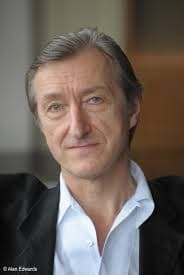
Julian Patrick Barnes is an English writer. He won the Man Booker Prize in 2011 with The Sense of an Ending, having been shortlisted three times previously with Flaubert's Parrot, England, England, and Arthur & George. Barnes has also written crime fiction under the pseudonym Dan Kavanagh. In addition to novels, Barnes has published collections of essays and short stories.
Similar books
- The Master And Margarita
Mikhail Bulgakov
4.3 (243k) average on GoodreadsFantasyExplores art, censorship, and the surreal nature of life under Soviet rule.
- One Day in the Life of Ivan Denisovich
Aleksandr Solzhenitsyn
4.0 (93k) average on GoodreadsHistorical FictionDepicts the harsh realities of Soviet repression and the struggle for human dignity.
- Doctor Zhivago
Boris Pasternak
4.0 (82k) average on GoodreadsHistorical FictionA sprawling narrative of life, love, and art amidst Russian revolutionary turmoil.
- The Old Man and the Sea
Ernest Hemingway
3.8 (831k) average on GoodreadsLiterary FictionA Cuban fisherman's long struggle with a giant marlin becomes a story of endurance and dignity, now retold for young adults with illustrations, phonetic guides, and writing prompts in Traditional Chinese.
- One Hundred Years of Solitude
Gabriel García Márquez
4.1 (753k) average on GoodreadsLiterary FictionThrough the multi-generational story of the Buendía family, a mythical town deals with the repeating patterns of time, love, and solitude, as the extraordinary mixes with the ordinary.
- The Goldfinch
Donna Tartt
3.9 (720k) average on GoodreadsLiterary FictionHaunted by a tragic explosion and clutching a stolen Dutch masterpiece, a young orphan navigates the opulent drawing rooms of New York and the gritty underbelly of the art world, desperately seeking connection and redemption amidst a life spiraling into crime and obsession.





Enjoyed the summary?
A summary gives you the shape of the book. The book itself has the detail, the examples and the voice.
Find The Noise of Time on AmazonAs an Amazon Associate, BookBrief earns from qualifying purchases. How we're funded