
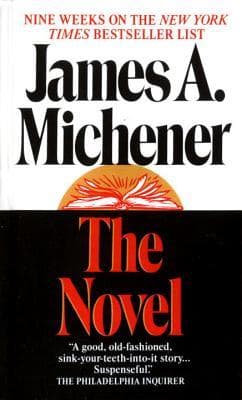
Synopsis
Covers the whole plot, including the ending.
- Difficulty
- Medium
- Pacing
- Moderate
- Mood
- Insightful, Reflective, Thought-provoking, Intricate
- Read it if
- You enjoy intricate stories about the publishing world, the creative process, and the impact of literature, with a touch of mystery.
- Skip it if
- You prefer fast-paced thrillers or are not interested in detailed explorations of literary themes and industry dynamics.
The Novel Plot Summary
Covers the whole plot, including the ending.
The Writer's Retreat and a New Idea
Lukas Yoder, a respected and successful novelist in his late sixties, has just finished what he thinks is his final book, a historical story. He lives in Doylestown, Pennsylvania, a community he values. However, a sense of unease begins in the town as a series of unexplained deaths occur among its elderly residents. At first, these incidents are called natural causes or accidents, but their frequency and odd circumstances bother Lukas. He feels drawn to the mystery, sensing an urge to write about it, despite his earlier belief that his writing career was ending. This new interest marks an unexpected chapter in his creative life, pulling him from his planned retirement from writing novels.
The Editor's Struggle
Yvonne Holland, Lukas Yoder's dedicated editor at the New York publishing house, Markham & Markham, is in a difficult professional spot. The firm, a place of literary tradition, faces a hostile corporate takeover by a larger, more commercially focused company. Yvonne is loyal to her authors, especially Lukas, and believes in the artistic value of their work. She tries to manage the tough world of publishing, resisting demands for more commercial projects and defending Lukas's often complex manuscripts. Her main goal is to protect the quality of the books Markham & Markham publishes and the careers of her authors, even as her professional world changes around her.
The Critic's Envy
Karl Streeter is a literature professor at a nearby university and a literary critic, living in the same area as Lukas Yoder. He understands literature and has a sharp mind, but also a quiet envy of Yoder's commercial success and critical praise. Streeter has often critiqued Yoder's work, sometimes harshly, feeling that Yoder's popular appeal outweighs his literary value. He deals with his own unfulfilled writing ambitions, comparing his academic and critical career to Yoder's celebrated status. This internal conflict fuels his often-conflicting feelings towards Yoder, moving between respect for his craft and bitter jealousy over his fame.
The Reader's Insight
Jane Garland is a careful and devoted reader of Lukas Yoder's novels, living in Doylestown. She is an intelligent and observant woman, who, like Lukas, begins to notice the pattern of deaths among the town's elderly. Unlike the authorities, who see these as separate incidents, Jane's mind starts to connect details. She keeps a detailed journal where she records her observations about the community and the unusual events around the deaths. Her deep engagement with Yoder's fictional worlds has improved her ability to spot details and patterns, making her an accidental, yet important, investigator in the real-life mystery in her town. She feels a growing belief that something wrong is happening.
The Plot Thickens
Driven by his writer's instinct, Lukas Yoder begins to informally investigate the deaths in Doylestown. He talks to neighbors, attends funerals, and looks at local news archives. He notices that many of the deceased were long-time residents, often living alone, and that their deaths, while seemingly natural, often involved odd circumstances like sudden falls or quick declines in health without clear medical reasons. He also sees a common point: many of the victims had recently changed their wills or financial arrangements. This discovery makes him suspect that the deaths are not random, but part of a planned scheme, pushing him further into the role of an amateur detective, despite the initial doubt of local authorities.
Corporate Publishing Battles
The corporate takeover bid grows stronger at Markham & Markham. Yvonne Holland often clashes with new, profit-focused executives who put marketability over literary quality. They push for faster production, demand changes to manuscripts to appeal to wider audiences, and question the commercial value of authors like Lukas Yoder, whose books are often long and challenging. Yvonne defends her authors and her editorial principles, arguing for the lasting value of quality literature. She tries to maintain the integrity of the publishing house while trying to secure Lukas's future and ensure his new, possibly controversial, novel about the Doylestown deaths will be published without being changed or rejected for commercial reasons.
Streeter's Critical Dilemma
Karl Streeter receives an offer to write a comprehensive essay on Lukas Yoder's entire body of work for a literary journal. This opportunity makes him re-read Yoder's novels carefully, facing his previous ideas and personal resentments. As he reads Yoder's stories, Streeter begins to appreciate the novelist's craft, his research, and his understanding of human nature. He struggles with the ethics of writing an objective critique while dealing with his own envy and past criticisms. This project becomes a journey of self-discovery for Streeter, challenging him to balance his academic rigor with his personal feelings and to acknowledge Yoder's literary contributions.
Jane's Breakthrough
Through her careful record-keeping and observation, Jane Garland makes an important discovery. She notices that all the deceased individuals had a common link: they were clients of a specific local financial advisor and had recently updated their wills, often leaving large parts of their estates to a newly established local charity or trust. She also observes that the beneficiaries of these changes are often the same people or organizations. Jane gathers her findings, creating a strong case that points to a scheme of elder financial abuse and possibly murder. She contacts Lukas Yoder, sharing her evidence, which matches and expands on his own growing suspicions.
The Unveiling of the Conspiracy
Combining his narrative insights with Jane Garland's evidence, Lukas Yoder begins to understand the full scope of the criminal conspiracy. The scheme involves a network of seemingly respectable community members, including a financial advisor, a lawyer, and possibly a medical professional, who have targeted vulnerable elderly residents, forcing them to change their wills before subtly causing their deaths. Lukas, driven by a sense of moral duty and his writer's need to expose truth, decides to confront the perpetrators, though carefully. He uses his public platform and connections to subtly bring attention to the pattern, preparing to expose the truth through his new novel and through direct, though risky, engagement with local authorities and the conspirators.
The Novel's Creation
Inspired by the events, Lukas Yoder begins to write his new novel, which he sees as a fictionalized account of the Doylestown conspiracy. He researches the details carefully, using Jane Garland's findings and his own observations. The process is personal and emotionally difficult, as he deals with the dark realities of human greed and betrayal. This novel is more than just a story; it is his way of seeking justice and giving a voice to the victims. Yvonne Holland, despite the corporate issues, supports this new project, recognizing its importance and potential effect, even as she fights to ensure its publication in its original form.
Streeter's Redemption
After much thought and re-evaluation, Karl Streeter finishes his essay on Lukas Yoder. The piece is a thoughtful analysis, recognizing Yoder's contributions to literature, his storytelling skill, and his ability to connect with many readers, while still offering academic critique. Streeter's essay shows his personal and professional growth, moving past jealousy to a true appreciation of Yoder's art. He sends a copy to Yoder, an act of professional respect and perhaps personal reconciliation, showing a change in their complex relationship from rivalry to mutual, if sometimes distant, admiration.
Publication and Impact
Despite corporate resistance and editorial challenges, Yvonne Holland successfully publishes Lukas Yoder's new novel. The book, a gripping and clear account of the Doylestown conspiracy, immediately gains wide attention. Its detailed portrayal of the crimes and the perpetrators, though fictionalized, causes public outrage and leads to a new, more serious investigation by law enforcement. The novel is a powerful force, leading to the arrest and prosecution of those responsible for the elder abuse and murders. Lukas Yoder's final novel not only confirms his literary legacy but also brings justice and healing to his community, showing how literature can reveal truth and cause change.
Principal Figures
Lukas Yoder
Protagonist
A celebrated, aging novelist who finds renewed purpose in exposing a local conspiracy.
Lukas Yoder is a highly respected and commercially successful novelist in his late sixties, living in Doylestown, Pennsylvania. Meticulous in his research and deeply connected to his community, he initially believes his writing career is concluding. However, a series of mysterious deaths among the elderly in his town reignites his creative fire and moral compass. He is observant, empathetic, and possesses a profound understanding of human nature, which he channels into his writing. His drive is to uncover and expose the truth, using his storytelling ability as a tool for justice.
Relationships: Yvonne Holland (Long-standing professional editor-author relationship, built on mutual respect and trust.); Karl Streeter (Complex relationship of professional rivalry and grudging respect.); Jane Garland (Collaborative relationship, with Jane providing crucial investigative support to Lukas.)
Yvonne Holland
Supporting
Lukas Yoder's dedicated editor, battling corporate interests to preserve literary integrity.
Yvonne Holland is a sharp, principled, and fiercely loyal editor at Markham & Markham. She possesses an unwavering commitment to literary quality and her authors, particularly Lukas Yoder. Facing the existential threat of a corporate takeover, she fights tirelessly to protect the publishing house's artistic vision and her authors' creative freedom. She is strategic, resilient, and deeply believes in the power of well-crafted stories. Her professional integrity is paramount, and she navigates the cutthroat publishing world with grace and determination, often putting her career on the line for her beliefs.
Relationships: Lukas Yoder (Long-standing professional editor-author relationship, built on mutual respect and trust.)
Karl Streeter
Supporting
A literary critic and professor whose envy of Yoder transforms into grudging respect.
Karl Streeter is a literature professor and critic, intelligent and articulate, but burdened by a simmering envy of Lukas Yoder's immense popular and critical success. He struggles with his own unfulfilled literary ambitions and often uses his critical platform to subtly undermine Yoder's work. Despite his critical stance, he possesses a deep knowledge of literature and an analytical mind. His internal conflict between professional integrity and personal resentment defines much of his character. He is driven by a desire for recognition and a need to prove his own intellectual worth.
Relationships: Lukas Yoder (Complex relationship of professional rivalry and grudging respect.)
Jane Garland
Supporting
A devoted reader of Yoder's novels who becomes an accidental, crucial investigator.
Jane Garland is an intelligent, observant, and meticulous resident of Doylestown, and a devoted reader of Lukas Yoder's novels. Her deep engagement with fiction has honed her ability to notice details and patterns in the real world. Initially just a concerned citizen, she becomes an accidental investigator as she tracks the mysterious deaths in her community. She is driven by a strong sense of justice and a desire to understand the truth, meticulously documenting her observations. Her quiet dedication and sharp intellect make her an invaluable asset in uncovering the conspiracy.
Relationships: Lukas Yoder (Collaborative relationship, with Jane providing crucial investigative support to Lukas.)
Markham & Markham Executives (e.g., Mr. Harrison)
Antagonist/Mentioned
Corporate figures seeking to acquire and commercialize Markham & Markham, threatening its literary integrity.
These executives represent the faceless, profit-driven forces of corporate publishing. They are primarily concerned with market share, sales figures, and commercial viability, often at the expense of literary quality and author relationships. They are antagonists to Yvonne Holland's and Lukas Yoder's artistic principles, pushing for changes that prioritize mass appeal over artistic merit. Their motivations are purely financial, and they embody the impersonal nature of big business encroaching upon a more traditional, craft-oriented industry. They seek to streamline, commodify, and ultimately control the publishing process.
Relationships: Yvonne Holland (Adversarial professional relationship due to conflicting business philosophies.)
The Conspirators (e.g., Financial Advisor, Lawyer)
Antagonist
A network of seemingly respectable community members orchestrating the Doylestown elder abuse and murders.
This group consists of various local professionals, such as a financial advisor, a lawyer, and potentially others, who exploit their positions of trust to defraud and ultimately murder elderly residents of Doylestown. They are characterized by their cunning, greed, and ruthless disregard for human life. Operating under a veneer of respectability, they meticulously plan and execute their scheme, manipulating wills and orchestrating circumstances to facilitate the deaths of their victims. They represent the insidious evil that can exist within seemingly peaceful communities, driven by avarice.
Relationships: Lukas Yoder (Antagonistic, as Yoder works to expose their criminal enterprise.); Jane Garland (Unbeknownst to them, Jane is a key figure in uncovering their scheme.)
The Elderly Victims
Mentioned
Vulnerable residents of Doylestown who fall prey to the conspiracy.
These characters are the elderly citizens of Doylestown who become the targets of the criminal conspiracy. They are often long-time residents, living alone, and are characterized by their trust in community professionals and their vulnerability. While individual victims are not deeply explored, their collective fate drives the central mystery and provides the moral impetus for Lukas Yoder and Jane Garland's investigations. They represent the innocent and exploited, whose stories are brought to light through the novel.
Relationships: Lukas Yoder (Their plight inspires Yoder's new novel and quest for justice.); Jane Garland (Their deaths spur Jane's meticulous investigation.)
Themes & Insights
The Power of Storytelling and Literature
The novel explores how literature can be a way to find truth, justice, and social commentary. Lukas Yoder's decision to write about the Doylestown deaths changes his craft from entertainment to an act of social responsibility. The book itself, within the story, becomes the tool that exposes the conspiracy and brings about change, showing that stories do not just reflect reality but can shape it. Yvonne Holland's fight to publish the novel, and Jane Garland's ability to see patterns through her reader's eye, also highlight this theme.
“A novel is not just words on a page; it is a mirror, a hammer, a light in the dark.”
Integrity vs. Commercialism
This theme is shown through Yvonne Holland's struggles and the corporate takeover of Markham & Markham. It puts artistic and editorial integrity against the pressures of commercial viability, profit, and mass market appeal. Yvonne's dedication to quality literature and her authors, even when facing career challenges, shows the importance of upholding values when facing widespread commercialism. This conflict also touches on Karl Streeter's initial dismissal of Yoder's 'popular' success over perceived 'literary' merit.
“To compromise on quality for the sake of profit is to betray the very soul of publishing.”
The Nature of Evil and Community Deception
The novel looks at the fact that evil can exist hidden beneath the surface of a peaceful community. The Doylestown conspiracy shows how trusted people can exploit vulnerability for personal gain, betraying community trust. This theme explores the nature of greed and how easily bad acts can be hidden when people operate within society's structures. It makes characters like Yoder and Garland face the dark side of their familiar world.
“The greatest evils are often cloaked in the most respectable disguises.”
The Role of the Reader
Through Jane Garland, the novel elevates the role of the reader from a passive consumer of stories to an active participant in understanding and shaping reality. Jane's careful observations and ability to connect different facts are linked to her experience as a devoted and analytical reader of complex stories. This theme suggests that the skills gained from reading literature—attention to detail, pattern recognition, empathy, and critical thinking—are not just for fiction but are tools for understanding real life.
“A good reader sees more than just the words; they see the world the words are trying to explain.”
Legacy and Purpose in Later Life
Lukas Yoder's journey explores the idea that purpose is not limited by age. Initially thinking of retirement, the Doylestown tragedy reignites his purpose, pushing him to create a final, impactful work. This theme highlights the human need for meaning and the potential for late-life transformation, showing that one's legacy can be redefined and deepened through new challenges and moral duties. It suggests that true fulfillment comes not just from past achievements but from continued involvement with the world.
“A writer's truest work is never finished until the last story that needs telling has been told.”
Plot Devices & Literary Techniques
The Unreliable Narrator (subtly implied)
The initial official dismissals of the Doylestown deaths serve as a form of narrative misdirection.
While not a first-person narrator, the initial official reports and community perception that the Doylestown deaths are natural or accidental function as a subtle form of unreliable narration. The 'official story' is presented as mundane, leading the reader (and some characters) to initially underestimate the gravity of the situation. This device creates suspense and allows the eventual revelation of the conspiracy to be more impactful. It forces characters like Yoder and Garland to look beyond the surface, challenging the 'given' truth and highlighting their investigative prowess.
The MacGuffin (The New Novel)
Lukas Yoder's new novel serves as the central object driving the plot and its resolution.
Lukas Yoder's decision to write a new novel about the Doylestown deaths acts as a MacGuffin. While the content of the novel is critical to the story's resolution, the 'novel' itself primarily serves as the driving force for Yoder's investigation, Yvonne's editorial battles, and the eventual exposure of the conspiracy. It provides a tangible goal for Yoder and a point of conflict for Yvonne, pushing the plot forward and giving a clear objective around which various character arcs converge. The novel's creation and publication are the ultimate stakes.
Foil Characters
Karl Streeter acts as a foil to Lukas Yoder, highlighting different aspects of literary ambition and success.
Karl Streeter serves as a significant foil to Lukas Yoder. Streeter represents the academic, often envious critic, struggling with his own unfulfilled literary aspirations, contrasting with Yoder's established popular and critical success. This contrast highlights different dimensions of the literary world and the complexities of artistic recognition. Streeter's initial disdain for Yoder's commercial appeal underscores the 'integrity vs. commercialism' theme, and his eventual shift in perspective emphasizes the possibility of overcoming professional jealousy for genuine appreciation.
Red Herring (Initial Official Explanations)
The initial explanations for the Doylestown deaths divert attention from the real cause.
The early official explanations for the series of deaths in Doylestown—attributing them to natural causes, accidents, or age-related infirmities—function as a red herring. These initial assessments are designed to mislead both the characters within the story and the reader, diverting attention away from the underlying criminal conspiracy. This device builds suspense and allows the true, more sinister plot to unfold gradually, making the eventual discovery of the truth more shocking and compelling as characters like Yoder and Garland must actively disbelieve the easy answers.
The Novel Quotes
“All writers are different. Some write best in the morning, some at night. Some with music, some in silence. Some fast, some slow. But all good writers have one thing in common: they write.”
“A novel is not just a story; it's a world you build, brick by brick, character by character, until it stands on its own.”
“The past is never truly past; it lives in the present, shaping our decisions, defining our characters.”
“Every character, no matter how minor, must have a reason for being, a life that extends beyond the page.”
“Research is the bedrock of any good historical novel. Without it, you're just making things up, and the reader will know.”
“The greatest enemy of a good sentence is a bad one. Edit mercilessly.”
“In every life, there are moments that define us, choices that pivot our future. A novelist must capture these.”
“Don't write for the critics. Write for the reader who will live in your world, breathe your air, and feel your characters' pain and joy.”
“Silence can be as powerful as dialogue. What isn't said often speaks volumes.”
“The first draft is simply you telling yourself the story. The real work begins with the second.”
“A sense of place is paramount. The setting isn't just a backdrop; it's another character in the story.”
“To truly understand an era, you must understand its people, their dreams, their fears, their daily struggles.”
“The beauty of fiction is that it can reveal truths that facts alone cannot convey.”
“Every writer carries a library of experiences, observations, and imagined worlds within them. Draw upon it.”
Quiz
10 questions on the plot and the characters. Each answer comes with a short explanation.
Question 1
Which character in 'The Novel' is described as a novelist who has had a long, successful career?
- The editor
- Lukas Yoder
- The critic
- The devoted reader
Show answer
B. Lukas Yoder Lukas Yoder is explicitly identified as the novelist with a long, successful career who believes he has written his final book.
Question 2
What event prompts Lukas Yoder to become obsessed with writing about it, despite believing he had written his final book?
- A corporate takeover of his publisher
- A literary award nomination
- A tragedy striking his community
- A conflict with his editor
Show answer
C. A tragedy striking his community The back cover states that 'tragedy strikes his community and he becomes obsessed with writing about it.'
Question 3
What challenge does Lukas Yoder's editor face in the novel?
- She struggles with her own ambitions as a writer.
- She must fight to preserve her integrity and her author as her firm faces a corporate takeover.
- She is trying to solve a mystery destroying their community.
- She is critical of Yoder's success.
Show answer
B. She must fight to preserve her integrity and her author as her firm faces a corporate takeover. The back cover explicitly states that 'Yoder's editor must fight to preserve her integrity - and her author - as her firm becomes the target of a corporate takeover.'
Question 4
Which character in 'The Novel' struggles with his feelings about Lukas Yoder's success and his own ambitions?
- The editor
- Lukas Yoder
- The critic who teaches literature near Yoder's hometown
- The devoted reader
Show answer
C. The critic who teaches literature near Yoder's hometown The back cover describes 'A critic who teaches literature near Yoder's hometown struggles with his feelings about Yoder's success, and his own ambitions.'
Question 5
What is the primary role of the devoted reader in 'The Novel'?
- To become Lukas Yoder's new editor.
- To criticize Yoder's latest work.
- To help Yoder solve the mystery that is destroying their community.
- To lead the corporate takeover of Yoder's publishing firm.
Show answer
C. To help Yoder solve the mystery that is destroying their community. The back cover states, 'And finally, a devoted reader helps Yoder solve the mystery that is destroying their community.'
Question 6
The novel explores the world of books through the perspectives of which four key roles?
- Publisher, agent, bookseller, librarian
- Writer, editor, critic, reader
- Historian, biographer, poet, playwright
- Journalist, academic, student, teacher
Show answer
B. Writer, editor, critic, reader The synopsis states, 'Here is the fascinating story of a writer, editor, critic, and reader locked in a desperate scenario of life, death, love and truth.'
Question 7
What is at stake for the editor during the corporate takeover of her firm?
- Her personal fortune and a new book deal for herself.
- Her integrity and the well-being of her author, Lukas Yoder.
- Her ability to teach literature and influence local academics.
- Her devoted readership and ability to solve community mysteries.
Show answer
B. Her integrity and the well-being of her author, Lukas Yoder. The back cover indicates the editor 'must fight to preserve her integrity - and her author - as her firm becomes the target of a corporate takeover.'
Question 8
What specific challenge does the critic face regarding Lukas Yoder?
- He is forced to collaborate with Yoder on a new book.
- He struggles with envy and his own unfulfilled literary ambitions in light of Yoder's success.
- He is tasked with uncovering the mystery in Yoder's community.
- He becomes Yoder's new literary agent during the corporate takeover.
Show answer
B. He struggles with envy and his own unfulfilled literary ambitions in light of Yoder's success. The synopsis highlights the critic's internal conflict: 'A critic who teaches literature near Yoder's hometown struggles with his feelings about Yoder's success, and his own ambitions.'
Question 9
Beyond the individual character arcs, what broader theme is suggested by the intertwining fates of the writer, editor, critic, and reader in 'The Novel'?
- The isolation of creative work and the solitary nature of reading.
- The complex, interdependent ecosystem of the literary world and the creation/reception of books.
- The eventual decline of traditional publishing in the face of modern challenges.
- The importance of tragedy as the sole inspiration for all great literature.
Show answer
B. The complex, interdependent ecosystem of the literary world and the creation/reception of books. The novel brings together these four distinct roles, suggesting a narrative that explores their interconnectedness and how each contributes to the life cycle of a book and its impact.
Question 10
What is the 'desperate scenario' mentioned in the synopsis that locks the writer, editor, critic, and reader together?
- A competition to win a prestigious literary prize.
- A struggle involving 'life, death, love and truth' combined with a mystery destroying their community and a corporate takeover.
- A collective effort to write a collaborative novel.
- A legal battle over plagiarism of Yoder's work.
Show answer
B. A struggle involving 'life, death, love and truth' combined with a mystery destroying their community and a corporate takeover. The synopsis explicitly states they are 'locked in a desperate scenario of life, death, love and truth.' This overarching scenario encompasses the individual crises like the community tragedy, corporate takeover, and personal ambitions.
The Novel FAQ
What is the central premise of 'The Novel'?
'The Novel' explores the intricate ecosystem of the literary world through the interwoven perspectives of a veteran novelist, his editor, a literary critic, and a devoted reader. The narrative kicks off when Lukas Yoder, a successful author, feels compelled to write about a local tragedy, challenging his previous decision to retire from writing.
Who is Lukas Yoder and what is his primary struggle in the book?
Lukas Yoder is a long-established and successful novelist who initially believes he has written his final book. His primary struggle arises when a tragic event in his community reignites his creative drive, compelling him to document it, even as he grapples with the emotional toll and the expectations placed upon his work.
How does the corporate takeover subplot impact the editor's role?
The corporate takeover subplot places immense pressure on Lukas Yoder's editor, forcing her to navigate a precarious balance between artistic integrity and commercial demands. She must fight to protect her author's vision and her own professional ethics against the encroaching influence of the new corporate owners.
What role does the literary critic play in the narrative?
The literary critic, who teaches near Yoder's hometown, serves as a counterpoint to the author's success, grappling with his own unfulfilled literary ambitions and complex feelings towards Yoder's acclaimed career. His perspective offers insights into the subjective nature of literary judgment and the pressures of academia.
How does the 'devoted reader' contribute to the plot?
The devoted reader plays a surprisingly active role by helping Lukas Yoder unravel the mystery at the heart of the community-destroying tragedy. This character highlights the profound connection between author and audience, demonstrating how readers can become integral to the creative and problem-solving process.
Are there any subtle allusions to Michener's own experiences as a writer within Yoder's character?
Given Michener's prolific career and his deep understanding of the publishing world, Lukas Yoder's journey likely contains many subtle allusions to Michener's own experiences. Yoder's struggle with creative burnout, the pressure to produce, and his engagement with community events mirroring Michener's dedication to historical research, could be interpreted as autobiographical echoes.
Does the 'mystery that is destroying their community' have a deeper symbolic meaning beyond its literal plot function?
The 'mystery that is destroying their community' likely functions on a symbolic level, representing not just a specific event but potentially broader societal issues like misinformation, loss of shared values, or the erosion of community bonds. Yoder's act of writing about it becomes a metaphor for truth-telling and healing.
What is the significance of the differing perspectives of the writer, editor, critic, and reader?
The differing perspectives are crucial for Michener's exploration of the multifaceted nature of literature. They demonstrate how a single book is created, shaped, judged, and ultimately consumed, revealing the distinct yet interdependent roles each player has in the literary ecosystem. This structure allows for a holistic view of a book's life cycle.
How does Lukas Yoder's obsession with the tragedy reflect a psychological aspect of the creative process?
Lukas Yoder's obsession with the tragedy reflects the often-uncontrollable nature of artistic inspiration, where external events can trigger an inescapable urge to create. It highlights the psychological drive of a writer to process and make sense of the world through narrative, even when it's emotionally taxing, demonstrating the compulsion inherent in true artistry.
What psychological impact does the corporate takeover have on the editor?
The corporate takeover likely inflicts significant psychological stress on the editor, forcing her to confront ethical dilemmas and professional compromises. This scenario tests her resilience, her commitment to her authors, and her sense of self-worth within a rapidly changing industry, potentially leading to feelings of powerlessness or heightened advocacy.
How does the critic's struggle with Yoder's success reveal his own psychological landscape?
The critic's struggle with Yoder's success reveals deep-seated psychological complexities, including envy, insecurity, and perhaps a sense of unfulfilled potential. His internal conflict highlights the competitive nature of the literary world and the psychological toll of comparing one's own achievements against those perceived as more successful.
In what ways does 'The Novel' challenge conventional notions of authorship and ownership of a story?
'The Novel' challenges conventional notions by showing that a story isn't solely owned by the author. The editor shapes it, the critic interprets it, and the reader completes it, even actively participating in its resolution. This suggests that authorship is a collaborative and communal process, extending beyond the individual writer.
Is 'The Novel' ultimately optimistic or pessimistic about the future of literature?
'The Novel' seems to strike a balanced, perhaps cautiously optimistic, tone about the future of literature. While it acknowledges challenges like corporate influence and personal struggles, the enduring power of storytelling (Yoder's renewed drive), the dedication of editors, and the active engagement of readers suggest that literature will adapt and persist.
How does the book explore the concept of 'truth' in fiction?
The book explores 'truth' in fiction through Yoder's attempt to write about a real-life tragedy, highlighting the tension between factual accuracy and narrative interpretation. It suggests that while fiction may not present literal truth, it can convey deeper emotional and experiential truths, offering understanding and meaning to complex events that mere facts cannot.
What philosophical statement does Michener make about the necessity of art in the face of tragedy?
Michener appears to make a strong philosophical statement about the necessity of art, particularly writing, as a means of processing, understanding, and healing from tragedy. Yoder's compulsion to write about the community's disaster suggests that art is not merely entertainment but a vital human response to chaos, offering catharsis and a path towards collective recovery.
Could the 'mystery' be a metaphor for the creative process itself – something needing to be solved through narrative?
Yes, the 'mystery that is destroying their community' could certainly be interpreted as a metaphor for the creative process. Just as a mystery needs clues and investigation to be solved, a story needs development, characters, and an underlying truth to be fully realized. Yoder's act of writing becomes his way of 'solving' the mystery, both literally and thematically.
What is the deeper message behind the 'devoted reader' helping Yoder solve the mystery?
The deeper message behind the devoted reader's involvement is the affirmation of the reader's active role in the literary experience. It suggests that stories are not complete until they are engaged with by an audience, and that sometimes, the insights and connections made by readers can even help an author understand and resolve elements of their own narrative or the real-world inspirations behind it.
About the author
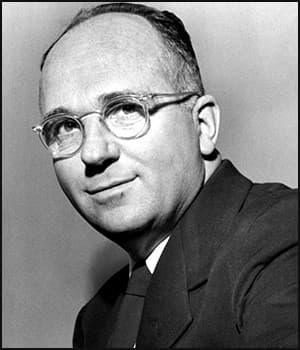
James A. Michener was an American author known for his historical fiction. His notable works include Hawaii, Chesapeake, Alaska, The Source, Poland, and Space, which often explore the history and culture of specific regions. Michener's storytelling is characterized by extensive research and a focus on the human experience within historical contexts.
Similar books
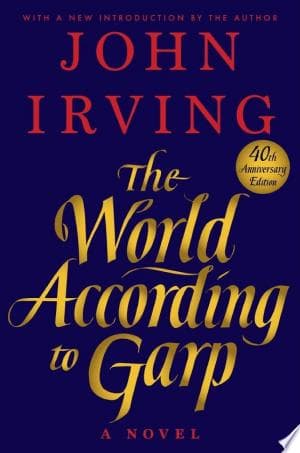
- The World According to Garp
John Irving
4.1 (205k) average on GoodreadsLiterary FictionExplores a writer's life and the interplay between fiction and reality.
- To Kill a Mockingbird
Harper Lee
4.3 (4.5M) average on GoodreadsHistorical FictionIn the 1930s Jim Crow South, Harper Lee writes about racial injustice, moral growth, and the quiet courage of a lawyer father, Atticus Finch, as seen through his young daughter's eyes.
- The Great Gatsby
F. Scott Fitzgerald
3.9 (3.8M) average on GoodreadsHistorical FictionIn the opulent Roaring Twenties, a mysterious millionaire's lavish parties hide his desperate, tragic pursuit of a lost love, exposing the emptiness within the American Dream.
- Pride and Prejudice
Jane Austen
4.3 (3M) average on GoodreadsHistorical FictionIn a society focused on status and money, Elizabeth Bennet navigates love and pride, challenging Mr. Darcy and social expectations to find true affection.
- Angels & Demons
Dan Brown
3.9 (2.7M) average on GoodreadsThrillerA Harvard symbologist races through Rome's ancient sites, deciphering cryptic clues to unmask the Illuminati and stop a vengeful plot to destroy the Vatican with a stolen antimatter weapon.
- The Kite Runner
Khaled Hosseini
4.3 (2.4M) average on GoodreadsHistorical FictionIn pre-Taliban Afghanistan, a wealthy boy's betrayal of his servant's son during a kite-running tournament starts a lifelong journey for amends as his country collapses.





Enjoyed the summary?
A summary gives you the shape of the book. The book itself has the detail, the examples and the voice.
Find The Novel on AmazonAs an Amazon Associate, BookBrief earns from qualifying purchases. How we're funded