

Core Idea
- Difficulty
- Medium
- Read it if
- You are interested in a revisionist, thought-provoking challenge to the traditional narrative of World War II's origins, focusing on diplomatic blunders and the unintended consequences of policy rather than a master plan.
- Skip it if
- You prefer a straightforward account that emphasizes Hitler's singular, premeditated culpability and a clear, linear progression to war, or if you are looking for a detailed military history.
Key Takeaways from The Origins of the Second World War
No Master Plan, Just Blunders
Hitler's foreign policy was one of opportunism, not a premeditated blueprint for war.
Taylor challenges the common post-war idea that Hitler carefully planned World War II from the start. Instead, he says Hitler's foreign policy was mostly improvised, a series of calculated risks that grew unexpectedly. Hitler reacted to events and what he saw as weaknesses in other European powers, rather than following a strict timeline or 'master plan' from books like 'Mein Kampf.' This view shifts blame from one evil mastermind to a more complex mix of diplomatic failures, miscalculations, and Europe's unstable political situation in the 1930s. It suggests that war was a possible outcome, not an unavoidable one, resulting from escalating mistakes rather than a planned march to global conflict.
“Hitler was a master opportunist, not a master planner. He took advantage of situations as they arose, rather than executing a long-term, calculated scheme for world domination.”
In the book: Taylor meticulously dissects the Hossbach Memorandum, arguing it was a brainstorming session, not a binding directive for war. He points to Hitler's repeated willingness to negotiate and his surprise at the British and French declarations of war in September 1939 as evidence against a pre-planned conflict.
Try this: When analyzing historical events, question whether grand narratives simplify complex realities. Look for evidence of improvisation, unintended consequences, and the role of chance, rather than assuming a linear progression towards a predetermined outcome.
Related ideas: revisionist-history, contingency, opportunism
Appeasement's Unintended Consequences
The policy of appeasement, while well-intentioned, inadvertently emboldened Hitler.
Taylor argues that British and French appeasement policies were not necessarily weak, but came from a deep and understandable desire to avoid another World War I. However, this well-intentioned strategy accidentally encouraged Hitler. Each concession, from the Rhineland to Austria and Czechoslovakia, strengthened Hitler's belief that Western powers would not stop him, leading to more demands. Instead of preventing aggression, appeasement accidentally gave a green light for gradual expansion, pushing Europe closer to the war it wanted to prevent. This shows the danger of diplomacy when dealing with an aggressive power.
“The policy of appeasement was not a sign of moral cowardice but a rational attempt to avoid another catastrophic war, yet it ultimately failed by encouraging Hitler's expansionist ambitions.”
In the book: The Munich Agreement of 1938, where Britain and France acquiesced to Germany's annexation of the Sudetenland, is presented as the quintessential example. Taylor suggests this agreement, intended to secure 'peace in our time,' merely confirmed Hitler's belief that he could push further.
Try this: In contemporary international relations, consider how concessions to aggressive regimes might be interpreted. Distinguish between genuine diplomatic solutions and appeasement that merely delays or encourages further aggression.
Related ideas: appeasement, diplomatic-failure, unintended-consequences
The German Question Reimagined
German foreign policy under Hitler shared continuities with pre-Weimar and Weimar-era goals.
One of Taylor's most debated arguments is that Hitler's foreign policy was not a radical change from traditional German goals, but a faster and more aggressive pursuit of existing nationalistic aims. He argues that goals like changing the Treaty of Versailles, uniting German-speaking people, and making Germany dominant in Central and Eastern Europe were common in German political thought long before Hitler. Hitler simply provided the ruthless will and the means to achieve these old goals. This view challenges the idea of Hitler as a unique problem and instead places him within German nationalism, though it took a uniquely destructive turn. It implies that the 'German Question' — Germany's place and power in Europe — was a constant source of instability.
“Hitler's foreign policy aims, particularly the revision of the Treaty of Versailles and the unification of all Germans, were not entirely novel but were deeply rooted in traditional German national aspirations.”
In the book: Taylor draws parallels between Hitler's demands for the Sudetenland and earlier German nationalist movements seeking to incorporate German minorities from neighboring states. He also highlights continuities in the German military's desire for rearmament and territorial expansion.
Try this: When analyzing historical figures, look for how their actions might align with or diverge from broader national historical trends. Avoid isolating individuals from the larger political and cultural currents of their time.
Related ideas: german-nationalism, treaty-of-versailles, historical-continuity
The Treaty of Versailles' Legacy
The punitive nature of the Treaty of Versailles created fertile ground for future conflict.
Taylor largely blames the Treaty of Versailles for setting the stage for World War II. He says its harsh terms — territorial losses, huge reparations, and the 'war guilt' clause — caused deep anger and a strong desire for change in Germany. This created a political environment ready for extreme ideas that promised to restore German pride and power. Instead of ensuring lasting peace, the treaty created future conflict by humiliating and financially destabilizing Germany, making it open to figures like Hitler who used this widespread unhappiness. It is a clear warning against harsh peace agreements that do not address underlying grievances.
“The Treaty of Versailles, by attempting to cripple Germany, inadvertently created the very conditions for resentment and revisionism that would lead to another war.”
In the book: The 'Diktat' narrative, widely accepted in Germany, is cited as a powerful motivator for revisionist policies. Taylor points to the economic hardships and political instability in Weimar Germany directly linked to the treaty's demands.
Try this: In conflict resolution, prioritize sustainable peace over punitive measures. Understand that imposed settlements, even with good intentions, can create new grievances that fuel future conflicts.
Related ideas: treaty-of-versailles, war-guilt, revisionism
The Role of Other Powers
The inaction and miscalculations of Britain, France, and Russia contributed significantly to the outbreak of war.
Taylor's analysis does not only focus on Hitler; it also looks critically at the roles of other major European powers. He argues that the indecisiveness of Britain and France, their failure to form a united front against Germany, and their constant underestimation of Hitler's intentions played a key role. Similarly, the Soviet Union's changing alliances and its agreement with Germany (the Molotov-Ribbentrop Pact) removed a major obstacle to Hitler's eastern plans. These failures of collective security and diplomatic resolve, combined with their own national interests and fears, created a void that Hitler was eager to fill. This points out that responsibility for the war was spread out, not just on one person.
“The war was as much a product of the failures of the status quo powers as it was of Hitler's aggressive designs.”
In the book: Taylor details the Anglo-French failure to intervene during the remilitarization of the Rhineland, the Austrian Anschluss, and the dismemberment of Czechoslovakia. He also analyzes the hesitant Soviet attempts at alliance with the West before turning to Germany.
Try this: In international politics, recognize that collective action and clear deterrence are crucial. A lack of unity or a failure to act decisively can inadvertently empower aggressive actors.
Related ideas: collective-security, diplomatic-failure, molotov-ribbentrop-pact
Domestic Politics and Foreign Policy
Internal political pressures and economic conditions heavily influenced each nation's foreign policy decisions.
Taylor emphasizes that the foreign policy decisions of Britain, France, and Germany were heavily influenced by their domestic politics and economies. For Britain and France, economic depression and a strong public desire to avoid war (from memories of WWI) limited their governments' ability to stand firm against Hitler. In Germany, Hitler's aggressive foreign policy helped him consolidate power internally, distract from domestic problems, and fulfill promises of national revival. Understanding these internal pressures is important to know why leaders made the choices they did, which led to war. It shows the complex connection between internal and external affairs.
“Foreign policy is often merely domestic policy pursued by other means, and the internal struggles of each nation profoundly shaped their responses to the gathering storm.”
In the book: Taylor discusses the British public's strong anti-war sentiment and the economic constraints on rearmament in Britain and France. For Germany, he highlights how Hitler's successes abroad boosted his popularity and quelled internal dissent.
Try this: When analyzing political decisions, always consider the domestic context. Understand that leaders are often balancing internal pressures with external challenges, which can lead to seemingly contradictory or hesitant actions.
Related ideas: domestic-politics, economic-depression, public-opinion
The 'Normal' European Statesman
Hitler's actions, though extreme, often mirrored the methods of traditional European statesmen.
Taylor's most debated claim is that, regarding foreign policy goals, Hitler was not an entirely unique or irrational figure, but a statesman working within traditional European power politics. His methods — demands for territorial changes, rearmament, and asserting national interest — were familiar, even if his scale and speed were new. This view challenges the 'madman' theory of Hitler, arguing that his success came from using existing diplomatic norms and the weaknesses of others, rather than only through revolutionary means. While it does not excuse Hitler's atrocities, it frames his foreign policy actions as a twisted, but recognizable, form of traditional statecraft, making the war a tragic result of system failures as much as individual evil.
“Hitler acted like a normal German statesman, pursuing traditional German aims, albeit with a ruthlessness and speed that startled his contemporaries.”
In the book: Taylor compares Hitler's demands for the Sudetenland or Danzig to historical precedents of great powers asserting their influence or reclaiming territories based on nationalistic claims. He argues Hitler's diplomatic maneuvers were often conventional, if aggressive.
Try this: Avoid historical exceptionalism. Even the most extreme figures often operate within, or exploit, existing political and diplomatic frameworks. Understanding these continuities can offer deeper insights than simply labeling them as 'evil' or 'mad'.
Related ideas: power-politics, realpolitik, diplomatic-norms
The 'War of Aims' vs. 'War of Blunders'
The Second World War erupted more from a series of miscalculations than a deliberate 'war of aims'.
Taylor's final conclusion is that the Second World War was not a grand, deliberate plan by Hitler to conquer Europe, but a tragic 'war of blunders.' He suggests that none of the major powers, including Germany, truly wanted a general European war to start in September 1939. Instead, a series of escalating diplomatic crises, misjudgments of intentions, and a failure to de-escalate led to a situation where war became an accidental, but unavoidable, outcome. Hitler sought local gains, Britain and France wanted to avoid war, and yet, through a disastrous chain of events, all found themselves in the largest conflict in human history. This greatly changes how we understand who was responsible.
“The Second World War, far from being a war of Hitler's deliberate aims, was rather a war of blunders and misunderstandings, where no one truly desired the outcome.”
In the book: Taylor points to Hitler's surprise at the British and French declarations of war after the invasion of Poland. He argues that Hitler expected another diplomatic capitulation, not a general war, suggesting his objectives were more limited.
Try this: Recognize that major historical events, especially wars, can often be the result of complex interactions and unintended consequences, rather than the singular will of one actor. Look for the points of no return and the compounding errors.
Related ideas: unintended-consequences, casus-belli, diplomatic-escalation
History as Interpretation
Taylor's work is a powerful reminder that historical narratives are constantly open to re-examination and debate.
Beyond its specific arguments about World War II, Taylor's The Origins of the Second World War shows the dynamic and often debated nature of historical interpretation. By questioning a deeply held post-war agreement, he showed that even seemingly settled historical events can be re-evaluated based on new perspectives or a critical re-reading of evidence. His work caused anger because it dared to question a comforting, but simple, story. This point highlights that history is not just facts but an ongoing process of inquiry, debate, and revision, which is important for understanding the past and its lessons.
“The historian's task is not to confirm established myths, but to relentlessly question and reinterpret the past based on the available evidence, however uncomfortable the conclusions may be.”
In the book: The intense controversy and scholarly debate his book generated upon its publication, which continues to some extent today, serves as evidence of its impact as a re-interpretation of history.
Try this: Approach historical accounts with a critical eye, always questioning the source, the context, and alternative interpretations. Understand that 'truth' in history is often constructed and can evolve with new evidence and perspectives.
Related ideas: historiography, historical-revisionism, source-criticism
The Origins of the Second World War Quotes
“The war of 1939, far from being premeditated, was a mistake, the result on both sides of diplomatic blunders.”
“Hitler was no more wicked and unscrupulous than many other contemporary statesmen.”
“The Treaty of Versailles was not exceptionally vindictive, judged by previous peace treaties.”
“The fundamental cause of the war was the system of international anarchy which allowed each state to decide for itself whether to keep the peace.”
“Appeasement was not a cowardly policy, but a sensible attempt to remove the grievances which might lead to war.”
“Hitler's foreign policy was that of his predecessors, of the professional diplomats at the German foreign office.”
“The war came because the British government finally made a stand, not because Hitler planned a general war.”
“No war is inevitable until it breaks out.”
“The Polish crisis was a diplomatic blunder which got out of hand.”
“Statesmen are concerned with immediate issues, not with long-term plans.”
“The real crime of the Nazis was not that they made war, but that they exterminated the Jews.”
“History gets thicker as it approaches recent times.”
“The balance of power, not collective security, determined the actions of states.”
“Men learn from history only that men never learn from history.”
Quiz
10 questions on the main ideas. Each answer comes with a short explanation.
Question 1
According to A.J.P. Taylor in 'The Origins of the Second World War', what was Hitler's primary role in causing the war?
- He deliberately planned and executed a master strategy for world conquest
- He blundered into war partly by accident, exploiting others' mistakes
- He was a puppet of German industrialists who pushed for war
- He was forced into war by Allied aggression and encirclement
Show answer
B. He blundered into war partly by accident, exploiting others' mistakes Taylor's controversial argument challenged the conventional view that Hitler had a calculated master plan for war. Instead, he portrayed Hitler as an opportunist who stumbled into conflict through miscalculation and by taking advantage of diplomatic failures by other powers.
Question 2
What event does Taylor focus on as the immediate trigger for World War II in his analysis?
- The Nazi invasion of Poland on September 1, 1939
- The Munich Agreement of 1938
- The Japanese invasion of Manchuria in 1931
- The German remilitarization of the Rhineland in 1936
Show answer
A. The Nazi invasion of Poland on September 1, 1939 While Taylor examines the broader diplomatic context, his book centers on the events leading directly to the Nazi invasion of Poland, which he re-examines to challenge traditional interpretations of Hitler's intentions.
Question 3
Why was Taylor's book considered scandalous and controversial when published?
- It contained previously unknown secret documents
- It argued that Hitler was not solely to blame for the war
- It claimed World War II never actually happened
- It suggested Britain should have surrendered to Germany
Show answer
B. It argued that Hitler was not solely to blame for the war Taylor's revisionist approach was attacked for seemingly vindicating Hitler by arguing that other powers' diplomatic failures and miscalculations contributed significantly to the outbreak of war, rather than portraying Hitler as the sole evil architect.
Question 4
According to Taylor, which of the following best describes the diplomatic failures that contributed to war?
- The League of Nations' excessive intervention in European affairs
- The failure of appeasement policies to contain German ambitions
- The Soviet Union's refusal to join anti-German alliances
- The United States' isolationism throughout the 1930s
Show answer
B. The failure of appeasement policies to contain German ambitions Taylor critically examines how appeasement policies, particularly by Britain and France, failed to deter Hitler and instead created opportunities for his opportunistic expansionism, contributing to the path to war.
Question 5
How does Taylor characterize Hitler's foreign policy goals in the 1930s?
- As a fixed, detailed blueprint for European domination
- As vague ambitions that evolved opportunistically
- As purely defensive measures against communist threats
- As identical to traditional German imperial goals
Show answer
B. As vague ambitions that evolved opportunistically Taylor argues against the view that Hitler had a coherent master plan. Instead, he portrays Hitler's goals as flexible and opportunistic, adapting to circumstances and the weaknesses of other powers.
Question 6
What methodological approach does Taylor employ in his re-examination of the war's origins?
- Psychological analysis of key leaders' personalities
- Statistical analysis of economic factors
- Stringent re-examination of diplomatic events and documents
- Oral history interviews with surviving participants
Show answer
C. Stringent re-examination of diplomatic events and documents Taylor's work is noted for its rigorous documentary analysis and re-examination of the sequence of diplomatic events, challenging established narratives through close reading of historical evidence rather than relying on psychological or economic theories.
Question 7
Which of the following powers does Taylor suggest shared responsibility for the outbreak of war?
- Only Germany under Hitler
- Germany and the Soviet Union equally
- Multiple powers including Britain, France, and Germany
- Primarily Japan for expanding the conflict to Asia
Show answer
C. Multiple powers including Britain, France, and Germany Taylor's controversial argument distributes responsibility among multiple actors, suggesting that diplomatic miscalculations and failures by Western powers, combined with Hitler's opportunism, collectively led to war rather than attributing it solely to German aggression.
Question 8
What was the primary scholarly impact of Taylor's book according to its description?
- It settled all debates about World War II origins
- It opened up new debate and is now recognized as classic research
- It was immediately rejected by all mainstream historians
- It shifted focus entirely to economic explanations
Show answer
B. It opened up new debate and is now recognized as classic research Despite initial controversy, Taylor's work fundamentally changed historical discourse by challenging orthodox views and stimulating new debates about the war's origins, eventually gaining recognition as a classic of scholarly revisionism.
Question 9
How does Taylor's interpretation differ from the 'intentionalist' view of Hitler's role in history?
- Taylor agrees with intentionalists that Hitler had detailed long-term plans
- Taylor argues Hitler was merely reacting to external pressures with no agency
- Taylor presents Hitler as an opportunist rather than a master planner
- Taylor suggests Hitler's intentions were fundamentally peaceful
Show answer
C. Taylor presents Hitler as an opportunist rather than a master planner Taylor's 'functionalist' or 'structuralist' approach contrasts with intentionalist historians who see Hitler as executing a premeditated program. Taylor emphasizes Hitler's improvisation and the role of structural factors in the international system.
Question 10
In practical terms, what does Taylor's analysis suggest about how historians should approach the study of war origins?
- Focus exclusively on the decisions of individual leaders
- Examine the complex interplay of diplomacy, miscalculation, and circumstance
- Prioritize economic determinants over political factors
- Accept established national narratives without question
Show answer
B. Examine the complex interplay of diplomacy, miscalculation, and circumstance Taylor's work demonstrates the importance of re-examining diplomatic history with attention to the unintended consequences of policies, the role of chance, and the shared responsibilities of multiple actors, rather than simplifying causation to single factors or villains.
The Origins of the Second World War FAQ
What is A.J.P. Taylor's main argument in 'The Origins of the Second World War'?
Taylor argues that Hitler did not have a premeditated master plan for world war, but rather blundered into it through opportunism and miscalculation, aided by the failures of other European leaders. He challenges the conventional view of Hitler as an evil genius with a clear blueprint for conquest.
Does Taylor's book vindicate Hitler?
No, Taylor does not vindicate Hitler but rather presents him as a reckless opportunist who exploited circumstances. While controversial for challenging the 'evil master plan' narrative, Taylor's analysis focuses on diplomatic failures and miscalculations rather than absolving Hitler of responsibility.
How different is Taylor's view from traditional WWII historiography?
Taylor's interpretation radically differs from traditional views that portrayed Hitler as having a deliberate, systematic plan for war. Instead, he emphasizes contingency, diplomatic blunders, and the role of other European powers in creating conditions that allowed the war to happen.
What is the 'blunder into war' thesis?
This is Taylor's central concept that Hitler stumbled into war through a series of opportunistic gambles and miscalculations rather than following a predetermined plan. He suggests Hitler was taking advantage of situations as they arose, not executing a grand design.
How does Taylor's work compare to other historians like Hugh Trevor-Roper?
Taylor's interpretation directly contradicted Trevor-Roper's view of Hitler as a systematic planner. Their debate became one of the most famous historical controversies of the 20th century, with Trevor-Roper accusing Taylor of dangerously minimizing Hitler's intentions.
Does Taylor's argument still hold up today?
While aspects remain controversial, Taylor's work opened important debates about historical contingency and the role of diplomacy in causing WWII. Most historians now acknowledge that the war resulted from complex interactions rather than simple master plans, though many still emphasize Hitler's aggressive intentions more than Taylor did.
What evidence does Taylor use to support his claims?
Taylor meticulously examines diplomatic documents, treaties, and political decisions from the 1930s, arguing that the pattern shows improvisation rather than systematic planning. He focuses particularly on the Munich Agreement and the lead-up to the invasion of Poland.
Why was Taylor's book so controversial when published?
The book caused outrage because it challenged the established narrative of WWII as a clear moral struggle against evil. Many accused Taylor of being an apologist for Hitler by suggesting the war resulted from diplomatic failures rather than pure Nazi aggression.
What is the significance of Taylor's focus on September 1st, 1939?
Taylor uses the Nazi invasion of Poland as his endpoint to demonstrate how a series of miscalculations and diplomatic failures culminated in war. He argues this date represents the failure of European diplomacy rather than just the execution of Hitler's plans.
How should readers approach this controversial work?
Readers should engage with Taylor's arguments critically while appreciating how he revolutionized historical debate. The book remains valuable for its rigorous examination of primary sources and its challenge to oversimplified narratives, even if some conclusions remain disputed.
About the author

A.J.P. Taylor was a renowned British historian, celebrated for his provocative interpretations of modern history. His seminal work, 'The Origins of the Second World War,' challenged conventional wisdom and cemented his reputation as a controversial yet influential figure in historical scholarship. Taylor's prolific writing career spanned several decades, producing numerous influential books on British and European history.
Similar books
- The Guns of August
Barbara W. Tuchman
4.2 (58k) average on GoodreadsPoliticsDetails the diplomatic and political lead-up to war, highlighting the rapid escalation and the roles of various leaders in the outbreak of conflict.
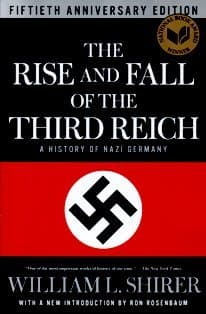
- The Rise and Fall of the Third Reich: A History of Nazi Germany
William L. Shirer
4.2 (101k) average on GoodreadsPoliticsShirer's work (1960) presents a stark contrast, largely embodying the 'master plan' narrative that Taylor critiques. Shirer, a journalist who lived in Nazi Germany, emphasizes Hitler's deliberate, long-term strategy for war and conquest, fueled by a unique evil and fanatical ideology. While Shirer chronicles the regime's brutality, Taylor focuses on diplomatic maneuvers and the unintended consequences of state actions, viewing Hitler more as an opportunistic statesman than a demonic mastermind. Shirer's narrative is more focused on the internal workings of the Nazi state and its atrocities, whereas Taylor examines the international diplomatic chessboard.
- 1984
George Orwell
4.2 (3.1M) average on GoodreadsPoliticsIn a future where surveillance and thought control are absolute, a man's search for truth clashes with the Party, showing that hope can be a form of rebellion.
- Animal Farm
George Orwell
4.0 (2.7M) average on GoodreadsPoliticsA farm animals' rebellion against humans turns into a pig-led dictatorship, showing how power corrupts and revolutionary ideals are betrayed.
- Freakonomics: A Rogue Economist Explores the Hidden Side of Everything
Steven D. Levitt
4.0 (709k) average on GoodreadsBusinessThis book uses economic principles to reveal the surprising incentives behind everything from drug dealing and real estate to cheating teachers and the decline of crime.
- I Am Malala: The Story of the Girl Who Stood Up for Education and Was Shot by the Taliban
Malala Yousafzai
4.1 (419k) average on GoodreadsPoliticsA teenage girl from a Taliban-controlled valley refuses to give up her books, becoming a global voice for education even after an assassination attempt.





Enjoyed the summary?
A summary gives you the shape of the book. The book itself has the detail, the examples and the voice.
Find The Origins of the Second World War on AmazonAs an Amazon Associate, BookBrief earns from qualifying purchases. How we're funded