
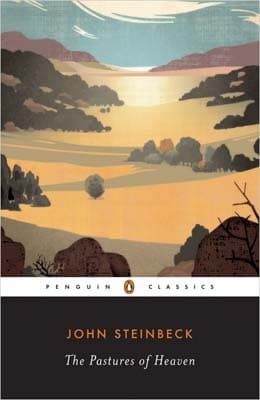
Synopsis
Covers the whole plot, including the ending.
- Difficulty
- Medium
- Pacing
- Slow
- Mood
- Reflective, Melancholy, Poignant, Observational
- Read it if
- You enjoy character-driven historical fiction with a focus on human nature and the complexities of community life, told through interconnected short stories.
- Skip it if
- You prefer a single, linear plot with a clear protagonist and a fast-paced narrative.
The Pastures of Heaven Plot Summary
Covers the whole plot, including the ending.
The Introduction to the Pastures of Heaven
The story opens with the discovery of the 'Pastures of Heaven' valley by a Spanish corporal, who abandons his post to settle there. Generations later, the valley is a thriving agricultural community. The main catalyst for the various narratives is the arrival of the Munroe family, led by Bert Munroe. Bert purchases the old Battle farm, drawn to the valley's beauty and its history. Unbeknownst to them, the Munroe family carries a strange, almost supernatural curse: every venture they undertake, no matter how well-intentioned, results in disaster or misfortune for those around them. This curse, though never explicitly stated as such, becomes the underlying force that subtly unravels the lives of the other valley residents.
Tularecito
Tularecito is a young boy with a large head and small body, residing at the local poor farm run by Mrs. Whiteside. He is mentally challenged but possesses a remarkable talent for drawing, particularly grotesque and fantastical creatures. His drawings, however, are seen as disturbing by Mrs. Whiteside, who tries to 'normalize' him by forcing him to draw conventional subjects. Tularecito's only solace comes from a traveling showman who briefly recognizes his unique gift. After a series of misunderstandings and a violent outburst when his drawings are destroyed, Tularecito is sent to an asylum. His potential for artistic expression is tragically stifled by the valley's inability to comprehend his difference.
The Lopez Sisters
Rosa and Maria Lopez, two attractive and hardworking sisters, establish a successful tamale stand and laundry service. Their business thrives, and they are generally well-regarded. However, the arrival of the Munroe family coincides with a shift in the valley's perception of them. Bert Munroe's casual friendliness is misinterpreted by the sisters as romantic interest, and by the community as scandalous behavior. The valley's gossip and moral judgments, fueled by the subtle influence of the Munroe's presence, lead to their business failing and their eventual departure from the valley. Their reputations are unjustly ruined by insinuation rather than fact.
Helen Van Deventer
Helen Van Deventer is a devoted mother to her frail, sickly son, Robbie. She is fiercely protective, shielding him from the outside world and believing he is too delicate for normal life. Bert Munroe, with his well-meaning but misguided attempts to be friendly, tries to engage Robbie in typical boyish activities. This perceived intrusion into her carefully constructed world for Robbie drives Helen to extreme measures. She becomes increasingly paranoid, isolating Robbie further, convinced that the valley's influence is harmful. The story culminates in Robbie's death, leaving Helen consumed by grief and a profound sense of loss, intensified by her own choices.
The Whiteside Family
Mrs. Whiteside is a stern, pious woman who runs the poor farm with an iron fist, convinced of her moral superiority. Her son, William, dreams of escaping her control and marrying a young woman named Mae, but Mae is intimidated by Mrs. Whiteside. Bert Munroe's arrival brings Mae to the poor farm to work, inadvertently placing her directly under Mrs. Whiteside's watchful eye. Bert, in his usual innocent way, tries to facilitate William and Mae's romance, which only serves to inflame Mrs. Whiteside's suspicions and intensify her grip. Ultimately, Mae leaves, and William remains trapped, unable to break free from his mother's domineering influence. This shows the Munroe's unsettling effect.
The Battle Farm
The Battle Farm, the property purchased by Bert Munroe, holds a significant history in the Pastures of Heaven. It was originally owned by a family whose lives were marked by a series of misfortunes and eccentricities, contributing to the local lore of the farm being 'cursed.' Bert Munroe, however, sees only its beauty and potential, dismissing the superstitions. His acquisition of the farm is the direct catalyst for the Munroe family's entry into the valley, and their subsequent interactions with the residents. The farm's past subtly foreshadows the troubles that will follow in the Munroe's wake, linking their personal 'curse' to the land itself.
The Wicks Family
The Wicks family, particularly Mrs. Wicks, is obsessed with social status and maintaining appearances. They host an annual bridge party, a crucial event for their standing in the community. Bert Munroe, wanting to be a good neighbor, offers to help with the preparations, specifically by setting up an elaborate outdoor lighting system. However, his amateur electrical work results in a catastrophic short circuit, plunging the party into darkness and causing a general uproar. The Wicks' carefully constructed social facade crumbles, and they become the subject of ridicule, their aspirations shattered by Bert's unintended blunder. This is another example of the Munroe's destructive innocence.
Edna and the Horse
Edna, a young girl, deeply loves her horse, a seemingly untamable animal that only she can ride. Bert Munroe, observing this unique bond, believes he can 'fix' the horse and make it more manageable for Edna, intending to be helpful. His attempts to break the horse, however, are misguided and ultimately lead to the horse being injured or becoming unrideable for Edna. This act, meant as a kindness, instead breaks Edna's spirit and her special connection with the animal, leaving her heartbroken and resentful. This highlights the destructive nature of the Munroe's interventions even when driven by good intentions.
Pat Humbert
Pat Humbert is a man consumed by a singular, decades-long obsession: to avenge the perceived slight of a local landowner who once cheated his father out of a small piece of land. He meticulously plans his revenge, saving money and waiting for the perfect opportunity. Bert Munroe, through a series of innocent but ill-timed conversations, inadvertently provides Pat with the information and the final push he needs to execute his plan. Pat successfully carries out his revenge, but the satisfaction is hollow, and his life remains stagnant. He ironically achieves his goal through the Munroe's unwitting aid, yet finds no true resolution or happiness.
Raymond Banks
Raymond Banks is a contented bachelor who finds joy and purpose in raising chickens. His life is simple, predictable, and fulfilling. Bert Munroe, observing Raymond's successful poultry operation, offers him advice on how to expand and modernize, convinced he is helping Raymond achieve greater prosperity. Raymond, swayed by Bert's enthusiasm, invests in new equipment and a larger flock. However, the expansion proves overwhelming and ultimately unprofitable, leading to financial strain and the loss of his peaceful lifestyle. Raymond's simple happiness is disrupted, and he finds himself burdened rather than enriched by the Munroe's 'help.'
The End of the Pastures
After a series of subtle and overt misfortunes befall the residents of the Pastures of Heaven, all indirectly linked to the Munroe family's presence, Bert Munroe decides to sell the farm. He reflects on his time in the valley, genuinely believing he has been a good neighbor and that his family has brought only positive changes. The Munroe family departs, oblivious to the trail of ruined lives and shattered dreams they leave behind. The final scene shows them on a bus, discussing their next move, still convinced of their own good fortune and innocent of the widespread havoc they caused. This encapsulates the central irony of the narrative.
The Pastures of Heaven Characters
Bert Munroe
Catalyst/Antagonist (unwitting)
The well-meaning patriarch whose family brings misfortune wherever they go.
Bert Munroe is the unsuspecting patriarch of the Munroe family. He is genuinely kind-hearted, optimistic, and industrious, always eager to help his neighbors and improve situations. He believes in progress and good intentions, never suspecting that his actions, or those of his family, consistently lead to disaster for others. His blindness to the negative impact he has is central to the novel's irony. He represents the destructive power of good intentions when coupled with a fundamental misunderstanding of others' lives and needs.
Relationships: His Family (Loving and supportive, though they share his unwitting destructive nature.); Valley Residents (Believes he is helping them, but his actions inadvertently cause their downfall.)
Tularecito
Supporting
A mentally challenged boy with a unique artistic talent, misunderstood by his community.
Tularecito is a resident of the poor farm, characterized by his physical deformities and developmental challenges. Despite his limitations, he possesses an extraordinary, albeit dark, artistic talent, drawing intricate and unsettling creatures. He is sensitive and observant, but unable to articulate his inner world in a way the valley residents can understand. His story highlights the valley's intolerance for difference and its inability to appreciate unconventional forms of beauty or intelligence.
Relationships: Mrs. Whiteside (His strict caretaker who tries to suppress his artistic expression.); Traveling Showman (Briefly recognizes and appreciates his unique talent.)
Mrs. Whiteside
Supporting
The stern, moralistic matron of the poor farm.
Mrs. Whiteside is a rigid, self-righteous woman who runs the valley's poor farm. She is deeply concerned with appearances and strict moral codes, believing she knows what is best for everyone, particularly those under her care. She views anything outside of her narrow definition of normalcy as problematic and tries to 'correct' it, as seen with Tularecito. Her piety often masks a lack of empathy and a desire for control over others' lives.
Relationships: Tularecito (His strict caretaker, trying to 'normalize' him.); William Whiteside (Her son, whom she dominates and prevents from finding independence.); Mae (Intimidates and drives away William's potential love interest.)
Helen Van Deventer
Supporting
A fiercely protective mother who isolates her sickly son, leading to tragedy.
Helen Van Deventer is a devoted but ultimately destructive mother. Her entire life revolves around her frail son, Robbie, whom she shields from every perceived danger and normal childhood experience. Her love is possessive and suffocating, bordering on paranoia, as she believes the outside world is a constant threat to Robbie's delicate health. Her actions, born of intense love, ironically lead to Robbie's profound isolation and contribute to her own deep sorrow.
Relationships: Robbie Van Deventer (Her sickly son, whom she loves fiercely but isolates completely.)
Robbie Van Deventer
Supporting
Helen's frail and isolated son.
Robbie is Helen Van Deventer's sickly son, kept in an almost complete state of isolation by his overprotective mother. He is frail and vulnerable, living a life devoid of normal childhood experiences. His interactions are limited, and he yearns for connection, which is often thwarted by his mother's fears. His existence highlights the tragic consequences of extreme, misguided love and the stifling effects of isolation.
Relationships: Helen Van Deventer (His mother, who loves him intensely but isolates him from the world.)
Rosa Lopez
Supporting
One of two sisters whose business is ruined by gossip and misunderstanding.
Rosa Lopez is one of the hardworking and attractive Lopez sisters. She is proud, independent, and initially successful in her business ventures with her sister, Maria. She is susceptible to misinterpreting friendly gestures as romantic advances, which, coupled with the valley's gossip, leads to the ruin of their reputation and livelihood. She represents the vulnerability of individuals to community judgment and the destructive power of rumor.
Relationships: Maria Lopez (Her sister and business partner.); Bert Munroe (Misinterprets his friendliness as romantic interest, leading to complications.)
Maria Lopez
Supporting
One of two sisters whose business is ruined by gossip and misunderstanding.
Maria Lopez is Rosa's equally hardworking and attractive sister. Like Rosa, she is a victim of the valley's propensity for gossip and misunderstanding. She is perhaps a bit more pragmatic than Rosa but still suffers the same fate when their reputations are unfairly tarnished. Her story, alongside Rosa's, emphasizes how easily a community can destroy lives based on unfounded rumors and moralistic judgments.
Relationships: Rosa Lopez (Her sister and business partner.); Bert Munroe (His casual friendliness is misinterpreted, contributing to their downfall.)
Pat Humbert
Supporting
A man consumed by a lifelong quest for revenge.
Pat Humbert is a solitary and obsessive character, driven by a singular purpose: to avenge a perceived wrong committed against his father decades ago. He is meticulous in his planning, patiently saving money and waiting for the opportune moment. His life is defined by this quest, leaving little room for anything else. While he eventually achieves his revenge, the act itself proves hollow, highlighting the futility of a life dedicated solely to vengeance.
Relationships: Bert Munroe (Unwittingly provides him with the final catalyst for his revenge.)
Raymond Banks
Supporting
A contented bachelor whose simple life is disrupted by well-meaning advice.
Raymond Banks is a bachelor who finds profound satisfaction in his simple life of raising chickens. He is content, self-sufficient, and enjoys the predictability of his existence. He represents the idyllic, undisturbed life that the Pastures of Heaven once offered. His story illustrates how well-intentioned 'progress' can disrupt genuine happiness and lead to unforeseen negative consequences, particularly when it forces an individual out of their natural rhythm.
Relationships: Bert Munroe (His advice on expanding the chicken farm leads to Raymond's financial and emotional distress.)
The Wicks Family
Supporting
A family obsessed with social status whose reputation is ruined by a disastrous party.
The Wicks family, particularly Mrs. Wicks, embodies the social aspirations and anxieties of the valley. They are deeply concerned with maintaining appearances and climbing the social ladder, with their annual bridge party being a key event for their standing. Their story highlights the fragility of social constructs and how easily they can be shattered by unexpected events, particularly when those events are driven by well-meaning but incompetent interference.
Relationships: Bert Munroe (His attempt to help with their party results in its catastrophic failure, ruining their reputation.)
The Pastures of Heaven Themes
The Destructive Nature of Good Intentions
A central theme is the irony that the Munroe family, with their genuinely good intentions and desire to help, consistently brings ruin and misfortune to the lives of those around them. Bert Munroe's attempts to 'improve' Raymond Banks' chicken farm lead to Raymond's financial ruin. His friendliness towards the Lopez sisters is misinterpreted, destroying their business and reputation. This theme suggests that even the purest motives can have devastating consequences when coupled with a lack of understanding or an inability to see beyond one's own perspective, subtly implying a curse or an inherent flaw in the Munroe's interaction with the world.
“It was the Munroe curse, that everything they touched went wrong, and not through any meanness of their own.”
Misunderstanding and Misinterpretation
The novel repeatedly demonstrates how easily people misunderstand each other's actions and motives, leading to tragic outcomes. The valley residents misinterpret the Munroe's casual friendliness as romantic interest or malicious intent, while the Munroes, in turn, fail to grasp the nuanced lives and sensitivities of their neighbors. Tularecito's artistic talent is seen as grotesque deviance by Mrs. Whiteside. The Lopez sisters' success is viewed with suspicion. This pervasive miscommunication and inability to empathize creates a social environment ripe for gossip, prejudice, and destruction, highlighting the fragility of human connection.
“The people in the Pastures of Heaven were not evil people. They were simply people, and they had a way of misunderstanding almost everything.”
The Illusion of Paradise
The valley, named 'The Pastures of Heaven,' initially appears as an idyllic, fertile, and peaceful place. However, beneath this surface, the lives of its inhabitants are filled with quiet desperation, unfulfilled dreams, and ultimately, tragedy. The Munroe family's arrival shatters this illusion, revealing the underlying flaws and vulnerabilities of the community. The novel suggests that no place, no matter how beautiful or seemingly perfect, can escape the complexities and inherent sorrows of human nature. The 'heaven' is only an illusion, easily disrupted by external forces or internal failings.
“It was a place where one might live forever, and never grow old, and never be sad. But that was before the Munroes came.”
The Suppression of Individuality and Difference
Many characters in the Pastures of Heaven struggle against the conformity and judgment of the community. Tularecito's unique artistic talent is not only misunderstood but actively suppressed by Mrs. Whiteside, who tries to force him into conventionality. The Lopez sisters are driven out because their independent success and perceived 'forwardness' clash with the valley's moralistic expectations. This theme explores how communities, even seemingly benevolent ones, can stifle creativity, independence, and any form of expression that deviates from the norm, leading to the marginalization or destruction of those who are different.
“There was no room in the Pastures of Heaven for a different thing.”
Plot Devices & Literary Techniques
The Munroe Curse
An unstated, but pervasive, force of misfortune tied to the Munroe family.
The 'Munroe Curse' is not a literal magical curse, but a powerful plot device that drives the narrative. It manifests as a consistent pattern where every well-intentioned action by a Munroe family member leads to unforeseen and often catastrophic consequences for others. This device creates dramatic irony, as the Munroes remain oblivious to the havoc they wreak, while the reader sees the direct cause-and-effect. It serves as a metaphorical representation of how good intentions, without understanding or foresight, can be profoundly destructive, and it links the seemingly disparate stories into a cohesive whole, demonstrating a shared tragic catalyst.
Episodic Structure
A series of interconnected short stories, each focusing on a different valley resident.
The novel employs an episodic structure, presenting the lives of various valley residents as distinct, yet interconnected, short stories. Each chapter focuses on a different family or individual, with the Munroe family's arrival and actions serving as the common thread that subtly (or overtly) impacts each character's fate. This structure allows Steinbeck to explore a wide range of human experiences and social dynamics within a confined setting, showcasing the varied ways the 'Munroe curse' manifests. It emphasizes the collective impact of the Munroe's presence on the community, rather than a single, overarching plot.
Dramatic Irony
The contrast between the Munroe's perception and the actual outcome of their actions.
Dramatic irony is a pervasive plot device throughout the novel. The Munroe family consistently believes they are doing good, being helpful, and improving the lives of their neighbors. However, the reader is privy to the actual, often disastrous, consequences of their actions. This creates a poignant and often darkly humorous tension, as the reader understands the impending doom or the tragedy that has just occurred, while the Munroes remain blissfully unaware. This irony underscores the novel's central theme about the destructive nature of good intentions and the subjective nature of truth and perception.
The Valley as a Microcosm
The Pastures of Heaven represents broader human society and its flaws.
The valley of the Pastures of Heaven functions as a microcosm, a small, self-contained world that reflects larger societal issues and human characteristics. Its isolation allows Steinbeck to examine human nature in a concentrated form, exploring themes like community judgment, the suppression of individuality, the illusion of paradise, and the impact of external forces on established ways of life. The residents, with their diverse personalities and struggles, represent archetypes of humanity, making their individual stories resonate with universal truths about human experience and social interaction.
The Pastures of Heaven Quotes
“It seems to me that if you killed a man, you wouldn't get to heaven, and if you went to hell, you'd probably meet him again.”
“Nearly all children are good. It's the adults who are the trouble.”
“The Pastures of Heaven, as the people called them, were seven small farms, each one a little paradise, and each one cursed.”
“He had a way of looking at a man, not with suspicion, but with a kind of mild, sorrowful judgment, as though he knew all your past sins and pitied them.”
“When a man has a farm, he has a reason for living. When he hasn't, he's only half a man.”
“The children's world was a much more orderly and logical place than the adults' world, for in the children's world, things had consequences and punishments, while in the adults' world, things merely happened.”
“It was just a question of time before everything went wrong, and the longer it took, the worse it would be.”
“There are some people who can't stand to see anyone else happy, and they'll do anything to spoil it.”
“His mind was a tangled skein of memories, some bright, some dark, and all of them pulling him in different directions.”
“They were all caught in the same net, woven by circumstance and accident and the strange twisted threads of human desire.”
“Some men are born to be unlucky, and some men are born to bring bad luck to others.”
“The world was full of little things that could hurt you, if you weren't careful.”
“He had a kind of loneliness that was not merely the absence of people, but the absence of hope.”
“The Pastures of Heaven were cursed with a strange, dark magic, not of witches or spells, but of human nature itself.”
Quiz
10 questions on the plot and the characters. Each answer comes with a short explanation.
Question 1
Quel événement malheureux est souvent associé à la famille Battle, débutant avec le père qui achète la terre?
- Leurs récoltes sont constamment volées.
- Ils subissent des accidents étranges et des malheurs répétitifs.
- Leurs enfants quittent tous la ferme pour la ville.
- Ils sont harcelés par les propriétaires terriens voisins.
Show answer
B. Ils subissent des accidents étranges et des malheurs répétitifs. La famille Battle est maudite par une série de malheurs, y compris des accidents et des morts étranges, qui semblent liés à la terre qu'ils ont achetée.
Question 2
Quel personnage est un ancien soldat de la Première Guerre mondiale, hanté par ses souvenirs et qui vit reclus?
- Bert Munroe
- Edward Wicks
- George Battle
- Pat Humbert
Show answer
B. Edward Wicks Edward Wicks est un vétéran traumatisé par la guerre, dont les souvenirs le poussent à s'isoler et à vivre dans un état de peur et de suspicion.
Question 3
Quel est le sort du jeune Tularecito, l'enfant étrange et incompris qui vit avec sa mère?
- Il s'enfuit de la vallée pour vivre en ville.
- Il est placé dans un asile.
- Il développe un talent artistique exceptionnel.
- Il devient un fermier prospère comme les autres.
Show answer
B. Il est placé dans un asile. Tularecito, avec son comportement imprévisible et sa nature différente, est finalement envoyé dans un asile, car la communauté ne sait pas comment gérer son unicité.
Question 4
Quel est le rôle principal de Bert Munroe dans le récit?
- Il est le narrateur omniscient de toutes les histoires.
- Il est le nouveau venu qui achète la ferme de la famille Battle, et son arrivée est un catalyseur pour les récits des autres habitants.
- Il est le propriétaire du magasin général et le centre d'information de la vallée.
- Il est un fermier local qui aide tous ses voisins.
Show answer
B. Il est le nouveau venu qui achète la ferme de la famille Battle, et son arrivée est un catalyseur pour les récits des autres habitants. Bert Munroe est le personnage dont l'arrivée dans la vallée, après l'achat de la ferme Battle, sert de point de départ pour l'exploration des différentes vies et histoires des habitants.
Question 5
Quel thème majeur Steinbeck explore-t-il à travers les histoires entrelacées des habitants des Pâturages du Ciel?
- La corruption politique dans les zones rurales.
- Les dangers de la technologie moderne.
- L'échec des rêves individuels et la solitude malgré un cadre idyllique.
- La réussite économique grâce au travail acharné.
Show answer
C. L'échec des rêves individuels et la solitude malgré un cadre idyllique. Malgré la beauté et la richesse de la vallée, Steinbeck met en lumière comment les rêves et les aspirations de nombreux personnages se heurtent à la réalité, conduisant souvent à l'isolement ou à la déception.
Question 6
Quelle est la particularité du personnage de Maria et de sa famille, les Lopez?
- Ils sont les plus riches propriétaires terriens de la vallée.
- Ils tiennent une taverne où tous les habitants se retrouvent.
- Ils gèrent un restaurant qui, malgré leurs bonnes intentions, devient un bordel à cause de malentendus.
- Ils sont connus pour leurs talents de musiciens.
Show answer
C. Ils gèrent un restaurant qui, malgré leurs bonnes intentions, devient un bordel à cause de malentendus. Maria et ses filles ouvrent un restaurant avec de bonnes intentions, mais en raison de leur nature naïve et des malentendus culturels, il est perçu et utilisé comme un bordel par les hommes de la région.
Question 7
Comment le personnage de Helen Van Deventer, la mère surprotectrice de la jeune Hilda, contribue-t-il au thème de l'isolement?
- Elle encourage Hilda à se faire des amis, mais la fille refuse.
- Elle isole Hilda de la société par peur et surprotection, ce qui conduit à la tragédie.
- Elle est elle-même isolée car personne ne veut être son amie.
- Elle organise des événements sociaux pour briser l'isolement des autres.
Show answer
B. Elle isole Hilda de la société par peur et surprotection, ce qui conduit à la tragédie. Helen Van Deventer, dans sa peur obsessionnelle de voir sa fille blessée ou jugée, l'enferme et l'isole du monde extérieur, ce qui a des conséquences dévastatrices.
Question 8
Quel est le symbolisme principal de la vallée des Pâturages du Ciel elle-même?
- Un lieu de prospérité économique garantie pour tous.
- Un paradis apparent qui masque des réalités complexes, des échecs personnels et des malentendus tragiques.
- Un refuge contre les influences néfastes de la ville moderne.
- Un lieu où la nature est toujours en parfaite harmonie avec l'homme.
Show answer
B. Un paradis apparent qui masque des réalités complexes, des échecs personnels et des malentendus tragiques. La vallée, malgré son nom idyllique et sa beauté naturelle, est le théâtre de nombreux destins brisés, de rêves inachevés et de tragédies, symbolisant que même le 'paradis' peut cacher des souffrances humaines.
Question 9
Quel détail récurrent Steinbeck utilise-t-il pour souligner la nature cyclique ou inéluctable des événements, notamment pour la famille Battle?
- La mention répétée de la rivière qui traverse la vallée.
- Les changements de saisons qui influencent directement les récoltes.
- Le fait que les malheurs de la famille Battle semblent se répéter à travers les générations.
- Les visites régulières d'un colporteur qui apporte des nouvelles de l'extérieur.
Show answer
C. Le fait que les malheurs de la famille Battle semblent se répéter à travers les générations. La 'malédiction' des Battle est un élément clé, montrant comment les malheurs et les accidents se transmettent et se répètent, créant un sentiment de destin inéluctable pour cette famille.
Question 10
Quelle est la réaction générale des habitants des Pâturages du Ciel face aux personnes ou événements qui ne correspondent pas à leurs attentes ou normes?
- Ils accueillent toujours la nouveauté avec curiosité et ouverture d'esprit.
- Ils essaient activement d'aider et d'intégrer les marginaux.
- Ils jugent souvent, interprètent mal les intentions et finissent par rejeter ou isoler ce qu'ils ne comprennent pas.
- Ils organisent des réunions communautaires pour résoudre les problèmes collectifs.
Show answer
C. Ils jugent souvent, interprètent mal les intentions et finissent par rejeter ou isoler ce qu'ils ne comprennent pas. Un thème récurrent est la difficulté des habitants à comprendre et à accepter la différence, ce qui conduit souvent à des jugements hâtifs, des malentendus tragiques et l'isolement des personnages uniques comme Tularecito ou les Lopez.
The Pastures of Heaven FAQ
What is the central premise of 'The Pastures of Heaven'?
'The Pastures of Heaven' explores the lives of various families residing in a beautiful, fertile valley in California. The valley, initially perceived as idyllic, seems to carry a subtle curse, as anyone who interacts with the Munroe family, particularly Bert Munroe, experiences an unexpected negative turn of events in their lives, often leading to ruin or tragedy.
Who is Bert Munroe and what is his role in the valley's misfortunes?
Bert Munroe is the man who purchases the titular 'Pastures of Heaven' ranch, believing it to be a paradise. Unbeknownst to him, his presence and well-intentioned but often clumsy actions, or even just his proximity, inadvertently trigger a chain of unfortunate events for the other families in the valley, leading them to ruin or despair.
Describe the general atmosphere and setting of the valley before Munroe's arrival.
The valley, known as 'The Pastures of Heaven,' is initially depicted as a pristine and prosperous agricultural community between Salinas and Monterey. Its inhabitants, a diverse group of farmers, live in relative peace and abundance, with fertile land yielding beautiful crops, fostering a sense of an almost Edenic existence.
What kind of stories are told in the book? Is there a single continuous plot?
The book is structured as a collection of interconnected short stories, each focusing on a different family or individual within the valley. While each story is distinct, they are all linked by the recurring presence of Bert Munroe and the subtle, often tragic, impact he has on the lives of those around him, creating a unified thematic narrative.
How does the story of the Lopez sisters exemplify the valley's curse?
The Lopez sisters, known for their generosity and willingness to share their home, inadvertently become objects of suspicion and scandal after Bert Munroe's visit. His innocent admiration for their hospitality is misinterpreted by outsiders, leading to rumors of a brothel and ultimately forcing the sisters to abandon their home and reputation.
What is the significance of the initial discovery of the valley by the Spanish corporal?
The Spanish corporal's discovery of the valley, and his subsequent decision to abandon his mission due to its overwhelming beauty, establishes the valley's almost mythical allure from the outset. It foreshadows the seductive yet ultimately destructive power the place holds over human aspirations and intentions.
How does the story of the Battle family subtly connect to broader themes of social class?
The Battle family's story, particularly their attempts to maintain a facade of gentility despite their poverty, highlights the societal pressures and class distinctions even within this isolated valley. Bert Munroe's genuine but misguided attempts to help them only expose their vulnerabilities and accelerate their decline, rather than offering true upliftment.
What might be the symbolic meaning of the 'curse' itself, beyond just Bert Munroe's actions?
The 'curse' could symbolize the fragility of human dreams and the inherent unpredictability of life, suggesting that even in seemingly perfect environments, external forces or simply fate can unravel well-laid plans. It might also represent the destructive power of good intentions gone awry or the way human perception can twist reality.
In what ways does Steinbeck use nature imagery to reflect the characters' psychological states?
Steinbeck often contrasts the valley's physical beauty and fertility with the internal turmoil and despair of its inhabitants. For instance, the lush, vibrant gardens might initially mirror a character's hopeful outlook, only for wilting flowers or encroaching weeds to subtly symbolize their deteriorating mental state or impending ruin.
How does the character of Molly Morgan demonstrate resilience in the face of the valley's influence?
Molly Morgan, despite being an outsider and facing judgment, demonstrates a strong independent spirit. While others succumb to despair, her practical nature and determination to carve out her own existence, even if unconventional, allow her to navigate the valley's challenges with a degree of self-preservation that many others lack.
What psychological impact does the valley's perceived 'curse' have on the characters who become aware of it?
The awareness or suspicion of a 'curse' fosters a sense of fatalism and paranoia among some characters. Instead of actively fighting their misfortunes, they might resign themselves to their fate, or even seek to blame external forces rather than examining their own choices, leading to a deepening sense of helplessness and despair.
How does the story of Helen Van Deventer explore themes of delusion and maternal possessiveness?
Helen Van Deventer is consumed by a delusional belief that her daughter, Hilda, is destined for greatness and must be protected from the world, particularly from men. Her intense maternal possessiveness leads her to isolate Hilda and ultimately commit a desperate act, showcasing the destructive power of unchecked delusion.
Is Bert Munroe truly malicious, or is he merely an innocent catalyst for misfortune?
Bert Munroe is consistently portrayed as genuinely well-intentioned and oblivious to the negative consequences of his actions. He is not malicious; rather, he serves as an innocent catalyst, a force whose presence, despite his good nature, somehow unravels the delicate balance of others' lives, making him a tragicomic figure.
Could the 'curse' be interpreted as a commentary on the American Dream in rural settings?
Yes, the 'curse' can be seen as a critique of the idealized American Dream, particularly the notion that hard work and a beautiful land guarantee prosperity and happiness. The valley, initially a symbol of this dream, ultimately shows how external factors, or even internal human flaws, can shatter such aspirations, regardless of effort.
What is Steinbeck's overall message about human nature in 'The Pastures of Heaven'?
Steinbeck suggests that human nature is complex and often contradictory, capable of both great kindness and profound delusion. He explores how individual desires, fears, and misinterpretations can lead to tragic outcomes, and how even well-meaning actions can have unforeseen and devastating consequences on others.
How does the ending of the book, with the bus passengers, contribute to its thematic depth?
The ending, where the bus passengers gaze upon the valley and idealize it as a perfect, untouched paradise, highlights the stark contrast between romanticized perception and harsh reality. It underscores the recurring theme that appearances can be deceiving and that true understanding often eludes those who merely observe from a distance, perpetuating the valley's myth.
Does the novel suggest any way for characters to escape the 'curse' or achieve genuine happiness?
The novel offers little in the way of explicit escape or guaranteed happiness. Characters who fare best often do so by maintaining a degree of self-awareness, independence, or by leaving the valley altogether. It subtly suggests that true contentment might lie in accepting life's imperfections rather than chasing an unattainable ideal, or by simply being detached from the valley's influence.
How does the character of Pat Humbert embody the theme of unfulfilled desires?
Pat Humbert lives a solitary life, clinging to the memory of his mother and an unexpressed desire for love and connection. His longing for a relationship with Mae Munroe, and his subsequent failure to act on it, perfectly illustrates how fear and inaction can lead to a lifetime of unfulfilled desires and isolation, ultimately exacerbated by the Munroe family's presence.
About the author
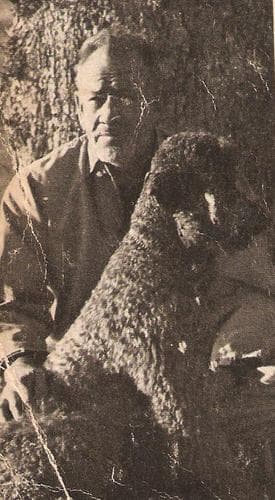
John Ernst Steinbeck was an American writer. He won the 1962 Nobel Prize in Literature "for his realistic and imaginative writings, combining as they do sympathetic humor and keen social perception". He has been called "a giant of American letters."
Similar books
- Dubliners
James Joyce
3.9 (123k) average on GoodreadsLiterary FictionA collection of interconnected short stories depicting life and epiphanies (or lack thereof) in a specific locale.
- East of Eden
John Steinbeck
4.4 (429k) average on GoodreadsLiterary FictionShares Steinbeck's characteristic deep dive into human nature, family dynamics, and the California landscape, albeit with a larger scope.
- To Kill a Mockingbird
Harper Lee
4.3 (4.5M) average on GoodreadsHistorical FictionIn the 1930s Jim Crow South, Harper Lee writes about racial injustice, moral growth, and the quiet courage of a lawyer father, Atticus Finch, as seen through his young daughter's eyes.
- The Great Gatsby
F. Scott Fitzgerald
3.9 (3.8M) average on GoodreadsHistorical FictionIn the opulent Roaring Twenties, a mysterious millionaire's lavish parties hide his desperate, tragic pursuit of a lost love, exposing the emptiness within the American Dream.
- Pride and Prejudice
Jane Austen
4.3 (3M) average on GoodreadsHistorical FictionIn a society focused on status and money, Elizabeth Bennet navigates love and pride, challenging Mr. Darcy and social expectations to find true affection.
- Angels & Demons
Dan Brown
3.9 (2.7M) average on GoodreadsThrillerA Harvard symbologist races through Rome's ancient sites, deciphering cryptic clues to unmask the Illuminati and stop a vengeful plot to destroy the Vatican with a stolen antimatter weapon.






Enjoyed the summary?
A summary gives you the shape of the book. The book itself has the detail, the examples and the voice.
Find The Pastures of Heaven on AmazonAs an Amazon Associate, BookBrief earns from qualifying purchases. How we're funded