
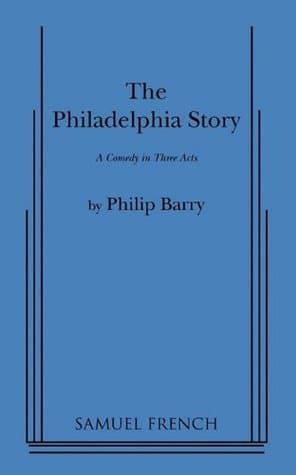
Synopsis
Covers the whole plot, including the ending.
- Difficulty
- Easy
- Pacing
- Moderate
- Mood
- Witty, Romantic, Charming, Elegant
- Read it if
- You enjoy classic screwball comedies, witty dialogue, and stories about high society and personal transformation.
- Skip it if
- You prefer fast-paced action or plots without romantic entanglements and nuanced character development.
The Philadelphia Story Plot Summary
Covers the whole plot, including the ending.
The Return of Dexter Haven
The play starts at the Lord estate in Philadelphia. Tracy Lord, a socialite, is getting ready for her second marriage to George Kittredge, a self-made man. Her ex-husband, C.K. Dexter Haven, arrives unexpectedly. He claims to deliver a wedding gift to her younger sister, Dinah. But he still has feelings for Tracy and does not approve of her upcoming marriage. His presence creates tension, especially with Tracy, who sees his return as an intrusion and a reminder of their failed marriage. She blames his drinking and her own perceived coldness for their divorce.
The Unexpected Guests
Tracy's father, Seth Lord, is having an affair with a showgirl. Her brother, Alexander 'Sandy' Lord, wants to keep this out of the news. To protect the family's name, Sandy makes a deal with Sidney Kidd, the editor of 'Spy' magazine: in exchange for exclusive access to Tracy's society wedding, Kidd will not publish the story about Seth. Reporter Macaulay 'Mike' Connor and photographer Elizabeth 'Liz' Imbrie arrive at the Lord estate pretending to be Sandy's friends. Tracy, angry about the invasion of privacy, must tolerate their presence to protect her father.
Tracy's Engagement and Doubts
Tracy's fiancé, George Kittredge, is a successful but somewhat proud man who admires Tracy's beauty and social standing. However, he often does not understand her deeper feelings, seeing her as a 'goddess' rather than a person. Tracy, despite her calm appearance, starts to feel limited by George's expectations and his inability to see past her 'ice princess' image. Dexter, who understands her better, and Mike Connor's observations begin to make her doubt her marriage to George.
The Confessions of Seth Lord
Tracy confronts her father, Seth Lord, about his affair and past actions. She blames him for her mother's unhappiness and her own perceived coldness. Seth, however, criticizes Tracy's character. He calls her 'magnificent' but also 'incapable of human understanding,' accusing her of being too perfect and lacking 'charity' for human weakness. This talk deeply affects Tracy, making her consider if her strict standards might be a flaw.
Mike Connor's Growing Affection
Macaulay 'Mike' Connor, initially critical of the wealthy Lord family, becomes interested in Tracy. He sees past her distant manner to a woman struggling with her identity. Their conversations, often sharp, show a surprising connection. Mike, a writer, is drawn to Tracy's intelligence, even as he challenges her privileged views. Liz Imbrie, Mike's photography partner and secret admirer, watches this growing attraction with amusement and quiet acceptance, recognizing Mike's changing focus.
The Pre-Wedding Party and Revelations
The night before the wedding, a party at the Lord estate gets loud, with lots of champagne. Tracy, feeling confused, drinks a lot. She confides in Mike, and they share a kiss. Dexter, watching, feels jealous. George mostly ignores the emotional turmoil, focused on the wedding's superficial aspects. The lines between reporter and subject, and between past and present relationships, start to blur.
The Morning After and George's Discovery
Tracy wakes up the next morning with a hangover and only vague memories of the night. She is embarrassed to realize her sister, Dinah, saw her swimming naked with Mike. George was also present, though he did not see the swimming. George has seen Tracy and Mike in a compromising situation and is angry. He confronts Tracy, demanding an explanation, but his strict moral code prevents him from understanding her actions. The wedding is now in danger.
The Confrontation and the Choice
With the wedding hours away, Tracy faces George, who, despite his anger, still wants to marry her, but on his terms. Mike, regretting his part in the scandal, tells Tracy he loves her and offers a different future. Dexter, always there, gently guides Tracy towards self-realization, reminding her of their past and hinting at a possible future together. Tracy is caught in many emotions and expectations, forced to choose not just between men, but between different versions of herself.
The Wedding That Wasn't (Initially)
In a moment of self-discovery, Tracy realizes she cannot marry George. She understands that George loves an idealized version of her, a 'goddess' without flaws, and she cannot live up to that. She breaks off the engagement, surprising George and relieving Dexter and Mike. This decision is a turning point for Tracy, showing her acceptance of her own imperfections and a more authentic self. Her 'magnificent' exterior starts to soften, revealing a more understanding woman.
A Surprising Turn of Events
With the wedding to George called off, the guests are confused. Mike offers to marry Tracy, truly in love with her, but Tracy realizes her feelings for him are not the same. She chooses Dexter, who has always understood her, flaws and all. Their shared history, affection, and understanding, though once broken, are the strongest foundation. The wedding proceeds, with Dexter as the groom, to the delight of Dinah and a surprised but accepting family.
Principal Figures
Tracy Lord
Protagonist
A beautiful, wealthy, and initially aloof Philadelphia socialite.
Tracy Lord is the central figure, a striking and intelligent woman from a prominent Philadelphia family. Initially presented as cold, principled, and somewhat puritanical, she has high standards for herself and others. Her journey throughout the play is one of self-discovery, as she learns to accept her own imperfections and embrace a more compassionate understanding of humanity. She is fiercely independent but also vulnerable, struggling with the expectations placed upon her by her family and society. Her perceived 'coldness' is a defense mechanism she slowly sheds.
Relationships: C.K. Dexter Haven (Ex-husband, eventual re-marriage); George Kittredge (Fiancé, engagement broken); Macaulay 'Mike' Connor (Reporter, romantic interest); Seth Lord (Father, strained but ultimately revelatory relationship); Margaret Lord (Mother); Dinah Lord (Younger sister)
C.K. Dexter Haven
Supporting/Love Interest
Tracy's charming, insightful, and subtly manipulative ex-husband.
Dexter is Tracy's first husband, a wealthy socialite and yacht designer who, despite their divorce, clearly still loves her. He is witty, intelligent, and possesses a deep understanding of Tracy's true nature, seeing past her 'goddess' facade to her vulnerabilities. He is initially portrayed as having a drinking problem, which Tracy cites as a reason for their divorce, but he has since sobered up. Dexter acts as a catalyst for Tracy's self-realization, subtly challenging her views and reminding her of their shared history. He is a sophisticated and confident figure, never truly giving up on Tracy.
Relationships: Tracy Lord (Ex-wife, eventual re-marriage); Seth Lord (Ex-father-in-law); Margaret Lord (Ex-mother-in-law)
Macaulay 'Mike' Connor
Supporting/Love Interest
A cynical but ultimately sensitive magazine reporter and aspiring writer.
Mike is a 'Spy' magazine reporter, sent to cover Tracy's wedding. He initially holds a jaded, socialist view of the wealthy, but he is also an intelligent and articulate aspiring writer. He is drawn to Tracy's intellect and spirit, despite his initial contempt for her privileged background. As he spends more time with her, his cynicism softens, and he develops genuine feelings for her, seeing a depth beneath her society veneer. His intellectual sparring with Tracy and his eventual confession of love force Tracy to confront her own feelings and desires.
Relationships: Tracy Lord (Subject of article, romantic interest); Elizabeth 'Liz' Imbrie (Work partner, unrequited love interest for Liz)
George Kittredge
Antagonist/Supporting
Tracy's earnest but rigid and somewhat pompous fiancé.
George is Tracy's fiancé, a self-made industrialist who represents 'new money' and a more conventional, conservative morality. He is genuinely in love with Tracy but loves an idealized version of her, seeing her as a 'goddess' and a symbol of perfection. He lacks Dexter's and Mike's nuanced understanding of Tracy's complexities and vulnerabilities. His rigid moral code and inability to forgive Tracy's indiscretion highlight his emotional immaturity and his unsuitability as a partner for the evolving Tracy. He is earnest but ultimately too conventional for Tracy.
Relationships: Tracy Lord (Fiancé, engagement broken)
Elizabeth 'Liz' Imbrie
Supporting
A witty and observant photographer, secretly in love with Mike Connor.
Liz is Mike's photographic partner and a sharp, observant woman with a dry wit. She is secretly in love with Mike and provides a pragmatic, often humorous, commentary on the unfolding events. She is a loyal friend to Mike and a keen observer of human nature, particularly the dynamics between Tracy, Mike, and Dexter. Her unrequited love for Mike adds a touch of bittersweet realism to the romantic entanglements of the play, and she serves as a grounded, relatable contrast to the more dramatic characters.
Relationships: Macaulay 'Mike' Connor (Work partner, unrequited love interest for Liz)
Dinah Lord
Supporting
Tracy's precocious and outspoken younger sister.
Dinah is Tracy's younger sister, a lively and often mischievous teenager who provides much of the play's comic relief. She is openly fond of Dexter and disapproves of George. Her youthful honesty and direct observations often cut through the social niceties, revealing truths that others might avoid. She is an enthusiastic participant in the family drama and an early advocate for Dexter's return to Tracy's life, serving as a charming and insightful commentator on the adult relationships around her.
Relationships: Tracy Lord (Older sister); C.K. Dexter Haven (Friend, preferred brother-in-law); Seth Lord (Father); Margaret Lord (Mother)
Seth Lord
Supporting
Tracy's estranged father, who delivers a crucial truth.
Seth Lord is Tracy's father, a figure of authority who has been living separately from his wife due to an affair. He is a complex character, flawed but ultimately wise. His harsh but honest assessment of Tracy's 'incapacity for human understanding' and her lack of 'charity' is a pivotal moment, forcing Tracy to confront her own perceived moral superiority and rigidity. Though his personal life is scandalous, his insights into Tracy's character are profound and essential for her growth.
Relationships: Tracy Lord (Daughter); Margaret Lord (Wife, estranged); Alexander 'Sandy' Lord (Son)
Margaret Lord
Supporting
Tracy's dignified and long-suffering mother.
Margaret is Tracy's mother, a dignified and somewhat long-suffering woman who has endured her husband's infidelity. She is generally kind and supportive but also somewhat resigned to the complexities of her family. She provides a stable, if sometimes overshadowed, presence in the Lord household. Her quiet strength and acceptance of life's imperfections offer a contrast to Tracy's initial rigidity, subtly influencing Tracy's journey towards a more understanding perspective.
Relationships: Tracy Lord (Daughter); Seth Lord (Husband, estranged); C.K. Dexter Haven (Ex-son-in-law)
Alexander 'Sandy' Lord
Supporting/Mentioned
Tracy's brother, who arranges the 'Spy' magazine coverage.
Sandy is Tracy's brother, who, despite not appearing on stage, plays a crucial role in initiating the plot. He is responsible for inviting Mike and Liz to the Lord estate, hoping to divert 'Spy' magazine's attention from his father's affair. His actions, driven by a desire to protect the family's reputation, inadvertently set in motion the events that lead to Tracy's self-discovery and ultimate choice of husband. He represents the family's concern for public image.
Relationships: Tracy Lord (Sister); Seth Lord (Father)
Themes & Insights
Identity and Self-Discovery
The main idea is Tracy Lord's change from a self-righteous 'goddess' to a more compassionate and self-aware person. She first defines herself by her strict moral code and social standing. But through her talks with Dexter, Mike, and her father, she faces her own flaws. Seth's comment about her lacking 'charity' makes her rethink her 'magnificent' but cold exterior. This leads her to accept her imperfections and become more authentic, as shown when she breaks off her engagement to George.
“You're magnificent, Tracy. Absolutely magnificent. But I don't think you're a very understanding human being.”
Love vs. Idealization
The play looks at different kinds of love and the difference between real affection and idealizing a partner. George Kittredge loves an idealized, flawless Tracy, unable to accept her as human. Mike Connor first idealizes her as a symbol of wealth, then as a romantic interest, but comes to love her more truly. Dexter Haven, however, loves Tracy for who she is, flaws and all, understanding her deeply. Tracy's choice to remarry Dexter shows she no longer wants to be an unreachable ideal and accepts a love that includes imperfection.
“The prettiest sight in this fine pretty world is the privileged class enjoying its privileges.”
Class and Social Commentary
Philip Barry subtly critiques the upper class while also showing its complexities. Mike Connor, the reporter, first sees the Lord family with disdain, thinking them frivolous. But as he gets to know them, especially Tracy, his view softens, showing the humanity beneath the privilege. The difference between George Kittredge's 'new money' ambition and the 'old money' ease of the Lords and Havens highlights different values. The play suggests that character and understanding matter more than social status, even as it makes fun of high society's superficiality.
“I'm not a goddess, George. I'm just a human being.”
Forgiveness and Imperfection
A key idea is the importance of forgiveness, both of others and of oneself, and accepting human imperfection. Tracy first struggles to forgive her father for his affair and Dexter for his past drinking, holding them to very high standards. Her father's revelation about her lack of 'charity' makes her confront her own judgmental nature. Her decision to marry Dexter again shows her ability to forgive and accept his past, and more importantly, to forgive herself for her own mistakes and accept her imperfect humanity, moving past her rigid self-image.
“The lord of the manor. And a lord of a manor he is, in all the best senses of the word. He's a man of tremendous integrity, and tremendous character, and tremendous courage.”
Plot Devices & Literary Techniques
The Intrusive Reporters
A plot device to introduce outside perspectives and catalyze change.
The arrival of Macaulay 'Mike' Connor and Elizabeth 'Liz' Imbrie from 'Spy' magazine is a crucial plot device. Their presence, initially forced upon Tracy, introduces an 'outsider' perspective into the insulated world of the Lord family. Mike, in particular, acts as a catalyst, challenging Tracy's preconceived notions about herself and her world. Their journalistic mission forces Tracy to confront her public image versus her private self, and Mike's growing attraction to her complicates the narrative, pushing her further into self-reflection and ultimately, a different romantic choice.
The Drunken Revelry
A moment of intoxicated freedom that reveals hidden desires and causes chaos.
The pre-wedding party, where Tracy and Mike drink heavily, serves as a classic plot device to lower inhibitions and reveal suppressed emotions. Tracy's inebriated state allows her to shed her 'goddess' facade and connect with Mike on a more human, passionate level, culminating in a swim and a kiss. This event not only propels the plot forward by creating a scandal that forces George's hand but also highlights Tracy's inner turmoil and her subconscious desire to break free from her rigid self-control. It's a moment of truth, however messy, that clears the path for her ultimate decision.
The 'Goddess' Metaphor
A recurring symbol representing Tracy's unattainable perfection and emotional distance.
Throughout the play, Tracy is repeatedly referred to as a 'goddess' by characters like George and even Dexter, though with different connotations. This metaphor symbolizes her perceived perfection, her aloofness, and her emotional inaccessibility. It represents the impossible standard she tries to uphold and the way others idealize her, rather than seeing her as a human being. Tracy's journey is about shedding this 'goddess' image, accepting her own humanity and flaws, and finding a love that embraces her true self, rather than worshipping an unattainable ideal.
The Yacht 'True Love'
A symbolic setting and a reminder of Tracy and Dexter's past.
Dexter Haven's yacht, 'True Love,' though not a primary setting, serves as a powerful symbol. It is a place of freedom and shared history for Tracy and Dexter, representing a time when their love was unburdened. Dexter's continued work on the yacht, even after their divorce, subtly hints at his enduring hope for their reconciliation. It stands in contrast to the rigid, formal setting of the Lord estate and the impending, conventional marriage to George, symbolizing a more adventurous and authentic love that Tracy eventually returns to. It's a tangible link to their past and a promise of their future.
The Philadelphia Story Quotes
“The course of true love never did run smooth.”
“I'm going to be a very great lady.”
“The prettiest sight in the world is a woman in love.”
“You can't be a human being and a goddess at the same time.”
“I suppose I'm a bit of a snob, but I can't help it.”
“To be able to make a man laugh is a gift.”
“Sometimes, the things you think you want most are the things you're better off without.”
“There's a grandeur in being able to admit you're wrong.”
“The rich are different from you and me.”
“I thought I was an ice goddess. I was just a human being in love.”
“Marriage is a very serious thing, and one should take it seriously.”
“I like to be looked at. I like to be admired.”
“It's a mistake to think that just because you're rich, you're immune to unhappiness.”
“You have a touch of common clay about you, and that's good.”
Quiz
10 questions on the plot and the characters. Each answer comes with a short explanation.
Question 1
Who is the main protagonist of 'The Philadelphia Story'?
- C.J. Dexter Haven
- Tracy Lord
- Mike Connor
- George Kittredge
Show answer
B. Tracy Lord Tracy Lord is the central character around whom the plot revolves, dealing with her upcoming wedding and past relationships.
Question 2
What is Tracy Lord's social standing at the beginning of the play?
- She is a struggling artist trying to make ends meet.
- She is a privileged and somewhat spoiled daughter of a wealthy Philadelphia family.
- She is a newly rich socialite trying to break into high society.
- She is a working-class woman engaged to a wealthy man.
Show answer
B. She is a privileged and somewhat spoiled daughter of a wealthy Philadelphia family. The book description explicitly states Tracy Lord is the 'spoiled daughter of the privileged' Philadelphia Lords.
Question 3
Who is Tracy Lord engaged to marry at the start of the play?
- C.J. Dexter Haven
- Mike Connor
- George Kittredge
- Seth Lord
Show answer
C. George Kittredge Tracy is 'engaged to a successful young snob,' who is George Kittredge, not her ex-husband or the reporter.
Question 4
Why does Tracy's brother inject a reporter and camera woman into the house?
- To help Tracy publicize her upcoming wedding in a positive light.
- To gather information for a tell-all book about his family.
- To divert the gossip weekly's attention from his father's romance with a Broadway dancer.
- To surprise Tracy with a feature in a national magazine.
Show answer
C. To divert the gossip weekly's attention from his father's romance with a Broadway dancer. Tracy's brother brings in the journalists from a gossip weekly 'who hopes to divert their attention from father's romance with a Broadway dancer.'
Question 5
What is C.J. Dexter Haven's relationship to Tracy Lord?
- He is her current fiancé.
- He is her estranged brother.
- He is her ex-husband.
- He is the reporter sent by the gossip weekly.
Show answer
C. He is her ex-husband. The book states Tracy is 'Divorced from C.J. Dexter Haven,' indicating he is her ex-husband.
Question 6
What is one of Tracy Lord's initial character traits, as described in the book?
- Outgoing and highly sociable.
- Inhibited and spoiled.
- Humble and modest.
- Rebellious and carefree.
Show answer
B. Inhibited and spoiled. Katharine Hepburn's character, Tracy Lord, is described as 'an inhibited and spoiled daughter of the privileged.'
Question 7
What kind of publication sends the reporter and camera woman to cover Tracy's wedding?
- A prestigious fashion magazine.
- A local society newspaper.
- A gossip weekly.
- A national news journal.
Show answer
C. A gossip weekly. The text explicitly states that 'A gossip weekly sends a reporter and a camera woman' to report on the wedding.
Question 8
Which theatrical star originated the role of Tracy Lord on Broadway?
- Bette Davis
- Joan Crawford
- Katharine Hepburn
- Vivien Leigh
Show answer
C. Katharine Hepburn The description clearly states, 'This Broadway hit starred Katharine Hepburn as Tracy Lord.'
Question 9
What is the primary conflict introduced by the arrival of the reporter and camera woman?
- They cause financial strain for the Lord family.
- They threaten to expose Tracy's fiancé's past.
- They inject an external, scrutinizing presence into the private lives of the privileged Lords, leading to self-reflection and complications for Tracy.
- They attempt to sabotage Tracy's wedding plans entirely.
Show answer
C. They inject an external, scrutinizing presence into the private lives of the privileged Lords, leading to self-reflection and complications for Tracy. The presence of the gossip reporters 'injects' them into the house, causing Tracy to find herself 'growing int' (implying introspection and change), as their gaze forces her to confront her identity and relationships.
Question 10
What genre does 'The Philadelphia Story' primarily fall under, according to the description?
- Drama / Thriller
- Mystery / Suspense
- Romance / Comedy
- Historical / Biographical
Show answer
C. Romance / Comedy The book description explicitly lists the genres as 'Romance. Comedy'.
The Philadelphia Story FAQ
What is 'The Philadelphia Story' about?
'The Philadelphia Story' follows the privileged but inhibited socialite Tracy Lord as she prepares for her second marriage. Her plans are complicated by the unexpected arrival of her charming ex-husband, C.J. Dexter Haven, and a cynical reporter, Macaulay Connor, and a photographer, Liz Imbrie, from a gossip magazine, all converging on her family estate before the wedding.
Why should I read 'The Philadelphia Story'?
You should read 'The Philadelphia Story' for its witty, sophisticated dialogue, memorable characters, and its exploration of societal expectations versus genuine self-discovery. It's a classic romantic comedy that delves into themes of class, marriage, and the complexities of human nature with humor and charm.
What is the background/setting of 'The Philadelphia Story'?
The story is set in the opulent Lord family estate in Philadelphia during the late 1930s. This exclusive, upper-crust setting provides a backdrop for the clash between old money traditions, the intrusion of modern media, and the personal dramas unfolding within the privileged lives of the characters.
What are the most memorable quotes?
Some memorable quotes include Dexter's observation, 'The prettiest sight in this fine pretty world is the privileged class enjoying its privileges,' and Tracy's declaration, 'I was going to be a terrible disappointment to my mother. I didn't have a grain of common sense.' These lines capture the wit and social commentary inherent in the play.
What writing style does Philip Barry use?
Philip Barry employs a sophisticated, sparkling, and often rapid-fire dialogue style, characteristic of screwball comedies of the era. His writing is sharp, witty, and intelligent, revealing character through their clever exchanges and often ironic observations about society and themselves.
What minor details add significant meaning?
The detail of Tracy's father's affair with a Broadway dancer, though not central to Tracy's immediate romance, highlights the hypocrisy and hidden lives even within the seemingly perfect Lord family. This undercurrent subtly challenges Tracy's black-and-white view of morality and fidelity.
What are some subtle foreshadowing moments?
Dexter Haven's initial playful yet pointed remarks about Tracy's 'goddess' persona and her lack of 'human kindness' subtly foreshadow her eventual self-realization. Also, Macaulay Connor's initial cynicism about the wealthy hints at his own eventual softening and deeper understanding of Tracy.
What unexpected character connections exist?
An unexpected connection forms between the cynical reporter, Macaulay Connor, and the 'spoiled' socialite, Tracy Lord. Despite their differing backgrounds and initial animosity, they find a surprising intellectual and emotional rapport, challenging Tracy's preconceived notions of love and class.
What are unspoken character motivations?
Tracy's unspoken motivation for her engagement to George Kittredge is partly a desire for stability and a respectable, conventional life after her tumultuous first marriage to Dexter. She seeks a partner who embodies the 'safe' qualities she believes she needs, rather than the passionate but volatile love she had before.
What psychological complexities do characters exhibit?
Tracy Lord exhibits a complex psychological journey, initially presenting as an emotionally guarded perfectionist. Her encounters with Dexter and Connor force her to confront her own snobbery, fear of vulnerability, and the 'goddess' image she projects, leading to a more authentic and flawed self.
What are the major emotional turning points?
A major emotional turning point occurs during the pre-wedding party when Tracy, under the influence of alcohol, reveals a more uninhibited and vulnerable side to Macaulay Connor, leading to a kiss. This moment shatters her carefully constructed facade and forces her to re-evaluate her feelings for all three men.
How do relationship dynamics evolve?
The relationship dynamics evolve significantly: Tracy and Dexter's initially combative ex-marriage transforms into a renewed understanding and rekindled affection. Tracy's engagement to George Kittredge crumbles as she realizes their incompatibility, while her relationship with Macaulay Connor shifts from adversarial to one of mutual respect and attraction.
Which parts remain ambiguous or open-ended?
While Tracy's ultimate choice of husband is clear, the long-term implications of her self-discovery and whether she will fully shed her 'goddess' persona remain somewhat open-ended. The play focuses on the moment of transformation rather than a definitive future.
What are controversial scenes or decisions?
The scene where Tracy, somewhat inebriated, swims naked with Macaulay Connor and is then discovered by George Kittredge is controversial. It challenges societal norms of the time, leading to a public scandal and forcing Tracy to confront her own impulsive actions and their consequences, shattering her perfect image.
'The Philadelphia Story' ending explained: how it ends & what it means
The play ends with Tracy Lord breaking off her engagement to George Kittredge and, in a surprising turn, remarrying her ex-husband, C.J. Dexter Haven. This ending signifies Tracy's acceptance of her own imperfections and her desire for a partner who truly understands and challenges her, rather than one who simply idolizes her.
About the author
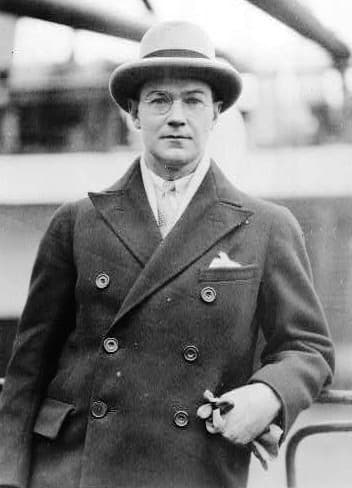
Philip Barry was an American playwright active in the early to mid-20th century, best known for his sharp wit and social commentary. His notable work, "The Philadelphia Story," explores themes of class and romance, and has been adapted into a successful film. Barry's plays often reflect the complexities of human relationships and societal norms.
Similar books
- Pride and Prejudice
Jane Austen
4.3 (3M) average on GoodreadsHistorical FictionExplores societal expectations, class differences, and a woman's journey to find true love amidst multiple suitors.
- The Hunger Games
Suzanne Collins
4.3 (6.4M) average on GoodreadsFantasyIn a future where children fight to the death on live television, Katniss Everdeen volunteers for the arena, turning a death sentence into a fight for survival and a spark of rebellion.
- The Great Gatsby
F. Scott Fitzgerald
3.9 (3.8M) average on GoodreadsHistorical FictionIn the opulent Roaring Twenties, a mysterious millionaire's lavish parties hide his desperate, tragic pursuit of a lost love, exposing the emptiness within the American Dream.
- The Fault in Our Stars
John Green
4.2 (3.6M) average on GoodreadsYoung AdultA girl with a terminal illness finds her story rewritten when a charming boy with a similar past enters her life at a cancer support group, leading to a star-crossed romance.
- Divergent
Veronica Roth
4.2 (2.9M) average on GoodreadsFantasyIn a society divided by virtues, a sixteen-year-old's difference from the norm starts a rebellion that threatens her world.
- Catching Fire
Suzanne Collins
4.3 (2.5M) average on GoodreadsFantasyAfter defying the Capitol and starting a rebellion, Katniss and Peeta are forced on a dangerous Victory Tour, navigating political schemes, a fake romance, and the constant threat of a government eager to crush the uprising they began.





Enjoyed the summary?
A summary gives you the shape of the book. The book itself has the detail, the examples and the voice.
Find The Philadelphia Story on AmazonAs an Amazon Associate, BookBrief earns from qualifying purchases. How we're funded