
Core Idea
- Difficulty
- Medium
- Read it if
- You are an Aikido practitioner seeking to deepen your understanding of its philosophical and spiritual dimensions, or if you are interested in how martial arts can serve as a path to personal and global harmony.
- Skip it if
- You are looking for a technical manual on Aikido techniques or a purely historical account of the art, or if you are skeptical of spiritual interpretations of physical disciplines.
Key Takeaways from The Philosophy of Aikido
Aikido as Embodied Philosophy
More than martial art, Aikido is a dynamic system of spiritual and philosophical principles.
Stevens presents Aikido as more than just a martial art. It is an 'embodied philosophy'—a set of spiritual and ethical principles shown and understood through physical practice. The movements, stance, and interaction with an opponent all act as ways to learn ideas like non-resistance, centeredness, and universal harmony. This view changes Aikido from a self-defense system into a complete way of life. It offers insights into personal behavior, solving conflicts, and spiritual growth that go beyond the dojo. It is about building inner peace that can then show itself outwardly.
“Aikido is not merely a collection of techniques, but a profound system of beliefs that offers a path to harmony, peace, and spiritual strength.”
In the book: The book's exploration of Aikido's connections to diverse philosophical traditions like Shinto, Shingon Buddhism, Taoist mysticism, and even Western systems such as Greek philosophy and Christianity, underscores its profound philosophical depth rather than just its martial utility.
Try this: Approach Aikido training not just as learning techniques, but as a moving meditation and a laboratory for philosophical inquiry. Reflect on how each movement or principle (e.g., blending with an attack, maintaining your center) applies to real-life challenges or conflicts, both internal and external.
Related ideas: embodied-cognition, spiritual-practice, martial-philosophy
Harmony Through Non-Resistance
Aikido's core principle is to blend with an opponent's energy, transforming conflict into cooperation.
Many martial arts focus on direct fighting and overpowering an opponent. Aikido, however, promotes non-resistance and blending. The goal is not to meet force with equal or greater force, but to move with the attacker's energy, redirecting it and stopping their aggression without unnecessary harm. This is not passive surrender; it is an active, dynamic engagement that seeks harmony within conflict. By moving 'with' instead of 'against,' Aikido practitioners learn to break an attacker's balance and intent. This leads to a resolution that helps both sides by avoiding mutual destruction. This idea is a strong comparison for resolving conflict in all parts of life.
“The essence of Aikido is to become one with the universe, to blend with its movements, and to resolve conflict not by opposing force with force, but by harmonizing with it.”
In the book: The physical techniques of Aikido, such as irimi (entering) and tenkan (turning), directly illustrate the principle of blending and redirecting an opponent's energy rather than clashing with it. Stevens often references Morihei Ueshiba's (O-Sensei) teachings on 'Aiki' as the art of harmonizing with the universe.
Try this: In disagreements or confrontations, rather than immediately opposing another's viewpoint, try to understand their 'energy' or intent. Seek to blend with their perspective first, find common ground, and then gently redirect the conversation towards a constructive outcome, aiming for mutual understanding over outright victory.
Related ideas: conflict-resolution, non-violence, flow-state, aiki
The Universal Center
Cultivating a strong internal center is key to physical stability and spiritual groundedness.
The idea of 'center' (hara or seika tanden) is very important in Aikido. It is not just a physical spot in the lower abdomen but a spiritual and energetic core. A strong, stable center provides solid physical balance, allowing practitioners to move smoothly and powerfully while staying grounded. More importantly, developing this inner center brings mental clarity, emotional stability, and spiritual grounding. It is the point where all action starts and all energy returns, helping a practitioner stay calm and focused even in chaos. This inner alignment is a small version of the universal center, connecting the person to the larger cosmic order.
“Your center is not merely a physical point; it is the axis of your being, connecting you to the earth and the heavens, and the source of all power.”
In the book: Stevens discusses how O-Sensei emphasized the 'one-point' or 'center' as the origin of all movement and power. The book includes illustrations of traditional Japanese calligraphy and body postures that visually represent the importance of the hara.
Try this: Practice centering exercises (e.g., mindful breathing, standing meditation focusing on the lower abdomen) daily. Before important meetings or stressful situations, take a moment to consciously connect with your physical and energetic center to enhance calm, focus, and resilience.
Related ideas: hara, tanden, mindfulness, grounding
Aikido's Ecumenical Roots
Aikido synthesizes wisdom from diverse spiritual and philosophical traditions, East and West.
One of Aikido's most interesting aspects, as Stevens explains, is its inclusive nature. It is not limited to one religious or philosophical teaching but combines various wisdom traditions. O-Sensei, its founder, was influenced by Japanese Shinto, Shingon Buddhism, and Omotokyo practices. However, Stevens shows how Aikido's principles connect with Taoist mysticism, Tantra, Greek philosophy, Christianity (especially love and forgiveness), Kabbalah, and even modern science. This broad base makes Aikido approachable and relevant to people from different backgrounds. It highlights universal truths about harmony, connection, and the human spirit.
“O-Sensei, Morihei Ueshiba, drew upon a vast tapestry of spiritual insights, weaving together threads from Shinto, esoteric Buddhism, Taoism, and even finding resonance with Western philosophical and religious thought.”
In the book: The book explicitly details the 'points of correspondence' between Aikido and traditions such as Shinto, Shingon Buddhism, Omotokyo esotericism, Taoist mysticism, Tantra, Greek philosophy, Christianity, Kabbalah, and alchemy. Stevens's background as a Buddhist scholar and priest lends significant weight to these connections.
Try this: Explore the philosophical underpinnings of your own beliefs or cultural heritage and look for parallels with Aikido's principles. This can deepen your understanding of both your own tradition and the universal nature of Aikido's wisdom, fostering a sense of interconnectedness.
Related ideas: interfaith-dialogue, perennial-philosophy, syncretism, cross-cultural-philosophy
Art as Spiritual Expression
Aikido's movements and philosophy are deeply intertwined with artistic principles and aesthetics.
Stevens argues for a clear link between Aikido and art. Aikido movements are not just effective martial techniques; they are expressions of beauty, balance, and flow, similar to dance or calligraphy. The focus on circular motion, natural posture, and harmonious blending creates an aesthetic quality that is both powerful and graceful. This connection goes beyond physical movement to philosophy. The principles of artistic creation—intuition, spontaneity, and seeking perfection—mirror the spiritual journey of an Aikido practitioner. The book suggests that mastering Aikido is not only about physical skill but about developing a deep appreciation for beauty and showing universal harmony through the body.
“The fluidity, balance, and grace of Aikido techniques are not merely functional; they are an expression of beauty, a living art form that mirrors the harmony of the universe.”
In the book: The inclusion of 70 black-and-white illustrations, including woodblock prints, calligraphy, and photographs from Stevens's collection, visually reinforces the artistic dimension of Aikido. Stevens's personal background as a calligraphy scholar further strengthens this connection.
Try this: Approach your Aikido practice (or any physical discipline) with an awareness of its aesthetic qualities. Focus on fluidity, grace, and natural movement. Alternatively, explore forms of art (e.g., calligraphy, dance, music) to develop a deeper appreciation for harmony and flow, which can then inform your physical and spiritual practice.
Related ideas: aesthetics, performance-art, calligraphy, kinesthetic-learning
Aikido for Global Issues
The principles of Aikido offer practical solutions for pressing global challenges like conflict and environmentalism.
Stevens says that Aikido's philosophy goes beyond individual self-improvement. It offers a strong way to address important global issues. The main idea of changing conflict through harmony, instead of making it worse, applies directly to international relations and community disputes. Also, Aikido's focus on interconnectedness and respect for all life fits well with environmental responsibility, supporting a harmonious relationship with nature. Its focus on overall well-being also affects health and healing. By helping individuals embody these principles, Aikido can contribute to a more peaceful, sustainable, and healthy world, moving from personal change to group action.
“The lessons learned on the mat – of blending, non-aggression, and interconnectedness – are not confined to the dojo; they are vital tools for addressing the urgent issues of conflict resolution, health, and environmental responsibility in the wider world.”
In the book: The book explicitly lists 'ways that Aikido thought can be used to advance the causes of such urgent issues as health and healing, conflict resolution and environmental responsibility,' demonstrating a clear intent to connect the philosophy to real-world problems.
Try this: Actively seek opportunities to apply Aikido's principles in your daily life beyond the dojo. For instance, in community discussions, practice active listening and seeking common ground. Advocate for sustainable practices by understanding interconnected ecological systems, rather than viewing nature as separate.
Related ideas: peace-studies, environmental-ethics, global-citizenship, social-justice
The Path of Spiritual Discipline
Aikido practice is a rigorous spiritual discipline leading to self-mastery and enlightenment.
For Stevens, Aikido is not a casual hobby but a demanding spiritual practice (shugyo). The repetitive, precise, and often difficult nature of training helps personal improvement. It requires patience, persistence, humility, and a willingness to face one's own limits and ego. Through this strict physical and mental training, practitioners slowly let go of ego-driven reactions, develop inner calm, and connect more deeply to their true selves and universal energy (Ki). This path of discipline is a way to achieve self-mastery, inner peace, and ultimately, spiritual enlightenment or 'oneness' with the cosmos, similar to practices in other spiritual traditions.
“The mat is a spiritual laboratory where through diligent practice, the practitioner refines not just their body, but their spirit, moving towards true self-mastery and oneness with the divine.”
In the book: Stevens's own background as an ordained Buddhist priest and his descriptions of the founder's intense spiritual training and visions underscore the disciplinary aspect. The historical context of martial arts as a path to spiritual awakening in Japan is also implicitly referenced.
Try this: Commit to consistent, disciplined practice in your chosen field, understanding that the challenges and repetitions are opportunities for spiritual growth and self-mastery, not just skill acquisition. Embrace humility and the learning process as integral to your journey.
Related ideas: shugyo, asceticism, self-mastery, spiritual-growth
Ki: The Universal Life Force
Aikido harnesses and cultivates 'Ki,' the vital energy that animates all existence.
A main idea in Aikido's philosophy is 'Ki' (Chi in Chinese), the universal life force or vital energy that fills and gives life to everything. Aikido training is about understanding, developing, and extending one's own Ki, and learning to harmonize with the Ki of an opponent and the environment. This is not just a mystical idea; it is physically felt as centeredness, power, and connection. By developing strong and extended Ki, practitioners can move more efficiently, influence others without obvious force, and feel more connected to the world around them. It is the energetic basis for blending and non-resistance, allowing for smooth interaction.
“Ki is the breath of the universe, the vital force that flows through all things. In Aikido, we learn to sense, extend, and harmonize with this Ki, making us part of its boundless power.”
In the book: Stevens frequently refers to 'Ki' and its role in Aikido techniques and philosophy. The founder, O-Sensei, often spoke of 'Aiki' as the 'harmonious Ki' and the art of uniting with the Ki of the universe.
Try this: Practice exercises that focus on 'Ki extension,' such as breathing techniques that visualize energy flowing outward from your center. In daily interactions, try to sense the 'energy' or mood of others and consciously adjust your own Ki to create a more harmonious exchange.
Related ideas: ki-energy, prana, life-force, energetic-healing
Beyond Technique: The Spirit of Aiki
True mastery in Aikido transcends physical techniques, embodying the spirit of universal love and compassion.
Stevens highlights that while techniques are important for practice, Aikido's ultimate goal is beyond just physical skill. The founder, O-Sensei, increasingly said that Aikido was 'Aiki-love' or 'the Way of Harmonious Love.' This means true mastery is not about perfect throws or pins, but about having a spirit of universal compassion, protection, and non-aggression. The techniques become a way to develop an inner state where one aims to protect, not harm, and to resolve conflict with empathy and understanding. This spiritual side makes Aikido more than a martial art; it is a deep ethical and moral path, aiming to create peace and positive relationships.
“Techniques are merely the vehicle; the true destination of Aikido is the cultivation of a spirit of universal love, compassion, and protection for all beings.”
In the book: Stevens details O-Sensei's later teachings, where he increasingly emphasized the spiritual and ethical dimensions of Aikido, often referring to it as an expression of love and a path to universal harmony, rather than just a martial art.
Try this: When practicing or encountering conflict, consciously shift your intention from 'defeating' to 'protecting' or 'harmonizing.' Seek to understand the other person's perspective and find solutions that benefit everyone involved, driven by empathy rather than aggression.
Related ideas: compassion, empathy, non-violence, spiritual-ethics
The Philosophy of Aikido Quotes
“Aikido is not a technique to fight with or defeat enemies. It is a way to reconcile the world and make all human beings one family.”
“The Way of the Warrior has been misunderstood. It is not about killing and destroying, but about nurturing life, preventing slaughter and war, and creating peace.”
“True victory is victory over oneself.”
“Aikido is a path that unifies mind, body, and spirit, and through this unification, unifies us with the universe.”
“The purpose of training is to tighten up your slack, develop your spirit, and learn to love nature, your family, and your fellow men.”
“Do not look at the world with your eyes alone. See with your whole body, your whole being.”
“Your mind should be in harmony with the universe. If your mind is not in harmony, you will not be able to apply Aikido effectively.”
“We must learn to blend with an attack, rather than meet it with force.”
“The universe is always moving, flowing. We must learn to move with it, not against it.”
“To injure an opponent is to injure yourself. To control aggression without inflicting injury is the Art of Peace.”
“Aikido is for the purification of the self and the world.”
“The highest form of martial arts is not to fight.”
“A good stance and posture reflect a proper state of mind.”
“Cultivate the spirit of peace and harmony, and all discord will vanish.”
Quiz
10 questions on the main ideas. Each answer comes with a short explanation.
Question 1
Which specific Asian tradition is highlighted in the book as having a relation to Aikido, alongside Shinto and Taoist mysticism?
- Confucianism
- Shingon Buddhism
- Pure Land Buddhism
- Zen Buddhism
Show answer
B. Shingon Buddhism The book explicitly lists Shingon Buddhism as one of the Asian traditions, along with Shinto, Omotokyo esotericism, Taoist mysticism, and Tantra, that relate to Aikido.
Question 2
What is one specific Western philosophical or religious system that John Stevens's book draws points of correspondence between Aikido and?
- Existentialism
- Kabbalah
- Stoicism
- Sufism
Show answer
B. Kabbalah The book mentions Kabbalah as a Western system corresponding with Aikido, alongside Greek philosophy, Christianity, alchemy, and modern scientific theories.
Question 3
According to the book's description, what is one practical application where Aikido thought can be used to advance urgent issues?
- Economic development
- Space exploration
- Environmental responsibility
- Urban planning
Show answer
C. Environmental responsibility The book highlights environmental responsibility as one of the urgent issues, along with health and healing and conflict resolution, where Aikido thought can be applied.
Question 4
Beyond being an Aikido instructor, what other specific artistic or scholarly pursuit is John Stevens noted for in the book's description?
- Traditional Japanese pottery
- Ikebana (flower arranging)
- Calligraphy
- Tea ceremony
Show answer
C. Calligraphy John Stevens is noted for having studied calligraphy for decades and authored 'Sacred Calligraphy of the East,' indicating a deep involvement beyond Aikido.
Question 5
The book states that Aikido is centered on a dynamic philosophy emphasizing what three core principles?
- Strength, speed, and precision
- Harmony, peace, and spiritual strength
- Discipline, endurance, and agility
- Self-defense, competition, and victory
Show answer
B. Harmony, peace, and spiritual strength The description explicitly states that the dynamic philosophy is 'centered on harmony, peace, and spiritual strength.'
Question 6
What is John Stevens's specific academic profession mentioned in the book's description during his thirty-five years in Japan?
- Professor of Japanese History
- Professor of Buddhist studies
- Professor of Martial Arts
- Professor of Comparative Religion
Show answer
B. Professor of Buddhist studies The description clearly states that John Stevens 'was a professor of Buddhist studies at Tohoku Fukushi University in Sendai.'
Question 7
The book includes 70 black-and-white illustrations. From what specific source are these illustrations primarily drawn?
- Historical photographs from the Aikikai Hombu Dojo archives
- Selections from famous Japanese art museums
- The author's extensive collection of woodblock prints, calligraphy, and photographs
- Commissioned artwork specifically for this publication
Show answer
C. The author's extensive collection of woodblock prints, calligraphy, and photographs The book states the illustrations are 'from the author's extensive collection' and specifies they are woodblock prints, calligraphy, and photographs.
Question 8
How does the book position itself for both beginning and advanced Aikido practitioners?
- It offers advanced techniques for experienced practitioners and basic history for beginners.
- It serves as an invaluable guide for those wishing to understand Aikido's developmental context and its modern implications.
- It focuses primarily on the physical aspects of Aikido, suitable for all skill levels.
- It provides a purely historical account, equally interesting to all readers.
Show answer
B. It serves as an invaluable guide for those wishing to understand Aikido's developmental context and its modern implications. The description states it is 'an invaluable guide for practitioners-whether beginning or advanced-wishing to know more about the context in which Aikido was developed and Aikido's implications for the world today.'
Question 9
The book mentions 'Omotokyo esotericism' as an Asian tradition related to Aikido. What is the significance of Omotokyo in the context of Aikido's founder, Morihei Ueshiba?
- Omotokyo provided the primary financial backing for Ueshiba's early dojos.
- Ueshiba was deeply influenced by and a devout follower of Omotokyo, which shaped his spiritual development and the philosophy of Aikido.
- Omotokyo was a rival spiritual movement that Ueshiba sought to differentiate Aikido from.
- The book uses Omotokyo as a general example of Japanese new religions, without specific deep connection to Ueshiba.
Show answer
B. Ueshiba was deeply influenced by and a devout follower of Omotokyo, which shaped his spiritual development and the philosophy of Aikido. While not explicitly detailed in the provided text, the mention of 'Omotokyo esotericism' in relation to Aikido implies a significant connection. Historically, Morihei Ueshiba was deeply influenced by Omotokyo, and its spiritual teachings were fundamental to the development of Aikido's philosophy. This question tests the reader's ability to infer deeper connections from the provided keywords.
Question 10
John Stevens is described as 'one of the foremost Western experts on aikido, holding a ranking of 7th dan Aikikai.' What does '7th dan Aikikai' specifically signify within the Aikido world?
- It indicates he is a certified referee for international Aikido competitions.
- It represents a very high level of mastery and teaching authority within the Aikikai Foundation, the original Aikido organization.
- It means he is the head instructor of the Aikikai's main dojo in Japan.
- It signifies his expertise in the historical aspects of Aikido, rather than practical application.
Show answer
B. It represents a very high level of mastery and teaching authority within the Aikikai Foundation, the original Aikido organization. A 'dan' rank in martial arts signifies a level of expertise, and 7th dan is exceptionally high, indicating profound mastery and teaching authority. 'Aikikai' specifies that this rank is recognized by the Aikikai Foundation, the main lineage of Aikido established by the founder's family.
The Philosophy of Aikido FAQ
What is the core philosophy behind Aikido as presented in this book?
This book explores Aikido's philosophy as a dynamic system centered on harmony, peace, and spiritual strength. It delves into the beliefs that form the foundation of its physical practice and its broader implications for life.
Does 'The Philosophy of Aikido' require prior Aikido experience to understand?
No, the book is designed to be accessible to both beginners and advanced practitioners. It provides context for Aikido's development and its philosophical underpinnings, making it valuable even for those new to the art.
What is the relationship between Aikido and Eastern spiritual traditions like Shinto or Taoism?
The book details the deep connections between Aikido and various Asian traditions, including Shinto, Shingon Buddhism, Omotokyo esotericism, Taoist mysticism, and Tantra, showing how these systems influenced its development and philosophy.
How does Aikido philosophy relate to Western thought, such as Greek philosophy or Christianity?
John Stevens identifies points of correspondence between Aikido and Western philosophical and religious systems, including Greek philosophy, Christianity, Kabbalah, alchemy, and even modern scientific theories, highlighting universal themes.
Can Aikido thought be applied to modern issues like conflict resolution or environmental responsibility?
Yes, the book explores practical ways that Aikido thought can be utilized to advance causes such as health and healing, conflict resolution, and environmental responsibility, demonstrating its relevance to contemporary challenges.
What is the significance of the illustrations in 'The Philosophy of Aikido'?
The book includes 70 black-and-white illustrations, comprising woodblock prints, calligraphy, and photographs from the author's extensive collection. These visuals enhance the reader's understanding and appreciation of the cultural and artistic context of Aikido.
How is 'The Philosophy of Aikido' different from other books on Aikido techniques?
Unlike books solely focused on physical techniques, this work delves exclusively into the system of beliefs and philosophical context of Aikido. It provides the 'why' behind the practice, rather than just the 'how'.
Does the author, John Stevens, have legitimate credentials to write on this topic?
Absolutely. John Stevens is a highly respected 7th dan Aikikai Aikido instructor, an ordained Buddhist priest, and a professor of Buddhist studies who lived in Japan for 35 years. He is recognized as one of the foremost Western experts on Aikido and has authored over thirty books.
About the author

John Stevens is an author known for his work in non-fiction, particularly in the field of martial arts and philosophy. His notable book, "The Philosophy of Aikido," explores the underlying principles and ethical dimensions of Aikido practice.
Similar books
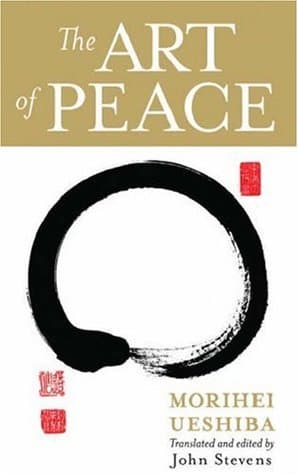
- The Art of Peace
Morihei Ueshiba
4.2 (4k) average on GoodreadsSpiritualityDirectly presents the spiritual and ethical teachings of Aikido's founder, often with Stevens' commentary.
- Zen in the Martial Arts
Joe Hyams
4.2 (3k) average on GoodreadsSpiritualityDiscusses the integration of spiritual principles, particularly Zen, with martial arts training.
- Eat, Pray, Love
Elizabeth Gilbert
3.6 (1.5M) average on GoodreadsLifestyleA heartbroken writer leaves her conventional life for a year-long global search for pleasure in Italy, spiritual devotion in India, and unexpected love and balance in Bali.
- Educated
Tara Westover
4.5 (796k) average on GoodreadsBiographyRaised in the Idaho mountains by fundamentalist survivalists, a young woman forges her own path to education, battling fierce family loyalty and personal demons to discover a world beyond her isolated upbringing.
- The Poisonwood Bible
Barbara Kingsolver
4.1 (659k) average on GoodreadsLiterary FictionA zealous missionary's rigid faith clashes with the Belgian Congo's wilderness and people, unraveling his family through the eyes of his five unforgettable women.
- Siddhartha
Hermann Hesse
4.0 (583k) average on GoodreadsHistorical FictionSiddhartha leaves a life of privilege and piety, embracing asceticism, wealth, and love to find enlightenment not in dogma, but in the whispers of a river and the unity of all existence.





Enjoyed the summary?
A summary gives you the shape of the book. The book itself has the detail, the examples and the voice.
Find The Philosophy of Aikido on AmazonAs an Amazon Associate, BookBrief earns from qualifying purchases. How we're funded