
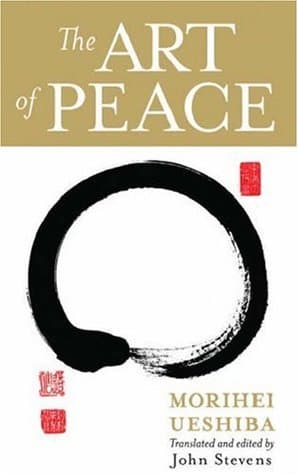
Core Idea
- Difficulty
- Medium
- Read it if
- You are seeking a profound spiritual philosophy centered on peace, non-violence, and self-mastery, especially if you are interested in martial arts principles beyond combat.
- Skip it if
- You are looking for a practical, step-by-step guide to conflict resolution or a secular approach to personal development.
Key Takeaways from The Art of Peace
True Victory is Self-Mastery
Conquering yourself is the ultimate triumph, leading to invincibility without conflict.
Ueshiba says that real victory is not about beating an external opponent, but about overcoming one's own ego, fears, and negative impulses. When you master yourself, you gain inner calm and clarity, making external aggression unimportant. This internal victory lets you respond to challenges with wisdom and compassion, instead of reactive violence. The goal is not to win by force, but to end conflict by changing your own internal state, which disarms the aggression of others. This self-mastery is the basis for a life lived in balance, both inside and out.
“True victory (masakatsu) is victory over oneself (agatsu).”
In the book: The core principle of Aikido's movements, which redirect an attacker's energy rather than meeting it with force, directly embodies this idea. The practitioner's calm center allows them to flow with the attack, demonstrating a victory over their own instinct to fight fire with fire.
Try this: Before reacting to an external conflict, pause and identify your own internal triggers (anger, fear, pride). Practice deep breathing and mindfulness to recenter yourself. Address your own emotional response first, then approach the external situation from a place of calm, seeking mutual understanding rather than domination.
Related ideas: self-mastery, non-resistance, inner-peace
The Art of Peace is Universal Love
Love is the ultimate protector and the true essence of the warrior's path.
Ueshiba sees love as a basic cosmic principle and the strongest force in the universe. He teaches that the true warrior embodies universal love (ai), showing compassion to all beings, even perceived enemies. This is not a passive love, but an active, protective force that aims to harmonize rather than destroy. By aligning with this universal love, one becomes an instrument of peace, able to resolve conflict without violence and encourage growth and understanding. This view changes the 'warrior' into a guardian of life, not a bringer of death.
“The Art of Peace begins with you. Work on yourself and your appointed task of the Art of Peace. Everyone has a spirit that can be refined, a body that can be trained in some manner, a suitable path to follow. You are here for no other reason than to realize your inner divinity and express your innate enlightenment.”
In the book: Ueshiba's personal transformation from a fierce martial artist to a spiritual leader who taught Aikido as a path to universal harmony, even in the context of Japan's militaristic era, exemplifies this. His teachings consistently emphasize the sacredness of all life.
Try this: In daily interactions, consciously practice empathy and seek common ground, even with those you disagree with. When faced with conflict, ask yourself how 'love' (meaning compassion, understanding, and a desire for harmony) might guide your response. Actively seek to protect and uplift others, rather than diminish them.
Related ideas: universal-love, compassion, harmony
Mind-Body-Spirit Unity
True power arises from the seamless integration of your physical, mental, and spiritual being.
Ueshiba stresses that people are not fragmented but whole. True strength comes from aligning the mind, body, and spirit into a single, unified unit. When these elements work together, one can move with effortless power, clear thought, and spiritual insight. This unity allows for intuitive action, where the body responds without conscious thought, guided by a refined spirit and a focused mind. Disconnection between these aspects leads to weakness, hesitation, and internal conflict. Developing this unity is central to both martial arts mastery and a peaceful, effective life.
“Your heart is full of fertile seeds, waiting to sprout. Just as a lotus flower blooms from mud, so too can you grow and blossom from any difficult situation.”
In the book: Aikido training heavily emphasizes centering (hara), proper breathing, and a calm, focused gaze, all of which are physical manifestations of mental and spiritual alignment. Practitioners learn to move from their core, integrating their whole being into each technique.
Try this: Practice mindfulness exercises that connect your breath, body sensations, and thoughts. Engage in physical activities (like yoga, tai chi, or Aikido) that emphasize fluid movement and internal focus. Regularly reflect on your actions, ensuring they align with your deeper values and intentions, fostering a sense of inner congruence.
Related ideas: holism, centering, integration
Become One With the Universe
Aligning with natural laws grants access to boundless energy and intuitive wisdom.
Ueshiba teaches that our individual existence is a small part of a vast, interconnected universe. By letting go of ego and developing a sense of oneness with creation, we access an endless source of power and wisdom. This 'oneness' is not just a philosophical idea but a practical state that allows the practitioner to move with the flow of energy, anticipate actions, and respond intuitively. Conflict comes from a sense of separation; peace is found in recognizing our connection to all things. When you act in harmony with universal principles, your actions become effortless and highly effective.
“To practice properly, you must be in harmony with the universe. You must be centered in your practice. You must be an extension of the Creator, and you must be in tune with the flow of the universe.”
In the book: Ueshiba often spoke of being 'one with the universe' and 'receiving divine inspiration' during his martial demonstrations, allowing him to effortlessly deflect multiple attackers. This isn't supernatural, but rather a profound attunement to energy and intention.
Try this: Spend time in nature, observing its patterns and interconnectedness. Practice meditation to quiet the ego and foster a sense of connection to something larger than yourself. Before making decisions, pause and consider the broader impact and whether your actions align with principles of harmony and sustainability.
Related ideas: cosmic-unity, flow-state, intuition
The Path of Non-Resistance
Yielding to an attack transforms it, leading to a peaceful resolution rather than direct confrontation.
A core part of Aikido, Ueshiba's idea of non-resistance teaches that instead of directly opposing an aggressive force, one should blend with it, redirect it, and neutralize it. This is not passive surrender, but an active, intelligent yielding that uses the attacker's own momentum against them. By not meeting force with force, you avoid making conflict worse and create a chance to guide the situation towards a peaceful solution. This principle applies beyond physical combat, suggesting that in any confrontation, seeking to understand and redirect rather than stubbornly oppose can lead to more effective and harmonious results.
“Do not meet the attacker with force. Let your body flow with the attack, then control it.”
In the book: The physical techniques of Aikido, such as iriminage or kokyunage, exemplify this. An attacker's grab or punch is not blocked, but rather joined and redirected, causing the attacker to lose balance and control without the need for striking.
Try this: In a disagreement, instead of immediately defending your position, listen actively to the other person's perspective. Try to understand their 'attack' (their argument or frustration) and 'blend' with it by acknowledging their feelings. Then, gently 'redirect' the conversation towards common goals or solutions, rather than a win-lose debate.
Related ideas: yielding, redirection, conflict-resolution
Daily Practice, Lifelong Refinement
Consistent effort and dedication are essential for spiritual growth and mastery in any art.
Ueshiba stresses that mastery, in martial arts or in life, is achieved not through occasional effort but through consistent, dedicated daily practice. This continuous improvement is not just about physical technique but also about refining one's character, developing inner peace, and deepening spiritual insight. Every moment is a chance for practice—how we interact, how we breathe, how we think. The path is ongoing, with no final 'finish line,' only continuous growth and improvement. This commitment to daily discipline changes one's entire being.
“The Art of Peace is not easy. It is a daily struggle. It is a constant battle against oneself. But it is a battle that can be won, and the rewards are immeasurable.”
In the book: Ueshiba himself trained relentlessly for decades, even into old age, constantly refining his art and teachings. The rigorous daily training regimen in traditional dojos reflects this philosophy, where repetition and dedication are paramount.
Try this: Identify one small, positive habit related to your personal growth (e.g., 5 minutes of meditation, journaling, mindful movement) and commit to practicing it daily for a month. Observe how consistent, small efforts accumulate over time to create significant change. Approach challenges not as failures, but as opportunities for further practice and refinement.
Related ideas: discipline, perseverance, continuous-improvement
Protect All Creation
The true warrior's purpose is to act as a guardian of life, fostering growth and harmony.
Ueshiba changes the warrior's role, shifting it from destruction to protection and nurturing. The true warrior, he teaches, is not someone who harms, but someone who protects life, creates peace, and promotes the well-being of all beings and the environment. This broad view of protection extends beyond human life to include nature and the entire cosmos. By acting as a guardian, the warrior embodies the creative force of the universe, ensuring harmony and growth rather than conflict and decay. This is a profound ethical stance, making martial skill a tool for universal good.
“The purpose of the Art of Peace is to protect all creation, not to destroy it.”
In the book: Ueshiba's later teachings explicitly moved away from the idea of combat for personal gain or victory, emphasizing Aikido as a path to unite the world and protect its inhabitants. His personal example of cultivating his farm and living in harmony with nature reinforces this.
Try this: Consider how your actions impact not just yourself, but your community, the environment, and future generations. Engage in activities that promote conservation, social justice, or support vulnerable populations. Frame your professional and personal goals through the lens of 'how can I contribute to protection and growth?'
Related ideas: stewardship, eco-consciousness, altruism
The Power of Breath and Ki
Conscious breathing connects us to universal energy, enhancing vitality and focus.
Ueshiba places great importance on breath (kokyu) and Ki (life force energy). He teaches that conscious, deep breathing is not just a physical function but a direct link to the universal energy that gives life to all things. By using proper breathing techniques, one can gather and circulate Ki, improving physical vitality, mental clarity, and spiritual awareness. This mastery of breath allows for powerful, effortless movement in Aikido and provides a stable base for handling life's challenges. It is a practical method for centering oneself and accessing inner strength.
“The Art of Peace is the medicine for a sick world. It is the breath of the universe, the breath of life, the breath of creation.”
In the book: Aikido training heavily emphasizes 'kokyu-ryoku' (breath power), where techniques are executed with a coordinated inhale/exhale that channels Ki from the practitioner's center, generating surprising force and stability.
Try this: Practice diaphragmatic breathing for 5-10 minutes daily. Focus on slow, deep inhales that expand your abdomen and equally slow exhales. When feeling stressed or unfocused, take a few deep, conscious breaths to recenter yourself and bring awareness back to your body and the present moment.
Related ideas: prana, qi, mindful-breathing
Spiritual Training is Physical Training
The dojo is a microcosm of life, where physical discipline cultivates spiritual growth.
For Ueshiba, there is no separation between physical training and spiritual development. The strict discipline of martial arts practice is not just about learning techniques, but about purifying the spirit, developing character, and embodying ethical principles. Every movement, every fall, every interaction in the dojo is a chance for self-reflection and growth. The physical challenges refine the body, but also train the mind to be calm under pressure and the spirit to be resilient and compassionate. The dojo becomes a place where one confronts oneself and strives for complete perfection.
“The Art of Peace is a spiritual art, but it is also a physical art. The two cannot be separated.”
In the book: The traditional Aikido dojo structure, where students bow, clean, and follow strict etiquette, underscores this. The physical techniques are taught not just for self-defense but as a vehicle for understanding principles like centering, non-resistance, and harmony.
Try this: Approach your physical activities (e.g., exercise, sports, even daily chores) with mindfulness and intention. See them not just as tasks, but as opportunities to cultivate focus, discipline, and inner calm. Reflect on how challenges in physical training mirror challenges in your personal or professional life and how you can apply lessons learned.
Related ideas: embodied-cognition, mindful-movement, character-development
Embrace the Void and Emptiness
Cultivating a state of no-mind allows for spontaneous, intuitive action.
Ueshiba's teachings often discuss 'emptiness' or 'void' (mu), similar to Zen Buddhist ideas. This is not a negative emptiness, but a state of mind free from preconceived ideas, ego, and attachment. When the mind is empty, it is open and receptive, allowing for spontaneous, intuitive action that responds perfectly to the present moment without hesitation or intellectual interference. This state of 'no-mind' (mushin) is important for true mastery, as it allows one to act in perfect harmony with the universe, going beyond the limits of conscious thought and ego-driven responses. It is the source of true creativity and effective action.
“The Art of Peace is the absence of discord. It is the void, the emptiness, the nothingness that gives birth to all things.”
In the book: In high-level Aikido, practitioners move with incredible fluidity and anticipation, often seeming to know an attacker's next move before it happens. This isn't magic, but the result of extensive training leading to a state where action arises spontaneously from an empty, receptive mind.
Try this: Practice 'beginner's mind' by approaching new situations or familiar tasks without judgment or expectations. Engage in activities that encourage flow states (e.g., creative arts, sports, meditation) where self-consciousness fades. When faced with a complex problem, try to quiet your internal monologue and allow solutions to emerge intuitively, rather than forcing them through rigid logic.
Related ideas: zen, no-mind, spontaneity
The Art of Peace Quotes
“The Art of Peace begins with you, work on yourself and your appointed task in the Art of Peace. Everyone has a spirit that can be refined, a body that can be trained in some way, and a suitable path to follow.”
“True victory is victory over oneself.”
“To injure an opponent is to injure yourself. To control aggression without inflicting injury is the Art of Peace.”
“The Way of a Warrior is to establish harmony.”
“Never fear challenges. Dig deep within yourself to discover the solution. For challenges are opportunities for growth.”
“Your heart is full of fertile seeds, waiting to sprout. Just as a plant sends roots deep into the earth, you must send roots deep into your soul to find the nourishment that will allow you to blossom.”
“When you are defeated, you are not defeated by a person, but by your own weakness. When you win, you win not over a person, but over your own weakness.”
“The Art of Peace is the medicine for a sick world. There is evil and disorder in the world, because people have forgotten that all things emanate from one source.”
“To practice the Art of Peace is to practice compassion, to be one with all creation.”
“The Art of Peace is not easy. It is a bitter struggle, a ordeal to the end. But the purpose of the Art of Peace is to make manifest divine love and wisdom.”
“Do not look upon this world with fear and loathing. Bravely face whatever comes your way.”
“The Art of Peace is based on four great virtues: bravery, wisdom, love, and friendship, symbolized by the fire, water, wind, and void of nature.”
“As soon as you concern yourself with the 'good' and 'bad' of your fellows, you create an opening in your heart for maliciousness to enter. Testing, competing with, and criticizing others will weaken and defeat you.”
“Your mind should be in harmony with the cosmos; your body in harmony with the movement of the universe. If your body and mind are not in harmony, you will not be able to achieve anything.”
Quiz
10 questions on the main ideas. Each answer comes with a short explanation.
Question 1
According to Morihei Ueshiba, what is the foundation of the real way of the warrior?
- Aggression and dominance
- Compassion, wisdom, fearlessness, and love of nature
- Strict adherence to physical techniques only
- Isolation and self-sufficiency
Show answer
B. Compassion, wisdom, fearlessness, and love of nature Ueshiba explicitly states that the real way of the warrior is based on compassion, wisdom, fearlessness, and love of nature, forming the core principles of the 'Art of Peace'.
Question 2
What is the primary characteristic of victory in Aikido, as taught by Ueshiba?
- Overwhelming the opponent with brute force
- A nonviolent resolution to conflict
- Achieving personal glory and recognition
- Escaping from the conflict entirely
Show answer
B. A nonviolent resolution to conflict Aikido offers a nonviolent way to victory in the face of conflict, distinguishing it from martial arts focused on pure aggression.
Question 3
Who compiled the teachings of Morihei Ueshiba found in 'The Art of Peace'?
- Morihei Ueshiba himself
- A group of his earliest students
- John Stevens
- A historical society dedicated to martial arts
Show answer
C. John Stevens The collection is compiled by the renowned modern Aikidoist John Stevens, who was a disciple of Ueshiba.
Question 4
Ueshiba believed that Aikido principles could be applied to which aspects of life?
- Only physical combat situations
- Mainly spiritual contemplation and meditation
- All the challenges we face in life, including personal, business, and societal interactions
- Only the relationships within a dojo setting
Show answer
C. All the challenges we face in life, including personal, business, and societal interactions Ueshiba believed that Aikido principles could be applied to all the challenges we face in life—in personal and business relationships, as well as in our interactions with society.
Question 5
What does Ueshiba's concept of 'love of nature' imply for a practitioner of the Art of Peace?
- A passive acceptance of all natural events
- A deep connection and harmony with the natural world, influencing one's actions and spirit
- Prioritizing environmental activism above all else
- Using natural elements to gain an advantage in conflict
Show answer
B. A deep connection and harmony with the natural world, influencing one's actions and spirit The 'love of nature' is one of the core tenets of the warrior's path, suggesting a deep spiritual and practical harmony with the environment, not just a passive observation or tactical use.
Question 6
How does the 'Art of Peace' differentiate itself from martial arts solely focused on defeating an opponent?
- By emphasizing the importance of physical strength over mental discipline
- By promoting a path of nonviolence and universal harmony, rather than mere victory through force
- By focusing on offensive techniques rather than defensive ones
- By requiring practitioners to avoid all forms of conflict
Show answer
B. By promoting a path of nonviolence and universal harmony, rather than mere victory through force The 'Art of Peace' offers a nonviolent way to victory, fundamentally shifting the goal from mere defeat of an adversary to a harmonious resolution, embodying compassion and wisdom.
Question 7
What role does 'fearlessness' play in Ueshiba's philosophy for the warrior?
- It means the absence of any danger or threat.
- It is a cultivated state of mind that allows one to face challenges without being paralyzed by apprehension.
- It implies recklessness and disregard for personal safety.
- It is achieved through superior physical conditioning alone.
Show answer
B. It is a cultivated state of mind that allows one to face challenges without being paralyzed by apprehension. Fearlessness in Ueshiba's context is not the absence of danger, but the mental and spiritual fortitude to confront challenges with a calm and resolute spirit, drawing on wisdom and compassion.
Question 8
How does Ueshiba's teaching on 'compassion' extend beyond individual interactions in the context of the 'Art of Peace'?
- It strictly applies only to one's direct opponents in a physical encounter.
- It encourages a broader empathy and understanding towards all beings and situations, aiming for universal harmony.
- It means avoiding any situation that might require a firm stance.
- It is a weakness that must be overcome in true martial arts.
Show answer
B. It encourages a broader empathy and understanding towards all beings and situations, aiming for universal harmony. Compassion is a fundamental pillar of the real way of the warrior, suggesting a deep understanding and empathy that extends to all aspects of life and interactions, fostering universal peace.
Question 9
The teachings in 'The Art of Peace' are described as 'succinct and pithy'. What does this imply about their nature and intended use?
- They are long, detailed essays requiring extensive study.
- They are concise and profound statements meant for contemplation and direct application.
- They are primarily historical accounts of Ueshiba's life.
- They are complex philosophical treatises accessible only to advanced scholars.
Show answer
B. They are concise and profound statements meant for contemplation and direct application. Succinct and pithy teachings are characterized by being brief, clear, and full of meaning, making them ideal for practical application and deep contemplation rather than academic analysis.
Question 10
How does the 'Art of Peace' challenge conventional notions of 'victory' in conflict?
- By advocating for surrender as the ultimate form of victory.
- By redefining victory as a nonviolent resolution that benefits all parties, rather than simply defeating an opponent.
- By suggesting that victory is irrelevant in the pursuit of peace.
- By focusing on internal spiritual victory, disregarding external outcomes.
Show answer
B. By redefining victory as a nonviolent resolution that benefits all parties, rather than simply defeating an opponent. The text explicitly states Aikido offers a 'nonviolent way to victory in the face of conflict,' which implies a redefinition of victory beyond mere subjugation to a more harmonious and encompassing resolution.
The Art of Peace FAQ
What is the core philosophy of 'The Art of Peace'?
'The Art of Peace' presents Morihei Ueshiba's teachings on the true path of a warrior, emphasizing compassion, wisdom, fearlessness, and a profound love of nature. It advocates for nonviolence as a means to victory in conflict, extending these principles to all aspects of life.
Does 'The Art of Peace' teach specific martial arts techniques?
While rooted in the principles of Aikido, 'The Art of Peace' is a book of philosophy and spiritual teachings, not a martial arts instruction manual. It focuses on the underlying mental and ethical framework that informs Aikido, rather than detailing physical techniques.
What is 'Aikido' in the context of Ueshiba's teachings?
Aikido, as taught by Morihei Ueshiba, is more than just a martial art; he called it the 'Art of Peace.' It is a discipline designed to foster harmony and nonviolent resolution, applying its principles to personal growth, relationships, and societal interactions.
How can the principles in 'The Art of Peace' be applied to everyday life?
The book suggests that its principles of nonviolence, harmony, and compassionate engagement can be applied to all life's challenges. This includes improving personal and business relationships, navigating conflicts with wisdom, and fostering a more peaceful approach to societal interactions.
How is 'The Art of Peace' different from other self-help or spiritual books?
'The Art of Peace' distinguishes itself by drawing directly from the profound insights of a martial arts master, Morihei Ueshiba, offering a unique perspective on conflict resolution and personal development rooted in the physical and spiritual discipline of Aikido. It emphasizes a nonviolent yet decisive approach.
Who was Morihei Ueshiba and why are his teachings significant?
Morihei Ueshiba (1883–1969) was the revered founder of Aikido, a Japanese martial art. His teachings are significant because they offer a path to inner peace and effective conflict resolution that transcends mere physical combat, advocating for a life guided by compassion and universal harmony.
Is 'The Art of Peace' suitable for someone with no martial arts experience?
Absolutely. While its origins are in martial arts, the book's teachings are philosophical and spiritual, focusing on universal principles applicable to anyone seeking wisdom, inner peace, and effective ways to navigate life's challenges, regardless of their physical training background.
Does 'The Art of Peace' promote pacifism?
While advocating for nonviolence, 'The Art of Peace' does not promote passive inaction. Instead, it teaches a dynamic, compassionate, and wise approach to conflict that aims for resolution and harmony, asserting that true victory lies in overcoming conflict without causing harm.
About the author

Morihei Ueshiba was a Japanese martial artist and the founder of Aikido, known for his philosophy of peace and harmony. His book, The Art of Peace, reflects his teachings on martial arts and spirituality, emphasizing the importance of achieving inner peace and understanding. Ueshiba's contributions to martial arts and his writings continue to influence practitioners and seekers of peace worldwide.
Similar books
- Zen in the Art of Archery
Eugen Herrigel
4.0 (11k) average on GoodreadsPsychologyExplores the spiritual dimensions of a martial art and the pursuit of mastery through practice.
- Tao Te Ching
Lao Tzu
4.3 (117k) average on GoodreadsSpiritualityOffers foundational principles of non-resistance, harmony with the universe, and spiritual wisdom similar to Ueshiba's philosophy.
- Eat, Pray, Love
Elizabeth Gilbert
3.6 (1.5M) average on GoodreadsLifestyleA heartbroken writer leaves her conventional life for a year-long global search for pleasure in Italy, spiritual devotion in India, and unexpected love and balance in Bali.
- Educated
Tara Westover
4.5 (796k) average on GoodreadsBiographyRaised in the Idaho mountains by fundamentalist survivalists, a young woman forges her own path to education, battling fierce family loyalty and personal demons to discover a world beyond her isolated upbringing.
- The Poisonwood Bible
Barbara Kingsolver
4.1 (659k) average on GoodreadsLiterary FictionA zealous missionary's rigid faith clashes with the Belgian Congo's wilderness and people, unraveling his family through the eyes of his five unforgettable women.
- Siddhartha
Hermann Hesse
4.0 (583k) average on GoodreadsHistorical FictionSiddhartha leaves a life of privilege and piety, embracing asceticism, wealth, and love to find enlightenment not in dogma, but in the whispers of a river and the unity of all existence.




Enjoyed the summary?
A summary gives you the shape of the book. The book itself has the detail, the examples and the voice.
Find The Art of Peace on AmazonAs an Amazon Associate, BookBrief earns from qualifying purchases. How we're funded