
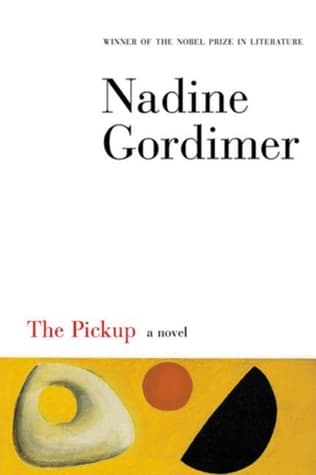
Synopsis
Covers the whole plot, including the ending.
- Difficulty
- Medium
- Pacing
- Moderate
- Mood
- Reflective, Thought-provoking, Intimate, Cultural
- Read it if
- You enjoy character-driven literary fiction exploring cultural clashes, immigration, and the complexities of human relationships.
- Skip it if
- You prefer fast-paced plots, clear-cut resolutions, or lighthearted romance.
The Pickup Plot Summary
Covers the whole plot, including the ending.
The Breakdown and the Encounter
Julie Summers, a young white woman from a wealthy Johannesburg family, finds her old car broken down in a rough part of the city. A young Arab mechanic, Abdu, helps her, fixing the car on the spot. Their first meeting is charged with curiosity and social awkwardness. Julie, who dislikes her privileged background and lives a bohemian life, is interested in Abdu's quiet intensity and his clear difference from her usual friends. Abdu, an undocumented immigrant from an unnamed Arab country, is cautious but also drawn to Julie's unconventional charm. This chance meeting marks the start of their unlikely relationship, bridging a cultural and socio-economic gap in post-apartheid South Africa.
Developing Relationship and Shared Living
Julie invites Abdu to live with her in her small, rented cottage. This decision is driven by her desire to defy her family's expectations and Abdu's need for stable shelter. Their relationship grows, characterized by a mix of physical intimacy, intellectual curiosity, and mutual dependence. Julie introduces Abdu to her artist friends, though he stays somewhat on the outside. Abdu, in turn, shares glimpses of his devout Muslim faith and his longing for his home country. Their daily life is affected by the constant threat of Abdu's illegal status, which hangs over them, making every interaction with authorities a source of worry.
The Threat of Deportation
The danger of Abdu's situation becomes clear when he is arrested during a police raid. Julie tries to intervene, using her family's connections and her own limited resources, but it is no use. Abdu is detained, facing imminent deportation. This event shatters their idea of a safe haven in Johannesburg and forces them to face the severe consequences of his undocumented status. Julie feels helpless and angry at the bureaucratic indifference and the injustices faced by immigrants like Abdu. The arrest highlights the power imbalance between her privileged background and his vulnerability.
The Decision to Leave
After a period of worry and failed legal appeals, Abdu receives a final deportation order. He decides to return to his unnamed Arab country, accepting that his dream of a new life in South Africa is over. To Abdu's surprise and her family's astonishment, Julie says she will go with him. Her decision is a mix of love, loyalty, and a continued rebellion against her own privileged life, which she feels offers her no real purpose. She sees this as an act of commitment and a chance to truly escape her upbringing, embracing an unknown future with Abdu.
Arrival in the Desert Village
Julie and Abdu arrive in his remote, poor village in the desert. The landscape, customs, and way of life are a shock to Julie. The village is traditional, governed by old customs and a strong sense of community, with women's roles clearly defined. Abdu's family, at first wary of the foreign woman, eventually accepts Julie, though her presence is a source of curiosity and quiet judgment. Julie struggles to adapt to the lack of modern amenities, the intense heat, and the slow pace of life, which is dictated by nature and religious observance. She begins to learn Arabic and observe local customs.
Julie's Adaptation and Abdu's Frustration
As Julie slowly adapts to village life, finding a strange sense of belonging and purpose in its simplicity, Abdu becomes restless. He is welcomed back by his family, but his experiences abroad have made him an outsider in his own home. He struggles to re-integrate into the traditional life he once wanted, finding the lack of opportunity and strict social norms stifling after his taste of modern, individualistic South Africa. His dream of becoming a successful mechanic is stopped by the village's limited resources and the expectation that he will conform to traditional roles, causing tension between him and Julie.
The Role of Faith and Community
Julie, at first an agnostic, becomes deeply involved in the daily life of Abdu's family and the village, observing the role of Islam in their existence. She sees the strength of their faith, the communal prayers, and how religious principles guide their interactions and provide comfort in their harsh environment. She learns about the social fabric, the support networks, and the quiet dignity with which the villagers face hardship. This challenges her Western, individualistic worldview, making her re-evaluate her own beliefs and her understanding of spirituality and community. She finds herself drawn to the sense of peace and order that faith provides to the villagers.
Abdu's Resentment and Julie's Discovery
As Julie finds an unexpected sense of peace and belonging in the desert village, even learning to appreciate the daily rituals and communal life, Abdu grows frustrated and resentful. He feels trapped, his ambition stopped, and his dreams of a modern life lost. He begins to project his unhappiness onto Julie, seeing her as a symbol of the world he can no longer access. Meanwhile, Julie, detached from her privileged past and her family's expectations, begins to discover a new, authentic self. She finds a quiet strength and a purpose in simply existing within this new, challenging reality, far from the empty rebellion that defined her in South Africa.
The Unspoken Divide
The initial romantic bond between Julie and Abdu begins to break under the weight of their different experiences and expectations. Julie's adaptation, though imperfect, contrasts with Abdu's growing sadness. He struggles to reconcile his past hopes with his present reality, while Julie finds a new kind of freedom without her old life. The cultural gap that once seemed bridgeable now appears vast, creating an unspoken difference between them. Their love, born out of rebellion and necessity, is tested by the realities of their different identities and the shift in their individual journeys.
Julie's Departure and Transformation
Ultimately, Julie decides to leave the village. Her departure is not a rejection of Abdu or the life she found there, but a recognition of her own changing path and the realization that Abdu is now rooted in his own world. She has changed deeply, shedding her youthful rebellion for a deeper understanding of self, community, and human connection. Abdu, though saddened, seems to understand, having found a certain acceptance of his fate. Julie returns to South Africa, not to her old life, but as a changed woman, carrying the marks of her journey and her experiences in the desert, forever altered by her 'pickup' of Abdu.
The Pickup Characters
Julie Summers
Protagonist
A rebellious white South African woman from a wealthy family, seeking authenticity.
Julie is a young woman in her twenties, intelligent and fiercely independent, but also somewhat adrift. She actively rejects her privileged, affluent background, living a deliberately bohemian life in Johannesburg and driving an old, unreliable car. Her rebellion is less about political ideology and more about a search for authentic experience and a refusal to conform to the expectations of her class. She is drawn to the 'other,' finding meaning in relationships and experiences that challenge her worldview. She is open-minded, sensitive, and capable of deep empathy, but also somewhat naive about the harsh realities faced by those outside her social sphere.
Relationships: Abdu (Romantic partner, companion in exile); Mr. Summers (Father) (Strained, rebellious against his wealth and expectations); Mrs. Summers (Mother) (Distant, representative of the life Julie rejects)
Abdu
Co-Protagonist
An undocumented Arab immigrant mechanic, striving for a better life.
Abdu is a young, devout Muslim man from an impoverished, unnamed Arab country. He is intelligent, resourceful, and deeply ambitious, having left his homeland to seek economic opportunity and a better future in South Africa. He is initially quiet and reserved, carrying the burden of his illegal status with a constant undercurrent of anxiety. He possesses a strong sense of dignity and a deep connection to his family and faith. While he is drawn to Julie and the possibilities her world represents, he also holds onto his traditional values and his longing for his own culture. He is ultimately a man caught between two worlds, unable to fully thrive in either.
Relationships: Julie Summers (Romantic partner, link to a different world); His Family (in the village) (Deeply connected, source of identity and obligation)
Mr. Summers
Supporting
Julie's wealthy, influential father.
Mr. Summers is a successful and powerful businessman, representing the world of affluence and privilege that Julie actively rebels against. He is concerned for his daughter, but his concern often manifests as an attempt to control or 'fix' her life through his resources and influence. He struggles to understand Julie's choices, particularly her relationship with Abdu, viewing it as a misguided phase. Despite his efforts to help Abdu with legal aid, his actions are rooted in his own worldview and a desire to protect his daughter from what he perceives as a dangerous situation.
Relationships: Julie Summers (Strained, paternal, often frustrated); Mrs. Summers (Marital, stable within their social circle)
Mrs. Summers
Supporting
Julie's socially conscious but ultimately conventional mother.
Mrs. Summers is part of the same wealthy elite as her husband, but perhaps with a more outwardly 'liberal' veneer. She attempts to engage with Julie's choices, even expressing some sympathy for Abdu's plight, but ultimately her understanding is limited by her own social conditioning. She embodies the polite but ultimately superficial tolerance of her class, unable to truly grasp the profound cultural and personal shifts Julie experiences. She represents the comfortable, predictable life Julie seeks to escape.
Relationships: Julie Summers (Distant, maternal, slightly bewildered); Mr. Summers (Marital, stable within their social circle)
Abdu's Mother
Supporting
A traditional, devout woman in the desert village.
Abdu's mother is a strong, resilient woman who embodies the traditional values and deep faith of her desert community. She is initially wary of Julie, a foreign woman who does not adhere to their customs, but eventually accepts her with quiet dignity. She represents the enduring strength of family and community in a harsh environment, and her life is centered around her faith and the well-being of her children. She provides Julie with a glimpse into a world governed by different principles, offering a maternal presence rooted in tradition and practicality.
Relationships: Abdu (Maternal, loving, protective); Julie Summers (Initially wary, then accepting, maternal figure)
Abdu's Father
Supporting
The patriarch of Abdu's family in the desert village.
Abdu's father is a respected elder in the village, a man of quiet authority and deep religious conviction. He represents the patriarchal structure and the adherence to traditional ways that define the community. He welcomes Abdu back and accepts Julie into their home, guided by a sense of duty and hospitality, but also embodies the expectations for Abdu to conform to the established order. His wisdom is practical and rooted in their way of life, providing a foil to Abdu's modern aspirations.
Relationships: Abdu (Paternal, authoritative, traditional expectations); Julie Summers (Accepting, hospitable)
Julie's Friends (Johannesburg)
Mentioned
Julie's bohemian, artistic social circle in Johannesburg.
These are a loose collection of artists, musicians, and intellectuals who form Julie's social world in Johannesburg. They share her anti-establishment sentiments and her rejection of conventional society. While they are outwardly progressive and accepting, their understanding of Abdu's situation and the complexities of his background is often superficial. They represent the intellectualized rebellion that Julie eventually outgrows, as their concerns remain largely theoretical compared to the lived realities she experiences.
Relationships: Julie Summers (Friends, shared social circle); Abdu (Distant acquaintances, curiosity)
The Pickup Themes
Identity and Belonging
The novel explores the fluid nature of identity, especially when people are displaced or choose to live outside their birth cultures. Julie, rebelling against her privileged South African identity, finds an unexpected sense of belonging in a remote Arab village. Conversely, Abdu, an undocumented immigrant in South Africa, wants a place to belong but finds himself an outsider even upon returning home. The characters struggle with where 'home' truly is—a physical place, a cultural context, or a state of mind. Julie's journey, from rejecting her birthright to finding a new, authentic self in an unfamiliar environment, shows how belonging can be found in unexpected places, often through adaptation and empathy, rather than just birthright or social status.
“She was learning to be, not to do. This was the teaching of the desert, its greatest and hardest lesson.”
Cultural Clash and Understanding
Gordimer portrays the cultural clash between Western individualism and traditional Arab communalism. The relationship between Julie and Abdu is a smaller example of this larger theme, as they navigate their different backgrounds, beliefs, and expectations. In South Africa, Julie struggles to understand Abdu's quiet piety and his connection to his family. In the desert village, Julie faces the realities of a patriarchal, faith-driven society, while Abdu deals with the loss of his 'Western' hopes. The novel observes the difficulties and occasional successes in bridging these divides, suggesting that true understanding requires immersion and a willingness to let go of preconceived notions, as shown by Julie's deep dive into village life.
“He brought his silence with him, the silence of a man who has learned the discipline of waiting. She brought her talk, the nervous energy of one who expects to be heard.”
Privilege and Dispossession
The contrast between Julie's inherited privilege and Abdu's lack of possessions as an undocumented immigrant is a central theme. Julie's 'rebellion' from her wealthy family is a choice, while Abdu's struggle for survival and legal status is a necessity. The novel shows how privilege, even when rejected, can offer a safety net (Julie's ability to travel, her father's attempted interventions). Conversely, lack of possessions leads to vulnerability, worry, and a constant fear of the state. This theme is most clear in Abdu's arrest and deportation, which exposes the power imbalances and injustices faced by the undocumented, contrasting sharply with Julie's relative freedom of movement and her eventual ability to choose her own path again.
“He was a pickup. She was a pickup. He was picked up by the police. She picked him up off the street.”
Love and Interdependence
The nature of love between Julie and Abdu changes throughout the novel, moving beyond initial attraction and romantic idealism to a complex interdependence. Their relationship is formed out of necessity, rebellion, and a shared sense of being outsiders in different contexts. In South Africa, Julie's love offers Abdu stability and acceptance, while Abdu offers Julie an escape from her stifling world. In the desert, their roles reverse, with Julie adapting and finding meaning, while Abdu struggles. The novel suggests that love, especially across cultural divides, is not always about perfect harmony, but about shared journeys, mutual support, and the deep, sometimes painful impact individuals have on each other's destinies, even when those destinies ultimately diverge.
“They had picked up each other's lives, and now they were carrying them, heavy or light, together.”
The Search for Authenticity
Julie's entire journey is driven by a desire for authenticity. She rejects the superficiality and materialism of her family's world, seeking a 'real' life not defined by wealth or social status. Her relationship with Abdu and her immersion in the desert village are attempts to remove the artificiality of her upbringing and find a more genuine existence. This search leads her to embrace hardship, cultural difference, and a simpler way of life, ultimately changing her understanding of herself and what truly matters. By the end, she finds a quiet, internal authenticity that goes beyond external circumstances, a contrast to her earlier, more showy rebellion.
“She had always been escaping something. Now she was finding something.”
Plot Devices & Literary Techniques
The Pickup (Metaphor)
A multifaceted symbol representing chance encounters, rescue, and the act of choosing a new path.
The title itself, 'The Pickup,' functions as a powerful, multi-layered metaphor. It literally refers to Julie picking up Abdu in her broken-down car, initiating their relationship. It also signifies Abdu being 'picked up' by the police, leading to his deportation. On a deeper level, it represents the act of picking up a new life, a new identity, or even a new set of values. For Julie, it's picking up an entirely different way of being, shedding her old self. For Abdu, it's picking up the pieces of his life after his dreams are shattered. The device underscores the role of chance, choice, and consequence in shaping human destinies.
Cultural Juxtaposition
The stark contrast between urban South Africa and the desert village highlights thematic concerns.
Gordimer uses the direct juxtaposition of two vastly different settings – the bustling, post-apartheid Johannesburg and the remote, traditional Arab desert village – as a primary plot device. This contrast serves to illuminate the novel's central themes of identity, belonging, and cultural understanding. Johannesburg represents modernity, individualism, and racial complexity, while the desert village embodies tradition, community, and religious conservatism. By placing Julie and Abdu in each other's native environments, the author forces them (and the reader) to confront their own biases, adapt to alien customs, and experience the profound impact of culture on individual lives. This device effectively externalizes the internal conflicts of the characters.
First-Person Plural (We-Narrative)
Occasional shifts to a collective 'we' perspective, often representing the immigrant community.
While largely told from Julie's perspective, the novel occasionally employs a first-person plural 'we' when describing the experiences of illegal immigrants like Abdu in South Africa. This narrative shift serves to broaden the scope beyond individual experience, giving voice to the collective vulnerability, fear, and shared struggle of the undocumented community. It functions as a powerful device to universalize Abdu's plight, emphasizing that his story is one of many. This 'we' also helps to create empathy and a sense of shared humanity for those often marginalized and unseen by the dominant society, preventing Abdu's story from being isolated and highlighting systemic issues.
The Unnamed Arab Country
The deliberate decision to keep Abdu's homeland anonymous.
The decision to leave Abdu's home country unnamed is a significant plot device. It prevents the reader from imposing specific geopolitical stereotypes or preconceived notions onto the narrative. By keeping it anonymous, Gordimer universalizes Abdu's experience, making him representative of many who migrate from impoverished, traditional societies to the Western world. It shifts the focus from a specific political context to the broader human experience of displacement, cultural difference, and the search for home. This anonymity allows the village to stand as an archetype of a traditional, faith-bound community, rather than a specific, identifiable place, thus enhancing its symbolic weight.
The Pickup Quotes
“There are some places in the world that are like that. Like a magnet. You get pulled there, and you don't know why, and you can't leave.”
“The past is a foreign country; they do things differently there.”
“You can't choose your family, but you can choose your country.”
“He knew her, not from the things she said, but from the way she was silent.”
“The rich are always looking for something to make them feel poor, and the poor are always looking for something to make them feel rich.”
“Exile is not just a place, it's a state of mind.”
“Love is not a solution, it's a complication.”
“The desert has a way of stripping you bare, of showing you what's real.”
“To be without papers is to be without a voice, without a name, without a life.”
“You don't know what you have until you lose it, and then you don't know what you've lost until you try to get it back.”
“The only real freedom is to be free of wanting anything.”
“Sometimes you have to go very far away to find out where you truly belong.”
“There are no easy answers, only harder questions.”
Quiz
10 questions on the plot and the characters. Each answer comes with a short explanation.
Question 1
What is the initial circumstance that brings Julie Summers and Abdu together?
- They meet at a political protest.
- Julie's car breaks down on a street.
- Abdu is working at a coffee shop Julie frequents.
- They are introduced by a mutual friend.
Show answer
B. Julie's car breaks down on a street. The story begins with Julie's car breaking down, leading Abdu, a mechanic, to come to her aid.
Question 2
What is Abdu's legal status in South Africa at the beginning of the novel?
- He is a naturalized citizen.
- He is a legal resident with a work permit.
- He is an illegal immigrant.
- He is a tourist on an extended visa.
Show answer
C. He is an illegal immigrant. Abdu is an illegal immigrant, desperate to avoid deportation to his impoverished home country.
Question 3
What is Julie's primary motivation for her lifestyle choices, particularly her relationship with Abdu, at the start of the book?
- She is genuinely seeking a partner from a different cultural background.
- She is in rebellion against her wealthy background and her father.
- She hopes to learn Arabic and move to the Middle East.
- She is conducting research for a book she is writing.
Show answer
B. She is in rebellion against her wealthy background and her father. Julie's attraction to Abdu is fueled by her rebellion against her privileged upbringing and her father.
Question 4
Where does the story primarily shift to after Abdu faces potential deportation?
- A refugee camp in Europe.
- A bustling metropolis in another African country.
- An Arab village in the desert, Abdu's home country.
- A remote island off the coast of South Africa.
Show answer
C. An Arab village in the desert, Abdu's home country. After Abdu's precarious legal situation, the narrative takes Julie and Abdu to his home, an Arab village in the desert.
Question 5
What significant challenge does Julie face when she moves to Abdu's home country?
- Learning a new trade to support their family.
- Adjusting to a vastly different culture and lifestyle, including limited modern conveniences.
- Dealing with hostility from Abdu's immediate family.
- Finding a way to send money back to her family in South Africa.
Show answer
B. Adjusting to a vastly different culture and lifestyle, including limited modern conveniences. Julie experiences a profound culture shock and has to adapt to a simpler, more traditional life in the Arab village, far removed from her privileged past.
Question 6
What does Abdu's family in the desert village initially call Julie?
- The Visitor
- The Foreigner
- The Bride
- The City Woman
Show answer
B. The Foreigner Upon her arrival, Julie is referred to as 'The Foreigner' by Abdu's family, highlighting her outsider status.
Question 7
How do Julie and Abdu's roles and expectations of each other evolve over the course of their journey to Abdu's home country?
- Julie becomes more dominant, while Abdu becomes more submissive.
- They remain unchanged, reinforcing their initial dynamic.
- Their initial notions of each other are overturned, and they experience a reversal of power dynamics and roles.
- They grow apart, realizing they have nothing in common.
Show answer
C. Their initial notions of each other are overturned, and they experience a reversal of power dynamics and roles. The move to Abdu's home country dramatically shifts their dynamic. Julie, once the more privileged, becomes reliant and an outsider, while Abdu regains his footing and identity within his own culture, overturning their initial notions of each other.
Question 8
What is the significance of the 'pickup' in the novel's title, beyond the literal breakdown of Julie's car?
- It refers to Abdu's side job as a taxi driver picking up fares.
- It symbolizes the casual, almost arbitrary way their relationship began, and the act of 'picking up' and moving to a new life.
- It alludes to the truck used to transport goods for Abdu's family business.
- It represents Julie's father 'picking up' the pieces of her life after her rebellion.
Show answer
B. It symbolizes the casual, almost arbitrary way their relationship began, and the act of 'picking up' and moving to a new life. The title 'The Pickup' refers not only to the initial encounter when Julie's car breaks down but also to the idea of 'picking up' a new life, a new identity, and the casual, almost accidental beginning of their profound relationship.
Question 9
How does Nadine Gordimer use the contrasting settings of South Africa and the Arab village to explore themes of identity and belonging?
- The settings primarily serve as exotic backdrops without deeper thematic purpose.
- The South African setting emphasizes racial tensions, while the Arab village focuses on religious conflict.
- By placing characters in unfamiliar environments where their established identities are challenged, Gordimer highlights how identity is shaped by context and belonging is fluid.
- The settings demonstrate that true identity is unchanging, regardless of location.
Show answer
C. By placing characters in unfamiliar environments where their established identities are challenged, Gordimer highlights how identity is shaped by context and belonging is fluid. Gordimer masterfully uses the stark contrast between urban, 'new' South Africa and the traditional Arab desert village to expose how Julie's and Abdu's identities are deeply intertwined with their environments, and how being an 'outsider' in one place can make one an 'insider' in another, challenging fixed notions of self.
Question 10
What is the ultimate outcome for Julie and Abdu's relationship by the end of the novel, in terms of their individual paths?
- They return to South Africa together, stronger than ever.
- They choose to separate, realizing their differences are insurmountable.
- They find a conventional happy ending, settling down in the desert village.
- Their relationship transforms, with each finding a sense of self and purpose that might lead to separate but intertwined destinies.
Show answer
D. Their relationship transforms, with each finding a sense of self and purpose that might lead to separate but intertwined destinies. The novel concludes with Julie and Abdu having undergone profound personal transformations. While their connection remains, their individual paths and newfound understandings of themselves suggest a future where their relationship is redefined, rather than ending in a conventional 'happily ever after' or a complete separation.
The Pickup FAQ
What initial event brings Julie Summers and Abdu together, and what are their immediate circumstances?
Julie Summers's car breaks down on a grimy street in a South African city, leading her to Abdu, a young Arab mechanic. At this point, Julie is actively rebelling against her affluent, privileged background and her father's expectations, while Abdu is an undocumented immigrant living in constant fear of deportation to his impoverished home country.
What are Julie's primary motivations for pursuing a relationship with Abdu, beyond simple attraction?
Julie is driven by a desire to escape and defy her wealthy, bourgeois upbringing and her father's influence. Her relationship with Abdu, an illegal immigrant from a vastly different world, serves as a radical rejection of her established social class and a pursuit of a more 'authentic' or challenging existence.
What is Abdu's main objective in his life in South Africa, and how does Julie initially fit into that plan?
Abdu's overriding goal is to avoid deportation and establish a stable life in South Africa, ideally gaining legal status. He initially sees Julie, with her South African citizenship and connections, as a potential means to secure his stay, perhaps through marriage or her influence, though genuine attraction also develops.
How does the setting of 'new South Africa' influence the dynamics between Julie and Abdu?
The 'new South Africa' provides a backdrop of shifting social hierarchies and lingering inequalities, where Julie's inherited privilege contrasts sharply with Abdu's precarious status as an illegal immigrant. This setting highlights the complexities of identity, belonging, and economic disparity in a post-apartheid nation, framing their personal drama against broader societal issues.
What causes the significant shift in their relationship where Julie ends up in Abdu's home country?
Abdu is eventually deported from South Africa, forcing him to return to his impoverished Arab village. Julie, unexpectedly and against her initial assumptions, chooses to follow him there, demonstrating a profound commitment that complicates her earlier motivations and overturns both their expectations.
How does Julie adapt to life in Abdu's Arab village, and what challenges does she face?
Julie struggles significantly with the harsh realities of village life, including the lack of modern amenities, the oppressive heat, and the vastly different cultural norms, particularly regarding women's roles. She must learn to navigate a society where her Western independence is often misunderstood or unwelcome, challenging her previous notions of freedom and authenticity.
What is the significance of the 'pickup' in the title, beyond the literal car breakdown?
The 'pickup' refers not only to Julie's car breaking down and Abdu coming to her aid but also metaphorically to the unexpected, almost random way their lives 'pick up' and intertwine. It also hints at the casual nature of their initial encounter versus the profound, unplanned consequences that follow, and perhaps the idea of 'picking up' pieces of their lives in new contexts.
How does Abdu's family in the village perceive Julie, and how does this affect their relationship?
Abdu's family initially views Julie with suspicion and some resentment, seeing her as a foreign woman who has taken their son away and brought an unfamiliar presence into their traditional lives. Her presence often causes tension, particularly with Abdu's mother and sister, forcing both Julie and Abdu to confront cultural clashes within their own home.
What internal conflict does Abdu experience upon returning to his village, especially regarding his ambitions?
Abdu grapples with profound disappointment and a sense of failure upon being deported and returning to the life he desperately tried to escape. He struggles to reconcile his Western aspirations and experiences with the limited opportunities and traditional expectations of his village, often feeling stifled and resentful of his circumstances.
How does Julie's perception of Abdu change once they are in his home country, away from her South African context?
Julie's idealized or rebellious image of Abdu is challenged as she witnesses him in his native environment, where he is no longer the 'exotic' outsider but a man constrained by family obligations and cultural expectations. She sees his vulnerabilities and the weight of his past, leading to a more complex, less romanticized understanding of him.
Discuss the role of language and communication barriers between Julie and Abdu's family.
Language barriers are significant, as Julie initially speaks no Arabic, isolating her from much of the daily life and conversations in the village. This forces her to rely on Abdu for translation, highlighting her dependency and limiting her ability to fully integrate or express herself, often leading to misunderstandings and feelings of alienation.
What philosophical questions does the novel raise about 'home' and belonging?
The novel deeply explores what constitutes 'home' – is it a place, a person, or a state of mind? Both Julie and Abdu are displaced, seeking belonging outside their original contexts, and the narrative questions whether true home can be found or whether it's an ever-shifting concept tied to identity and acceptance, regardless of physical location.
How does the ending of the novel reflect the characters' evolving understanding of freedom and commitment?
The ending often portrays a complex, perhaps ambiguous, resolution where both characters have undergone significant transformations. It suggests that freedom might not be found in escape or rebellion, but in acceptance, adaptation, and a deeper understanding of one's own desires and limitations, challenging their initial notions of commitment and independence.
What is the significance of the desert landscape in Abdu's village?
The desert serves as a powerful symbol of harshness, isolation, and endurance. It reflects the challenging nature of life in the village and the stark contrast to Julie's previous environment. It can also represent a kind of stark truth or stripping away of illusions, forcing characters to confront fundamental aspects of existence.
How does Julie's relationship with her father evolve or remain static throughout her journey?
Initially, Julie's relationship with her father is defined by rebellion and rejection of his values. While her physical distance from him increases, her journey forces her to confront aspects of herself that might not be so different from her background. The novel subtly explores whether her actions are truly independent or still reactions to her paternal influence, leading to a nuanced, rather than fully resolved, evolution.
What does the novel suggest about the nature of love in the face of vast cultural and economic disparities?
The novel suggests that love, while potent, is severely tested and shaped by external forces like cultural differences, economic inequality, and political status. It explores whether genuine connection can overcome these divides or if it inevitably becomes intertwined with and perhaps limited by them, forcing characters to redefine their expectations of intimacy.
In what ways does Julie's initial 'rebellion' against her background transform into something else?
Julie's initial rebellion, characterized by an impulsive rejection of her privilege, gradually transforms into a more mature, if difficult, process of self-discovery and adaptation. Her experiences in Abdu's village force her beyond mere defiance, requiring genuine resilience, empathy, and a re-evaluation of her own identity and values, rather than just an oppositional stance.
About the author
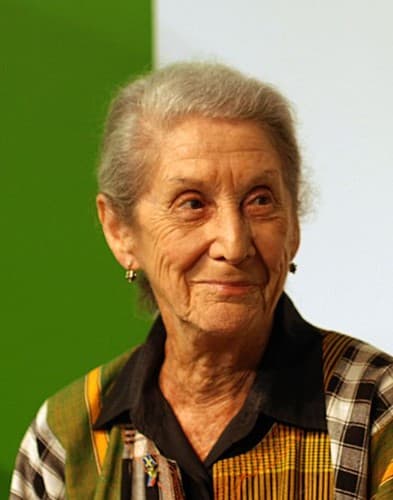
Nadine Gordimer was a South African writer and political activist. She received the Nobel Prize in Literature in 1991, recognized as a writer "who through her magnificent epic writing has ... been of very great benefit to humanity".
Similar books
- Disgrace
J. M. Coetzee
3.8 (87k) average on GoodreadsLiterary FictionExplores post-apartheid South Africa and complex moral dilemmas with a focus on character introspection.
- Americanah
Chimamanda Ngozi Adichie
4.3 (264k) average on GoodreadsLiterary FictionDeals with themes of immigration, cultural identity, and navigating different worlds in a modern romance.
- Exit West
Mohsin Hamid
3.8 (105k) average on GoodreadsLiterary FictionWhile both The Pickup and Hamid's Exit West explore themes of migration and displacement, Hamid's novel employs magical realism (the literal doors to other places) to illuminate the fluidity and suddenness of migration, offering a more allegorical and less overtly political lens. Hamid delves deeper into the intimate, personal costs of displacement and the resilience of human connection amidst chaos, often with greater emotional immediacy and less explicit social commentary than Gordimer's more realistic and politically charged narrative. Hamid's focus is more on the internal landscapes of the migrants themselves and their evolving relationships.
- The Old Man and the Sea
Ernest Hemingway
3.8 (831k) average on GoodreadsLiterary FictionA Cuban fisherman's long struggle with a giant marlin becomes a story of endurance and dignity, now retold for young adults with illustrations, phonetic guides, and writing prompts in Traditional Chinese.
- One Hundred Years of Solitude
Gabriel García Márquez
4.1 (753k) average on GoodreadsLiterary FictionThrough the multi-generational story of the Buendía family, a mythical town deals with the repeating patterns of time, love, and solitude, as the extraordinary mixes with the ordinary.
- The Goldfinch
Donna Tartt
3.9 (720k) average on GoodreadsLiterary FictionHaunted by a tragic explosion and clutching a stolen Dutch masterpiece, a young orphan navigates the opulent drawing rooms of New York and the gritty underbelly of the art world, desperately seeking connection and redemption amidst a life spiraling into crime and obsession.






Enjoyed the summary?
A summary gives you the shape of the book. The book itself has the detail, the examples and the voice.
Find The Pickup on AmazonAs an Amazon Associate, BookBrief earns from qualifying purchases. How we're funded