

Core Idea
- Difficulty
- Easy
- Read it if
- You are interested in social experiments, memoirs about challenging stereotypes, or stories about the power of an individual to provoke change and expose societal biases, particularly concerning young women and education.
- Skip it if
- You prefer straightforward narratives without elements of deception, or if you are looking for a book specifically about actual teenage pregnancy experiences rather than a social experiment exploring its societal perception.
Key Takeaways from The Pregnancy Project
Challenging Stereotypes Through Lived Experience
Gaby's project exposed the pervasive and damaging nature of assumptions.
Gaby's experiment was not just a prank; it was a deep look into society. By faking her pregnancy, she stepped into a stereotype that had affected her family for generations. The project aimed to show how societal expectations can decide a young person's perceived future, often ignoring their efforts and goals. The main idea is that stereotypes, even unspoken ones, greatly affect how people are seen, treated, and how they might see themselves. Her experience shows how important it is to challenge these ideas and look past labels.
“I wanted to understand how people would treat me if I 'lived down' to their expectations, if I became just another pregnant teen statistic.”
In the book: Gaby's observation of the immediate shift in how teachers, friends, and even family members began to treat her – from academic potential to a 'problem' – once her 'pregnancy' became known, despite her consistent academic performance.
Try this: Actively question and challenge stereotypes, both in yourself and others. Before making assumptions about someone's capabilities or future, consider the individual's actions, character, and dreams, rather than group affiliations or past circumstances.
Related ideas: stereotype-threat, social-experiment, preconceived-notions
The Weight of Low Expectations
Societal and familial expectations can heavily influence a young person's trajectory.
Gaby grew up with a 'family tradition' of teen pregnancy, a story that threatened to define her before she could define herself. This takeaway highlights how deeply low expectations can become ingrained, not only in how others see someone but also in how they see themselves. The book powerfully shows the emotional weight of constantly being told or subtly implied that you are headed for a certain future, especially a difficult one. It shows the strength needed to break free from these stories and create your own path, proving that destiny is not decided by circumstances or past family patterns.
“It was practically a family tradition. I had ambitions that didn’t include teen motherhood.”
In the book: Gaby's family history of teen pregnancy and the constant comments she received from others suggesting she would follow suit, despite her academic achievements.
Try this: For mentors, educators, and parents: consciously articulate high, positive expectations for young people, regardless of their background. Focus on their potential and individual strengths, not on historical patterns or perceived limitations. For individuals: actively resist internalizing negative predictions about your future. Seek out positive influences and mentors who believe in your potential.
Related ideas: self-fulfilling-prophecy, resilience, generational-patterns
The Power of Deception for Revelation
Sometimes, a carefully constructed illusion is necessary to expose a deeper truth.
Gaby's decision to fake a pregnancy was ethically complex, but clearly effective. This takeaway explores the controversial but powerful idea that planned deception can be a strong tool for social comment and revelation. By acting the 'role' of a pregnant teen, Gaby gained a unique understanding of the judgments, pity, and changed social interactions that such a status brings. It shows that direct experience, even when simulated, can provide a depth of understanding not possible through just watching or talking. The project's success is in its ability to hold a mirror to society, showing uncomfortable truths about prejudice and compassion.
“I realized that sometimes, to truly understand something, you have to experience it firsthand, even if it means creating a temporary reality.”
In the book: The international attention and debate generated by her project, proving its effectiveness in sparking conversations about teen pregnancy, stereotypes, and judgment.
Try this: While not advocating for widespread deception, consider how 'experiential learning' or 'role-playing' can offer profound insights into complex social issues. Engage in empathy-building exercises that challenge your own perspectives by stepping into someone else's shoes, even if only metaphorically.
Related ideas: social-experimentation, empathy-building, unconventional-methods
The Unseen Toll of Judgment
Being judged for a perceived mistake can be isolating and emotionally draining.
Gaby's project clearly shows the emotional cost of constant judgment. Even knowing her pregnancy was fake, she felt the isolation, pity, and changed social dynamics that real pregnant teens face. This takeaway emphasizes that societal judgment, whether clear or subtle, creates a difficult environment that can hurt self-esteem and prevent personal growth. It reveals how quickly a person's identity can be reduced to one situation, overshadowing their whole being. The experience highlights the importance of creating supportive, non-judgmental communities, especially for young people facing difficult situations.
“I felt the weight of every stare, every whispered comment, every pitying glance. It was exhausting.”
In the book: Gaby's detailed accounts of how friends distanced themselves, teachers treated her differently, and even strangers offered unsolicited advice or pity, all contributing to a sense of being 'othered.'
Try this: Practice radical empathy and suspend judgment when interacting with others, particularly those facing challenging life circumstances. Offer support and understanding rather than criticism or pity. Reflect on how your own words and actions might contribute to a culture of judgment or acceptance.
Related ideas: social-stigma, emotional-burden, empathy
The Unwavering Support System
The project's success hinged on a small, trusted circle.
While Gaby's project was about exposing broad societal reactions, it also highlights the critical importance of a close, steady support system. Her mother, the principal, and a few key teachers were her trusted advisors, giving the emotional, practical, and ethical guidance needed to carry out such a complex and emotionally draining experiment. This takeaway shows that even the most independent and ambitious people rely on a core group for strength, perspective, and accountability. It is a reminder that no major effort is truly done alone, and the quality of one's inner circle can make or break a project or a life.
“My mom and a few trusted adults were my anchors, the only ones who knew the truth and helped me navigate the experiment.”
In the book: The detailed planning meetings with her mother and principal, their agreement to maintain secrecy, and their ongoing emotional support throughout the seven-month duration of the 'pregnancy.'
Try this: Cultivate and cherish a small, trusted circle of individuals who provide honest feedback, unwavering support, and ethical guidance. Be a part of such a circle for others. For leaders: recognize the power of a committed core team in executing ambitious or sensitive projects.
Related ideas: trust, mentorship, support-network
Finding Strength in Authenticity
Breaking free from a role, even a self-imposed one, can be profoundly liberating.
The reveal of Gaby's deception was not just the peak of her project but a personal release. This takeaway emphasizes the deep relief and strength that comes from dropping a false identity, even one taken on for a good cause. Living a lie, no matter how short, takes huge emotional energy. Revealing the truth allowed Gaby to reclaim her real self, free from the limits and judgments tied to the 'pregnant teen' persona. It highlights the importance of living truthfully and the personal cost of not being authentic, even with good intentions.
“Coming clean was terrifying, but it was also the most liberating moment of my life. I was Gaby again, not 'pregnant Gaby.'”
In the book: Gaby's description of the immense emotional burden of maintaining the lie for seven months and the overwhelming sense of relief and liberation she felt after her public revelation.
Try this: Regularly reflect on whether you are living authentically. Identify any 'roles' you might be playing in your life that are not true to yourself and consider how to shed them. Embrace vulnerability and the freedom that comes with being your true self, even if it's uncomfortable at first.
Related ideas: authenticity, self-liberation, vulnerability
Media's Double-Edged Sword
Public attention can amplify a message but also distort personal narratives.
Gaby's story became a global sensation, showing the media's power to spread a message widely. However, this takeaway also looks at the possible problems of media exposure. While the attention validated her project and spread its message, it also put her under intense scrutiny and simplified her complex reasons and experiences. The media often prefers sensationalism over detail, which can lead to misunderstandings or a loss of the personal story's depth. It is an important reminder for anyone using public platforms to be aware of how their story might be shaped and, at times, distorted.
“The international headlines brought attention to my message, but they also simplified my story, sometimes missing the nuance.”
In the book: The global headlines and news coverage that followed her revelation, contrasting with her own internal reflections on the project's deeper meanings that might have been lost in translation or sensationalism.
Try this: When consuming media, seek out diverse sources and critical analysis to understand complex issues beyond headlines. For those sharing their stories publicly, be prepared for potential misinterpretations and consider proactively shaping your narrative to maintain its integrity.
Related ideas: media-literacy, public-narrative, sensationalism
Education as a Catalyst for Change
Her project transformed a classroom assignment into a global lesson.
At its core, 'The Pregnancy Project' began as an assignment, showing how education can go beyond traditional learning. This takeaway highlights how a well-planned educational effort can move past textbooks to create real-world impact and foster deep personal growth. Gaby's project shows how critical thinking, social awareness, and courage, when supported in a school setting, can empower young people to challenge norms and contribute meaningfully to societal discussions. It is an inspiring example of project-based learning at its most effective, proving that the most memorable lessons are often those we create and live.
“This wasn't just a school project; it was a lesson for my community, and ultimately, for myself.”
In the book: The initial motivation for the project stemming from a school assignment on stereotypes and Gaby's deliberate choice to make it a lived experience rather than just a research paper.
Try this: For educators: encourage and support students in developing projects that address real-world issues, allowing them to apply critical thinking and make a tangible difference. For students: seek out opportunities to engage in experiential learning that challenges assumptions and fosters deep understanding beyond academic requirements.
Related ideas: experiential-learning, critical-thinking, social-impact
The Pregnancy Project Quotes
“I was going to prove that teenage pregnancy wasn't a death sentence, that it could be a catalyst for something great.”
“The stares were the hardest. They were like tiny little needles, poking at me, reminding me of what they thought I'd done.”
“It wasn't just about the belly; it was about the attitude, the way I carried myself, the subtle shift in my priorities.”
“I started to see how easy it would be to fall into that trap, to believe what everyone else believed about you.”
“My friends, the ones who were supposed to know me best, were the first to distance themselves.”
“The silence in the classroom when I walked in was almost louder than any shout.”
“I was learning that sometimes, the hardest lessons are the ones you choose to teach yourself.”
“It wasn't just about getting a grade; it was about changing minds, even if it was just one at a time.”
“The project became bigger than me, bigger than my grade. It became about all the girls who had been judged.”
“I was a mirror, reflecting back the judgments and assumptions people held.”
“Sometimes, you have to pretend to be someone else to truly understand who you are.”
“The weight wasn't just physical; it was the weight of expectations, of disappointment, of a future others had already written for me.”
“My biggest fear wasn't getting caught, it was failing to make a difference.”
“Unveiling the truth felt like shedding a skin, a painful but necessary release.”
Quiz
10 questions on the main ideas. Each answer comes with a short explanation.
Question 1
What was the primary motivation behind Gaby Rodriguez's decision to fake her pregnancy for a school project?
- To gain attention from her peers and become popular.
- To expose a specific teacher who she believed was biased against pregnant students.
- To understand how her community and family would react to a pregnant teenager, given her family history.
- To secure a scholarship for a prestigious university by undertaking a unique project.
Show answer
C. To understand how her community and family would react to a pregnant teenager, given her family history. Gaby's primary motivation stemmed from her family history of teen pregnancy and her desire to see how she would be treated if she 'lived down' to those expectations, as stated in the book's description.
Question 2
Which of the following best describes the initial reaction of Gaby's close friends and family members who were NOT in on the secret?
- They were immediately supportive and understanding, offering help without judgment.
- They expressed disappointment and concern, often accompanied by judgment or a sense of Gaby fulfilling a stereotype.
- They largely ignored her, assuming it was a phase or not their business.
- They were angry that she had kept such a secret from them for so long.
Show answer
B. They expressed disappointment and concern, often accompanied by judgment or a sense of Gaby fulfilling a stereotype. The book details how many reactions were often marked by disappointment, judgment, and the perception of Gaby fulfilling a 'teen mom' stereotype, which was precisely what she aimed to investigate.
Question 3
What was one of the key practical challenges Gaby faced in maintaining the illusion of her pregnancy?
- Consistently wearing a heavy, realistic prosthetic belly under her clothes.
- Avoiding all physical activity to prevent 'miscarriage' rumors.
- Convincing her parents to buy her baby supplies and attend prenatal classes.
- Faking morning sickness and cravings during school hours.
Show answer
A. Consistently wearing a heavy, realistic prosthetic belly under her clothes. The memoir specifically highlights the use of a prosthetic belly as a crucial element of her deception, requiring careful concealment and management throughout the project.
Question 4
Who among the following was explicitly stated in the book's description as being kept in the dark about Gaby's fake pregnancy?
- Her mother
- Her older sisters
- Her siblings and boyfriend's parents
- Her school principal
Show answer
C. Her siblings and boyfriend's parents The book's description explicitly states that she hid the truth from 'even her siblings and boyfriend's parents', indicating they were not privy to the secret.
Question 5
The book argues that Gaby's project was primarily a fight against what specific social issue?
- Lack of sex education in schools.
- The pressure on teenagers to conform to social norms.
- Stereotypes and the shadow of low expectations placed on individuals, especially teen girls.
- The inadequacy of support systems for actual pregnant teenagers.
Show answer
C. Stereotypes and the shadow of low expectations placed on individuals, especially teen girls. The summary states, 'Gaby’s story is about fighting stereotypes, and how one girl found the strength to come out from the shadow of low expectations to forge a bright future for herself.'
Question 6
What major outcome did Gaby's project achieve beyond her personal learning experience?
- It led to a new state law requiring comprehensive sex education in all high schools.
- It resulted in her school implementing a mandatory support group for pregnant students.
- It garnered international headlines and sparked widespread discussion about stereotypes.
- It inspired several of her classmates to undertake similar social experiments.
Show answer
C. It garnered international headlines and sparked widespread discussion about stereotypes. The book's description explicitly mentions that her project 'made international headlines in the process,' indicating a significant public impact.
Question 7
How did Gaby's boyfriend react to learning about the fake pregnancy, considering he was also part of the deception?
- He initially struggled with the secrecy but ultimately supported her project.
- He was enthusiastic from the start and enjoyed the challenge of the deception.
- He broke up with her shortly after the project began due to the stress.
- He tried to convince her to reveal the truth much earlier than planned.
Show answer
A. He initially struggled with the secrecy but ultimately supported her project. The book delves into the emotional toll and challenges faced by Gaby's boyfriend, who was a key accomplice, highlighting his initial struggles with the secrecy but eventual commitment to supporting her project.
Question 8
What specific type of treatment did Gaby observe from some adults in authority, such as school staff, during her fake pregnancy?
- Increased academic support and encouragement to continue her studies.
- A shift towards viewing her as a 'statistic' with a presumed lack of future potential.
- More lenient disciplinary actions due to her 'condition'.
- Complete indifference, as they believed it was a personal matter.
Show answer
B. A shift towards viewing her as a 'statistic' with a presumed lack of future potential. One of Gaby's core questions was whether people would 'see her as just another pregnant teen statistic with no future,' and her observations during the project confirmed this shift in perception from some authority figures.
Question 9
The book suggests that Gaby's project ultimately helped her to achieve what personal goal?
- To prove that teen pregnancy is not as impactful as society believes.
- To escape the shadow of low expectations and forge a bright future for herself.
- To convince her family members to pursue higher education.
- To become a professional advocate for teen parents.
Show answer
B. To escape the shadow of low expectations and forge a bright future for herself. The final sentence of the book's description clearly states, 'Gaby’s story is about fighting stereotypes, and how one girl found the strength to come out from the shadow of low expectations to forge a bright future for herself.'
Question 10
What was the most significant challenge Gaby faced in keeping her project a secret from her own mother, who had been a teen mom herself?
- Her mother's constant questioning about the father's identity.
- Her mother's emotional support and empathy, which made Gaby feel guilty about the deception.
- Her mother attempting to schedule doctor's appointments and prenatal care.
- Her mother's anger and disappointment, making their relationship strained.
Show answer
B. Her mother's emotional support and empathy, which made Gaby feel guilty about the deception. The book details the internal conflict Gaby felt due to her mother's genuinely supportive and empathetic reaction, knowing her mother had experienced teen pregnancy herself. This made the deception particularly difficult and emotionally taxing for Gaby.
The Pregnancy Project FAQ
What inspired Gaby Rodriguez to fake her own pregnancy for a school project?
Gaby was frequently told she would become a teen mom, following a family pattern. She wanted to understand how people would treat her if she conformed to these low expectations and if her identity would be reduced to a 'pregnant teen statistic,' which sparked her project.
Does 'The Pregnancy Project' offer advice on how to fake a pregnancy?
While Gaby details how she executed her fake pregnancy, the book's primary purpose is not to instruct readers on how to do the same. Instead, it focuses on the social experiment's impact and the lessons learned about stereotypes and judgment.
What is the main concept of Gaby Rodriguez's 'Pregnancy Project'?
The core concept is a social experiment designed to expose societal biases and stereotypes against pregnant teenagers. Gaby aimed to observe how her community, friends, and family would react to her perceived pregnancy, challenging preconceived notions and low expectations.
How did Gaby manage to keep her fake pregnancy a secret from her family and friends?
Gaby employed various strategies, including using props and carefully managing her appearance and interactions. The book delves into the specific methods she used to maintain the deception, even from close family members and her boyfriend's parents.
What major lessons did Gaby learn from her fake pregnancy experience?
Gaby learned profound lessons about the power of stereotypes, the impact of judgment, and the importance of fighting against low expectations. The experience highlighted how quickly people's perceptions can change based on a single perceived circumstance, regardless of an individual's true character or ambitions.
How is 'The Pregnancy Project' different from typical memoirs about teen pregnancy?
Unlike memoirs by actual teen mothers, Gaby's book explores the *perception* of teen pregnancy and its societal impact through a unique social experiment. It's less about the realities of teen motherhood and more about challenging stereotypes and expectations through a lived experience of deception.
Did Gaby's school support her 'Pregnancy Project'?
Gaby's school was aware of and supported her project as an educational endeavor. The principal and a few trusted adults were in on the secret, helping to facilitate the experiment and ensure her safety and the project's integrity.
What impact did 'The Pregnancy Project' have on Gaby's life and future?
The project profoundly changed Gaby's life, empowering her to fight stereotypes and forge a bright future. It brought her international attention, allowing her to share her story and message about overcoming low expectations with a wider audience.
Is 'The Pregnancy Project' suitable for young adult readers?
Yes, the book is specifically categorized as Young Adult. Its themes of identity, stereotypes, social pressure, and self-discovery are highly relevant and engaging for a teenage audience.
About the author

GaRodriguez is an author known for writing non-fiction, including "The Pregnancy Project." This work explores themes related to pregnancy and personal experiences, contributing to discussions on the topic. Rodriguez's writing often reflects a focus on real-life narratives and social issues.
Similar books
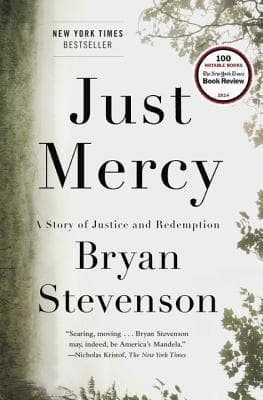
- Just Mercy: A Story of Justice and Redemption
Bryan Stevenson
4.6 (143k) average on GoodreadsPoliticsExplores systemic injustices and challenges stereotypes within a social context, advocating for empathy and understanding for marginalized groups.
- The Glass Castle
Jeannette Walls
4.3 (903k) average on GoodreadsBiographyA memoir by a young woman overcoming significant challenges and societal judgments through resilience and the pursuit of education.
- The Diary of a Young Girl
Anne Frank
4.2 (2.7M) average on GoodreadsBiographyDuring the Nazi occupation, a teenage girl's diary, written from a secret annex, shares observations on humanity, hope, and the wait for freedom.
- Eat, Pray, Love
Elizabeth Gilbert
3.6 (1.5M) average on GoodreadsLifestyleA heartbroken writer leaves her conventional life for a year-long global search for pleasure in Italy, spiritual devotion in India, and unexpected love and balance in Bali.
- Night
Elie Wiesel
4.3 (970k) average on GoodreadsBiographyIn the darkness of Auschwitz and Buchenwald, a teenage Elie Wiesel faces the extermination of his family, the loss of his faith, and the lasting scars of humanity's deepest cruelty.
- Steve Jobs
Walter Isaacson
4.1 (957k) average on GoodreadsBusinessSteve Jobs was a visionary who fused creativity and technology to revolutionize six industries and shape our digital world.





Enjoyed the summary?
A summary gives you the shape of the book. The book itself has the detail, the examples and the voice.
Find The Pregnancy Project on AmazonAs an Amazon Associate, BookBrief earns from qualifying purchases. How we're funded