
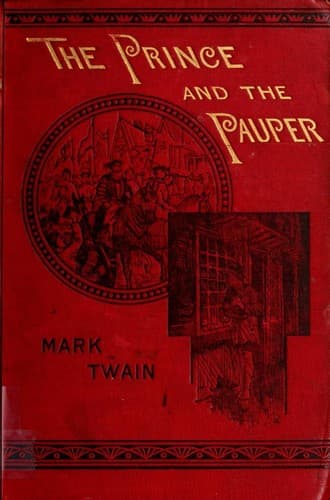
Synopsis
Covers the whole plot, including the ending.
- Difficulty
- Easy
- Pacing
- Moderate
- Mood
- Adventurous, Humorous, Thought-provoking, Classic
- Read it if
- You enjoy classic historical fiction with a moral message, stories about identity and social class, or tales of mistaken identity and adventure suitable for young readers.
- Skip it if
- You prefer fast-paced modern fantasy, complex adult themes, or stories without clear good-vs-evil narratives.
The Prince and the Pauper Plot Summary
Covers the whole plot, including the ending.
The Birth of Opposites: Edward and Tom
On a particular day in the 16th century, two boys are born in London. One is Edward Tudor, the heir to King Henry VIII, whose birth is met with national celebration. The other is Tom Canty, born into poverty in Offal Court, a slum. Tom lives with his abusive father, John Canty, his grandmother, and two sisters, Bet and Nan. Despite his harsh life, Tom finds comfort in stories told by Father Andrew, a kind priest, and dreams of a better existence, often pretending to be a prince with other poor children.
A Chance Encounter and a Fateful Swap
One day, Tom Canty, curious, wanders near Westminster Palace. Palace guards roughly handle him. Edward, seeing this, brings Tom into the palace. Inside, the two boys are surprised by their identical looks. Edward is interested in Tom's stories of life outside the palace, while Tom is amazed by Edward's royal clothes. On a whim, they swap clothes, each wanting to experience the other's life briefly. Edward, dressed in Tom's rags, goes to fetch something, leaving Tom in his royal garments.
The Prince Exiled and the Pauper Enthroned
When Edward, in Tom's clothes, tries to return to the palace, guards turn him away, thinking he is the beggar boy. Despite his claims of being the Prince of Wales, he is beaten and thrown out. Meanwhile, King Henry VIII and the court find Tom, dressed as Edward, and believe the prince has gone mad, thinking he is a pauper. Tom, scared, tries to explain the swap, but his words are dismissed. The King, worried about his heir's mental state, orders that Tom be treated kindly but watched closely, forcing him to keep up the deception.
Edward's Ordeal in the Underworld
Edward, alone and in rags, is found by John Canty, Tom's abusive father, who mistakes him for his own son. John beats Edward for his supposed absence and his 'mad' claims of being a prince. Edward is pulled into the harsh world of Offal Court, experiencing hunger, cold, and violence for the first time. He is forced to beg and sees the realities of poverty, crime, and society's indifference. Despite his suffering, Edward's royal spirit and sense of justice remain, and he promises to return to his place and help his people.
Miles Hendon: The Prince's Protector
Edward escapes John Canty and meets Miles Hendon, a kind but disgraced nobleman. Miles, having been disinherited and exiled by his younger brother, first thinks Edward's claims of being the prince are from a mad boy. However, he is moved by Edward's dignity and vulnerability, and out of kindness, protects the boy. Miles promises to shield Edward, even enduring public humiliation and beatings for him, forming a strong bond with the 'mad' prince.
The King's Death and Tom's Reign
Back in the palace, King Henry VIII dies. Tom Canty, still pretending to be Edward, is now the acting King. He struggles with royal responsibilities, always fearing exposure. However, his kindness leads him to make just and merciful decisions, often overturning harsh laws and pardoning people, surprising the court. He misses his family and simple life, and sometimes makes mistakes that raise suspicion among some courtiers, especially Lord Hertford.
Edward's Journey and Trials
Edward, still with Miles Hendon, continues his journey across England. They meet outlaws, beggars, and persecuted people. Edward sees the extreme poverty, the unfair legal system, and harsh punishments on common people. He is arrested, imprisoned, and put in the stocks, experiencing his kingdom's laws. These experiences deepen his understanding of his future subjects' problems and strengthen his resolve to be a just and kind ruler.
Miles Hendon's Return Home
Miles Hendon, hoping to get back his inheritance, travels with Edward to his ancestral home, Hendon Hall. They find that Miles's younger brother, Hugh, has taken his title and lands and married Miles's beloved Lady Edith. Hugh denies Miles's identity and, with his servants, has Miles and Edward imprisoned and publicly flogged. Edward, seeing this injustice against his protector, is further angered by the abuse of power and promises to get revenge on Hugh, strengthening his bond with Miles.
The Coronation and the Revelation
The coronation day arrives, and Tom Canty, scared and guilty, is about to be crowned King Edward VI. As the ceremony begins, a tattered Edward, with Miles Hendon, bursts into Westminster Abbey, declaring himself the true king. At first, the court dismisses him as mad. Tom, however, recognizes the true prince and, with tears, admits his deception. The court is in an uproar, demanding proof from the two identical boys. Edward, with an idea, asks Tom a specific question about the Great Seal, which only the true prince would know.
Proof and Restoration
When Edward asks about the Great Seal, Tom says he used it as a nutcracker. Edward then explains where he hid the real Great Seal, which had been lost, under a suit of armor. This detail, known only to the true prince, convinces the court. Edward is put back on his throne as King Edward VI. He immediately rewards Miles Hendon, giving him back his title, lands, and making him an Earl. Tom Canty becomes the King's 'Whipping-Boy,' a position of honor and comfort. Edward, having experienced his kingdom's harsh realities, rules with mercy and justice for the rest of his short reign, guided by his time as a pauper.
Principal Figures
Edward Tudor
Protagonist
The Prince of Wales, who experiences the life of a pauper.
Edward is initially portrayed as a somewhat spoiled but ultimately good-hearted prince. His curiosity and sense of justice lead him to invite Tom Canty into the palace. Once thrust into the life of a pauper, he endures immense suffering, humiliation, and injustice, yet his royal dignity and strong moral compass never waver. These experiences transform him from an entitled royal into a compassionate and empathetic future king, deeply understanding the plight of his subjects. He is intelligent, observant, and possesses an unwavering belief in his own identity and divine right.
Relationships: Tom Canty (doppelgänger and temporary swap partner); Miles Hendon (loyal protector and friend); King Henry VIII (father)
Tom Canty
Protagonist
A pauper boy who temporarily becomes the Prince of Wales, then King.
Tom is a kind, imaginative boy from the impoverished Offal Court. Despite his abusive father and harsh life, he dreams of a better world, often playing at being a prince. When he swaps places with Edward, he is overwhelmed by the luxury and responsibility of royal life. He struggles with the deception but uses his innate kindness to make merciful decisions. Tom's character highlights the corrupting influence of power and the innocence that can be maintained even in dire circumstances. He is terrified of exposure but driven by a desire to do good.
Relationships: Edward Tudor (doppelgänger and temporary swap partner); John Canty (abusive father); Bet and Nan Canty (loving sisters)
Miles Hendon
Supporting
A disgraced nobleman who becomes Edward's protector and loyal friend.
Miles Hendon is a brave, honorable, and compassionate nobleman who was unjustly disinherited and exiled by his younger brother. He encounters Edward, initially believing him to be a mad boy, but is moved by his dignity and takes him under his protection. Miles's loyalty to Edward is unwavering, even when it means suffering humiliation and beatings. He is a steadfast friend, a symbol of true nobility, and a foil to the corrupt aristocracy. His personal quest for justice mirrors Edward's own struggle.
Relationships: Edward Tudor (loyal friend and protector); Hugh Hendon (usurping younger brother); Lady Edith (former beloved, now Hugh's wife)
John Canty
Antagonist
Tom's cruel and abusive father.
John Canty is a violent, drunken, and thieving man who represents the worst aspects of London's underbelly. He regularly beats Tom and his family and forces them to beg. He is entirely self-serving and shows no affection or compassion. His pursuit of Edward (mistaking him for Tom) drives much of Edward's initial suffering in the pauper's world. He is a stark contrast to the royal family and a symbol of the social injustices of the era.
Relationships: Tom Canty (abused son); Edward Tudor (mistaken for his son, whom he abuses)
King Henry VIII
Supporting
The dying king and Edward's father.
King Henry VIII is depicted as ailing and somewhat detached from his son's supposed 'madness.' He is stern and commanding but also shows paternal concern for what he believes is his son's mental deterioration. His death precipitates Tom's ascent to the throne. His character serves to highlight the immense power of the monarchy and the vulnerability of the kingdom during a succession crisis.
Relationships: Edward Tudor (father); Tom Canty (mistaken for his son)
Lord Hertford
Supporting
Edward's uncle and a key courtier.
Lord Hertford is a shrewd and observant courtier, Edward's uncle, who becomes a prominent figure after King Henry VIII's death. He is initially skeptical of Tom's 'madness' but plays along to maintain order and his own influence. He is a pragmatic and cautious figure, representing the political maneuvering within the court. He is one of the first to suspect something is amiss with 'Prince Edward' but keeps his suspicions to himself for the sake of stability.
Relationships: Edward Tudor (uncle); Tom Canty (courtier to the 'prince')
Father Andrew
Supporting
A kind and educated priest who teaches Tom Canty.
Father Andrew is an old, impoverished, but benevolent priest who lives in Offal Court. He teaches Tom to read and write and tells him stories, nurturing Tom's imagination and kindness. He is a positive influence in Tom's harsh life and represents the potential for goodness even in the darkest corners of society. His death at the hands of John Canty is a pivotal moment that pushes Tom further into his royal charade.
Relationships: Tom Canty (mentor and friend)
Hugh Hendon
Antagonist
Miles Hendon's younger brother, who usurped his inheritance.
Hugh Hendon is the younger brother of Miles Hendon, characterized by his greed and treachery. He falsely claims Miles's inheritance, marries Lady Edith, and cruelly denies Miles's identity upon his return. He represents the corruption and injustice that Edward witnesses in the nobility. His actions highlight the ease with which power can be abused and the vulnerability of those without it.
Relationships: Miles Hendon (usurped older brother); Lady Edith (wife (formerly betrothed to Miles))
Lady Edith
Supporting
Miles Hendon's former betrothed, now married to Hugh.
Lady Edith is the woman Miles Hendon loved and was betrothed to before his exile. She is forced to marry Hugh Hendon and is portrayed as unhappy and trapped in her situation. She recognizes Miles upon his return but is powerless to help him due to Hugh's tyranny. Her character underscores the theme of injustice and the limited agency of women in that era.
Relationships: Miles Hendon (former beloved); Hugh Hendon (unwilling wife)
Themes & Insights
Identity and Self-Discovery
The novel explores how identity is shaped by birthright and experience. Edward, without his royal clothes, learns what it means to be human and a just ruler by living a common man's life. Tom, forced into royalty, deals with his true self versus the role he plays. Their identical appearances show that true identity comes from character, actions, and inner belief. Both boys grow as they navigate their swapped lives, understanding themselves and their roles more deeply.
“What does it profit a man to gain the whole world and lose his own soul?”
Social Injustice and Inequality
Twain contrasts the rich life of the monarchy with the poverty and injustice common people faced. Edward's journey through slums, prisons, and beggar camps shows him the harsh realities of a society with unfair laws, cruel punishments, and widespread suffering. The novel critiques the class system and the powerful's indifference to the poor, advocating for kindness and change. The arbitrary nature of the law, where small offenses lead to severe penalties, appears often.
“He saw the great gulf which separated the poor from the rich, and how the law was but a net for the small fry, while the great fish broke through.”
The Nature of Power and Leadership
The story examines what makes a good leader. Tom, without training, often makes merciful and wise decisions because of his kindness. Edward's experiences as a pauper give him deep empathy that shapes his future rule. The novel suggests that true leadership comes from understanding and compassion for one's subjects, not just birthright. It questions the divine right of kings by showing that a pauper can sometimes be a better ruler than a king who lacks empathy.
“He had seen the great and the lowly, the just and the unjust, and he had learned that a king's heart should be as wide as his realm.”
Appearance vs. Reality
The central idea of identical boys swapping places directly addresses appearance versus reality. People in the story judge based on clothing and social status, failing to see the true prince in rags or the true pauper in royal clothes. The court's inability to tell Edward and Tom apart, despite their different behaviors and knowledge, shows how easily appearances deceive and how deep societal prejudices are. Only specific, undeniable proof reveals the truth.
“Clothes make the man. Naked people have little or no influence on society.”
Justice and Mercy
Throughout Edward's journey, he sees many acts of injustice and cruelty, from abuse of the poor to unfair legal punishments. His experiences drive his desire to rule with mercy. Tom, as temporary king, also shows a surprising capacity for mercy, often pardoning those condemned under harsh laws. The novel supports the idea that justice should be balanced with mercy, and that a truly just ruler understands the human condition and the reasons for crime.
“From that day forth, no man in England suffered punishment for crimes which Edward Tudor would not himself have punished with a lighter hand.”
Plot Devices & Literary Techniques
Doppelgänger
The uncanny resemblance between Prince Edward and Tom Canty.
The identical appearance of Edward Tudor and Tom Canty is the central plot device that drives the entire narrative. Without their perfect resemblance, the swap would be impossible, and the story would not exist. It allows Twain to explore themes of identity, social class, and the arbitrary nature of power, as both boys are mistaken for each other, forcing them to experience lives vastly different from their own. The doppelgänger serves as a catalyst for their respective journeys of self-discovery and social commentary.
Mistaken Identity
The core conflict arising from the two boys being indistinguishable.
Mistaken identity is the engine of the plot, creating both the dramatic tension and the comedic elements of the story. Edward is repeatedly dismissed as a mad pauper, while Tom is forced to impersonate the prince, leading to humorous blunders and moments of genuine fear. This device allows Twain to highlight how easily society can be fooled by appearances and how difficult it is to prove one's true identity when all external markers are stripped away or falsely applied. It underscores the fragility of social order based on superficial recognition.
Fish out of Water
Both protagonists are thrust into unfamiliar and challenging environments.
This device applies to both Edward and Tom. Edward, a pampered prince, is suddenly exposed to the brutal realities of poverty, hunger, and violence in the slums of London and the English countryside. Tom, a pauper, is overwhelmed by the opulence, etiquette, and immense responsibilities of court life. This contrast highlights the vast differences between the social classes and forces each character to adapt, learn, and grow in their respective 'new' environments, leading to their personal transformations and the novel's social commentary.
The Great Seal
A seemingly minor object that becomes the ultimate proof of identity.
The Great Seal serves as a crucial symbol and plot device for resolving the central conflict. Initially, it's just a royal artifact that Edward misplaced and Tom innocently used as a nutcracker. However, its specific location and the unique knowledge of its disappearance become the irrefutable proof of Edward's true identity during the coronation. This device cleverly uses a small, specific detail to cut through the confusion of mistaken identity, emphasizing that true knowledge and memory are more reliable than superficial appearance.
The Prince and the Pauper Quotes
“The difference between a king and a pauper is but a matter of clothes.”
“When I am king, they shall not have bread and shelter only, but also teachings out of books; for a full belly is little worth where the mind is starved.”
“Kings should go to school to their own laws at times, and so learn mercy.”
“Truth is the most valuable thing we have. Let us economize it.”
“The world is made up of fools, and a few wise men; the latter are always in doubt, while the former are positive.”
“I am the king; and I will go.”
“He had a rather pretty wit, what there was of it.”
“It is not best to swap horses while crossing the river.”
“The law is not for the king, but for his subjects.”
“I will not have it so; I will not have my people suffer.”
“A man's a man, for a' that.”
“The prince and the pauper were born the same day, and resembled each other as much as one twin resembles another.”
“He had been kicked, cuffed, and spat upon; but he was a king still, and had a king's heart.”
Quiz
10 questions on the plot and the characters. Each answer comes with a short explanation.
Question 1
What event initially causes Prince Edward and Tom Canty to switch places in 'The Prince and the Pauper'?
- Tom sneaks into the palace to steal food
- Edward gets lost during a royal procession
- They meet by chance at the palace gates and decide to trade clothes out of curiosity
- Tom is kidnapped and forced to impersonate the prince
Show answer
C. They meet by chance at the palace gates and decide to trade clothes out of curiosity In the book, Prince Edward invites the pauper Tom Canty into the palace after seeing him mistreated by guards. Out of mutual curiosity about each other's lives, they swap clothes, leading to their accidental switch when Edward is mistaken for Tom and thrown out.
Question 2
Who is Miles Hendon, and how does he help Prince Edward during his adventures?
- A thief who tries to rob Edward but later becomes his ally
- A nobleman and soldier who protects Edward, believing his claims of royalty
- A palace guard who secretly aids Edward's return
- Tom Canty's father who helps Edward out of guilt
Show answer
B. A nobleman and soldier who protects Edward, believing his claims of royalty Miles Hendon is a kind-hearted soldier and nobleman who encounters Edward wandering as a pauper. Despite Edward's wild claims of being the prince, Hendon humors and protects him, offering loyalty and shelter, which proves crucial to Edward's survival and eventual restoration.
Question 3
What major theme in 'The Prince and the Pauper' is highlighted by the experiences of Edward and Tom after switching places?
- The importance of wealth and power in society
- The fluidity of identity and the arbitrary nature of social class
- The inevitability of fate and destiny
- The value of education and literacy
Show answer
B. The fluidity of identity and the arbitrary nature of social class The book explores how identity is shaped by social circumstances rather than innate qualities. Edward learns humility and justice from life as a pauper, while Tom gains insight into the burdens of royalty, showing that class distinctions are often superficial.
Question 4
How does Tom Canty initially react to being mistaken for Prince Edward in the palace?
- He immediately confesses the truth to avoid punishment
- He embraces the role and enjoys the luxuries, pretending to have amnesia
- He tries to escape but is caught by guards
- He seeks help from Miles Hendon to reveal the switch
Show answer
B. He embraces the role and enjoys the luxuries, pretending to have amnesia Tom, overwhelmed by the palace's opulence and fearing punishment, goes along with the mistake. He claims to have lost his memory to explain his ignorance of royal customs, gradually adapting to his new life while inwardly longing for his old one.
Question 5
What key detail allows Prince Edward to prove his true identity and reclaim the throne at the end of the story?
- He produces a signed letter from King Henry VIII
- He reveals the location of the Great Seal of England, which he had hidden before switching places
- Miles Hendon testifies on his behalf in court
- Tom Canty publicly confesses to the switch
Show answer
B. He reveals the location of the Great Seal of England, which he had hidden before switching places Edward remembers hiding the Great Seal of England in a suit of armor before swapping clothes with Tom. This specific knowledge, which only the true prince would have, convinces the court of his identity, leading to his restoration as king.
Question 6
Which character serves as the primary antagonist threatening Prince Edward's life during his time as a pauper?
- John Canty, Tom's abusive father
- The Lord Protector, who plots to seize power
- A rival prince from a foreign kingdom
- The palace chef who mistakes Edward for a thief
Show answer
A. John Canty, Tom's abusive father John Canty, Tom's violent and criminal father, forces Edward (whom he believes is Tom) into a life of begging and theft. Canty's abuse and pursuit pose a direct threat to Edward's safety, highlighting the dangers of poverty and corruption.
Question 7
What practical lesson does Prince Edward learn from his experiences as a pauper that influences his rule as king?
- The importance of military strength for national security
- The need for economic reforms to reduce taxes
- The value of mercy and justice for the common people
- The benefits of alliances with foreign powers
Show answer
C. The value of mercy and justice for the common people Living among the poor, Edward witnesses injustice and suffering firsthand, such as harsh laws and unfair punishments. This empathy leads him to become a more compassionate ruler, emphasizing fairness and leniency in his decrees after regaining the throne.
Question 8
In what historical setting does 'The Prince and the Pauper' take place, and how does this context affect the plot?
- Medieval France, influencing feudal conflicts
- Tudor England in the 16th century, during the reign of King Henry VIII
- Ancient Rome, affecting political intrigue
- Victorian London, shaping social reforms
Show answer
B. Tudor England in the 16th century, during the reign of King Henry VIII The story is set in 1547 in Tudor England, shortly after the death of Henry VIII. This historical backdrop includes rigid class hierarchies, political instability, and harsh legal systems, which amplify the challenges Edward and Tom face and the themes of social inequality.
Question 9
How does Tom Canty's background as a pauper uniquely prepare him for his temporary role as prince?
- His experience with hunger makes him appreciate palace food
- His literacy and education from Father Andrew allow him to handle royal duties
- His skill at theft helps him navigate palace politics
- His physical strength enables him to perform ceremonial tasks
Show answer
B. His literacy and education from Father Andrew allow him to handle royal duties Despite his poverty, Tom was taught to read and write by Father Andrew, a kind priest. This education gives him a basic understanding of language and courtly matters, helping him bluff his way through his princely duties and making his impersonation somewhat plausible.
Question 10
What symbolic object represents the power and responsibility of the monarchy in 'The Prince and the Pauper', and how is it used in the plot?
- The royal scepter, which Edward uses to command respect
- The crown jewels, which Tom admires for their beauty
- The Great Seal of England, which authenticates royal decrees and proves Edward's identity
- The king's signet ring, which Miles Hendon steals
Show answer
C. The Great Seal of England, which authenticates royal decrees and proves Edward's identity The Great Seal is a crucial symbol of royal authority, used to officialize documents. Edward's knowledge of its hiding place becomes the key evidence in resolving the identity switch, underscoring how tangible objects can embody and verify power in the monarchy.
The Prince and the Pauper FAQ
What is 'The Prince and the Pauper' about?
The novel follows two identical boys in 16th-century England: Tom Canty, a poor pauper from Offal Court, and Prince Edward, heir to the throne. After accidentally swapping places, each experiences the other's life—Edward faces poverty and injustice while Tom navigates royal court intrigue—leading to a climactic restoration of their true identities during Edward's coronation.
Why should I read 'The Prince and the Pauper'?
It offers a timeless exploration of social class, identity, and justice through a thrilling adventure. Twain's blend of humor, historical detail, and moral insight makes it engaging for both young readers and adults, while the swapped-identity premise provides sharp commentary on Elizabethan England's inequalities.
What is the background/setting of 'The Prince and the Pauper'?
Set in London and surrounding areas in 1547, during the reign of King Henry VIII and the early days of Edward VI's rule. The story contrasts the opulence of Westminster Palace with the squalor of London's slums like Offal Court, highlighting the stark divide between royalty and commoners in Tudor England.
What are the most memorable quotes?
Notable quotes include: 'The law is not for the king,' reflecting Edward's realization of legal injustice; 'Kings go mad, and the people suffer for it,' underscoring the novel's critique of absolute power; and Tom Canty's plea, 'I am not the prince,' during his initial confusion in the palace.
What writing style does the author use?
Twain employs a satirical and humorous style, with vivid descriptions and archaic dialogue to evoke the Tudor period. He blends adventure with social commentary, using irony—such as the pauper's accidental competence as king—to critique class hierarchies and institutional corruption.
What minor details add significant meaning?
The Great Seal of England, which Edward hides and later uses to prove his identity, symbolizes royal authority and becomes a crucial plot device. Similarly, Tom's recurring dream of being a prince foreshadows the swap, while the rags Edward wears as a pauper visually represent his loss of status.
What are some subtle foreshadowing moments?
Early scenes show Tom daydreaming about palace life and imitating royalty, hinting at his eventual role. Edward's curiosity about commoners' lives and his declaration 'I will make things right' prefigure his later reforms. The boys' identical appearance is repeatedly noted before their fateful meeting.
What unexpected character connections exist?
Miles Hendon, a disinherited nobleman who befriends Edward, is revealed to have a brother who stole his inheritance, tying into themes of familial betrayal. John Canty, Tom's abusive father, becomes a pursuer of both boys, linking the pauper's world to the prince's peril through criminal underworld connections.
What are unspoken character motivations?
Tom Canty is driven by a deep-seated desire for dignity and escape from abuse, not just curiosity. Edward's insistence on experiencing poverty stems from an unconscious need to prove his worth beyond birthright. Miles Hendon's loyalty to Edward masks his own quest for redemption and restored honor.
What psychological complexities do characters exhibit?
Tom grapples with impostor syndrome and guilt as he enjoys royal luxuries while knowing he's an imposter. Edward undergoes a transformation from arrogance to empathy, wrestling with trauma after facing violence and injustice. Miles Hendon shows resilience mixed with melancholy from his past betrayals.
What are the major emotional turning points?
Edward's beating by John Canty shatters his royal naivety and fuels his resolve for justice. Tom's crisis of conscience during a state dinner where he nearly reveals his true identity highlights his internal conflict. The reunion of the boys at the coronation, where Edward publicly acknowledges Tom, delivers emotional catharsis and mutual respect.
How do relationship dynamics evolve?
Edward and Tom move from initial curiosity to a bond forged by shared adversity, culminating in Edward granting Tom the title 'King's Ward.' Miles Hendon evolves from a skeptical protector to Edward's devoted friend, symbolizing earned loyalty over birthright. Tom's family dynamics shift from abuse to redemption when Edward pardons John Canty.
Which parts remain ambiguous or open-ended?
The long-term impact of Edward's brief reign is unclear—whether his promised reforms materialize fully. Tom's future beyond being 'King's Ward' is left open, as is the fate of secondary characters like Miles Hendon's brother. The novel implies but doesn't detail how Edward's experiences permanently changed the monarchy.
What are controversial scenes or decisions?
Edward's decision to pardon John Canty, despite his abuse and crimes, sparks debate over mercy versus justice. Tom's initial willingness to maintain the deception as king raises ethical questions about complicity. Some readers critique the idealized resolution as overlooking systemic change in favor of personal redemption.
'The Prince and the Pauper' ending explained: how it ends & what it means
The story ends with Edward reclaiming the throne at his coronation, instituting reforms based on his experiences, and honoring Tom as a royal ward. This conclusion emphasizes that true nobility comes from empathy and justice, not birth, and suggests personal growth can lead to societal improvement, though it leaves some reforms implied rather than shown.
About the author
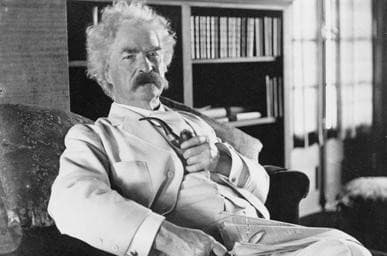
Samuel Langhorne Clemens, best known by his pen name Mark Twain, was an American writer, humorist, entrepreneur, publisher, and lecturer. He was praised as the "greatest humorist the United States has produced", and William Faulkner called him "the father of American literature". His novels include The Adventures of Tom Sawyer (1876) and its sequel, Adventures of Huckleberry Finn (1884), the latter of which has often been called the "Great American Novel". Twain also wrote A Connecticut Yankee in King Arthur's Court (1889) and Pudd'nhead Wilson (1894), and co-wrote The Gilded Age: A Tale of Today (1873) with Charles Dudley Warner.
Similar books
- A Little Princess
Frances Hodgson Burnett
4.2 (4k) average on GoodreadsFantasyExplores themes of social class, resilience, and identity in a historical setting.
- Oliver Twist
Charles Dickens
3.9 (319k) average on GoodreadsHistorical FictionDepicts the harsh realities of poverty and social injustice in England, with a young protagonist.
- Kidnapped
Robert Louis Stevenson
3.8 (58k) average on GoodreadsHistorical FictionFeatures a young protagonist on an adventure, facing trials and seeking his rightful inheritance.
- Harry Potter and the Sorcerer's Stone
J.K. Rowling
4.5 (7M) average on GoodreadsFantasyRescued from a miserable life under the stairs, an orphaned boy discovers he's a wizard destined for a magical school, where he uncovers a dangerous secret tied to the dark wizard who murdered his parents.
- The Hobbit, or There and Back Again
J.R.R. Tolkien
4.3 (2.9M) average on GoodreadsFantasyA comfort-loving hobbit named Bilbo Baggins is whisked away by a mischievous wizard and a band of dwarves on an unexpected journey to reclaim stolen treasure from a fearsome dragon, discovering courage and a magical ring along the way.
- Harry Potter and the Goblet of Fire
J.K. Rowling
4.6 (2.6M) average on GoodreadsFantasyA bewildered Harry Potter, underage and thrust into a deadly Triwizard Tournament, must brave dragons, mermaids, and a resurgent dark magic to survive a year that will forever alter the wizarding world.



Enjoyed the summary?
A summary gives you the shape of the book. The book itself has the detail, the examples and the voice.
Find The Prince and the Pauper on AmazonAs an Amazon Associate, BookBrief earns from qualifying purchases. How we're funded