

Synopsis
Covers the whole plot, including the ending.
- Difficulty
- Medium
- Pacing
- Moderate
- Mood
- Adventurous, Historical, Suspenseful, Evocative, Friendship
- Read it if
- You enjoy classic adventure stories, historical fiction set in Scotland, tales of unlikely friendships, or coming-of-age narratives.
- Skip it if
- You prefer modern prose, fast-paced thrillers without historical context, or stories with minimal dialect.
Kidnapped Plot Summary
Covers the whole plot, including the ending.
David Balfour's Inheritance and Treachery
After his parents die, seventeen-year-old David Balfour has only a letter from his father telling him to find his Uncle Ebenezer, the Laird of Shaws. David travels to the House of Shaws, a run-down mansion, where his uncle greets him with suspicion. Ebenezer, a miserly and paranoid man, acknowledges David but immediately tries to get rid of him. During a dangerous tour of the house at night, Ebenezer tries to make David fall to his death from an unrailed tower staircase. David escapes, confirming his uncle's bad intentions. He learns from a local lawyer, Mr. Rankeillor, that he is the rightful heir to the estate, not Ebenezer, who has been holding it unlawfully.
The Kidnapping and Voyage to America
Ebenezer, seeing his plan to disinherit David fail, lures David to the Queensferry pier by pretending to find him a legal representative. Here, Captain Hoseason of the brig 'Covenant' ambushes David and knocks him out. He wakes up a prisoner on the ship, on his way to the American colonies to be sold into servitude. The 'Covenant' is a disreputable ship involved in the illegal slave trade, and its crew is brutal. David endures harsh treatment and learns of his uncle's part in his abduction, strengthening his resolve to escape and reclaim his inheritance.
The Rescue of Alan Breck Stewart
While sailing through the Inner Hebrides, the 'Covenant' hits a small boat in a dense fog. The only survivor, Alan Breck Stewart, a Scottish Highlander and Jacobite fugitive, is brought aboard. Captain Hoseason and his crew initially plan to murder Alan and steal his money, but David warns Alan after seeing their cruel intentions. Together, David and Alan barricade themselves in the fore-cabin, fighting off the crew. Alan, a skilled swordsman, defends himself easily, and David, though less experienced, shows his courage. They negotiate a truce with Captain Hoseason, who, fearing Alan's connections and a possible mutiny, agrees to land them safely.
Shipwreck on the Isle of Erraid
The 'Covenant' tries to navigate through dangerous waters near the Torran Rocks. Drunk and with bad judgment, Captain Hoseason's crew runs the ship aground. The ship is damaged beyond repair, and the crew abandons it. David is thrown overboard and, through luck and determination, swims to the desolate Isle of Erraid, mistaking it for the mainland. He spends several days alone, hungry and exposed, before realizing he is on a tidal island and can cross to Mull at low tide. He eventually makes his way to the mainland, only to find Alan Breck is not with him.
The Appin Murder and Flight
After reaching the mainland, David journeys through the Highlands and eventually meets Alan Breck Stewart in a remote area. Soon after their reunion, they witness the assassination of Colin Roy Campbell, the 'Red Fox,' the King's factor of Appin. Alan is a known Jacobite and a rival of Campbell, making him an immediate suspect. Despite Alan's claims of innocence, the murder involves both of them, and they become fugitives. This event begins their difficult journey across the Scottish Highlands, hunted by government troops.
The Highland Chase
David and Alan begin a dangerous flight across the rugged Scottish Highlands. They face extreme hardship, including hunger, thirst, harsh weather, and constant watch against government soldiers. Alan, familiar with the terrain and the Highlanders' ways, guides David through bogs, mountains, and glens. Their journey includes close calls, narrow escapes, and meetings with both supportive and hostile locals. David, not used to such a life, struggles physically but gains resilience and a deeper understanding of Highland culture and the Jacobite cause.
Conflict and Camaraderie
During their flight, David and Alan often argue because of their different backgrounds and personalities. David, a Lowlander and a Whig, is practical and law-abiding, while Alan, a Highlander and a Jacobite, is proud, impulsive, and lives outside the law. Their arguments are often heated, especially about their political loyalties and Alan's gambling. However, their shared situation and reliance on each other build a strong bond of friendship and respect. David comes to admire Alan's courage and loyalty, and Alan, in turn, values David's prudence and honesty. Their friendship grows with each challenge they overcome together.
Seeking Assistance from the Cluny Macpherson
As they continue their flight, Alan decides they must seek help from Cluny Macpherson, the chief of the Clan Macpherson, who is also an outlawed Jacobite living in hiding. They travel to Cluny's Cage, a hidden dwelling on Ben Alder. Cluny provides them with food, shelter, and much-needed rest. During their stay, David observes the unique customs and loyalty within the Highland clans, including Cluny's almost regal manner despite his circumstances. While Cluny is hospitable, David finds the forced idleness and constant card games a strain, eager to continue their journey and resolve his own affairs.
Journey to the Lowlands and Reconciliation
After some time at Cluny's Cage, David and Alan decide to move on towards the Lowlands. They leave Cluny and continue their difficult journey. As they approach the more populated Lowland areas, they must be even more careful to avoid capture. David is determined to confront his Uncle Ebenezer and reclaim his inheritance. Alan, despite the danger to himself, insists on going with David to ensure his safety and help him with his claim, showing his loyalty to his young friend. Their journey has continued risks as they navigate a country still on high alert for Jacobite fugitives.
Confrontation at the House of Shaws
David, with Alan, returns to the House of Shaws. With the help of Mr. Rankeillor, the lawyer, they plan to expose Ebenezer's treachery. Alan positions himself outside the house while David confronts his uncle. David pretends to be a stranger sent by Alan, claiming that Alan has proof of Ebenezer's part in the kidnapping. Ebenezer, believing Alan is outside and can overhear, accidentally confesses his crimes, revealing his fear of Alan and confirming David's story. With Ebenezer's confession, David's claim to the estate is undeniable, and his uncle is forced to give it up.
Justice and Parting Ways
After Ebenezer's confession, David takes possession of the House of Shaws and his inheritance. He arranges for his uncle to receive a small annuity, ensuring he is cared for but stripped of his power. With his affairs settled, David must say goodbye to Alan Breck Stewart. Alan, still a wanted man, cannot stay in the Lowlands and must flee to the Continent. They share a heartfelt parting; their deep friendship, formed through shared hardship and adventure, is now firm. David is left to manage his estate, forever changed by his experiences and the bond he formed with the daring Highlander.
Kidnapped Characters
David Balfour
Protagonist
A naive Lowland orphan who matures into a resilient young man through adversity.
David Balfour is a seventeen-year-old Lowlander, initially naive, bookish, and somewhat timid, thrust into a world of danger and intrigue after his parents' death. He is honest, principled, and initially bewildered by the treachery of his Uncle Ebenezer and the harshness of life at sea. Throughout his journey with Alan Breck, David develops courage, resourcefulness, and a deeper understanding of human nature and the complex political landscape of Scotland. He maintains his moral compass, often acting as a voice of reason to the impulsive Alan, and ultimately reclaims his rightful inheritance.
Relationships: Alan Breck Stewart (Close friend and companion, initially wary but growing into deep loyalty); Ebenezer Balfour (Treacherous uncle and antagonist); Mr. Rankeillor (Trustworthy lawyer who aids him)
Alan Breck Stewart
Supporting Character / Deuteragonist
A charismatic, brave, and hot-headed Jacobite Highlander, David's loyal companion.
Alan Breck Stewart is a dashing, proud, and often impulsive Highlander, a former soldier for Bonnie Prince Charlie and a wanted Jacobite fugitive. He is an expert swordsman, fiercely loyal to his clan and the Stuart cause, and possesses a strong sense of honor, albeit one that sometimes bends to his own self-interest (like gambling). Despite his volatile temper and occasional recklessness, Alan proves to be a loyal and protective friend to David, guiding him through the dangers of the Highlands. He represents the wild, romantic spirit of the Highlands and the Jacobite rebellion.
Relationships: David Balfour (Close friend and companion, initially wary but growing into deep loyalty); Colin Roy Campbell (Political rival and victim of the Appin Murder); Cluny Macpherson (Fellow Jacobite outlaw and clan chief)
Ebenezer Balfour
Antagonist
David's miserly, paranoid, and treacherous uncle who attempts to disinherit and kidnap him.
Ebenezer Balfour is David's uncle and the primary antagonist. He is a deeply unpleasant character: miserly, paranoid, cowardly, and consumed by guilt and fear over his unlawful possession of the Shaws estate. He lives in a state of disrepair, hoards his money, and is willing to resort to extreme measures, including attempted murder and kidnapping, to keep David from his rightful inheritance. His actions drive much of the initial plot, setting David on his extraordinary adventure.
Relationships: David Balfour (Nephew and victim of his treachery); Captain Hoseason (Accomplice in David's kidnapping)
Captain Hoseason
Supporting Antagonist
The unscrupulous captain of the brig 'Covenant' who kidnaps David.
Captain Hoseason is the captain of the brig 'Covenant,' a ship involved in illicit trade and the forced transportation of indentured servants. He is a pragmatic and ruthless man, driven by profit, who readily agrees to Ebenezer's scheme to kidnap David. While not inherently cruel for cruelty's sake, he is indifferent to the suffering of others and quick to resort to violence or treachery if it serves his purpose. His character embodies the moral corruption present in certain segments of society.
Relationships: Ebenezer Balfour (Conspirator in David's kidnapping); David Balfour (His captive); Alan Breck Stewart (His unwilling passenger, whom he attempts to rob and murder)
Mr. Rankeillor
Supporting Character
A scrupulous lawyer who helps David understand and reclaim his inheritance.
Mr. Rankeillor is a respectable lawyer from Queensferry who knows the history of the Balfour family and the Shaws estate. He is honest, shrewd, and knowledgeable about the law. When David first approaches him, Rankeillor provides crucial information about his rightful inheritance, confirming Ebenezer's treachery. Later, he assists David and Alan in devising the plan to expose Ebenezer and secure David's claim, acting as a reliable and ethical figure in a world often full of deceit.
Relationships: David Balfour (Client and beneficiary of his legal expertise); Ebenezer Balfour (Opponent in legal matters)
Colin Roy Campbell (The Red Fox)
Mentioned Character
The King's factor of Appin, whose murder ignites the chase across the Highlands.
Colin Roy Campbell, known as 'The Red Fox,' is the King's factor for the forfeited Appin estates and a prominent figure among the Argyll Campbells. He is a staunch Whig and a symbol of government authority and oppression to the Jacobite Highlanders. His assassination, witnessed by David and Alan, is a pivotal moment in the novel, forcing them into a desperate flight across Scotland and making Alan a prime suspect. Though only briefly alive in the narrative, his death drives much of the plot.
Relationships: Alan Breck Stewart (Political enemy and alleged murderer)
Cluny Macpherson
Supporting Character
An outlawed Jacobite clan chief living in hiding in the Highlands.
Cluny Macpherson is the chief of the Clan Macpherson, a prominent Jacobite leader who has been outlawed and lives in a hidden refuge known as 'Cluny's Cage' on Ben Alder. He is a charismatic and hospitable figure, maintaining a semblance of his former chieftain's dignity despite his fugitive status. He provides David and Alan with refuge and supplies. Cluny represents the enduring spirit of the Jacobite cause and the unique culture of the Highland clans, even in defeat.
Relationships: Alan Breck Stewart (Fellow Jacobite and acquaintance); David Balfour (His guest for a time)
Ransome
Supporting Character
A young cabin boy on the 'Covenant' who suffers under Captain Hoseason's cruelty.
Ransome is a young cabin boy on the brig 'Covenant.' He is a victim of the brutal conditions on the ship and the cruel treatment by Captain Hoseason and the crew. David initially tries to befriend Ransome, but the boy is terrified and broken by his experiences. His accidental death at the hands of Mr. Shuan, the mate, further highlights the depravity on board the ship and deeply affects David, reinforcing his desire to escape.
Relationships: David Balfour (Brief acquaintance and object of David's pity); Mr. Shuan (His abuser and accidental killer)
Kidnapped Themes
Identity and Self-Discovery
David Balfour's journey is one of self-discovery. Initially a naive orphan, he must confront his lineage, claim his identity as the rightful Laird of Shaws, and grow through adversity. His travels expose him to different social classes, political ideas, and moral challenges, making him define his own principles and capabilities. The contrast between his Lowland upbringing and the Highland world he travels further shapes his understanding of who he is and where he belongs.
“I was now alone in the world; a lad of eighteen, with no one to advise me.”
Justice and Injustice
The novel explores justice and injustice, both personal and political. David suffers a personal injustice from his Uncle Ebenezer, who tries to defraud and kidnap him. This personal quest for justice drives much of David's initial motivation. At the same time, the larger political situation of post-Jacobite Scotland is full of injustice: the oppression of the Highlanders, the 'Appin Murder' and its subsequent blaming, and the ongoing conflict between Whigs and Jacobites, each side believing their cause is right. The story examines the complexities of what justice means in a divided society.
“There was no justice for the likes of me, or for any man that had a drop of Stewart blood.”
Loyalty and Betrayal
Loyalty is a main theme, shown in different ways. Alan Breck's loyalty to his clan, his 'name,' and the Jacobite cause defines much of his character. More personally, the deep loyalty that grows between David and Alan, despite their political and cultural differences, is a key part of the story. This contrasts with the betrayal David experiences from his Uncle Ebenezer, showing the destructive power of greed and deceit. The novel also touches on loyalties within clans and among outlaws, showing how these bonds can be a source of strength and a potential weakness.
“I was to remember that when a man was in a close place, and did not like to say a thing, it was a good idea to get it said by another.”
The Clash of Cultures (Lowland vs. Highland)
Stevenson shows the strong contrast between Lowland and Highland Scottish cultures, a significant theme in the novel. David, a practical and law-abiding Lowlander, initially struggles to understand the customs, language, and fierce independence of the Highlanders, represented by Alan. The Highlands are depicted as wild, untamed, and full of tradition and clan loyalties, often at odds with the central government of the Lowlands. This cultural clash is a source of both conflict and interest, ultimately broadening David's perspective and showing the rich diversity within Scotland.
“I had been brought up to think of Highlanders as savages, and here was one of them, a gentleman, and a friend.”
Coming of Age
The entire story is a classic coming-of-age narrative for David Balfour. At the start, he is an innocent, inexperienced boy, dependent on others and easily manipulated. Through his difficult experiences – from kidnapping and shipwreck to surviving the wilderness and evading capture – he is forced to grow up quickly. He learns practical skills, develops courage, gains self-reliance, and forms his own moral code. His friendship with Alan, despite its challenges, also contributes to his growth, as he learns to adapt, negotiate, and stand his ground.
“I was no longer the same boy that had left the manse of Essendean.”
Plot Devices & Literary Techniques
First-Person Narration
The story is told entirely from David Balfour's perspective.
The novel is narrated in the first person by David Balfour, allowing readers direct access to his thoughts, fears, and evolving understanding of the world. This perspective emphasizes his growth from naive youth to a more mature and discerning individual. It also creates a sense of immediacy and personal investment, as readers experience the dangers and wonders of his adventure alongside him. The language is often reflective, looking back on the events from a later, wiser viewpoint, which adds depth to his observations of characters like Alan Breck and the Scottish landscape.
The MacGuffin (The Appin Murder)
The assassination of Colin Roy Campbell as a catalyst for the main chase.
While a real historical event, in the context of the novel's plot, the Appin Murder serves as a MacGuffin. Its precise details and the true culprit are less important than its function in driving the narrative forward. The murder immediately implicates Alan Breck and, by association, David, forcing them into a desperate flight across the Highlands. It provides the external conflict and urgency that keeps the protagonists on the move, solidifying their bond as fugitives and exposing them to the raw realities of the Scottish landscape and its people, without necessarily needing a full resolution within David's personal story arc.
The Journey/Quest Motif
David's physical and metaphorical journey to reclaim his inheritance and identity.
The entire novel is structured around a classic journey or quest motif. David embarks on a physical journey from the Lowlands to the Highlands and back, traversing diverse landscapes and facing numerous obstacles. This physical journey mirrors his internal quest for identity, justice, and self-discovery. Each stage of his journey brings new challenges and encounters that contribute to his growth and the gradual unfolding of the plot, ultimately leading him to reclaim his rightful place and inheritance.
Foil Characters
Alan Breck Stewart as a foil to David Balfour.
Alan Breck Stewart serves as a classic foil to David Balfour. David is a pragmatic, cautious Lowlander, a Whig, and initially naive. Alan is an impulsive, daring Highlander, a Jacobite, and worldly. Their contrasting personalities, political allegiances, and social backgrounds highlight each other's traits and provoke conflict, yet also foster mutual respect and a deep friendship. Alan's wildness and experience force David to adapt and grow, while David's prudence often tempers Alan's recklessness, creating a dynamic and engaging central relationship that drives much of the character development and dialogue.
Kidnapped Quotes
“I was a good lad, I did my best to be a good lad, but I had a good deal to learn.”
“I have been as good as a father to you.”
“I have a good deal to say, but I'll make it short. I'm a Whig, for one thing; but that's neither here nor there.”
“A man that has been in danger, and seen the death of others, has not the same way of looking at the world.”
“I had been brought up a Presbyterian, and I had been taught to hate the very name of a Papist.”
“It's a grand thing to be a gentleman, David.”
“I'm a man of my word, and I'll keep it.”
“I had been told by my uncle that I was to be a great man, and I had believed him.”
“I was to learn that a man may be a good man, and yet be a Jacobite.”
“The great thing is to have a good conscience.”
“It was a wild night, and the rain blew in squalls, and the wind sang in the rigging like a fiend.”
“I was a prisoner, and I knew it.”
“There are some things a man can't stand, and one of them is to be called a liar.”
“I had come out of the house of my fathers, and I was going forth into the world, a stranger.”
Quiz
10 questions on the plot and the characters. Each answer comes with a short explanation.
Question 1
Upon his father's death, what is David Balfour's immediate goal when he travels to Shaws?
- To sell his father's belongings and move to the city.
- To claim his rightful inheritance from his Uncle Ebenezer.
- To join the army and fight for Scotland.
- To find a new guardian among his distant relatives.
Show answer
B. To claim his rightful inheritance from his Uncle Ebenezer. David's father's death leaves him in poverty, and he knows he has an inheritance from his family, leading him to seek out his Uncle Ebenezer at Shaws.
Question 2
How does Uncle Ebenezer initially attempt to get rid of David at the House of Shaws?
- He tries to poison David's food.
- He sends David to climb a dangerous, unfinished tower.
- He locks David in a dark cellar without food.
- He arranges for David to be pressed into naval service.
Show answer
B. He sends David to climb a dangerous, unfinished tower. Uncle Ebenezer, a 'mean, nasty man,' tries to orchestrate David's death by sending him up a dark, crumbling tower, hoping he will fall.
Question 3
What is the primary reason David is taken prisoner on board a ship?
- He was caught trying to stow away to America.
- His Uncle Ebenezer arranged for him to be kidnapped and sold into slavery.
- He was mistaken for a rebel and arrested by the authorities.
- He volunteered for a dangerous sea voyage for adventure.
Show answer
B. His Uncle Ebenezer arranged for him to be kidnapped and sold into slavery. The book explicitly states David 'is kidnapped and taken prisoner on board a ship bound for slavery,' a plot orchestrated by his villainous uncle.
Question 4
Who is Alan Breck and how does he become involved with David?
- He is a wealthy merchant who offers David passage to the colonies.
- He is a daring rebel David encounters after escaping the ship, and they become companions.
- He is a ship's captain who helps David escape his captors.
- He is David's long-lost cousin who helps him reclaim his inheritance.
Show answer
B. He is a daring rebel David encounters after escaping the ship, and they become companions. Alan Breck is described as a 'daring rebel' who assists David after his escape, leading to their shared adventure across the Scottish moors.
Question 5
What is the primary setting for David and Alan's adventures after David's escape?
- The bustling streets of Edinburgh.
- The desolate Scottish moors.
- The high seas on a merchant vessel.
- The remote islands of the Outer Hebrides.
Show answer
B. The desolate Scottish moors. The synopsis clearly states that David 'is hunted across the desolate Scottish moors' with Alan Breck.
Question 6
What is the 'dark family secret' alluded to in the description concerning Uncle Ebenezer?
- Ebenezer is secretly involved in smuggling contraband goods.
- Ebenezer unjustly holds David's rightful inheritance and may have been involved in his father's death.
- Ebenezer is a Jacobite sympathizer hiding rebels from the Crown.
- Ebenezer has a hidden treasure map leading to great riches.
Show answer
B. Ebenezer unjustly holds David's rightful inheritance and may have been involved in his father's death. The 'dark family secret' centers around Ebenezer's usurpation of David's inheritance and the possibility of his involvement in his brother's (David's father's) death or disappearance, making David's claim a threat.
Question 7
What kind of novel is 'Kidnapped' described as by the publisher?
- A romantic drama.
- A historical fiction, young adult action adventure novel.
- A mystery thriller.
- A philosophical allegory.
Show answer
B. A historical fiction, young adult action adventure novel. The provided text explicitly labels the book as 'Historical Fiction, Young Adult' and later calls it an 'action adventure novel'.
Question 8
What is a major theme explored through David's journey with Alan Breck?
- The importance of urban development and industrialization.
- The struggle for justice, survival, and the clash of loyalties in post-Jacobite Scotland.
- The pursuit of scientific discovery and enlightenment.
- The tranquility of rural life versus the corruption of city life.
Show answer
B. The struggle for justice, survival, and the clash of loyalties in post-Jacobite Scotland. The context of 'daring rebel Alan Breck' and being 'hunted across the desolate Scottish moors' strongly suggests themes of political unrest, loyalty, and the fight for survival in a turbulent historical period.
Question 9
How does David's character likely develop throughout his ordeal?
- He becomes increasingly naive and dependent on others.
- He transforms from an innocent, impoverished youth into a resilient, resourceful individual.
- He grows bitter and cynical, losing all hope for justice.
- He focuses solely on revenge against his uncle, neglecting all other goals.
Show answer
B. He transforms from an innocent, impoverished youth into a resilient, resourceful individual. Starting as an impoverished youth and then facing kidnapping, slavery, and being hunted across moors, David must develop resilience and resourcefulness to survive and pursue justice.
Question 10
What role does Alexander McCall Smith play in this particular edition of 'Kidnapped'?
- He is the illustrator for the novel.
- He wrote a brilliant introduction to the novel.
- He adapted the novel into a modern screenplay.
- He provided historical annotations throughout the text.
Show answer
B. He wrote a brilliant introduction to the novel. The final sentence of the description explicitly states, 'Robert Louis Stevenson's action adventure novel is brilliantly introduced by Alexander McCall Smith.'
Kidnapped FAQ
What is 'Kidnapped' about?
'Kidnapped' tells the story of David Balfour, a young Scottish orphan who, after his father's death, seeks his inheritance from his cruel Uncle Ebenezer. David soon finds himself abducted and shipped off to be sold into slavery, only to escape and embark on a perilous journey across the Scottish Highlands with the charismatic Jacobite rebel, Alan Breck Stewart.
Why should I read 'Kidnapped'?
You should read 'Kidnapped' for its thrilling adventure, rich historical detail of 18th-century Scotland, and the compelling coming-of-age journey of David Balfour. It offers a classic tale of survival, unlikely friendship, and a vivid portrayal of the political tensions between Jacobites and Hanoverians, all wrapped in Stevenson's masterful storytelling.
What is the background/setting of 'Kidnapped'?
The novel is set in 1751 Scotland, shortly after the failed Jacobite Rising of 1745. It vividly depicts the rugged Scottish Lowlands and Highlands, a landscape rife with political unrest between the loyalists to the Hanoverian Crown and the remaining Jacobite clans, particularly after the Appin Murder, a real historical event central to the plot.
What are the most memorable quotes?
One memorable quote is Alan Breck's declaration, 'I am a Highlander, and I will die in my own country.' Another is David's reflection, 'No man is an island, entire of itself; every man is a piece of the continent, a part of the main.'
What writing style does the author use?
Robert Louis Stevenson employs a first-person narrative, told from David Balfour's perspective, giving the reader intimate access to his thoughts and fears. The style is rich in vivid descriptions of the Scottish landscape and uses period-appropriate dialogue, blending adventure with a strong sense of historical realism.
What minor details add significant meaning?
The specific details of the 'Appin Murder' and the real historical figures like James Stewart of the Glens add significant meaning, grounding the fictional adventure in genuine historical events and political tensions. The Jacobite tunes Alan plays on his pipe also subtly reinforce his cultural identity and loyalty.
What are some subtle foreshadowing moments?
Early on, Uncle Ebenezer's extreme wariness of David approaching the house and his attempt to have David fall to his death from the tower subtly foreshadow his deep malice and the extent of his villainy. The suspicious haste of the ship's captain, Hoseason, to set sail also hints at the impending kidnapping.
What unexpected character connections exist?
The most unexpected connection is between David Balfour and Alan Breck. Despite their vastly different upbringings – David a Lowlander and a Whig, Alan a Highlander and a Jacobite – they form an unbreakable bond of loyalty and friendship, transcending deep-seated historical animosities.
What are unspoken character motivations?
Uncle Ebenezer's unspoken motivation is his profound greed and fear of losing his ill-gotten wealth. He wants David out of the picture permanently to secure the entire inheritance, driven by a deep-seated insecurity and avarice that overrides any familial affection or moral compass.
What psychological complexities do characters exhibit?
David Balfour exhibits psychological complexity as he grapples with his shifting identity, moving from an innocent, naive boy to a resourceful and morally conflicted young man. Alan Breck, despite his bravado, shows a deep-seated melancholy and fierce loyalty to his lost cause and his people, highlighting the psychological toll of exile and rebellion.
What are the major emotional turning points?
A major emotional turning point is David's successful escape from the ship, marking his transition from victim to active participant in his own destiny. Another is the 'round-robin' agreement between David and Alan, solidifying their trust and commitment to each other amidst danger, transforming their initial forced alliance into genuine friendship.
How do relationship dynamics evolve?
The relationship between David and Alan evolves from an initially wary, almost antagonistic alliance born out of necessity on the ship, to one of deep mutual respect, loyalty, and affection. They start as strangers from opposing sides of a conflict but become steadfast companions, each learning from the other's strengths and weaknesses.
Which parts remain ambiguous or open-ended?
The ultimate fate of Alan Breck remains somewhat ambiguous, as he continues his life as a fugitive, implying his adventures are far from over. While David's inheritance is secured, the future of Scotland and the lingering tensions between clans also remain open-ended, reflecting the ongoing historical reality.
What are controversial scenes or decisions?
The 'Appin Murder' itself is a controversial event within the novel, as the identity of the true killer of Colin Roy Campbell 'The Red Fox' is never definitively proven, leaving room for debate among the characters and readers alike regarding justice and culpability in a politically charged environment.
'Kidnapped' ending explained: how it ends & what it means
The novel ends with David Balfour successfully returning to Edinburgh, securing his rightful inheritance from his disgraced Uncle Ebenezer with the help of lawyers. Alan Breck, however, remains a fugitive and departs for France. The ending signifies David's coming-of-age and triumph over adversity, but also highlights the enduring political divisions and the sacrifice of individuals like Alan for their cause, emphasizing that not all characters achieve a 'happy' conventional ending.
About the author
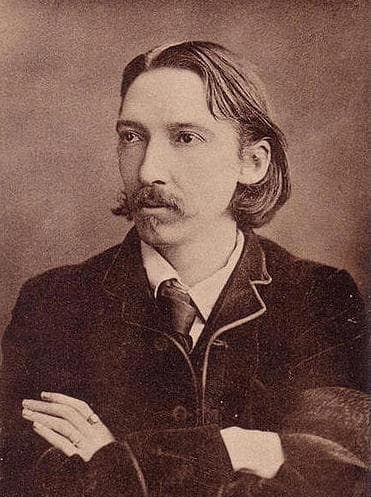
Robert Louis Stevenson was a Scottish novelist, essayist, poet and travel writer. He is best known for works such as Treasure Island, Strange Case of Dr Jekyll and Mr Hyde, Kidnapped and A Child's Garden of Verses.
Similar books
- Treasure Island
Robert Louis Stevenson
Classic adventure, coming-of-age, seafaring elements, and a focus on danger and moral choices.
- Rob Roy
Walter Scott
3.7 (10k) average on GoodreadsHistorical adventure in the Scottish Highlands, themes of justice, loyalty, and encounters with outlaws.
- The Scarlet Pimpernel
Emmuska Orczy
4.1 (124k) average on GoodreadsHistorical FictionBoth Kidnapped and The Scarlet Pimpernel are historical adventure novels featuring protagonists navigating dangerous political landscapes. However, Kidnapped is a tale of survival and self-discovery from a commoner's perspective, deeply embedded in Scottish history. The Scarlet Pimpernel, conversely, focuses on a heroic, aristocratic figure engaged in daring rescues during the French Revolution, emphasizing romantic heroism and espionage. Kidnapped offers a more grounded, gritty portrayal of historical hardship and the slow development of character, while The Scarlet Pimpernel is more overtly theatrical and focused on a single, iconic hero.
- To Kill a Mockingbird
Harper Lee
4.3 (4.5M) average on GoodreadsHistorical FictionIn the 1930s Jim Crow South, Harper Lee writes about racial injustice, moral growth, and the quiet courage of a lawyer father, Atticus Finch, as seen through his young daughter's eyes.
- The Great Gatsby
F. Scott Fitzgerald
3.9 (3.8M) average on GoodreadsHistorical FictionIn the opulent Roaring Twenties, a mysterious millionaire's lavish parties hide his desperate, tragic pursuit of a lost love, exposing the emptiness within the American Dream.
- Pride and Prejudice
Jane Austen
4.3 (3M) average on GoodreadsHistorical FictionIn a society focused on status and money, Elizabeth Bennet navigates love and pride, challenging Mr. Darcy and social expectations to find true affection.





Enjoyed the summary?
A summary gives you the shape of the book. The book itself has the detail, the examples and the voice.
Find Kidnapped on AmazonAs an Amazon Associate, BookBrief earns from qualifying purchases. How we're funded