
Synopsis
Covers the whole plot, including the ending.
- Difficulty
- Medium
- Pacing
- Fast
- Mood
- Tense, Suspenseful, Gritty, Urgent
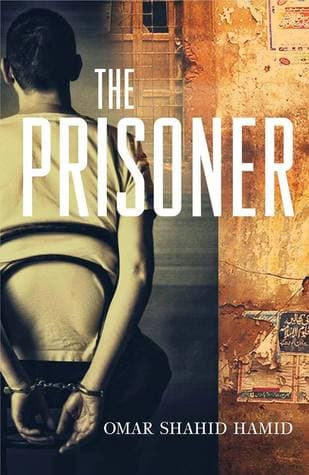
The Prisoner Plot Summary
Covers the whole plot, including the ending.
The Abduction of Jon Friedland
On an unusually cold December evening in Karachi, Pakistan, American journalist Jon Friedland is abducted. Friedland, known for his critical reporting, is taken by kidnappers who plan to release a video of his execution on Christmas Eve. The abduction immediately alarms the Pakistani government, as it risks severe embarrassment and strained relations with its American allies, especially given the sensitive political climate. The clock begins ticking for the authorities, specifically the intelligence agencies and local police, who must find Friedland alive before the kidnappers can carry out their deadly threat. The initial investigation focuses on identifying the perpetrators and their motives, starting a high-stakes search through the city's dangerous underworld.
Enter Constantine D'Souza
The Inspector General of Police, facing immense pressure, brings in Constantine D'Souza, a retired and somewhat disgraced police officer, to assist with the investigation. D'Souza, known for his unconventional methods and deep understanding of Karachi's criminal networks, initially resists, preferring his quiet retirement. However, the gravity of the situation and a personal plea from the IG eventually convince him to take the case. His involvement immediately raises eyebrows among the active police force, many of whom remember his past controversies. D'Souza's return signals a shift in the investigative approach, moving away from conventional police work towards a more ambiguous strategy, using his old contacts and street-level intelligence.
Initial Leads and Dead Ends
D'Souza and his team, which includes a young, idealistic officer, begin sifting through the limited evidence. They encounter numerous dead ends, false leads, and deliberate misdirection. The kidnappers prove to be highly organized and elusive, leaving minimal traces. Early theories range from a simple ransom demand to a politically motivated act by extremist groups or rival intelligence agencies. The pressure mounts as Christmas Eve draws nearer, and the authorities struggle to gain a solid foothold in the investigation. D'Souza's methods, while initially met with skepticism, start to yield fragmented pieces of information, hinting at a larger conspiracy.
The Search for the Mastermind
As D'Souza investigates, he starts to uncover connections between the current abduction and past incidents, suggesting a pattern and a more sophisticated mastermind behind the operation. He realizes that Friedland's kidnapping is not merely a random act but a carefully orchestrated event with wide-ranging implications. His investigation leads him to suspect a shadowy figure with deep ties to both extremist organizations and elements within the Pakistani establishment. This discovery complicates the case significantly, as it means D'Souza is not just fighting criminals but also navigating a treacherous political situation where allegiances are fluid and betrayal is common. The urgency to identify this mastermind intensifies, as their capture is key to Friedland's rescue.
The Role of International Politics
The American government, deeply concerned about its citizen's fate, exerts significant pressure on Pakistan. This international involvement, while providing resources, also complicates the local investigation. US intelligence agencies often clash with Pakistani counterparts, leading to mistrust, conflicting strategies, and a lack of cooperation. D'Souza finds himself caught between the demands of his own government and the heavy-handed interference of foreign powers. This dynamic highlights the geopolitical tensions at play, where Friedland's life becomes a pawn in a larger game of international diplomacy and regional power struggles. The conflicting agendas threaten to derail the rescue efforts, adding another layer of complexity to an already difficult situation.
A Race Against Time
With Christmas Eve looming, the deadline for Friedland's execution draws dangerously close. The kidnappers release ominous messages, increasing the psychological warfare. D'Souza and his team intensify their efforts, working around the clock. They pursue every possible lead, no matter how remote, navigating the dangerous streets of Karachi, where informants are unreliable and violence is ever-present. The pressure is immense, and the emotional toll on the investigators is palpable. Despite their best efforts, a clear path to Friedland remains elusive, and the fear that they might fail grows with each passing hour. The city itself seems to hold its breath, anticipating the outcome of this desperate race.
Betrayal and Double-Crossing
As the investigation progresses, D'Souza uncovers layers of betrayal and double-crossing within the very institutions he is supposed to trust. He realizes that some individuals within the police and intelligence agencies may be complicit, either directly or indirectly, in Friedland's abduction or are actively obstructing the investigation for their own political or financial gains. This revelation shatters his trust and makes his task even more perilous. He must now discern who he can truly rely on, operating in an environment where loyalty is a commodity and corruption is rampant. The conspiracy extends far beyond simple criminals, reaching into the highest levels of power, making the search for Friedland a battle against an entrenched system.
The Confrontation
Through shrewd deduction, old-school detective work, and a crucial tip-off from an unexpected source, D'Souza finally zeroes in on the likely location of Friedland's captivity. The hideout is in a volatile and heavily guarded area, making a direct assault extremely risky. D'Souza must carefully plan his next move, weighing the lives of his team against the urgency of rescuing Friedland. The stage is set for a tense confrontation, where the forces of law and order, albeit fractured, will face the well-entrenched kidnappers. This moment is the culmination of weeks of relentless investigation, leading to a high-stakes operation with no guarantee of success.
The Rescue Attempt
D'Souza leads a small, hand-picked team in a daring raid on the kidnappers' hideout, just hours before the Christmas Eve deadline. The operation is fraught with danger, as the kidnappers are heavily armed and prepared to fight. Gunfire erupts, and a violent struggle ensues. D'Souza, despite his age and a past injury, demonstrates remarkable courage and tactical acumen. The team faces unexpected resistance and casualties, but their determination to save Friedland propels them forward. The chaotic scene highlights the brutal realities of their mission, where every decision carries life-or-death consequences. The success of the rescue hangs precariously in the balance amidst the exchange of fire.
The Aftermath and Loose Ends
Miraculously, Jon Friedland is rescued, albeit shaken and injured, just as the deadline was about to expire. The immediate threat is neutralized, and a major international crisis is averted. However, the victory is bittersweet. While some of the immediate kidnappers are apprehended or killed, the true masterminds behind the elaborate plot, those who pulled the strings from the shadows, manage to evade capture. D'Souza is left with the unsettling realization that while he saved Friedland, the deeper conspiracy remains largely intact. The ending suggests that the cycle of violence and political machinations in Karachi is far from over, leaving many questions unanswered about the powerful forces at play and the true cost of justice in such a complex city.
The Prisoner Characters
Constantine D'Souza
Protagonist
A retired, disillusioned but brilliant Karachi police officer
Constantine D'Souza is a seasoned police officer, now retired and somewhat jaded, living a quiet life after a controversial past that led to his forced retirement. He is known for his sharp intellect, unconventional methods, and a deep, intuitive understanding of Karachi's intricate criminal underworld and political landscape. Despite his cynicism, he possesses a strong moral compass and a commitment to justice, even when it means operating outside established protocols. His past experiences have left him with a weariness but also an unparalleled ability to navigate the city's treacherous currents.
Relationships: Jon Friedland (Target of his rescue mission); Inspector General (Former colleague and superior, who brings him back); Younger Police Officers (Mentor/leader)
Jon Friedland
Victim/Catalyst
An American journalist whose abduction ignites the plot
Jon Friedland is an American journalist known for his investigative reporting, particularly on sensitive political and social issues in Pakistan. His abduction serves as the central catalyst for the novel's plot, triggering a high-stakes international incident. While he is primarily a victim, his past reporting and connections hint at the complex web of power and intrigue that led to his capture. He represents the innocent caught in the crossfire of larger geopolitical games, his life a bargaining chip for various factions.
Relationships: Constantine D'Souza (His rescuer); US Government (His nation's interest in his safety)
Inspector General (IG)
Supporting
The high-ranking police chief who enlists D'Souza
The Inspector General is a high-ranking official within the Karachi police force, burdened by the immense political pressure of Friedland's kidnapping. He is pragmatic and strategic, willing to bend rules and seek unconventional solutions, like bringing D'Souza out of retirement, to achieve his objectives. He represents the institutional face of law enforcement, caught between internal corruption, external political demands, and the desire to maintain stability. He values D'Souza's unique abilities despite their past differences.
Relationships: Constantine D'Souza (Former subordinate, now trusted consultant)
The Mastermind (unnamed or alias)
Antagonist
The shadowy orchestrator of Friedland's abduction
This character is the enigmatic and highly intelligent individual or group pulling the strings behind Friedland's kidnapping. They operate from the shadows, utilizing a network of extremist elements, corrupt officials, and political proxies to achieve their complex objectives. Their motives are deep-seated, possibly involving a blend of political destabilization, revenge, or a desire to expose certain truths, even if it means orchestrating extreme violence. This antagonist represents the pervasive corruption and hidden power structures within Karachi, making them incredibly difficult to trace and neutralize.
Relationships: Jon Friedland (His captor); Constantine D'Souza (His adversary)
Younger Police Officer (e.g., Junaid)
Supporting
An idealistic officer working with D'Souza
This character represents the newer generation of police officers, often idealistic and struggling to reconcile their sense of justice with the rampant corruption and political maneuvering within the force. They are assigned to D'Souza's team, initially skeptical of his methods but gradually learning to appreciate his wisdom and unconventional insights. This officer provides a contrast to D'Souza's cynicism, highlighting the hope for change while also experiencing the brutal realities of law enforcement in Karachi firsthand.
Relationships: Constantine D'Souza (Mentee/subordinate)
US Embassy Officials / CIA Operatives
Supporting
American representatives involved in the rescue efforts
These characters represent the American government's interest and involvement in the Friedland case. They are often portrayed as assertive, sometimes clashing with Pakistani authorities due to differing priorities, methods, and levels of trust. Their presence highlights the international dimensions of the crisis and the geopolitical tensions at play. They provide resources but also introduce complexities and diplomatic friction, reflecting the often-strained relationship between the two nations in counter-terrorism efforts.
Relationships: Jon Friedland (Citizen they are trying to protect); Pakistani Authorities (Collaborators/rivals in the investigation)
Local Informants / Underworld Figures
Supporting
D'Souza's network of street-level contacts
These characters form D'Souza's crucial network within Karachi's criminal underworld. They are a diverse group of individuals – petty criminals, gang members, and street-level contacts – who provide fragmented but vital information in exchange for money, favors, or protection. They operate in a morally ambiguous space, often driven by self-preservation but occasionally displaying glimpses of loyalty or a code of their own. They are essential for D'Souza's unconventional detective work, providing the eyes and ears on the ground that official channels often lack.
Relationships: Constantine D'Souza (Source of information/mutual reliance)
Corrupt Police/Intelligence Officers
Antagonist/Supporting
Individuals within the system hindering the investigation
These characters represent the deep-seated corruption within Pakistan's law enforcement and intelligence agencies. They either actively obstruct the investigation, provide misinformation, or are secretly complicit in the larger conspiracy surrounding Friedland's abduction. Their motivations vary from financial gain to political allegiance or protecting their own interests. They serve as a constant internal threat to D'Souza's mission, making it difficult to discern friend from foe within the very institutions meant to uphold justice.
Relationships: Constantine D'Souza (Adversaries/obstacles); The Mastermind (Complicit/allied with)
The Prisoner Themes
Corruption and Moral Ambiguity
The novel explores the corruption within Pakistani institutions, from the police force to political circles. It portrays a world where lines between good and evil are blurred, and individuals, even those striving for justice, must often compromise their morals to achieve their goals. Constantine D'Souza embodies this theme, forced to navigate a system riddled with deceit, where loyalty is bought, and betrayal is common. The narrative constantly questions whether true justice can exist in such an environment.
“In Karachi, the truth was rarely simple, and justice, if it existed at all, often wore a disguise of compromise and expediency.”
The Price of Justice
This theme examines the personal and societal cost of pursuing justice in a fractured and dangerous society. D'Souza's character arc highlights the sacrifices, disillusionment, and personal risks involved in fighting against entrenched power structures and crime. The novel suggests that achieving even a semblance of justice often requires individuals to operate outside the law, endure immense personal suffering, and accept that complete victory may be impossible. It is a somber reflection on the enduring struggle against injustice.
“Every victory against the darkness came with a price, and in this city, the currency was often paid in blood or shattered ideals.”
Geopolitics and International Intrigue
The abduction of an American journalist immediately thrusts the local crime into the global arena, illustrating how international politics impacts domestic affairs. The novel shows the complex and often tense relationship between Pakistan and the United States, with conflicting agendas, mistrust between intelligence agencies, and the use of individuals as pawns in larger geopolitical games. It highlights how local conflicts can have far-reaching international consequences and how foreign intervention can complicate, rather than simplify, local efforts.
“Friedland wasn't just a man; he was a flag, and his fate was a diplomatic incident waiting to explode.”
The Nature of Karachi
Karachi itself is a character in the novel – a sprawling, chaotic, and energetic metropolis that is both dangerous and alluring. The city's unique blend of poverty, wealth, political factions, and criminal networks creates a complex backdrop for the narrative. The novel portrays Karachi as a place where nothing is as it seems, where loyalties are fluid, and survival often depends on understanding its unwritten rules. It emphasizes the city's ability to consume and reshape those who inhabit it, reflecting its tumultuous history and uncertain future.
“Karachi was a beast, alive and hungry, and if you didn't understand its rhythm, it would devour you whole.”
Plot Devices & Literary Techniques
Ticking Clock
The Christmas Eve execution deadline
The kidnappers' threat to execute Jon Friedland on Christmas Eve creates an intense and relentless ticking clock. This device builds immense suspense and urgency throughout the narrative, driving the characters' actions and decisions. It constantly reminds the reader of the high stakes and the limited time available, amplifying the pressure on D'Souza and his team. Every lead, every setback, and every moment of inaction is magnified by the looming deadline, making the rescue attempt a desperate race against time.
The Reluctant Hero
Constantine D'Souza's return to duty
Constantine D'Souza embodies the reluctant hero archetype. Having retired and become disillusioned with the system, he initially resists being drawn back into the dangerous world of police work. His reluctance stems from past traumas and a deep understanding of the pervasive corruption he'll have to confront. This device allows for character development as D'Souza grapples with his past and present, while also adding realism to his heroism – he's not a gung-ho idealist, but a weary veteran making a difficult choice for the greater good.
Red Herring
Misleading clues and false suspects
Throughout the investigation, D'Souza and his team encounter numerous red herrings – misleading clues, false informants, and deliberately planted evidence. These diversions are often orchestrated by the true masterminds or by rival factions seeking to muddy the waters. This device keeps the reader guessing, making the mystery more complex and highlighting the treacherous nature of the investigation in Karachi. It underscores the difficulty of discerning truth from deception in a city where nothing can be taken at face value.
Political Intrigue and Conspiracy
Layers of hidden agendas and powerful forces
The plot is deeply woven with political intrigue and a complex conspiracy that extends beyond simple criminal activity. Friedland's abduction is not an isolated incident but part of a larger, carefully orchestrated plan involving powerful figures within the government, intelligence agencies, and extremist groups. This device creates a labyrinthine narrative where D'Souza must navigate not only the immediate threat but also the hidden agendas and power struggles that constantly threaten to derail his mission. It adds depth and realism to the portrayal of the geopolitical landscape.
Quiz
10 questions on the plot and the characters. Each answer comes with a short explanation.
Question 1
What is the name of the American journalist who is kidnapped in Karachi?
- Jon Friedland
- Omar Shahid Hamid
- Jon Smith
- David Miller
Show answer
A. Jon Friedland The book states that Jon Friedland is the American journalist who is kidnapped.
Question 2
In which city does the kidnapping take place?
- New York
- London
- Karachi
- Islamabad
Show answer
C. Karachi The text explicitly mentions that the kidnapping occurs in the Pakistani city of Karachi.
Question 3
What is the kidnappers' stated plan for Jon Friedland on Christmas Eve?
- To release him after a ransom is paid.
- To exchange him for imprisoned militants.
- To post a video of his execution online.
- To force him to write a story criticizing the government.
Show answer
C. To post a video of his execution online. The text states that the kidnappers plan to post a video of his execution online on Christmas Eve.
Question 4
Why is the kidnapping particularly inconvenient for the Pakistani government?
- It distracts from important economic negotiations.
- It risks embarrassing them in front of their American allies.
- It could lead to international sanctions.
- It fuels internal political unrest.
Show answer
B. It risks embarrassing them in front of their American allies. The text mentions that the kidnapping occurs at an inopportune time as the Pakistani government risks embarrassing itself before its American allies.
Question 5
Which of the following is NOT mentioned as a group operating in the streets of Karachi within the context of the story?
- Jihadis
- Corrupt police
- Political operatives
- International spies
Show answer
D. International spies The text mentions jihadis, corrupt police, and political henchmen, but not international spies.
Question 6
What is the general atmosphere or characteristic of the city of Karachi as described in the book?
- Predictable and orderly
- Peaceful and welcoming
- Nothing is as it seems
- A city of strict laws
Show answer
C. Nothing is as it seems The description states that Karachi is a city where 'nothing is as it seems'.
Question 7
The story implies a race against time. What event is the deadline tied to?
- A major political summit
- The release of a captured diplomat
- Christmas Eve and the planned execution video
- A scheduled military operation
Show answer
C. Christmas Eve and the planned execution video The kidnappers plan to release the video on Christmas Eve, creating a deadline for the authorities.
Question 8
What genre(s) are associated with 'The Prisoner' by Omar Shahid Hamid?
- Romance, Comedy
- Science Fiction, Fantasy
- Politics, Thriller, Mystery
- Historical Fiction, Drama
Show answer
C. Politics, Thriller, Mystery The provided description explicitly lists the genres as Politics, Thriller, and Mystery.
Question 9
The description of Karachi suggests a complex and dangerous environment. Which of the following best captures this complexity?
- A city struggling with natural disasters.
- A place where power is held by a single, unified faction.
- A setting rife with deceit, corruption, and extremist elements.
- A city undergoing rapid, peaceful modernization.
Show answer
C. A setting rife with deceit, corruption, and extremist elements. The mention of 'Jihadis, corrupt police, and bloodthirsty political henchmen' points to a complex and dangerous environment characterized by deceit and violence.
Question 10
Considering the political implications mentioned, the kidnapping of Jon Friedland could be seen as a tool for what?
- Promoting international tourism.
- Gaining leverage or causing disruption in international relations.
- Facilitating cultural exchange programs.
- Encouraging diplomatic negotiations.
Show answer
B. Gaining leverage or causing disruption in international relations. The kidnapping's timing and potential to embarrass the government in front of allies suggest it's being used to gain leverage or cause disruption in international relations.
The Prisoner FAQ
What is the plot of 'The Prisoner' by Omar Shahid Hamid?
'The Prisoner' follows the abduction of American journalist Jon Friedland in Karachi, Pakistan. His kidnappers plan to release a video of his execution on Christmas Eve, creating immense pressure on the Pakistani government and intelligence agencies to find him before time runs out.
Who is the main protagonist in 'The Prisoner'?
The central character is Jon Friedland, an American journalist who becomes the victim of a high-stakes kidnapping. The narrative also heavily features the efforts of intelligence services and police trying to rescue him.
What are the main themes explored in 'The Prisoner'?
The novel delves into themes of political intrigue, terrorism, corruption within law enforcement, and the complex geopolitical relationship between Pakistan and the United States. It also explores the dangerous realities of life in Karachi.
What kind of setting does 'The Prisoner' take place in?
The story is set in Karachi, Pakistan, a bustling metropolis depicted as a dangerous environment filled with jihadis, corrupt police, and ruthless political operatives. The city itself is portrayed as a character, where appearances can be deceiving.
Is 'The Prisoner' a fast-paced thriller?
Yes, the novel is described as a thriller with a ticking clock element, as authorities race against time to save Jon Friedland before his scheduled execution. The urgency of the situation drives the plot forward.
What makes 'The Prisoner' different from other political thrillers?
Its gritty realism and unflinching portrayal of the dark underbelly of Karachi, including its jihadist elements and corrupt officials, set it apart. The book aims to offer a visceral and authentic look at the challenges faced by those trying to maintain order in a chaotic environment.
Who would enjoy reading 'The Prisoner'?
Readers who enjoy political thrillers, mystery novels, and stories set in complex, real-world geopolitical landscapes will likely find 'The Prisoner' engaging. It appeals to those interested in the intersection of journalism, politics, and crime in a foreign setting.
Does 'The Prisoner' offer insights into Pakistani politics and society?
While a fictional thriller, the book aims to provide a glimpse into the complex political landscape and societal challenges of Pakistan, particularly in Karachi. It touches upon issues of corruption, extremism, and the pressures of international relations.
Is the book based on real events?
The book is a work of fiction, but it draws inspiration from the real-world political climate and the dangers present in cities like Karachi. It aims for a high degree of realism in its depiction of the environment and the conflicts.
What is the role of journalism in 'The Prisoner'?
Journalism is central to the plot, with the protagonist being an American journalist. His profession places him directly in the path of danger and highlights the risks involved in reporting from volatile regions.
Similar books
- A Case of Exploding Mangoes
Mohammed Hanif
3.8 (10k) average on GoodreadsLiterary Fiction"The Prisoner" shares with Hanif's "A Case of Exploding Mangoes" a satirical yet deeply critical look at Pakistani politics and the absurdities of power. However, while Hanif employs dark humor and farce to expose the machinations of the state, Hamid's approach is more grounded in realism and a grim, procedural suspense. Hamid's tone is less overtly comedic and more focused on the human cost of political corruption and violence, offering a grittier, less exaggerated, but equally incisive critique of the system.
- The Ministry of Utmost Happiness
Arundhati Roy
3.5 (28k) average on GoodreadsLiterary FictionWhile set in India, Roy's "The Ministry of Utmost Happiness" shares with "The Prisoner" a sprawling narrative that intertwines personal stories with a broad socio-political tapestry, exploring themes of identity, injustice, and the marginalized. Both authors create a rich, immersive world, but Hamid's focus is more tightly on the thriller and mystery aspects within a specific institutional framework (police, intelligence), whereas Roy's novel is more literary and character-driven, with a broader scope of social critique and less emphasis on a central mystery or investigation.
- 1984
George Orwell
4.2 (3.1M) average on GoodreadsPoliticsIn a future where surveillance and thought control are absolute, a man's search for truth clashes with the Party, showing that hope can be a form of rebellion.
- Animal Farm
George Orwell
4.0 (2.7M) average on GoodreadsPoliticsA farm animals' rebellion against humans turns into a pig-led dictatorship, showing how power corrupts and revolutionary ideals are betrayed.
- Freakonomics: A Rogue Economist Explores the Hidden Side of Everything
Steven D. Levitt
4.0 (709k) average on GoodreadsBusinessThis book uses economic principles to reveal the surprising incentives behind everything from drug dealing and real estate to cheating teachers and the decline of crime.
- I Am Malala: The Story of the Girl Who Stood Up for Education and Was Shot by the Taliban
Malala Yousafzai
4.1 (419k) average on GoodreadsPoliticsA teenage girl from a Taliban-controlled valley refuses to give up her books, becoming a global voice for education even after an assassination attempt.





Enjoyed the summary?
A summary gives you the shape of the book. The book itself has the detail, the examples and the voice.
Find The Prisoner on AmazonAs an Amazon Associate, BookBrief earns from qualifying purchases. How we're funded