
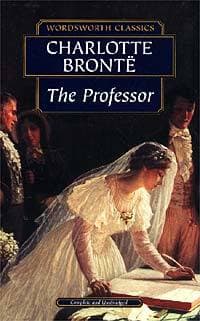
Synopsis
Covers the whole plot, including the ending.
- Difficulty
- Medium
- Pacing
- Slow
- Mood
- Reflective, Observational, Earnest, Understated Romantic
- Read it if
- You enjoy character-driven stories of quiet determination, intellectual romance, and social observation set in 19th-century Europe. Perfect for fans of early Brontë works.
- Skip it if
- You prefer fast-paced plots, dramatic action, or protagonists who are overtly passionate and flamboyant. This book is a slow burn.
The Professor Plot Summary
Covers the whole plot, including the ending.
William Crimsworth's Unpromising Start in England
William Crimsworth, an orphan raised by his clergyman uncle, tells about his early life. He refuses to enter the church, disappointing his uncle. After school, he tries to find work with his two older brothers, the rich and arrogant Edward, and the more helpful but ultimately ineffective Matthew. Edward, a mill owner, reluctantly offers William a clerkship but treats him with disrespect and cruelty, always reminding him he depends on him. William puts up with the harsh conditions and his brother's control for a time, watching the industrial world around him. He decides he cannot stand Edward's oppressive nature and resolves to seek his fortune elsewhere, even though he has no connections or prospects.
A New Beginning in Brussels: Monsieur Pelet's School
Wanting independence and having a recommendation from a former schoolmate, Mr. Hunsden, William decides to leave England for Brussels. Hunsden, a practical man, helps William get a job as an English and Latin teacher at a boys' school run by Monsieur Pelet. William finds the school and Belgian culture very different from England. He watches Monsieur Pelet, a man of superficial charm and a focus on profit, and learns about teaching and managing students. At first, William feels alone and struggles with the new language and customs. He is determined to succeed and prove himself.
Intrigue at Mademoiselle Reuter's Pensionnat
While teaching at Pelet's school, William is also offered a job teaching English at a nearby girls' school, the Pensionnat de Demoiselles, run by Mademoiselle Zoraïde Reuter. William quickly sees that Monsieur Pelet and Mademoiselle Reuter, despite being polite, have a romantic relationship driven by ambition and money. Pelet hopes to merge their schools. William observes Reuter's manipulative nature and her calculated charm. He gets involved in their professional and personal rivalry, all while staying detached and observant. His sharp perception lets him see through their pretenses, especially Reuter's.
Mademoiselle Reuter's Calculated Advances and William's Disillusionment
Mademoiselle Reuter, impressed by William's intelligence and honesty, starts to pay him special attention, trying to charm him. She invites him to social events and talks to him alone, suggesting deeper interest. William, however, is not easily swayed. He sees her superficiality and underlying ambition, recognizing her attempts to get him as a husband for money and social gain. His observations confirm his first impression of her as a calculating and insincere woman. He rejects her advances, which makes her less friendly towards him and makes her resent him, especially when she realizes he is not easily manipulated.
The Arrival of Frances Henri and William's Growing Interest
A new teacher, Frances Henri, arrives at Mademoiselle Reuter's school to teach lace-mending and plain needlework. Frances is a quiet, reserved Anglo-Swiss girl, at first ignored by Reuter and the other staff. William, however, notices her diligent work, intelligence, and thoughtful manner. He is particularly struck by her earnestness and her struggles, seeing in her a similar spirit who, like him, wants independence and respect. He starts to watch her more closely, finding her genuine character a contrast to the superficiality of Reuter and her group. A quiet admiration begins as he sees her quiet dignity and talent.
Frances's Dismissal and William's Intervention
Mademoiselle Reuter, feeling more and more offended by William's rejection and perhaps jealous of his growing interest in Frances, finds an excuse to fire Frances from the school. Frances is very sad about losing her job and her uncertain financial situation. William, seeing her distress and knowing her dismissal is unfair, feels he must help. He offers her advice and assistance, helping her find new work as a lace-mender and a private English tutor. This kindness strengthens their connection and allows them to spend more time together, talking about their struggles and hopes, and deepening William's respect and affection for her.
William's Departure from Pelet's and New Opportunities
William's relationship with Monsieur Pelet gets worse as Pelet becomes suspicious of William's influence and his perceived competition for Mademoiselle Reuter's affection, even though William clearly is not interested in her. The work environment becomes unbearable, and William decides to leave Pelet's school. At the same time, Mademoiselle Reuter's English teacher quits, and William is offered the job. He accepts, wanting the higher salary and a chance to prove himself independently. This move also puts him closer to Frances, whom he continues to secretly guide and support in her own efforts, further cementing his feelings for her.
Frances's Struggles and William's Guidance
Despite William's help, Frances continues to have financial difficulties and the challenges of being an independent woman in Brussels. She works hard, often alone, to make enough money and improve her skills. William, acting as her mentor and confidant, continues to encourage her, give practical advice, and sometimes even financial help when needed, though she is proud and prefers to earn her own way. He sees her resilience, quiet determination, and intellectual curiosity directly. Their bond strengthens through shared experiences of professional struggle and mutual respect for hard work and honesty, a sharp contrast to the superficiality around them.
The Proposal and the Path to Marriage
William realizes how much he feels for Frances, admiring her intelligence, integrity, and quiet strength. He proposes marriage to her, and she accepts, having felt the same way about him for a long time. Their engagement is based not on passion or social status, but on deep mutual respect, shared values, and a common understanding of their struggles. They discuss their future plans, which include starting their own school, a venture that fits their ambitions for independence and intellectual fulfillment. Their marriage shows substance winning over superficiality.
Establishing Their Own School and Future Success
William and Frances marry. With their combined savings and William's inheritance from his deceased uncle, they start their own boys' boarding school. They work hard together, with Frances being a valuable partner in both teaching and managing the institution. Their school does well because of their dedication, new teaching methods, and the genuine care they show their students. They become financially stable and get professional recognition. The story ends with William thinking about their successful life, their deep marital happiness, and their children, especially their son, Victor. He looks forward to Victor's future, hoping he will return to England and have a successful career there.
Principal Figures
William Crimsworth
Protagonist
An orphaned, intelligent, and observant young man seeking independence and a meaningful life.
William Crimsworth is the novel's narrator and protagonist, an orphaned Englishman who, despite his humble beginnings, possesses a keen intellect, strong moral compass, and a desire for self-sufficiency. He is observant, analytical, and somewhat reserved, often preferring to observe human nature rather than actively participate in social machinations. His experiences with his cruel brother Edward and the manipulative Monsieur Pelet and Mademoiselle Reuter harden his resolve and sharpen his judgment. He values integrity, hard work, and genuine affection over superficial charm or wealth. His journey is one of self-discovery and the pursuit of a life built on merit and mutual respect.
Relationships: Edward Crimsworth (antagonistic, oppressive elder brother); Monsieur Pelet (employer and rival); Mademoiselle Zoraïde Reuter (colleague, employer, and manipulative suitor); Frances Henri (student, colleague, beloved wife, and intellectual partner)
Frances Henri
Love Interest / Supporting Protagonist
A quiet, intelligent, and independent Anglo-Swiss girl who becomes William's wife and partner.
Frances Henri is an Anglo-Swiss orphan who initially works as a lace-mender and later as a teacher. She is characterized by her quiet diligence, intelligence, strong work ethic, and fierce independence. Despite her reserved demeanor, she possesses a passionate spirit and a deep capacity for affection. She is initially a student of William's and later becomes his intellectual equal and beloved wife. Her struggles for independence and her quiet dignity resonate deeply with William, who sees in her a kindred spirit untainted by the superficiality of their surroundings. She is resourceful and determined to make her own way in the world.
Relationships: William Crimsworth (student, colleague, beloved wife, and intellectual partner); Mademoiselle Zoraïde Reuter (employer who dismisses her unjustly)
Mademoiselle Zoraïde Reuter
Antagonist / Supporting
The ambitious and manipulative directress of a girls' school, who attempts to ensnare William.
Mademoiselle Zoraïde Reuter is the attractive, ambitious, and ultimately manipulative directress of the Pensionnat de Demoiselles. She is outwardly charming and sophisticated but driven by a desire for financial gain and social advancement. She attempts to use her charms to secure a advantageous marriage, first with Monsieur Pelet and then with William Crimsworth. Her superficiality and lack of genuine affection are quickly discerned by William, leading to her resentment and eventual attempts to undermine him and Frances Henri. She represents the social climbing and insincerity that William despises.
Relationships: William Crimsworth (employer and rejected suitor); Monsieur Pelet (lover and business partner); Frances Henri (employer who dismisses her unjustly)
Monsieur Pelet
Supporting / Antagonist
The proprietor of a boys' school, superficial and driven by profit, who initially employs William.
Monsieur Pelet is the proprietor of the boys' school where William first finds employment in Brussels. He is a man of superficial charm and a shrewd businessman, more concerned with profit and appearances than with genuine intellectual pursuits or the welfare of his staff. He is involved in a calculating romantic relationship with Mademoiselle Reuter, hoping to merge their schools for mutual benefit. Pelet's jealousy and suspicion towards William, stemming from his own insecurities and Reuter's machinations, eventually lead to William's departure from his school. He embodies the commercial and somewhat shallow aspects of the Belgian educational system.
Relationships: William Crimsworth (employer and rival); Mademoiselle Zoraïde Reuter (lover and business partner)
Edward Crimsworth
Antagonist / Supporting
William's wealthy and cruel elder brother, who treats him with contempt and disdain.
Edward Crimsworth is William's eldest brother, a wealthy mill owner who embodies arrogance, cruelty, and a rigid class consciousness. He grudgingly offers William a clerkship but subjects him to constant humiliation and demeaning treatment, viewing his younger brother as a burden and an inferior. His oppressive nature is a primary catalyst for William's decision to leave England and seek his fortune elsewhere. Edward represents the harsh social hierarchies and lack of compassion William encounters in his early life, contrasting sharply with William's own integrity and desire for independence.
Relationships: William Crimsworth (antagonistic, oppressive younger brother)
Mr. Hunsden
Supporting
A pragmatic and somewhat cynical acquaintance who helps William secure his first job in Brussels.
Mr. Hunsden is a former schoolmate of William's, a practical and somewhat cynical Englishman living in Brussels. He provides William with crucial advice and connections, helping him secure his initial teaching position with Monsieur Pelet. Hunsden represents a grounded, albeit sometimes blunt, perspective on life and human nature. He is a man of the world, offering William practical guidance and a dose of reality, though he also expresses some traditional English prejudices regarding foreign cultures and women. He serves as a foil to William's more idealistic nature at times, but is ultimately a supportive figure.
Relationships: William Crimsworth (acquaintance and benefactor)
Matthew Crimsworth
Mentioned
William's other elder brother, who is more sympathetic but ultimately unhelpful.
Matthew Crimsworth is William's second elder brother. While he is described as more sympathetic than Edward, he is ultimately passive and does not actively help William escape his difficult situation. He represents a kind of benign neglect, unable or unwilling to challenge Edward's authority or provide meaningful support to William. His character highlights William's isolation and the necessity of his self-reliance.
Relationships: William Crimsworth (indifferent elder brother)
Victor Crimsworth
Mentioned
William and Frances's son, whose future is a source of hope and reflection for William.
Victor Crimsworth is William and Frances's son, mentioned in the concluding chapters of the novel. He represents the culmination of William's journey and his legacy. William reflects on Victor's future, hoping he will return to England and achieve success there, symbolizing a full circle for the Crimsworth family. Victor embodies the hope for a prosperous and fulfilling future, built upon the hard-won achievements and integrity of his parents.
Relationships: William Crimsworth (son); Frances Henri (son)
Themes & Insights
Independence and Self-Reliance
The novel emphasizes independence, especially for William Crimsworth. From refusing his uncle's church path to enduring his brother's control and leaving England, William always wants to be self-sufficient. He refuses to depend on others, preferring to earn his way through hard work and honesty. Frances Henri's struggles as an orphaned teacher, who also wants to be independent, mirror this theme. Their decision to start their own school together is the ultimate success of this theme. They create a life and career entirely on their own terms, free from manipulation and superficiality.
“I had made up my mind to be a tradesman, and to work my way up from the bottom; and I meant to do it. It might be hard, but it should be done.”
Integrity vs. Superficiality
A main contrast in 'The Professor' is between true honesty and outward appearances. William Crimsworth, with his quiet observation and strong moral sense, consistently sees through the pretenses of characters like Mademoiselle Reuter and Monsieur Pelet. Reuter's charm and ambition are shown to be manipulative and selfish, while Pelet's friendliness hides a mercenary nature. In contrast, Frances Henri, though modest and at first overlooked, shows true worth through her hard work, intelligence, and sincerity. The novel values inner character and honest work over social posing and material gain, rewarding William and Frances's true virtues.
“I was not a man to be dazzled by any amount of superficial brilliancy; I could see the gold under the tinsel, and the base metal under the gilding.”
The Role of Education and Intellect
Education and intellect are important for personal growth and social advancement in the novel. William's intelligence and dedication to learning, especially his language skills, allow him to escape his oppressive English background and start a new career in Brussels. He is not just a teacher but a sharp observer and analyst of people. Frances Henri's intellectual ability, her desire to improve herself through study, and her skills as an educator are equally important to her survival and eventual success. Their shared commitment to academic excellence and their new teaching approach lead to their school's prosperity, showing education's power to change lives.
“To be a good master, I saw, it was necessary to be a better scholar.”
Social Class and Ambition
The novel explores social class and different kinds of ambition. William, from a respectable family, faces his wealthy brother Edward's scorn because he lacks his own money. His ambition is not for high status but for financial independence and professional respect earned through merit. Mademoiselle Reuter, on the other hand, shows a more common, money-driven ambition, wanting to marry for wealth and social advancement. The story criticizes the superficiality of class differences and the damaging effect of ambition when it lacks honesty. It ultimately affirms William's quiet, merit-based rise over Reuter's calculating social climbing.
“I determined that, if I could not be a gentleman in the world's eye, I would at least be one in my own.”
Gender Roles and Female Agency
While William is the main male character, the novel also addresses gender roles and female action through characters like Frances Henri and Mademoiselle Reuter. Reuter, though manipulative, is a woman who acts strongly in her professional and personal life, though often for selfish reasons. Frances, however, represents a more admirable form of female action. As an orphaned woman, she faces huge social and financial challenges but tries to be self-reliant through her own work and mind. Her desire for independence and her partnership with William, where she is his intellectual and professional equal, challenges the usual limits placed on women at the time.
“No man can live a life of perfect self-sacrifice; no woman can live a life of perfect self-abnegation; each must have some aim, some interest, some object of their own.”
Plot Devices & Literary Techniques
First-Person Narration (William Crimsworth)
Provides an intimate, analytical perspective on events and characters.
The entire novel is narrated from the first-person perspective of William Crimsworth. This device allows the reader direct access to William's thoughts, observations, and judgments, shaping the perception of all other characters and events through his highly analytical and often cynical lens. It emphasizes his role as a detached observer, particularly in the Belgian social scene, and highlights his integrity as he recounts his experiences with honesty and self-reflection. The reader experiences William's journey of self-discovery and his eventual understanding of genuine worth, making his eventual happiness feel earned and authentic.
Foil Characters
Highlights William's virtues and integrity through contrast with other characters.
Several characters serve as foils to William Crimsworth, emphasizing his unique qualities. Edward Crimsworth's cruelty and arrogance highlight William's resilience and moral uprightness. Monsieur Pelet's superficiality and mercenary nature contrast with William's intellectual depth and integrity. Most notably, Mademoiselle Reuter's calculating charm and ambition serve to underscore Frances Henri's quiet sincerity and genuine worth, which William comes to value above all. These contrasts allow the reader to appreciate William's discerning nature and the honest values he upholds in a world often driven by less noble motives.
Bildungsroman (Coming-of-Age Story)
Traces the moral and intellectual development of the protagonist.
'The Professor' functions as a Bildungsroman, chronicling William Crimsworth's journey from a young, oppressed man in England to a mature, successful, and happily married professor in Brussels. The narrative focuses on his education, both formal and informal, as he learns about human nature, navigates social complexities, and develops his own moral code. His experiences, particularly his encounters with various types of ambition, deceit, and integrity, shape his character and lead him to a deeper understanding of himself and what truly constitutes a fulfilling life. His eventual success is a testament to his personal growth and resilience.
Symbolism of Brussels (Foreign Land)
Represents both opportunity and a testing ground for William's character.
Brussels serves as a significant symbolic setting. For William, it is a foreign land that offers an escape from the oppressive social strictures of England and a chance for self-reinvention. It represents opportunity and a fresh start, a place where he can build a career based on merit rather than inherited status. However, it also acts as a testing ground, exposing him to different cultural norms, the superficiality of certain European social circles, and various forms of manipulation. His success in Brussels, culminating in the establishment of his own school, symbolizes his triumph over adversity and his ability to thrive independently in an unfamiliar environment.
The Professor Quotes
“Mine be the privilege of teaching you. I am a stranger; I may be a friend. I am an alien; I may be a brother. I have no claim on you, but that of your dependence on me. Your dependence on me is absolute.”
“For my part, I like to look at an original; and I like to discover the original for myself.”
“I was not a man of many words, and I had no need to be. My actions spoke for me.”
“There are certain persons who are not naturally gregarious, and I am one of them.”
“I had a native antipathy to fawning, and I could not bring myself to flatter.”
“The feeling of being useful, of being needed, was a new and pleasant one to me.”
“I had a will, and I meant to use it.”
“I could not be a tool; I must be a man.”
“Poverty is a great educator. It teaches lessons that no university can impart.”
“I was not made for idleness; I was made for work.”
“To be loved, to be cherished, to be understood, is, I believe, the great want of human nature.”
“I had no taste for frivolous pleasures; my pleasures were of a more solid and substantial kind.”
“It is a grand thing to be independent; it is a grand thing to be one's own master.”
“I found a peculiar pleasure in watching her work, in seeing her mind unfold.”
Quiz
10 questions on the plot and the characters. Each answer comes with a short explanation.
Question 1
What is the primary reason William Crimsworth leaves his initial employment with his brother, Edward?
- He inherited a large sum of money and no longer needed to work.
- Edward's cruel and exploitative treatment made his position unbearable.
- He decided to pursue a career in the military.
- He was offered a more prestigious position in London.
Show answer
B. Edward's cruel and exploitative treatment made his position unbearable. William leaves his brother Edward's employ because Edward treats him with contempt and exploits his labor, making his life miserable and offering no prospect of advancement.
Question 2
Who is the first person to offer William Crimsworth assistance and advice after he leaves his brother's factory?
- His estranged mother.
- Mr. Hunsden, an independent and observant mill-owner.
- A former school friend.
- His uncle, who lives in London.
Show answer
B. Mr. Hunsden, an independent and observant mill-owner. After leaving his brother, William encounters Mr. Hunsden, who, despite his blunt manner, offers William practical advice and connections, ultimately helping him secure a position in Brussels.
Question 3
Where does William Crimsworth initially find work in Brussels?
- As a tutor in a wealthy private home.
- As a professor at the boys' school run by Monsieur Pelet.
- As a translator for a government agency.
- As a clerk in a merchant's office.
Show answer
B. As a professor at the boys' school run by Monsieur Pelet. William is initially hired by Monsieur Pelet to teach English and Latin at his boys' school in Brussels, marking his first step into the academic world.
Question 4
What is the nature of William's relationship with Zoraïde Reuter, the headmistress of the girls' school?
- She is a kind and supportive mentor who helps him adjust to Brussels.
- She attempts to seduce him and manipulate him for her own gain.
- They form a purely professional working relationship based on mutual respect.
- She is his distant cousin and offers him family support.
Show answer
B. She attempts to seduce him and manipulate him for her own gain. Zoraïde Reuter, the headmistress, attempts to ensnare William in a romantic entanglement, primarily to secure her own position and influence, rather than out of genuine affection.
Question 5
What characteristic does William Crimsworth value most in a potential partner, as exemplified by his eventual love interest?
- Wealth and social standing.
- Physical beauty and charm.
- Intellectual equality, independence, and sincere affection.
- Submissiveness and domestic skills.
Show answer
C. Intellectual equality, independence, and sincere affection. William is drawn to Frances Henri because of her intelligence, diligence, independence, and genuine character, contrasting sharply with the superficiality he observes in others.
Question 6
What is Frances Henri's profession when William first encounters her?
- She is a wealthy student at the girls' school.
- She is a lace-mender and a teacher of needlework at the girls' school.
- She is a professional musician.
- She is a published author.
Show answer
B. She is a lace-mender and a teacher of needlework at the girls' school. Frances Henri is initially employed at Mademoiselle Reuter's school as a lace-mender and English teacher, highlighting her industrious and independent nature.
Question 7
How does William Crimsworth eventually become the head of his own school?
- He inherits it from a deceased relative.
- He wins it in a lottery.
- He and Frances establish their own prosperous school together.
- He is promoted after Monsieur Pelet retires.
Show answer
C. He and Frances establish their own prosperous school together. William and Frances, through their hard work and shared vision, eventually establish their own successful combined boys' and girls' school, demonstrating their joint ambition and capability.
Question 8
What is a significant thematic difference between William Crimsworth's approach to education and that of his Belgian counterparts (e.g., Pelet, Reuter)?
- William prioritizes strict discipline, while they prefer leniency.
- William values genuine intellectual development and moral character, while they focus more on superficial accomplishments and social display.
- William emphasizes physical education, while they focus on academic subjects.
- William believes in co-education, while they only teach single-sex schools.
Show answer
B. William values genuine intellectual development and moral character, while they focus more on superficial accomplishments and social display. William consistently critiques the superficiality and moral laxity he observes in the Belgian schools, advocating for a more rigorous, honest, and character-building form of education, especially for girls.
Question 9
How does William Crimsworth's perception of wealth and ambition evolve throughout the novel?
- He remains indifferent to wealth, always prioritizing intellectual pursuits.
- He initially seeks fortune but ultimately embraces a simpler, more modest life.
- He initially disdains wealth but comes to appreciate its necessity for independence and security.
- He becomes increasingly obsessed with accumulating vast riches.
Show answer
C. He initially disdains wealth but comes to appreciate its necessity for independence and security. William, having experienced poverty and dependence, learns that a moderate amount of wealth and financial independence are crucial for self-respect and the freedom to live according to one's principles, rather than being beholden to others.
Question 10
What role does Mr. Hunsden play in William and Frances's eventual return to England?
- He directly offers them a teaching position in England.
- He lends them a significant sum of money to start a new life.
- He advises them on investing their savings wisely, which allows them to purchase property in England.
- He arranges their marriage and emigration.
Show answer
C. He advises them on investing their savings wisely, which allows them to purchase property in England. Mr. Hunsden, with his shrewd business sense, advises William on how to invest his inherited money, enabling William and Frances to purchase a small property in England and secure their future, eventually leading to their establishment of a successful school there.
The Professor FAQ
What is The Professor about?
The Professor follows William Crimsworth, a young, principled Englishman who, after a disastrous attempt at a mercantile career under his cruel brothers, seeks independence and purpose as a teacher in Belgium. It chronicles his professional struggles, his observations of European society and education, and his eventual romance with Frances Henri, a quiet, diligent lace-mender and fellow teacher.
Why should I read The Professor?
You should read The Professor for its unique male perspective from Charlotte Brontë, offering insights into her early literary style and themes that would later define her work. It provides a detailed, often critical, look at 19th-century Belgian education and social mores, and features a compelling, understated romance between William and Frances, built on mutual respect and intellectual equality rather than grand passion.
What is the background/setting of The Professor?
The story is primarily set in Brussels, Belgium, in the mid-19th century, reflecting Charlotte Brontë's own experiences there. William Crimsworth works first at Monsieur Pelet's boys' school and later at Mademoiselle Zoraïde Reuter's fashionable girls' seminary, offering a contrasting view of the educational systems and social hierarchies within the city.
What are the most memorable quotes?
One memorable quote is William's observation: 'I found myself in a foreign land, under a foreign roof, with a foreign tongue in my ears, and foreign faces about me.' Another poignant line reflecting his pragmatism and Frances's quiet strength is when he notes, 'I saw her, a quiet, gentle, serious little creature, whose only wealth was her education and her industry.'
What writing style does the author use?
Charlotte Brontë employs a first-person narrative from William Crimsworth's perspective, characterized by a direct, observational, and often analytical tone. Her prose is precise and descriptive, focusing on character psychology and social commentary, though less overtly passionate than in her later works, reflecting William's reserved nature.
What minor details add significant meaning?
Frances Henri's constant, diligent lace-mending is a minor detail that profoundly illustrates her independence, industry, and quiet determination. It symbolizes her self-reliance and her ability to build a life through hard work, contrasting with the more superficial pursuits of other female characters at the seminary.
What are some subtle foreshadowing moments?
William's early disillusionment with his brothers' business and his inherent discomfort with superficial societal expectations subtly foreshadow his eventual rejection of the materialistic values embodied by Mademoiselle Reuter and his preference for a life of intellectual pursuit and genuine connection with Frances.
What unexpected character connections exist?
An unexpected connection is between William Crimsworth and the seemingly frivolous Mademoiselle Zoraïde Reuter. Though they initially have a flirtatious dynamic and she offers him a position, their connection ultimately highlights his integrity as he refuses to compromise his principles for her manipulative charm, solidifying his moral compass.
What are unspoken character motivations?
William Crimsworth's unspoken motivation is a deep-seated desire for respect and intellectual companionship, stemming from years of being undervalued by his family. His initial aloofness masks a yearning for a genuine connection that transcends social status or superficial charm, which he eventually finds with Frances.
What psychological complexities do characters exhibit?
Frances Henri exhibits psychological complexity through her quiet resilience and fierce independence. Despite her humble origins and reserved demeanor, she possesses a strong intellect and an unwavering sense of self-worth, refusing charity and valuing her autonomy even when deeply in love with William.
What are the major emotional turning points?
A major emotional turning point for William is when he realizes the depth of his affection for Frances Henri, especially after her temporary departure and the subsequent emptiness he feels. This moment solidifies his understanding that his true happiness lies not in worldly success but in a partnership based on mutual respect and intellectual equality.
How do relationship dynamics evolve?
The relationship dynamics between William and Frances evolve from a mentor-student dynamic, where he recognizes her intelligence, into a deep, egalitarian partnership. Initially, he is her professor, but their connection blossoms through shared intellectual pursuits and mutual respect, culminating in a marriage where they are professional equals, running their own school.
Which parts remain ambiguous or open-ended?
While the ending provides a clear resolution for William and Frances, the long-term societal impact of their unconventional, progressive school in Belgium remains somewhat ambiguous. The narrative doesn't delve into how their educational philosophy might influence the broader, more traditional European society in the decades to come.
What are controversial scenes or decisions?
One potentially controversial aspect is William's somewhat detached and critical observations of the female students and faculty at Mademoiselle Reuter's school. While presented as honest insights, his judgments can be seen as harsh or even misogynistic by modern readers, though they reflect his principled rejection of what he perceives as vanity and superficiality.
The Professor ending explained: how it ends & what it means
The Professor ends with William and Frances happily married, having established their own successful boys' school in Belgium. They have a son, Victor, and live a fulfilling life built on intellectual companionship, hard work, and mutual respect, eventually returning to England. The ending signifies the triumph of genuine merit and sincere affection over superficiality and social climbing, portraying a quiet, earned happiness.
About the author
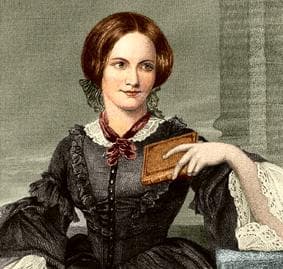
Charlotte Brontë was an English novelist and poet, the eldest of the three Brontë sisters who survived into adulthood and whose novels became classics of English literature.
Similar books
- Villette
Charlotte Brontë
3.8 (60k) average on GoodreadsHistorical FictionExplores similar themes of a solitary English teacher in a Belgian school, with a focus on internal emotional landscapes.
- Shirley
Charlotte Brontë
3.8 (30k) average on GoodreadsHistorical FictionFeatures Brontë's social commentary and strong, independent characters, though 'The Professor' is more intimate in scope.
- North and South
Elizabeth Gaskell
4.2 (57k) average on GoodreadsHistorical FictionOffers a similar blend of social observation, character development, and a slow-building, intellectual romance in a 19th-century setting.
- Vanity Fair
William Makepeace Thackeray
3.8 (118k) average on GoodreadsHistorical FictionWhile both novels critique societal norms, Thackeray's Vanity Fair is a sprawling social satire with an omniscient, cynical narrator and a vast cast of characters, offering a panoramic view of Victorian society's hypocrisies. The Professor, in contrast, is more contained and introspective, focusing on one man's struggle for dignity and self-definition, told from his limited, albeit observant, perspective.
- To Kill a Mockingbird
Harper Lee
4.3 (4.5M) average on GoodreadsHistorical FictionIn the 1930s Jim Crow South, Harper Lee writes about racial injustice, moral growth, and the quiet courage of a lawyer father, Atticus Finch, as seen through his young daughter's eyes.
- The Great Gatsby
F. Scott Fitzgerald
3.9 (3.8M) average on GoodreadsHistorical FictionIn the opulent Roaring Twenties, a mysterious millionaire's lavish parties hide his desperate, tragic pursuit of a lost love, exposing the emptiness within the American Dream.



Enjoyed the summary?
A summary gives you the shape of the book. The book itself has the detail, the examples and the voice.
Find The Professor on AmazonAs an Amazon Associate, BookBrief earns from qualifying purchases. How we're funded