
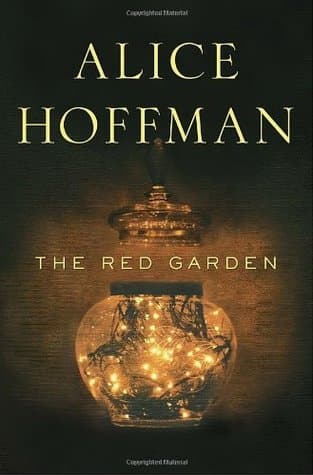
Synopsis
Covers the whole plot, including the ending.
- Difficulty
- Medium
- Pacing
- Moderate
- Mood
- Atmospheric, Evocative, Magical, Melancholy, Hopeful
- Read it if
- You enjoy interconnected short stories, magical realism, historical fiction, and lyrical prose that explores the enduring spirit of a place and its people.
- Skip it if
- You prefer a single, continuous narrative with a clear protagonist and linear plot progression, or if you dislike magical realism.
The Red Garden Plot Summary
Covers the whole plot, including the ending.
The Founding of Blackwell
In 1750, Amelia, a determined young woman from England, arrives in the Massachusetts wilderness. She was exiled for an unknown reason. She is a survivor, able to face blizzards and bears, and she establishes the settlement that will become Blackwell. She builds a cabin by a river and plants a garden, but only red flowers grow there, hinting at the land's strange magic. Amelia's independent spirit and resilience set the tone for Blackwell's future inhabitants. Her garden becomes a central, mystical element in the town, witnessing generations of secrets and desires. Her initial solitude and strength define the new community.
The Witch of Blackwell
In the late 17th century, Rebecca, a woman living outside Blackwell, is accused of witchcraft by the fearful townsfolk. Her unusual knowledge of herbs and her solitary nature make her an easy target, especially after unexplained misfortunes strike the community. The story explores the hysteria and paranoia that can grip a small, isolated settlement. Rebecca's trial and fate serve as a reminder of the dangers of intolerance. Her story is a foundational myth in Blackwell, casting a long shadow over its history and reinforcing the town's connection to the mystical.
The Civil War Soldier's Refuge
During the Civil War, Thomas, a severely wounded soldier, stumbles into Blackwell and is taken in by a kind woman named Martha. She nurses him back to health, and their shared vulnerability and quiet companionship grow into a deep, tender love. Thomas's physical and emotional scars slowly heal under Martha's care. Their relationship shows the power of human connection amidst war. Their story emphasizes resilience, compassion, and love's restorative nature, showing how personal bonds can offer solace and a path to recovery in Blackwell's peaceful setting.
The Year Without Summer
In 1816, the 'Year Without Summer,' a mysterious stranger named Silas arrives in Blackwell as an unseasonable chill grips the region, causing crops to fail and despair to spread. Silas is a man of few words, with a quiet intensity and an unsettling knowledge of the natural world. His presence coincides with the town's struggle against the cold and hunger. He becomes a figure of both fascination and suspicion. The story explores how a community copes with unexplained natural phenomena and the fear of the unknown. Silas's enigmatic nature adds to the town's folklore, leaving a lasting impression on its inhabitants.
The Poet and the Blind Man
A local poet, Elara, known for her verses about Blackwell, falls deeply in love with a blind man named Arthur. Their relationship goes beyond conventional understanding. Elara learns to see the world through Arthur's other senses, and Arthur finds a new kind of vision through Elara's descriptions and poetry. Their bond is built on trust, shared perceptions, and an appreciation for hidden beauty. This chapter explores perception, intimacy, and how people connect, showing how love can grow in unexpected forms and challenge ideas of what it means to truly 'see' another person in the close-knit community of Blackwell.
The Runaway and His Dog
A young man named Peter, feeling stifled by Blackwell's small-town life, decides to run away to New York City in search of adventure. His only companion is his loyal dog, a symbol of his connection to home despite his desire for independence. The journey is challenging, and Peter experiences both the harsh realities and the possibilities of the wider world. This story explores self-discovery, the allure of the unknown, and the bittersweet nature of leaving one's roots. Peter's journey represents the universal longing for freedom while hinting at Blackwell's lasting mark on its children.
The Red Garden's Secrets
Throughout the centuries, the red garden, where only crimson plants grow, becomes a silent witness and a repository of Blackwell's deepest secrets. Characters from different eras, driven by love, loss, or a desire for truth, visit the garden, often leaving behind objects or confessions. The garden seems to absorb their emotions and memories, sometimes revealing answers in unexpected ways. It is a place of solace, confrontation, and transformation, where the veil between ordinary and magical is thinnest. This central plot device ties together the stories, symbolizing the enduring power of the land and the collective memory of the town's inhabitants.
The Baker's Unspoken Love
A skilled baker named Samuel, known for his delicious pastries and quiet demeanor, secretly harbors a deep and lasting love for a woman in Blackwell named Sarah. His affection remains unspoken for decades, expressed only through the care he puts into his work and his subtle acts of kindness. Sarah, unaware of his feelings, lives her own life, while Samuel continues to watch over her from afar. This story explores the quiet strength of unrequited love, the sacrifices made in silence, and the profound impact of unspoken emotions within a small community. Samuel's devotion highlights the hidden emotional lives that thrive beneath the surface of everyday existence in Blackwell.
The Fortune Teller's Warning
A traveling fortune teller, known only as Madame Zola, arrives in Blackwell. Her caravan is filled with exotic scents and shimmering fabrics. She offers cryptic readings and unsettling predictions to the curious townsfolk, some of whom are deeply affected by her words. Her warnings and insights, whether true or self-fulfilling prophecies, stir up anxieties and hopes, causing certain characters to make life-altering decisions. This episode explores fate versus free will, the power of belief, and how external influences can shape individual destinies within Blackwell's insular world. Madame Zola's visit adds another layer of magical realism to the town's history.
The Legacy of Loyalty
The narrative features a story of loyalty between two lifelong friends, Eleanor and Beatrice, who navigate the complexities of life in Blackwell together. Their bond is tested by romantic entanglements, personal tragedies, and the passage of time, yet their unwavering support remains constant. This chapter highlights the strength of platonic love, showing how deep friendships can provide an essential foundation for navigating life's challenges. Their story shows the importance of community and the human need for connection and steadfast support in a changing world, a central theme to Blackwell's spirit.
The Mysterious Illness
At one point in Blackwell's history, a mysterious illness descends upon the town, defying medical explanation and striking fear into its residents. Doctors are baffled, and traditional remedies prove ineffective. The community turns to both scientific and folk cures, showing the tension between reason and superstition. Some believe the illness is a curse, others a natural phenomenon. This event forces the town to confront its vulnerabilities and the limits of human knowledge, further blurring the lines between the mundane and the magical in Blackwell. The struggle against the unknown illness reveals the resilience and resourcefulness of the townspeople.
The Stolen Locket
A family in Blackwell is thrown into turmoil by the disappearance of a precious locket, a treasured heirloom passed down through generations. The locket holds sentimental value, believed to contain a lock of hair from a long-lost loved one. Its absence triggers an investigation into family history, revealing long-buried secrets, forgotten grievances, and unresolved grief. The search for the locket becomes a catalyst for reconciliation and a confrontation with the past. This story emphasizes how material objects can carry immense emotional weight and act as keys to unlocking hidden truths within families in the close-knit community of Blackwell.
The Annual Town Fair
The annual town fair is a recurring event in Blackwell, a setting for various narratives throughout its history. It's a place where young lovers meet, old rivalries reignite, and important decisions are made amidst games, food, and music. The fair symbolizes the cyclical nature of life in the town, a moment of collective celebration. It's where the community gathers, where secrets might be whispered or revealed, and where individual stories intertwine, showing Blackwell's lasting traditions and evolving social fabric across generations.
The Lighthouse Keeper's Solitude
On the coast near Blackwell, a reclusive lighthouse keeper, Silas, lives a solitary existence, dedicating his life to maintaining the beacon that guides ships. His isolation is profound, yet he finds a unique connection to the world through his duty and the silent company of the sea. Despite his solitude, he becomes an unwitting witness to events unfolding in the town, and his unwavering commitment to his task symbolizes steadfastness and quiet resilience. His story explores duty, loneliness, and the unexpected ways purpose can be found even in the most isolated of lives, connecting him subtly to the broader community of Blackwell.
The Enduring Spirit of Blackwell
As centuries pass, Blackwell, Massachusetts, endures, a result of its inhabitants' resilience and the land's lasting magic. The red garden remains at the town's heart, a constant, strong presence that continues to witness and hold the stories of generations. The narratives of love, loss, secrets, and redemption intertwine, creating a rich history that defines the town's unique character. The final chapters emphasize that while individual lives come and go, the spirit of Blackwell, with its blend of ordinary life and subtle magic, persists, leaving a lasting mark on all who call it home and those who merely pass through its enchanted boundaries.
The Red Garden Characters
Amelia
Founding Protagonist
The brave and resilient founder of Blackwell, exiled from England.
Amelia is the strong-willed Englishwoman who, after being exiled, establishes the town of Blackwell in the Massachusetts wilderness in 1750. She is fiercely independent, capable of surviving harsh conditions, and possesses an innate connection to the land. Her determination to build a new life from nothing, despite her past, defines her. She plants the mysterious red garden, which becomes central to the town's identity. Amelia's spirit of resilience and her quiet strength set a foundational tone for the generations that follow.
Rebecca
Accused Witch
A solitary woman accused of witchcraft in early Blackwell.
Rebecca is a woman living in early Blackwell, known for her knowledge of herbs and her reclusive nature. Her distinctiveness makes her a target for the fear and superstition prevalent in the nascent community, leading to accusations of witchcraft. She represents the tragic consequences of ignorance and mass hysteria, and her story serves as a cautionary tale within the town's history. Despite her fate, her memory lingers, adding to the mystical aura of Blackwell.
Martha
Supporting Protagonist
A compassionate woman who heals a Civil War soldier and finds love.
Martha is a kind and nurturing woman in Blackwell who takes in Thomas, a severely wounded Civil War soldier. Her compassion and gentle care are instrumental in his recovery, both physical and emotional. She embodies the healing power of love and empathy, providing solace and stability in a time of great upheaval. Martha's quiet strength and her capacity for deep affection make her a memorable figure in the town's history.
Relationships: Thomas (lover/partner)
Thomas
Supporting Protagonist
A wounded Civil War soldier who finds refuge and love in Blackwell.
Thomas is a Civil War soldier who suffers severe injuries and finds his way to Blackwell, where he is taken in by Martha. He carries the physical and psychological scars of war, but through Martha's care, he slowly begins to heal and rediscover hope. Thomas represents the human cost of conflict and the potential for recovery and new beginnings. His story highlights themes of resilience and the transformative power of love and compassion.
Relationships: Martha (lover/partner)
Silas (1816)
Mysterious Traveler
An enigmatic stranger who arrives in Blackwell during the 'Year Without Summer'.
Silas is a mysterious figure who appears in Blackwell during the unusually cold 'Year Without Summer' in 1816. He is quiet, observant, and seems to possess a deep, almost unsettling connection to the natural world. His presence adds an element of foreboding and wonder to the town during a time of hardship. Silas's enigmatic nature makes him a subject of fascination and suspicion, embodying the unpredictable forces of nature and the unknown that often touch Blackwell.
Elara
Supporting Protagonist
A local poet who falls in love with a blind man.
Elara is a gifted poet from Blackwell, known for her ability to capture the essence of the town and its people in her verses. She falls deeply in love with Arthur, a blind man, and their relationship challenges conventional notions of perception and connection. Elara learns to articulate the world in new ways for Arthur, and through this, deepens her own understanding of love and beauty. She represents the artistic and sensitive soul of Blackwell, finding profound meaning beyond the visible.
Relationships: Arthur (lover/partner)
Arthur
Supporting Protagonist
A blind man who finds love and a new way of seeing through a poet.
Arthur is a blind man living in Blackwell who forms a profound connection with the poet Elara. Despite his lack of sight, he possesses a keen understanding of the world through his other senses and his perceptive mind. His relationship with Elara allows him to experience the world in new and vibrant ways, as she describes it to him through her poetic lens. Arthur represents the idea that true understanding and connection transcend physical limitations.
Relationships: Elara (lover/partner)
Peter
Supporting Protagonist
A young man who leaves Blackwell for New York City seeking independence.
Peter is a young man from Blackwell who feels a strong urge to escape the confines of his small town and seek adventure in New York City. He embodies the universal yearning for freedom and self-discovery, leaving behind the familiar with only his loyal dog for company. His journey represents the bittersweet transition from youth to adulthood and the pull between one's roots and the desire for a new life. Peter's story explores themes of ambition and the search for identity.
Samuel
Supporting Character
A dedicated baker harboring a long-standing, unrequited love.
Samuel is Blackwell's skilled baker, a quiet and meticulous man whose life is marked by a deep, unspoken love for a local woman, Sarah. His feelings remain a secret, expressed only through the care in his baking and his subtle acts of kindness. Samuel represents the silent depths of human emotion and the enduring nature of unrequited affection. His story highlights the hidden lives and emotional landscapes that exist beneath the surface of a seemingly ordinary town.
Relationships: Sarah (object of unrequited love)
Eleanor
Supporting Character
One half of a lifelong friendship, embodying enduring loyalty.
Eleanor is one of two lifelong friends in Blackwell, whose unwavering loyalty to Beatrice forms a central part of her story. She navigates the ups and downs of life, providing steadfast support and companionship. Eleanor represents the strength of platonic love and the vital role that deep friendships play in sustaining individuals through various challenges. Her character emphasizes the importance of community bonds and mutual support.
Relationships: Beatrice (lifelong best friend)
Beatrice
Supporting Character
The other half of a lifelong friendship, demonstrating resilience.
Beatrice is the other half of a profound lifelong friendship with Eleanor. She faces various personal trials and triumphs, always supported by her loyal friend. Beatrice embodies resilience and the human capacity to overcome adversity with the help of strong interpersonal connections. Her story, intertwined with Eleanor's, underscores the theme of enduring companionship and the comfort found in shared history within the Blackwell community.
Relationships: Eleanor (lifelong best friend)
Madame Zola
Mentioned Character
A mysterious traveling fortune teller who influences some townspeople.
Madame Zola is a transient fortune teller who passes through Blackwell, offering cryptic predictions and insights into the future. Her presence stirs the town, bringing both hope and anxiety to those who seek her counsel. She represents the allure of the unknown and the human desire to understand or control fate. While not a permanent resident, her influence on individual characters and their decisions is significant, adding a layer of magical realism to the town's history.
The Red Garden Themes
The Enduring Power of the Land and Nature
Blackwell itself, and especially the red garden, acts as a living character, shaping the lives and destinies of its inhabitants over centuries. The land has a quiet magic, influencing events and holding the town's collective memory. From Amelia's initial struggle to cultivate the soil and the garden's insistence on growing only red plants, to the 'Year Without Summer' that brings a mysterious traveler and challenges the town's resilience, nature is a constant, powerful force. It provides solace, challenges, and continuity, subtly guiding the lives of generations. The landscape witnesses every secret and every joy, becoming an integral part of the town's identity.
“The earth remembered everything, every sorrow and every joy, every secret whispered into its soil.”
Love in Its Many Forms
The book explores love in many forms, from passionate romance to lasting friendship and unspoken devotion. We see the tender love between the wounded Civil War soldier Thomas and his compassionate rescuer Martha, the unique intellectual and emotional bond between the poet Elara and the blind man Arthur, and the steadfast, lifelong loyalty between friends like Eleanor and Beatrice. Even unrequited love, like Samuel the baker's devotion to Sarah, is portrayed with depth. These diverse depictions show love's capacity to heal, inspire, and sustain individuals through life's challenges, forming the emotional core of the Blackwell community.
“Love was a language spoken not just with words, but with the silent gestures of a lifetime.”
Secrets and Their Unveiling
Blackwell is a town built on secrets, both personal and communal, which often come to light unexpectedly, frequently linked to the red garden. The narrative often explores hidden pasts, unspoken desires, and concealed truths that ripple through generations. From Amelia's mysterious exile to the discovery of a stolen locket revealing family history, secrets shape relationships and drive many of the individual stories. Revealing these secrets, whether through confession, discovery, or time, often leads to redemption, understanding, or profound change, showing their powerful impact on lives in Blackwell.
“Some secrets were meant to be buried, but the earth always had a way of bringing them to the surface.”
Resilience and Adaptation
Blackwell's inhabitants show resilience in the face of adversity, whether it's the harshness of the wilderness, societal prejudices, war, or mysterious natural phenomena. From Amelia's pioneering spirit in founding the town to the community's survival during the 'Year Without Summer' and through various personal tragedies, characters consistently adapt and find ways to endure. This theme highlights the human capacity to overcome challenges, rebuild, and find hope even in the darkest times. The continuous flourishing of the red garden itself is a metaphor for the town's enduring spirit and its ability to adapt and thrive through centuries of change.
“Even in the harshest winters, the seeds of hope lay dormant, waiting for their time to bloom.”
The Interconnectedness of Lives and Generations
The novel weaves together disparate stories across three centuries, showing how the lives of Blackwell's residents are interconnected, often without their direct knowledge. Actions and events from one generation subtly influence the next, creating a rich shared history and destiny. The red garden is a central point, a silent witness to these ongoing connections. Characters' fates are intertwined by shared experiences, inherited legacies, and the enduring spirit of the town itself. This theme highlights that no life is truly isolated, and every individual story contributes to the larger, ongoing narrative of a community.
“Every life was a thread, woven into a pattern that only the earth could truly see.”
Plot Devices & Literary Techniques
The Red Garden
A mysterious garden where only red plants grow, acting as a repository of secrets and emotions.
The Red Garden is the central, mystical plot device that ties together all the disparate narratives across centuries. It is a physical place where only red-hued flora can thrive, suggesting a deep connection to passion, blood, and the earth's raw energy. The garden functions as a silent witness to the town's history, absorbing the secrets, sorrows, and joys of generations of Blackwell residents. Characters often visit it for solace, to bury objects, or to seek truth. It acts as a conduit for memory and a subtle influencer of events, subtly revealing truths or holding onto them, blurring the lines between the natural and the supernatural.
Non-Linear Narrative Structure
Stories are presented out of chronological order, building a mosaic of Blackwell's history.
The novel employs a non-linear narrative structure, presenting individual stories and character vignettes from different centuries without strict chronological order. This device allows Hoffman to build a rich, mosaic-like history of Blackwell, emphasizing the cyclical nature of life, love, and loss. By jumping through time, the reader gradually pieces together the town's legacy and understands how past events and characters subtly influence the present. It creates a sense of timelessness and interconnectedness, highlighting how history is not a straight line but a complex web of recurring themes and enduring spirits.
Magical Realism
The blending of ordinary life with subtle, unexplained magical elements.
Magical realism is a pervasive plot device throughout the book, subtly integrating fantastical elements into the otherwise realistic setting of Blackwell. The most prominent example is the red garden itself, which defies natural explanation. Other instances include characters with unusual sensitivities, unexplained coincidences, and an underlying sense that the natural world holds deeper, unseen forces. This device creates an atmosphere of wonder and enchantment, suggesting that magic is not an external force but an intrinsic part of the world and human experience, blurring the line between the mundane and the miraculous, and enriching the town's folklore.
Recurring Motifs and Symbols
Repeated images and ideas that deepen thematic resonance and connect stories.
The novel utilizes several recurring motifs and symbols to connect its various stories and deepen its thematic resonance. Beyond the obvious 'red' motif (blood, passion, the garden), there are recurring images of birds, water (the river, the ocean), specific plants, and the changing seasons. These elements appear in different narratives, creating subtle links between characters and eras. For instance, a specific type of flower might appear in a love story from one century and a tale of loss in another, underscoring the enduring nature of human experience and the cyclical patterns of life in Blackwell.
The Red Garden Quotes
“Love is a country, and we are all immigrants.”
“Some things, once broken, can never be mended, and some hearts, once shut, can never be opened.”
“The past is not a place, it is a river.”
“There are no ordinary lives, only ordinary ways of looking at them.”
“Magic is not a trick, it is a way of seeing.”
“To forget is to die, a little.”
“Grief is a house where the rooms are always changing.”
“The heart, like a garden, can be overgrown with weeds or cultivated with care.”
“Even the smallest acts of kindness can echo through generations.”
“Sometimes the greatest courage is simply to keep living.”
“The stories we tell about ourselves are the truest maps of who we are.”
“There is a language of flowers, and a language of silence, and both can speak volumes.”
“What is lost can still be found, not always in the way you expect, but found nonetheless.”
Quiz
10 questions on the plot and the characters. Each answer comes with a short explanation.
Question 1
Which of the following best describes the central feature of the mysterious garden in Blackwell?
- Only blue flowers can grow there.
- Only red plants can grow there.
- It is perpetually covered in snow, even in summer.
- It is a place where lost items reappear.
Show answer
B. Only red plants can grow there. The book explicitly states that the mysterious garden is a place where 'only red plants can grow,' and where 'the truth can be found by those who dare to look.'
Question 2
What is the primary role of the town's founder, as described in the book?
- A wealthy merchant who established the first trading post.
- A brave young woman from England who fears neither blizzards nor bears.
- A reclusive scholar who cataloged the town's history.
- A skilled carpenter who built the first church.
Show answer
B. A brave young woman from England who fears neither blizzards nor bears. The synopsis describes the town's founder as 'a brave young woman from England who has no fear of blizzards or bears,' highlighting her resilience and pioneering spirit.
Question 3
Over approximately how many years does 'The Red Garden' capture the history and intertwined lives of Blackwell?
- Fifty years
- One hundred years
- Three hundred years
- Five hundred years
Show answer
C. Three hundred years The book's description states that Hoffman presents 'some three hundred years of passion, dark secrets, loyalty, and redemption.'
Question 4
What significant event brings a wounded Civil War soldier into contact with a passionate neighbor?
- He was seeking refuge in the town's church.
- He was discovered injured and subsequently saved by her.
- He was assigned to her household for recovery by the local doctor.
- They met at a town festival celebrating the war's end.
Show answer
B. He was discovered injured and subsequently saved by her. The summary mentions 'a young wounded Civil War soldier who is saved by a passionate neighbor,' indicating her direct role in his recovery and their subsequent interaction.
Question 5
Which of the following themes is NOT explicitly mentioned as central to the stories in 'The Red Garden'?
- Passion
- Dark secrets
- Technological advancement
- Redemption
Show answer
C. Technological advancement The description highlights 'passion, dark secrets, loyalty, and redemption' as key themes. Technological advancement is not listed among them, fitting the historical and magical realism aspects of the book.
Question 6
What unusual companion does a young man take with him when he runs away to New York City?
- A talking parrot
- Only his dog
- A loyal horse
- A magical compass
Show answer
B. Only his dog The book describes 'the young man who runs away to New York City with only his dog for company,' emphasizing the simplicity and perhaps loneliness of his departure.
Question 7
What unique characteristic allows the garden to reveal 'the truth'?
- It has ancient runes inscribed on its stones.
- It reflects the deepest desires of those who enter it.
- It is a place where the truth can be found by those who dare to look.
- It has an oracle who speaks prophecies.
Show answer
C. It is a place where the truth can be found by those who dare to look. The book states that the garden is where 'the truth can be found by those who dare to look,' suggesting a metaphorical or mystical ability for revelation rather than a literal mechanism.
Question 8
Which specific natural phenomenon is mentioned in relation to the town's founder, highlighting her bravery?
- Volcanic eruptions
- Earthquakes and tsunamis
- Blizzards or bears
- Droughts and famines
Show answer
C. Blizzards or bears The description explicitly states the founder 'has no fear of blizzards or bears,' emphasizing her resilience against specific harsh environmental challenges of the early settlement.
Question 9
What specific characteristic makes the year a mysterious traveler arrives in town particularly notable?
- It was a year of perpetual fog.
- It was the year when summer never arrives.
- It was marked by an unusual meteor shower.
- It was the year the town's clock tower stopped.
Show answer
B. It was the year when summer never arrives. The book mentions 'a mysterious traveler who comes to town in the year when summer never arrives,' indicating an unusual and memorable environmental condition for that specific period.
Question 10
What type of character falls in love with a blind man, showcasing the diverse relationships within the novel?
- A town librarian
- A renowned painter
- A poet
- A reclusive musician
Show answer
C. A poet Among the extraordinary characters mentioned is 'a poet who falls in love with a blind man,' highlighting a specific and poignant relationship within the narrative.
The Red Garden FAQ
What is the central premise of 'The Red Garden'?
'The Red Garden' chronicles nearly three hundred years of history in the fictional town of Blackwell, Massachusetts, through a series of interconnected stories. It explores the lives of its inhabitants, their passions, secrets, and redemptions, all subtly linked by fate and the mysterious red garden.
Who was the founder of Blackwell, and what was her notable trait?
The town of Blackwell was founded by a brave young woman from England named Rebecca Sparrow. She was remarkable for her fearlessness, even in the face of harsh blizzards and dangerous bears, establishing a resilient legacy for the town.
What is the significance of the 'red garden' mentioned in the title and description?
The red garden is a mysterious, central location in Blackwell where only red plants can grow. It serves as a place where truths are revealed and profound insights are found by those brave enough to seek them, often reflecting the deep emotions and secrets of the townspeople.
How does the book connect the disparate stories across different time periods?
The stories are connected through recurring themes of love, loss, magic, and destiny, as well as through the enduring presence of the red garden and the town of Blackwell itself. Characters' lives often echo or directly influence those who come after them, creating a rich tapestry of interwoven histories.
Can you give an example of a specific character and their story arc?
One example is a wounded Civil War soldier, Silas, who is saved by a passionate neighbor, Sarah. Their story explores themes of healing, unexpected love, and the enduring impact of war on individuals and communities in Blackwell.
What is the implied connection between the 'traveler' who comes to town and the year 'when summer never arrives'?
The mysterious traveler arriving in the year without summer likely symbolizes a significant disruption or turning point for Blackwell. This character often brings a new perspective or catalyst, coinciding with a period of hardship or unusual events, challenging the town's established rhythms.
Are there any recurring symbols or motifs beyond the red garden?
Beyond the red garden, recurring motifs include specific types of flowers (especially those that are red), the presence of animals like bears and dogs, and the cyclical nature of seasons. These elements often mirror the characters' emotional states or foreshadow significant events.
How does the historical character's appearance in one woman's story impact the narrative?
When a woman meets a fiercely human historical character, it blurs the lines between history and personal experience, suggesting that the past is not a distant entity but an active force in the present. This encounter often provides a pivotal moment of realization or transformation for the character.
What psychological impact does living in a town with such a long, interwoven history have on its residents?
Living in Blackwell likely fosters a deep sense of inherited memory and collective unconscious among its residents. Characters may feel the weight of past generations' choices, leading to a complex interplay of destiny and free will in their own lives, often manifesting as a strong connection to place.
How do characters' 'dark secrets' contribute to their psychological profiles?
Dark secrets in 'The Red Garden' often act as psychological burdens, shaping characters' behaviors, relationships, and internal struggles. These secrets can lead to isolation, guilt, or a desperate need for redemption, driving much of their personal growth or stagnation.
What role does 'passion' play in the psychological development of the characters?
Passion, whether for love, revenge, or a cause, is a powerful psychological motivator in the book. It often propels characters to break societal norms, make sacrifices, or achieve extraordinary feats, revealing their deepest desires and vulnerabilities.
How does the 'magic' in the book influence the characters' understanding of reality?
The subtle magic in 'The Red Garden' often blurs the line between the mundane and the miraculous, encouraging characters to embrace a more fluid, intuitive understanding of reality. It can challenge their rational perceptions, leading to a deeper acceptance of the unknown and the mystical aspects of life.
Is the 'fate' that intertwines characters' lives truly predetermined, or is it a result of their 'own actions'?
This is a central interpretive question in the book. While fate seems to draw characters together or set them on certain paths, their 'own actions' ultimately determine the specifics of their journeys and their responses to these fated encounters, suggesting a nuanced interplay between destiny and free will.
What is the overarching message about 'redemption' in the context of the town's history?
Redemption in 'The Red Garden' is often presented as a long, generational process, not just an individual act. It suggests that past mistakes can be atoned for over time, and that the collective spirit of the town can heal and find renewal through acts of loyalty and love, even across centuries.
How does the novel use the concept of 'home' as a theme?
The concept of 'home' in 'The Red Garden' is multifaceted. It's not just a physical place, but a repository of history, memory, and identity. Characters who leave, like the young man running to New York, often find themselves drawn back by an intrinsic connection to Blackwell, suggesting home is an indelible part of the self.
What commentary does the book offer on the nature of 'small-town America'?
The book offers a complex, non-romanticized view of small-town America, portraying it as a place of both enduring beauty and hidden darkness. It suggests that while small towns can foster strong community bonds, they also harbor secrets and prejudices, making them microcosms of universal human experience.
How does the love story between the poet and the blind man contribute to the book's themes?
The love story between the poet and the blind man likely explores themes of perception, inner vision, and unconventional connection. It suggests that true understanding and love transcend physical appearances or conventional expectations, emphasizing emotional and spiritual bonds.
Is the magic in the book meant to be literal or metaphorical?
The magic in 'The Red Garden' is often presented with a subtle ambiguity, blurring the lines between literal enchantment and heightened metaphor. It encourages readers to perceive the magical in everyday occurrences and the deep emotional resonance of events, rather than strictly adhering to a literal interpretation.
About the author

Alice Hoffman is a celebrated American novelist known for her magical realism and explorations of family, love, and loss. Her notable works include the bestselling 'Practical Magic' series, 'The Museum of Extraordinary Things,' and 'The Rules of Magic.' Hoffman's poignant storytelling and vivid imagery have earned her widespread critical acclaim and a dedicated readership.
Similar books
- Practical Magic
Alice Hoffman
3.8 (75k) average on GoodreadsFantasyShares Hoffman's signature magical realism, focus on family legacy, and small-town charm.
- Olive Kitteridge
Elizabeth Strout
3.8 (172k) average on GoodreadsLiterary FictionFeatures interconnected stories of a small town's inhabitants, exploring their lives and relationships over time.
- Garden Spells
Sarah Addison Allen
4.1 (87k) average on GoodreadsFantasyBlends magical realism with a focus on a magical garden and a family's unique heritage.
- One Hundred Years of Solitude
Gabriel García Márquez
4.1 (753k) average on GoodreadsLiterary FictionBoth The Red Garden and One Hundred Years of Solitude are seminal works of magical realism that chronicle the multi-generational history of a fictional town. However, Márquez's novel is far more ambitious in its scope, complexity, and the sheer extravagance of its magical elements, often pushing the boundaries of the fantastic to allegorical extremes. The Buendía family saga is intricately woven with political and social commentary, and the narrative voice is often more detached and epic. Hoffman's The Red Garden, while employing similar techniques, maintains a more intimate, gentle tone and a less overtly political focus, centering more on individual human experiences and the quiet magic embedded in daily life. Márquez's work is often seen as more overtly 'maximalist' in its ambition and scope, as discussed by critics like Stephen M. Hart in his analysis of Latin American literature, while Hoffman's is more 'minimalist' in its magical realism, grounding it more firmly in the relatable human condition.
- The Old Man and the Sea
Ernest Hemingway
3.8 (831k) average on GoodreadsLiterary FictionA Cuban fisherman's long struggle with a giant marlin becomes a story of endurance and dignity, now retold for young adults with illustrations, phonetic guides, and writing prompts in Traditional Chinese.
- The Goldfinch
Donna Tartt
3.9 (720k) average on GoodreadsLiterary FictionHaunted by a tragic explosion and clutching a stolen Dutch masterpiece, a young orphan navigates the opulent drawing rooms of New York and the gritty underbelly of the art world, desperately seeking connection and redemption amidst a life spiraling into crime and obsession.




Enjoyed the summary?
A summary gives you the shape of the book. The book itself has the detail, the examples and the voice.
Find The Red Garden on AmazonAs an Amazon Associate, BookBrief earns from qualifying purchases. How we're funded