
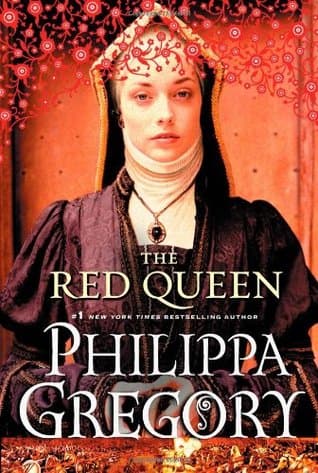
Synopsis
Covers the whole plot, including the ending.
- Difficulty
- Medium
- Pacing
- Moderate
- Mood
- Intriguing, Ambitious, Political, Dramatic, Determined
- Read it if
- You enjoy historical fiction centered on powerful, scheming women during the Wars of the Roses, with a focus on political maneuvering and dynastic ambition.
- Skip it if
- You prefer fast-paced action over detailed political intrigue and character-driven historical narratives, or find religious fanaticism in protagonists off-putting.
The Red Queen Plot Summary
Covers the whole plot, including the ending.
A Child Bride and Prophecy
The story opens with a young Margaret Beaufort, a devout and ambitious girl, marrying at a very young age to Edmund Tudor, half-brother to King Henry VI. Despite her youth, Margaret knows her lineage as a descendant of John of Gaunt and Katherine Swynford places her close to the throne. A wise woman, Mother Fosdyke, tells her that her son will be king, a prophecy that fuels her ambition and religious fervor. This early marriage shows her sense of duty and a beginning understanding of politics, even as she deals with the realities of marriage and her own piety. Her focus quickly shifts from personal happiness to the destiny foretold for her future child.
Widowhood and the Birth of Henry
Tragedy strikes when Edmund Tudor is captured by Yorkist forces during the Wars of the Roses and dies of the plague, leaving Margaret a pregnant widow at thirteen. Her brother-in-law, Jasper Tudor, takes her in and ensures the birth of her son. The birth is very difficult for Margaret, almost costing her life and leaving her physically scarred, but she endures with a belief in the prophecy. She names her son Henry, after the Lancastrian king, and dedicates her life to ensuring his future, seeing him as the fulfillment of the prophecy and her divine purpose. Her bond with Henry is intense and almost obsessive from the moment he is born.
Second Marriage and Yorkist Control
To protect herself and her son, Margaret marries Henry Stafford, a loyal Yorkist. This marriage is one of convenience and strategy, letting her stay in England and keep some influence, though under the eye of the victorious Yorkist regime. She endures the political changes and the increasing power of King Edward IV and Queen Elizabeth Woodville, always with Henry's safety as her main concern. She learns to navigate the court, outwardly professing loyalty to the House of York while inwardly plotting and praying for the day her son can claim his place. Her relationship with Henry Stafford is one of mutual respect, but her heart remains dedicated to her son.
The Rise of Richard III and Henry's Exile
As the Wars of the Roses continue, the political situation changes with Edward IV's death and Richard III's taking of the throne. The disappearance of the Princes in the Tower creates more instability, and Margaret sees an opportunity. Her son, Henry, is forced into exile in Brittany, a move that causes Margaret much pain but strengthens her resolve. She begins to correspond with him through secret channels, encouraging his ambitions and assuring him of her support. She believes that Richard III's reign is an affront to God and that Henry is destined to right the wrongs and claim the crown.
Secret Alliances and the Betrothal
Margaret, a strategist, recognizes the growing discontent with Richard III's rule. She starts a secret alliance with the Dowager Queen Elizabeth Woodville, a former adversary. Their shared grief and desire to see their children on the throne unite them. They plan: Henry Tudor will return from exile, defeat Richard III, and marry Elizabeth's eldest daughter, Elizabeth of York, uniting the warring houses of Lancaster and York. This betrothal is a key moment, symbolizing a potential end to the Cousins' War and the start of a new dynasty. Margaret works behind the scenes, using her connections and influence to gather support for this plan.
Buckingham's Rebellion and its Failure
Margaret arranges a rebellion led by the Duke of Buckingham, a former ally of Richard III who has become disillusioned. This rebellion is meant to pave the way for Henry Tudor's return to England. However, the plan goes wrong because severe storms prevent Henry's fleet from landing, and Buckingham's forces are scattered and defeated. Buckingham is captured and executed by Richard III. This setback is a blow to Margaret, testing her faith and resolve. She faces increased scrutiny from Richard's spies but avoids suspicion, though she is stripped of some of her lands and confined to her husband's estates, under strict orders not to communicate with her son.
Third Marriage and Continued Plotting
After Henry Stafford's death, Margaret marries Thomas Stanley, the Earl of Derby, a powerful nobleman known for playing both sides. This marriage gives her a new layer of protection and access to court, despite Richard III's suspicions. While Stanley remains outwardly loyal to Richard, Margaret uses her position to continue her plotting, subtly influencing her husband and gathering intelligence. She keeps secret communications with her son, urging him to prepare for his return. Her life becomes a delicate balancing act, outwardly conforming while inwardly dedicated to her son's cause, constantly praying and strategizing.
The Battle of Bosworth Field
The moment Margaret has prayed and plotted for arrives: Henry Tudor lands in Wales with his army, ready to challenge Richard III for the throne. Margaret's husband, Thomas Stanley, and his brother, William Stanley, are at the Battle of Bosworth Field, but their allegiance remains strategically unclear until the critical moment. Margaret is not on the battlefield, but her fate, and that of her son, hangs in the balance. She spends the day in intense prayer, agonizing over the outcome. The Stanley brothers switch their allegiance during the battle, securing Henry's victory and sealing Richard III's fate.
Henry's Victory and Accession
Richard III is killed on Bosworth Field, and Henry Tudor is crowned King of England. Margaret's prophecy is fulfilled. She rushes to meet her son, overwhelmed with joy and pride, seeing her ambition realized. This moment is the culmination of years of sacrifice, plotting, and faith. She takes on a significant role in the new Tudor court, guiding her son and ensuring the stability of his reign. Her influence is immense, and she helps plan Henry's marriage to Elizabeth of York, solidifying the alliance and ending the Wars of the Roses.
Founding the Tudor Dynasty
Margaret supervises the arrangements for Henry VII's marriage to Elizabeth of York. This union is not just a political necessity but a symbolic act of peace and reconciliation between the formerly warring houses of Lancaster and York. Margaret is determined to establish a strong and legitimate Tudor dynasty. She ensures the marriage happens and that Elizabeth's pregnancy quickly follows, securing the succession. While she holds immense power and influence as the King's mother, she remains religious and focused on her son's legacy and the new royal line. Her final triumph is seeing the continuation of her son's line and the establishment of a new era for England.
The Red Queen Characters
Margaret Beaufort
Protagonist
The devout, ambitious, and cunning mother of Henry VII.
Margaret Beaufort is a deeply religious and fiercely ambitious woman, driven by an unwavering belief in a prophecy that her son will be king. From a young age, she is acutely aware of her royal lineage and the political machinations of the English court during the Wars of the Roses. Despite her physical frailty and the hardships of early widowhood and a difficult childbirth, her will is iron-strong. She is a master manipulator, capable of outwardly conforming to the demands of powerful Yorkist lords while secretly plotting and praying for her son's ascension. Her piety often borders on fanaticism, fueling her conviction that her actions are divinely ordained.
Relationships: Henry Tudor (Her only son, for whom she dedicates her entire life and ambition.); Edmund Tudor (Her first husband, who dies early, leaving her a pregnant widow.); Henry Stafford (Her second husband, a Yorkist, whom she respects but uses for protection.); Thomas Stanley (Her third husband, a powerful and ambivalent lord, whom she subtly influences.); Elizabeth Woodville (Her initial rival, later her co-conspirator in the plan to unite their children.)
Henry Tudor
Supporting
Margaret's son, destined to become King Henry VII.
Henry Tudor is the son of Margaret Beaufort and Edmund Tudor, a figure largely in exile for much of the story. He is the object of his mother's unwavering ambition and the fulfillment of her prophecy. While not directly present in many scenes, his existence and potential claim to the throne drive Margaret's every action. He is portrayed as a young man growing up under the shadow of his mother's immense expectations and the constant threat of Yorkist retribution. His character is shaped by his time in Brittany and his reliance on his mother's network of supporters. He represents the hope for a new dynasty and the end of the civil war.
Relationships: Margaret Beaufort (His fiercely devoted and ambitious mother.); Elizabeth of York (His future wife, part of the alliance to unite the warring houses.)
Elizabeth Woodville
Supporting
The Dowager Queen, former rival and later ally of Margaret.
Elizabeth Woodville, the 'White Queen' from the previous book, appears in this novel as a diminished but still formidable figure. Having lost her husband, Edward IV, and her sons (the Princes in the Tower), she is desperate to secure the future of her daughters. She initially views Margaret Beaufort with suspicion and rivalry but is eventually driven by shared adversity and a common enemy (Richard III) to form a dangerous alliance. She is intelligent, resilient, and deeply protective of her family, willing to set aside past animosities for the sake of her children's future and the stability of England.
Relationships: Margaret Beaufort (Initially rivals, they become reluctant but effective allies.); Edward IV (Her deceased husband, whose death plunges her into vulnerability.); Elizabeth of York (Her eldest daughter, destined to marry Henry Tudor.)
Richard III
Antagonist
The King who usurps the throne, creating an opportunity for Henry Tudor.
Richard III is depicted as a ruthless and ambitious king, whose usurpation of the throne and the disappearance of his nephews, the Princes in the Tower, create widespread discontent. He is a formidable opponent, intelligent and suspicious, but ultimately unable to hold onto power. His reign is marked by political instability and a growing number of enemies. He is a constant threat to Margaret's plans and her son's life, and his actions inadvertently pave the way for Henry Tudor's success by alienating many powerful lords. He is a figure of fear and a catalyst for the final push towards the Tudor dynasty.
Relationships: Margaret Beaufort (His political adversary, whom he suspects but cannot entirely control.); Thomas Stanley (His powerful but ultimately disloyal lord.)
Thomas Stanley
Supporting
Margaret's third husband, a powerful and politically opportunistic lord.
Thomas Stanley is a powerful and shrewd nobleman, known for his ability to navigate the treacherous political landscape of the Wars of the Roses by playing both sides. He marries Margaret Beaufort, providing her with a degree of protection and access to court, though he remains outwardly loyal to the reigning monarch. He is pragmatic and self-serving, always looking out for his own interests and those of his family. His ultimate allegiance at the Battle of Bosworth Field is a critical turning point, demonstrating his opportunistic nature and his significant influence on the outcome of the war.
Relationships: Margaret Beaufort (His wife, whom he respects but is wary of her intense ambition and piety.); William Stanley (His brother, who also plays a pivotal role at Bosworth.)
Jasper Tudor
Supporting
Henry Tudor's uncle and protector, a loyal Lancastrian.
Jasper Tudor is Henry Tudor's paternal uncle and a steadfast Lancastrian. He acts as a guardian and protector for young Henry after Edmund Tudor's death, ensuring his safety and eventual exile to Brittany. He remains a loyal and constant supporter of Henry's claim to the throne, working tirelessly from abroad to gather support and prepare for Henry's return. He is a brave and principled figure, deeply committed to his family and the Lancastrian cause, providing a stable, protective force in Henry's life.
Relationships: Henry Tudor (His nephew, whom he protects and supports throughout his exile.); Margaret Beaufort (His sister-in-law, with whom he shares the goal of Henry's ascension.)
Elizabeth of York
Supporting
Daughter of Edward IV and Elizabeth Woodville, destined to marry Henry Tudor.
Elizabeth of York is the eldest daughter of Edward IV and Elizabeth Woodville. She is a pawn in the political games of her mother and Margaret Beaufort, destined to marry Henry Tudor to unite the warring houses. She is portrayed as beautiful, gracious, and intelligent, but her personal desires are secondary to the needs of the realm and her family. Her future marriage is the linchpin of the peace plan devised by the two queens, and her existence represents the hope for a stable future for England.
Relationships: Elizabeth Woodville (Her mother, who orchestrates her marriage for political stability.); Henry Tudor (Her future husband, whom she marries to unite the warring houses.)
Henry Stafford
Supporting
Margaret's second husband, a Yorkist lord.
Henry Stafford is Margaret Beaufort's second husband, a Yorkist nobleman. Their marriage is a political arrangement, providing Margaret with a measure of protection and stability within the Yorkist court. He is a decent and honorable man who treats Margaret with respect, though he is unaware of the full extent of her ambition and secret plotting. His loyalty lies with the House of York, but he cares for Margaret. His death eventually frees Margaret to marry Thomas Stanley, a more strategically advantageous match for her ultimate goals.
Relationships: Margaret Beaufort (His wife, whom he respects and provides a home for.)
The Red Queen Themes
Ambition and Destiny
The central theme is Margaret Beaufort's ambition, fueled by a prophecy that her son will be king. This ambition is not just for personal gain but is tied to her deep religious conviction that she is an instrument of God's will. Every decision, marriage, and political move is planned to fulfill this destiny. For example, her difficult childbirth and physical weakness strengthen her resolve, as she sees her survival and her son's birth as divine intervention, shown when she dedicates her life to Henry's future immediately after his birth. Her ambition drives the entire narrative, shaping the course of the Wars of the Roses through her plans.
“He is my destiny, and I am his. I was born for this, for him, for England.”
Faith and Divine Right
Margaret Beaufort's piety and faith are part of her character and motivations. She believes her actions are divinely guided and that her son, Henry, is God's chosen king. This conviction lets her justify her cunning and often manipulative strategies, seeing them as necessary steps to fulfill God's plan. Her constant prayers and appeals to saints, especially the Virgin Mary, are not just religious acts but active parts of her political strategy. For instance, during the Battle of Bosworth Field, Margaret's intense prayer is shown as her direct contribution to the outcome, demonstrating how faith is intertwined with her belief in divine right.
“God has chosen him. I have seen it, I know it, and I will make it so.”
Motherhood and Sacrifice
The novel explores Margaret's intense, almost obsessive, motherhood and the sacrifices she makes for her son. From the agonizing childbirth that leaves her physically scarred to her willingness to endure multiple political marriages and live under constant scrutiny, every action is for Henry. Her love for him is not a soft, nurturing love but a fierce, protective, and strategic one. She sacrifices personal happiness, comfort, and even her own reputation to ensure Henry's safety and eventual ascension. Her alliance with Elizabeth Woodville, a former rival, shows this theme, as both mothers are willing to put aside animosity for their children's future, as seen in their agreement for Henry and Elizabeth of York's marriage.
“My son is my life, my purpose, my very breath. I would walk through fire for him.”
Political Intrigue and Manipulation
The narrative is set in the dangerous politics of the Wars of the Roses, where alliances shift and betrayal is common. Margaret Beaufort is a master of political intrigue, using her intelligence and cunning to navigate this world. She uses subtle manipulation, secret communications, and strategic marriages to advance her agenda. Her ability to outwardly appear loyal to the Yorkist regime while secretly undermining it, as shown by her alliance with Elizabeth Woodville and her arranging of Buckingham's rebellion, shows her skill. The novel portrays the constant surveillance, suspicion, and calculated risks in court politics, where every word and action has significant weight.
“In this court, a whispered word can be more potent than a thousand swords.”
The Role of Women in Power
The book shows the limited yet impactful ways women could use power in a patriarchal society. Despite being largely confined to domestic roles and having their lives dictated by marriage, characters like Margaret Beaufort and Elizabeth Woodville show political agency. They operate through influence, strategic alliances, and their roles as mothers, using their sons and daughters as pawns and prizes in the game of thrones. Margaret's ability to arrange rebellions and forge alliances from behind the scenes, using her position as a wife and mother, shows how women found ways to exert control over national events, even without direct access to the throne.
“A woman's power lies not in the sword, but in the cradle, and the counsel she can give.”
Plot Devices & Literary Techniques
The Prophecy
A prediction of Henry Tudor's future kingship, driving Margaret's actions.
The prophecy, delivered to Margaret Beaufort by Mother Fosdyke, foretelling that her son will be king, serves as the primary motivating force for Margaret throughout the novel. It imbues her ambition with a sense of divine purpose, allowing her to justify her manipulative actions and endure immense hardship. The prophecy provides a clear goal for the narrative, building suspense as the reader follows Margaret's relentless efforts to see it fulfilled. It also functions as a thematic element, intertwining fate, faith, and free will within the story.
Secret Correspondence
Clandestine letters and messages used by Margaret to communicate with her son and allies.
Secret correspondence is a crucial plot device that enables Margaret Beaufort to maintain contact with her exiled son, Henry Tudor, and coordinate with her allies, such as Elizabeth Woodville. These hidden messages allow her to continue plotting and influencing events despite being under constant surveillance by the Yorkist regime. The risk associated with these communications heightens the tension and underscores the danger Margaret constantly faces. It effectively demonstrates her cunning and resourcefulness in a world where direct action is often impossible for her.
Strategic Marriages
Margaret's multiple marriages, used as tools for protection and political advancement.
Margaret's three marriages—to Edmund Tudor, Henry Stafford, and Thomas Stanley—are not unions of love but strategic alliances. Each marriage serves a distinct purpose: securing her lineage, providing protection under a hostile regime, or gaining influence at court. These marriages are plot devices that allow Margaret to navigate the volatile political landscape, providing her with varying degrees of safety, access, and leverage. They highlight the limited options available to women of her era and her pragmatic approach to achieving her ultimate goal, demonstrating her relentless dedication to her son's destiny.
The Princes in the Tower
The mysterious disappearance of Edward IV's sons, creating a power vacuum.
The unexplained disappearance and presumed death of Edward IV's young sons, the Princes in the Tower, is a pivotal plot device that destabilizes the Yorkist monarchy and creates a critical opportunity for Henry Tudor. Their fate, attributed by many to Richard III, fuels discontent and undermines Richard's legitimacy, making him vulnerable. This event is not directly depicted but its consequences are profound, providing the political vacuum and moral outrage that Margaret Beaufort expertly exploits to rally support for her son's claim to the throne, pushing the narrative towards the Battle of Bosworth.
The Red Queen Quotes
“I am a queen. I have my own will, and my own mind, and my own way.”
“Love is a battlefield, and I am armed for war.”
“A woman's beauty is her greatest weapon, and her greatest curse.”
“The crown is a heavy burden, but I will wear it with pride.”
“Every secret has a price, and I am prepared to pay it.”
“There are no friends in politics, only allies and enemies.”
“My children are my legacy, and I will protect them with my last breath.”
“History is written by the victors, but the truth remains.”
“To be a queen is to be constantly on display, constantly judged.”
“Sometimes, silence is the loudest protest.”
“The greatest battles are fought not on the field, but in the heart.”
“Hope is a dangerous thing, but I cling to it still.”
“I will not be a pawn in any man's game.”
Quiz
10 questions on the plot and the characters. Each answer comes with a short explanation.
Question 1
Who is the central character of 'The Red Queen'?
- Elizabeth Woodville
- Anne Neville
- Margaret Beaufort
- Elizabeth of York
Show answer
C. Margaret Beaufort The book description explicitly states that Margaret Beaufort 'now takes centre stage' in 'The Red Queen'.
Question 2
Margaret Beaufort was widowed in her early teens from which husband?
- Jasper Tudor
- Henry Stafford
- Thomas Stanley
- Edmund Tudor
Show answer
D. Edmund Tudor The book description states Margaret was 'the child-bride of Edmund Tudor, who, although widowed in her early teens'.
Question 3
What is Margaret Beaufort's ultimate goal throughout the novel?
- To become Queen of England herself.
- To ensure her son, Henry Tudor, becomes King of England.
- To unite the houses of Lancaster and York through her own marriage.
- To become a powerful Lady in Waiting at the York court.
Show answer
B. To ensure her son, Henry Tudor, becomes King of England. The description clearly states Margaret's main objective is to 'ultimately ensure that her only son, Henry Tudor, triumphs as King of England'.
Question 4
How does Margaret Beaufort initially infiltrate the House of York?
- By marrying a prominent Yorkist lord.
- Through open rebellion against King Edward IV.
- Under the guise of loyal friend and servant.
- By secretly poisoning key Yorkist figures.
Show answer
C. Under the guise of loyal friend and servant. The synopsis mentions Margaret 'uses her determination of character and wily plotting to infiltrate the house of York under the guise of loyal friend and servant'.
Question 5
Which historical conflict forms the backdrop of 'The Red Queen'?
- The Hundred Years' War
- The English Civil War
- The War of the Roses
- The Norman Conquest
Show answer
C. The War of the Roses The book description explicitly states the story takes place 'in the bitter struggle of The War of the Roses'.
Question 6
Who does Margaret Beaufort collaborate with to arrange the betrothal of her son, Henry, to Elizabeth's daughter?
- Richard III
- The Dowager Queen Elizabeth Woodville
- Anne Neville
- King Edward IV
Show answer
B. The Dowager Queen Elizabeth Woodville The text states, 'Through collaboration with the dowager Queen Elizabeth Woodville, Margaret agrees to a betrothal between Henry and Elizabeth's daughter'.
Question 7
What is the intended outcome of the betrothal between Henry Tudor and Elizabeth Woodville's daughter?
- To secure Margaret's position as a powerful regent.
- To expand England's territories through strategic alliances.
- To unite the families and resolve the Cousins War, founding the Tudor dynasty.
- To strengthen the support for Richard III against Lancastrian claims.
Show answer
C. To unite the families and resolve the Cousins War, founding the Tudor dynasty. The description highlights this action's purpose: 'thereby uniting the families and resolving the Cousins War once and for all by founding of the Tudor dynasty'.
Question 8
How does Margaret Beaufort actively undermine support for Richard III?
- By publicly denouncing his claim to the throne at court.
- By raising a large army to challenge him directly.
- Through her 'wily plotting' and actions while seemingly loyal to the House of York.
- By encouraging foreign powers to invade England.
Show answer
C. Through her 'wily plotting' and actions while seemingly loyal to the House of York. The text states Margaret 'uses her determination of character and wily plotting to... undermine the support for Richard III'. This implies a more subtle and indirect approach than open rebellion.
Question 9
What is the significance of 'The Red Queen' being the second book in 'The Cousins' War' trilogy?
- It means it focuses on a completely different historical period.
- It provides a new perspective on the War of the Roses, focusing on Margaret Beaufort after she was a 'shadowy' character in the first book.
- It concludes the overall narrative of the War of the Roses.
- It explores the early life of Elizabeth Woodville.
Show answer
B. It provides a new perspective on the War of the Roses, focusing on Margaret Beaufort after she was a 'shadowy' character in the first book. The librarian's note states Margaret Beaufort was 'a shadowy and mysterious character in the first book of the series - The White Queen - but who now takes centre stage'. This indicates a shift in perspective within the ongoing series.
Question 10
The founding of the Tudor dynasty is presented as a resolution to which ongoing conflict?
- The conflict between England and France.
- The internal power struggles within the House of York.
- The Cousins War (War of the Roses).
- The succession crisis after Henry VII's death.
Show answer
C. The Cousins War (War of the Roses). The text explicitly states the betrothal aims to 'resolving the Cousins War once and for all by founding of the Tudor dynasty'.
The Red Queen FAQ
What is the central conflict of 'The Red Queen'?
The central conflict revolves around Margaret Beaufort's relentless pursuit to secure the English throne for her son, Henry Tudor, amidst the tumultuous War of the Roses, primarily against the reigning House of York and later Richard III. She navigates treacherous political landscapes, often working from the shadows to undermine her rivals.
Who is Margaret Beaufort and what is her primary motivation?
Margaret Beaufort is the titular 'Red Queen', a devout and fiercely ambitious woman, child-bride of Edmund Tudor, and mother to Henry Tudor. Her primary motivation is a divinely inspired conviction that her son is destined to be king, which drives all her political maneuvering and personal sacrifices.
How does Margaret initially infiltrate the House of York?
Margaret infiltrates the House of York by marrying Thomas Stanley, a powerful lord with connections to the Yorkist court. This strategic marriage allows her to gain access and influence, presenting herself as a loyal friend and servant while secretly working towards her son's ascension.
What role does Elizabeth Woodville play in Margaret's plans?
Elizabeth Woodville, the Dowager Queen and 'White Queen', initially a rival, becomes a crucial ally to Margaret. They eventually collaborate, agreeing to betroth Elizabeth's daughter, Elizabeth of York, to Margaret's son, Henry Tudor, to unite the warring houses and solidify Henry's claim.
How does Margaret's early widowhood impact her life and ambition?
Margaret's early widowhood after Edmund Tudor's death leaves her a teenage mother with a powerful dynastic claim through her son, Henry. This vulnerable yet significant position fuels her ambition, as she must protect her son and his lineage, making her fiercely determined and independent.
Are there any subtle hints about Margaret's future influence on the Tudor dynasty's religious policies?
Yes, Margaret's intense piety and unwavering belief in her divine mission foreshadow the strong religious undertones of the early Tudor dynasty. Her devout Catholicism, bordering on fanaticism, suggests the deep religious convictions that would shape the era, though her son Henry VII would later navigate complex religious politics.
How does the book subtly connect Margaret's actions to the broader 'Cousins' War' series narrative?
The book subtly connects by showing events from Margaret's perspective that were only glimpsed or interpreted differently in 'The White Queen'. It fills in the strategic gaps of how Henry Tudor's claim gained traction and how the seemingly disparate factions were eventually brought together through the marriage alliance, providing a fuller picture of the war's conclusion.
What is the significance of Margaret's dreams or visions in her decision-making?
Margaret's dreams and visions are presented as divine messages, reinforcing her belief that God has chosen Henry to be king. These spiritual experiences provide her with unwavering conviction and justification for her often ruthless political maneuvers, making her feel truly blessed and guided.
Does the novel hint at any long-term consequences of Margaret's intense focus on Henry for their personal relationship?
The novel suggests that Margaret's singular focus on Henry's destiny, rather than his personal well-being, creates a rather formal and distant relationship between them. While she loves him fiercely, it is a love often expressed through political action and ambition, potentially leading to a lack of genuine emotional intimacy.
How does Margaret's piety influence her moral compass and political decisions?
Margaret's extreme piety leads her to believe that her actions, no matter how manipulative or seemingly immoral, are justified by God's will for her son. This conviction allows her to rationalize betrayals and deceptions, seeing them as necessary steps on a divinely ordained path to the throne.
Discuss Margaret's psychological resilience in the face of repeated setbacks and exile.
Margaret displays extraordinary psychological resilience. Despite exiles, the constant threat to her son, and personal losses, her faith in Henry's destiny remains unshaken. Her unwavering belief acts as a powerful coping mechanism, allowing her to endure hardship and continue plotting with unwavering resolve.
How does Margaret's social standing as a woman in the 15th century affect her methods of wielding power?
As a woman in the 15th century, Margaret cannot directly lead armies or openly rule. This forces her to wield power through indirect means: strategic marriages, alliances, covert communication, and influencing powerful men like her husband, Thomas Stanley, showcasing her cunning and adaptability in a patriarchal society.
What psychological toll does Margaret's constant scheming and deception take on her?
The novel suggests that Margaret's constant scheming takes a toll on her, manifesting as an intense, almost obsessive, focus and a certain coldness. While her faith sustains her, the isolation of her secret plotting and the moral compromises likely contribute to her somewhat detached and formidable persona.
Is Margaret Beaufort a sympathetic character, despite her ruthless actions?
This is debatable. While her unwavering devotion to her son and her deep conviction are admirable, her ruthlessness, manipulation, and willingness to sacrifice others often make her a difficult character to fully sympathize with. Readers may admire her strength but question her methods.
How does the novel challenge or reinforce traditional views of female power during the War of the Roses?
The novel challenges traditional views by showcasing how women like Margaret, Elizabeth Woodville, and Anne Neville wielded significant, albeit indirect, power through strategic marriages, manipulation, and dynastic claims. It reinforces the idea that their power was often limited to the domestic or political sphere of alliances, rather than direct military or governmental control.
To what extent is Margaret's ambition a personal drive versus a religiously mandated duty?
This is a central interpretive question. While Margaret genuinely believes in God's will, her personal ambition is deeply intertwined with it. It's difficult to separate where her personal desire for her son to be king ends and her religiously mandated duty begins, suggesting a complex interplay between the two.
How does Margaret's relationship with her son, Henry Tudor, evolve throughout the book?
Margaret's relationship with Henry is largely defined by her ambition for him. Initially, she is fiercely protective of him as a child. As he grows, her focus remains on his political advancement, and while she loves him, their interactions are often formal and driven by strategic necessity rather than warm maternal affection, particularly during his long exile.
Does the book portray Richard III as a villain or a more nuanced character from Margaret's perspective?
From Margaret's perspective, Richard III is largely portrayed as an obstacle and a villain, especially after the disappearance of the Princes in the Tower. She views him as an illegitimate usurper of the throne that she believes rightfully belongs to her son, thus justifying her efforts to undermine him.
What is the ultimate message or theme conveyed through Margaret Beaufort's story in 'The Red Queen'?
The ultimate message appears to be about the relentless power of a mother's ambition, particularly when fueled by deep conviction and belief, to shape history. It highlights how seemingly powerless individuals can, through cunning and unwavering determination, orchestrate profound political change and establish new dynasties.
About the author

Philippa Gregory is a British author known for her historical fiction, particularly set in the Tudor period. Her notable works include "The Other Boleyn Girl," "The White Queen," and "The Constant Princess," which explore the lives and intrigues of women in history. Gregory's writing often focuses on themes of power, gender, and the complexities of royal life.
Similar books
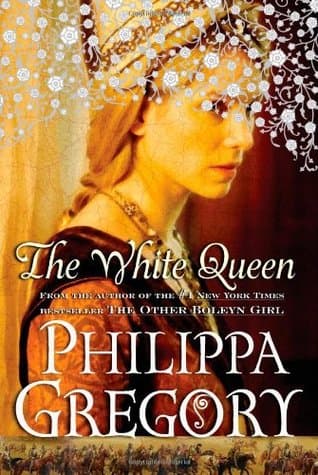
- The White Queen
Philippa Gregory
3.9 (155k) average on GoodreadsHistorical FictionPart of the same series, focusing on Elizabeth Woodville during the Wars of the Roses.
- The Other Boleyn Girl
Philippa Gregory
4.1 (456k) average on GoodreadsHistorical FictionAnother historical novel by Gregory focusing on powerful women in English court during a tumultuous period.
- A Place of Greater Safety
Hilary Mantel
4.0 (8k) average on GoodreadsLiterary FictionHistorical fiction with deep political intrigue and character studies of powerful figures during a period of revolution.
- To Kill a Mockingbird
Harper Lee
4.3 (4.5M) average on GoodreadsHistorical FictionIn the 1930s Jim Crow South, Harper Lee writes about racial injustice, moral growth, and the quiet courage of a lawyer father, Atticus Finch, as seen through his young daughter's eyes.
- The Great Gatsby
F. Scott Fitzgerald
3.9 (3.8M) average on GoodreadsHistorical FictionIn the opulent Roaring Twenties, a mysterious millionaire's lavish parties hide his desperate, tragic pursuit of a lost love, exposing the emptiness within the American Dream.
- Pride and Prejudice
Jane Austen
4.3 (3M) average on GoodreadsHistorical FictionIn a society focused on status and money, Elizabeth Bennet navigates love and pride, challenging Mr. Darcy and social expectations to find true affection.





Enjoyed the summary?
A summary gives you the shape of the book. The book itself has the detail, the examples and the voice.
Find The Red Queen on AmazonAs an Amazon Associate, BookBrief earns from qualifying purchases. How we're funded