
Synopsis
Covers the whole plot, including the ending.
- Difficulty
- Medium
- Pacing
- Moderate
- Mood
- Hopeful, Poignant, Inspiring, Resilient
- Read it if
- You enjoy heartwarming stories of resilience, the power of education, and unlikely friendships against a backdrop of severe hardship. Perfect for readers interested in Cambodian history and culture.
- Skip it if
- You prefer fast-paced thrillers or stories without significant emotional challenges and poverty as a central theme. May be too slow for some readers.
The Rent Collector Plot Summary
Covers the whole plot, including the ending.
Life Among the Trash Heaps
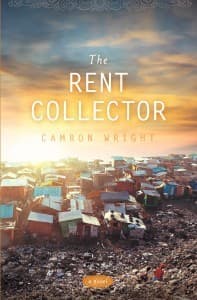
Sang Ly and Ki Lim live a hard life at the Stung Meanchey dump in Phnom Penh, Cambodia. They collect recyclables to earn money for food and medicine for their infant son, Nisay, who has a mysterious illness. Their home is a small shack among mountains of trash, and their neighbors are other poor families doing the same. Each day is a fight against hunger, sickness, and the dump's bad smell. Sang Ly often thinks about how unfair their situation is, especially when she sees Nisay getting sicker. Their only hope is to earn enough for better medicine or a doctor, but there are few chances, and their income barely covers daily needs.
The Arrival of the Rent Collector
Sopeap, the strict rent collector, adds to Sang Ly's daily worries. Sopeap visits weekly and is known for her harsh manner and demands for payment for the small plots of land where the shacks stand. Sang Ly fears these meetings, especially when money is short, because Sopeap threatens to evict those who cannot pay. One week, Sang Ly struggles to get the rent, feeling the pressure of Sopeap's stern look and firm demands. The rent collector seems like another big problem in Sang Ly's already difficult life, offering no sympathy or understanding.
A Glimmer of Hope and a Desperate Plea
Nisay's health gets much worse, making Sang Ly feel more desperate. Their small earnings barely cover food and basic medicine, and the thought of losing her son pushes Sang Ly to take a big step. During Sopeap's next rent collection, Sang Ly, against her husband Ki Lim's advice, bravely approaches the woman. She asks not for rent, but for a loan to buy more effective medicine for Nisay. To Sang Ly's surprise, Sopeap does not refuse or scold her. Instead, Sopeap notices Sang Ly trying to read medicine labels. Sopeap then makes an offer: she will lend Sang Ly the money if Sang Ly agrees to learn to read.
The First Lessons Begin
Sang Ly, wanting to save Nisay, agrees to Sopeap's terms. Their lessons start in secret, often after the dump settles down for the day. Sopeap is a strict teacher, using an old, torn book. Sang Ly quickly realizes that Sopeap knows a lot about language and books, more than one would expect from a rent collector at Stung Meanchey. As Sang Ly struggles with the alphabet and simple words, Sopeap pushes her, often with harsh words, but there is a clear passion in Sopeap's teaching. Sang Ly's first reason to learn is for Nisay, but she slowly starts to enjoy learning itself.
Unveiling Sopeap's Past
As lessons continue, Sang Ly becomes more curious about Sopeap. Sopeap's refined speech, her knowledge of classic books, and her occasional hints of a different life all suggest a past far from the dump. Sang Ly starts to put together parts of Sopeap's history. She notices how Sopeap handles books with respect and how certain words bring out sadness in her. Sang Ly learns that Sopeap's real name is Srey Mom and that she was once a respected teacher and writer. The more Sang Ly learns to read, the more she can understand the clues Sopeap unintentionally leaves. This shows a woman who has experienced great loss and hardship, especially during the Khmer Rouge time.
The Search for the Lost Son
Through personal talks, often prompted by what they read, Sang Ly eventually learns Sopeap's full sad story. Sopeap (Srey Mom) was separated from her son, Sarun, during the Khmer Rouge era. She has spent decades looking for him, believing he might still be alive. The dump, it turns out, is not just where she collects rent; it is where she looks for any sign of her son among the displaced. Her harsh manner is a defense, and her dedication to reading shows her own intellectual past and perhaps a way to connect with the memory of her son, whom she taught to read.
Shared Dreams and Growing Bonds
As Sang Ly's reading gets better and she learns more about Sopeap's story, their relationship changes a lot. The fear and dislike Sang Ly first felt for the rent collector turn into respect, understanding, and then a close friendship. Sopeap, in turn, starts to soften, showing more of her vulnerable side. They share dreams and fears. Sang Ly becomes not just a student, but a trusted friend and a source of comfort for Sopeap. Sang Ly's new ability to read helps her, not only in her own life but also in understanding Sopeap's pain, creating a strong bond between the two women.
Nisay's Recovery and New Hope
Sang Ly's ability to read helps her understand Nisay's condition. She can now read medicine labels, research symptoms, and understand advice from a visiting medical volunteer. She learns that Nisay's illness is likely from the dump's dirty conditions and poor nutrition. With this knowledge, Sang Ly can make good choices about Nisay's care, using available resources with her new understanding. Slowly, Nisay starts to get better, growing stronger and healthier, showing Sang Ly's effort and the power of knowledge.
The Orphanage and a Faint Memory
Because of Sopeap's strong hope, Sang Ly, Ki Lim, and Sopeap go to an orphanage outside the dump. They follow a small clue about a boy who might be Sarun. The visit is emotional. Sopeap looks closely at every child, searching for a familiar face. Sarun is not there, but Sopeap meets a boy named Lucky, who reminds her of her son. The experience is mixed, showing how hard her search is and the great loss she has carried. It also shows the many other children who suffered similar fates during that time.
A Life Reclaimed and a Legacy Shared
Sopeap never finds her son Sarun, but she finds a different kind of peace and purpose. Inspired by Sang Ly's change and their friendship, Sopeap decides to teach the children of Stung Meanchey. She turns her small shack into a school, sharing her love of books and knowledge. Sang Ly becomes her assistant, helping to teach the next generation. The rent collector, once feared, becomes a source of hope and learning. Sang Ly, no longer defined by the dump, is a mother to a healthy Nisay and a teacher. Her life is changed by reading and an unexpected friendship.
The Rent Collector Characters
Sang Ly
Protagonist
A young mother living in the Stung Meanchey dump, seeking to save her son.
Sang Ly is a resilient and determined young woman living in extreme poverty at the Stung Meanchey dump in Cambodia. Her primary motivation throughout the story is the well-being and survival of her chronically ill infant son, Nisay. Initially uneducated and somewhat naive, she possesses an innate curiosity and a strong will to learn. Her love for Nisay pushes her beyond her fears, leading her to approach Sopeap for help and ultimately embark on a journey of literacy. She is observant, empathetic, and capable of deep personal growth, transforming from a fearful scavenger into an educated woman and teacher.
Relationships: Ki Lim (Husband, fellow scavenger, supportive partner); Nisay (Infant son, the primary motivation for her actions); Sopeap (Initially feared rent collector, later her teacher and closest friend)
Sopeap (Srey Mom)
Supporting/Antagonist (initially)
The enigmatic and harsh rent collector who harbors a profound secret.
Sopeap, whose real name is Srey Mom, is initially presented as a formidable and unyielding rent collector at the Stung Meanchey dump. She is intelligent, articulate, and possesses a vast knowledge of literature, hinting at a past far removed from her current circumstances. Beneath her harsh exterior lies deep grief and a lifelong search for her son, Sarun, lost during the Khmer Rouge regime. She uses her stern demeanor as a shield, but her passion for teaching and her vulnerability slowly emerge as she mentors Sang Ly. She represents resilience, the enduring power of education, and the lasting scars of historical trauma.
Relationships: Sang Ly (Student and later her closest friend and confidante); Sarun (Her lost son, the central focus of her life's search); Ki Lim (Respectful acquaintance through Sang Ly)
Ki Lim
Supporting
Sang Ly's devoted and hardworking husband.
Ki Lim is Sang Ly's loving and supportive husband. He works tirelessly alongside her, scavenging at the dump to provide for their family. He is practical, cautious, and sometimes hesitant about Sang Ly's more audacious plans, such as asking Sopeap for a loan. However, he consistently supports Sang Ly, trusting her judgment and celebrating her achievements, particularly her newfound literacy. He represents the steadfast love and quiet strength that anchors Sang Ly in their difficult life.
Relationships: Sang Ly (Wife, partner in survival); Nisay (Son, whom he loves deeply and works to protect); Sopeap (Respects her as Sang Ly's teacher and friend)
Nisay
Supporting
Sang Ly and Ki Lim's infant son, whose illness drives much of the plot.
Nisay is Sang Ly and Ki Lim's infant son, whose chronic illness and fragile health serve as the primary catalyst for Sang Ly's desperate actions and her journey of literacy. His sickness symbolizes the vulnerability of life at the dump and the profound challenges faced by its inhabitants. Nisay's gradual recovery, enabled by Sang Ly's acquired knowledge, represents hope, the power of parental love, and the tangible benefits of education.
Relationships: Sang Ly (Mother, fiercely protective); Ki Lim (Father, devoted provider)
Lucky
Mentioned/Minor
A boy at an orphanage who reminds Sopeap of her lost son.
Lucky is a young boy encountered by Sang Ly, Ki Lim, and Sopeap at an orphanage. Though not Sopeap's lost son, Sarun, Lucky's presence evokes strong emotions in Sopeap, as he bears a resemblance to her son or embodies the innocence and vulnerability of children lost during the war. He serves as a poignant reminder of Sopeap's enduring grief and the countless tragedies of the Khmer Rouge era, highlighting the broader impact of the war on Cambodian families.
Relationships: Sopeap (A child who evokes memories of her lost son); Sang Ly (Witness to Sopeap's emotional reaction to him)
Grandpa
Supporting
An elderly resident of the dump who offers wisdom and perspective.
Grandpa is an elderly, wise resident of the Stung Meanchey dump. He is a respected figure in the community, often offering philosophical observations and a historical perspective on their current situation. His quiet presence and occasional profound statements help Sang Ly to reflect on her life and understand the resilience of the human spirit. He represents the collective memory and enduring wisdom of the Cambodian people who have survived immense hardship.
Relationships: Sang Ly (Recipient of his wisdom); Ki Lim (Fellow resident, respects his age and experience)
The Children of Stung Meanchey
Supporting/Collective
The young inhabitants of the dump, representing innocence and future hope.
The numerous children living and working in the Stung Meanchey dump represent the grim reality of poverty and the cycle of hardship. They are often depicted scavenging alongside their parents, their childhoods stolen by the necessity of survival. However, they also symbolize innocence, resilience, and the potential for a better future, especially once Sopeap and Sang Ly begin their school. Their presence underscores the importance of education and the hope for breaking the cycle of poverty.
Relationships: Sang Ly (Their future teacher); Sopeap (Their future teacher)
Sarun
Mentioned
Sopeap's long-lost son, central to her life's quest.
Sarun is Sopeap's son, separated from her during the atrocities of the Khmer Rouge regime. Although he never appears in the present narrative, his memory and the hope of finding him drive Sopeap's actions and define her character. He represents the profound and lasting impact of war on families, and his absence underscores Sopeap's deep, unresolved grief. Sopeap's desire to find him is the core of her personal quest and slowly revealed secret.
Relationships: Sopeap (Mother, eternally searching for him)
The Rent Collector Themes
The Power of Education and Literacy
The main theme is how education can change lives. Sang Ly learns to read, which helps her save her son Nisay by letting her understand his medical needs. It also shows her a world beyond the dump. It helps her, gives her confidence, and leads to a new purpose as a teacher. Sopeap, a former teacher, finds healing and new meaning by sharing her knowledge. The book shows how reading can break cycles of poverty and lack of knowledge, offering hope and respect in difficult situations, as seen by the school at the dump.
“A book is a garden, an orchard, a storehouse, a party, a company by the way, a counselor, a multitude of counselors.”
Hope and Resilience in Adversity
Despite the harsh realities of life at the Stung Meanchey dump, the characters, especially Sang Ly, show great hope and strength. They face hunger, sickness, poverty, and loss, yet they keep working for a better future. Sang Ly's hope for Nisay's recovery drives her to learn. Sopeap's decades-long search for her son, even if it seems unlikely, shows her lasting hope. The community at the dump, though poor, finds ways to support each other and endure, showing how strong people can be even in desperate situations.
“Even in the dump, there is beauty. There is hope. There is a future.”
Redemption and Second Chances
The idea of new beginnings is key to Sopeap's character. At first, she seems harsh. Her past as a respected teacher and mother is slowly revealed. Her choice to teach Sang Ly, and later the children of the dump, is an act of healing, letting her recover from her own pain and find new purpose. She changes from a person troubled by loss to a source of hope. Sang Ly's journey also offers a new beginning, as she rises above her circumstances and finds a life with meaning, showing that one's past does not have to decide one's future.
“Sometimes, the only way to find yourself is to get lost.”
The Enduring Scars of the Khmer Rouge
The novel quietly but strongly explores the lasting effects of the Khmer Rouge time on Cambodia. Sopeap's past, especially losing her son Sarun and living as an educated person forced into hiding, is a direct result of this brutal period. The widespread poverty and the existence of places like the Stung Meanchey dump can be seen as continuing effects of the war, which destroyed infrastructure, education, and social structures. The search for lost family members and the shared trauma are constant themes, reminding readers of the history that shaped the characters' lives.
“The past is like a wound. You can try to ignore it, but it will fester.”
The Unlikely Bonds of Friendship
A significant theme is the unexpected friendship between Sang Ly and Sopeap. Despite their first difficult relationship and big differences, they form a close bond through shared vulnerability, mutual respect, and the act of teaching and learning. Their friendship goes beyond social barriers and personal histories, showing that connection can be found in surprising places and between different people. This bond becomes a source of strength, comfort, and change for both women.
“Some friendships are like that. Formed in fire. Forged in struggle.”
Plot Devices & Literary Techniques
The Dump as a Microcosm
Stung Meanchey dump symbolizes the broader struggles of poverty and resilience.
The Stung Meanchey municipal waste dump serves as more than just a setting; it is a powerful symbol and a microcosm of the larger struggles faced by the Cambodian poor. It represents the harsh realities of extreme poverty, the cycle of scavenging for survival, and the constant threat of disease. Yet, within this grim environment, it also highlights human resilience, community, and the persistent search for hope. The dump's transformation, however slight, with the establishment of a school, mirrors the internal transformations of the characters and the potential for growth even in the most desolate places.
Literacy as a Catalyst
The act of learning to read drives the entire plot and character development.
Literacy is not merely a skill in 'The Rent Collector'; it is the central plot device that propels the narrative forward and enables the profound character development of Sang Ly. Sopeap's condition for the loan, that Sang Ly learns to read, sets the entire story in motion. Sang Ly's growing ability to read directly impacts Nisay's health, allows her to uncover Sopeap's past, and ultimately transforms her worldview. It is the key that unlocks secrets, fosters connections, and provides the means for a better future, making it the most significant catalyst for change in the book.
The Mentor-Protégé Relationship
Sopeap guides Sang Ly, fostering mutual growth and transformation.
The dynamic between Sopeap as the mentor and Sang Ly as the protégé is a fundamental plot device. Sopeap's initial harshness slowly gives way to a nurturing, albeit strict, guidance, while Sang Ly's initial fear morphs into respect and affection. This relationship allows for the gradual revelation of Sopeap's past and the development of Sang Ly's character. Through their interactions, both women learn from each other, challenge each other, and ultimately transform. It is through this bond that the themes of education, redemption, and friendship are most powerfully explored.
Symbolism of Books and Stories
Books represent knowledge, escape, and a connection to a lost past.
Books and stories hold significant symbolic weight in the novel. For Sang Ly, they initially represent the incomprehensible knowledge of the educated, then become a tool for survival, and finally, a source of profound joy and empowerment. For Sopeap, they are a tangible link to her past as a teacher and a way to keep the memory of her son, Sarun, alive. The stories within the books provide a means of escape from the harsh reality of the dump, offer universal truths, and facilitate a deeper understanding between the two women, symbolizing hope, wisdom, and enduring human culture.
The Rent Collector Quotes
“Sometimes the greatest gifts are the ones we don’t even know we want.”
“There are always two sides to every story, and sometimes, even more.”
“Hope is a fragile thing, but it’s the only thing that keeps us going.”
“A life without stories is like a sky without stars.”
“The greatest treasure isn’t what you find, but what you become.”
“Even in the darkest places, there can be light.”
“Learning is a treasure that will follow its owner everywhere.”
“Fear can be a powerful motivator, but love is stronger.”
“Sometimes the most beautiful things grow in the most unexpected places.”
“The past is a story we tell ourselves. The future is a story waiting to be written.”
“It is not the place that defines the person, but the person who defines the place.”
“Every person has a story worth hearing, if only we take the time to listen.”
“A good story can make you forget your hunger, your pain, even your fear.”
“The greatest wealth is not in possessions, but in the love we share.”
Quiz
10 questions on the plot and the characters. Each answer comes with a short explanation.
Question 1
Where do Ki Lim and Sang Ly make their living scavenging recyclables?
- Phnom Penh Central Market
- Stung Meanchey, the largest municipal waste dump
- Along the Mekong River banks
- In the rural rice paddies
Show answer
B. Stung Meanchey, the largest municipal waste dump The book explicitly states that Ki Lim and Sang Ly live and work at Stung Meanchey, the largest municipal waste dump in Cambodia, scavenging for recyclables.
Question 2
What is the name of Ki Lim and Sang Ly's chronically ill child?
- Sophea
- Nisay
- Rithy
- Channary
Show answer
B. Nisay The summary clearly mentions their child's name is Nisay, and he is chronically ill, requiring expensive medicines.
Question 3
What is the primary motivation for Sang Ly to seek a deeper understanding of the rent collector?
- To escape her life at the dump and find a new job.
- To find a way to pay for her son Nisay's expensive, ineffective medicines.
- To learn the rent collector's scavenging techniques.
- To get revenge on the rent collector for her harsh demeanor.
Show answer
B. To find a way to pay for her son Nisay's expensive, ineffective medicines. Sang Ly's main drive is to save her son, Nisay. Learning the rent collector's secret is a means to an end, hoping it will somehow alleviate their struggles, particularly the cost of Nisay's treatment.
Question 4
The book is described as a story of 'hope' and 'redemption.' Which character's journey primarily embodies the theme of 'redemption'?
- Ki Lim
- Nisay
- The bad-tempered rent collector
- Sang Ly
Show answer
C. The bad-tempered rent collector The summary states the book is 'one woman's journey to save her son and another woman's chance at redemption.' This 'other woman' refers to the rent collector, whose secret sets in motion events that offer her a path to redemption.
Question 5
What specific detail about the rent collector does Sang Ly learn that changes her perspective?
- That the rent collector is secretly very wealthy.
- That the rent collector has a hidden talent or past that is quite unexpected.
- That the rent collector is related to a powerful government official.
- That the rent collector is also secretly scavenging at another dump.
Show answer
B. That the rent collector has a hidden talent or past that is quite unexpected. The summary mentions Sang Ly 'learns a secret about the bad-tempered rent collector... a secret that sets in motion a tide that will change the life of everyone it sweeps past.' While the summary doesn't reveal the exact secret, it implies a transformative, unexpected aspect of her character, which is a common trope for 'hidden talent/past' in such narratives.
Question 6
The setting of Stung Meanchey highlights which major theme in the novel?
- The abundance of natural resources in Cambodia.
- The struggle for survival and resilience amidst extreme poverty.
- The ease of social mobility in modern Cambodia.
- The importance of urban development and infrastructure.
Show answer
B. The struggle for survival and resilience amidst extreme poverty. Living and working in the largest municipal waste dump, where 'survival for Ki Lim and Sang Ly is a daily battle,' directly emphasizes the theme of struggle, poverty, and the resilience required to endure such harsh conditions.
Question 7
How does learning the rent collector's secret primarily impact Sang Ly's efforts to save her son?
- It immediately provides her with the money for Nisay's treatment.
- It leads her to gain knowledge or skills that ultimately help her improve her family's situation.
- It causes the rent collector to leave the dump, removing a burden.
- It reveals a secret cure for Nisay's illness.
Show answer
B. It leads her to gain knowledge or skills that ultimately help her improve her family's situation. The summary states the secret 'sets in motion a tide that will change the life of everyone it sweeps past.' This suggests a transformative process rather than an immediate solution. Given the story is about 'hope' and 'redemption,' it's more likely to involve Sang Ly gaining something valuable (like knowledge or a new perspective) that empowers her to change their circumstances.
Question 8
The book's genre is Historical Fiction. What aspect of the summary most strongly supports this classification?
- The focus on a single family's struggle.
- The specific setting of Stung Meanchey in Cambodia, implying a particular time period and socio-economic context.
- The theme of hope and redemption.
- The presence of a 'secret' driving the plot.
Show answer
B. The specific setting of Stung Meanchey in Cambodia, implying a particular time period and socio-economic context. Historical fiction typically grounds its narrative in a specific historical period and place, using real-world contexts to frame its story. The specific mention of 'Stung Meanchey, the largest municipal waste dump in all of Cambodia,' situates the story within a particular socio-economic reality of Cambodia, characteristic of historical fiction.
Question 9
Which of the following best describes the initial relationship between Sang Ly and the rent collector?
- Friendly and mutually supportive.
- Antagonistic, with the rent collector being 'bad-tempered' and demanding.
- Indifferent, with little interaction between them.
- Respectful, due to the rent collector's authority.
Show answer
B. Antagonistic, with the rent collector being 'bad-tempered' and demanding. The summary explicitly describes the rent collector as 'bad-tempered' and 'demanding money,' indicating an antagonistic or at least very challenging initial relationship from Sang Ly's perspective.
Question 10
The 'tide that will change the life of everyone it sweeps past' refers to the ripple effect of what specific event?
- Nisay's recovery from his illness.
- A major discovery of valuable recyclables at the dump.
- Sang Ly learning the rent collector's secret.
- The arrival of a new family at Stung Meanchey.
Show answer
C. Sang Ly learning the rent collector's secret. The summary states, 'Just when things seem worst, Sang Ly learns a secret about the bad-tempered rent collector... a secret that sets in motion a tide that will change the life of everyone it sweeps past.' This directly links the 'tide' to the revelation of the rent collector's secret.
The Rent Collector FAQ
What is 'The Rent Collector' about?
'The Rent Collector' is about Sang Ly, a young mother living in the Stung Meanchey garbage dump in Cambodia, who struggles daily to find enough recyclables to feed her family and afford medicine for her chronically ill son, Nisay. Her life takes an unexpected turn when she discovers that the formidable and bad-tempered rent collector, Sopeap, possesses a profound secret: she is literate and a former teacher. This discovery leads Sang Ly to seek Sopeap's help in learning to read, hoping that education will provide a path to a better future for Nisay.
Why should I read 'The Rent Collector'?
You should read 'The Rent Collector' for its inspiring message of hope, resilience, and the transformative power of education amidst dire circumstances. It offers a poignant look into the lives of people living in extreme poverty at the Stung Meanchey dump, while weaving a beautiful narrative of an unlikely friendship between Sang Ly and Sopeap. The story highlights the enduring human spirit and the profound impact of knowledge on an individual's life and destiny.
What is the background/setting of 'The Rent Collector'?
The book is set in the grim reality of the Stung Meanchey municipal waste dump in Phnom Penh, Cambodia, which serves as both the primary source of income and the living space for thousands of impoverished families. This backdrop is crucial, as it vividly portrays the daily struggles of survival, the pervasive smell, the constant search for recyclables, and the ever-present health risks. The narrative also subtly touches upon Cambodia's tumultuous history, particularly the Khmer Rouge regime, which deeply impacted characters like Sopeap.
What are the most memorable quotes?
One memorable quote is, 'The only thing more expensive than education is ignorance,' which encapsulates the core theme of the book and Sopeap's belief in the power of learning. Another is, 'Hope, like the kindling of a fire, must be nurtured,' reflecting Sang Ly's journey and her persistent optimism despite her harsh environment. These quotes highlight the book's central messages about knowledge and perseverance.
What writing style does the author use?
Camron Wright employs an accessible and evocative writing style that balances the harsh realities of the setting with moments of profound beauty and emotional depth. He uses vivid descriptions to immerse the reader in the sights, sounds, and smells of Stung Meanchey, while also crafting intimate character perspectives. The narrative is often reflective, focusing on the internal journeys and evolving relationships of Sang Ly and Sopeap, making it both poignant and hopeful.
What minor details add significant meaning?
The small, recurring motif of Sang Ly's efforts to keep Nisay clean and protected from the dump's filth, despite living within it, underscores her fierce maternal love and her refusal to let their environment fully define their dignity. Another detail is the specific types of recyclables they search for, like plastic bottles or aluminum cans, which grounds the story in the tangible, desperate economics of their daily survival and the value of even the smallest find.
What are some subtle foreshadowing moments?
Early in the story, Sopeap's occasional, almost imperceptible glances at the books Sang Ly carries for her, and her unusual demands for precise rent payments, subtly hint at her past connection to literacy and her hidden intellectual depth. Additionally, the recurring mention of the old, tattered books Sopeap possesses, before her secret is revealed, foreshadows her former life and her profound knowledge, which she has kept hidden for so long.
What unexpected character connections exist?
The most unexpected connection is between Sopeap, the gruff rent collector, and Sang Ly, the young mother. Their relationship evolves from one of fear and animosity to a deep, transformative friendship rooted in shared humanity and the pursuit of knowledge. Furthermore, Sopeap's past as a respected teacher and her experiences during the Khmer Rouge regime link her profoundly to the broader history of Cambodia, connecting her personal tragedy to the nation's collective trauma.
What are unspoken character motivations?
Sopeap's initial harshness and guarded demeanor are driven by deep-seated trauma and a desire to protect herself from further pain, stemming from her past during the Khmer Rouge regime. Her reluctance to teach Sang Ly is not due to malice, but a fear of revisiting her past and the responsibilities that come with her knowledge. Sang Ly's unwavering pursuit of education, beyond just saving Nisay, is also subtly motivated by a desire for personal dignity and a longing to understand the world beyond the dump's confines.
What psychological complexities do characters exhibit?
Sopeap exhibits profound post-traumatic stress, manifesting as emotional detachment, cynicism, and a fierce protectiveness of her hidden intellectual life. Her journey involves slowly confronting her past and allowing herself to feel again. Sang Ly, while outwardly resilient, struggles with immense anxiety over Nisay's health and the constant fear of failure, yet she maintains an inner strength and optimism that allows her to persevere and hope for a better future, showcasing complex emotional fortitude.
What are the major emotional turning points?
A major emotional turning point occurs when Sang Ly discovers Sopeap's literacy and humbly asks to be taught, breaking down the initial barrier of fear and establishing a new dynamic between them. Another is when Sopeap begins to share her personal history and the stories she has preserved, allowing Sang Ly to see her not just as a rent collector, but as a wise, wounded soul. Finally, Nisay's improving health after Sang Ly applies lessons learned from Sopeap's stories marks a powerful emotional shift for the entire family.
How do relationship dynamics evolve?
The relationship between Sang Ly and Sopeap dramatically evolves from one of fear and resentment, where Sang Ly sees Sopeap as an antagonist, to a deep, mentor-mentee bond and eventually a profound friendship. Sopeap gradually opens up, sharing her knowledge and her tragic past, while Sang Ly’s unwavering respect and pursuit of learning soften Sopeap’s hardened exterior. Their dynamic transforms into mutual support and understanding, bridging their generational and social divides.
Which parts remain ambiguous or open-ended?
While Nisay's health significantly improves by the end, the ultimate long-term prognosis for his condition is not explicitly stated, leaving some ambiguity about his future. Also, the exact details of Sopeap's life after her initial redemption are not fully explored, allowing readers to ponder the full extent of her healing and her continued impact on the community beyond Sang Ly's immediate family. The future of Stung Meanchey itself, as a place of dwelling, is also left open.
What are controversial scenes or decisions?
One potentially controversial aspect is Sopeap's initial unwillingness to share her knowledge and her harsh treatment of Sang Ly and the other dump residents. While her reasons are later revealed as trauma, her actions can be seen as morally questionable, sparking debate on whether her past fully justifies her present behavior. Another is the difficult decision Sang Ly faces regarding Nisay's treatment, relying on traditional remedies and Sopeap's 'stories' rather than conventional medicine, which could be debated regarding its efficacy and realism.
'The Rent Collector' ending explained: how it ends & what it means
The book ends with Sang Ly having learned to read and write, using her newfound literacy to help her family and others in the dump. Nisay's health has significantly improved, attributed by Sang Ly to the 'medicine of stories' and the hope they instilled. Sopeap, having found redemption through teaching and sharing her past, experiences a quiet peace and connection to her heritage. The ending signifies the triumph of hope, education, and human connection over poverty and despair, suggesting that even in the bleakest environments, knowledge and compassion can lead to profound transformation and a better future.
Similar books
- A Thousand Splendid Suns
Khaled Hosseini
4.4 (1.2M) average on GoodreadsHistorical FictionExplores female resilience and friendship amidst hardship in a historical setting, with a focus on survival and the power of human connection.
- The Kite Runner
Khaled Hosseini
4.3 (2.4M) average on GoodreadsHistorical FictionFeatures a strong sense of place (Afghanistan), themes of redemption, complex relationships, and the impact of historical conflict on personal lives.
- Educated
Tara Westover
4.5 (796k) average on GoodreadsBiographyChronicles a young woman's journey to overcome extreme poverty and lack of formal education through self-determination and the transformative power of learning.
- To Kill a Mockingbird
Harper Lee
4.3 (4.5M) average on GoodreadsHistorical FictionIn the 1930s Jim Crow South, Harper Lee writes about racial injustice, moral growth, and the quiet courage of a lawyer father, Atticus Finch, as seen through his young daughter's eyes.
- The Great Gatsby
F. Scott Fitzgerald
3.9 (3.8M) average on GoodreadsHistorical FictionIn the opulent Roaring Twenties, a mysterious millionaire's lavish parties hide his desperate, tragic pursuit of a lost love, exposing the emptiness within the American Dream.
- Pride and Prejudice
Jane Austen
4.3 (3M) average on GoodreadsHistorical FictionIn a society focused on status and money, Elizabeth Bennet navigates love and pride, challenging Mr. Darcy and social expectations to find true affection.






Enjoyed the summary?
A summary gives you the shape of the book. The book itself has the detail, the examples and the voice.
Find The Rent Collector on AmazonAs an Amazon Associate, BookBrief earns from qualifying purchases. How we're funded