
Synopsis
Covers the whole plot, including the ending.
- Difficulty
- Medium
- Pacing
- Moderate
- Mood
- Introspective, Melancholy, Thought-provoking, Poignant
- Read it if
- You enjoy introspective literary fiction exploring the psychological impact of war and complex human relationships.
- Skip it if
- You prefer fast-paced plots or clear-cut moral resolutions, as this book deals with ambiguity and emotional depth.
The Return of the Soldier Plot Summary
Covers the whole plot, including the ending.
The Arrival of the News
The novel opens with Jenny, the narrator, reflecting on Baldry Court, awaiting news of her cousin and owner, Captain Chris Baldry, who is fighting in World War I. One day, a shabby woman named Margaret Grey arrives, claiming to be Chris's true love and asking to see him. Jenny and Chris's elegant wife, Kitty, are dismissive of Margaret. However, a telegram confirms Chris's return, not as a hero, but suffering from shell shock. He believes he is in love with Margaret and has no memory of the past fifteen years, including his marriage to Kitty.
Margaret's Revelation
Distraught, Kitty tries to send Margaret away, but Jenny, sensing a deeper truth, allows Margaret to stay. Margaret, though plain, speaks with dignity about her past with Chris. She recounts their youthful romance from fifteen years prior, before Chris met Kitty, explaining their deep love and plans for a future. She describes their intimate relationship and connection, which Chris's amnesia has brought back, making her the only woman he recognizes as his beloved.
Chris's Return to Baldry Court
Chris arrives at Baldry Court, disoriented and with severe amnesia. He recognizes neither Kitty nor Jenny, but immediately gravitates towards Margaret, treating her with the affection of a long-lost lover. He believes they are still the young couple from fifteen years ago, living in their humble lodgings and planning their life together. This creates tension, as Kitty watches her husband's devotion to another woman, while Jenny observes the painful charade and the contrast between Chris's current mental state and his pre-war self.
Life with Amnesia
With Chris's mind stuck in the past, Margaret becomes essential at Baldry Court. She is the only one who can comfort him, understand his disjointed memories, and bring him peace. Kitty, consumed by jealousy, struggles to maintain composure and her position as mistress of the house. Jenny, observing, begins to see the sincerity of Chris and Margaret's connection, and questions the superficiality of Chris's life with Kitty. The household is fractured, existing in a state of suspended reality, defined by Chris's selective memory.
The Unveiling of the Past
Driven to understand Chris's condition and the woman who holds his heart, Jenny investigates Chris's past with Margaret. She visits their old lodging house, speaks to acquaintances, and pieces together the story of their profound and innocent love. Jenny discovers their relationship was pure, a contrast to Chris's more conventional marriage with Kitty. This research strengthens Jenny's respect for Margaret and her understanding of why Chris's traumatized mind reverted to this earlier, simpler time of happiness.
Kitty's Desperation
Kitty, deeply hurt by Chris's rejection and Margaret's presence, becomes desperate to restore Chris's memory of their life together. She fears losing her husband, her social standing, and her comfortable life. She consults doctors and explores every way to bring back the 'old Chris,' believing only his return to normalcy can restore her happiness and Baldry Court's integrity. Her desperation highlights her love for Chris, focused more on his social role and status than on his well-being.
The Arrival of Dr. Anderson
Recognizing Chris's severe condition and the emotional toll on the household, a renowned psychoanalyst, Dr. Anderson, is called to Baldry Court. Dr. Anderson assesses Chris's amnesia as a psychological defense against the horrors of war and the complexities of his adult life. He explains that Chris retreated to a simpler, happier past to escape an unbearable present. The doctor's arrival brings hope for Kitty, but dread for Jenny and Margaret, who fear restoring Chris's memory might destroy the fragile peace he has found with Margaret.
The Ethical Dilemma
As Dr. Anderson prepares treatment, the ethical dilemma becomes clear: should Chris be forced to remember a life that caused such trauma, or should he remain in blissful ignorance with Margaret? Kitty wants his return to 'normalcy,' but Jenny and Margaret are torn. Jenny questions if the 'real' Chris, burdened by expectations and a less passionate marriage, was truly happier. Margaret, despite her deep love for Chris, understands the potential pain his recovery would cause her, yet she prioritizes his well-being over her own desires.
The Intervention
Dr. Anderson suggests a strong emotional shock might trigger Chris's memory. After much thought, and with Jenny's subtle guidance and a shared understanding, Margaret makes the agonizing decision to help Chris return to his full memory. She understands that for Chris to be whole, he must confront his present. She decides to remind him of a specific, painful detail from their past that will jar him back to reality, even if it means losing him to his 'other' life. This is an act of immense self-sacrifice and love.
The Return of the Soldier
Margaret, with courage, points out a small scar on Chris's hand – a detail he had overlooked in his amnesia. This mundane, yet personal, detail shatters Chris's protective mental state. He slowly begins to recall the war, his marriage to Kitty, and his life at Baldry Court. The 'soldier' returns, but he is a changed man, burdened by war memories and the loss of his blissful ignorance. The cost of his recovery is clear in Margaret's quiet sorrow, Kitty's bittersweet relief, and Jenny's introspection.
Life After Recovery
Chris's memory is fully restored, and he returns to his expected role as master of Baldry Court and Kitty's husband. Margaret quietly departs, her purpose fulfilled, leaving a void only Jenny truly acknowledges. Chris is no longer the carefree, loving man Margaret remembered, nor the detached, elegant figure Kitty had married. He is now a man haunted by war and marked by his brief return to an idealized past. The novel ends with Jenny reflecting on the profound changes from Chris's ordeal, and Margaret's selfless love's impact on all their lives, particularly her own.
Principal Figures
Jenny
Narrator/Supporting
Chris's cousin and the observer of the household's emotional drama.
Jenny is the novel's narrator, a thoughtful and perceptive woman who resides at Baldry Court. Initially somewhat complacent within her upper-class world, she possesses a keen observational eye and a growing moral conscience. She is loyal to her family but becomes increasingly disillusioned with the superficiality of Kitty's world and more empathetic towards Margaret's genuine, if unconventional, love. Her role is primarily as an observer and interpreter of events, guiding the reader through the complex emotional landscape.
Relationships: Chris Baldry (Cousin; initially admiring, later empathetic and protective); Kitty Baldry (Cousin-in-law; initially close, later critical of her superficiality); Margaret Grey (Acquaintance; develops deep respect and empathy for her)
Captain Chris Baldry
Protagonist
A shell-shocked soldier who loses his memory of his adult life.
Captain Chris Baldry is the central figure, a wealthy landowner and soldier who returns from WWI suffering from shell shock and amnesia. His mind has regressed fifteen years, making him believe he is still in love with Margaret Grey and unaware of his marriage to Kitty. He is presented as a man who, before the war, embodied a certain English ideal of masculinity and success, but whose trauma reveals a deeper, more authentic self yearning for a simpler, more genuine past. His amnesia highlights the contrast between his societal persona and his emotional core.
Relationships: Jenny (Cousin; initially familiar, later a figure of comfort in his amnesiac state); Kitty Baldry (Wife; completely forgotten during his amnesia, later remembered with a sense of duty); Margaret Grey (Past love; believed to be his current love during amnesia, central to his emotional world)
Kitty Baldry
Antagonist/Supporting
Chris's elegant and socially conscious wife, threatened by his amnesia.
Kitty is Chris's beautiful, sophisticated, and socially ambitious wife. She embodies the Edwardian upper-class ideal, valuing appearances, status, and the seamless functioning of her privileged life at Baldry Court. Her love for Chris appears to be intertwined with the security and prestige he provides. When Chris's amnesia causes him to forget her and embrace Margaret, Kitty's world is shattered, and her desperation to restore his memory is driven by a desire to reclaim her identity and social standing, rather than purely selfless love for Chris.
Relationships: Chris Baldry (Husband; initially loving but possessive, later desperate to reclaim him); Jenny (Cousin-in-law; initially close, later strained by Kitty's jealousy); Margaret Grey (Rival; views her with intense disdain and jealousy)
Margaret Grey
Supporting
Chris's forgotten first love, embodying authenticity and selfless devotion.
Margaret Grey is a working-class woman, plain in appearance and worn by life, but possessing an inherent dignity and profound emotional depth. She was Chris's first love fifteen years prior, and it is to her that his shell-shocked mind returns. Margaret represents a simpler, more authentic past, untainted by the complexities and compromises of upper-class life. Her quiet strength, unwavering love for Chris, and ultimate self-sacrifice make her the moral compass of the story, highlighting the contrast between genuine affection and superficial attachment.
Relationships: Chris Baldry (Past and present love; deeply devoted and self-sacrificing); Jenny (Acquaintance; earns Jenny's respect and empathy); Kitty Baldry (Rival; treated with contempt by Kitty)
Dr. Anderson
Mentioned/Supporting
A psychoanalyst brought in to treat Chris's amnesia.
Dr. Anderson is the medical professional consulted to treat Chris's shell shock and amnesia. He represents the emerging field of psychoanalysis and offers a scientific, yet empathetic, perspective on Chris's condition. He explains that Chris's regression to a past memory is a protective mechanism against unbearable trauma. While his role is brief, he provides the medical context and the means for Chris's potential recovery, setting the stage for the ethical dilemma faced by the women.
Relationships: Chris Baldry (Patient; attempts to restore his memory); Kitty Baldry (Client; consults him for Chris's treatment)
Themes & Insights
The Nature of Love and Marriage
The novel explores different forms of love: the passionate, authentic love between Chris and Margaret, rooted in a simpler past, versus the conventional, socially-driven love between Chris and Kitty, which is more about status and comfort. Chris's amnesia forces a comparison, suggesting that 'true' love may not always align with societal expectations of marriage. Scenes where Chris only recognizes Margaret highlight their deep bond, while Kitty's desperation to restore his memory shows a love more concerned with possession and social propriety.
“For the truth was that Chris was not happy with us. He was not unhappy, certainly, but he was not happy. He was merely living.”
The Trauma of War and Psychological Wounds
The novel portrays the lasting psychological impact of World War I through Chris's shell shock and amnesia. His regression to a happier past is a direct result of the horrors he witnessed, showing the mind's attempt to escape unbearable reality. The narrative emphasizes that not all war wounds are visible, and emotional scars can be just as debilitating. Chris's return to his 'normal' self, though changed, highlights the profound and irreversible nature of war trauma.
“By nights I saw Chris running across the brown rottenness of No-Man's-Land...”
Social Class and Identity
The contrast between the upper-class world of Baldry Court (Kitty and Jenny) and Margaret Grey's working-class background is central to the novel. Chris's amnesia bridges this divide, forcing the upper-class characters to confront a reality outside their insulated world. Margaret's quiet dignity and genuine love challenge the superficial values of the upper class, suggesting that true worth and happiness are not tied to social standing or wealth. The initial condescension towards Margaret shows the rigid class structures of the time.
“She was not beautiful, nor was she young, but there was a profound and tranquil beauty in her face that had been put there by the years.”
Memory and Identity
Chris's amnesia raises questions about identity: if a man loses his memory of fifteen years, including his marriage and social role, is he still the same person? The novel suggests that memory is linked to who we are, but also that a deeper, more essential self might exist beneath layers of experience. Chris's return to his youthful self with Margaret reveals an identity perhaps truer to his core desires, challenging the idea that one's adult, socially constructed identity is the only valid one.
“He was not the Chris we had known, but a Chris who had never been.”
Sacrifice and Selflessness
Margaret Grey's decision to help restore Chris's memory, despite the personal pain it will cause her, is an act of selflessness. She prioritizes Chris's wholeness and recovery over her own desire to remain with him in his idealized state. This act contrasts with Kitty's more self-serving motivations for wanting Chris's memory restored. Margaret's sacrifice elevates her character to a moral ideal, showing the purest form of love.
“She was not thinking of herself. She was thinking of him.”
Plot Devices & Literary Techniques
Amnesia
A psychological loss of memory, specifically Chris's fifteen-year regression.
Chris Baldry's amnesia is the central plot device, driving the entire narrative. It serves multiple functions: it introduces the conflict by making him forget his wife and remember his first love, it allows for an exploration of his past and the nature of his relationships, and it creates an ethical dilemma regarding whether to restore his memory. The amnesia is not merely a plot contrivance but a manifestation of his shell shock, highlighting the psychological impact of war and forcing characters to confront deeper truths about love and identity.
First-Person Narration (Jenny)
The story is told from the perspective of Chris's cousin, Jenny.
Jenny's first-person narration provides an intimate, subjective, yet ultimately insightful lens through which the events unfold. As an insider to the Baldry household but also a keen observer of human nature, she offers both personal involvement and critical distance. Her perspective allows the reader to witness the emotional turmoil, the class dynamics, and the moral ambiguities without direct access to Chris's inner thoughts. Her evolving empathy for Margaret and her critical view of Kitty shape the reader's understanding of the characters and themes.
Foil Characters (Kitty and Margaret)
Two characters who highlight each other's contrasting qualities.
Kitty Baldry and Margaret Grey serve as powerful foil characters. Kitty represents the superficiality, social ambition, and possessiveness of upper-class love and marriage, while Margaret embodies authenticity, selfless devotion, and a simpler, more genuine connection. Their contrasting appearances, social standing, and reactions to Chris's amnesia illuminate the novel's central themes of love, class, and identity. Chris's amnesia forces him to choose between these two women, and in doing so, reveals the inherent values each represents.
Symbolism of Baldry Court
The country estate as a symbol of upper-class life and illusion.
Baldry Court, Chris's ancestral home, symbolizes the ordered, beautiful, yet ultimately somewhat sterile and conventional upper-class life that Chris returns to. It represents the societal expectations and 'normalcy' that Kitty is desperate to maintain. When Chris's amnesia disrupts this order, the court itself becomes a stage for the clash between his forgotten past and his present. Its beauty, initially a source of comfort, becomes a backdrop for the emotional turmoil, highlighting the superficiality that can lie beneath a polished exterior.
The Return of the Soldier Quotes
“There are two great things in life, the first is to want something, and the second is to get it.”
“It is not beauty that wins love; it is love that sees beauty.”
“The past is not a package to be stored away. It is a living, breathing thing that shapes us.”
“There are some people who seem to be born with a special gift for happiness.”
“War is a great simplifier. It strips away all the inessentials.”
“It is strange how one can live with a person for years and yet never truly know them.”
“The truth is often a very inconvenient thing.”
“There are wounds that time can never heal, only cover over.”
“One cannot build a new life on the ruins of the old without first acknowledging the ruins.”
“The heart has its reasons which reason knows nothing of.”
“Sometimes the greatest kindness is to let someone live in their own delusion.”
“Life is a perpetual discovery of the things one never knew about oneself.”
“It is a terrible thing to be a woman, to be so utterly dependent on the whims of men.”
“Memory is a queer thing; it can be a torment or a comfort.”
Quiz
10 questions on the plot and the characters. Each answer comes with a short explanation.
Question 1
Who is the narrator of 'The Return of the Soldier'?
- Kitty Baldry
- Margaret Grey
- Jenny Baldry
- Captain Chris Baldry
Show answer
C. Jenny Baldry The novel is narrated by Jenny, Chris Baldry's cousin, who lives at Baldry Court with Chris and his wife Kitty.
Question 2
What is Captain Chris Baldry suffering from upon his return from the war?
- A physical injury that incapacitates him
- Shell shock, leading to amnesia regarding his adult life
- A terminal illness contracted in the trenches
- Financial ruin due to wartime losses
Show answer
B. Shell shock, leading to amnesia regarding his adult life Chris returns suffering from shell shock, which has caused him to lose all memory of the past 18 years, including his marriage to Kitty.
Question 3
Whom does Chris Baldry believe he is in love with when he returns home, due to his amnesia?
- Jenny, his cousin
- Kitty, his wife
- Margaret Grey, his former sweetheart
- A nurse he met during the war
Show answer
C. Margaret Grey, his former sweetheart Due to his shell shock, Chris reverts to a younger mental state and believes he is still in love with Margaret Grey, a woman he knew before his marriage.
Question 4
What is the primary conflict between Kitty Baldry and Margaret Grey?
- They both want to marry Chris, unaware he is already married.
- Kitty resents Margaret's past relationship with Chris and her present influence over him.
- Margaret is trying to extort money from the Baldry family.
- They disagree on the best medical treatment for Chris.
Show answer
B. Kitty resents Margaret's past relationship with Chris and her present influence over him. Kitty sees Margaret as a threat to her marriage and social standing, as Chris's amnesia has made him reject Kitty and cling to Margaret, his forgotten love.
Question 5
What role does Jenny play in the household dynamic and Chris's recovery?
- She actively tries to keep Chris and Margaret apart.
- She acts as an observer and initially tries to protect Kitty, but eventually understands Margaret's importance.
- She secretly encourages Chris's continued amnesia.
- She is indifferent to Chris's condition and the family drama.
Show answer
B. She acts as an observer and initially tries to protect Kitty, but eventually understands Margaret's importance. Jenny is the narrator and a key observer. While initially siding with Kitty, she develops a deeper understanding of Chris's trauma and the complex role Margaret plays in his psychological well-being.
Question 6
What is the 'green pleasantness' that Jenny mentions in the excerpt, and what does it symbolize?
- The trenches of the war, symbolizing the harsh realities of combat.
- Baldry Court and the idyllic English countryside, symbolizing peace and the life Chris left behind.
- Margaret Grey's humble home, symbolizing a simpler, forgotten past.
- A dream world Chris retreats to, symbolizing escapism.
Show answer
B. Baldry Court and the idyllic English countryside, symbolizing peace and the life Chris left behind. The 'green pleasantness' refers to Baldry Court and its beautiful surroundings, representing the pre-war domestic tranquility and the life Kitty and Jenny want Chris to return to.
Question 7
What is the ultimate 'cure' for Chris's amnesia, as depicted in the novel?
- A new experimental drug administered by a doctor.
- A shocking revelation about his past that forcefully restores his memory.
- A deliberate act by Margaret Grey to remind him of his present life and responsibilities.
- The natural passage of time, allowing his memories to slowly return.
Show answer
C. A deliberate act by Margaret Grey to remind him of his present life and responsibilities. Margaret Grey makes the difficult decision to show Chris the reality of his present life and the changes he has undergone, effectively 'curing' him but also causing him pain and a return to his 'soldier' self.
Question 8
How does Rebecca West's approach to the soldier's reintegration into society compare to that of Virginia Woolf's 'Mrs Dalloway' or Dorothy L. Sayers' 'The Unpleasantness at the Bellona Club'?
- West's novel offers a more pessimistic view of recovery, similar to Woolf's.
- West's novel provides a more optimistic outlook on the possibility of reintegration.
- West focuses solely on the physical aspects of recovery, unlike the others.
- West ignores the trauma of war, unlike the other authors.
Show answer
B. West's novel provides a more optimistic outlook on the possibility of reintegration. As stated in the prompt, 'this novel lends certain optimism that the soldier can be reintegrated into society,' contrasting with the often more bleak portrayals in other contemporary works.
Question 9
What thematic significance does the contrast between Baldry Court and Margaret Grey's home hold in the novel?
- It highlights the class differences between Chris and Margaret, which prevented their marriage.
- Baldry Court represents the artificiality and superficiality of Chris's adult life, while Margaret's home represents authentic, forgotten happiness.
- It shows Chris's preference for luxury over simplicity.
- The contrast emphasizes the economic prosperity of post-war England.
Show answer
B. Baldry Court represents the artificiality and superficiality of Chris's adult life, while Margaret's home represents authentic, forgotten happiness. Baldry Court, with its opulence, represents the life Chris built and Kitty maintains, which feels alien to his shell-shocked mind. Margaret's humble home, by contrast, embodies the simplicity and genuine affection of his remembered past, making it a place of comfort for his traumatized self.
Question 10
How does the novel explore the concept of identity in the aftermath of trauma?
- It suggests that trauma completely erases past identities, creating an entirely new person.
- It shows how trauma can fracture identity, forcing individuals and their loved ones to confront which version of a person is 'real' or desirable.
- It argues that identity is static and unaffected by external events like war.
- It focuses on the legal aspects of identity changes due to war injuries.
Show answer
B. It shows how trauma can fracture identity, forcing individuals and their loved ones to confront which version of a person is 'real' or desirable. Chris's amnesia creates two distinct identities: the young, carefree man in love with Margaret, and the older, successful husband of Kitty. The novel explores the pain and confusion this causes, questioning which identity is more 'authentic' and how trauma fundamentally alters one's sense of self and relationships.
The Return of the Soldier FAQ
What is the central premise of 'The Return of the Soldier'?
'The Return of the Soldier' centers on Captain Chris Baldry, a World War I soldier who returns home suffering from shell shock, having lost all memory of the past 15 years. His wife Kitty and cousin Jenny must confront his altered state and the unexpected re-emergence of his former love, Margaret Grey, who he now believes to be his wife.
Who are the main female characters and how do they relate to Chris?
The main female characters are Jenny, Chris's cousin and narrator; Kitty, his beautiful and socially ambitious wife; and Margaret Grey, his working-class former fiancée. Jenny provides a detached yet intimate perspective, Kitty represents his present life of wealth and status, and Margaret embodies his forgotten past and a simpler, more authentic love.
What kind of trauma does Chris Baldry experience, and what are its immediate effects?
Chris suffers from severe shell shock, manifesting as complete amnesia for the period after he broke off his engagement to Margaret Grey, roughly 15 years prior. He believes he is still in love with Margaret and has no recollection of his marriage to Kitty or his affluent life at Baldry Court, creating immense distress for his family.
How does the novel portray the societal expectations placed on returning soldiers during WWI?
The novel subtly critiques the societal expectation for soldiers to return whole and assimilate seamlessly, highlighting the profound disconnect between the public's idealized image of heroism and the reality of psychological trauma. Chris's condition disrupts the carefully constructed peace of Baldry Court, forcing those around him to confront the unseen costs of war.
What role does Dr. Anderson play in Chris's recovery?
Dr. Anderson is the psychiatrist called upon to treat Chris. He represents a more modern, empathetic approach to mental health, understanding that Chris's amnesia is a psychological defense mechanism. He believes that confronting the painful truth, rather than maintaining the delusion, is essential for Chris's reintegration.
What is the significance of Chris remembering Margaret but not Kitty?
Chris's amnesia selectively erases his life with Kitty, including his wealth and social standing, while preserving his memories of Margaret. This suggests that his pre-war self, with Margaret, was a more authentic or emotionally fulfilling period, and his life with Kitty represents a superficial existence he subconsciously seeks to escape.
How does the setting of Baldry Court contrast with Margaret's home?
Baldry Court, depicted as idyllic and meticulously maintained, symbolizes the artificiality and superficiality of Chris's post-Margaret life and Kitty's social aspirations. Margaret's humble home, by contrast, is portrayed as simple but genuine, reflecting a more honest and less complicated existence that Chris's traumatized mind yearns for.
Is there a symbolic significance to Chris's physical appearance changing after his amnesia?
Yes, Chris's physical appearance shifts; he becomes less refined and more boyish, reflecting his regression to a younger mental state. This change symbolizes the stripping away of the layers of sophistication and societal expectations he accumulated during his adult life, revealing a more primal, unburdened self.
How does Jenny's narrative voice influence our perception of the events?
Jenny's narrative voice is often detached and observational, yet it carries an underlying emotional depth and loyalty to Chris. Her perspective, as an outsider within the immediate family, allows for a more critical view of Kitty's superficiality and a more sympathetic understanding of Margaret's quiet dignity, shaping the reader's judgment.
How does Kitty's character evolve throughout the novel in response to Chris's condition?
Kitty initially reacts with vanity and outrage, viewing Chris's amnesia as a personal affront that threatens her social standing and carefully constructed life. While she ultimately cooperates with the treatment, her motivation remains largely self-serving, focused on restoring her husband to his 'proper' self for her own benefit, rather than his true well-being.
What psychological theories might be applied to Chris's shell shock and amnesia?
Chris's condition aligns with early psychoanalytic theories of trauma, where amnesia serves as a defense mechanism to escape overwhelming psychic pain and return to a perceived happier past. His regression suggests a Freudian concept of returning to an earlier stage of development to avoid current stressors.
How does Margaret Grey represent a psychological 'anchor' for Chris?
Margaret represents a psychological 'anchor' because she embodies a simpler, more authentic past for Chris, a time before the complexities and compromises of his adult life. His memory latches onto her as a safe haven, a symbol of unconditional love and innocence that his traumatized mind seeks to return to, offering solace from the horrors of war.
What is the psychological impact of Chris's return on Jenny, the narrator?
Jenny experiences a complex psychological impact; she is forced to confront her own unrequited love for Chris and the superficiality of her life at Baldry Court. Witnessing Chris's regression and the authenticity of his love for Margaret causes her to re-evaluate her own values and desires, leading to a deeper understanding of genuine affection.
Does the novel offer a truly optimistic view of soldiers' reintegration, or is there a darker undercurrent?
While the novel concludes with Chris's 'recovery' and return to his former life, there's a darker undercurrent. His reintegration comes at the cost of his genuine happiness and the forced suppression of a more authentic self, suggesting that 'healing' may sometimes involve a painful compromise rather than true restoration.
What is the significance of the 'return' in the title 'The Return of the Soldier'?
The 'return' is multifaceted: it signifies Chris's physical return from war, his mental return to a past self through amnesia, and ultimately, his forced return to the societal expectations and responsibilities of his present life. It highlights the impossibility of truly returning unchanged from trauma.
Is Margaret Grey a purely positive figure, or does she have complexities?
Margaret is often portrayed positively through Chris's eyes and Jenny's observations, embodying authenticity and unwavering love. However, her quiet acceptance of her fate and her willingness to sacrifice her own happiness for Chris's 'cure' could also be interpreted as a form of self-effacement, a common expectation for women of her class at the time.
How does the ending, where Chris regains his memory, challenge or affirm the novel's themes?
The ending, where Chris regains his memory by seeing his son's distinguishing mark, affirms the theme that societal order and family duty often triumph over individual desire and authentic selfhood. It challenges the idea of a simple 'happy ending,' implying that healing can be a painful conformity rather than a liberating restoration.
How does the novel compare to other WWI literary works focusing on trauma?
Unlike some WWI literature that emphasizes the futility of war or the permanent brokenness of soldiers, 'The Return of the Soldier' offers a nuanced perspective on the possibility of reintegration, albeit with a bittersweet undertone. It focuses intensely on the domestic impact of trauma, contrasting with broader battlefield narratives.
What is Rebecca West's commentary on the nature of love through the relationships in the novel?
Rebecca West explores different facets of love: Kitty's possessive, status-driven love; Jenny's quiet, sacrificing adoration; and Margaret's deep, unconditional, and authentic love. The novel suggests that true love, as embodied by Margaret, is selfless and enduring, but often clashes with societal expectations and the demands of 'normalcy.'
About the author
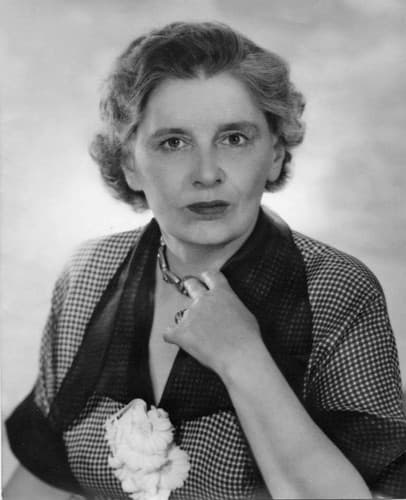
Dame Cicily Isabel Fairfield, known as Rebecca West, or Dame Rebecca West, was a British author, journalist, literary critic and travel writer. An author who wrote in many genres, West reviewed books for The Times, the New York Herald Tribune, The Sunday Telegraph and The New Republic, and she was a correspondent for The Bookman. Her major works include Black Lamb and Grey Falcon (1941), on the history and culture of Yugoslavia; A Train of Powder (1955), her coverage of the Nuremberg trials, published originally in The New Yorker; The Meaning of Treason, later The New Meaning of Treason (1964), a study of the trial of the British fascist William Joyce and others; The Return of the Soldier (1918), a modernist World War I novel; and the "Aubrey trilogy" of autobiographical novels, The Fountain Overflows (1956), This Real Night, and Cousin Rosamund (1985). Time called her "indisputably the world's number one woman writer" in 1947. She was made CBE in 1949, and DBE in 1959; in each case, the citation reads: "writer and literary critic". She took the pseudonym "Rebecca West" from the rebellious young heroine in Rosmersholm by Henrik Ibsen. She was a recipient of the Benson Medal.
Similar books
- Mrs Dalloway
Virginia Woolf
3.8 (361k) average on GoodreadsFictionExplores post-WWI trauma and its effects on individuals and society, with a focus on internal lives.
- Atonement
Ian McEwan
4.4 (70) average on GoodreadsFeatures a similar themes of war's impact, memory, and the complexities of love and class in early 20th-century England.
- Regeneration
Pat Barker
4.0 (25k) average on GoodreadsLiterary FictionBoth deal with shell shock in WWI. West's approach is more allegorical and focuses on the intimate, domestic impact of trauma. Barker's is a meticulously researched historical fiction, focusing on real figures and the clinical, institutional treatment of shell shock, offering a more explicit historical and medical lens.
- The Old Man and the Sea
Ernest Hemingway
3.8 (831k) average on GoodreadsLiterary FictionA Cuban fisherman's long struggle with a giant marlin becomes a story of endurance and dignity, now retold for young adults with illustrations, phonetic guides, and writing prompts in Traditional Chinese.
- One Hundred Years of Solitude
Gabriel García Márquez
4.1 (753k) average on GoodreadsLiterary FictionThrough the multi-generational story of the Buendía family, a mythical town deals with the repeating patterns of time, love, and solitude, as the extraordinary mixes with the ordinary.
- The Goldfinch
Donna Tartt
3.9 (720k) average on GoodreadsLiterary FictionHaunted by a tragic explosion and clutching a stolen Dutch masterpiece, a young orphan navigates the opulent drawing rooms of New York and the gritty underbelly of the art world, desperately seeking connection and redemption amidst a life spiraling into crime and obsession.





Enjoyed the summary?
A summary gives you the shape of the book. The book itself has the detail, the examples and the voice.
Find The Return of the Soldier on AmazonAs an Amazon Associate, BookBrief earns from qualifying purchases. How we're funded