
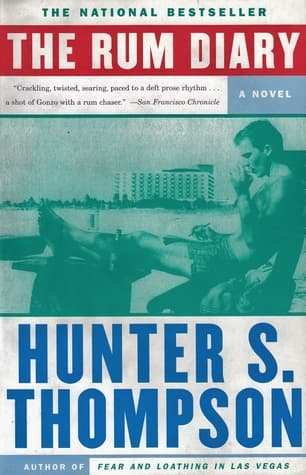
Synopsis
Covers the whole plot, including the ending.
- Difficulty
- Medium
- Pacing
- Moderate
- Mood
- Decadent, Cynical, Chaotic, Atmospheric, Drunken
- Read it if
- You enjoy raw, semi-autobiographical tales of journalistic disillusionment, heavy drinking, and the chaotic underbelly of paradise, with a distinct Gonzo-esque voice.
- Skip it if
- You prefer tightly plotted thrillers with clear resolutions, or are sensitive to themes of alcoholism, misogyny, and aimless self-destruction.
The Rum Diary Plot Summary
Covers the whole plot, including the ending.
Arrival in San Juan
Paul Kemp, a disillusioned American journalist, arrives in San Juan, Puerto Rico, in 1958, to work at The San Juan Daily News. He notices the intense heat, the island's lively but chaotic energy, and the constant presence of alcohol. After checking into a cheap hotel, he meets Sala, another American and a veteran journalist at the paper, who quickly introduces him to the local drinking culture and the harsh realities of their job. Kemp feels both fascinated and uneasy, dealing with culture shock and the heavy drinking that defines his new life.
Introduction to Yeamon and Chenault
Kemp meets Yeamon, another American expat at the newspaper, a man prone to violent outbursts. More importantly, Kemp meets Chenault, Yeamon's beautiful and mysterious girlfriend. There is an immediate, unspoken attraction between Kemp and Chenault, a dangerous undercurrent that suggests future problems. Yeamon's possessiveness and Chenault's appeal create a tense dynamic, forming a love triangle that will drive much of the story's conflict, all set against San Juan's indulgent lifestyle and the ever-present flow of rum.
The Newspaper's Decline
Paul Kemp soon realizes that The San Juan Daily News is a failing, low-quality publication, staffed by cynical and often drunk American expats. He sees firsthand the ethical compromises and general lack of interest in the newsroom, as journalists write sensationalized stories or simply fill space. The paper's owner, Mr. Zimburger, is a distant and seemingly indifferent figure, while the editor, Lotterman, is a stressed man trying to maintain some order amid the chaos. Kemp's initial journalistic ideals begin to fade as he becomes part of this environment of professional despair and personal excess.
Conflict with Yeamon
The growing tension between Kemp, Chenault, and Yeamon turns into open conflict. Yeamon's jealousy and paranoia increase, leading to several violent fights. One notable event involves Yeamon brutally beating Chenault, leaving her bruised. Kemp, witnessing this abuse, feels a growing desire to protect Chenault and a deepening dislike for Yeamon. These clashes show Yeamon's destructive nature and Chenault's vulnerable position, while strengthening the forbidden connection between Kemp and Chenault amidst the rising drama.
The Yacht Incident
Kemp, Sala, Yeamon, and Chenault go on a doomed yacht trip that quickly falls apart. Fueled by large amounts of alcohol, the journey becomes a symbol of their shared recklessness. Yeamon's erratic behavior reaches its peak, and the boat itself becomes a source of tension and near-disaster. The yacht eventually runs aground, leaving the group stranded and forcing them to face the results of their irresponsible actions. This incident illustrates the self-destructive path many characters are on and the dangers of their unrestrained lifestyle.
Meeting Sanderson
Kemp meets Sanderson, a smooth, wealthy American businessman involved in questionable real estate development schemes in Puerto Rico. Sanderson sees potential in Kemp, not as a journalist, but as a public relations operative who can help promote his dubious ventures. He offers Kemp a well-paying opportunity to write promotional material, tempting him with the promise of wealth and a more comfortable life away from the failing newspaper. This meeting marks a turning point, as Kemp is drawn further into the island's corrupt underworld and the appeal of easy money, blurring his journalistic ethics.
Chenault's Disappearance and Return
After a particularly brutal beating from Yeamon, Chenault disappears, leaving Kemp and Sala worried. Her absence casts a shadow over the story, increasing Kemp's concern and feelings for her. However, she eventually reappears, seemingly unaffected by her ordeal but with a tougher edge. Her return reignites the complex dynamics between her, Kemp, and Yeamon, adding another layer of unpredictability to their volatile relationships. Her resilience, or perhaps her detachment, in the face of such violence highlights her mysterious nature.
The Carnival Riot
Kemp and Sala find themselves caught in a violent carnival riot in the streets of San Juan. The festive atmosphere quickly becomes chaotic, with clashes between revelers and police. This incident vividly depicts the underlying social unrest and instability of Puerto Rico, a sharp contrast to the idyllic image often presented. Kemp and Sala's frantic escape through the chaos emphasizes the unpredictable and often dangerous nature of their adopted home, further solidifying Kemp's growing disillusionment with the island's superficial charm.
Kemp's Moral Crisis
Paul Kemp faces a choice, torn between his fading journalistic ideals and Sanderson's tempting offer to join his corrupt real estate business. He struggles with the moral implications of leaving his profession for a life of easy money and involvement in schemes he knows are unethical. This internal conflict shows his disillusionment with traditional journalism and his growing cynicism about the possibility of honest work in San Juan. The decision he faces tests his character and his ability to resist the pervasive corruption around him.
The Newspaper's Demise
The struggling San Juan Daily News finally closes, a victim of its financial problems and its owners' general indifference. The closure leaves Kemp, Sala, and their fellow journalists jobless and uncertain. This event marks the end of an era for the expat journalists and forces them to confront their unknown futures. For Kemp, it means the complete collapse of his original reason for being in Puerto Rico and pushes him toward making a definite decision about his next steps, whether to accept Sanderson's world or find another path.
Kemp's Reckoning
With the newspaper gone and his options limited, Kemp finally decides his future. He rejects Sanderson's offer, refusing to completely give in to the corruption he has seen. He realizes that while he may be disillusioned, he cannot abandon his core principles entirely. He chooses to leave San Juan, though with a lingering attachment and a deep impact from his experiences. This decision marks a maturation for Kemp, as he acknowledges the destructive path he was on and seeks a different direction, carrying the scars and lessons learned from his time in Puerto Rico.
The Rum Diary Characters
Paul Kemp
Protagonist
A disillusioned American journalist seeking escape and meaning in Puerto Rico.
Paul Kemp arrives in San Juan as a cynical, heavy-drinking journalist, seeking to escape a past he doesn't fully disclose. He is initially drawn to the chaotic energy of the island but quickly becomes entangled in its corruption and the destructive lives of his fellow expatriates. Despite his cynicism, he retains a flicker of idealism and a sense of moral integrity, which are constantly tested by the temptations and depravities he encounters. He is observant, intelligent, and prone to introspection, often reflecting on the absurdity of his situation.
Relationships: Sala (Close friend and drinking companion, a fellow journalist.); Chenault (Object of his forbidden affection and desire.); Yeamon (Antagonist and rival for Chenault's affection, a source of violent conflict.); Sanderson (Tempter and purveyor of corrupt opportunities.)
Sala
Supporting
A grizzled, cynical, and loyal veteran journalist at The San Juan Daily News.
Sala is a long-suffering American journalist, a fixture at The San Juan Daily News, and Kemp's closest confidant on the island. He is perpetually drunk, world-weary, and deeply cynical about his profession and life in general. Despite his rough exterior and often self-destructive habits, Sala possesses a surprising loyalty and a dark sense of humor. He serves as Kemp's guide to the expat underworld of San Juan, sharing his wisdom and his rum, embodying the tragicomic figure of the disillusioned American abroad.
Relationships: Paul Kemp (Close friend and drinking companion.); Yeamon (Tolerated colleague, often a source of annoyance.)
Chenault
Supporting
The beautiful, mysterious, and troubled girlfriend of Yeamon, who captivates Kemp.
Chenault is a stunningly beautiful American woman, characterized by her enigmatic nature and her troubled relationship with Yeamon. She is a figure of allure and vulnerability, often subjected to Yeamon's violent outbursts but possessing a striking resilience. Her presence ignites a dangerous attraction in Kemp, making her a central figure in the novel's romantic and dramatic tension. She remains somewhat elusive, a symbol of both destructive beauty and a fragile hope for escape from the island's pervasive darkness.
Relationships: Paul Kemp (Object of his desire, a forbidden love interest.); Yeamon (Abusive and possessive boyfriend, a source of her suffering.)
Yeamon
Antagonist
A volatile and violent American expatriate, Chenault's possessive boyfriend.
Yeamon is a deeply disturbed and violent American expatriate, prone to explosive rages and self-destructive behavior. He is Chenault's possessive boyfriend and a constant source of conflict, particularly with Kemp. His character embodies the darker side of expat life in San Juan, a man consumed by jealousy, alcohol, and an inability to control his impulses. He serves as a foil to Kemp, representing the destructive path that Kemp constantly skirts, and his actions drive much of the novel's tension and physical violence.
Relationships: Chenault (Abusive and possessive boyfriend.); Paul Kemp (Rival and antagonist, object of his jealousy.)
Sanderson
Supporting
A wealthy, manipulative American businessman involved in corrupt real estate ventures.
Sanderson is a smooth-talking, opportunistic American businessman who embodies the rampant corruption and unchecked capitalism in Puerto Rico. He is involved in shady real estate deals, using his charm and wealth to manipulate others. He sees potential in Kemp, not for his journalistic skills, but for his ability to craft persuasive narratives for his public relations schemes. Sanderson represents the seductive power of money and the moral compromises inherent in the island's economic boom, tempting Kemp with an alternative to his struggling journalism career.
Relationships: Paul Kemp (Potential employer and tempter.)
Lotterman
Supporting
The harried and ineffective editor of The San Juan Daily News.
Lotterman is the perpetually stressed and largely ineffective editor of The San Juan Daily News. He struggles to maintain order amidst the chaos of his newsroom and the general apathy of his staff. He is a man caught between the demands of a failing publication and the unruly nature of his journalists, often resorting to desperate measures to fill pages. Lotterman represents the decline of traditional journalism and the futility of trying to uphold professional standards in a morally compromised environment.
Relationships: Paul Kemp (His editor, a source of assignments and professional frustration.)
Mobley
Supporting
A naive, young photographer at the newspaper, often overshadowed by his colleagues.
Mobley is a young, somewhat naive photographer at The San Juan Daily News. He is less cynical than his older colleagues and often finds himself on the periphery of their debauchery. He provides a contrast to the hardened journalists, representing a lost innocence or a potential for a different path. While not as central as Sala or Yeamon, Mobley's presence highlights the spectrum of expatriate experiences and the varying degrees of corruption and disillusionment among the Americans on the island.
Relationships: Paul Kemp (Colleague at the newspaper.)
Mr. Zimburger
Mentioned
The unseen and indifferent owner of The San Juan Daily News.
Mr. Zimburger is the absentee owner of The San Juan Daily News, a distant and seemingly indifferent figure whose lack of engagement contributes to the newspaper's decline. He is rarely seen and only mentioned in the context of the paper's financial struggles and eventual collapse. He represents the corporate apathy that allows the newspaper to flounder and its staff to devolve into disarray, a symbol of the larger forces at play in the economic landscape of Puerto Rico.
Relationships: Lotterman (His employee, struggling to manage the newspaper.)
The Rum Diary Themes
Disillusionment and Failed Idealism
The novel explores the widespread disillusionment felt by its protagonist, Paul Kemp, and his fellow expat journalists. They come to Puerto Rico, often escaping past failures or seeking new beginnings, only to find their professional ideals shattered by a failing newspaper and a corrupt society. Kemp's initial hope for meaningful journalism quickly turns to cynicism as he sees the ethical compromises and trivial nature of the stories he must write. This theme appears clearly in the newsroom scenes, where the journalists' apathy and heavy drinking show their lost aspirations, ending with the newspaper's eventual collapse.
“I was looking for some kind of truth, and it seemed to me that a journalist's job was to find it, no matter what.”
Alcoholism and Self-Destruction
Alcohol acts as both a coping mechanism and a destructive force throughout the story. Almost every character, especially the American expats, is deeply involved in a culture of heavy drinking. Rum fuels their days and nights, blurring reality and often leading to violence and self-sabotage. Sala and Yeamon show this theme, their lives spiraling out of control due to their addiction. For Kemp, alcohol is a constant companion, but he also struggles with its destructive power, making it a strong symbol of the characters' attempts to escape their grim realities and their simultaneous descent into chaos.
“You can drink rum for a hundred years and never get used to it. It's like a woman. The more you drink, the more you want to drink.”
Corruption and Unchecked Capitalism
The novel criticizes the widespread corruption and the negative side of unregulated capitalism in 1950s Puerto Rico. The island, presented as a paradise, is actually a hub of shady real estate deals and get-rich-quick schemes, often harming local communities. Sanderson embodies this theme, tempting Kemp with opportunities that require moral compromise. The failing newspaper itself is a symptom of this environment, unable to hold power accountable. This theme highlights the exploitation of the island and the moral decay that comes with rapid, unregulated development, forcing Kemp to confront his own ethical boundaries.
“The whole damn island is for sale. Just like everything else.”
The American Expatriate Experience
The book clearly shows the lives of American expats in San Juan, a group of individuals often running from something or looking for a fresh start. They form a closed, indulgent society, defined by heavy drinking, casual sex, and a cynical outlook. Characters like Sala, Yeamon, and Kemp are all seeking something – escape, wealth, meaning – but often find only more disillusionment and self-destruction. This theme explores the challenges of adapting to a foreign culture, forming new social groups, and how individuals can become trapped in a transient, morally ambiguous lifestyle, far from the norms of home.
“We were all strangers there, in one way or another, and we clung to each other like shipwreck survivors.”
Plot Devices & Literary Techniques
First-Person Narration
The story is told entirely from Paul Kemp's subjective perspective.
The entire novel is narrated through Paul Kemp's first-person perspective, offering an intimate and unfiltered view of his experiences, thoughts, and feelings. This device allows readers to directly access his cynicism, his moral dilemmas, and his often-hallucinatory observations, particularly under the influence of alcohol. It creates a strong sense of immediacy and authenticity, characteristic of Thompson's writing style, immersing the reader in Kemp's chaotic world and psychological state without external judgment.
Setting as Character
San Juan, Puerto Rico, acts as a dynamic and influential force in the story.
The city of San Juan, Puerto Rico, is more than just a backdrop; it functions almost as a character itself. Its oppressive heat, vibrant but chaotic streets, pervasive rum culture, and underlying corruption significantly influence the characters' actions and fates. The setting embodies both allure and decay, mirroring the characters' internal struggles and the novel's themes of hedonism and disillusionment. The island's dual nature – a tropical paradise and a moral wasteland – shapes the narrative and the psychological states of its inhabitants.
Symbolism of Rum
Rum represents both escape and destruction for the characters.
Rum is a powerful symbol throughout the novel, embodying both the promise of escape and the reality of destruction. It is the lifeblood of the expatriate community, a constant companion that facilitates camaraderie, numbs pain, and fuels reckless behavior. However, it also leads to violence, poor decisions, and a deeper descent into self-destruction. The pervasive presence of rum highlights the characters' attempts to cope with their disillusionment and the inherent dangers of their uninhibited lifestyle, blurring the lines between pleasure and peril.
Love Triangle
The romantic tension between Kemp, Chenault, and Yeamon drives much of the interpersonal conflict.
The complex and dangerous love triangle involving Paul Kemp, Chenault, and Yeamon serves as a central plot device, fueling much of the novel's interpersonal drama and violence. Kemp's forbidden attraction to Chenault, combined with Yeamon's possessiveness and abusive nature, creates constant tension and leads to several explosive confrontations. This device not only explores themes of desire, jealousy, and loyalty but also highlights the destructive potential of relationships within the hedonistic and morally ambiguous environment of San Juan.
The Rum Diary Quotes
“It was a good morning, and even the smell of the city seemed to have been washed away by the rain.”
“I felt like a fly caught in a web, and the web was this goddamn city.”
“The only way to make sense out of change is to plunge into it, move with it, and join the dance.”
“Every now and then when your life gets complicated and the weasels start closing in, the only cure is to load up on super-pure booze and slide into the nearest fantasy.”
“San Juan was an ugly city, and I was just another ugly thing in it.”
“We are all alone, born alone, die alone, and—despite what they tell you—we shall all go to hell alone.”
“There are some things you can't learn from a book. You have to feel them.”
“The only thing I ever learned from a woman was how to hate her.”
“I would get up in the mornings and write a column about the news, and then I would get drunk and write another column about the news.”
“It was a mistake to come here. A terrible mistake. But what the hell, I'm here now.”
“We were not looking for anything, and we were finding everything.”
“The feeling of a good story, even a bad one, is a powerful drug.”
“There was a faint, lingering smell of rum and desperation.”
“The world was a terrible place, but it was all we had.”
“It was a fine line between pleasure and pain, and sometimes it was impossible to tell which was which.”
Quiz
10 questions on the plot and the characters. Each answer comes with a short explanation.
Question 1
What is the name of the freelance journalist who narrates 'The Rum Diary'?
- Hunter S. Thompson
- Paul Kemp
- Yeamon
- Lotterman
Show answer
B. Paul Kemp The narrator and protagonist of 'The Rum Diary' is Paul Kemp, a freelance journalist working in Puerto Rico.
Question 2
In what Caribbean city is the majority of 'The Rum Diary' set?
- Havana, Cuba
- Kingston, Jamaica
- San Juan, Puerto Rico
- Santo Domingo, Dominican Republic
Show answer
C. San Juan, Puerto Rico The story takes place in the 'Caribbean boomtown' of San Juan, Puerto Rico, in the late 1950s.
Question 3
What is the primary profession of Paul Kemp in San Juan?
- Hotel owner
- Newspaper editor
- Freelance journalist
- Real estate developer
Show answer
C. Freelance journalist Paul Kemp is introduced as a freelance journalist, struggling to make a living and find meaningful work in San Juan.
Question 4
Who is the 'sexy, mysterious woman' that Paul Kemp is irresistibly drawn to?
- Chenault
- Mona
- Sally
- Frederica
Show answer
B. Mona Paul Kemp becomes infatuated with Mona, the girlfriend of his eccentric colleague, Yeamon.
Question 5
What kind of publication does Paul Kemp work for, albeit reluctantly, in San Juan?
- A prestigious international newspaper
- A local, struggling English-language newspaper
- A travel magazine
- A government propaganda leaflet
Show answer
B. A local, struggling English-language newspaper Kemp gets a job at a failing English-language newspaper, the 'Daily News,' which serves as a backdrop for much of the story's events.
Question 6
Which recurring theme is prominently explored through Paul Kemp's experiences and observations in San Juan?
- The triumph of justice over corruption
- The pursuit of spiritual enlightenment
- The pervasive nature of corruption and get-rich-quick schemes
- The beauty of selfless love and devotion
Show answer
C. The pervasive nature of corruption and get-rich-quick schemes The novel explicitly states that Kemp is 'thrust into a world where corruption and get-rich-quick schemes rule,' a central theme of the narrative.
Question 7
What is the primary substance that fuels the 'violent alcoholic lust' mentioned in the book's description?
- Whiskey
- Beer
- Rum
- Gin
Show answer
C. Rum The title itself, 'The Rum Diary,' indicates the central role of rum in the characters' lives and the narrative's atmosphere of 'alcoholic lust.'
Question 8
What is the ultimate fate of the newspaper Paul Kemp works for?
- It becomes highly successful and widely read.
- It is bought out by a larger media conglomerate.
- It goes bankrupt and shuts down.
- It transitions into an online publication.
Show answer
C. It goes bankrupt and shuts down. The newspaper, already on its last legs, eventually succumbs to financial difficulties and closes, leaving Kemp and his colleagues jobless.
Question 9
How does Paul Kemp's relationship with Yeamon evolve throughout the story, particularly regarding Mona?
- They become close friends and allies.
- Their friendship is tested by Kemp's attraction to Mona, leading to conflict.
- They remain indifferent to each other.
- Yeamon encourages Kemp's relationship with Mona.
Show answer
B. Their friendship is tested by Kemp's attraction to Mona, leading to conflict. Kemp's growing obsession with Mona, Yeamon's girlfriend, creates significant tension and animosity between the two men, embodying the 'jealousy' described in the synopsis.
Question 10
What broader social or political commentary does the novel implicitly make about American expatriate life in Puerto Rico during the late 1950s?
- It idealizes the pursuit of the American Dream abroad.
- It critiques the exploitation and moral decay associated with unchecked development and American influence.
- It celebrates the harmonious integration of cultures.
- It suggests that expatriates universally find spiritual fulfillment.
Show answer
B. It critiques the exploitation and moral decay associated with unchecked development and American influence. The novel, through its depiction of corruption, get-rich-quick schemes, and the characters' moral ambiguities, offers a critical view of American influence and the often-exploitative nature of development in places like Puerto Rico during that era.
The Rum Diary FAQ
What is the central premise of 'The Rum Diary' and who is its protagonist?
'The Rum Diary' follows Paul Kemp, an American journalist who moves to San Juan, Puerto Rico, in the late 1950s to work for a struggling English-language newspaper. He quickly becomes entangled in the island's bohemian lifestyle, fueled by alcohol and a burgeoning tourism industry, while navigating personal and professional disillusionment.
Who is Chenault and what is his significance to Paul Kemp?
Chenault is one of Kemp's eccentric colleagues at The Daily News, known for his erratic behavior, heavy drinking, and general disarray. He represents a cautionary tale of what prolonged exposure to the San Juan lifestyle can do to a person, often serving as a foil and a grim predictor for Kemp's own potential future.
Describe the relationship between Paul Kemp and Sanderson.
Sanderson is a wealthy American developer in Puerto Rico who initially hires Kemp to write promotional material for his various, often dubious, real estate schemes. Their relationship is complex, marked by a blend of professional opportunism, mutual disdain, and Kemp's reluctant admiration for Sanderson's ruthless ambition and access to the 'good life.'
Who is Yeamon and what is his role in the narrative?
Yeamon is another American expatriate and colleague of Kemp's at the newspaper, characterized by his volatile temperament, heavy drinking, and possessiveness over his girlfriend, Chenault. His intense jealousy and violent outbursts, particularly towards Chenault, drive significant conflict and provide a stark example of the destructive relationships prevalent in their social circle.
What role does San Juan, Puerto Rico, play in the story?
San Juan is more than just a setting; it's a character itself, embodying the allure and decay of a Caribbean boomtown. It represents both a paradise of opportunity and a corrupting force, with its cheap rum, beautiful beaches, and rampant get-rich-quick schemes, ultimately shaping the characters' fates and moral compasses.
How does the 'rum diary' concept manifest within the book's narrative?
The 'rum diary' isn't a literal diary kept by Kemp, but rather a metaphorical chronicling of his experiences and observations while under the influence of alcohol. It reflects the blurred lines between reality and intoxication, the hazy memories, and the often distorted perceptions that define his time in San Juan, shaping his journalistic perspective.
Are there any subtle allusions to Thompson's future literary style within 'The Rum Diary'?
Yes, 'The Rum Diary' contains nascent elements of Thompson's signature Gonzo journalism, particularly in its first-person, highly subjective narrative and its focus on the author's immersion in and reaction to the story. The raw, unfiltered portrayal of excess and disillusionment, though less overtly experimental, foreshadows his later, more radical works.
What is the significance of the recurring motif of the 'American Dream' in a Caribbean setting?
The 'American Dream' is twisted and corrupted in San Juan, where it manifests as a pursuit of quick wealth and hedonism rather than traditional success. Characters like Sanderson embody this distorted dream, while Kemp struggles with the moral compromises required to achieve it, highlighting the emptiness beneath the glittering surface.
How does the book explore the psychological impact of constant intoxication on its characters?
The novel vividly portrays the psychological toll of continuous drinking, leading to paranoia, violence, emotional instability, and a pervasive sense of apathy among the characters. Kemp, despite his observations, often succumbs to the same patterns, demonstrating how alcohol blurs judgment and erodes self-control, leading to destructive cycles.
Analyze Paul Kemp's internal conflict regarding his journalistic integrity.
Kemp grapples with a constant internal struggle between his desire for authentic journalism and the pragmatic need to survive, often accepting morally dubious assignments from Sanderson. He despises the corruption he witnesses but is simultaneously tempted by its benefits, reflecting a deep ambivalence towards his profession and his own moral compass.
What psychological factors contribute to the volatile relationship between Yeamon and Chenault?
Their relationship is fueled by a toxic mix of Yeamon's deep insecurity, possessiveness, and alcohol-induced rage, coupled with Chenault's escapism, fear, and desire for an unattainable freedom. This dynamic creates a cycle of abuse and reconciliation, rooted in their individual psychological vulnerabilities and the permissive environment they inhabit.
How does Kemp's initial idealism clash with the realities he encounters in San Juan?
Kemp arrives in San Juan with a degree of journalistic idealism, hoping to find purpose and perhaps a story. However, he quickly confronts a reality dominated by corruption, exploitation, and moral decay, which forces him to either compromise his ideals or face increasing disillusionment, challenging his initial romanticized view of the tropics.
Is 'The Rum Diary' ultimately a hopeful or a cynical novel?
While the novel is deeply cynical in its portrayal of human nature and the corrupting influence of power and greed, it ends with a subtle hint of defiance and a desire for change from Kemp. His decision to leave San Juan and pursue more meaningful journalism suggests a glimmer of hope, though one tempered by the pervasive darkness he has witnessed.
How does the book comment on American expatriates in the post-WWII era?
The novel critiques a segment of American expatriates as rootless, disillusioned individuals seeking escape or exploitation in foreign lands. They often bring their own vices and prejudices, contributing to the very corruption they claim to be fleeing, highlighting a darker side of American influence abroad during that period.
What is the overarching message about the pursuit of pleasure and its consequences?
The book suggests that unchecked hedonism and the relentless pursuit of pleasure, particularly through alcohol and illicit schemes, ultimately lead to decay, violence, and profound emptiness. While initially alluring, this lifestyle traps its adherents in a cycle of self-destruction, demonstrating the high cost of moral abandon.
To what extent is 'The Rum Diary' a semi-autobiographical work?
'The Rum Diary' is heavily semi-autobiographical, drawing directly from Hunter S. Thompson's own experiences as a young journalist in Puerto Rico in the late 1950s. The character of Paul Kemp reflects Thompson's own struggles with idealism, disillusionment, and the allure of a chaotic, alcohol-fueled lifestyle, making it a deeply personal narrative.
How does the novel use humor to temper its darker themes?
Despite its bleak themes, 'The Rum Diary' employs a dark, often absurd humor, particularly through the eccentricities of its characters and the sheer ridiculousness of some situations. This gallows humor serves to make the harsh realities more palatable and reflects Thompson's unique voice, allowing readers to find amusement amidst the chaos and despair.
About the author
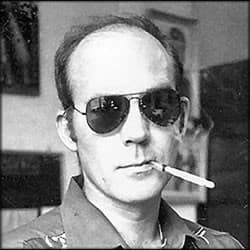
Hunter Stockton Thompson was an American journalist and author who founded the gonzo journalism movement. He rose to prominence with the publication of Hell's Angels (1967), a book for which he spent a year living and riding with the Hells Angels motorcycle club to write a first-hand account of their lives and experiences.
Similar books
- Fear and Loathing in Las Vegas
Hunter S. Thompson
4.1 (299k) average on GoodreadsLifestyleShares Thompson's unique narrative voice, themes of excess, and a descent into drug-fueled chaos.
- On The Road
Jack Kerouac
3.6 (349k) average on GoodreadsLifestyleExplores the wanderlust and disillusionment of a post-war generation, with a focus on travel and hedonism.
- A Farewell to Arms
Ernest Hemingway
3.8 (263k) average on GoodreadsHistorical FictionFeatures a cynical, world-weary protagonist grappling with love and existential despair amidst a backdrop of conflict.
- The Sun Also Rises
Ernest Hemingway
3.8 (366k) average on GoodreadsHistorical FictionWhile both depict disillusioned expatriates, Hemingway's prose is more restrained and his characters, though lost, often retain a certain romanticism. Thompson's The Rum Diary offers a darker, grittier, and less romanticized view of escape and disillusionment.
- Under the Volcano
Malcolm Lowry
3.8 (22k) average on GoodreadsLiterary FictionBoth novels explore self-destructive tendencies of an alcoholic protagonist in a foreign setting. However, Lowry's narrative is far more complex and symbolic, employing a deep stream-of-consciousness style, whereas Thompson's approach, even in this early work, leans towards external observation and journalistic realism.
- Angels & Demons
Dan Brown
3.9 (2.7M) average on GoodreadsThrillerA Harvard symbologist races through Rome's ancient sites, deciphering cryptic clues to unmask the Illuminati and stop a vengeful plot to destroy the Vatican with a stolen antimatter weapon.





Enjoyed the summary?
A summary gives you the shape of the book. The book itself has the detail, the examples and the voice.
Find The Rum Diary on AmazonAs an Amazon Associate, BookBrief earns from qualifying purchases. How we're funded