
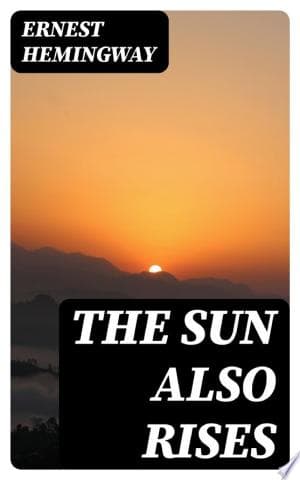
Synopsis
Covers the whole plot, including the ending.
- Difficulty
- Medium
- Pacing
- Moderate
- Mood
- Melancholy, Disillusioned, Atmospheric, Reflective
- Read it if
- You want to experience a foundational work of modernist literature, explore themes of post-war disillusionment and unrequited love, or appreciate Hemingway's iconic sparse prose.
- Skip it if
- You prefer fast-paced plots with clear resolutions, dislike ambiguous character motivations, or are put off by themes of infidelity and emotional detachment.
The Sun Also Rises Plot Summary
Covers the whole plot, including the ending.
Jake Barnes in Paris
The novel begins in Paris in the early 1920s with Jake Barnes, an American journalist and World War I veteran. Jake describes his daily life of drinking, dining, and socializing with other expatriates. He details his platonic but deep love for Lady Brett Ashley, a beautiful and charming British socialite. Jake's war injury has left him impotent, preventing a physical relationship with Brett, despite their feelings for each other. He recounts Brett's restless nature and her many relationships, including her engagement to Mike Campbell, a heavy-drinking Scotsman. Jake often observes his friends, especially Robert Cohn, a wealthy American writer and former boxer, who is infatuated with Brett.
Robert Cohn's Infatuation
Robert Cohn, a wealthy American writer who funds a literary magazine, is a well-meaning but often naive and insecure character. He recently had a short affair with Lady Brett Ashley, which left him deeply in love and convinced she loves him. This infatuation causes much tension in the group, as Cohn constantly pursues Brett and expresses his feelings, often looking foolish. Jake, while sympathetic, finds Cohn's romantic idealism and inability to understand the group's cynical ways irritating. Cohn's presence and open adoration for Brett create awkwardness and resentment, especially from Mike Campbell, Brett's fiancé, who openly dislikes Cohn.
Brett's Relationships and Engagements
Lady Brett Ashley is an independent and modern woman, always surrounded by admirers and moving between relationships. She is engaged to Mike Campbell, but her affections are divided, and she often seeks out Jake Barnes, with whom she shares a deep emotional bond. Despite their mutual love, Jake's war wound prevents a physical relationship, causing deep longing and frustration for both. Brett's inability to commit to one man, along with her desire for excitement, drives much of the story. Her relationships, including the one with Cohn, are often short-lived and impulsive, leaving hurt feelings and jealousy among her male companions.
Travel to Spain: San Sebastián
Jake Barnes and his friend Bill Gorton, an American writer, decide to leave Paris for a fishing trip in Spain. They travel to Bayonne, then by bus into the Pyrenees, arriving in Burguete, near Pamplona. This journey changes the novel's mood, offering a temporary escape from the emotional complexities of Paris. The two men enjoy simple companionship, fishing in the Irati River and having lighthearted conversations. This break shows a different side of Jake's character – his appreciation for nature and male friendship, providing a brief rest before the entire group reunites for the fiesta in Pamplona, bringing all the unresolved tensions with them.
The Fishing Trip
Jake and Bill Gorton go on their fishing trip in the Spanish countryside, finding a temporary escape from their Parisian emotional turmoil. They spend several days in Burguete, fishing for trout in the clear, cold streams of the Irati River. During this time, they engage in simple, masculine activities, drinking wine, eating good food, and discussing their lives with camaraderie. This period is peaceful and beautiful, contrasting with their decadent Paris life. The fishing trip is a restorative break, allowing Jake to escape his unrequited love for Brett and his social circle's frustrations.
Arrival in Pamplona and the Fiesta
Jake and Bill arrive in Pamplona and are soon joined by Brett, Mike Campbell, and Robert Cohn. The city is preparing for the San Fermín fiesta, a week-long celebration with bullfights and running with the bulls. The atmosphere is lively and chaotic, filled with music, dancing, and endless drinking. The group's arrival in Pamplona intensifies existing tensions. Cohn's pursuit of Brett becomes more obvious and embarrassing, leading to increased animosity from Mike. Brett, in turn, is attracted to the excitement and attention, further fueling the jealousy among the men. The fiesta setting provides a backdrop for their escalating emotional conflicts.
Pedro Romero's Appearance
During the fiesta, the group attends several bullfights. There, they meet Pedro Romero, a young, talented, and handsome bullfighter. Romero shows integrity, courage, and artistry that impress Jake and captivate Brett. His disciplined approach to bullfighting contrasts with the expatriate group's aimless hedonism. Brett, drawn to his passion, becomes intensely infatuated with him. This new attraction further complicates the strained relationships in the group, particularly angering Robert Cohn, who sees Romero as a rival, and upsetting Mike Campbell, Brett's fiancé.
Jealousy and Confrontation
Robert Cohn's love for Brett reaches a breaking point when she begins an affair with Pedro Romero. Consumed by jealousy, Cohn confronts Brett, then Mike Campbell, and finally Jake, accusing them of helping Brett's relationship with Romero. His frustration leads to violent outbursts. Cohn physically assaults Mike and then Jake, beating them both severely. He also confronts Romero, beating him, though Romero, despite being injured, maintains his dignity and still performs heroically in the bullring. These confrontations show the raw emotions and destructive nature of Cohn's unrequited love, further alienating him from the group and highlighting their moral decay.
Brett and Romero's Affair
After the violent confrontations, Brett, despite her initial guilt and the group's disapproval, decides to leave Pamplona with Pedro Romero. She is drawn to his youth, passion, and authenticity, which she finds lacking in her own life and among her friends. Her departure marks a turning point in the fiesta and the group's dynamics. Mike Campbell, defeated, leaves Pamplona, while Bill Gorton also departs. Jake remains, feeling a complex mix of sadness and resignation. The affair with Romero, though brief, symbolizes Brett's ongoing search for meaning and her ultimate inability to find it within her current social circle.
The Aftermath and Dispersion
Following Brett's departure with Romero and the violent incidents, the fiesta ends, and the group disperses. Mike Campbell leaves Pamplona, broken by Brett's actions. Bill Gorton also departs, leaving Jake alone to reflect on the events and his emptiness. Jake travels to San Sebastián, seeking peace. He tries to enjoy swimming and relaxing, but the emotional scars of the fiesta and his love for Brett remain. This period shows Jake's deep isolation and his struggle to find meaning in a world that often seems indifferent to his suffering.
Brett's Return and Final Conversation
After some time alone in San Sebastián, Jake receives a telegram from Brett, asking him to come to Madrid. She has left Pedro Romero, realizing she was corrupting him and their relationship could not last. Jake immediately travels to her. They meet and discuss her decision to let Romero go, with Brett showing a rare moment of self-awareness. She admits she couldn't ruin him. They spend some time together, riding in a taxi, where Brett says, "Oh, Jake, we could have had such a damned good time together." Jake's reply, "Isn't it pretty to think so?" captures their tragic love and the futility of their desires, ending the novel as they acknowledge the impossibility of their relationship.
Principal Figures
Jake Barnes
Protagonist
An American expatriate journalist and WWI veteran, deeply in love with Lady Brett Ashley.
Jake is the narrator and central figure of the novel. A World War I veteran, he suffers from an unspecified war injury that has left him impotent, which is a constant source of pain and defines his relationship with Brett. He is observant, cynical, and deeply reflective, often using his journalistic detachment to process the chaotic lives around him. Despite his outward composure, he harbors profound emotional wounds and a longing for a normal life and love. He often acts as a confidant and mediator within his group of friends, though he is not immune to their destructive behaviors.
Relationships: Lady Brett Ashley (Unrequited love, deep emotional bond); Robert Cohn (Friendship, exasperation, occasional animosity); Bill Gorton (Close friendship, camaraderie); Mike Campbell (Acquaintance, occasional drinking companion)
Lady Brett Ashley
Deuteragonist
A charismatic, independent British socialite, the object of desire for many men.
Brett is a beautiful, modern, and fiercely independent woman whose allure drives much of the novel's plot. She is a divorcée with a string of affairs, embodying the moral ambiguity and restlessness of the Lost Generation. She genuinely loves Jake but cannot commit to him due to his impotence, leading her to seek physical gratification elsewhere. She is charming, seductive, and often reckless, but also capable of moments of surprising self-awareness and self-sacrifice, as seen in her decision to let go of Romero to avoid corrupting him. Her actions often cause pain to those around her, but she is also a victim of her own desires and the societal constraints of her time.
Relationships: Jake Barnes (Unrequited love, deep emotional bond); Robert Cohn (Brief affair, source of his infatuation); Mike Campbell (Fiancé, tumultuous relationship); Pedro Romero (Passionate affair, ultimately ended by Brett)
Robert Cohn
Antagonist/Supporting
A wealthy American writer, insecure and deeply infatuated with Brett.
Robert Cohn is a former boxing champion and a Princeton graduate, now a wealthy writer who funds a literary magazine. He is earnest, romantic, and often naive, which sets him apart from the more cynical expatriates. His deep infatuation with Brett, stemming from a brief affair, drives him to desperate and often humiliating actions. He is portrayed as an outsider, unable to fully integrate into the group's casual hedonism, and his idealism often clashes with their jaded worldview. His jealousy ultimately leads to violent confrontations, making him an increasingly isolated and disliked figure.
Relationships: Lady Brett Ashley (Obsessive love, unrequited); Jake Barnes (Friendship, later animosity due to jealousy); Mike Campbell (Antagonistic, mutual dislike)
Bill Gorton
Supporting
An American writer and Jake's close friend, providing comedic relief and companionship.
Bill Gorton is an American writer and a good friend of Jake Barnes. He is known for his wit, humor, and love of drinking, often providing comic relief amidst the group's emotional turmoil. Bill shares a comfortable and genuine camaraderie with Jake, particularly during their fishing trip in Spain, where they find a temporary escape from the complexities of their lives. He is more grounded and less susceptible to the dramatic entanglements of Brett and Cohn, offering a voice of reason and often a cynical commentary on their friends' behavior. He represents a simpler, more straightforward form of male friendship.
Relationships: Jake Barnes (Close friendship, camaraderie)
Mike Campbell
Supporting
Brett's perpetually drunk fiancé, prone to jealousy and financial instability.
Mike Campbell is a Scottish expatriate and Lady Brett Ashley's fiancé. He is a charming but perpetually drunk and financially unstable character, often relying on his inheritance or the generosity of others. Mike is deeply insecure about Brett's infidelity and his own inability to provide for her, which manifests in bitter, jealous outbursts, particularly directed at Robert Cohn. He represents the destructive aspects of the Lost Generation's aimlessness and alcoholism, often contributing to the group's escalating tensions through his drunken insults and erratic behavior. Despite his flaws, he genuinely loves Brett, though his love is often overshadowed by his self-pity and resentment.
Relationships: Lady Brett Ashley (Fiancé, tumultuous, alcohol-fueled love); Robert Cohn (Intense animosity, frequent confrontations); Jake Barnes (Acquaintance, occasional drinking companion)
Pedro Romero
Supporting
A young, exceptionally skilled, and honorable bullfighter who captivates Brett.
Pedro Romero is a young, nineteen-year-old bullfighter who embodies a sense of purity, integrity, and discipline that contrasts sharply with the jaded expatriates. His artistry and courage in the bullring deeply impress Jake and captivate Brett. Romero represents an older, more traditional code of honor and passion, living his life with an intensity and purpose that the 'Lost Generation' lacks. He is fearless, dignified, and possesses a profound sense of self. His brief affair with Brett highlights her yearning for something authentic and meaningful, but ultimately, his world is too pure for her destructive influence.
Relationships: Lady Brett Ashley (Passionate affair, temporary love interest); Jake Barnes (Mutual respect, admiration)
Georgette Hobin
Mentioned
A prostitute Jake hires early in the novel.
Georgette Hobin is a prostitute whom Jake Barnes hires for an evening early in the novel. Her brief appearance serves to immediately establish Jake's impotence and the superficiality of some of his interactions. She is a pragmatic and straightforward woman, uninterested in emotional complexities, which highlights Jake's inability to form conventional romantic relationships.
Relationships: Jake Barnes (Client-prostitute relationship)
Count Mippipopolous
Supporting
A wealthy Greek count, a friend of Brett, who embodies a stoic philosophy.
Count Mippipopolous is a wealthy Greek count and a friend of Brett. He is a minor but memorable character who embodies a unique philosophy of life. Having 'been through it all' and possessing an unshakeable inner peace, he serves as a foil to the restless and angst-ridden expatriates. He carries a small leather case containing a collection of values, representing his ability to find meaning and order in a chaotic world. He provides a brief, almost spiritual, counterpoint to the group's despair, suggesting a different way to cope with disillusionment.
Relationships: Lady Brett Ashley (Friend)
Themes & Insights
Disillusionment and the Lost Generation
The novel portrays the 'Lost Generation' – young adults disillusioned by World War I and searching for meaning in the post-war era. This theme appears in the characters' aimless lives, heavy drinking, superficial relationships, and constant search for distraction. Jake's impotence reflects this emotional emptiness. The characters cannot form lasting connections, seeking fleeting pleasures that leave them empty. The contrast between their pleasure-seeking lifestyle and Pedro Romero's traditional values highlights their lost state.
“You’re an expatriate. You’ve lost touch with the soil. You get precious. Fake European standards have ruined you. You drink yourself to death. You become obsessed with sex. You spend all your time talking, not working. You are an expatriate, see? You hang around cafés.”
Unrequited Love and Impotence
The central theme of unrequited love, especially between Jake and Brett, is tied to Jake's war-induced impotence. This physical wound symbolizes a deeper emotional emptiness within the 'Lost Generation.' Despite their deep affection, their love can never be fully realized, causing constant frustration and pain. Brett's inability to commit to Jake due to this physical barrier leads her into destructive relationships, while Jake silently endures his longing. The theme explores the tragic irony of deep love that cannot be fulfilled conventionally, showing the emotional scars of war.
“Oh, Jake,” Brett said, “we could have had such a damned good time together.” “Isn’t it pretty to think so?”
Masculinity and Honor
The novel explores different ideas of masculinity, especially after the war when traditional ideas of heroism were challenged. Jake's impotence directly affects his sense of masculinity and his ability to have a 'normal' relationship. Robert Cohn's pursuit of Brett and his violent outbursts are a desperate attempt to assert his masculinity. In contrast, Pedro Romero embodies a strong, traditional masculinity based on courage, discipline, and integrity, especially in the bullring. His 'afición' (passion for bullfighting) represents an authentic code of honor that contrasts with the aimless behavior of the expatriate men.
“Bull-fighting is not a sport. It is a tragedy. A man who is not a matador may not be an aficionado. He may be a aficionado, but he cannot be an aficionado. The aficionado is one who has a passion for bull-fighting. He is one who has a knowledge of bull-fighting. He is one who has a respect for bull-fighting.”
Hedonism and Escapism
The characters constantly seek pleasure through drinking, parties, and casual sex, using these activities to escape their inner emptiness and disillusionment. The constant travel between Paris and Spain, and the energy of the fiesta, distract them from their internal struggles. This pleasure-seeking lifestyle, however, offers only temporary relief, as the underlying pain always returns. The characters are caught in a cycle of seeking external stimulation to fill an internal void, showing that escapism is not a long-term solution to existential angst.
“I can’t stand it to think my life is going so fast and I’m not really living it.”
Plot Devices & Literary Techniques
The Code Hero
Characters who live by a strict personal code of honor, courage, and grace under pressure.
Hemingway's 'Code Hero' is exemplified by Pedro Romero. This device highlights characters who face life's challenges with dignity, self-control, and a specific set of moral principles, often in the face of chaos or meaninglessness. Romero's disciplined performance in the bullring, his stoicism after being beaten by Cohn, and his commitment to his art embody this code. Jake Barnes, to a lesser extent, also strives to live by a code, seeking authenticity and integrity in his actions and observations, especially in contrast to the emotional excesses of his friends. This device serves to contrast ideal behavior with the 'Lost Generation's' moral decay.
Symbolism of Impotence
Jake's physical wound symbolizes the spiritual and emotional barrenness of the Lost Generation.
Jake's war injury, which leaves him physically impotent, is a powerful symbol throughout the novel. On a literal level, it prevents him from having a conventional relationship with Brett, driving much of the romantic conflict. Symbolically, it represents the emotional, spiritual, and creative impotence of the 'Lost Generation' as a whole. The war has left them unable to truly connect, to find lasting meaning, or to 'produce' anything of substance beyond fleeting pleasures. This device underscores the theme of disillusionment and the profound damage inflicted by the war, extending beyond physical wounds to the very soul.
The Fiesta of San Fermín
The chaotic, vibrant Spanish festival as a microcosm of the characters' lives and a catalyst for conflict.
The week-long Fiesta of San Fermín in Pamplona serves as a crucial plot device. Its frenetic energy, constant drinking, and blend of sacred tradition with violent spectacle mirror the chaotic and often destructive lives of the expatriate characters. The fiesta acts as a pressure cooker, intensifying pre-existing tensions and bringing latent conflicts to the surface, particularly between Cohn, Mike, and Brett. The bullfights, with their themes of death, courage, and artistry, provide a stark contrast to the characters' aimless existence and introduce Pedro Romero, a figure of authentic passion and honor, further highlighting the group's moral and emotional disarray.
The Journey Motif
Physical travel as a means of seeking escape, self-discovery, or confirming internal states.
The characters' repeated journeys, from Paris to Spain, and within Spain (e.g., Jake and Bill's fishing trip, Jake's trip to San Sebastián, Brett's call from Madrid), serve as a significant plot device. These physical movements often parallel their internal quests for meaning, escape, or resolution. The fishing trip offers Jake and Bill a temporary respite and a taste of authentic living, while the journey to Pamplona plunges them back into chaos. Brett's final journey to Madrid and her call to Jake signify a moment of self-awareness and a desire for closure, confirming that physical escape alone cannot solve their deeper emotional problems.
The Sun Also Rises Quotes
“You are all a lost generation.”
“It is awfully easy to be hard-boiled about everything in the daytime, but at night it is another thing.”
“How are you going to get to be a serious drunk?”
“Oh, Jake, we could have had such a damned good time together.”
“No; I don't like it. It's too big.”
“I can't stand it to think my life is going so fast and I'm not really living it.”
“I did not care what it was all about. All I wanted to know was how to live in it.”
“Enjoying living was learning to get your money's worth and knowing when you had it.”
“It was like a fiesta. It was like a dream.”
“Nobody ever lives their life all the way up except bull-fighters.”
“The world was not a pleasant place to be. The world was a good place to buy in.”
“Going to another country doesn't make any difference. I've tried all that. You can't get away from yourself by moving from one place to another.”
“You know it makes me feel rather good deciding not to be a bitch.”
“I can't stand to think my life is going so fast and I'm not really living it.”
“It was a good morning, and there was a good feeling to the day.”
Quiz
10 questions on the plot and the characters. Each answer comes with a short explanation.
Question 1
What is Jake Barnes's profession in Paris?
- Novelist
- Journalist
- Artist
- Banker
Show answer
B. Journalist Jake Barnes works as a journalist in Paris, which provides him with some income and a routine amidst his aimless social life.
Question 2
What is the primary reason for Jake Barnes's physical wound and his inability to have a conventional romantic relationship with Lady Brett Ashley?
- A bullfighting injury
- A pre-war accident
- A war injury that left him impotent
- A duel with another suitor
Show answer
C. A war injury that left him impotent Jake's war injury left him impotent, which is a central theme in his unfulfilled love for Brett and his sense of disillusionment.
Question 3
To which country do Jake, Brett, and their friends travel to watch the bullfights?
- Italy
- Spain
- France (outside Paris)
- Portugal
Show answer
B. Spain The group travels to Spain for the bullfights and the fiesta of San Fermín in Pamplona, which is a major setting for the latter half of the novel.
Question 4
What term did Gertrude Stein use to describe the generation of disillusioned post-WWI expatriates depicted in the novel?
- The Jazz Age Generation
- The Roaring Twenties
- The Lost Generation
- The Bohemian Set
Show answer
C. The Lost Generation Gertrude Stein famously coined the term 'The Lost Generation' to characterize the disaffected youth of the post-WWI era, a term prominently associated with Hemingway's novel.
Question 5
Which character is consistently portrayed as jealous and insecure, frequently getting into arguments and physical altercations, often due to Brett Ashley's attention?
- Bill Gorton
- Robert Cohn
- Mike Campbell
- Pedro Romero
Show answer
B. Robert Cohn Robert Cohn is the character who struggles most visibly with jealousy and insecurity, particularly regarding Brett, leading to his isolation and conflicts with the other men.
Question 6
What is Lady Brett Ashley's marital status at the beginning of the novel?
- Single and never married
- Married to Mike Campbell
- A divorcée, engaged to Mike Campbell
- A widow
Show answer
C. A divorcée, engaged to Mike Campbell Brett is a divorcée who is engaged to Mike Campbell, though her commitment to him is as fleeting as her other relationships.
Question 7
What is the significance of the bullfighter, Pedro Romero, to Lady Brett Ashley?
- He represents a stable, conventional love she desires.
- He symbolizes an authentic passion and purity that briefly captivates her, contrasting with her usual superficial relationships.
- He is merely another passing fling, indistinguishable from the others.
- He is a source of financial support for her.
Show answer
B. He symbolizes an authentic passion and purity that briefly captivates her, contrasting with her usual superficial relationships. Pedro Romero, with his integrity and skill in the bullring, offers Brett a glimpse of something pure and genuine, attracting her strongly, even though she ultimately realizes she cannot 'ruin' him.
Question 8
At the end of the novel, after Brett leaves Pedro Romero, what is Jake's final response to Brett's wistful comment, 'Oh, Jake, we could have had such a damned good time together,' as they ride in a taxi?
- He agrees, expressing his regret.
- He tells her, 'Isn't it pretty to think so?'
- He remains silent, lost in thought.
- He tells her it's still possible.
Show answer
B. He tells her, 'Isn't it pretty to think so?' Jake's iconic response, 'Isn't it pretty to think so?' encapsulates the novel's theme of romantic futility and disillusionment, acknowledging the impossibility of their relationship due to his injury.
Question 9
How does the novel portray the concept of 'nada' (nothingness) or existential emptiness, particularly through the characters' actions and dialogue?
- Through their constant pursuit of spiritual enlightenment and philosophical debates.
- Through their aimless wandering, heavy drinking, superficial relationships, and lack of purpose.
- Through their dedicated work ethic and commitment to rebuilding post-war society.
- Through their deep engagement in political activism and social reform.
Show answer
B. Through their aimless wandering, heavy drinking, superficial relationships, and lack of purpose. The characters' constant drinking, partying, and transient relationships without deeper meaning or commitment are central to portraying the existential emptiness and disillusionment of the 'Lost Generation'.
Question 10
Beyond the romantic entanglements, what is a key contrast highlighted by the bullfighting scenes in Spain, especially through the character of Pedro Romero, compared to the expatriates' lifestyle?
- The rigid class structure of Spanish society versus the bohemian freedom of the expatriates.
- The superficiality and decadence of traditional Spanish culture versus the expatriates' search for authenticity.
- The pursuit of 'afición' (passion and integrity) and living life with grace under pressure versus the expatriates' aimless hedonism and emotional disarray.
- The commercialization of sport in Spain versus the pure amateurism of the expatriates' activities.
Show answer
C. The pursuit of 'afición' (passion and integrity) and living life with grace under pressure versus the expatriates' aimless hedonism and emotional disarray. The bullfighting, particularly through Romero, represents a world of 'afición'—passion, integrity, and facing death with grace—which stands in stark contrast to the expatriates' often hollow and emotionally chaotic existence.
The Sun Also Rises FAQ
What is the central conflict driving the plot of 'The Sun Also Rises'?
The central conflict revolves around Jake Barnes's unrequited love for Lady Brett Ashley, complicated by his war wound which has rendered him impotent. This physical limitation creates an insurmountable barrier to their relationship, fueling his emotional frustration and her restless pursuit of fleeting connections, often with other men in their circle.
Who are the main characters and what is their relationship dynamic?
The main characters are Jake Barnes, a journalist and WWI veteran; Lady Brett Ashley, a captivating British socialite; Robert Cohn, a wealthy Jewish American writer; Mike Campbell, Brett's perpetually indebted fiancé; and Bill Gorton, an American writer and Jake's good friend. Their dynamic is characterized by a complex web of unrequited love, jealousy, and codependency, particularly centered around Brett's allure and the men's pursuit of her.
Where does the story primarily take place, and how do the settings influence the narrative?
The story primarily takes place in 1920s Paris and during a trip to Spain, specifically Pamplona for the San Fermín festival and bullfights. Paris represents the expatriate's escapist, often decadent lifestyle, while the Spanish setting, with its bullfighting and religious festivals, introduces a stark contrast of tradition, passion, and a more visceral engagement with life and death, highlighting the characters' emotional emptiness.
What role does Robert Cohn play in the group, and why is he often ostracized?
Robert Cohn, a wealthy and somewhat naive Jewish American writer, acts as an outsider who attempts to integrate into the group but is frequently mocked and excluded. His romantic idealism, particularly his persistent pursuit of Brett, clashes with the group's cynical, jaded worldview, making him an easy target for their frustrations and insecurities.
How does the bullfighter, Pedro Romero, impact the group's dynamics, especially Brett's?
Pedro Romero, a young and authentic bullfighter, captivates Brett with his purity, grace, and integrity, offering a stark contrast to the emotionally damaged men in her circle. His brief affair with Brett ignites intense jealousy among the men, particularly Cohn and Mike, and ultimately leads to the disintegration of the group's fragile harmony as Brett momentarily seeks a genuine, uncorrupted connection.
What is the significance of the fishing trip Jake and Bill take to Burguete?
The fishing trip to Burguete serves as a brief respite from the emotional turmoil of Paris and Pamplona. It represents a moment of male camaraderie, simple pleasures, and an escape into nature, offering Jake a temporary sense of peace and a chance to bond with Bill away from Brett's destructive influence. It contrasts sharply with the later chaos of the fiesta.
How does Hemingway use the 'iceberg theory' in portraying Jake's war wound and its emotional impact?
Hemingway employs the 'iceberg theory' by rarely explicitly detailing Jake's war wound or its psychological toll. Instead, the reader infers the profound impact of his impotence and trauma through his understated reactions, his inability to consummate his love for Brett, and the underlying sadness and resignation that permeate his narration, leaving much unsaid beneath the surface.
Are there any subtle indications of the characters' financial situations beyond what's explicitly stated?
Yes, subtle indications exist. Mike Campbell's constant need to borrow money and his vague promises of future inheritance suggest his chronic indebtedness. Robert Cohn's ability to travel and pursue his interests without working indicates inherited wealth. Brett's expensive lifestyle and frequent changes of partners imply she relies on others' money, despite her independence.
What is the implied meaning behind the recurring phrase, 'It's a grand life if you don't weaken'?
The phrase, often spoken by Mike Campbell, reflects the characters' attempts to maintain a façade of resilience and enjoyment despite their underlying disillusionment and emotional fragility. It's a sardonic acknowledgment of their precarious existence and the constant effort required to avoid succumbing to despair in their post-war, directionless lives.
How does Jake Barnes cope with his emotional pain and physical limitation?
Jake copes with his emotional pain and physical limitation through stoicism, a detached observational stance as a journalist, and seeking solace in simple pleasures like fishing and drinking. He often internalizes his suffering, rarely expressing it directly, and finds a degree of control in his routines and the act of witnessing the chaos around him.
Analyze Lady Brett Ashley's psychological motivations for her restless pursuit of relationships.
Brett's restless pursuit of relationships stems from a deep-seated trauma and an inability to commit, possibly linked to her war experiences and the death of her true love. She seeks constant validation and distraction, using her charm and sexuality to exert control, but ultimately remains unfulfilled, unable to find lasting happiness or peace in any connection.
What psychological concept does Robert Cohn's idealism and eventual violent outburst represent?
Robert Cohn's idealism represents a yearning for a romantic, purposeful life that clashes with the cynical reality of the Lost Generation. His violent outburst, particularly when he assaults Jake, Mike, and Romero, signifies the breakdown of his suppressed frustrations and humiliations, a desperate lashing out against the group's emotional cruelty and his own perceived inadequacy.
How do the male characters' individual insecurities manifest in their interactions with Brett?
The male characters' insecurities manifest in varied ways. Jake's impotence fuels his quiet despair. Cohn's lack of acceptance and romantic naivety makes him obsessive. Mike's financial instability and alcoholism lead to jealous outbursts and aggression. Each man projects his own deficiencies onto his pursuit of Brett, turning her into a symbol of their unfulfilled desires and anxieties.
Is 'The Sun Also Rises' ultimately a pessimistic or optimistic novel?
While often read as a pessimistic novel due to its portrayal of disillusionment and unfulfilled desires, it contains glimmers of stoic optimism. Jake's ability to find moments of peace, the brief instances of genuine camaraderie, and Brett's ultimate decision to send Romero away to avoid corrupting him, suggest a resilience and a quiet search for grace under pressure, even if happiness remains elusive.
How does the novel explore the concept of 'masculinity' in the post-WWI era?
The novel explores a fractured concept of masculinity. Jake's war wound challenges traditional notions of male virility, while Cohn's romanticism is seen as weak. Mike's alcoholism and aggression are destructive. In contrast, Pedro Romero embodies an older, more authentic form of masculinity characterized by skill, discipline, and honor, highlighting the crisis of identity among the 'Lost Generation' men.
What is the significance of the title, 'The Sun Also Rises,' in relation to the novel's themes?
The title, taken from Ecclesiastes, suggests a cyclical nature of life and a sense of enduring continuity despite human suffering and change. It implies that while individuals may be lost or disillusioned, life and the natural world persist. This offers a counterpoint to the characters' despair, hinting at a timeless order that transcends their immediate chaos and personal tragedies.
To what extent is Lady Brett Ashley a symbol of female liberation or merely another victim of her circumstances?
Brett is arguably both a symbol of female liberation and a victim. Her independence, sexual freedom, and rejection of traditional roles were radical for her time. However, her constant restlessness, inability to commit, and self-destructive tendencies also portray her as deeply damaged by her past, making her a victim of the very freedoms she embodies, unable to find genuine fulfillment.
How does the novel critique or endorse the expatriate lifestyle of the Lost Generation?
The novel offers a nuanced view of the expatriate lifestyle. It portrays the allure of freedom, artistic pursuit, and escape from post-war American puritanism. However, it also critiques the aimlessness, excessive drinking, emotional emptiness, and moral decay that often accompanied this lifestyle, suggesting that escaping one's home country doesn't necessarily mean escaping oneself or finding meaning.
What is the enduring legacy of 'The Sun Also Rises' as a modernist novel?
Its enduring legacy as a modernist novel lies in its groundbreaking spare prose, which stripped away excess to convey deeper meaning, and its vivid portrayal of the 'Lost Generation.' It captured the disillusionment, moral ambiguity, and search for meaning in the aftermath of WWI, influencing countless writers and defining a significant literary and cultural moment.
About the author
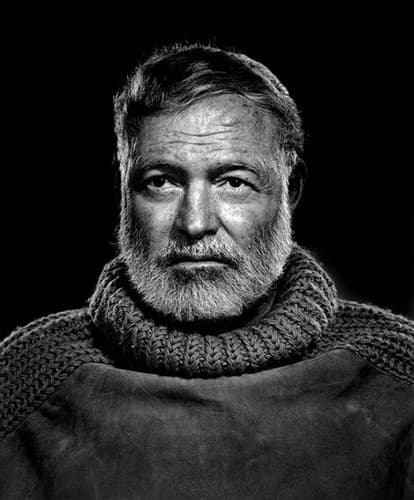
Ernest Miller Hemingway was an American novelist, short-story writer, and journalist. His economical and understated style—which included his iceberg theory—had a strong influence on 20th-century fiction, while his adventurous lifestyle and public image brought him admiration from later generations. Hemingway produced most of his work between the mid-1920s and the mid-1950s, and he was awarded the 1954 Nobel Prize in Literature. He published seven novels, six short-story collections, and two nonfiction works. Three of his novels, four short-story collections, and three nonfiction works were published posthumously. Many of his works are considered classics of American literature.
Similar books
- Tender is the Night
F. Scott Fitzgerald
3.8 (114k) average on GoodreadsLiterary FictionExplores American expatriates in Europe, complex relationships, and themes of decline and disillusionment in the Jazz Age.
- A Farewell to Arms
Ernest Hemingway
3.8 (263k) average on GoodreadsHistorical FictionFeatures Hemingway's distinctive prose, focuses on love and war, and captures a similar post-WWI sensibility.
- The Great Gatsby
F. Scott Fitzgerald
3.9 (3.8M) average on GoodreadsHistorical FictionOffers a classic portrayal of the Jazz Age, examines wealth and social alienation, and features a tragic, unrequited love story.
- Mrs Dalloway
Virginia Woolf
3.8 (361k) average on GoodreadsFictionBoth novels explore the psychological aftermath of World War I and the inner lives of their characters within a single day or a short period. However, their narrative approaches differ significantly. Hemingway employs a terse, externalized narrative, focusing on dialogue and action, while Woolf utilizes stream of consciousness, delving deeply into the subjective experiences and internal monologues of her characters. While 'The Sun Also Rises' focuses on a group's collective disillusionment, 'Mrs Dalloway' offers a more intimate, fragmented portrait of individual consciousness grappling with memory, societal expectations, and the passage of time.
- To Kill a Mockingbird
Harper Lee
4.3 (4.5M) average on GoodreadsHistorical FictionIn the 1930s Jim Crow South, Harper Lee writes about racial injustice, moral growth, and the quiet courage of a lawyer father, Atticus Finch, as seen through his young daughter's eyes.
- Pride and Prejudice
Jane Austen
4.3 (3M) average on GoodreadsHistorical FictionIn a society focused on status and money, Elizabeth Bennet navigates love and pride, challenging Mr. Darcy and social expectations to find true affection.






Enjoyed the summary?
A summary gives you the shape of the book. The book itself has the detail, the examples and the voice.
Find The Sun Also Rises on AmazonAs an Amazon Associate, BookBrief earns from qualifying purchases. How we're funded