
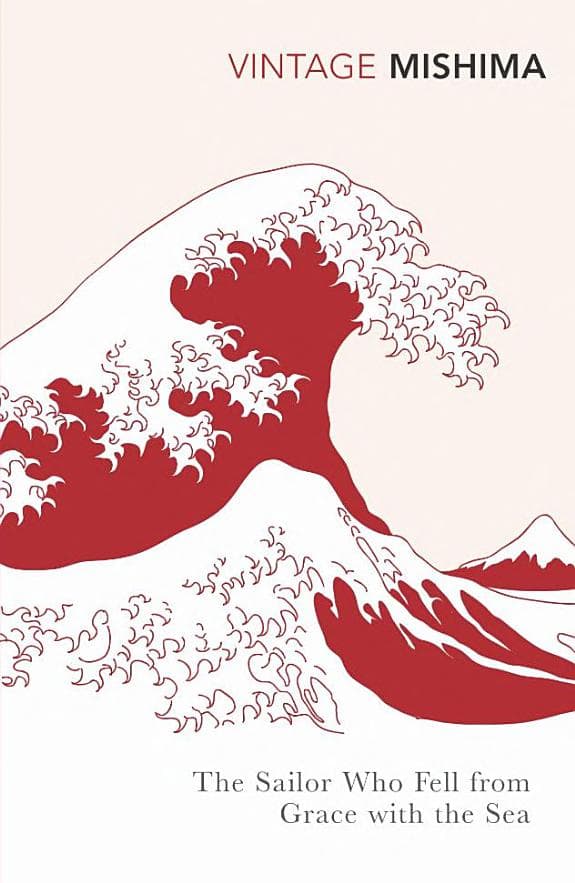
Synopsis
Covers the whole plot, including the ending.
- Difficulty
- Medium
- Pacing
- Moderate
- Mood
- Dark, Disturbing, Philosophical, Intense, Disquieting
- Read it if
- You are interested in a dark, philosophical exploration of innocence, corruption, and the clash between individual desire and societal expectations, with a strong focus on psychological tension and disturbing themes.
- Skip it if
- You prefer lighthearted narratives, shy away from graphic content or themes of child violence, or dislike morally ambiguous characters.
The Sailor who Fell from Grace with the Sea Plot Summary
Covers the whole plot, including the ending.
The Peephole and the Chief's Philosophy
Noboru Kuroda, a thirteen-year-old boy in Yokohama, Japan, lives with his widowed mother, Fusako. He finds a peephole in his chest of drawers, letting him spy on her bedroom. Noboru is part of a gang of thirteen-year-old boys, led by the 'Chief,' who follow a philosophy of dispassionate observation and contempt for adult emotions. They believe sentimentality and love are weaknesses, and true power lies in detached analysis of the world's 'meaningless' aspects. Noboru, at first curious about the peephole, finds his observations fit the Chief's cynical views on human behavior, especially regarding the mundane parts of adult life and relationships.
A Sailor's Allure
Fusako, Noboru's stylish mother who owns a European fashion boutique, takes Noboru to visit a ship at the docks. There, they meet Ryuji Tsukazaki, a second mate aboard the commercial steamer Rakuyo. Ryuji is a handsome, enigmatic man who embodies a sense of freedom and adventure that captivates both Fusako and, at first, Noboru. Fusako is drawn to Ryuji's masculine presence and his connection to the sea. Noboru, watching them, is fascinated by Ryuji's aura, seeing him as a figure of strength and detachment, an ideal that matches his gang's philosophy. This meeting sets a new dynamic for their lives.
The First Encounter and Noboru's Revelation
Noboru uses his peephole to spy on Fusako and Ryuji's first night together in his mother's bedroom. He sees their lovemaking with a mix of revulsion and strange elation. As Ryuji and Fusako are intimate, a ship's horn sounds, and Ryuji turns towards the sound, momentarily distracted from Fusako. Noboru sees this as a revelation: Ryuji's connection to the sea overrides human emotion, embodying an 'ineluctable circle of life.' He believes he has seen the true, cold order of the universe, confirming his gang's beliefs about the insignificance of human feeling and the power of the indifferent, natural world. This experience solidifies Ryuji's heroic status in Noboru's eyes.
Disappointment and the Sailor's Return
After their first night, Ryuji and Fusako continue their relationship. Their second night together happens at a hotel, which disappoints Noboru as it prevents him from spying. Ryuji eventually returns to sea aboard the Rakuyo, but his connection with Fusako stays strong through letters and anticipation of his next shore leave. Noboru, though initially thrilled by Ryuji's perceived adherence to the 'sea's call,' becomes disillusioned by their relationship's conventionality. He sees Ryuji's continued interest in his mother and land-based life as a betrayal of the wild, untamed spirit he once admired.
Ryuji's Decision to Stay Ashore
Upon Ryuji's next return, he announces he will leave the sea permanently and marry Fusako, planning to help manage her clothing store. This decision shatters Noboru's idealized image of Ryuji. For Noboru, Ryuji's choice to abandon the ocean's freedom for a domestic life on land is the ultimate act of weakness and betrayal. He sees Ryuji becoming 'ordinary,' succumbing to the mundane, emotional traps his gang despises. Noboru feels a deep sense of loss and anger, as the symbol of wild masculinity he once revered has now been domesticated and, in his eyes, defiled.
The Gang's Judgment
Noboru tells his gang about Ryuji's decision to leave the sea and marry his mother. The Chief and the other boys share Noboru's outrage and disappointment. They see Ryuji's choice as a grave transgression against their nihilistic code, an act of 'cowardice' and a surrender to the 'slimy' world of adult sentimentality. They discuss Ryuji's transformation from a 'hero' into an 'ordinary man' with disdain. The gang collectively decides Ryuji, having fallen from grace, must be 're-educated' – a euphemism for a more sinister plan to restore what they perceive as natural order and punish his perceived weakness.
The 'Re-education' Plan
The Chief, with Noboru's eager help, creates a meticulous and sadistic 're-education' plan for Ryuji. They decide Ryuji's perceived softness and betrayal of his sea-faring nature must be purged. The plan involves luring Ryuji to a secluded spot, pretending to show him a 'rare' object. There, they plan to drug him and then perform a 'dissection' – not literally to kill him, but to symbolically cut away his 'soft' parts and restore his 'true' self, or so they rationalize. The boys prepare for this ritual, gathering tools and ensuring secrecy, their youthful cruelty hidden by a cold, intellectual rationale.
The Lure and the Trap
Noboru, following the gang's plan, approaches Ryuji with a made-up story about a unique, rare plant he found in a secluded area. He appeals to Ryuji's curiosity and his lingering connection to the natural world, even if he has abandoned the sea. Ryuji, unaware of Noboru's true intentions, agrees to go with him. Noboru leads Ryuji to the isolated, overgrown spot where the rest of the gang waits, ready to execute their 're-education' ritual. Ryuji, still seeing Noboru as his future stepson, walks willingly into the trap.
The Ritual Begins
Once Ryuji arrives at the secluded spot, the boys ambush him. They quickly overpower him and force-feed him a drugged tea, making him disoriented and helpless. As Ryuji succumbs to the drug, the boys, led by the Chief, begin their chilling 're-education' ritual. They strip him, and the Chief prepares his surgical tools, intending to 'dissect' Ryuji not to kill him directly, but to remove his 'soft' parts, symbolizing his surrender to domesticity and emotion. The scene has a terrifying blend of childish malice and pseudo-intellectual conviction, as the boys believe they are performing a necessary act of purification.
The Final Act
The narrative ends with the boys starting their 'dissection' of Ryuji. The Chief, with a scalpel, prepares to make the first incision, focusing on what they see as the source of his 'softness' and betrayal. The story strongly implies Ryuji's death, though it is not explicitly stated. The boys' cold, detached approach to this brutal act shows their complete break from conventional morality and empathy. The final image is one of chilling finality, leaving Ryuji's fate in the hands of the young, ruthless 'judges' who believe they are restoring order to a world corrupted by adult weakness and sentimentality.
The Sailor who Fell from Grace with the Sea Characters
Noboru Kuroda
Protagonist
A thirteen-year-old boy fascinated by the sea and a member of a nihilistic gang.
Noboru is a complex and deeply disturbed adolescent. He possesses a keen intellect and a vivid imagination, but these are twisted by his adherence to the Chief's nihilistic philosophy. He seeks order and meaning in a world he perceives as chaotic and sentimental, finding solace in the cold, detached logic of his gang. His initial admiration for Ryuji as a symbol of untamed masculinity quickly turns to bitter contempt when Ryuji chooses domesticity. Noboru's actions are driven by a desire to enforce his rigid moral code, even if it means resorting to extreme violence.
Relationships: Fusako Kuroda (Son, but views her as a subject for observation and later, as a victim of sentimentality.); Ryuji Tsukazaki (Initially idolizes him as a symbol of the sea's wildness, then despises him for choosing domesticity.); The Chief (A devoted follower and co-conspirator, seeking validation and intellectual alignment.)
Ryuji Tsukazaki
Central Figure/Victim
A sailor who dreams of finding honor at sea but ultimately chooses a life on land.
Ryuji is a man caught between two worlds: the boundless freedom and perceived honor of the sea, and the stability and affection offered by a life on land with Fusako. He is initially portrayed as an enigmatic, almost heroic figure in Noboru's eyes, embodying a primal connection to the ocean. However, Ryuji also harbors a deep-seated desire for a sense of belonging and a conventional life, leading him to abandon his seafaring dreams. His internal conflict and ultimate choice to embrace domesticity make him a tragic figure, misunderstood and brutally judged by Noboru and his gang.
Relationships: Fusako Kuroda (Lover and fiancée, representing a chance at a stable, loving life.); Noboru Kuroda (Unsuspecting future stepfather, whom he views with affection and trust.)
Fusako Kuroda
Supporting Character
Noboru's widowed mother and a successful boutique owner, seeking love and companionship.
Fusako is a sophisticated and independent woman, a successful entrepreneur who runs a European-style fashion boutique. Widowed, she seeks companionship and love, finding it in Ryuji. She represents the adult world of sentimentality and human connection that Noboru and his gang despise. Fusako is largely unaware of the dark undercurrents in her son's mind and the true nature of his gang. Her desire for a conventional, loving relationship with Ryuji is presented as a natural human need, yet it inadvertently triggers the boys' violent retribution against Ryuji.
Relationships: Noboru Kuroda (Mother, with a complex and ultimately strained relationship due to his secret observations and judgments.); Ryuji Tsukazaki (Lover and fiancée, with whom she shares a genuine emotional connection.)
The Chief
Antagonist
The charismatic and intellectually cruel leader of Noboru's gang.
The Chief is the mastermind behind the gang's nihilistic philosophy and their increasingly violent actions. He is highly intelligent and articulate, capable of rationalizing their cruelties with a chilling, detached logic. He views the world through a lens of meaninglessness and despises adult sentimentality and weakness. The Chief exerts a powerful influence over the other boys, particularly Noboru, shaping their worldview and directing their collective will towards destructive ends. He is the embodiment of intellectualized cruelty, using sophisticated arguments to justify barbaric acts.
Relationships: Noboru Kuroda (Leader and intellectual guide, whom Noboru deeply admires and follows.); Other Gang Members (The unquestioned leader, whose philosophy they adopt and enforce.)
Other Gang Members
Supporting
Noboru's friends who adhere to the Chief's philosophy and participate in the 're-education.'
The other members of Noboru's gang are largely anonymous, serving as extensions of the Chief's will and Noboru's complicity. They are young boys who have adopted a shared philosophy of nihilism and contempt for the adult world. They participate actively in the discussions and the eventual 're-education' of Ryuji, demonstrating a chilling lack of empathy and a willingness to engage in extreme violence under the Chief's guidance. Their collective anonymity underscores the idea that their cruelty is a product of a shared ideology rather than individual malice, making their actions even more disturbing.
Relationships: Noboru Kuroda (Comrades in their shared philosophy and actions.); The Chief (Followers and enforcers of his ideology.)
The Sailor who Fell from Grace with the Sea Themes
The Corruption of Innocence
The novel portrays how childhood innocence twists into calculated cruelty. Noboru and his gang, despite their youth, follow a sophisticated nihilistic philosophy that justifies their sadistic actions. Their intellectual detachment lets them rationalize violence, like Ryuji's 're-education,' as a necessary purification. This theme shows in Noboru's initial fascination with the peephole, which quickly goes from curiosity to a tool for judgment, and ends with the gang's cold planning and execution of Ryuji's fate, showing how young minds can be shaped by destructive ideologies.
“There was no room in the world for things that were not useful. What was useful was good. What was not useful was bad.”
The Conflict Between the Sea and Land
This theme explores the opposition between the sea's untamed freedom and the confining nature of land life. Ryuji embodies this conflict, first representing the sea's wildness and independence, which Noboru idealizes. However, Ryuji's decision to leave the sea for a life with Fusako on land is seen by Noboru and his gang as a betrayal and a fall from grace. The sea represents an ideal of purity and strength, while the land means weakness, sentimentality, and corruption in the boys' view. Ryuji's 'punishment' is a direct result of his choice to leave the sea for the land.
“The sea, though, was a world that was all of a piece, and in it there was no room for anything but itself.”
Nihilism and Existential Despair
The gang's philosophy comes from a deep nihilism. They see all adult emotions, especially love and sentimentality, as meaningless and contemptible. They believe in a universe without inherent purpose, which leads them to reject conventional morality and seek a detached, objective understanding of life's 'meaninglessness.' This despair drives their intellectualized cruelty, as they try to impose their own rigid order on the world. Their 're-education' of Ryuji is not just violence but a philosophical statement, an attempt to cleanse the world of what they consider impure and inauthentic.
“For them, the world was a vast, meaningless expanse, and adults were merely clumsy, foolish creatures who tried to give it meaning.”
The Nature of Masculinity
The novel examines different aspects of masculinity. Noboru and his gang idealize a harsh, unyielding masculinity, free of emotion and connection, as shown by their initial view of Ryuji as a wild, sea-hardened figure. Ryuji himself struggles with this ideal, wanting the sea's honor but also the softness and comfort of domestic life. His choice for land-based love is seen by the boys as a fatal flaw, a betrayal of true masculinity. The story contrasts the boys' cold, intellectualized ideal with Ryuji's more human, conflicted reality, suggesting the destructive consequences of rigid definitions of manhood.
“A man who could throw away the sea, the one thing that gave him meaning, was no man at all.”
Plot Devices & Literary Techniques
The Peephole
A hidden vantage point that symbolizes Noboru's voyeurism and psychological detachment.
The peephole in Noboru's chest of drawers is a central plot device. It allows him to secretly observe his mother's most intimate moments, fostering a sense of psychological detachment and power. It transforms Fusako and Ryuji into objects of study rather than subjects of empathy. The peephole serves as a metaphor for Noboru's and the gang's voyeuristic and judgmental worldview, where they observe and analyze human behavior without emotional involvement, ultimately leading to their cold, 'objective' decision to 're-educate' Ryuji.
The Gang's Philosophy
A shared nihilistic ideology that rationalizes cruelty and violence.
The Chief's nihilistic philosophy, adopted by Noboru and the other boys, is a crucial plot device. It provides the intellectual framework that justifies their actions, particularly the 're-education' of Ryuji. This philosophy, which despises sentimentality and seeks to expose the 'meaninglessness' of the world, allows the boys to commit horrific acts while believing they are enforcing a higher, colder truth. It functions as a collective delusion, blinding them to the moral implications of their cruelty and transforming their sadism into a principled stance.
Symbolism of the Sea
Represents freedom, purity, and an untamed, ideal masculinity.
The sea is a powerful symbol throughout the novel, representing an ideal of untamed freedom, honor, and a harsh, pure form of masculinity. For Noboru, it embodies everything that the 'land' (domesticity, emotion, sentimentality) is not. Ryuji's initial connection to the sea makes him a hero in Noboru's eyes. His decision to abandon the sea is perceived as a profound betrayal of this ideal, triggering the gang's violent response. The sea thus serves as a benchmark against which Ryuji's character is judged, and his departure from it is the catalyst for the tragic climax.
The Sailor who Fell from Grace with the Sea Quotes
“The sea! The sea! The sea! It was the only thing that could make a man forget the meanness of the land.”
“The boy had a dark, secret pride in his mother's beauty, a pride that made him feel like a connoisseur of rare and precious things.”
“There was no beauty that could compare with the beauty of a ship at sea, riding the waves like a living thing, its sails full, its prow cutting the water.”
“The world was a vast, meaningless, and cruel place, and only through death could one attain a true and lasting peace.”
“He had committed the ultimate crime against the sea: he had come ashore for good.”
“The boy had a passion for dissecting things, for getting to the heart of what made them tick, for understanding their inner workings.”
“Only in his dreams did he ever feel truly alive, truly free.”
“The world was full of men who had lost their way, who had forgotten what it meant to be truly alive.”
“He had fallen from grace with the sea, and there was no going back.”
“The boy's eyes were like the eyes of a cat, cold and calculating, seeing everything and revealing nothing.”
“Love was a dangerous thing, a force that could destroy a man, that could make him forget who he was.”
“He felt a strange kinship with the dead, a sense of understanding that he could never find among the living.”
“The sea had given him everything, and now it was taking it all away.”
“The boy knew that he had to act, that he had to restore order to the world, even if it meant doing something terrible.”
Quiz
10 questions on the plot and the characters. Each answer comes with a short explanation.
Question 1
What is the name of Noboru's widowed mother, who owns a European-style haute fashion clothing store?
- Akiko
- Fusako
- Yumiko
- Haruko
Show answer
B. Fusako Noboru's mother is named Fusako. She owns the fashion store, Rex.
Question 2
What is the occupation of Ryuji Tsukazaki when Noboru and Fusako first meet him?
- A ship captain
- A dock worker
- A sailor and second mate
- A naval officer
Show answer
C. A sailor and second mate Ryuji is introduced as a sailor and the second mate aboard the commercial steamer Rakuyo.
Question 3
Where does Noboru discover the peephole he uses to spy on his mother?
- Behind a loose floorboard
- In his closet
- In his chest of drawers
- Under his bed
Show answer
C. In his chest of drawers Noboru finds the secret peephole into his mother's bedroom in his chest of drawers.
Question 4
What is the name of the commercial steamer Ryuji Tsukazaki serves on?
- The Kōbe Maru
- The Rakuyo
- The Yamato
- The Akatsuki
Show answer
B. The Rakuyo Ryuji is the second mate aboard the commercial steamer Rakuyo.
Question 5
What event during Ryuji and Fusako's first night together makes Noboru feel 'elated' and believe he has witnessed 'the true order of the universe'?
- Ryuji expressing his love for Fusako
- Ryuji turning towards a ship's horn, away from Fusako
- Fusako confessing her feelings for Ryuji
- Ryuji showing a detailed map of his voyages
Show answer
B. Ryuji turning towards a ship's horn, away from Fusako Noboru is elated when a ship's horn sounds, and Ryuji turns towards it, interpreting this as Ryuji being drawn to the sea away from 'feeling,' signifying the 'ineluctable circle of life.'
Question 6
What is the name of Fusako's European-style haute fashion clothing store?
- Chic
- Glamour
- Rex
- Elegance
Show answer
C. Rex Fusako owns a store called Rex, which specializes in European-style haute fashion.
Question 7
What is Noboru's initial interpretation of Ryuji turning towards the ship's horn during his mother's first night with the sailor?
- He believes Ryuji is being unfaithful to his mother.
- He sees it as Ryuji's true nature, drawn to the sea and unified with the 'ineluctable circle of life.'
- He thinks Ryuji is merely distracted and uninterested in his mother.
- He interprets it as a sign that Ryuji will soon abandon his life at sea.
Show answer
B. He sees it as Ryuji's true nature, drawn to the sea and unified with the 'ineluctable circle of life.' Noboru interprets Ryuji's turning towards the ship's horn as a confirmation of the 'true order of the universe' and an 'ineluctable circle of life,' signifying Ryuji's inherent connection to the sea over human emotion.
Question 8
What is the primary characteristic of Noboru and his friends, despite their secret gang activities?
- They are rebellious and frequently skip school.
- They are good students who believe in conventional morality.
- They are delinquents known for petty crimes.
- They are isolated and have no other social interactions.
Show answer
B. They are good students who believe in conventional morality. The text states that Noboru and his group of friends are good students but are secretly a gang who believe in conventional morality.
Question 9
How does Noboru react to Ryuji and Fusako's second night together taking place at a hotel?
- He is indifferent, as he is no longer interested in their relationship.
- He is pleased, as it signifies a more serious commitment.
- He is disappointed, as he cannot spy on them.
- He is suspicious, believing Ryuji is hiding something.
Show answer
C. He is disappointed, as he cannot spy on them. Noboru is disappointed when their second night together takes place at a hotel, as this means he cannot spy on them through his peephole.
Question 10
What is Ryuji Tsukazaki's internal conflict or characteristic regarding his relationship with the sea and land?
- He has always been deeply rooted in the land and fears the sea.
- He has strong ties to other sailors but feels no connection to the sea itself.
- He has always remained distant from the land but has no real ties with the sea or other sailors.
- He constantly struggles between his love for the sea and his desire for a family on land.
Show answer
C. He has always remained distant from the land but has no real ties with the sea or other sailors. The text states that 'Ryuji has always remained distant from the land, but he has no real ties with the sea or other sailors,' indicating a lack of deep connection to either world.
The Sailor who Fell from Grace with the Sea FAQ
What is the central conflict introduced early in 'The Sailor who Fell from Grace with the Sea'?
The central conflict emerges from Noboru Kuroda's discovery of a peephole into his widowed mother Fusako's bedroom. His voyeuristic observations of her burgeoning romance with the sailor Ryuji Tsukazaki clash with his rigid, gang-enforced worldview, setting the stage for his disillusionment and subsequent actions.
Who are the main characters and what are their initial motivations?
Noboru Kuroda is an adolescent boy who, despite being a good student, leads a secret gang upholding a strict, conventional morality. His mother, Fusako, is a sophisticated fashion store owner seeking companionship after widowhood. Ryuji Tsukazaki is a sailor with an undefined yearning for 'honor' at sea, feeling a disconnect from both land and his fellow sailors.
How does Noboru initially react to his mother's relationship with Ryuji?
Noboru initially views Ryuji's attraction to the sea, particularly when a ship's horn sounds during their first sexual encounter, as a profound affirmation of the 'true order of the universe.' He perceives this as an 'ineluctable circle of life,' unifying him with Fusako and Ryuji and validating his belief in the sea's powerful, unfeeling draw.
What event marks Noboru's first significant disappointment regarding Ryuji?
Noboru's first significant disappointment occurs when Fusako and Ryuji's second night together takes place at a hotel, rather than in his mother's bedroom where he could spy on them. This shift disrupts his perceived 'ineluctable circle' and removes him from his position as an omniscient observer, signaling a deviation from his idealized vision.
What role does the 'Chief' play in Noboru's life and the gang's philosophy?
The 'Chief' is the charismatic leader of Noboru's gang, dictating their stringent code of conduct and their disdain for sentimentality and weakness. His influence reinforces Noboru's rigid adherence to conventional morality and contributes to his developing contempt for anything he perceives as deviation or compromise, particularly in adults.
How does the sound of the ship's horn during Ryuji and Fusako's first encounter influence Noboru's perception?
The ship's horn sounding during Ryuji and Fusako's first sexual encounter acts as a catalyst for Noboru's initial elation. He interprets Ryuji's turning towards the sound as a powerful affirmation of the sea's call over human emotion, solidifying his belief in a grand, unfeeling universal order and his own place within it.
What is the significance of the 'peephole' for Noboru beyond mere voyeurism?
The peephole is more than a tool for voyeurism; it represents Noboru's attempt to control and understand the adult world through observation. It initially provides him with a sense of mastery and privileged insight, allowing him to construct his own narrative of universal order, which later crumbles as events unfold outside his controlled gaze.
How does Fusako's profession as a haute fashion store owner subtly contrast with Ryuji's life as a sailor?
Fusako's ownership of Rex, a European-style haute fashion store, signifies her immersion in a world of artifice, luxury, and societal expectations. This contrasts sharply with Ryuji's life at sea, which Noboru initially idealizes as primal and unadorned, highlighting a fundamental tension between their respective worlds and values.
What does Noboru mean by the 'ineluctable circle of life' and how does it relate to his initial view of Ryuji?
The 'ineluctable circle of life' (p. 13) refers to Noboru's belief that Ryuji's turning towards the ship's horn during sex signified a natural, irresistible draw to the sea, a primal force. Noboru sees this as an unyielding, beautiful order that unifies him with his mother and the sailor, validating his own strict, unfeeling worldview.
Analyze Noboru's psychological state as a leader of a gang despite being a 'good student.'
Noboru's dual identity as a good student and gang leader reveals a deep-seated need for control and adherence to a rigid moral code. His gang provides an outlet for his budding nihilism and a platform to enforce his beliefs, creating a stark contrast between his public persona and his darker, more manipulative private self.
How does Ryuji's 'vague notions of a special honor' at sea reflect his internal psychological conflict?
Ryuji's vague notions of 'special honor' at sea suggest a profound internal dissatisfaction and a yearning for meaning that the sea, in its vastness, seems to promise but never delivers. This ambiguity highlights his psychological drift—he is neither truly connected to the land nor deeply rooted in the maritime world, leaving him emotionally unmoored.
What psychological impact does Noboru's voyeurism have on his perception of adults and relationships?
Noboru's voyeurism fosters a detached, analytical, and ultimately dehumanizing view of adults and relationships. By observing without participating, he develops a sense of intellectual superiority and a belief that he can discern the 'true' nature of things, leading him to judge and condemn perceived weaknesses and emotional compromises.
How does the concept of 'conventional morality' as embraced by Noboru's gang differ from genuine ethical understanding?
The 'conventional morality' of Noboru's gang is a rigid, superficial code based on outward appearances, strength, and a rejection of perceived weakness or sentimentality. It lacks empathy, nuance, and genuine ethical understanding, serving primarily as a justification for their judgmental and increasingly cruel actions rather than fostering true moral development.
Is Ryuji's initial attraction to Fusako a genuine desire for connection, or a flight from the sea's disillusionment?
Ryuji's attraction to Fusako appears to be a complex mix of genuine desire for connection and a flight from the disillusionment he feels regarding his idealized life at sea. His lack of real ties to the sea or other sailors suggests an underlying emptiness that Fusako's world of stability and romance momentarily fills, offering an escape from his existential drift.
How does the novel challenge traditional notions of innocence and childhood through Noboru's character?
The novel profoundly challenges traditional notions of innocence by portraying Noboru as a calculating, detached, and ultimately sadistic adolescent. His intellectual capacity and leadership of the gang subvert the idea of childhood as a period of purity, revealing a darker, more complex psychological landscape often overlooked in younger characters.
What might the 'honor' Ryuji vaguely seeks at sea truly represent, and why does he fail to find it?
The 'honor' Ryuji vaguely seeks at sea likely represents an idealized sense of purpose, purity, or ultimate truth that he believes only the untamed ocean can bestow. He fails to find it because such an abstract ideal cannot be concretely achieved; it's a projection of his own internal yearning rather than an external reality, leading to perpetual disillusionment.
Discuss the symbolic significance of the sea in the novel, particularly in contrast to the land.
The sea in the novel symbolizes an idealized realm of purity, untamed power, and potential for 'honor' for Ryuji and initially for Noboru. In contrast, the land represents the compromising, emotional, and ultimately 'weak' world of human relationships and societal norms, creating a symbolic battleground for the characters' conflicting values.
How does Mishima use the setting of Yokohama, a port city, to enhance the novel's themes?
Yokohama, as a bustling port city, serves as a crucial bridge between the idealized, wild sea and the mundane, civilized land. Its constant flow of ships and sailors underscores the transient nature of Ryuji's existence and the encroaching 'contamination' of the land's perceived weakness upon the sea's purity, intensifying the novel's thematic tension.
About the author
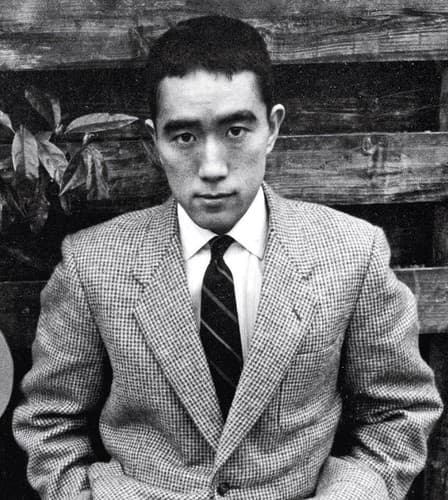
Kimitake Hiraoka , also known as Yukio Mishima , was a Japanese author, poet, playwright, actor, model, Shintoist, nationalist, and founder of the Tatenokai , an unarmed civilian militia. Mishima is considered one of the most important writers of the 20th century. He was considered for the Nobel Prize in Literature in 1968, but the award went to his countryman and benefactor Yasunari Kawabata. His works include the novels Confessions of a Mask and The Temple of the Golden Pavilion , and the autobiographical essay Sun and Steel . Mishima's work is characterized by "its luxurious vocabulary and decadent metaphors, its fusion of traditional Japanese and modern Western literary styles, and its obsessive assertions of the unity of beauty, eroticism and death", according to author Andrew Rankin.
Similar books
- Lord of the Flies
William Golding
3.7 (2.3M) average on GoodreadsYoung AdultExplores the dark side of human nature and the descent into savagery among a group of boys.
- A Clockwork Orange
Anthony Burgess
4.0 (601k) average on GoodreadsThrillerFeatures a charismatic but violent youth protagonist and explores themes of free will vs. societal control.
- The Stranger
Albert Camus
4.1 (3k) average on GoodreadsFantasyDeals with themes of alienation, existentialism, and a protagonist who is detached from conventional morality.
- The Catcher in the Rye
J.D. Salinger
3.8 (2.7M) average on GoodreadsYoung AdultBoth novels feature alienated adolescent protagonists, but their responses to the adult world differ significantly. Holden Caulfield's alienation is characterized by internal angst and a desire to escape the 'phoniness' of adults. Noboru's gang, however, actively seeks to 'correct' or destroy what they perceive as adult compromise, transforming their disillusionment into a chilling, active malevolence. Salinger's novel is a portrait of internal turmoil; Mishima's is a depiction of externalized, destructive judgment.
- The Old Man and the Sea
Ernest Hemingway
3.8 (831k) average on GoodreadsLiterary FictionA Cuban fisherman's long struggle with a giant marlin becomes a story of endurance and dignity, now retold for young adults with illustrations, phonetic guides, and writing prompts in Traditional Chinese.
- One Hundred Years of Solitude
Gabriel García Márquez
4.1 (753k) average on GoodreadsLiterary FictionThrough the multi-generational story of the Buendía family, a mythical town deals with the repeating patterns of time, love, and solitude, as the extraordinary mixes with the ordinary.






Enjoyed the summary?
A summary gives you the shape of the book. The book itself has the detail, the examples and the voice.
Find The Sailor who Fell from Grace with the Sea on AmazonAs an Amazon Associate, BookBrief earns from qualifying purchases. How we're funded