
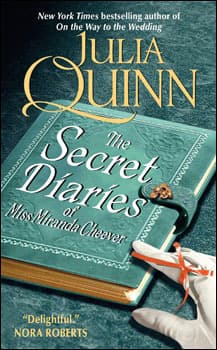
Synopsis
Covers the whole plot, including the ending.
- Difficulty
- Easy
- Pacing
- Moderate
- Mood
- Heartwarming, Romantic, Emotional, Hopeful
- Read it if
- You enjoy historical romance with a 'childhood crush to lovers' trope, a focus on emotional healing, and a strong, determined heroine.
- Skip it if
- You dislike heroes who are initially distant or emotionally wounded, or prefer plots with less internal conflict and more immediate romance.
The Secret Diaries of Miss Miranda Cheever Plot Summary
Covers the whole plot, including the ending.
A Childhood Promise
In March 1810, ten-year-old Miranda Cheever attends a party. Feeling self-conscious about her appearance, she overhears a cruel comment about her looks. However, Nigel Bevelstoke, Viscount Turner, notices her distress. He approaches her, compliments her intelligence, and kisses her hand, promising her that she will one day 'grow into herself' and be beautiful. This encounter deeply affects Miranda, solidifying her adoration for Turner and shaping her expectations for love. She immediately records this event in her secret diary, marking the beginning of her lifelong devotion to him.
Years of Unrequited Love
Over the next decade, Miranda becomes a witty, intelligent, and attractive young woman, fulfilling Turner's childhood prediction. She continues to record her thoughts and feelings for him in her diary, observing his life from afar. Meanwhile, Turner's life takes a tragic turn. He marries Olivia, whom he loves, and they have a son. However, both Olivia and their son die in an accident, leaving Turner a grief-stricken and reclusive man. His once-charming demeanor is replaced by bitterness and despair, making him largely inaccessible to society.
A Chance Reacquaintance
Years later, Miranda, now twenty-two and a debutante, encounters Viscount Turner for the first time as an adult at a ball. He is a shadow of his former self, embittered and withdrawn, barely recognizing the young woman before him as the child he once encouraged. Miranda is disheartened by his transformation but remains determined to pursue her childhood love. Despite his aloofness and her friends' warnings, she finds herself drawn to him, seeing past his hardened exterior to the man she remembers.
The Proposal of Convenience
Turner, burdened by his family's expectations and the need for an heir, decides he must marry again. He approaches Miranda with a pragmatic proposal. He admits he cannot offer love but believes she is a sensible choice. Miranda, despite her deep romantic feelings, accepts his offer, believing that her enduring love for him will eventually win him over. She sees this as her chance to finally be close to him and help him heal, even if he doesn't yet return her affections.
A Difficult Adjustment to Married Life
Married life for Miranda and Turner is difficult. Turner remains emotionally distant, haunted by his past wife and son. He treats Miranda politely but keeps her at arm's length, making their physical and emotional intimacy almost nonexistent. Miranda, despite her initial optimism, is frustrated by his inability to open up. She tries various ways to break through his defenses, but his grief is a strong barrier, leaving her feeling increasingly alone in their marriage.
The Discovery of the Diaries
During a period of strain, Turner accidentally discovers Miranda's childhood diaries, which she has kept hidden. He begins to read them, initially out of curiosity, but soon becomes engrossed in her detailed accounts of her life, her observations of him, and, most importantly, her unwavering love for him since that day she was ten. The diaries give him an intimate look into her heart and mind, revealing the depth and constancy of her affection, which he had never suspected. This discovery begins to break down his cynicism and emotional walls.
Confrontation and Revelation
Armed with the knowledge from the diaries, Turner confronts Miranda. He is overwhelmed by the realization of her lifelong devotion and the contrast between her pure love and his own bitterness. Miranda, initially embarrassed, bravely confirms the authenticity of her feelings. This confrontation becomes a turning point, as Turner finally begins to truly see Miranda, not as a replacement or a convenience, but as a woman who has loved him unconditionally for years. The honesty of the moment allows a crack in his hardened heart to form.
Reconciliation and Healing
Following the diary revelation, Turner begins a slow process of healing. He starts to talk about Olivia and their son, sharing his grief with Miranda, who listens with empathy. He realizes that loving Miranda does not diminish his love for his past family but allows him to live and find joy again. Miranda's patience and deep affection create a safe space for him to grieve and eventually move forward. Their physical and emotional intimacy deepens as he gradually opens his heart to her.
A New Beginning
As Turner continues to heal, he fully embraces his love for Miranda. He expresses his feelings for her, acknowledging her impact on his life. Their marriage transforms from one of convenience to one of deep, mutual affection and passion. They discuss their future, including the possibility of children, symbolizing a complete renewal of hope and happiness. The story concludes with Turner finally returning the love Miranda has held for him since childhood, solidifying their bond and promising a lifetime of shared joy and understanding.
Principal Figures
Miranda Cheever
Protagonist
A witty and intelligent woman who carries a lifelong love for Viscount Turner.
From a plain ten-year-old girl to a vibrant and intelligent young woman, Miranda's defining characteristic is her unwavering devotion to Nigel Bevelstoke, Viscount Turner. She is an astute observer of human nature, documenting her life and feelings in her secret diaries. Despite initial insecurities about her appearance, she grows into a confident woman, guided by her deep emotional intelligence and patience. She is driven by the belief that love can conquer all, even the deepest grief, and is determined to win Turner's heart.
Relationships: Nigel Bevelstoke, Viscount Turner (Lifelong crush, then husband; she loves him unconditionally.); Her family (Supportive and loving, though sometimes oblivious to her inner world.)
Nigel Bevelstoke, Viscount Turner
Love Interest / Protagonist
A once-charming viscount, now embittered by tragedy, who eventually finds love again.
Initially a charismatic and kind young man, Turner is profoundly changed by the tragic deaths of his first wife, Olivia, and their son. He becomes reclusive, bitter, and emotionally closed off, haunted by guilt and grief. He struggles to move past his sorrow, believing he cannot love again. His primary motivation is to fulfill his duty to his family name, which leads him to propose a marriage of convenience to Miranda. He is initially blind to Miranda's true feelings, consumed by his own pain, but possesses an underlying goodness that eventually resurfaces.
Relationships: Miranda Cheever (Childhood admirer, then wife; he gradually learns to love her.); Olivia (first wife) (Deceased wife, deeply loved, the source of his profound grief.); His son (deceased) (Deceased son, a source of immense sorrow and guilt.)
Lady Olivia Bevelstoke
Mentioned / Catalyst
Viscount Turner's beloved first wife, whose death deeply impacts him.
Olivia is Turner's deceased first wife, and though she never appears alive in the narrative, her presence is deeply felt. She is consistently portrayed as the great love of Turner's life, and her tragic death, along with their son's, is the catalyst for Turner's profound grief and emotional withdrawal. Her memory is a barrier to Turner's ability to love again, as he feels immense guilt for having survived her. Miranda must contend with Olivia's idealized memory to win Turner's heart.
Relationships: Nigel Bevelstoke, Viscount Turner (Beloved deceased wife; their bond was intense and loving.)
Lady Sarah
Supporting
Miranda's friend and confidante.
Lady Sarah is one of Miranda's close friends in society. She is a loyal and supportive presence, often offering advice and commiseration regarding Miranda's unusual courtship and marriage to Turner. Sarah represents the more conventional perspective of society, sometimes questioning Miranda's choices but ultimately standing by her. Her reactions and comments help to highlight the unconventional nature of Miranda's relationship with Turner.
Relationships: Miranda Cheever (Close friend and confidante.)
Lady Eleanor
Supporting
Another of Miranda's friends, providing a different perspective.
Lady Eleanor is another member of Miranda's social circle. Like Sarah, she offers companionship and a sounding board for Miranda's romantic dilemmas. Eleanor often provides a slightly more cynical or pragmatic view than Sarah, offering a contrast to Miranda's steadfast romanticism. Her presence helps to flesh out Miranda's social world and provides opportunities for Miranda to articulate her feelings and reasoning.
Relationships: Miranda Cheever (Friend.)
Themes & Insights
The Enduring Power of Love
This theme is central to the novel, showing how Miranda's steady love for Turner triumphs over his deep grief and emotional walls. From her childhood crush, documented in her diaries, to her patient endurance of his bitterness, Miranda's love remains constant. This unwavering affection, not a sudden spark, gradually breaks down Turner's defenses, allowing him to heal and open his heart again. The story suggests that true love is about commitment, understanding, and perseverance, as seen when Miranda accepts Turner's pragmatic proposal, believing her love will eventually prevail.
“2 March 1810... Today, I fell in love. And I knew, with the certainty of a ten-year-old, that I would love him forever.”
Healing from Grief and Loss
The novel explores healing from profound loss, primarily through Viscount Turner's character. His tragic past—the death of his beloved wife and son—leaves him a broken and bitter man, convinced he can never love again. His journey shows the isolating nature of grief and the difficulty of moving forward. Miranda's presence, especially her understanding and acceptance of his past, creates a safe space for him to confront his sorrow. The discovery of her diaries acts as a catalyst, forcing him to acknowledge that love can exist alongside grief, not replace it, leading to his emotional recovery.
“He knew he loved Olivia. He knew he'd loved his son. But he had not known that he could love again, that his heart, so long a barren wasteland, could bloom once more.”
The Importance of Inner Beauty and Intelligence
While Miranda is initially a plain child, Turner's early recognition of her intelligence sets the stage for this theme. His childhood prediction that she would 'grow into herself' and be as beautiful as she was smart proves true. The novel emphasizes that Miranda's wit, empathy, and emotional depth are what truly make her captivating, even more than her eventual physical attractiveness. It challenges superficial judgments, suggesting that a person's character and mind are more lasting and valuable than fleeting physical beauty. Turner's journey to truly see Miranda involves him looking past his own pain and her external appearance to appreciate her inner qualities.
“You are already smart, Miranda, and one day, you'll be as beautiful as you are clever.”
The Power of Diaries and Self-Reflection
Miranda's secret diaries are a central thematic element. They hold her true feelings, hopes, and observations, allowing her to process her experiences and maintain a clear vision of her love for Turner. Writing is shown as a form of self-preservation and emotional steadfastness. The discovery of these diaries by Turner is the turning point in their relationship. The raw truth within their pages forces him to confront his own emotional state and Miranda's deep devotion, making the diaries a powerful instrument of revelation and reconciliation.
“She wrote because she had to. Because the truth, if not written down, might be forgotten.”
Plot Devices & Literary Techniques
The Secret Diaries
Miranda's lifelong journal documenting her thoughts and love for Turner.
Miranda's diaries are the most significant plot device, serving multiple functions. They establish her unwavering love for Turner from childhood, provide insight into her character and observations, and, most critically, act as a catalyst for Turner's emotional breakthrough. Their discovery by Turner forces him to confront the depth of Miranda's feelings and his own emotional stagnation, propelling the narrative towards reconciliation and healing. They are a physical manifestation of Miranda's inner world and a direct link to her past self.
The Childhood Promise
Turner's early compliment and prediction to young Miranda.
Turner's promise to ten-year-old Miranda—that she would grow into herself and be beautiful—is a foundational plot device. It instills in Miranda a lifelong devotion and a sense of destiny regarding Turner. This promise acts as a guiding star for her, shaping her expectations for love and giving her the courage to pursue him despite his later bitterness. It also highlights the contrast between the charming man of her childhood and the grief-stricken man he becomes, emphasizing the journey they both must undertake to bridge that gap.
The Tragic Backstory
Turner's loss of his first wife and son.
The tragic death of Turner's first wife, Olivia, and their son, is the primary source of conflict and character motivation for Turner. This backstory explains his reclusiveness, bitterness, and initial inability to love Miranda. It serves as the major external and internal obstacle to the couple's happiness, creating high stakes for Miranda's quest to win his heart. The resolution of this backstory, through Turner's healing and acceptance, is central to the novel's emotional arc.
The Secret Diaries of Miss Miranda Cheever Quotes
“One should never be too sure of anything. There is always the unexpected, and there is always…” He paused, his gaze drifting over her face. “…love.”
“A person did not have to be an angel to be good. A person did not have to be a saint to be kind. A person did not have to be perfect to be loved.”
“The greatest love stories are not those in which love is only spoken, but those in which it is lived.”
“Sometimes the most beautiful things are the ones that are a little bit broken.”
“It was a strange thing, to be loved. To be truly seen, and truly loved, for all that you were, and all that you were not.”
“He had kissed her as if he were dying of thirst and she were the only water in the world.”
“One should never underestimate the power of a good book, or a good friend.”
“He didn’t just love her. He saw her. And that was a far more precious thing.”
“Life was not a story in a book. It was messy, and complicated, and beautiful, all at once.”
“It was a truly terrible thing, to be lonely. But it was an even more terrible thing, to be lonely when you were not alone.”
“Sometimes, the only way to find your way home was to get lost first.”
“He might have been a duke, but he was also just a man, with all the strengths and weaknesses that entailed.”
“Happiness was not a destination, but a way of traveling.”
“There was a difference between being admired and being loved. One was for the world, the other was for the heart.”
Quiz
10 questions on the plot and the characters. Each answer comes with a short explanation.
Question 1
At what age did Miranda Cheever first meet Nigel Bevelstoke, Viscount Turner, and fall in love?
- Eight
- Ten
- Twelve
- Thirteen
Show answer
B. Ten The book description explicitly states, 'At the age of ten, Miranda Cheever showed no signs of Great Beauty... And even at ten, Miranda knew she would love him forever.'
Question 2
What title does Nigel Bevelstoke hold?
- Duke of Turner
- Earl of Bevelstoke
- Viscount Turner
- Baron Bevelstoke
Show answer
C. Viscount Turner The description introduces him as 'Nigel Bevelstoke, the handsome and dashing Viscount Turner.'
Question 3
What specific action did Viscount Turner perform that solidified Miranda's love for him at their first meeting?
- He offered her a rose.
- He danced with her.
- He solemnly kissed her hand.
- He wrote her a letter.
Show answer
C. He solemnly kissed her hand. The text states he 'solemnly kissed her hand and promised her that one day she would grow into herself.'
Question 4
What was Viscount Turner's prediction or promise to Miranda about her future self?
- That she would become a renowned scholar.
- That she would grow into herself and be as beautiful as she was smart.
- That she would travel the world.
- That she would marry a duke.
Show answer
B. That she would grow into herself and be as beautiful as she was smart. Turner 'promised her that one day she would grow into herself, that one day she would be as beautiful as she already was smart.'
Question 5
How did society generally view Miranda Cheever's appearance at the age of ten?
- She was considered a great beauty.
- She showed no signs of Great Beauty.
- She was considered plain but charming.
- Her appearance was not mentioned.
Show answer
B. She showed no signs of Great Beauty. The description explicitly states, 'At the age of ten, Miranda Cheever showed no signs of Great Beauty.'
Question 6
What is the primary reason given for Viscount Turner's current state of being a 'lonely, bitter man'?
- Financial ruin
- A devastating loss
- Social ostracization
- A failed political career
Show answer
B. A devastating loss The description states that Turner 'is a lonely, bitter man, crushed by a devastating loss.'
Question 7
What characteristic is Miranda said to possess in her adulthood, fulfilling Turner's prediction?
- She is as wealthy as she is intelligent.
- She is as intriguing as the viscount boldly predicted.
- She is as famous as she is kind.
- She is as quiet as she is observant.
Show answer
B. She is as intriguing as the viscount boldly predicted. The text states, 'She is as intriguing as the viscount boldly predicted on that memorable day.'
Question 8
What is the central theme of Miranda's personal journey regarding her love for Turner?
- Accepting unrequited love.
- Letting go of childhood fantasies.
- Fighting for the love she believes is her destiny.
- Finding love with a new suitor.
Show answer
C. Fighting for the love she believes is her destiny. The description concludes with Miranda's resolve: 'she will not allow the love that is her destiny to slip lightly through her fingers.'
Question 9
The opening line of the diary excerpt, '2 March 1810... Today, I fell in love,' sets a significant tone. What does this immediate declaration imply about Miranda's character and the story's focus?
- She is prone to fleeting infatuations.
- Her feelings are profound and foundational to her life's narrative.
- The story will primarily be about her social debut.
- She has a tendency to exaggerate her emotions.
Show answer
B. Her feelings are profound and foundational to her life's narrative. The direct and dated declaration 'Today, I fell in love' from a diary entry at such a young age highlights the profound and lasting impact this event has on Miranda, making it foundational to her life and the core of the story.
Question 10
The contrasting fortunes of Miranda and Turner over the years ('as cruel to Turner as they were kind to Miranda') is a key plot device. What literary technique does this contrast primarily serve?
- Foreshadowing a tragic ending.
- Creating dramatic irony.
- Establishing a significant obstacle for their eventual reunion and love.
- Highlighting the unpredictability of fate.
Show answer
C. Establishing a significant obstacle for their eventual reunion and love. The stark contrast in their fortunes—Miranda flourishing while Turner suffers a 'devastating loss' and becomes 'lonely, bitter'—creates a significant challenge for Miranda to overcome in pursuing her destiny with him, forming the central conflict for their romance.
The Secret Diaries of Miss Miranda Cheever FAQ
What is the central premise of 'The Secret Diaries of Miss Miranda Cheever'?
The story follows Miranda Cheever, who at age ten, is told by Viscount Turner that she will grow into her beauty. She falls in love with him then and there, and years later, she endeavors to win the heart of the now-embittered Turner, who has suffered a great loss, determined to fulfill the destiny she believes they share.
Who is Nigel Bevelstoke, Viscount Turner, and what is his initial role in Miranda's life?
Nigel Bevelstoke is a handsome and dashing viscount who, when Miranda is ten, offers her a kind prophecy about her future beauty. This single interaction profoundly impacts Miranda, leading her to believe he is her destined love, despite her initial plainness.
How does Miranda Cheever evolve from childhood to adulthood?
As a child, Miranda is plain and accepts society's low expectations, but Turner's prophecy gives her hope and purpose. By adulthood, she has indeed grown into an intelligent and intriguing woman, confident enough to pursue her long-held love for Turner despite his changed demeanor.
What significant event changed Viscount Turner's personality and life path?
Turner suffered a devastating loss, specifically the death of his wife and unborn child, which left him a lonely, bitter, and withdrawn man. This tragedy is the primary reason for his emotional unavailability and resistance to Miranda's affections.
What role do Miranda's 'secret diaries' play in the narrative?
Miranda's diaries are where she records her thoughts, feelings, and the unwavering belief in her love for Turner, stemming from their childhood encounter. These diaries serve as a testament to her steadfast affection and her interpretation of their shared destiny, often guiding her actions.
Are there any subtle recurring motifs or symbols related to Miranda's transformation?
The motif of 'growing into oneself' is central, not just for Miranda's physical beauty but also her emotional maturity and confidence. Her diaries themselves symbolize her inner world and the steadfastness of her convictions, acting as a personal anchor.
How does the author use the historical setting to enhance the romance?
The Regency era's societal constraints and expectations, particularly regarding women's roles and marriage, amplify the challenges Miranda faces in pursuing Turner. Her unconventional determination to choose her own husband, rather than accept a suitable match, is highlighted by the period.
Is there a specific scene or interaction that foreshadows Turner's eventual healing?
While not explicitly detailed in the synopsis, typically in such narratives, early, subtle moments where Turner shows a flicker of his old self or a brief moment of vulnerability towards Miranda, even in his bitterness, would foreshadow his eventual emotional recovery.
What is the significance of the date '2 March 1810' in the context of the story's opening?
This specific date likely marks the day Miranda, at ten, first met Turner and experienced his kind words and hand-kiss, solidifying her love for him. It's the pivotal moment that sets the entire trajectory of her life and the book's plot.
How does Miranda's childhood experience shape her adult self-perception and romantic ideals?
Turner's prophecy instilled in Miranda a profound sense of self-worth and a belief in a grand, destined love, despite her initial plainness. This makes her resilient and determined, as she views her love for Turner not as a mere crush but as an unchangeable truth.
What psychological impact does Turner's past tragedy have on his ability to form new relationships?
Turner's devastating loss has likely led to profound grief, guilt, and fear of further emotional pain. This makes him withdrawn and resistant to new relationships, as he perceives them as a threat to his emotional peace and a potential for renewed suffering.
How does Miranda's unwavering belief in 'destiny' influence her pursuit of Turner?
Her belief in destiny provides her with immense courage and persistence. She sees her love for Turner as an undeniable truth, not something to be questioned or easily abandoned, which allows her to push past his initial rejections and bitterness with unwavering resolve.
What psychological challenges does Turner face in accepting Miranda's love, given his past?
Turner likely struggles with survivor's guilt, a sense of betrayal to his deceased wife, and the fear of loving again. Miranda's youth and vibrant spirit might also serve as a painful reminder of what he lost, making it difficult for him to embrace new happiness.
Is Miranda's long-held love for Turner an example of true love or an idealized childhood fantasy?
This is open to interpretation. While it begins as a childhood fantasy, her sustained affection and active pursuit as an adult suggest a deep emotional connection that transcends simple infatuation, evolving into a mature, determined love.
Does the novel suggest that a single childhood interaction can truly define a person's romantic destiny?
The novel leans into this romantic notion, portraying Turner's words as a catalyst that shaped Miranda's entire romantic worldview. It suggests that profound moments, even brief ones, can have lasting impacts on an individual's perception of love and self-worth.
How does the book challenge or uphold traditional Regency-era gender roles?
Miranda challenges traditional roles by actively pursuing her chosen love, rather than passively awaiting a proposal. However, the ultimate goal is still marriage, which upholds the era's societal structure, albeit with a more assertive heroine.
What message does the novel convey about overcoming grief and finding happiness after loss?
The novel suggests that while grief can be debilitating, it is possible to heal and find love again, often through the persistent and unwavering affection of another. It implies that new love doesn't diminish past love but rather opens the heart to new possibilities.
Could Turner's initial kindness to young Miranda be interpreted as patronizing rather than genuinely prophetic?
While intended as kind, a modern interpretation might view his words as somewhat patronizing, given Miranda's age and his position. However, within the romantic context of the story, it's presented as a moment of genuine insight and profound impact.
About the author

Julia Quinn is an American author known for her historical romance novels, particularly set in the Regency era. Her notable works include "The Duke and I," "The Viscount Who Loved Me," "Romancing Mister Bridgerton," "When He Was Wicked," "Just Like Heaven," and "The Secret Diaries of Miss Miranda Cheever." Quinn's writing often features witty dialogue and strong character development, contributing to her popularity in the genre.
Similar books
- Romancing Mister Bridgerton
Julia Quinn
4.2 (47k) average on GoodreadsHistorical FictionFeatures a heroine with a long-standing crush on a family friend who eventually marries him.
- The Duke and I
Julia Quinn
4.0 (87k) average on GoodreadsHistorical FictionAnother Regency romance by the same author with a focus on a marriage of convenience turning into true love.
- Devil in Winter
Lisa Kleypas
4.3 (58k) average on GoodreadsHistorical FictionKleypas's 'Devil in Winter' features a hero, Sebastian St. Vincent, who also enters a marriage of convenience. However, Sebastian's transformation from a cynical rake to a devoted husband is portrayed with greater emotional realism and a more gradual, believable evolution compared to Turner's character arc in Quinn's novel. Kleypas delves deeper into the psychological complexities of her characters, making Sebastian's ultimate devotion feel more profoundly earned.
- To Kill a Mockingbird
Harper Lee
4.3 (4.5M) average on GoodreadsHistorical FictionIn the 1930s Jim Crow South, Harper Lee writes about racial injustice, moral growth, and the quiet courage of a lawyer father, Atticus Finch, as seen through his young daughter's eyes.
- The Great Gatsby
F. Scott Fitzgerald
3.9 (3.8M) average on GoodreadsHistorical FictionIn the opulent Roaring Twenties, a mysterious millionaire's lavish parties hide his desperate, tragic pursuit of a lost love, exposing the emptiness within the American Dream.
- Pride and Prejudice
Jane Austen
4.3 (3M) average on GoodreadsHistorical FictionIn a society focused on status and money, Elizabeth Bennet navigates love and pride, challenging Mr. Darcy and social expectations to find true affection.




Enjoyed the summary?
A summary gives you the shape of the book. The book itself has the detail, the examples and the voice.
Find The Secret Diaries of Miss Miranda Cheever on AmazonAs an Amazon Associate, BookBrief earns from qualifying purchases. How we're funded