

Synopsis
Covers the whole plot, including the ending.
- Difficulty
- Medium
- Pacing
- Moderate
- Mood
- Melancholy, Reflective, Poignant, Haunting
- Read it if
- You enjoy deep character studies, exploring themes of memory, injustice, and the impact of historical societal norms, especially within an Irish context.
- Skip it if
- You prefer fast-paced plots with clear-cut answers and shy away from stories dealing with mental health institutions and historical trauma.
The Secret Scripture Plot Summary
Covers the whole plot, including the ending.
Roseanne's Journal Begins: A Century of Silence
Nearing her 100th birthday, Roseanne McNulty has spent decades in the Roscommon Regional Mental Hospital, which is now slated for closure. Dr. Grene, her psychiatrist, is tasked with assessing her for relocation. Unknown to him, Roseanne has secretly begun to write her autobiography on scraps of paper, hiding them under the floorboards of her room. She uses a rusty nail as a pen and berry juice for ink, documenting her life from her childhood in Sligo to her committal. Her writing is an attempt to reclaim her identity and provide an 'alternative' history to the official records, which she believes are deeply flawed and unjust. She recalls her parents, her brother, and the often harsh, setting of her youth.
Dr. Grene's Inquiry: The Search for Truth
Dr. Grene, burdened by his own personal struggles, including a recent separation from his wife, begins to look into Roseanne's extensive medical files. He finds her official diagnosis of 'nymphomania' and 'moral imbecility' disturbing and outdated. He notes the lack of clear records and the conflicting accounts of her past. His professional curiosity is piqued, and he starts to interview other long-term staff members and explore the hospital's archives. He senses that there is a significant untold story behind Roseanne's decades of confinement. He feels a growing empathy for his patient and a desire to understand the real circumstances that led her to the institution.
Childhood in Sligo: Love and Loss
Roseanne's narrative takes the reader to her childhood in Ballyless, Sligo. She describes a loving but impoverished family life with her father, Joe McNulty, who worked as a lighthouse keeper, her mother, and her beloved younger brother, Tom. Her early years were marked by a deep connection to nature and a sense of freedom, despite the societal constraints of early 20th-century Ireland. However, tragedy strikes early with the death of her mother, leaving Roseanne and Tom in their father's care. This loss shapes her resilience and her longing for connection, while also foreshadowing the series of misfortunes that will plague her life.
The Arrival of Father Gaunt: A Shadow Falls
As Roseanne grows into a young woman, a new priest, Father Gaunt, arrives in Ballyless. His rigid, fundamentalist interpretation of Catholicism and his zealous pursuit of moral purity cast a dark shadow over the community. He preaches fire and brimstone, and his influence quickly spreads, creating an atmosphere of fear and judgment. Roseanne, with her striking beauty and independent spirit, becomes a particular target of his scrutiny and suspicion. His presence marks a shift in the village's social dynamics, leading to increased gossip, paranoia, and a harsh condemnation of anything perceived as sinful or unconventional.
Love and Betrayal: Michael McNulty
Roseanne falls deeply in love with Michael McNulty, a Protestant man and a talented musician who works at the local dance hall. Their relationship is passionate but clandestine, as their religious differences and the strict social codes of the time make their union scandalous. They meet in secret, their love blossoming against a backdrop of increasing sectarian tension and the watchful eyes of the community, especially Father Gaunt. Roseanne becomes pregnant with Michael's child, a secret she desperately tries to keep. This revelation sets in motion a chain of devastating events, as their forbidden love is discovered and condemned.
The Accusation and the Asylum
When Roseanne's pregnancy becomes undeniable, she is publicly shamed and ostracized. Father Gaunt, fueled by his moral outrage and a personal vendetta, orchestrates her downfall. Her baby is born prematurely and dies shortly after birth. Roseanne is falsely accused of infanticide, a charge that, coupled with her perceived 'loose' morals and her relationship with a Protestant, leads to her being deemed insane. She is forcibly committed to the Roscommon Regional Mental Hospital, her pleas of innocence ignored, and her voice silenced by the patriarchal and religiously zealous society of the time. This begins her long incarceration.
Dr. Grene's Discoveries: A Different Narrative
As Dr. Grene continues his investigation, he unearths more discrepancies. He interviews Nurse Carey, a long-serving staff member who offers fragmented but important insights into Roseanne's early days at the asylum. He finds old photographs and documents that suggest Roseanne was not always the quiet, withdrawn woman he knows. He learns about the brutal and often inhumane treatment of patients in earlier decades. The more he digs, the more the official narrative of Roseanne's 'madness' begins to crumble, replaced by a picture of a woman who was a victim of societal prejudice, religious extremism, and a flawed justice system.
The True Story of the Child
In her secret scripture, Roseanne finally reveals the agonizing truth about her baby. The child was indeed stillborn or died very soon after birth due to the traumatic circumstances of her delivery and her subsequent mistreatment. She implicates Father Gaunt, not only in her committal but also in the fate of her child, suggesting he was far more involved and malicious than official records indicate. Her raw, emotional recounting of this period shows the profound injustice and trauma she endured, solidifying her innocence regarding the infanticide accusation and exposing the depths of the priest's cruelty.
A Shared Past: The Grene Connection
Dr. Grene makes a startling personal discovery: his own father, a former psychiatrist at the Roscommon hospital, was involved in Roseanne's case. He uncovers letters and notes from his father that reveal a complex and troubling relationship with Roseanne. This revelation adds a deeply personal dimension to his investigation, forcing him to confront his family's past and the ethical implications of his father's role in the institution. The connection makes his pursuit of Roseanne's truth even more urgent and emotionally charged, as he realizes he is not just a detached professional but a participant in a legacy of silence and injustice.
The Ultimate Revelation: Identity Unveiled
The story's climax occurs when the full truth is unveiled: Dr. Grene is, in fact, Roseanne's son. His father, Dr. Grene Senior, had taken the baby, believing Roseanne to be unfit, or perhaps even complicit in the societal condemnation. Roseanne's baby did not die; he was adopted and raised by Dr. Grene Senior and his wife. This revelation shatters both Roseanne's and Dr. Grene's worlds, providing a devastating answer to Roseanne's lifelong search for her child and explaining the deep, inexplicable connection Dr. Grene felt towards her. The 'secret scripture' is not just her past, but a key to his own identity.
Reunion and Reconciliation
Following the earth-shattering revelation, a fragile and emotionally charged reconciliation begins between Roseanne and Dr. Grene. The truth, while painful, brings some peace and understanding. Roseanne, after decades of believing her child was lost, finds him in the most unexpected place. Dr. Grene grapples with the implications of his true parentage and the legacy of deception. Their shared history, once obscured by institutional silence and personal trauma, now binds them. The hospital's closure, initially a threat, now offers a chance for a new beginning, however late, for both mother and son.
The Secret Scripture Characters
Roseanne McNulty
Protagonist
An elderly woman confined to a mental hospital, seeking to reclaim her life story.
Roseanne is the central figure, a woman nearing her 100th birthday who has spent decades institutionalized. She is intelligent, observant, and possesses a remarkable inner strength, despite the trauma and injustice she has endured. Her secret act of writing her autobiography is her rebellion against the official narrative that branded her 'insane.' She cherishes memories of her youth in Sligo, her family, and her forbidden love. Her resilience and determination to tell her truth drive the entire narrative, slowly revealing the profound injustices she faced due to societal prejudice and religious zealotry.
Relationships: Dr. Grene (Psychiatrist and, ultimately, her son); Joe McNulty (Loving father); Tom McNulty (Beloved younger brother); Michael McNulty (Her forbidden love and father of her child); Father Gaunt (Antagonistic priest responsible for her downfall)
Dr. William Grene
Protagonist/Supporting
Roseanne's psychiatrist, grappling with his own life and uncovering her past.
Dr. Grene is a compassionate and introspective psychiatrist assigned to Roseanne's case. He is in his fifties, recently separated from his wife, and carries his own burdens of professional disillusionment and personal heartache. His initial professional duty to assess Roseanne evolves into a deeply personal quest for truth. He is meticulous in his research, questioning official records and the historical context of mental health treatment in Ireland. His growing empathy for Roseanne, coupled with a subtle, unexplained draw to her, leads him to uncover the shocking truth about their shared past and his own identity.
Relationships: Roseanne McNulty (Patient and, ultimately, his mother); Dr. Grene Senior (Adoptive father and former psychiatrist at the asylum); His Wife (Recently separated from)
Father Gaunt
Antagonist
A zealous and morally rigid priest who condemns Roseanne.
Father Gaunt is a fanatical and judgmental Catholic priest who arrives in Ballyless during Roseanne's youth. He represents the oppressive and dogmatic religious authority prevalent in early 20th-century Ireland. He is consumed by a rigid sense of morality and a desire to enforce strict adherence to Catholic doctrine, often to the detriment of human compassion. His personal vendetta against Roseanne, fueled by her beauty, independence, and her relationship with a Protestant man, leads him to orchestrate her public shaming and committal to the asylum. He is a symbol of the institutional forces that silenced and punished women like Roseanne.
Relationships: Roseanne McNulty (His victim and object of his moral condemnation)
Michael McNulty
Supporting
Roseanne's forbidden love and the father of her child.
Michael McNulty is a Protestant musician with whom Roseanne falls deeply in love. He is kind, artistic, and represents a world of freedom and passion for Roseanne, away from the rigid strictures of her Catholic community. Their love is passionate but doomed due to the sectarian divisions and social condemnation of the time. His disappearance or presumed death after Roseanne's committal leaves her heartbroken and alone, and his memory remains a source of both pain and enduring love throughout her decades in the asylum. He is a symbol of the lost opportunities and happiness in Roseanne's life.
Relationships: Roseanne McNulty (Lover and father of her child)
Joe McNulty
Supporting
Roseanne's loving and protective father, a lighthouse keeper.
Joe McNulty is Roseanne's father, a lighthouse keeper, who instilled in her a love for nature and a sense of independence. He is a quiet, hardworking man who deeply loves his children. After the death of his wife, he does his best to raise Roseanne and Tom, but he is ultimately powerless against the societal and religious forces that conspire against his daughter. His eventual illness and death leave Roseanne vulnerable, removing her last protector and paving the way for her committal. He represents the warmth and security of Roseanne's early life, a stark contrast to her later experiences.
Relationships: Roseanne McNulty (Daughter); Tom McNulty (Son)
Tom McNulty
Supporting
Roseanne's cherished younger brother.
Tom is Roseanne's beloved younger brother. Their bond is strong and affectionate, representing an innocent and uncomplicated love in Roseanne's life. He is a source of joy and companionship during her childhood. After Roseanne's committal, Tom tries to help her, attempting to visit her and advocating for her, but he is ultimately thwarted by the institutional barriers and the powerful forces against her. His efforts highlight the injustice of Roseanne's situation and the isolation she experienced. His fate after his attempts to help her remains somewhat ambiguous, adding to the tragedy of Roseanne's separation from her family.
Relationships: Roseanne McNulty (Sister); Joe McNulty (Father)
Nurse Carey
Supporting
A long-serving nurse at the asylum who provides insights into Roseanne's past.
Nurse Carey is an older, long-serving nurse at the Roscommon Regional Mental Hospital. She has witnessed many changes in the institution and has a long memory, though her recollections can be fragmented. She provides Dr. Grene with crucial, albeit sometimes reluctant, insights into Roseanne's early years at the asylum and the harsh realities of mental health care in the past. While not actively challenging the system, her quiet observations and fragmented memories serve as an important source of information, helping Dr. Grene piece together the true story of Roseanne's committal and her life within the institution.
Relationships: Roseanne McNulty (Patient); Dr. Grene (Colleague, to whom she provides information)
Dr. Grene Senior
Mentioned
Dr. Grene's adoptive father and a former psychiatrist at the asylum.
Dr. Grene Senior is the adoptive father of Dr. Grene and a former, now deceased, psychiatrist at the Roscommon Regional Mental Hospital. His past involvement with Roseanne's case is a critical piece of the puzzle. While not directly appearing in the narrative, his actions and decisions profoundly impact both Roseanne and his son. He represents the institutional power that determined Roseanne's fate and the personal choices that led to the secret of Dr. Grene's parentage. His character embodies the complex ethical dilemmas and moral compromises within the medical establishment of the era.
Relationships: Dr. Grene (Adoptive father); Roseanne McNulty (Her psychiatrist and the man who took her child)
The Secret Scripture Themes
Identity and the Power of Narrative
The novel explores how identity is constructed and contested, especially through storytelling. Roseanne's 'secret scripture' is her attempt to reclaim her true self from the official, dehumanizing labels imposed upon her by the asylum and society. Her written account challenges the dominant narrative, asserting her agency and humanity against a history designed to erase her. Dr. Grene's investigation, too, is a quest for truth and identity, both for Roseanne and ultimately for himself, as he unravels the official lies to reveal a more authentic, albeit painful, reality.
“I have lived in this place for so long, they have taken everything from me, but they cannot take my mind, and my mind is where I keep my history.”
Injustice and Institutional Abuse
The book details the systemic injustices faced by women in early to mid-20th century Ireland, especially those deemed 'deviant' by a conservative, religiously dominated society. Roseanne's committal to the asylum is a stark example of how religious zealotry (Father Gaunt), societal prejudice, and a flawed legal/medical system conspired to strip individuals of their rights and freedom. The novel exposes the horrific conditions and dehumanizing treatment within mental institutions, showing the abuse of power and the devastating impact on innocent lives. Roseanne's story is one of countless untold stories of those silenced by such systems.
“The diagnosis was 'nymphomania' and 'moral imbecility.' It was a way of saying, 'We don't know what to do with you, so we'll lock you away.'”
Memory, Truth, and Subjectivity
The narrative's dual perspective, with Roseanne's often poetic and subjective memories juxtaposed against Dr. Grene's clinical but increasingly compassionate investigation, highlights the elusive nature of truth. Memory is presented not as a perfect record but as a fluid, often fragmented, and deeply personal construction, especially after decades of trauma. Roseanne's 'secret scripture' is her truth, even if colored by age and emotion, standing against the 'official' truths of medical files and societal judgments. The novel suggests that complete objectivity is impossible, and true understanding requires piecing together multiple, often conflicting, subjective accounts.
“A man's memory is a hydra, with many heads, and each one tells a different tale.”
Love and Loss
At its heart, the novel explores love in its various forms—familial, romantic, and maternal—and the devastating impact of its loss. Roseanne's deep love for her family, especially her brother Tom and her father Joe, forms the bedrock of her early life. Her passionate, forbidden love for Michael McNulty is a central tragedy, leading to the birth and subsequent loss of her child. Her lifelong yearning for her baby is the emotional force behind her narrative. The ultimate revelation of her son's identity brings a belated, bittersweet reunion, showing the enduring power of maternal love despite decades of separation and pain.
“Love is a thing that can be lost, and found, and lost again. But it is never truly gone.”
The Changing Face of Ireland
The backdrop of Roseanne's story is the socio-political transformation of Ireland throughout the 20th century. Her youth reflects a rural, deeply Catholic society heavily influenced by the Church, where moral conservatism and sectarianism dictated social norms. Her long incarceration spans periods of change, from the strictures of the early Free State to a more modern, secularized Ireland, symbolized by the closure of the mental hospital itself. The novel critiques the past's rigid morality and celebrates the possibility of a more compassionate future, using Roseanne's personal history as a microcosm of the nation's own complex journey.
“The Ireland I was born into is gone now, buried under motorways and shopping centres. But it lives in me, every stone and every shadow.”
Plot Devices & Literary Techniques
Dual Narrative Perspective
The story is told through the alternating journals of Roseanne McNulty and Dr. Grene.
This device is central to the novel's structure and thematic exploration. Roseanne's 'secret scripture' offers a subjective, poetic, and often emotional first-person account of her past, revealing her inner life and suppressed history. Dr. Grene's journal provides a more objective, investigative, and clinical perspective, tracking his research and personal reflections. The juxtaposition of these two voices allows for a layered unveiling of the truth, highlighting the discrepancies between official records and lived experience, and ultimately converging to reveal a shared, devastating reality.
Unreliable Narrator
Both Roseanne and, to a lesser extent, Dr. Grene, present subjective and potentially incomplete truths.
Roseanne, having spent decades in an asylum and suffering immense trauma, writes her story from memory, which is naturally fallible and colored by her emotional state. While her narrative is presented as 'her truth,' the reader is implicitly aware that it is a subjective account. Dr. Grene, too, initially relies on official records that are proven to be unreliable, and his own emotional state and personal connection to the case influence his interpretations. This device forces the reader to actively participate in discerning the 'truth' by piecing together fragmented information and questioning perspectives.
The 'Secret Scripture' (Manuscript)
Roseanne's hidden autobiography, written on scraps of paper, serves as a crucial plot device and symbol.
This physical object is the catalyst for the entire plot. Roseanne's act of writing on hidden scraps of paper, using makeshift ink, symbolizes her desperate struggle for agency and her refusal to be silenced. The manuscript is not just a story; it is a testament to her resilience and a direct challenge to the institutional records that confined her. Its discovery and Dr. Grene's reading of it are the primary means by which the past is revealed, making it a tangible link between the present and the hidden history.
The Lighthouse
A recurring symbol of guidance, isolation, and vigilance.
The lighthouse, where Roseanne's father worked, serves as a potent symbol throughout the novel. It represents stability and guidance in her early life, a beacon of safety amidst the encroaching darkness of societal judgment. However, it also symbolizes isolation, reflecting Roseanne's eventual confinement and her solitary struggle to keep her truth alive. The light itself can be seen as a metaphor for truth and enlightenment, slowly piercing through the darkness of deception and ignorance that surrounds Roseanne's story, just as Dr. Grene's investigation brings light to her hidden past.
The Secret Scripture Quotes
“I have lived a long life, and I have seen many things. I have seen the truth twisted and turned, and I have seen lies believed as if they were gospel.”
“There are times when you have to choose between living and remembering. I chose living, and I chose to forget.”
“We are all just stories in the end, and it's how we tell them that matters.”
“The past is a foreign country; they do things differently there.”
“Madness is a country and the country is Ireland.”
“Love is a dangerous thing. It can make you do things you never thought you would.”
“Sometimes the things we think we know are the very things that lead us astray.”
“The only way to truly know someone is to listen to their story, without judgment, without interruption.”
“Memory is a tricky thing. It plays tricks on you, makes you remember things that never happened, and forget things that did.”
“People always want to believe the worst. It's easier than believing the truth.”
“A secret is a burden, and a long-held secret can crush a soul.”
“The heart is a strange muscle. It can break and heal, break again and heal again, and still keep beating.”
“History is not what happened, but what is remembered.”
“Sometimes the greatest kindness you can show someone is to let them tell their own story, in their own time.”
Quiz
10 questions on the plot and the characters. Each answer comes with a short explanation.
Question 1
What is the primary reason the Roscommon Regional Mental hospital is closing?
- It is being converted into a private nursing home.
- It is preparing for closure due to changing mental health policies.
- There are not enough patients to justify its operation.
- The building is deemed unsafe and beyond repair.
Show answer
B. It is preparing for closure due to changing mental health policies. The book states that the hospital is preparing for closure, which is a key plot point driving Roseanne's immediate future and the necessity of her conversations with Dr. Grene. This reflects broader changes in mental health care.
Question 2
Through what narrative device is Roseanne's story primarily told?
- First-person narration from her perspective.
- Interviews conducted by a journalist.
- Her personal journal, or 'secret scripture'.
- Flashbacks triggered by Dr. Grene's therapy sessions.
Show answer
C. Her personal journal, or 'secret scripture'. The book description explicitly mentions the story is told through 'their respective journals,' referring to Roseanne and Dr. Grene. Roseanne's journal is her 'secret scripture'.
Question 3
What is Dr. Grene's profession?
- A social worker.
- A historian.
- A psychiatrist.
- A hospital administrator.
Show answer
C. A psychiatrist. The summary clearly states that Roseanne talks often with 'her psychiatrist Dr Grene,' indicating his professional role in her life.
Question 4
A central theme of Roseanne's story is the impact of what on her life?
- Financial hardship and poverty.
- Political upheaval and civil war.
- Terrible mistreatment and ignorance.
- The loss of her family in a natural disaster.
Show answer
C. Terrible mistreatment and ignorance. The summary highlights that Roseanne's life was 'blighted by terrible mistreatment and ignorance,' which is a core theme explored through her experiences in Ireland.
Question 5
How does the book describe the nature of Roseanne's story as it emerges through memory and retelling?
- A straightforward, factual account.
- Refracted through the haze of memory and retelling.
- A collection of unrelated anecdotes.
- Primarily based on verifiable historical documents.
Show answer
B. Refracted through the haze of memory and retelling. The summary explicitly states that Roseanne's story is 'refracted through the haze of memory and retelling,' indicating the subjective and potentially unreliable nature of her account.
Question 6
What does Roseanne's story also become, beyond her personal experiences, according to the description?
- A guide to mental health recovery.
- An alternative, secret history of Ireland's changing character.
- A cautionary tale about institutionalization.
- A testament to the power of forgiveness.
Show answer
B. An alternative, secret history of Ireland's changing character. The summary states her story becomes 'an alternative, secret history of Ireland's changing character,' tying her personal narrative to broader historical and societal changes.
Question 7
What is the approximate age of Roseanne McNulty at the beginning of the story?
- In her late seventies.
- Around her ninetieth birthday.
- Nearing her one-hundredth birthday.
- Just turned eighty-five.
Show answer
C. Nearing her one-hundredth birthday. The first sentence of the summary states, 'Nearing her one-hundredth birthday, Roseanne McNulty faces an uncertain future.'
Question 8
How does the relationship between Roseanne and Dr. Grene evolve over the course of the book?
- It remains strictly professional and distant.
- It intensifies and complicates.
- It becomes strained and eventually hostile.
- It transforms into a simple friendship.
Show answer
B. It intensifies and complicates. The summary notes that 'their relationship intensifies and complicates' as Roseanne shares her story with Dr. Grene.
Question 9
Despite the 'terrible mistreatment and ignorance' Roseanne faced, what enduring qualities are still said to mark her life?
- Resentment and bitterness.
- Ambition and success.
- Love and passion and hope.
- Isolation and despair.
Show answer
C. Love and passion and hope. The summary concludes by stating her life was 'yet marked still by love and passion and hope,' highlighting the resilience of the human spirit amidst hardship.
Question 10
What genre elements are explicitly mentioned in the book's description?
- Romance, Sci-Fi, Thriller.
- Literary Fiction, Historical Fiction, Mystery.
- Fantasy, Biography, Horror.
- Adventure, Young Adult, Satire.
Show answer
B. Literary Fiction, Historical Fiction, Mystery. The provided book information lists the genres as 'Literary Fiction, Historical Fiction, Mystery.'
The Secret Scripture FAQ
What is 'The Secret Scripture' about?
'The Secret Scripture' tells the story of Roseanne McNulty, an elderly woman institutionalized for decades in a mental hospital in Roscommon, Ireland. As the hospital faces closure, she recounts her life story through a hidden journal, while her psychiatrist, Dr. Grene, attempts to understand her past and determine her future, revealing a shocking history of misdiagnosis, love, and persecution in 20th-century Ireland.
Why should I read 'The Secret Scripture'?
You should read 'The Secret Scripture' for its profound exploration of memory, identity, and historical injustice, particularly the mistreatment of women in Ireland. The novel offers a beautifully written, multi-layered narrative from two unreliable perspectives, challenging readers to piece together the truth of Roseanne's tragic yet resilient life story, interwoven with Ireland's tumultuous past.
What is the background/setting of 'The Secret Scripture'?
The story is primarily set in the Roscommon Regional Mental Hospital in contemporary Ireland, as well as rural Sligo and Roscommon in the early to mid-20th century, particularly during the tumultuous period following the Irish Civil War. This historical backdrop highlights the social conservatism, religious influence, and often brutal institutional practices that shaped Roseanne's life.
What are the most memorable quotes?
One memorable quote is, 'We are all just a story in the end.' Another poignant one is, 'Memory is a great deceiver, it is a great beautifier, and a great remover.' These quotes encapsulate the novel's central themes of narrative construction and the subjective nature of truth.
What writing style does the author use?
Sebastian Barry employs a lyrical, often poetic prose style, rich in imagery and metaphor. The narrative is presented through alternating first-person journals – Roseanne's stream-of-consciousness reflections and Dr. Grene's more clinical yet increasingly personal entries – creating a fragmented, deeply subjective, and emotionally resonant reading experience.
What minor details add significant meaning?
The recurring motif of birds, particularly Roseanne's fascination with them and the caged bird she keeps, symbolizes her own confinement and her yearning for freedom. Also, the detail of the 'secret scripture' itself, written on scraps of paper and hidden, underscores the suppression of her voice and truth for decades.
What are some subtle foreshadowing moments?
Early in Dr. Grene's journal, his descriptions of his own marital troubles and his deceased father subtly foreshadow his personal connection to Roseanne's past. Roseanne's fragmented memories and her initial inability to fully articulate her story hint at the traumatic and deeply buried nature of the truth that will eventually be uncovered.
What unexpected character connections exist?
The most significant unexpected connection is revealed towards the end: Dr. Grene is Roseanne's son. This revelation recontextualizes their entire relationship, transforming his professional curiosity into a deeply personal quest for his own origins and his mother's true story, making his care for her all the more poignant.
What are unspoken character motivations?
Roseanne's unspoken motivation for writing her 'secret scripture' is a desperate, subconscious need to reclaim her identity and validate her experiences before she dies or is moved. Dr. Grene's unspoken motivation, beyond professional duty, is a deep-seated personal longing to understand his own past and connect with the mother he never knew.
What psychological complexities do characters exhibit?
Roseanne exhibits profound psychological resilience despite decades of trauma and misdiagnosis, showcasing a fragmented memory that slowly coalesces into a coherent narrative. Dr. Grene grapples with his own grief, professional detachment, and a growing emotional attachment to his patient, which becomes profoundly complicated by the truth of their relationship.
What are the major emotional turning points?
A major emotional turning point for Roseanne is the death of her beloved husband, Tom McNulty, which triggers her initial institutionalization and mental breakdown. For Dr. Grene, the discovery of his father's identity and the realization of his own connection to Roseanne's story is a profound emotional upheaval, shifting his perspective entirely.
How do relationship dynamics evolve?
The relationship between Roseanne and Dr. Grene evolves from a standard doctor-patient dynamic to one of deep trust and eventually, a rediscovered mother-son bond. Initially, he views her as a 'case,' but as he reads her story, his empathy grows, culminating in his personal involvement and the profound realization of their familial connection.
Which parts remain ambiguous or open-ended?
While the major mystery of Roseanne's past is resolved, the exact truth of some minor events, filtered through Roseanne's memory and the biases of others, remains slightly ambiguous. The future of Roseanne and Dr. Grene's relationship, now that the truth is out, is also left somewhat open-ended, though hopeful.
What are controversial scenes or decisions?
The most controversial aspect is the systemic mistreatment and misdiagnosis of Roseanne, including her forced institutionalization and the removal of her child, based on false accusations and societal prejudice. Father Gaunt's malicious actions and the complicity of the community in Roseanne's suffering are deeply disturbing and provoke strong reactions from readers.
'The Secret Scripture' ending explained: how it ends & what it means
The novel ends with the revelation that Dr. Grene is Roseanne's son. He reads her entire 'secret scripture,' finally understanding the tragic truth of her life and his own origins. This ending signifies the triumph of truth and memory over suppression, offering Roseanne a measure of peace and recognition, and allowing Dr. Grene to connect with his past and embrace his mother.
About the author

Sebastian Barry is an Irish novelist, playwright and poet. He was named Laureate for Irish Fiction, 2019–2021.
Similar books
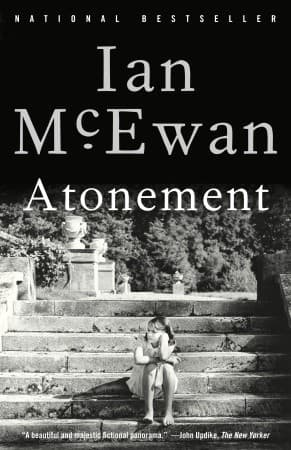
- Atonement
Ian McEwan
4.4 (70) average on GoodreadsExplores themes of false accusation, memory, and the lasting impact of a single event on multiple lives, with a focus on historical context.
- Brooklyn
Colm Tóibín
Both novels address themes of Irish identity and emigration, but The Secret Scripture delves into the darker, more traumatic aspects of Irish social history, particularly the institutionalization of women and the societal control over their lives, presenting a significantly more challenging and often heartbreaking narrative compared to the more gentle and hopeful journey depicted in Brooklyn.
- The Old Man and the Sea
Ernest Hemingway
3.8 (831k) average on GoodreadsLiterary FictionA Cuban fisherman's long struggle with a giant marlin becomes a story of endurance and dignity, now retold for young adults with illustrations, phonetic guides, and writing prompts in Traditional Chinese.
- One Hundred Years of Solitude
Gabriel García Márquez
4.1 (753k) average on GoodreadsLiterary FictionThrough the multi-generational story of the Buendía family, a mythical town deals with the repeating patterns of time, love, and solitude, as the extraordinary mixes with the ordinary.
- The Goldfinch
Donna Tartt
3.9 (720k) average on GoodreadsLiterary FictionHaunted by a tragic explosion and clutching a stolen Dutch masterpiece, a young orphan navigates the opulent drawing rooms of New York and the gritty underbelly of the art world, desperately seeking connection and redemption amidst a life spiraling into crime and obsession.
- Little Fires Everywhere
Celeste Ng
4.1 (713k) average on GoodreadsLiterary FictionIn Shaker Heights, an artist and her daughter move in, and their free-spirited lives clash with a rule-bound matriarch, revealing hidden conflicts beneath a perfect surface.




Enjoyed the summary?
A summary gives you the shape of the book. The book itself has the detail, the examples and the voice.
Find The Secret Scripture on AmazonAs an Amazon Associate, BookBrief earns from qualifying purchases. How we're funded