

Synopsis
Covers the whole plot, including the ending.
- Difficulty
- Easy
- Pacing
- Moderate
- Mood
- Heartwarming, Atmospheric, Romantic, Emotional
- Read it if
- You enjoy a heartwarming romance with a strong sense of place, a 'city girl meets rugged outdoorsman' trope, and themes of family reconciliation and finding oneself.
- Skip it if
- You dislike slow-burn romances, stories with significant internal conflict, or don't appreciate a setting that plays a major role in the plot.
The Simple Wild Plot Summary
Covers the whole plot, including the ending.
A Reluctant Return to the Wild
Calla Fletcher, a 26-year-old fashion blogger in Toronto, learns her estranged father, Wren Fletcher, who lives in remote Bangor, Alaska, is dying of cancer. Calla's mother left Wren and Alaska when Calla was a toddler, causing a lifelong separation. Despite her worries about the Alaskan wilderness and the man she barely knows, Calla feels she must make the difficult trip. She flies to Anchorage, then takes a small plane to Bangor, immediately noticing the stark difference from her city life. The pilot, Jonah, is rugged, initially rude, and openly doubts her ability to adapt to the wild.
First Impressions and Harsh Realities
Upon arriving in Bangor, Calla is overwhelmed by the basic conditions. Her father’s cabin lacks modern plumbing, and the town is isolated and harsh. Wren, a gruff but kind man, is clearly weakened by his illness. Calla struggles to adjust to no internet, the cold, and the general ruggedness. Her interactions with Jonah, Wren’s business partner and part of the small community, are tense. He sees her as a pampered city girl who won't last, and his directness often offends her, though she secretly agrees with some of his points. Their first meetings are marked by sharp talk and mutual dislike.
A Glimpse into Wren's Life
As Calla spends more time with Wren, she starts to understand the life he built in Alaska. She learns about his charter plane company, The Simple Wild, and his deep love for flying and the land. She joins him on a supply run to a remote village, seeing firsthand his vital role in connecting isolated communities. Through these experiences, Calla begins to look past her initial resentment of her father's choice to stay in Alaska, slowly understanding his strong connection to his home. She also observes the close-knit community of Bangor and how they support each other.
Jonah's Unexpected Support
Despite their rough start, Jonah gradually shows a different side to Calla. He offers her practical advice on surviving in the Alaskan wilderness, teaching her how to chop wood, fish, and navigate the area. Their shared concern for Wren, as his health declines, helps them connect. Calla, in turn, starts to see past Jonah’s gruff exterior to the caring and protective man beneath. Their banter softens, changing from antagonism to playful teasing, and Calla finds herself increasingly drawn to his strength and his commitment to his way of life.
Forging a Connection
Calla and Jonah's bond grows through shared experiences, from flying in bad weather to quiet evenings at Wren’s cabin. They discover a mutual attraction, shown in stolen glances, lingering touches, and more open talks about their lives and dreams. Jonah shares more about his past and his deep roots in Alaska, while Calla shares her insecurities about her place in the world. Their physical connection becomes clear, leading to a passionate kiss that marks a shift from friendship to something deeper, despite their different life paths.
The Inevitable Goodbye
Wren's cancer progresses quickly, and Calla, along with Jonah and the rest of the Bangor community, supports him. Calla spends his final days with him, valuing their new connection and the stories he shares about his life and her mother. She realizes how much she has come to love and respect her father, despite their years apart. Wren passes away peacefully in his cabin, surrounded by those who loved him. His death is a deep loss for Calla and the community, but it also strengthens Calla's understanding of her father's lasting influence and his wild spirit.
Aftermath and Uncertainty
After Wren's funeral, Calla feels deep grief and an unexpected problem. Her original plan was to return to Toronto and her old life, but her experiences in Alaska and her relationship with Jonah have complicated things. She feels a growing attachment to the wilderness and the community, as well as a strong emotional connection to Jonah. The thought of leaving him and everything she has come to appreciate in Bangor is painful. She starts to consider staying, but the fear of repeating her parents' failed relationship and the practical challenges of adapting to such a different life weigh on her.
A Test of Resolve
Calla tries to get more involved in the Alaskan lifestyle, helping Jonah with the charter business and learning about bush flying. However, the harsh realities of the wild, including a close call with a bear and the constant isolation, test her resolve. She struggles with the lack of modern conveniences and the sharp contrast from her previous life. A moment of doubt and fear makes her question if she truly belongs in Alaska, causing tension between her and Jonah, who sees her hesitation as a sign that she is not truly committed to his world.
The Pull of Two Worlds
Overwhelmed by her conflicting emotions and the practical problems, Calla decides to return to Toronto, believing it is the only logical choice. Her separation from Jonah is heartbreaking, and she constantly thinks of him and Alaska. Her life in Toronto feels empty and unsatisfying compared to the energy she experienced in the wild. She realizes her feelings for Jonah are real and she misses the raw honesty of Alaska. This time apart forces her to confront what truly matters to her and where her heart truly lies.
A Return, A Choice, A Future
Unable to deny her feelings for Jonah and her growing love for Alaska, Calla makes the brave decision to return to Bangor, not just to visit, but to make a life there. She confronts Jonah, expressing her commitment to him and her willingness to embrace the challenges of the wild. Jonah, who was hurt by her departure, is initially cautious but eventually accepts her return. They decide to face the future together, building a life that respects their individual desires and their shared love, showing that love can grow even in the wildest places.
Principal Figures
Calla Fletcher
Protagonist
A city-dwelling fashion blogger who reluctantly returns to her Alaskan roots.
Calla is a 26-year-old woman who has spent her life in Toronto, cultivating a sophisticated image as a fashion blogger. She is initially portrayed as somewhat pampered and out of her element in the rugged Alaskan wilderness. Beneath her fashionable exterior, Calla is intelligent, observant, and possesses a hidden resilience. She carries emotional baggage from her parents' separation and her father's absence, which makes her initially guarded and fearful of commitment. She values connection and authenticity, which she eventually finds in Alaska.
Relationships: Wren Fletcher (Estranged father, later a deeply loved and understood parent.); Jonah (Initial antagonist, evolving into her romantic partner and soulmate.); Agnes (Wren's supportive friend and a maternal figure in Calla's life.)
Jonah
Love Interest / Supporting
A rugged, proud Alaskan bush pilot with a deep connection to the land.
Jonah is a seasoned bush pilot, intrinsically linked to the Alaskan wilderness and Wren's charter business. He is initially gruff, sarcastic, and openly judgmental of Calla's city upbringing, embodying the 'wild' aspect she struggles with. Beneath his tough exterior, Jonah is fiercely loyal, protective, and deeply caring, especially towards Wren. He is passionate about his way of life and hesitant to form attachments with anyone who doesn't share his commitment to Alaska, fearing a repeat of Wren's past heartache. He is honest to a fault and has a dry wit.
Relationships: Calla Fletcher (Initial adversary, evolving into her romantic partner and soulmate.); Wren Fletcher (Close friend, business partner, and father figure.)
Wren Fletcher
Supporting
Calla's estranged, ailing father and a legendary Alaskan bush pilot.
Wren is Calla's father, a stoic and independent man who chose the rugged life of an Alaskan bush pilot over a conventional family life. He is a man of few words but deep affections, deeply respected by his community for his skill, integrity, and resilience. Despite the years of separation from Calla, he holds a quiet love for her. His impending death forces Calla's return, and their reunion allows for a poignant reconciliation. He embodies the spirit of the Alaskan wild and provides Calla with a crucial link to her heritage.
Relationships: Calla Fletcher (Estranged daughter, with whom he reconciles before his death.); Jonah (Close friend, business partner, and surrogate son.)
Agnes
Supporting
Wren's kind and supportive friend, who becomes a maternal figure to Calla.
Agnes is a warm, practical, and compassionate woman who is a long-time resident of Bangor and a close friend to Wren. She runs the local general store and serves as a pillar of the small community. She quickly takes Calla under her wing, offering practical advice, emotional support, and a much-needed maternal presence. Agnes is observant and wise, often providing Calla with insights into Wren's character and the Alaskan way of life. She plays a crucial role in helping Calla navigate the challenges of her new environment and understand the dynamics of the community.
Relationships: Calla Fletcher (Friend and maternal figure.); Wren Fletcher (Close friend.)
Roy
Supporting
A local elder and friend of Wren's, known for his wisdom and storytelling.
Roy is an elderly, wise resident of Bangor, and a long-time friend of Wren's. He often shares stories and observations about the community and the wilderness, offering a historical perspective and a sense of continuity. Roy represents the deep-rooted knowledge and community spirit of Alaska. He is one of the many characters who help Calla understand the unique culture and values of the people living in the remote frontier. His presence adds warmth and a sense of tradition to the narrative.
Relationships: Wren Fletcher (Long-time friend.); Calla Fletcher (Elderly acquaintance and source of local knowledge.)
Mona
Mentioned
Calla's mother, who left Alaska with Calla when she was a toddler.
Mona is Calla's mother, who fled Alaska when Calla was very young, unable to cope with the isolation and harshness of the wild. Her decision created the initial rift between Calla and Wren and shaped Calla's urban upbringing. Though she doesn't appear in the story, her choices and experiences are a constant backdrop, serving as a cautionary tale and a point of comparison for Calla's own struggles with adapting to Alaska. Her story highlights the central theme of choosing between two vastly different lifestyles.
Relationships: Calla Fletcher (Mother.); Wren Fletcher (Ex-wife.)
Themes & Insights
Belonging and Identity
The novel explores Calla's journey to find where she belongs and who she is. She initially identifies with her city life in Toronto, but her return to Alaska forces her to face her roots and the wilder part of her background. She grapples with the idea of home not just as a place, but as a feeling of being authentic and connected. This theme appears in her struggle to adapt to the basic Alaskan lifestyle versus her comfortable city life, and her eventual realization that her heart belongs in the wild, with Jonah and the community she comes to love.
“Maybe home wasn't a place, but a feeling. The feeling of being accepted, of being loved, of being exactly where you were supposed to be.”
Reconciliation and Forgiveness
A main theme is Calla's reconciliation with her estranged father, Wren, and her acceptance of his choices. For years, she resented his absence, but her time in Alaska helps her understand his deep connection to the land and forgive him for the life he chose. This also extends to forgiving herself for her initial judgments and embracing the complex nature of family love. The slow, gentle rebuilding of their relationship, ending with Wren's peaceful death, highlights the importance of making peace with the past before it is too late.
“It was impossible to resent him when he was right here, so vulnerable, so clearly loved by this place and these people.”
Love Across Divides
The romance between Calla and Jonah shows how love can overcome big differences in lifestyle and personality. Calla represents the modern, urban world, while Jonah represents the rugged, traditional Alaskan wilderness. Their initial dislike turns into a deep, passionate connection, but their different life paths create major obstacles. Their journey explores whether love is enough to bridge such a gap, challenging the idea that partners must have identical dreams and lifestyles. Their choice to build a life together shows love's power to inspire compromise and adaptation.
“He was the wild, and I was the city, and somehow, we fit.”
The Call of the Wild vs. Civilization
The novel directly compares the raw beauty and harshness of the Alaskan wilderness with the comforts of city life. Calla's initial discomfort with outhouses, no internet, and dangerous animals highlights this contrast. The story values the self-sufficiency, close community, and deep connection to nature found in the wild, while also acknowledging its difficulties. It questions what truly makes a 'rich' life and suggests that real fulfillment might be found outside modern society. Calla's eventual choice to embrace the wild represents a rejection of superficial comforts for a deeper, more authentic existence.
“Some people were born for the wild. Others were born to run from it.”
Plot Devices & Literary Techniques
Fish-out-of-Water Trope
Calla, a city girl, is placed in the unfamiliar and challenging Alaskan wilderness.
This device is central to the narrative, creating immediate conflict and opportunities for character development and humor. Calla's initial struggles with the primitive conditions, lack of modern amenities, and dangerous wildlife highlight her urban upbringing and create a stark contrast with Jonah and the local Alaskans. This setup allows for her gradual transformation as she learns to adapt, grow, and eventually embrace the wild, making her journey of self-discovery more impactful and relatable to readers who might also feel out of place in new environments.
Enemies-to-Lovers Trope
Calla and Jonah's initial dislike and antagonism evolve into deep romantic love.
This popular romance trope fuels much of the romantic tension and character interaction. Calla and Jonah's initial interactions are marked by sharp banter, mutual judgment, and personality clashes. Jonah's skepticism and Calla's defensiveness create a dynamic that slowly breaks down as they are forced to spend time together and rely on each other, particularly in their shared concern for Wren. The gradual shift from animosity to respect, friendship, and ultimately passionate love provides a satisfying emotional arc and allows for a deeper understanding of each character's vulnerabilities and strengths.
The Dying Parent Catalyst
Wren's terminal illness forces Calla's return to Alaska and initiates her journey.
Wren's cancer serves as the primary catalyst for Calla's entire journey. Without his illness, Calla would likely never have returned to Alaska, preventing her reconciliation with her father, her discovery of her roots, and her romance with Jonah. This device creates a sense of urgency and emotional weight, driving Calla's actions and ensuring that the stakes are high. It forces her to confront unresolved family issues and make difficult choices about her future, ultimately leading to profound personal growth and transformation.
Nature as a Character/Setting as Conflict
The Alaskan wilderness is an active force, shaping characters and driving plot.
The Alaskan wilderness is not merely a backdrop but an integral, living entity that influences every aspect of the story. Its harshness (cold, isolation, wildlife) creates external conflict for Calla and tests her resilience, while its raw beauty and vastness inspire awe and a sense of freedom. The wilderness acts as a mirror, reflecting the characters' inner struggles and strengths, and ultimately plays a crucial role in Calla's transformation and her decision to embrace a new life. It embodies the 'wild' side of life that Calla must learn to understand and love.
The Simple Wild Quotes
“I’d learned a long time ago that you can’t force someone to love you. You can’t force someone to stay.”
“You can’t run from yourself, Calla. Not really.”
“Sometimes you have to break to become whole again.”
“The wild doesn’t care about your feelings, Calla. It only cares about survival.”
“I missed the quiet of the wild, the way it made everything else fade away.”
“He saw me, really saw me, in a way no one ever had before.”
“It was terrifying, this feeling of wanting something so badly it hurt.”
“Some things are worth fighting for, even if the odds are against you.”
“The hardest part wasn’t leaving, it was staying gone.”
“Home wasn’t a place; it was a feeling. And I found it with him.”
“There’s a difference between living and merely existing.”
“You can't expect the world to adapt to you. Sometimes, you have to adapt to the world.”
“Every scar tells a story, Calla. Don't be ashamed of yours.”
“The wilderness had a way of stripping you bare, showing you who you really were.”
Quiz
10 questions on the plot and the characters. Each answer comes with a short explanation.
Question 1
Why did Calla's mother leave Alaska when Calla was a baby?
- She found a better job opportunity in Toronto.
- She couldn't handle the isolation and extreme rural lifestyle.
- Wren Fletcher asked her to leave.
- Calla needed specialized medical care not available in Alaska.
Show answer
B. She couldn't handle the isolation and extreme rural lifestyle. Calla's mother left because she was unable to cope with the challenging and isolated lifestyle of the Alaskan wild.
Question 2
What is Calla's profession or primary residence before she returns to Alaska?
- She is a pilot in Vancouver.
- She lives a busy life in Toronto.
- She works as a journalist in New York.
- She is a wilderness guide in British Columbia.
Show answer
B. She lives a busy life in Toronto. The synopsis states that Calla has a 'busy life in Toronto' before returning to Alaska.
Question 3
What is Jonah's initial impression of Calla?
- He sees her as a kindred spirit who loves the wild.
- He believes she is too pampered to handle the wild.
- He is immediately attracted to her city sophistication.
- He is indifferent to her presence.
Show answer
B. He believes she is too pampered to handle the wild. Jonah is described as 'convinced that she’s too pampered to handle the wild' and 'waiting with one hand on the throttle to fly this city girl back to where she belongs'.
Question 4
What is the primary reason Calla decides to return to Alaska?
- To escape problems in her Toronto life.
- To help her father expand his charter plane business.
- She learns her father's health is failing and his days may be numbered.
- She wants to reconnect with her Alaskan heritage and explore her roots.
Show answer
C. She learns her father's health is failing and his days may be numbered. Calla returns to Alaska 'when Calla learns that Wren’s days may be numbered'.
Question 5
What specific challenges does Calla face when adjusting to the Alaskan environment?
- Navigating complex social dynamics and urban traffic.
- Dealing with roaming wildlife, odd daylight hours, exorbitant prices, and outhouses.
- Learning to fly a bush plane and survive extreme blizzards.
- Finding a reliable internet connection and gourmet food.
Show answer
B. Dealing with roaming wildlife, odd daylight hours, exorbitant prices, and outhouses. The text explicitly mentions she 'braves the roaming wildlife, the odd daylight hours, the exorbitant prices, and even the occasional—dear God—outhouse'.
Question 6
What is the nature of Wren Fletcher's business?
- He runs a remote fishing lodge.
- He operates a charter plane company.
- He is a wildlife photographer and guide.
- He owns a general store in the frontier town.
Show answer
B. He operates a charter plane company. Jonah is described as the pilot who 'helps keep her father’s charter plane company operational'.
Question 7
What is the central internal conflict Calla faces regarding a potential romance with Jonah?
- She is worried about Jonah's commitment issues.
- She fears repeating her parents' failed relationship due to their differing lifestyles.
- She is already engaged to someone in Toronto.
- She believes Jonah is too old for her.
Show answer
B. She fears repeating her parents' failed relationship due to their differing lifestyles. The synopsis states, 'It would be foolish of her to kindle a romance, to take the same path her parents tried—and failed at—years ago.'
Question 8
What is the primary reason Jonah is convinced Calla will not stay in Alaska?
- He knows she has a demanding job in Toronto.
- He believes she is too accustomed to city comforts and won't adapt to the wild.
- He overheard her making plans to leave immediately.
- He thinks she dislikes his personality.
Show answer
B. He believes she is too accustomed to city comforts and won't adapt to the wild. Jonah is portrayed as 'convinced that she’s too pampered to handle the wild' and expects her to return to her city life.
Question 9
What is the significance of the phrase 'It’s a simple truth that turns out to be not so simple after all' in the context of the story?
- It refers to the simple truth that Calla must leave Alaska, but her feelings for Jonah complicate it.
- It implies that living in the Alaskan wild is much simpler than city life, contrary to expectations.
- It describes the simple truth about Wren's illness, which becomes complicated by family secrets.
- It refers to the simple truth that her parents' marriage failed, but the reasons were complex.
Show answer
A. It refers to the simple truth that Calla must leave Alaska, but her feelings for Jonah complicate it. The phrase directly follows the statement about Calla's determination not to kindle a romance because 'Calla is not in Alaska to stay and Jonah will never leave.' This 'simple truth' becomes complicated by their developing bond.
Question 10
What shared trait or experience eventually helps Calla and Jonah form an 'unexpected bond'?
- Their mutual love for Toronto's city life.
- Their shared interest in expanding Wren's charter business.
- Calla's determination to adapt to the wild and Jonah witnessing her efforts.
- Their shared past growing up together in the Alaskan frontier.
Show answer
C. Calla's determination to adapt to the wild and Jonah witnessing her efforts. Calla is 'determined to prove him wrong' about her inability to handle the wild, and 'As his undercurrent of disapproval dwindles, it’s replaced by friendship—or perhaps something deeper?' This implies her efforts to adjust lead to their bond.
The Simple Wild FAQ
What prompts Calla Fletcher to return to Alaska after two decades?
Calla returns to Alaska because she learns her estranged father, Wren Fletcher, is gravely ill and his days are numbered. This news compels her to make the journey from Toronto to the remote frontier town, driven by a desire to connect with him before it's too late.
Describe Calla's initial struggles and adjustments to life in the Alaskan wild.
Calla, a city girl from Toronto, initially struggles immensely with the rugged Alaskan environment. She faces challenges like roaming wildlife, the odd daylight hours, exorbitant prices, and even the use of an outhouse, which are all stark contrasts to her comfortable urban life.
Who is Jonah and what is his initial impression of Calla?
Jonah is an unkempt, obnoxious, and proud Alaskan pilot who works for Wren's charter plane company. His initial impression of Calla is that she is a pampered city girl who is too soft to handle the wild, and he expects her to leave quickly, even offering to fly her out.
What kind of relationship did Calla have with her father, Wren, before her return?
Calla had a largely estranged relationship with Wren; her mother took her away when she was less than two years old, fleeing the isolation of the Alaskan wild. For over two decades, Calla lived a life entirely separate from him in Toronto, knowing him only from afar.
What is the central conflict or 'simple truth' that Calla and Jonah face regarding their developing feelings?
The central conflict is that Calla is not in Alaska to stay, while Jonah is deeply rooted and will never leave. They both realize that kindling a romance would be foolish, as it mirrors the failed relationship of Calla's parents, who couldn't reconcile their different lifestyles.
How does Calla's mother's past influence Calla's own fears about a relationship with Jonah?
Calla's mother's inability to handle the isolation and extreme lifestyle of Alaska, leading her to leave Wren, deeply influences Calla's fears. She worries that she will repeat her mother's pattern, falling for someone like Jonah who is tied to the wild, only to find herself unable to adapt long-term.
Are there specific instances where Jonah's initial disapproval of Calla begins to dwindle?
Jonah's disapproval begins to dwindle as he witnesses Calla's genuine efforts to adapt, such as her willingness to learn about the bush planes, her persistence in connecting with Wren, and her resilience in facing the harsh environment. His respect grows as she proves her determination.
What role do the bush planes play in the narrative beyond being a setting for Wren's business?
The bush planes symbolize Wren's connection to the wild and his livelihood, but they also become a point of connection for Calla and Jonah. Calla's interest in learning about them shows her engagement with Wren's world, and they are the primary means of transportation, representing both freedom and isolation in Alaska.
How does Calla's perception of Wren evolve throughout her time in Alaska?
Calla's perception of Wren evolves from a distant, somewhat flawed figure to a man she deeply cares for and understands better. She learns about his life, his dedication to the wild, and the reasons behind his choices, leading to a more complete and empathetic view of her father.
What psychological barriers does Calla need to overcome to truly connect with Wren?
Calla needs to overcome the psychological barriers of resentment for his absence, her own preconceived notions of him, and the fear of repeating her mother's mistakes. She also has to confront her discomfort with the Alaskan lifestyle, which initially acts as a barrier to understanding his world.
How does Jonah's seemingly 'obnoxious' exterior serve as a protective mechanism?
Jonah's 'obnoxious' and dismissive exterior serves as a protective mechanism, likely to guard against potential heartbreak or disappointment, especially with 'city girls' like Calla whom he assumes won't last in Alaska. It allows him to maintain his boundaries and his commitment to his home.
In what ways do Calla and Jonah's initial interactions mirror their parents' past struggles?
Calla and Jonah's initial interactions mirror their parents' struggles by highlighting the fundamental clash between urban and wild lifestyles. Jonah's conviction that Calla can't handle Alaska reflects the very reason Calla's mother left, setting up the same central conflict that tore her parents apart.
Could Calla's determination to 'prove Jonah wrong' be interpreted as a deeper need for self-validation?
Yes, Calla's determination to 'prove Jonah wrong' can be interpreted as a deeper need for self-validation. It's not just about proving it to Jonah, but also to herself, her father, and perhaps even her mother's legacy, that she is capable of handling the wild and making her own choices.
The description mentions Jonah's 'undercurrent of disapproval.' What might be the source of this disapproval beyond Calla's city origins?
Beyond Calla's city origins, Jonah's disapproval might stem from a protective loyalty to Wren, having seen the pain Wren endured when Calla's mother left. He might also disapprove of the perceived abandonment of Wren by Calla for so many years, viewing her return as potentially disruptive or temporary.
Is the 'simple truth' that Calla cannot stay and Jonah will not leave truly insurmountable, or is there room for compromise?
The 'simple truth' initially appears insurmountable, but the narrative explores whether love and personal growth can create room for compromise. The book delves into the characters' willingness to adapt, make sacrifices, or find a third path that allows their relationship to flourish despite their differing commitments to place.
How does the remote Alaskan setting contribute to the novel's themes of isolation and connection?
The remote Alaskan setting intensifies themes of isolation, highlighting Calla's initial loneliness and the inherent solitude of the wild. Paradoxically, this isolation also fosters deep connections, as people rely heavily on each other for survival and companionship, drawing Calla closer to Wren and Jonah.
What is the significance of the title, 'The Simple Wild,' in relation to the story's themes?
The title 'The Simple Wild' is significant because it refers to the seemingly straightforward, yet ultimately complex, nature of life in Alaska and the characters' relationships. The 'simple' wild demands directness and resilience, but the 'simple truth' of Calla and Jonah's situation proves to be anything but simple, highlighting the complexities of love and belonging.
About the author

K.A. Tucker is a contemporary author known for her engaging fiction. Her notable works include "Ten Tiny Breaths," which explores themes of love and healing, and "The Simple Wild," a story about family and self-discovery set against the backdrop of the Alaskan wilderness. Tucker's writing often combines emotional depth with compelling characters.
Similar books
- Things We Never Got Over
Lucy Score
4.1 (1.1M) average on GoodreadsRomanceCombines small-town charm with a feisty female lead and a protective, gruff male love interest.
- The Great Alone
Kristin Hannah
4.3 (377k) average on GoodreadsHistorical Fiction'The Simple Wild' shares a similar Alaskan wilderness setting with 'The Great Alone' and explores themes of survival and family dynamics in harsh environments. However, Tucker's novel places a stronger emphasis on the romantic relationship and personal reconciliation, whereas Hannah's work delves deeper into the psychological impact of isolation and domestic abuse. While both are atmospheric, Tucker's tone is generally more hopeful and focused on healing.
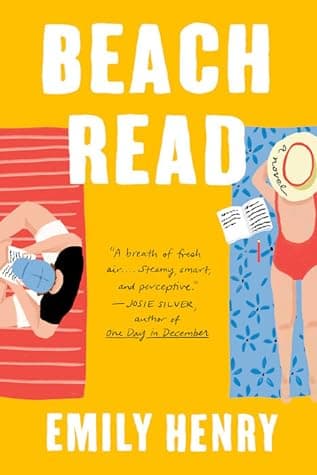
- Beach Read
Emily Henry
4.1 (86k) average on GoodreadsRomanceBoth 'The Simple Wild' and 'Beach Read' feature protagonists grappling with their pasts and unexpected romantic connections. However, Henry's novel is set in a more conventional, albeit charming, small-town environment and focuses on the interplay between two writers with contrasting styles. Tucker's book offers a much more rugged, high-stakes wilderness setting, making the external challenges faced by the characters far more pronounced and integral to their emotional journeys. 'The Simple Wild' prioritizes the external struggle against nature alongside internal character development, while 'Beach Read' is more character-driven within a less imposing environment.
- The Hunger Games
Suzanne Collins
4.3 (6.4M) average on GoodreadsFantasyIn a future where children fight to the death on live television, Katniss Everdeen volunteers for the arena, turning a death sentence into a fight for survival and a spark of rebellion.
- The Great Gatsby
F. Scott Fitzgerald
3.9 (3.8M) average on GoodreadsHistorical FictionIn the opulent Roaring Twenties, a mysterious millionaire's lavish parties hide his desperate, tragic pursuit of a lost love, exposing the emptiness within the American Dream.
- The Fault in Our Stars
John Green
4.2 (3.6M) average on GoodreadsYoung AdultA girl with a terminal illness finds her story rewritten when a charming boy with a similar past enters her life at a cancer support group, leading to a star-crossed romance.





Enjoyed the summary?
A summary gives you the shape of the book. The book itself has the detail, the examples and the voice.
Find The Simple Wild on AmazonAs an Amazon Associate, BookBrief earns from qualifying purchases. How we're funded