
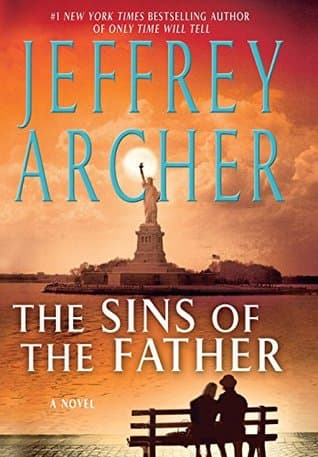
Synopsis
Covers the whole plot, including the ending.
- Difficulty
- Medium
- Pacing
- Variable
- Mood
- Dramatic, Suspenseful, Intriguing, Historical
- Read it if
- You enjoy sweeping historical sagas with courtroom drama, mistaken identity, and political intrigue, set against the backdrop of WWII.
- Skip it if
- You dislike cliffhangers (as this is part of a series) or intricate plots that span multiple character perspectives and significant time jumps.
The Sins of the Father Plot Summary
Covers the whole plot, including the ending.
A Desperate Escape
In 1939, just before Britain declares war on Germany, Harry Clifton makes a drastic decision. He is still dealing with the revelation that Arthur Penrose, not Hugo Barrington, is his biological father. He also despairs over his inability to marry Emma Barrington. He enlists in the Merchant Navy as a steward on the MV Buckingham. He hopes to escape the complicated family secrets and the pain of his unrequited love for Emma. He believes that by leaving Bristol, he can outrun the scandal and emotional turmoil that have affected his young life. This act of self-exile begins his perilous journey.
A Sinking Ship and a New Identity
Harry's Merchant Navy vessel, the MV Buckingham, is torpedoed in the Atlantic by a German U-boat. Most of the crew die. Harry is one of the few survivors, rescued by an American cruise liner, the SS Kansas Star. Among the other rescued sailors is an American third officer named Tom Bradshaw. Bradshaw, severely injured, dies during the night. Harry sees a desperate chance to shed his past and the complicated Clifton-Barrington family saga. He impulsively decides to assume Bradshaw's identity, believing it will give him a fresh start in America, free from his complicated history and heartbreak over Emma.
Arrival in New York and a Dark Revelation
Upon arriving in New York City aboard the SS Kansas Star, Harry, now living as Tom Bradshaw, is immediately confronted by two men who know the real Bradshaw. They quickly reveal that the man whose identity Harry has stolen was involved in serious criminal activities, including bank robbery. Harry realizes his desperate gamble has failed. Instead of escaping his own troubles, he has inherited a far more perilous and immediate threat. He is trapped, unable to prove his true identity without revealing his past, which he still wants to keep hidden.
The Bradshaw Trial
Harry, still posing as Tom Bradshaw, is arrested by the FBI and charged with bank robbery and murder, crimes committed by the real Bradshaw. He is brought before a grand jury and then put on trial. Despite his desperate attempts to explain his true identity, he has no credible evidence. His fingerprints are not on file, and his story is deemed unbelievable. The prosecution, led by Sefton M. Jelks, presents a strong case against him, portraying him as a dangerous criminal. Harry faces a potential death sentence for crimes he did not commit.
Giles Barrington's Intervention
Meanwhile, back in England, Giles Barrington, now a Member of Parliament, learns of Harry's situation through a newspaper report about the 'Tom Bradshaw' trial. Giles recognizes Harry's unique writing style in letters published by 'Bradshaw' in a newspaper. He suspects the truth. Despite the ongoing animosity between their families, Giles feels a deep loyalty and friendship towards Harry. He immediately travels to New York, determined to prove Harry's true identity and save him from the electric chair. His arrival brings a glimmer of hope to Harry's desperate situation.
The Courtroom Drama
Giles Barrington, working with Harry's appointed lawyer, learns that Harry's birth certificate and other documents were destroyed in the bombing of Bristol. They struggle to find concrete proof of Harry's identity. During the trial, Giles takes the stand, testifying to Harry's true name and background. However, the prosecution, led by Sefton Jelks, questions his testimony, suggesting it is a fabricated story to save a criminal. The courtroom becomes a battleground of truth and deception. Harry's life hangs in the balance as the jury deliberates.
The Verdict and Imprisonment
Despite Giles Barrington's efforts and the defense, the jury finds 'Tom Bradshaw' (Harry Clifton) guilty of murder and bank robbery. The judge sentences him to a long term in a federal penitentiary. Harry is devastated, his hopes of a new life in America shattered. He is sent to a maximum-security prison, where he must deal with the harsh realities of incarceration and the constant threat from genuine criminals. This period marks a low point for Harry, as he grapples with the injustice of his situation and the crushing weight of his stolen identity.
Emma Barrington's Quest
Back in England, Emma Barrington, deeply in love with Harry, refuses to believe he is a criminal. She is heartbroken by the news of his conviction and dedicates herself to proving his innocence. She meticulously researches the real Tom Bradshaw's background, searching for any detail that could exonerate Harry. Her unwavering faith and tireless efforts become a beacon of hope. She navigates bureaucratic hurdles and faces skepticism from those who believe Harry is guilty. Her determination shows the depth of her love and commitment to Harry.
The Real Tom Bradshaw's Family
Emma's relentless investigation eventually leads her to the real Tom Bradshaw's family in America. Through her discussions with them, she uncovers crucial details about Bradshaw's past, including his involvement with a criminal gang and his distinctive tattoos. This information provides proof that the man in prison is not their relative. The family, initially skeptical, comes to understand Emma's mission and provides her with the evidence she needs to present a compelling case for Harry's exoneration. This discovery is a major breakthrough in her quest for justice.
A New Trial and Exoneration
Armed with the evidence gathered by Emma, including the real Tom Bradshaw's family's testimony and detailed descriptions of his tattoos, the case for Harry's innocence is reopened. A new trial is granted, and this time, the truth prevails. Harry Clifton is finally exonerated of all charges of bank robbery and murder. He is released from prison, a free man, but forever marked by the ordeal. His legal battle concludes, but the emotional scars and the time lost remain. This sets the stage for his return to England and the challenges that await him.
Return to England and Reconciliation
After his exoneration, Harry returns to England, a hero to many, particularly Emma and Giles. He is reunited with his family, including his mother Maisie and his stepfather Hugo Barrington, who expresses deep regret for his past actions. Harry and Emma, their love tested by immense hardship, are finally free to pursue their relationship without the shadows of the past or the legal battle. Harry begins to rebuild his life, eager to resume his writing career and embrace a future with Emma. The path ahead is still fraught with challenges and unresolved family tensions.
The Barrington Shipping Empire
While Harry and Emma look towards their future, the Barrington family faces its own struggles. Hugo Barrington, still affected by his past and the strained relationship with Harry, works to secure the future of Barrington Shipping. The war continues to pose significant challenges to the company's operations and profitability. Meanwhile, Harry, having endured his harrowing ordeal, is determined to make a name for himself as a writer, separate from the Barrington legacy. He and Emma begin to plan their marriage, hoping for a peaceful future despite the ongoing global conflict and the lingering family complexities.
The Unveiling of Arthur Penrose
The novel explores the mystery surrounding Harry's biological father, Arthur Penrose. The previous book revealed his identity. "The Sins of the Father" explores the implications of this revelation and its impact on Harry's sense of self and his relationships with Maisie and Hugo. The legacy of Arthur Penrose, a man Harry never truly knew, continues to cast a long shadow, influencing Harry's understanding of his own identity and place in the world. The family deals with the lingering secrets and the complex emotional fallout.
Giles's Political Ascent
Giles Barrington's efforts to save Harry in America significantly boost his public profile and political career. Having proven his integrity and determination, he gains respect and support, positioning him for a promising future in Parliament. He continues to be a steadfast ally to Harry and Emma, navigating the complexities of their intertwined lives and the ongoing family drama. His political ascent runs parallel to Harry's personal struggles and triumphs. This highlights the different paths taken by the two young men who share a deep, if complicated, friendship.
The Shadow of the War
Throughout the narrative, World War II is a significant force shaping the characters' lives. Harry's decision to join the Merchant Navy is a direct response to the impending war. The sinking of his ship is a brutal consequence of the conflict. The war also impacts Barrington Shipping and the general atmosphere of uncertainty and peril. It shapes the decisions made by characters, the risks they take, and the sacrifices they endure. This reminds readers that personal dramas unfold against a canvas of monumental historical events. The war is a pervasive force that influences destinies.
The Sins of the Father Characters
Harry Clifton
Protagonist
A young writer seeking to escape his past and find his true identity.
Harry is a sensitive, intelligent, and determined young man with a passion for writing. Haunted by the revelations about his parentage and his unrequited love for Emma Barrington, he makes impulsive decisions to escape his circumstances. He possesses a strong moral compass but is also prone to acts of desperation. Despite his trials, he maintains an inner strength and a belief in justice, driven by a desire to live an honest life and pursue his literary ambitions.
Relationships: Emma Barrington (Love interest, fiancée, later wife); Giles Barrington (Best friend, loyal ally); Maisie Clifton (Mother); Hugo Barrington (Stepfather, complicated relationship); Arthur Penrose (Biological father (deceased), a source of past mystery)
Emma Barrington
Supporting
Harry's unwavering love interest, determined to prove his innocence.
Emma is a strong-willed, intelligent, and deeply loyal woman. Her love for Harry is profound and unwavering, driving her to extraordinary lengths to prove his innocence when he is wrongly imprisoned. She is resourceful, persistent, and unafraid to challenge authority or navigate complex situations. Her emotional strength and conviction are crucial to Harry's eventual exoneration, demonstrating her fierce independence and deep commitment.
Relationships: Harry Clifton (Love interest, fiancée, later wife); Giles Barrington (Brother); Hugo Barrington (Father); Lady Virginia Barrington (Mother)
Giles Barrington
Supporting
Emma's brother and Harry's loyal friend, who becomes a Member of Parliament.
Giles is honorable, courageous, and possesses a strong sense of justice. Despite the historical rivalry between the Clifton and Barrington families, his friendship with Harry runs deep. He is pragmatic and politically astute, using his growing influence as a Member of Parliament to aid Harry. His unwavering belief in Harry's innocence and his willingness to travel to America to testify on his behalf demonstrate his loyalty and integrity.
Relationships: Harry Clifton (Best friend, loyal ally); Emma Barrington (Sister); Hugo Barrington (Father); Lady Virginia Barrington (Mother)
Maisie Clifton
Supporting
Harry's loving mother, who carries deep family secrets.
Maisie is a resilient and loving mother, fiercely protective of Harry. She carries the heavy burden of her past secrets, particularly the true identity of Harry's biological father. Her life has been marked by hardship and difficult choices, but her love for her son remains her driving force. She represents the emotional core of the Clifton family, constantly navigating the complexities of her relationships with both Harry and Hugo Barrington.
Relationships: Harry Clifton (Son); Hugo Barrington (Husband, Harry's stepfather)
Hugo Barrington
Supporting
Harry's stepfather and head of Barrington Shipping, a man burdened by past actions.
Hugo is a powerful and complex businessman, head of Barrington Shipping. He is initially portrayed as an antagonist to Harry, but his character develops to reveal a man haunted by his past actions and a desire for redemption. He loves Maisie and Emma deeply, and his relationship with Harry is fraught with tension and regret. He is a man of his era, often driven by ambition and social standing, but capable of displaying genuine affection and remorse.
Relationships: Maisie Clifton (Wife); Emma Barrington (Daughter); Giles Barrington (Son); Harry Clifton (Stepfather, complicated relationship)
Sefton M. Jelks
Antagonist
The relentless and ambitious prosecutor in Harry's trial.
Sefton M. Jelks is the formidable and ambitious prosecutor in Harry's trial. He is portrayed as a shrewd and determined lawyer, focused on securing a conviction, regardless of the complexities of the case. He skillfully dismantles the defense's arguments and casts doubt on Giles Barrington's testimony, making Harry's situation appear hopeless. Jelks represents the impersonal and often unforgiving nature of the legal system, driven by professional ambition rather than a pursuit of absolute truth.
Tom Bradshaw
Mentioned
The real American sailor whose identity Harry assumes.
Tom Bradshaw is a deceased American third officer whose identity Harry Clifton assumes after the sinking of the MV Buckingham. Though he dies early in the story, his criminal past, including bank robbery and murder, becomes the central conflict for Harry. Bradshaw serves as a plot device, his hidden life forcing Harry into a desperate struggle for survival and identity. His true character is revealed through the consequences of his actions, which Harry inherits.
Lady Virginia Barrington
Supporting
Hugo's first wife and Emma and Giles's mother, a woman of strong social standing.
Lady Virginia is Hugo Barrington's ex-wife and the mother of Emma and Giles. She is a woman of strong social standing, deeply rooted in the upper echelons of society. Her interactions are often characterized by a concern for appearances and family reputation. While not central to Harry's immediate legal drama, her presence highlights the social divide and family tensions that continue to influence the Barrington family dynamics.
Relationships: Hugo Barrington (Ex-husband); Emma Barrington (Daughter); Giles Barrington (Son)
The Sins of the Father Themes
Identity and Self-Discovery
This theme is central to Harry's journey as he deals with his true parentage and then assumes a false identity. His desperate act of becoming Tom Bradshaw plunges him into a crisis of self. He fights for the right to be recognized as Harry Clifton. The struggle to prove who he is, both legally and personally, drives the story. It is not just about proving his name, but about asserting his inherent goodness against the crimes of another. This shows powerfully in the courtroom scenes where his very existence as Harry is questioned.
“You can run from your past, Harry, but it will always catch up with you in the end.”
Justice and Injustice
The novel explores the experience of being wrongly accused and imprisoned. Harry's trial and conviction for crimes committed by Tom Bradshaw highlight the flaws of the legal system. His fight for exoneration, championed by Giles and Emma, shows the pursuit of justice. The theme questions whether the truth always prevails and emphasizes the profound impact of injustice on an individual's life. The courtroom drama clearly shows this struggle.
“To be found guilty of a crime you didn’t commit, and to face the gallows for it, is a torment few could imagine.”
Love and Loyalty
The unwavering love between Harry and Emma, and the deep loyalty of Giles Barrington, are crucial to Harry's survival and freedom. Emma's relentless pursuit of the truth, traveling across an ocean and meticulously investigating Tom Bradshaw's past, is driven by her love. Giles's willingness to risk his own reputation and political career to testify for Harry shows the strength of their friendship. These relationships serve as beacons of hope and resilience against Harry's despair and the impersonal legal system.
“Love, Harry realized, was not just a feeling, but a force that could move mountains and break down prison walls.”
The Weight of the Past
Both Harry's original escape from England and his subsequent predicament as Tom Bradshaw are direct consequences of past actions and secrets. Harry flees the revelations of his parentage and his unrequited love. He then inherits Tom Bradshaw's criminal past. The novel shows how unresolved issues and hidden truths can shape present and future events. It demonstrates that escaping one's history is often impossible. The lingering shadow of Arthur Penrose and the Barrington-Clifton feud are constant reminders of this theme.
“Every secret, every lie, eventually demanded its reckoning.”
War and Its Impact
World War II is not just a setting but a significant force shaping the characters' lives. Harry's decision to join the Merchant Navy is a direct response to the impending war. The sinking of his ship is a consequence of the conflict. The war also impacts Barrington Shipping and the general atmosphere of uncertainty and peril. It highlights how personal dramas unfold against a canvas of global conflict, adding another layer of danger and urgency to the characters' struggles.
“The war, like a relentless tide, swept away individual lives and reshaped destinies.”
Plot Devices & Literary Techniques
Mistaken Identity
Harry assumes the identity of a deceased man, leading to catastrophic consequences.
The core plot device of mistaken identity drives the entire narrative. Harry Clifton's desperate decision to assume the identity of Tom Bradshaw after a shipwreck immediately plunges him into unforeseen peril. This device allows for extreme dramatic tension as Harry is accused of crimes he didn't commit and has no way to prove his true self. It forces him to confront existential questions about who he is and highlights the fragility of identity in the face of legal and bureaucratic systems.
The Unreliable Narrative (Partial)
The initial reports and legal proceedings present a false version of events.
While not a fully unreliable narrator, the initial news reports and court proceedings regarding 'Tom Bradshaw' present a narrative that is fundamentally untrue from Harry's perspective. The reader, knowing Harry's true identity, experiences the frustration and injustice of this false narrative. This device builds suspense and empathy for Harry, as the official story contradicts the truth, creating a compelling struggle for characters like Giles and Emma to uncover and present the real facts.
Deus Ex Machina (Qualified)
Giles Barrington's timely intervention and Emma's discovery of crucial evidence.
Giles Barrington's sudden recognition of Harry's writing style in an American newspaper, leading him to travel to the US to help, acts as a qualified Deus Ex Machina. While not entirely unforeshadowed (given their friendship), his timely arrival and subsequent actions are a crucial, almost miraculous, turning point. Similarly, Emma's eventual discovery of the real Tom Bradshaw's family, though driven by her persistence, provides the definitive evidence Harry needs, resolving an otherwise insurmountable problem.
The MacGuffin (Tom Bradshaw's Past)
The criminal past of Tom Bradshaw serves as the central object of pursuit and conflict.
The real Tom Bradshaw's criminal history – his bank robbery and murder – functions as a MacGuffin. It is the central object of conflict and mystery, driving the plot forward as Harry inherits these crimes. While the specific details of Bradshaw's past are important, their primary function is to create the dire situation Harry finds himself in, motivating the actions of the prosecution, defense, and characters like Emma who seek to uncover the truth about the 'real' Bradshaw.
The Sins of the Father Quotes
“I’m afraid I have some bad news, Mrs. Clifton,” the doctor began, his voice flat and devoid of emotion. “Your husband is dead.”
“Some men are born to greatness, others have greatness thrust upon them, and some just happen to be in the right place at the right time.”
“The truth, like a cat, will always find its way home, no matter how far you try to throw it.”
“A father’s love is a powerful thing, but a mother’s love… that’s an entirely different beast.”
“He had learned that the only way to escape the past was to build a future so grand that the past simply faded into insignificance.”
“There are some wounds that time can never heal, only scar over.”
“Money doesn’t buy happiness, but it certainly buys a more comfortable brand of misery.”
“Every man has his price, and some women have theirs too. It’s just a matter of finding out what it is.”
“He realized then that a lie, once told, had a life of its own, growing and twisting until it became almost impossible to untangle.”
“The greatest battles are not fought on the battlefield, but in the hearts and minds of men.”
“Sometimes, the greatest act of courage is simply to keep going, even when all hope seems lost.”
“History, like a persistent shadow, always catches up with you in the end.”
“To forgive is divine, but to forget is foolish.”
“The world was a stage, and he was determined to play a leading role, no matter the cost.”
Quiz
10 questions on the plot and the characters. Each answer comes with a short explanation.
Question 1
What significant global event is about to unfold as the story begins, influencing Harry Clifton's decision to join the Merchant Navy?
- The end of World War I
- Britain declares war on Germany (World War II)
- The Great Depression
- The Cold War
Show answer
B. Britain declares war on Germany (World War II) The story begins 'Only days before Britain declares war on Germany,' which sets the stage for World War II.
Question 2
Why does Harry Clifton join the Merchant Navy at the beginning of the novel?
- To pursue a lifelong dream of sailing the world.
- To escape long-buried family secrets and his unfulfilled desire to marry Emma Barrington.
- He was conscripted into service due to the impending war.
- To seek his fortune in America.
Show answer
B. To escape long-buried family secrets and his unfulfilled desire to marry Emma Barrington. Harry joins the Merchant Navy 'hoping to escape the consequences of long-buried family secrets, and forced to accept that his desire to marry Emma Barrington will never be fulfilled.'
Question 3
What happens to Harry Clifton's ship in the Atlantic?
- It reaches its destination safely after a long journey.
- It is sunk by a German U-boat, with almost the entire crew drowning.
- It is captured by German forces, and the crew becomes prisoners of war.
- It suffers engine failure and is stranded at sea for weeks.
Show answer
B. It is sunk by a German U-boat, with almost the entire crew drowning. The text states, 'But his ship is sunk in the Atlantic by a German U-boat, drowning almost the entire crew.'
Question 4
Which ship rescues Harry Clifton and a handful of other sailors after his ship is sunk?
- A British Royal Navy destroyer
- A German cargo vessel
- An American cruise liner, the SS Kansas Star
- A French fishing trawler
Show answer
C. An American cruise liner, the SS Kansas Star An American cruise liner, the SS Kansas Star, rescues a handful of sailors, among them Harry.
Question 5
Who is Tom Bradshaw, and what role does he play in Harry Clifton's escape plan?
- He is a fellow crew member on Harry's original ship who helps him fake his death.
- He is the third officer on the SS Kansas Star who dies, allowing Harry to assume his identity.
- He is a German spy who helps Harry defect to America.
- He is a wealthy American businessman who offers Harry a job.
Show answer
B. He is the third officer on the SS Kansas Star who dies, allowing Harry to assume his identity. Tom Bradshaw is 'the third officer, an American named Tom Bradshaw.' When he 'dies in the night, Harry seizes on the chance to escape his tangled past and assumes his identity.'
Question 6
What is the primary motivation for Harry to assume Tom Bradshaw's identity?
- To gain access to Bradshaw's substantial inheritance.
- To escape his tangled past and avoid the consequences of family secrets.
- To join the American navy under a new name.
- He genuinely believes he is Bradshaw due to amnesia.
Show answer
B. To escape his tangled past and avoid the consequences of family secrets. Harry 'seizes on the chance to escape his tangled past and assumes his identity' after Bradshaw dies.
Question 7
What realization does Harry make upon landing in America under Bradshaw's identity?
- He has successfully escaped all his previous problems.
- He has made a mistake, as Bradshaw's past in New York is potentially worse than his own.
- He finds a welcoming family ready to embrace him as Bradshaw.
- He discovers Bradshaw was a secret agent, offering him an exciting new life.
Show answer
B. He has made a mistake, as Bradshaw's past in New York is potentially worse than his own. Upon landing in America, Harry 'quickly learns the mistake he has made, when he discovers what is awaiting Bradshaw in New York.' He realizes he is 'chained to a past that could be far worse than the one he had hoped to escape.'
Question 8
What is the central irony of Harry Clifton's decision to assume Tom Bradshaw's identity?
- He wanted to escape war but finds himself in a new conflict.
- He sought to escape his past, only to find himself chained to an even more problematic past.
- He aimed for anonymity but becomes a public figure.
- He desired wealth but ends up penniless.
Show answer
B. He sought to escape his past, only to find himself chained to an even more problematic past. The irony lies in Harry's attempt to escape his 'tangled past' only to find himself 'chained to a past that could be far worse than the one he had hoped to escape' by assuming Bradshaw's identity.
Question 9
The title 'The Sins of the Father' suggests a prominent theme. How does the initial plot summary relate to this theme?
- Harry's own 'sins' are causing his problems, not those of his father.
- Harry is trying to escape the 'consequences of long-buried family secrets,' which implies the impact of his father's or ancestors' actions.
- The theme is about Harry becoming a father and making his own mistakes.
- It refers to the German U-boat captain being a 'sinner' for sinking the ship.
Show answer
B. Harry is trying to escape the 'consequences of long-buried family secrets,' which implies the impact of his father's or ancestors' actions. Harry 'hoping to escape the consequences of long-buried family secrets' directly ties into the theme of 'The Sins of the Father,' suggesting he is dealing with the repercussions of previous generations' actions.
Question 10
What crucial detail prevents Harry Clifton from easily proving his true identity once he realizes his mistake in America?
- He lost all his identification documents in the shipwreck.
- He deliberately destroyed his documents to fully commit to Bradshaw's identity.
- The American authorities refuse to believe him without a witness.
- His true identity is a secret even to himself due to amnesia.
Show answer
A. He lost all his identification documents in the shipwreck. The text states, 'Without any way of proving his true identity, Harry Clifton is now chained to a past that could be far worse than the one he had hoped to escape.' The shipwreck and subsequent identity theft would logically lead to the loss or lack of his original identification.
The Sins of the Father FAQ
What significant event forces Harry Clifton to join the Merchant Navy at the beginning of the book?
Harry joins the Merchant Navy to escape the fallout of discovering he is not the biological son of Arthur Clifton, but rather the illegitimate son of Major Alex Fisher. This revelation, coupled with his unrequited love for Emma Barrington due to their perceived familial connection, compels him to flee his past and seek a new beginning.
How does Harry Clifton end up assuming the identity of Tom Bradshaw?
After his ship, the SS Hartford, is torpedoed by a German U-boat, Harry is rescued by the SS Kansas Star. Among the few survivors is Tom Bradshaw, an American third officer, who succumbs to his injuries overnight. Seeing an opportunity to escape his complicated past, Harry takes Bradshaw's identity, including his papers and belongings.
What immediate trouble does Harry encounter upon arriving in New York as Tom Bradshaw?
Upon arrival, Harry discovers that Tom Bradshaw is a wanted man, implicated in a murder and facing serious criminal charges. He is immediately arrested by the FBI and finds himself embroiled in a legal battle for a crime he didn't commit, unable to prove his true identity.
Who is Giles Barrington and what is his role in the unfolding events?
Giles Barrington is Emma Barrington's brother and Harry's childhood friend. He initially believes Harry is dead and later plays a crucial role as a witness in Harry's trial, though he is unaware of Harry's true identity as Tom Bradshaw, which complicates matters significantly.
What is the primary motivation behind Harry's decision to maintain the deception of being Tom Bradshaw, even after realizing the danger?
Harry's primary motivation is the perceived impossibility of returning to his old life, believing his family secrets would forever taint his relationship with Emma Barrington. He also feels trapped by the legal system in America, where proving his true identity seems more difficult than defending himself as Bradshaw.
How does the revelation of Harry's true paternity impact his self-perception and future choices?
Learning that Major Alex Fisher is his biological father shatters Harry's sense of identity and belonging, leading to feelings of betrayal and anger. This profound shock fuels his desire to escape his past and contributes to his impulsive decision to assume Bradshaw's identity, seeking a fresh start away from the 'sins of the father.'
What role does Hugo Barrington play in the ongoing family drama and Harry's predicament?
Hugo Barrington is Harry's biological father, though he denies it, and the father of Emma and Giles. His past actions, particularly his relationship with Maisie Clifton, are the root cause of Harry's identity crisis and the subsequent complications that drive Harry to flee England and ultimately into trouble in America.
How does Harry's experience in the Merchant Navy and subsequent shipwreck affect his character development?
The shipwreck and the harrowing experience of survival harden Harry, forcing him to confront mortality and make desperate decisions. This trauma contributes to his willingness to shed his old identity, making him more resilient but also more isolated as he navigates a new, dangerous reality.
What specific evidence is used against 'Tom Bradshaw' in the American court?
The prosecution presents evidence linking Tom Bradshaw to the murder of a dockworker, including eyewitness testimony placing Bradshaw at the scene, a weapon found near Bradshaw's last known location, and Bradshaw's known association with the victim. This circumstantial evidence forms a strong case against Harry.
How does Emma Barrington react to the news of Harry's presumed death, and does she play any role in his later legal struggles?
Emma is devastated by Harry's presumed death and carries a deep grief. While she doesn't directly participate in his American legal struggles, her love for him and the complications surrounding their relationship are a constant undercurrent that influences Harry's decisions and motivations.
What is the significance of the title 'The Sins of the Father' in relation to Harry Clifton's journey?
The title directly refers to the consequences of Hugo Barrington's past affair with Maisie Clifton, which results in Harry's illegitimacy and the subsequent family secrets. Harry's entire predicament, from his flight from England to his legal troubles in America, stems from these 'sins' and the desire to escape their shadow.
Are there any subtle clues or foreshadowing in the early chapters that hint at the complications awaiting 'Tom Bradshaw' in New York?
Yes, there are subtle hints. When Harry finds Bradshaw's papers, the description of Bradshaw as a 'rough character' and the urgency implied in his travel plans subtly foreshadow the trouble he's running into. Harry's own unease about Bradshaw's past also serves as foreshadowing.
How does the historical context of World War II influence the plot and character decisions?
The impending war serves as a catalyst for Harry's escape, as he joins the Merchant Navy just before Britain declares war. The sinking of his ship by a German U-boat directly leads to him assuming Bradshaw's identity, highlighting how global events profoundly impact individual fates and choices.
What ethical dilemmas does Harry face by impersonating Tom Bradshaw, particularly regarding the real Bradshaw's family or reputation?
Harry faces significant ethical dilemmas by stealing Bradshaw's identity. He effectively erases Bradshaw's existence, potentially denying his family closure or justice. He also inherits Bradshaw's criminal past, which complicates the real Bradshaw's legacy and places Harry in a morally compromising position.
Could Harry have avoided his predicament by immediately revealing his true identity upon rescue or arrival in America?
While it's debatable, immediately revealing his true identity would have presented its own challenges. He might have faced skepticism without proof, or still been entangled in the complexities of his English family secrets. However, it would have prevented him from being implicated in Bradshaw's crimes, offering a potentially less dangerous path.
What role does Mrs. Bradshaw, Tom's mother, play in Harry's unfolding legal battle?
Mrs. Bradshaw is a key figure, as she initially identifies Harry as her son, Tom. Her mistaken identification is crucial for the prosecution's case. Later, her growing doubts and eventual realization that Harry is not her son become pivotal in potentially unraveling the truth during the trial.
How does the legal system in America, as depicted in the book, contribute to Harry's feeling of being trapped and unable to prove his innocence?
The American legal system is portrayed as rigid and focused on the evidence presented, making it incredibly difficult for Harry to convince anyone of his true identity without verifiable proof. The bureaucratic hurdles and the lack of immediate access to his past records exacerbate his feeling of being trapped and voiceless.
What is the overarching theme of fate versus free will as explored through Harry's choices?
The book heavily explores the theme of fate versus free will. Harry's initial flight from England is an act of free will, but he is then caught in a web of circumstances, seemingly fated to suffer the consequences of Tom Bradshaw's past. His struggle to clear his name highlights the tension between his choices and the forces beyond his control.
About the author

Jeffrey Howard Archer, Baron Archer of Weston-super-Mare is an English novelist, life peer, convicted criminal, and former politician. Before becoming an author, Archer was a Member of Parliament (1969–1974), but did not seek re-election after a financial scandal that left him almost bankrupt.
Similar books
- Kane and Abel
Jeffrey Archer
4.3 (100k) average on GoodreadsThrillerFeatures rivalries, ambition, and a multi-generational saga by the same author.
- The Nightingale
Kristin Hannah
4.6 (698k) average on GoodreadsHistorical FictionHistorical fiction set during WWII, focusing on personal struggles amidst global conflict.
- Fall of Giants
Ken Follett
4.3 (268k) average on GoodreadsHistorical FictionFollett's 'Fall of Giants' covers a similar historical period but offers a more sprawling, multi-perspective narrative, integrating the personal stories of its characters more deeply into major historical events across different nations. Archer's 'The Sins of the Father' maintains a tighter focus on a single family's saga, with historical events serving more as a backdrop than an intrinsic part of character development. Follett provides greater socio-political commentary and a broader scope of historical detail, while Archer prioritizes plot-driven personal drama.
- The Pelican Brief
John Grisham
4.0 (374k) average on GoodreadsThrillerWhile both Archer and Grisham excel in crafting legal thrillers, Grisham's 'The Pelican Brief' typically delves deeper into the intricacies of legal procedures, political corruption, and the mechanics of the justice system, often with a more cynical and realistic edge. Archer's courtroom dramas in 'The Sins of the Father' tend to be more melodramatic and focused on the emotional impact and personal stakes for the characters, prioritizing narrative momentum and emotional resolution over detailed legal realism or complex legal arguments. Grisham's protagonists often navigate a more morally ambiguous world, whereas Archer's heroes are more clearly defined.
- Angels & Demons
Dan Brown
3.9 (2.7M) average on GoodreadsThrillerA Harvard symbologist races through Rome's ancient sites, deciphering cryptic clues to unmask the Illuminati and stop a vengeful plot to destroy the Vatican with a stolen antimatter weapon.
- Gone Girl
Gillian Flynn
4.1 (2.3M) average on GoodreadsThrillerA wife's sudden disappearance on her fifth anniversary reveals a web of lies and psychological warfare, exposing the secrets within a seemingly perfect marriage.





Enjoyed the summary?
A summary gives you the shape of the book. The book itself has the detail, the examples and the voice.
Find The Sins of the Father on AmazonAs an Amazon Associate, BookBrief earns from qualifying purchases. How we're funded