
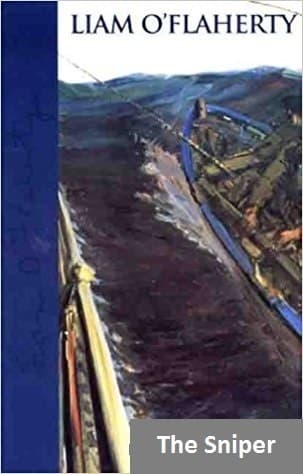
Synopsis
Covers the whole plot, including the ending.
- Difficulty
- Easy
- Pacing
- Fast
- Mood
- Tense, grim, ironic, reflective
The Sniper Plot Summary
Covers the whole plot, including the ending.
A Dublin Rooftop
The story begins on a Dublin rooftop near O'Connell Bridge during the Irish Civil War. A young Republican sniper, gaunt and intense, is introduced. He has been fasting since morning and is now very hungry. He decides to risk lighting a cigarette, even though it might reveal his position to enemy snipers. The match flash briefly lights his face, immediately drawing enemy fire from a Free State sniper on a rooftop across the street. The Republican sniper quickly puts out the match and takes cover, realizing how dangerous his position is. He is in a good spot but also exposed.
The Armored Car
As the sniper watches his surroundings, a Free State army armored car moves down the street, getting his attention. The car stops below him, and a Free State officer comes out of the turret. This creates a new threat, as the car's machine gun could easily target his rooftop. The Republican sniper aims at the officer. He shoots the officer, who falls dead to the street. The armored car, now without its commander, drives on, leaving the sniper with one less immediate threat, but the enemy sniper is still watching him.
The Old Woman Informer
After the armored car leaves, an old woman comes from a side street. She goes to where the Free State officer fell and talks to the armored car's driver, pointing up towards the Republican sniper's position. It is clear she is an informer, telling the enemy where he is. The sniper, seeing the danger she poses, has no choice but to act. He aims and shoots the old woman, killing her instantly. Her body falls to the ground next to the officer, showing the harsh truth of the civil war and the difficult choices people faced.
The Enemy Sniper's Shot
Immediately after the old woman falls, the Free State sniper across the street fires a shot. The bullet hits the Republican sniper in the right forearm, shattering the bone. Intense pain shoots through him, and his rifle clatters to the roof. He quickly moves for cover, realizing his right arm is useless. The injury is serious, and he knows he cannot use his rifle well with his dominant arm. This injury forces him to change his plan and makes his situation even more dangerous. He is now at a big disadvantage, both physically and tactically.
A Deceptive Plan
Despite the severe pain and his injured right arm, the Republican sniper stays calm and focused. He starts to make a plan to outsmart his opponent. He carefully takes off his cap and puts it over the muzzle of his rifle, then slowly raises the rifle, with the cap on top, above the wall. This is a trick to make the enemy sniper think he is showing his head to take another shot. He hopes to draw fire and show the enemy's exact position, even if it means risking his rifle.
The Decoy Works
The Republican sniper's trick works. The enemy sniper across the street sees the cap rise above the wall and immediately falls for it. A shot rings out, and the bullet pierces the cap. The Republican sniper watches the cap fall to the roof, confirming his opponent has fired. More important, the shot reveals the Free State sniper's exact position. The Republican sniper now knows exactly where his enemy is, giving him a key advantage despite his injury. He now has a clear target.
The Kill
With his left arm, the Republican sniper carefully picks up his rifle. He places it on the wall, steadying it as best he can. Despite the difficulty and pain, he aims at the spot where the enemy sniper had fired from. He pulls the trigger. The shot rings out, and he sees a figure fall from the opposite rooftop, landing with a thud on the street below. The enemy sniper is dead. A wave of triumph washes over the Republican sniper, followed almost immediately by deep regret and disgust at the killing.
Descent and Curiosity
After the kill, a strange curiosity takes hold of the Republican sniper. He feels a strong urge to identify the man he has just killed. He carefully lowers himself from the rooftop using a rope, enduring the pain in his arm as he goes down. He lands in an alleyway and then moves through the streets, carefully avoiding any remaining patrols or enemy fire. His need to see his opponent's face overrides his caution and the pain of his wound. He is driven by a deep need to understand who he has just killed in this brutal conflict.
The Shocking Revelation
The Republican sniper finally reaches the body lying in the street. He cautiously approaches, his heart pounding. He turns the body over, and as he looks at the dead Free State sniper's face, a wave of shock and horror washes over him. The face is familiar, impossibly so. It is his own brother. The realization is crushing, turning his earlier triumph into deep despair. The brutal and impersonal nature of war is revealed, as brother has been pitted against brother in the senseless conflict.
The Sniper Characters
The Republican Sniper
Protagonist
A dedicated, ruthless, and ultimately tragic figure fighting for the Republican cause.
The Republican sniper is a young, experienced soldier with a fanatical devotion to his cause. He is described as having "the eyes of a man who is used to looking at death." He is sharp-witted, disciplined, and capable of extreme ruthlessness, as evidenced by his quick decision to kill the informer and his cunning plan to outsmart the enemy sniper. Despite his hardened exterior, he experiences moments of intense pain, exultation, and ultimately, profound remorse and horror at his actions, especially after the shocking revelation at the end.
Relationships: The Free State Sniper (Enemy (revealed to be his brother)); The Old Woman (Victim (informer))
The Free State Sniper
Antagonist
The skilled enemy sniper, later revealed to be the protagonist's brother.
Initially presented as a faceless enemy, the Free State sniper is a formidable opponent, demonstrating skill and vigilance by immediately spotting the Republican sniper's match. He successfully wounds the protagonist, forcing him to devise a complex plan. His role is primarily to serve as the direct antagonist and a mirror image of the protagonist's own skills. His identity is only revealed at the very end, making his death a tragic and pivotal moment that underscores the brutal irony and personal devastation of civil war.
Relationships: The Republican Sniper (Enemy (revealed to be his brother))
The Old Woman
Supporting
An informer whose death highlights the brutal choices of war.
The old woman is a minor character who serves a crucial plot function. She is an informer, pointing out the Republican sniper's position to the Free State armored car. Her actions directly lead to her death at the hands of the Republican sniper. She represents the collateral damage and the moral ambiguities of war, where even seemingly innocent civilians can become targets due to their involvement or perceived allegiances. Her death is a stark reminder of the ruthless decisions soldiers are forced to make in conflict zones.
Relationships: The Republican Sniper (Victim of); Free State soldiers (Collaborator with)
The Free State Officer
Supporting
The first victim of the Republican sniper, signifying the start of direct combat.
The Free State officer appears briefly, emerging from the turret of an armored car. He is the first direct kill made by the Republican sniper in the story. His death establishes the immediate danger and the lethal efficiency of the protagonist. He represents the enemy forces in a more tangible form before the focus shifts to the duel between the two snipers. His presence and swift demise set a grim tone for the unfolding conflict.
Relationships: The Republican Sniper (Victim of)
The Armored Car Driver
Supporting
A minor character who interacts with the informer and then departs.
The driver of the armored car is a largely unseen character, only noted for his interaction with the old woman informer. He briefly stops the car and listens to her, implicitly acknowledging her information. His presence highlights the coordinated nature of the Free State forces and the danger they pose to the Republican sniper. After the officer is killed, the car moves on, suggesting a temporary retreat or reassignment.
Relationships: The Old Woman (Recipient of information from); The Free State Officer (Subordinate of)
The Sniper Themes
The Brutality and Dehumanization of War
The story shows the harsh truth of civil war, where people become targets. The sniper's actions, from killing an old woman informer to outsmarting and killing his opponent, are presented with a stark, almost clinical detachment. His physical pain and the mental cost of his actions are clear, but the story emphasizes these brutal acts as necessary for survival in wartime. The final discovery of killing his own brother highlights how war strips away personal connections in the name of conflict.
“There was a flash and a bullet whizzed past his head. He dropped immediately. He had been too careless.”
The Irony and Tragedy of Civil War
A main theme of the story is the bitter irony of civil war, where countrymen, and in this case, brothers, fight each other. The ending reveals that the protagonist has killed his own sibling, a powerful symbol of internal conflict's senseless and destructive nature. This twist changes the story from a tense combat narrative into a tragedy, showing how war can destroy families and communities, leaving behind lasting damage and grief.
“Then the sniper turned over the dead body and looked into his brother's face.”
Moral Ambiguity and Necessity
The story explores the complex moral side of war, where normal ethical rules blur. The Republican sniper must make morally wrong choices, such as killing an unarmed old woman, to survive strategically. These acts are presented not as evil, but as necessary evils within the war's brutal context. The story does not judge the sniper's actions but shows them as a result of his situation, making the reader confront the difficult decisions soldiers face and the moral gray areas in conflict.
“He took a revolver from his pocket and fired a shot for an instant into the air. Then he let the revolver drop to the roof. He muttered a curse. He had bitten his lip.”
The Psychological Impact of War
Beyond physical injuries, the story looks at the psychological impact war has on those involved. The Republican sniper experiences moments of intense focus, triumph after a kill, followed by deep regret. The final discovery of his victim's identity plunges him into shock and horror. This emotional journey, from fanaticism to revulsion, illustrates the deep psychological wounds caused by combat, suggesting that even survivors carry invisible scars long after the fighting ends.
“The lust of battle died in him. He became bitten by remorse. The sweat stood out in beads on his forehead. Weakened by his wound and the long fast and the reaction of the struggle, he began to gibber to himself.”
Plot Devices & Literary Techniques
Foreshadowing
Subtle hints that suggest future events, particularly the final revelation.
While not overt, there are subtle elements of foreshadowing that build tension and prepare the reader for the tragic twist. The initial description of the sniper as having "the eyes of a man who is used to looking at death" hints at the grim realities he faces. The emphasis on the impersonal nature of the conflict, where enemies are simply 'the other side,' implicitly sets up the shock when that 'other side' becomes deeply personal. The story's focus on the sniper's internal state and his growing remorse also subtly prepares for a devastating emotional climax, which is delivered by the final revelation.
Dramatic Irony
The audience knows less than the characters until the shocking climax.
The story masterfully employs dramatic irony in its final moments. Throughout the narrative, the reader, like the Republican sniper, is unaware of the true identity of the enemy sniper. The entire duel is presented as a detached, impersonal conflict between two soldiers. The shock and horror experienced by the protagonist when he discovers he has killed his own brother are mirrored by the reader's own surprise. This shared moment of revelation amplifies the tragic impact, making the reader fully experience the protagonist's despair and the profound irony of the civil war.
Symbolism
Objects and actions represent deeper meanings within the context of war.
Several elements in the story carry symbolic weight. The rooftop setting symbolizes isolation and the detached perspective of a sniper, physically elevated from the conflict yet deeply embroiled in it. The cigarette represents a moment of human weakness and risk-taking amidst extreme danger. The old woman informer symbolizes betrayal and the moral compromises inherent in civil war. Most powerfully, the two snipers, revealed to be brothers, symbolize the self-destructive nature of civil conflict, where the nation is literally fighting against itself, tearing apart its own family.
Reversal
A sudden and unexpected change in the protagonist's fortune or understanding.
The entire narrative builds towards a powerful reversal at the very end. The protagonist, initially exultant after successfully outwitting and killing his enemy, undergoes a complete reversal of emotion and understanding. His triumph turns to profound horror and despair when he discovers the identity of his victim. This sudden shift from victory to tragedy is the story's most impactful moment, fundamentally altering the meaning of all the preceding events and leaving the protagonist (and the reader) with a devastating realization about the true cost of his actions.
Quiz
10 questions on the plot and the characters. Each answer comes with a short explanation.
Question 1
What is the setting of Liam O'Flaherty's short story "The Sniper"?
- The trenches of World War I
- A battlefield during the American Civil War
- Dublin during the Irish Civil War
- A small village in rural Ireland
Show answer
C. Dublin during the Irish Civil War The story is explicitly set in Dublin during the Irish Civil War, a period of intense conflict.
Question 2
What is the protagonist doing at the beginning of the story?
- He is eating a meal in a cafe.
- He is hiding on a rooftop, waiting for an enemy.
- He is writing a letter to his family.
- He is tending to his wounds.
Show answer
B. He is hiding on a rooftop, waiting for an enemy. The story opens with the sniper taking up a position on a rooftop, observing the street below.
Question 3
What does the sniper do after he "sips a little whisky"?
- He falls asleep from the drink.
- He lights a cigarette, revealing his position.
- He calls out to his comrades.
- He packs up his rifle and leaves.
Show answer
B. He lights a cigarette, revealing his position. Despite his awareness of the danger, the sniper lights a cigarette, which attracts the attention of an enemy sniper.
Question 4
Who is the enemy sniper that the protagonist shoots?
- A rival sniper from his own side.
- A British soldier.
- An old man.
- His brother.
Show answer
D. His brother. The shocking twist at the end reveals that the enemy sniper he killed was his own brother.
Question 5
What is the significance of the "old woman" who passes by the sniper?
- She informs the sniper of enemy movements.
- She is a spy for the opposing side.
- She is the mother of the enemy sniper.
- She is a civilian caught in the crossfire.
Show answer
C. She is the mother of the enemy sniper. The old woman is identified as the mother of the enemy sniper, adding to the personal tragedy of the conflict.
Question 6
What does the sniper realize after he kills the enemy?
- That he has won the battle.
- That he is wounded.
- That he has killed his own brother.
- That he needs to escape immediately.
Show answer
C. That he has killed his own brother. Upon approaching the fallen enemy, the sniper discovers the devastating truth of his victim's identity.
Question 7
What is the main theme explored in "The Sniper"?
- The camaraderie between soldiers.
- The futility and personal cost of war.
- The bravery of Irish freedom fighters.
- The strategic brilliance of snipers.
Show answer
B. The futility and personal cost of war. The story powerfully illustrates the tragic and dehumanizing effects of war, particularly on individuals and their relationships.
Question 8
What does the sniper's decision to eat and drink carelessly on the rooftop suggest about his state of mind?
- He is overly confident and arrogant.
- He is reckless and perhaps numb to the danger.
- He is trying to impress his enemies.
- He is preparing for a long stakeout.
Show answer
B. He is reckless and perhaps numb to the danger. His actions, such as lighting the cigarette, show a lapse in judgment, suggesting he has become desensitized or overly confident due to the prolonged conflict.
Question 9
The sniper's internal conflict is primarily shown through:
- His interactions with other characters.
- The descriptions of the battlefield.
- His thoughts and reactions after the killing.
- His physical appearance.
Show answer
C. His thoughts and reactions after the killing. The story focuses heavily on the sniper's inner turmoil, revealed through his thoughts and the emotional impact of his actions, especially after the final revelation.
Question 10
What is the symbolic meaning of the "republican sniper" and the "free stater"?
- They represent opposing political ideologies in Irish history.
- They symbolize the eternal struggle between good and evil.
- They are simply generic soldiers with no deeper meaning.
- They represent the older generation fighting the younger generation.
Show answer
A. They represent opposing political ideologies in Irish history. The terms "republican sniper" and "free stater" refer to the two main factions in the Irish Civil War, highlighting the bitter internal conflict within Ireland.
The Sniper FAQ
What is The Sniper by Liam O'Flaherty about?
The Sniper is a short story set during the Irish Civil War. It follows a Republican sniper who kills an enemy sniper, only to discover a shocking personal connection to his victim.
Who wrote The Sniper?
The short story 'The Sniper' was written by Liam O'Flaherty, a prominent Irish writer known for his depictions of Irish life and conflict.
What historical event is The Sniper based on?
The story is set during the Irish Civil War (1922-1923), a brutal conflict that followed Ireland's struggle for independence from British rule.
What is the main theme of The Sniper?
A central theme is the futility and tragic nature of civil war, highlighting how it can pit countrymen against each other and lead to devastating personal consequences.
What is the climax of The Sniper?
The climax occurs when the sniper, after killing his enemy, discovers that the man he shot was his own brother.
What does the ending of The Sniper reveal?
The ending reveals the horrific irony and personal tragedy of war, showing that in the midst of conflict, one can unknowingly kill their own kin.
Is The Sniper a true story?
While the story is set within the context of the real Irish Civil War, it is a fictional narrative. It uses the historical setting to explore the human cost of such conflicts.
What is the significance of the sniper's actions?
The sniper's actions, driven by duty and the demands of war, lead to a profound personal revelation that underscores the devastating and indiscriminate nature of civil conflict.
How does The Sniper depict the Irish Civil War?
The story portrays the Irish Civil War as a deeply divisive and tragic conflict, focusing on the personal suffering and moral dilemmas faced by individuals caught in the fighting.
What message does O'Flaherty convey through The Sniper?
O'Flaherty conveys a powerful anti-war message, emphasizing the senselessness of brother fighting brother and the devastating psychological impact of such violence.
About the author
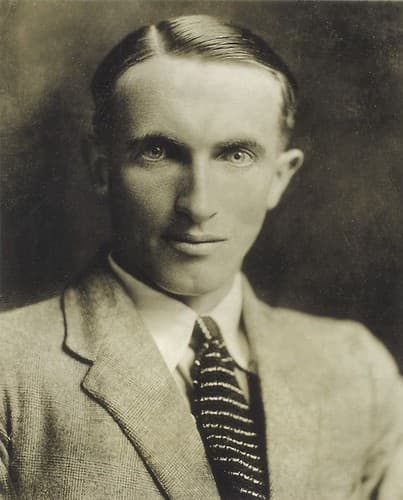
Liam O'Flaherty was an Irish author known for his contributions to fiction. He is recognized for his short story "The Sniper," which explores the psychological impact of war. O'Flaherty's works often reflect themes of conflict and human experience.
Similar books
- All Quiet on the Western Front
Erich Maria Remarque
4.0 (355k) average on GoodreadsHistorical FictionWhile Remarque's novel provides a sweeping, immersive, and detailed account of the psychological and physical horrors of World War I from the perspective of a German soldier, "The Sniper" distills the same anti-war sentiment into a single, intensely focused incident. Both works decry the dehumanizing aspects of war and the loss of innocence, but Remarque builds his argument through extensive narrative and multiple characters, whereas O'Flaherty achieves a similar emotional impact through brevity and a shocking individual revelation. Remarque focuses on the collective trauma of a generation; O'Flaherty on the specific, tragic irony of fratricide.
- To Kill a Mockingbird
Harper Lee
4.3 (4.5M) average on GoodreadsHistorical FictionIn the 1930s Jim Crow South, Harper Lee writes about racial injustice, moral growth, and the quiet courage of a lawyer father, Atticus Finch, as seen through his young daughter's eyes.
- The Great Gatsby
F. Scott Fitzgerald
3.9 (3.8M) average on GoodreadsHistorical FictionIn the opulent Roaring Twenties, a mysterious millionaire's lavish parties hide his desperate, tragic pursuit of a lost love, exposing the emptiness within the American Dream.
- Pride and Prejudice
Jane Austen
4.3 (3M) average on GoodreadsHistorical FictionIn a society focused on status and money, Elizabeth Bennet navigates love and pride, challenging Mr. Darcy and social expectations to find true affection.
- Angels & Demons
Dan Brown
3.9 (2.7M) average on GoodreadsThrillerA Harvard symbologist races through Rome's ancient sites, deciphering cryptic clues to unmask the Illuminati and stop a vengeful plot to destroy the Vatican with a stolen antimatter weapon.
- The Kite Runner
Khaled Hosseini
4.3 (2.4M) average on GoodreadsHistorical FictionIn pre-Taliban Afghanistan, a wealthy boy's betrayal of his servant's son during a kite-running tournament starts a lifelong journey for amends as his country collapses.






Enjoyed the summary?
A summary gives you the shape of the book. The book itself has the detail, the examples and the voice.
Find The Sniper on AmazonAs an Amazon Associate, BookBrief earns from qualifying purchases. How we're funded