

Synopsis
Covers the whole plot, including the ending.
- Difficulty
- Medium
- Pacing
- Slow
- Mood
- Reflective, Evocative, Aspiring, Melancholy, Inspiring
- Read it if
- You appreciate deep character studies of artistic ambition, stories of self-discovery set against vivid American landscapes, and Willa Cather's lyrical prose.
- Skip it if
- You prefer fast-paced plots, lighthearted themes, or dislike detailed explorations of an artist's inner life and development.
The Song of the Lark Plot Summary
Covers the whole plot, including the ending.
Moonstone, Colorado: The Early Years
The story begins in Moonstone, Colorado, introducing Thea Kronborg, a sensitive and independent young girl from a large, somewhat busy Swedish immigrant family. Thea's musical talent shows early, especially in her piano playing, which she practices carefully despite her siblings and the limits of her small town. Her first piano teacher, Professor Wunsch, a refined but alcoholic German, sees her gift and helps it grow. He introduces her to classical music and supports her ambition, though his own problems show the artistic isolation of Moonstone. Thea finds comfort and ideas in her music and in the beauty of the nearby canyons, which become a private place for her growing artistic mind.
Mentors and Aspirations
As Thea grows, her talent draws the notice of others in Moonstone. Dr. Archie, the town doctor, becomes a lifelong fan and gives important emotional and financial help. Mrs. Tellamantez, a Mexican woman who cleans for the Kronborgs, shares her culture and a deeper understanding of the land, influencing Thea's appreciation for natural beauty and old history. Thea's brother, Gus, also encourages her. However, the stifling feel of Moonstone, with its few cultural chances and typical expectations for women, bothers Thea more and more. She wants a bigger world where her art can fully grow. She feels a strong need to leave her small town and follow her musical path.
Chicago: A New Beginning
Wanting to further her music education, Thea moves to Chicago. She lives with the Harsanyi family and studies piano with Mr. Harsanyi, a demanding but brilliant Hungarian teacher. In Chicago, Thea sees a busy art community and a wider world of culture. She attends concerts and operas that deepen her understanding and love for music. She becomes close friends with Fred Ottenburg, a medical student, and has a complex relationship with the wealthy Ray Kennedy, a traveling salesman who secretly loves her. This time in Chicago is filled with artistic growth and self-discovery. Thea begins to understand the hard work needed for a professional musician and the sacrifices she must make.
A Shift in Focus
While studying piano in Chicago, Thea's strong and unique singing voice starts to appear. Mr. Harsanyi, seeing the special quality of her voice, encourages her to switch from piano to vocal training. This change is a key moment, as Thea accepts her true artistic path. She begins to study with a vocal coach, learning the skills needed to develop her natural gift. This time also brings personal challenges, including the death of her admirer, Ray Kennedy, who leaves her a large inheritance. This money allows her to continue her studies without immediate financial worries.
Professional and Personal Struggles
Thea's journey to become a professional singer is hard. She travels to Germany to experience opera culture and improve her voice, facing tough training and strong competition. Her relationship with Fred Ottenburg deepens, and they become lovers, but their connection is complicated by Fred's marriage. Thea struggles with the moral issues of their affair and what society thinks. She also feels self-doubt and loneliness, dealing with the isolation that often comes with intense artistic pursuit. Despite these personal and professional challenges, Thea's steady dedication to her art moves her forward, strengthening her resolve to achieve her opera dreams.
Arizona: Renewal and Inspiration
Overwhelmed by her training and personal life, Thea becomes exhausted and her art stalls. Dr. Archie, always her supporter, arranges for her to spend a summer in Arizona, recovering among the ancient cliff dwellings of Panther Canyon. This time alone, connected to the old land, changes her. The canyon's raw beauty and historical feel, with its echoes of ancient people and their struggles, deeply inspire Thea. She finds a deep link between the careful artistry of the ancient inhabitants and her own artistic goals, realizing that true art comes from a deep, real source, much like the pottery and tools left by the cliff dwellers.
The Ascent to Stardom
Refreshed and inspired by her time in Arizona, Thea returns to her vocal studies with new energy and clear purpose. Her voice matures, and her performances gain more notice. She eventually debuts at the Metropolitan Opera in New York, receiving praise and becoming a rising star. Thea's success has costs; her career's demands mean more sacrifices in her personal life and a greater sense of isolation. She continues to rely on Dr. Archie's steady support. He remains a constant in her life, celebrating her wins and offering comfort during her struggles, linking her to her past and her true self.
The Price of Success
As Thea's fame grows, she faces the demands of public life, including busy schedules, critical review, and audience expectations. She keeps her artistic honesty, refusing to change her vision for money or quick popularity. Her relationship with Fred Ottenburg eventually ends, as she realizes her dedication to art is greater than traditional home life. Thea understands that her artistic journey needs a single focus and a willingness to give up some personal comforts. She finds deep satisfaction in her work, knowing her voice is not just her own, but a channel for something larger and more timeless, connecting her to the universal human experience.
A Homecoming and Reflection
Years later, Thea visits Moonstone. The town, though familiar, seems smaller and more distant, a sharp contrast to her vast artistic world. She reconnects with her family and old friends, seeing how much she has changed and how much Moonstone has stayed the same. This visit allows her to reflect. Thea sees the strong influence her childhood had on shaping her character and art. She understands that while she had to leave Moonstone to reach her destiny, the landscape, the people, and her early struggles remain a part of who she is, a basic element of her unique artistic voice.
The Enduring Artist
The novel ends with Thea Kronborg established as a celebrated opera singer, her career doing well on the international stage. She has achieved the artistic freedom and recognition she wanted. Thea's journey shows her steady dedication, strength, and the power of her natural talent. She continues to find strength and inspiration from her deep connection to her childhood land and the honesty of her artistic vision. Her story is one of continuous growth, a constant effort for artistic perfection, and a deep understanding that true art goes beyond personal ambition, becoming a key expression of the human spirit. She is, at last, truly herself, an artist fully realized.
The Song of the Lark Characters
Thea Kronborg
Protagonist
A fiercely independent and gifted young woman who becomes a renowned opera singer.
Thea is introduced as a sensitive, determined, and somewhat solitary girl in Moonstone, Colorado. She possesses an innate musical talent and a powerful, almost spiritual connection to nature, particularly the canyons. Driven by an intense inner fire and a profound need for self-expression, she is often misunderstood by her family but finds solace and guidance in her music and a few select mentors. Her ambition is not for fame itself, but for the freedom to fully develop and express her artistic potential. She is resilient, disciplined, and willing to make significant personal sacrifices for her art.
Relationships: Professor Wunsch (First piano teacher, mentor); Dr. Archie (Lifelong friend, confidant, financial supporter); Mrs. Tellamantez (Housekeeper, cultural guide, spiritual influence); Mr. Harsanyi (Piano and vocal teacher, mentor); Fred Ottenburg (Lover, friend); Ray Kennedy (Admirer, financial benefactor)
Dr. Archie
Supporting
The compassionate town physician who becomes Thea's lifelong friend and supporter.
Dr. Archie is a kind, perceptive, and somewhat melancholic man who sees Thea's unique spirit and talent from her childhood. He provides emotional support, wisdom, and crucial financial assistance throughout her career, acting as a surrogate father figure and a constant link to her origins. He understands Thea's artistic temperament and her need for independence, never imposing his own expectations. His unwavering belief in her, even when others doubt, is a source of great strength for Thea. He represents the steady, grounding presence that allows Thea to launch into her demanding artistic life.
Relationships: Thea Kronborg (Lifelong friend, confidant, platonic love); Kronborg Family (Family physician, acquaintance)
Professor Wunsch
Supporting
Thea's first piano teacher, a cultured but troubled German immigrant.
Professor Wunsch is an alcoholic but highly educated German musician who recognizes Thea's extraordinary talent in Moonstone. He introduces her to classical music and instills in her a deep appreciation for artistic rigor and beauty. Despite his personal failings and the limitations of his environment, he is a crucial early mentor, sparking Thea's ambition and laying the groundwork for her future. His tragic circumstances underscore the isolation and lack of cultural opportunity in the American West, highlighting what Thea must escape to truly flourish.
Relationships: Thea Kronborg (Piano teacher, mentor); Kronborg Family (Acquaintance)
Mrs. Tellamantez
Supporting
A wise Mexican woman who works for the Kronborgs and introduces Thea to a different cultural perspective.
Mrs. Tellamantez is a quiet, observant woman with a deep connection to the land and a rich understanding of Mexican culture and ancient history. She shares her stories and traditions with Thea, fostering the girl's appreciation for beauty, history, and the spiritual dimensions of life. Her influence is subtle but profound, helping Thea develop a sense of rootedness and a connection to the timeless human experience, which later informs her artistic expression. She represents a link to the ancient, enduring spirit of the American Southwest.
Relationships: Thea Kronborg (Mentor, friend); Kronborg Family (Employer/employee)
Fred Ottenburg
Supporting
A medical student and later Thea's lover, who represents a more conventional path.
Fred Ottenburg is an intelligent, charming, and somewhat conventional man whom Thea meets in Chicago. Their relationship develops into a deep affection and eventually a love affair, complicated by Fred's marriage. He offers Thea companionship and a glimpse into a more domestic life, but ultimately, his world cannot accommodate the singularity of her artistic drive. He is supportive of her career but struggles to fully comprehend the depth of her artistic commitment. Their relationship highlights the sacrifices Thea must make for her art.
Relationships: Thea Kronborg (Lover, friend); Mrs. Ottenburg (Wife)
Ray Kennedy
Supporting
A traveling salesman who secretly loves Thea and provides her with a crucial inheritance.
Ray Kennedy is a rough-around-the-edges but kind-hearted traveling salesman who harbors a deep, unspoken love for Thea. He is a practical man who recognizes Thea's unique spirit and potential, even if he doesn't fully understand her art. His tragic death and the inheritance he leaves her provide Thea with the financial freedom necessary to pursue her vocal studies abroad, a pivotal moment in her career. Ray represents the unsung heroes who quietly support artists, often without seeking recognition.
Relationships: Thea Kronborg (Admirer, benefactor)
Mr. Harsanyi
Supporting
Thea's demanding and brilliant piano and vocal teacher in Chicago.
Mr. Harsanyi is a Hungarian music teacher in Chicago who initially teaches Thea piano. He is a rigorous and perceptive instructor who recognizes Thea's immense talent and, crucially, identifies her true calling as a singer. He pushes her to excel, instilling in her the discipline and technical foundation necessary for a professional music career. His guidance is instrumental in Thea's transition from pianist to vocalist and her understanding of the dedication required for artistic mastery.
Relationships: Thea Kronborg (Piano and vocal teacher, mentor)
The Kronborg Family
Supporting
Thea's large, bustling Swedish immigrant family in Moonstone.
The Kronborg family, particularly Thea's parents and numerous siblings, represents the conventional, domestic world from which Thea must escape to pursue her artistic ambitions. While not unloving, they often fail to understand Thea's unique sensitivity and intense drive, sometimes viewing her artistic pursuits as an indulgence. Their practical, community-oriented lives contrast sharply with Thea's solitary, ambitious path. They provide a backdrop against which Thea's individuality shines, and her eventual success brings them a mixture of pride and bewilderment.
Relationships: Thea Kronborg (Family)
The Song of the Lark Themes
The Awakening of an Artist
This theme explores the hard and often lonely journey of someone finding and achieving their artistic potential. Thea's growth is shown as an inborn, almost natural drive, starting with her early piano lessons and ending with her opera success. Cather emphasizes that true artistic genius needs not only talent but also great discipline, sacrifice, and a deep connection to an inner source. Thea's journey shows the need to escape typical expectations and find places that help, rather than stop, creative growth, as seen when she moves from Moonstone to Chicago and then to Europe.
“What was any art but an effort to make a sheath, a mould in which to imprison for a moment the shining, elusive element which is life itself... to save it from waste, to make it an eternal possession?”
The Artist's Relationship with the Land and Heritage
Cather strongly links Thea's artistic development to her origins and the American landscape, especially the Colorado canyons and the ancient cliff dwellings of Arizona. These natural and historical places give Thea a sense of belonging, inspiration, and a connection to something timeless and real. Her time in Panther Canyon is a key moment of artistic renewal, where she gets strength and understanding from the ancient people who lived there. This theme suggests that an artist's unique voice is deeply shaped by their personal history and the land that formed them, making her art an expression of a deeper, shared human experience.
“She had had to come a long way to find it, but now she knew what she had come for. This was the thing that had made her a singer.”
Plot Devices & Literary Techniques
Bildungsroman
A novel of education or formation, tracing the protagonist's moral and psychological growth.
The Song of the Lark is a classic Bildungsroman, meticulously charting Thea Kronborg's journey from childhood in a small Colorado town through her artistic and personal development into a celebrated opera singer. The narrative focuses on her formative experiences, her struggles with identity and societal expectations, and her gradual realization of her true calling. Each stage of her life, from her early mentors in Moonstone to her studies in Chicago and Europe, contributes to her education and the shaping of her character, culminating in her self-actualization as an artist.
Symbolism of the Canyon
The natural landscape, particularly the canyons and cliff dwellings, symbolizes artistic authenticity and deep connection to the past.
The canyons and ancient cliff dwellings, especially Panther Canyon in Arizona, serve as powerful symbols throughout the novel. For Thea, they represent a sanctuary from the superficiality of modern life and a source of profound inspiration. The ancient pottery and tools left by the cliff dwellers symbolize the enduring nature of art and the deep human need for creative expression, connecting Thea's contemporary artistic struggles to a timeless human endeavor. The canyon's vastness and silence also reflect the internal space Thea needs for self-discovery and artistic contemplation, helping her to find her authentic voice.
The Song of the Lark Quotes
“The world was wide, and there was a great deal of it to see.”
“Every artist makes himself born. It is the real birth, and it is a painful one.”
“What was any art but an effort to make a sheath for a flame?”
“The great thing was to find your place and fill it.”
“It was as if she had been born for the first time, and had found her own body.”
“She wanted to be a great artist, and she wanted to be loved.”
“Artistic growth is, more than anything else, a refining of the sense of truth.”
“She had to have a world of her own, and a world into which no one else could come.”
“That was what you paid for the privilege of being alive: you had to get over things.”
“The world was full of people who were always waiting for something to happen to them.”
“She had to make her voice her own, to take it away from all the people who had tried to possess it.”
“It was not a question of talent, but of life.”
“The desert had a voice, and it was always telling her that she was not alone.”
“To be an artist, you have to be a man of courage.”
Quiz
10 questions on the plot and the characters. Each answer comes with a short explanation.
Question 1
What is the name of the small Colorado town where Thea Kronborg grows up?
- Moonstone
- Black Hawk
- Silverton
- Central City
Show answer
B. Black Hawk Thea Kronborg's childhood home is the small, isolated town of Black Hawk, Colorado.
Question 2
Which instrument does Thea Kronborg primarily study and become proficient in before focusing solely on her singing career?
- Violin
- Flute
- Piano
- Cello
Show answer
C. Piano Before fully dedicating herself to singing, Thea is a talented pianist, often practicing diligently in her home.
Question 3
What is the name of Thea's first significant music teacher who encourages her talent in Black Hawk?
- Professor Wunsch
- Mr. Harsanyi
- Dr. Archie
- Fred Ottenburg
Show answer
A. Professor Wunsch Professor Wunsch, a German music teacher, recognizes and nurtures Thea's early musical gifts in Black Hawk.
Question 4
Where does Thea go to find inspiration and a deeper connection to her artistic self, often spending time alone there?
- The Metropolitan Opera House library
- The cliff dwellings in Arizona
- A cabin in the Rocky Mountains
- The art galleries of Chicago
Show answer
B. The cliff dwellings in Arizona Thea finds profound inspiration and a sense of belonging among the ancient cliff dwellings in the Southwest, which helps her connect with her artistic roots.
Question 5
Which character serves as a significant mentor and financial supporter for Thea, encouraging her move to Chicago?
- Ray Kennedy
- Dr. Archie
- Fred Ottenburg
- Spanish Johnny
Show answer
B. Dr. Archie Dr. Archie, the kind local doctor, recognizes Thea's talent early on and provides crucial financial and moral support for her to leave Black Hawk for Chicago.
Question 6
What major city does Thea move to after leaving Black Hawk to further her musical education?
- New York City
- San Francisco
- Chicago
- Boston
Show answer
C. Chicago Thea first moves to Chicago to study piano and singing more seriously, before eventually making her way to New York and Europe.
Question 7
A recurring theme in 'The Song of the Lark' is the tension between an artist's personal life and their professional dedication. How does Thea primarily resolve this tension?
- She gives up her career for marriage.
- She integrates her personal relationships into her artistic process, finding inspiration in them.
- She prioritizes her art above all else, often at the expense of conventional relationships.
- She finds a perfect balance, effortlessly managing both.
Show answer
C. She prioritizes her art above all else, often at the expense of conventional relationships. Thea consistently places her artistic development and career above her personal relationships, often feeling that domesticity would stifle her creativity. Her art demands her singular focus.
Question 8
The novel's title, 'The Song of the Lark,' is symbolic. What does the lark's song primarily represent for Thea?
- The fleeting nature of fame and success.
- The beautiful but ultimately confining traditions of classical music.
- The spontaneous, natural, and uninhibited expression of true artistic genius.
- The melancholy and loneliness inherent in an artist's life.
Show answer
C. The spontaneous, natural, and uninhibited expression of true artistic genius. The lark's song represents the pure, unforced, and soaring quality of natural talent and artistic expression, which Thea strives to achieve in her own singing.
Question 9
What is the primary opera role that Thea Kronborg becomes most famous for performing and which is considered her signature role?
- Mimi in 'La Bohème'
- Aïda in 'Aïda'
- Sieglinde in 'Die Walküre'
- Carmen in 'Carmen'
Show answer
C. Sieglinde in 'Die Walküre' Thea achieves her greatest fame and artistic fulfillment performing the role of Sieglinde in Wagner's 'Die Walküre', often connecting it to her own Western roots.
Question 10
How does Willa Cather portray the influence of the Western American landscape on Thea's artistic development?
- As a stifling force that Thea must escape entirely to find her art.
- As a source of raw, elemental power and authenticity that feeds her unique artistic voice.
- As a nostalgic memory that has little bearing on her adult career.
- As a backdrop for her early struggles, but not a significant artistic influence.
Show answer
B. As a source of raw, elemental power and authenticity that feeds her unique artistic voice. Cather explicitly connects Thea's powerful, authentic voice and artistic sensibility to the vast, untamed nature of the Western landscape she grew up in, particularly emphasized during her time in Arizona.
The Song of the Lark FAQ
What is the central conflict Thea Kronborg faces in 'The Song of the Lark'?
Thea Kronborg's central conflict is the struggle to reconcile her artistic ambition and personal development with the restrictive social expectations and provincial environment of Moonstone, Colorado. She constantly battles against the demands of her family and community, who often fail to understand or support her singular drive towards becoming a great singer, forcing her to seek independence and solitude to cultivate her talent.
How does the setting of Moonstone, Colorado, influence Thea's early development?
Moonstone, Colorado, provides both a stifling and formative environment for Thea. While it offers limited cultural exposure and constant demands on her time, it also fosters her resilience and self-reliance, and her early experiences with nature, particularly the vast Western landscape, instill in her a deep sense of connection to the land that later fuels her artistic expression and need for solitude.
Who are some of the key mentors who help Thea on her journey?
Thea benefits from several key mentors: Professor Wunsch, her eccentric German piano teacher, who first recognizes and nurtures her musical talent; Dr. Archie, the family friend who provides emotional and financial support, understanding her unique nature; and Fred Ottenburg, a sophisticated musician who introduces her to a wider world of music and art in Chicago, expanding her horizons beyond Moonstone.
What role do Thea's trips to the cliff dwellings in Arizona play in her artistic awakening?
Thea's trips to the cliff dwellings in Arizona are pivotal for her artistic awakening, providing her with a profound sense of connection to ancient artistry and the deep, enduring spirit of the land. Immersed in the solitude and history of these ancient places, she finds a renewed sense of purpose and a deeper understanding of the origins of art, drawing inspiration for her own voice.
How does Thea's relationship with her family evolve throughout the novel?
Thea's relationship with her family evolves from one of early dependence and occasional friction to a more distant but ultimately understanding dynamic. While her family initially struggles to comprehend her artistic ambition, particularly her mother and siblings who prioritize domesticity, they eventually come to accept her unique path, though Thea must largely sever ties to achieve her independence.
What is the significance of the recurring motif of the 'song of the lark' itself?
The 'song of the lark' symbolizes the untamed, natural, and inherently free expression of Thea's artistic spirit, often associated with the wildness of the Western landscape. It represents the pure, uninhibited voice that Thea constantly strives to achieve, a voice that transcends conventional boundaries and connects directly to primal emotions and the essence of life, much like the bird's spontaneous melody.
How does Thea's relationship with Fred Ottenburg contrast with her earlier connections?
Thea's relationship with Fred Ottenburg is characterized by intellectual and artistic camaraderie, a stark contrast to her earlier, more conventional connections in Moonstone. Fred understands her artistic drive and provides a stimulating environment, rather than demanding domesticity or conformity, allowing her to develop her talent with a partner who shares her passions, albeit with their own complexities.
Are there specific instances where Cather's own life experiences are subtly woven into Thea's narrative?
Yes, Cather subtly weaves her own life experiences into Thea's narrative, particularly through Thea's journey from a small Western town to the pursuit of an artistic career in larger cities, mirroring Cather's own move from Red Cloud, Nebraska, to Lincoln and then New York. Thea's fierce independence, deep connection to the land, and dedication to her art strongly echo Cather's own artistic temperament and autobiographical elements.
What is the underlying symbolism of the 'moonstone' in the town's name?
The 'moonstone' in the town's name subtly symbolizes the latent, often hidden, and sometimes melancholic beauty and potential that Thea possesses, much like the gem's luminous quality revealed in certain light. It also suggests the town's provincial, somewhat mystical, and often cold nature that Thea must overcome to find her true brilliance, reflecting the gem's cool, pale glow.
How does Thea's need for solitude contribute to her artistic growth?
Thea's profound need for solitude is crucial for her artistic growth as it allows her to fully immerse herself in her art, free from distractions and social obligations. It is in these moments of isolation, whether in her attic room in Moonstone or the cliff dwellings, that she can deeply reflect, practice, and connect with her inner self, essential for developing her unique artistic voice and vision.
Discuss the psychological impact of Thea's early financial struggles on her ambition.
Thea's early financial struggles profoundly impact her ambition by reinforcing her determination and sense of urgency. The necessity of earning her own way and the sacrifices made for her education instill a fierce independence and a practical understanding of the effort required for success, driving her to work harder and value every opportunity, rather than allowing her to become complacent.
How does Thea's perfectionism manifest and what are its psychological costs?
Thea's perfectionism manifests in her relentless pursuit of artistic excellence, never being fully satisfied with her performances and constantly striving for improvement. Psychologically, this comes at the cost of personal relationships and often leads to intense self-criticism and isolation, as her single-minded focus leaves little room for compromise or the casual give-and-take of social interaction, causing her to appear cold or detached.
Explore the concept of 'the artist's ego' as depicted through Thea's character.
'The artist's ego' in Thea's character is depicted not as vanity, but as an essential, almost primal, self-preservation instinct crucial for her artistic survival and development. It's her unshakeable belief in her own unique talent and destiny, allowing her to disregard societal expectations and criticisms, and providing the necessary resilience to pursue her singular path despite immense obstacles and personal sacrifices.
Is Thea Kronborg a sympathetic character, given her often solitary and detached nature?
Thea Kronborg is largely a sympathetic character, despite her solitary and sometimes detached nature, because her isolation stems from an intense dedication to her art rather than malice. Readers often empathize with her struggle against societal constraints and admire her unwavering commitment to her passion, understanding that her detachment is a necessary sacrifice for her artistic fulfillment and not a personal failing.
How does Cather present the idea of 'American determination' in the novel?
Cather presents 'American determination' through Thea's relentless pursuit of her artistic dreams against all odds, embodying the pioneer spirit of self-reliance and resilience. Thea's journey from a humble Western town to the grand stages of the Metropolitan Opera symbolizes the American ideal of upward mobility and the individual's capacity to shape their own destiny through hard work and unwavering ambition, deeply connected to the land.
To what extent is 'The Song of the Lark' a feminist novel?
'The Song of the Lark' can be interpreted as a feminist novel to a significant extent, as it champions a woman's right to pursue her artistic and professional ambitions outside of traditional domestic roles. Thea's journey highlights the challenges faced by women artists in a patriarchal society, celebrating her independence, self-sufficiency, and refusal to conform to societal expectations for wives and mothers, making her a powerful symbol of female agency.
How does the novel challenge or uphold traditional notions of success and happiness?
The novel challenges traditional notions of success and happiness by portraying Thea's artistic fulfillment, rather than conventional marriage or family life, as her ultimate triumph. It suggests that true happiness for an artist lies in the complete realization of their talent, even if it means sacrificing personal relationships or domestic comforts, thereby redefining success as the achievement of one's unique potential rather than adherence to societal norms.
What is the significance of the novel's open ending regarding Thea's future?
The novel's open ending, with Thea having achieved success but her personal future left somewhat ambiguous, signifies that the artist's journey is continuous and never truly 'finished.' It suggests that while Thea has reached a peak in her career, the pursuit of art is an ongoing process of growth and struggle, leaving her future open to continued artistic challenges and personal evolution rather than a definitive, settled conclusion.
About the author
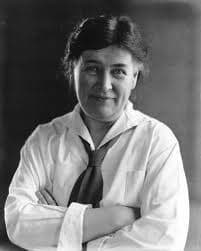
Willa Sibert Cather was an American writer known for her novels of life on the Great Plains, including O Pioneers!, The Song of the Lark, and My Ántonia. In 1923, she was awarded the Pulitzer Prize for One of Ours, a novel set during World War I.
Similar books
- My Ántonia
Willa Cather
3.8 (120k) average on GoodreadsHistorical FictionShares Cather's signature style, focus on the American West, and strong female protagonists.
- Of Human Bondage
W. Somerset Maugham
4.1 (50k) average on GoodreadsLiterary FictionA sprawling bildungsroman detailing an individual's struggles and growth in pursuit of their calling.
- A Tree Grows in Brooklyn
Betty Smith
4.3 (388k) average on GoodreadsHistorical FictionFeatures a determined young woman from humble beginnings striving for a better life and education.
- A Portrait of the Artist as a Young Man
James Joyce
3.6 (128k) average on GoodreadsLiterary FictionUnlike Joyce's novel, which focuses on intellectual and spiritual rebellion and philosophical alienation, Cather emphasizes the visceral, instinctual drive of an artist deeply connected to her physical instrument and the land. Thea's alienation is more pragmatic, tied to her practical artistic pursuit, contrasting with Stephen Dedalus's philosophical estrangement.
- Sister Carrie
Theodore Dreiser
3.8 (37k) average on GoodreadsLiterary FictionWhile both novels track a woman's rise from small-town origins to urban success, Cather's portrayal of ambition is less about material gain and external circumstances (as with Carrie Meeber) and more about an internal, almost spiritual quest for artistic perfection. Thea's success is a deliberate, often painful cultivation of innate talent, driven by devotion to her craft, unlike Carrie's more circumstantial ascent.
- The Old Man and the Sea
Ernest Hemingway
3.8 (831k) average on GoodreadsLiterary FictionA Cuban fisherman's long struggle with a giant marlin becomes a story of endurance and dignity, now retold for young adults with illustrations, phonetic guides, and writing prompts in Traditional Chinese.






Enjoyed the summary?
A summary gives you the shape of the book. The book itself has the detail, the examples and the voice.
Find The Song of the Lark on AmazonAs an Amazon Associate, BookBrief earns from qualifying purchases. How we're funded