
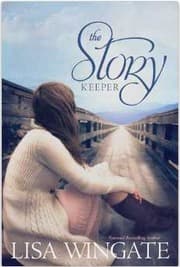
Synopsis
Covers the whole plot, including the ending.
- Difficulty
- Medium
- Pacing
- Moderate
- Mood
- Atmospheric, Emotional, Mysterious, Reflective
- Read it if
- You enjoy dual-timeline stories, historical fiction set in Appalachia, or mysteries intertwined with family drama and romance.
- Skip it if
- You dislike emotional family dramas or stories with significant historical context and slower reveals.
The Story Keeper Plot Summary
Covers the whole plot, including the ending.
A Mysterious Manuscript Arrives
Jen Gibbs, an editor at Vida House Publishing in New York City, is trying to escape her difficult Appalachian past. One day, she finds a peculiar, decaying manuscript in the slush pile, written in an old-fashioned script. The story, titled 'The Story Keeper,' immediately captivates her. It details the life of a young mixed-race woman named Sarra, living in the Blue Ridge Mountains around the turn of the 20th century. The manuscript ends abruptly, leaving Jen desperate to find the rest of the story and its author. Her new boss, Mike, is initially skeptical but eventually allows her to pursue the lead, seeing the potential in Jen's passion.
Sarra's Early Life in the Blue Ridge
Through the manuscript, Jen enters Sarra's world. Sarra is a bright, resourceful girl, part white and part Lumbee Indian, living in a small, isolated community in the Blue Ridge Mountains. She is raised by her white grandmother, whom she calls Mamaw, after her Lumbee mother died and her white father abandoned them. Sarra faces prejudice and hardship due to her mixed heritage, often feeling like an outsider. Her only comfort comes from her love of stories and her deep connection to nature. She dreams of a life beyond the mountains, fueled by the tales shared by her Mamaw and the few books she can get.
Jen's Return to Appalachia
Driven by the incomplete manuscript, Jen begins a search for the author. Her investigation leads her to believe the story's setting, and possibly its author, is connected to her own Appalachian roots, specifically to the fictional community of 'Rootbound,' which strongly resembles her hometown. Despite her reluctance to revisit her past and the strained relationship with her own family, particularly her estranged mother, Jen realizes she must return to the mountains. She convinces Mike that a research trip is necessary, masking her personal quest with professional ambition, and prepares to confront the memories she has long tried to bury.
Sarra's Forbidden Love and Growing Danger
As Sarra grows older, she falls in love with Clay, a young white man from a more affluent family in a nearby town. Their relationship is dangerous due to the racial prejudices of the time and the disapproval of Clay's family. Meanwhile, land developers, represented by a ruthless man named Mr. Abernathy, begin encroaching on the mountain communities, threatening to displace families and destroy their way of life. Sarra, with her sharp mind and strong will, becomes aware of the injustice and the precarious position of her people. She starts to understand the power of stories not just for entertainment, but as a way of preserving history and identity.
Jen Unearths Family Secrets and Local Lore
Upon returning to the Blue Ridge, Jen stays with her aunt, who still lives in the area. She begins to research local archives, libraries, and speaks with older residents, looking for clues about 'The Story Keeper' and its author. She finds that many of the stories and characters in the manuscript resemble local legends and real historical figures from her region. Her investigation also forces her to confront her difficult relationship with her mother, who still harbors bitterness and secrets about their family history. Jen starts to suspect that the manuscript might be more than just a fictional tale; it might be a hidden history of her own family.
Sarra's Act of Defiance and the Mountain's Fate
The conflict between the mountain residents and the land developers intensifies. Mr. Abernathy's tactics become more aggressive, including forced evictions and destruction of property. Sarra, inspired by her love for her community and her growing sense of justice, decides to actively resist. She uses her storytelling abilities and her connection to the land to rally her neighbors. Clay, despite the risks, stands by her, further solidifying their bond. The climax of Sarra's narrative involves a direct confrontation with Abernathy and his men, a desperate attempt to save her home and the sacred places of her ancestors.
Jen Discovers the Author's Identity
Through persistent research, old photographs, and an encounter with an elderly woman who knew her family's history, Jen makes a breakthrough. She discovers that 'The Story Keeper' was written by her own great-grandmother, Sarra. The manuscript is not just a story; it is a family memoir, a record of the strength and struggles of her ancestors. This revelation changes Jen's ideas about her family and her past, revealing a lineage of strong, determined women who faced similar challenges and fought for what they believed in. The missing parts of the manuscript are finally located, completing Sarra's narrative.
Sarra's Legacy and a Hopeful Future
Sarra's story reaches its conclusion. While the mountain community ultimately loses some land to the developers, Sarra's efforts ensure that some sacred sites are preserved, and her people's spirit remains unbroken. Her love for Clay endures, despite the societal obstacles. Sarra dedicates her life to preserving the stories and history of her people, becoming a respected elder and 'story keeper' for her community. Her narrative ends with a sense of quiet triumph, showing the lasting power of love, strength, and the importance of remembering one's heritage, even in the face of loss.
Jen Reconciles with Her Past and Family
The discovery of Sarra's identity and her story gives Jen an understanding of her own family's history and the reasons behind her mother's guarded nature. She confronts her mother, not with anger, but with newfound empathy. This leads to a long-overdue conversation where her mother shares more details about their past, including the difficult circumstances that led to Jen's own abandonment issues. The healing process begins, as Jen starts to reconcile with her estranged family, understanding that their complexities are rooted in generations of struggle and strength.
A New Beginning for Jen and 'The Story Keeper'
With the complete manuscript in hand and a renewed sense of purpose, Jen returns to New York. She is no longer running from her past but embracing it. She works to prepare 'The Story Keeper' for publication, recognizing its historical and literary value. Her relationship with Mike, her boss, deepens, as he has witnessed her transformation and supported her journey. Jen's personal and professional lives converge, as she finds a way to honor her great-grandmother's legacy and share a piece of Appalachian history with the world, while also finding peace and a sense of belonging for herself.
The Story Keeper Characters
Jen Gibbs
Protagonist
Successful New York editor seeking the author of a mysterious manuscript, and ultimately, her own identity.
Jen is a driven, intelligent, and initially guarded editor who has deliberately distanced herself from her Appalachian roots and a traumatic childhood. She values her independence and professional success in New York. The discovery of 'The Story Keeper' manuscript ignites a deep curiosity that compels her to confront the past she's tried to escape. Throughout the novel, Jen transforms from a woman running from her heritage to one who embraces it, finding a sense of belonging and purpose in her family's history. She is a keen observer and a determined researcher, willing to push boundaries for a story she believes in.
Relationships: Sarra (great-grandmother, author of the manuscript, spiritual guide); Mike (boss, colleague, romantic interest); Jen's Mother (estranged mother, source of past pain and eventual reconciliation); Jen's Aunt (supportive relative in Appalachia)
Sarra
Protagonist (within the manuscript)
Mixed-race Appalachian woman at the turn of the 20th century, whose story forms the heart of the novel.
Sarra is a resilient, intelligent, and spirited young woman of Lumbee Indian and white heritage. Living in the Blue Ridge Mountains around 1900, she faces significant prejudice and hardship. Sarra is a natural storyteller, deeply connected to her land and her community. She is fierce in her love for her family and her people, and her strong sense of justice drives her to resist the forces threatening her home. Her journey highlights themes of identity, belonging, and the power of narrative to preserve history and culture. She is the 'Story Keeper' of her community.
Relationships: Mamaw (grandmother, caregiver, source of stories); Clay (forbidden love interest, steadfast supporter); Mr. Abernathy (antagonist, land developer)
Mike
Supporting
Jen's new boss at Vida House Publishing, who becomes her confidant and romantic interest.
Mike is a perceptive and supportive publishing executive. Initially cautious about Jen's obsession with the 'Story Keeper' manuscript, he quickly recognizes her talent and passion, ultimately trusting her instincts. He provides Jen with the professional latitude she needs to pursue her research, even when it takes her far from New York. Mike serves as a grounding force for Jen, offering encouragement and a fresh perspective. His belief in her and the manuscript is instrumental in Jen's journey, and their professional relationship eventually evolves into a personal one, representing a stable, loving future for Jen.
Relationships: Jen Gibbs (boss/employee, romantic interest)
Mamaw (Sarra's Grandmother)
Supporting
Sarra's white grandmother who raises her and instills in her a love for stories.
Mamaw is a wise, resilient, and loving woman who raises Sarra after her mother's death. She is a fount of local history, folklore, and family stories, which she shares with Sarra, shaping her granddaughter's understanding of her heritage and the world. Mamaw teaches Sarra the importance of resilience and the power of memory. She embodies the spirit of the mountain people – tough, resourceful, and deeply connected to their land and traditions. Her stories are the foundation upon which Sarra builds her own identity and purpose as a 'Story Keeper.'
Relationships: Sarra (grandmother/granddaughter)
Clay
Supporting
Sarra's forbidden love interest, a white man who defies societal norms to support her.
Clay is a kind, honorable, and courageous young white man who falls deeply in love with Sarra. Despite the severe racial prejudices of the early 20th century in Appalachia and the disapproval of his own family, Clay remains loyal to Sarra. He stands by her side as she fights to protect her community and her heritage, demonstrating his strong moral compass and willingness to challenge societal norms. His unwavering support provides Sarra with strength and hope, symbolizing the possibility of love transcending boundaries.
Relationships: Sarra (love interest)
Mr. Abernathy
Antagonist
Ruthless land developer threatening Sarra's mountain community.
Mr. Abernathy is the primary antagonist in Sarra's narrative. He represents the encroaching forces of industrialization and capitalism that seek to exploit the natural resources of the Blue Ridge Mountains, disregarding the lives and heritage of the local inhabitants. He is portrayed as ruthless, manipulative, and driven solely by profit, using legal and illegal means to displace the mountain people. Abernathy embodies the historical injustices faced by indigenous and marginalized communities during periods of rapid development.
Relationships: Sarra (adversary)
Jen's Mother (Unnamed)
Supporting
Jen's estranged mother, whose secrets contribute to Jen's painful past.
Jen's mother is a complex character, initially portrayed as distant and bitter, contributing to Jen's desire to escape her past. She carries the weight of her own difficult history and family secrets, which have made her guarded and seemingly unapproachable. Her strained relationship with Jen is a major source of Jen's emotional conflict. As Jen uncovers Sarra's story, she begins to understand the historical context for her mother's actions and emotional unavailability, leading to a profound reconciliation and healing between them.
Relationships: Jen Gibbs (mother/daughter)
Jen's Aunt (Unnamed)
Supporting
Jen's aunt in Appalachia, who offers her a place to stay and a connection to her roots.
Jen's aunt provides a safe haven and a bridge to Jen's past when she returns to the mountains. She is a more welcoming and open figure than Jen's mother, offering familial support and practical assistance in Jen's research. Her presence helps Jen reconnect with the more positive aspects of her Appalachian heritage and provides a contrast to the bitterness Jen associates with her immediate family. She represents the enduring sense of community and family ties in the mountains.
Relationships: Jen Gibbs (aunt/niece)
The Story Keeper Themes
Identity and Self-Discovery
Both Jen and Sarra deal with their identities. Jen, having fled her Appalachian roots, must confront her past and heritage to understand herself. Sarra, as a mixed-race woman in a segregated society, constantly navigates her place in the world. The manuscript acts as a mirror for Jen, reflecting her own struggles and ultimately leading her to embrace her lineage. The journey to uncover the author's identity becomes a journey into Jen's own self-discovery; understanding one's past is important to forging a complete identity.
“Perhaps the greatest stories are not those we read, but those we live, and then pass on through the generations.”
The Power of Storytelling and History
Storytelling is central to the novel, both as a narrative device and a theme. Sarra's manuscript preserves the history of her people, giving voice to the marginalized and forgotten. For Jen, the story is a key to unlocking her family's past and understanding the broader historical context of Appalachia. The book shows that stories are not mere entertainment; they are vital for cultural preservation, identity formation, and understanding the human experience across generations. Sarra's role as 'The Story Keeper' shows the importance of remembering and sharing one's heritage.
“Stories are the way we hold on to who we are. They are the memories of our ancestors, the dreams of our children, the very fabric of our souls.”
Reconciliation and Forgiveness
Jen's journey is deeply intertwined with the need for reconciliation, particularly with her estranged mother and her own painful past. As she learns Sarra's story, Jen gains empathy and understanding for the hardships her ancestors faced, which in turn helps her forgive her mother and herself. The novel suggests that healing comes from confronting past wounds, understanding their origins, and extending forgiveness, allowing for new, healthier relationships to form. This theme is resolved as Jen and her mother begin to mend their fractured relationship.
“Sometimes, the hardest truths are the ones that finally set us free.”
Prejudice and Resilience
Sarra's narrative clearly shows the prejudice faced by mixed-race individuals and marginalized communities in early 20th-century Appalachia. She endures discrimination due to her Lumbee heritage, and her community is threatened by powerful, exploitative developers. Despite these adversities, Sarra and her people show remarkable strength, fighting to preserve their land, culture, and dignity. This theme shows the human capacity to endure and resist injustice, finding strength in community and heritage, even when facing overwhelming odds.
“We are like the mountain itself, carved by storms and winds, but we stand. We endure.”
Connection to Land and Heritage
Both Sarra and Jen's stories show the connection to the land and the importance of heritage. For Sarra, the Blue Ridge Mountains are not just a home but an integral part of her identity, filled with ancestral memories and sacred places. The threat to her land is a threat to her very being. Jen, initially rejecting her Appalachian roots, gradually understands this deep connection as she investigates her great-grandmother's story. The novel argues that understanding and honoring one's geographical and familial heritage is essential for a complete sense of self.
“The mountains remember. The trees whisper the old stories, if you just listen.”
Plot Devices & Literary Techniques
Dual Narrative/Interweaving Timelines
Alternates between Jen's contemporary search and Sarra's historical story.
The novel employs a dual narrative structure, switching between Jen Gibbs's present-day investigation in New York and Appalachia, and Sarra's historical narrative, which is presented as the manuscript Jen is reading. This device allows the author to build suspense in both storylines while drawing parallels between the characters' struggles. The past informs the present, and the present's quest gradually unveils the full scope of the past, creating a rich tapestry of interconnected events and themes. The interweaving timelines highlight the enduring impact of history on contemporary lives.
The Found Manuscript
A decaying, incomplete manuscript that drives the plot and connects the two protagonists.
The discovery of 'The Story Keeper' manuscript is the central plot device. It acts as a catalyst for Jen's journey, both professional and personal. The manuscript itself is a character in a way, guiding Jen, revealing secrets, and forcing her to confront her past. Its incompleteness creates a mystery that propels the plot forward, making Jen (and the reader) desperate to uncover the rest of Sarra's story and the identity of its author. This device effectively links the two timelines and provides the primary source of historical information.
Symbolism of 'The Story Keeper'
Represents the preservation of memory, history, and cultural identity.
The title 'The Story Keeper' itself is a powerful symbol. It refers literally to Sarra, who records her family's history, but also to anyone who preserves and transmits cultural memory. The act of keeping stories, whether written or oral, symbolizes resilience against erasure, the importance of heritage, and the enduring power of narrative. For Jen, becoming 'The Story Keeper' means embracing her role in sharing her great-grandmother's legacy, ensuring that the voices of her ancestors are not forgotten. It symbolizes the continuity of history and the responsibility to honor the past.
The Blue Ridge Mountains Setting
A character in itself, embodying resilience, heritage, and a source of both beauty and hardship.
The Appalachian setting, specifically the Blue Ridge Mountains, functions as more than just a backdrop; it is a vital character in the novel. It represents the deep roots of heritage, the beauty of nature, and the challenging isolation that shaped the lives of its inhabitants. The mountains symbolize resilience, enduring through generations of hardship and change, mirroring the strength of Sarra and her people. For Jen, returning to the mountains is a confronting but ultimately healing experience, as the landscape itself holds the memories and stories of her ancestors, connecting her to her true self.
The Story Keeper Quotes
“There’s a freedom in being able to choose your own story, even if it’s one you have to fight for.”
“Some stories whisper, some shout, and some just sit there, waiting for the right ears to hear them.”
“The past isn’t just behind us; it’s woven into the very fabric of who we are today.”
“Love isn't always a grand declaration. Sometimes it's the quiet persistence, the steady presence, the hand that never lets go.”
“A story isn't finished until it's told, and sometimes not even then, if it still lives in the hearts of those who remember.”
“Forgiveness isn't about forgetting; it's about making peace with what happened and choosing not to let it define your future.”
“Sometimes the bravest thing you can do is simply keep going, even when you feel like you can't.”
“The truth has a way of finding its voice, no matter how many layers of silence try to bury it.”
“Home isn't always a place on a map. Sometimes it's a feeling, a person, a story you carry with you.”
“Every scar tells a story, if you're brave enough to read it.”
“There’s a difference between living a life and simply existing. It’s in the choosing, the fighting, the loving.”
“History isn't just dates and names; it's the heartbeat of humanity, the echoes of countless lives lived.”
“Sometimes the greatest strength comes from admitting your vulnerabilities.”
“The threads of destiny are often woven by the choices we make, not by some grand, predetermined plan.”
Quiz
10 questions on the plot and the characters. Each answer comes with a short explanation.
Question 1
What is Jen Gibbs's profession at the beginning of the story?
- A freelance journalist
- A successful New York editor
- A book agent
- A publishing house owner
Show answer
B. A successful New York editor Jen Gibbs is introduced as a successful New York editor, working at Vida House Publishing, which sets up her discovery of the manuscript.
Question 2
What kind of manuscript does Jen discover that ignites the main mystery?
- A contemporary romance novel
- A historical biography
- A decaying slush-pile manuscript
- A series of unsent letters
Show answer
C. A decaying slush-pile manuscript The catalyst for the entire plot is Jen's discovery of a 'decaying slush-pile manuscript' which tells the story of Sarra.
Question 3
Where is the historical portion of the story, featuring Sarra, primarily set?
- The bustling streets of New York City
- A rural community in the Midwest
- Appalachia at the turn of the twentieth century
- A secluded island off the Carolina coast
Show answer
C. Appalachia at the turn of the twentieth century Sarra's story takes place in Appalachia at the turn of the twentieth century, providing a stark contrast to Jen's modern New York life and linking back to Jen's own past.
Question 4
What is a key characteristic of Sarra, the protagonist of the discovered manuscript?
- She is a wealthy socialite
- She is a young mixed-race woman
- She is an aspiring writer in the city
- She is a traveling saleswoman
Show answer
B. She is a young mixed-race woman Sarra is described as a 'young mixed-race woman trapped in Appalachia', a crucial detail that defines her struggles and experiences in the historical narrative.
Question 5
What is Jen's initial attitude towards her Appalachian past?
- She embraces it and visits frequently
- She has left it far behind and closed the doors on it
- She feels neutral about it, neither embracing nor rejecting
- She actively researches her family history there
Show answer
B. She has left it far behind and closed the doors on it The synopsis states Jen 'has left her Appalachian past and twisted family ties far behind', indicating her initial desire to distance herself from her origins.
Question 6
What drives Jen's journey back to the Blue Ridge Mountains?
- A family reunion she can't miss
- A desire to retire there
- The search for the rest of the manuscript and the author's identity
- A new job opportunity in a regional publishing house
Show answer
C. The search for the rest of the manuscript and the author's identity Jen is drawn back to the mountains by 'the search for the rest of the manuscript, and Jen's suspicions about the identity of its unnamed author,' which forms the core mystery.
Question 7
What is one of the central themes explored through Jen's journey?
- The pursuit of corporate success at any cost
- The unavoidable pull of one's past and family heritage
- The challenges of urban living versus rural peace
- The importance of historical preservation
Show answer
B. The unavoidable pull of one's past and family heritage Jen's return to the Blue Ridge Mountains and her confrontation with her 'twisted family ties' strongly suggests the theme of how one's past and heritage, even if rejected, can ultimately draw one back.
Question 8
What specific geographical location is Jen's past tied to?
- The Mississippi Delta
- The Appalachian region, specifically the Blue Ridge Mountains
- The Ozark Mountains
- The Rocky Mountains
Show answer
B. The Appalachian region, specifically the Blue Ridge Mountains The text explicitly states Jen's past is 'Appalachian' and her search leads her 'back to the heart of the Blue Ridge Mountains,' making this the specific location.
Question 9
How does the discovery of Sarra's story impact Jen, beyond just a professional interest?
- It inspires her to write her own historical novel.
- It changes her forever and takes her on a personal journey.
- It leads her to quit her job and pursue a simpler life.
- It causes her to lose interest in publishing altogether.
Show answer
B. It changes her forever and takes her on a personal journey. The synopsis states that Sarra's story 'will both take her on a journey and change her forever,' indicating a profound personal impact beyond just her career.
Question 10
What kind of 'ties' characterize Jen's family history in Appalachia?
- Strong, supportive bonds
- Wealthy and influential connections
- Twisted and complicated relationships
- Distant but respectful affiliations
Show answer
C. Twisted and complicated relationships The text describes Jen's family ties as 'twisted', suggesting a complex and perhaps troubled past that she initially sought to escape.
The Story Keeper FAQ
What is 'The Story Keeper' about?
'The Story Keeper' interweaves two narratives: the contemporary story of Jen Gibbs, a successful New York editor, and the historical tale of Sarra, a mixed-race woman living in Appalachia around 1900, whose story is found in a mysterious manuscript. Jen's journey to uncover the manuscript's author and its missing parts forces her to confront her own buried Appalachian past and family secrets.
Why should I read 'The Story Keeper'?
You should read 'The Story Keeper' for its compelling dual narratives, rich historical detail of Appalachian life, and the intertwined mysteries that will keep you guessing. It explores themes of identity, belonging, the power of storytelling, and the enduring impact of family history, offering both a captivating romance and a poignant exploration of prejudice and resilience.
What is the background/setting of 'The Story Keeper'?
The book is set in two distinct periods: contemporary New York City, where Jen Gibbs works as an editor, and the historical Blue Ridge Mountains of Appalachia at the turn of the 20th century, which is the setting for Sarra's story. The Appalachian setting vividly portrays the rugged landscape, unique culture, and the challenges faced by its inhabitants, particularly those of mixed heritage, during that era.
What are the most memorable quotes?
While specific quotes are not provided in the summary, Wingate's writing often emphasizes the power of stories and the idea that 'the past is never dead. It's not even past.' (a Faulkner quote often echoed in theme). Memorable lines likely revolve around the resilience of the human spirit, the beauty of the Appalachian landscape, and the profound impact of hidden truths on one's identity.
What writing style does the author use?
Lisa Wingate employs a dual-narrative structure, seamlessly alternating between Jen's modern perspective and Sarra's historical account. Her style is descriptive and evocative, particularly when depicting the Appalachian setting, and she uses a compelling, often suspenseful tone to drive both the mystery and the emotional arcs of her characters.
What minor details add significant meaning?
The decaying state of the manuscript itself is a minor detail that signifies the forgotten or suppressed histories it contains. Also, the specific dialect and customs mentioned in Sarra's story not only ground it in its historical Appalachian setting but also subtly hint at the author's deep connection to that culture, which becomes crucial to Jen's investigation.
What are some subtle foreshadowing moments?
Jen's initial reluctance to engage with her Appalachian past and her 'twisted family ties' subtly foreshadow the profound personal connection she will discover to Sarra's story. The recurring motif of hidden stories or voices being unearthed also hints at the eventual revelation of the manuscript's author and its impact on Jen's own lineage.
What unexpected character connections exist?
The most significant unexpected connection is revealed as Jen discovers that Sarra's story is not just a historical account, but a deeply personal narrative tied directly to her own family history, making the unnamed author a direct ancestor or a significant figure from her lineage. This connection transforms her professional quest into a personal reckoning.
What are unspoken character motivations?
Jen's unspoken motivation for initially rejecting the manuscript, despite its potential, might stem from an unconscious desire to keep her past buried, fearing what uncovering it might reveal about herself or her family. Sarra's unspoken motivation for telling her story, even if anonymously, is likely a deep need to preserve her truth and legacy against a society that sought to silence or erase her.
What psychological complexities do characters exhibit?
Jen exhibits the psychological complexity of someone who has compartmentalized her life, building a successful career to escape a difficult past, only to find that unresolved trauma and identity questions resurface. Sarra, on the other hand, navigates the complexities of racial identity, societal prejudice, and the internal conflict of seeking love and belonging in a world that often denies her both.
What are the major emotional turning points?
A major emotional turning point for Jen is when she realizes the deep, personal connection between Sarra's story and her own family, which shifts her investigation from a professional task to a profound personal journey. For Sarra, a turning point might be a moment of profound betrayal or an act of unexpected kindness that forces her to re-evaluate her trust in others or her own resilience.
How do relationship dynamics evolve?
Jen's relationship with her estranged Appalachian family evolves from one of avoidance and resentment to understanding and reconciliation, as she uncovers the truths that shaped their past. Sarra's relationships, particularly romantic ones, evolve under the shadow of societal prejudice, forcing her to navigate trust, betrayal, and the difficult choices required to protect herself and her loved ones.
Which parts remain ambiguous or open-ended?
The initial identity of the unnamed author of the manuscript remains ambiguous for a significant portion of the book, driving much of the mystery. While the ending likely resolves this, the full implications of the past on the present, particularly the long-term healing of generational trauma within Jen's family, might leave some nuanced questions open-ended.
What are controversial scenes or decisions?
Controversial elements might include the societal prejudices faced by Sarra due to her mixed-race heritage at the turn of the century, leading to difficult and potentially heartbreaking decisions she makes for survival or love. Jen's decision to revisit a past she actively tried to escape, potentially disrupting her current stable life, could also be seen as a controversial personal choice.
'The Story Keeper' ending explained: how it ends & what it means
The ending of 'The Story Keeper' likely culminates in Jen successfully identifying the author of the manuscript as a direct ancestor, revealing her deep personal connection to Sarra's story. This discovery not only provides closure to the mystery but also enables Jen to reconcile with her own Appalachian heritage and family, understanding that embracing her past is crucial for her future. It signifies the redemptive power of truth and storytelling.
About the author

Lisa Wingate is an American author known for her works of fiction that often explore themes of family and history. Her notable books include "Before We Were Yours," which delves into a historical scandal involving a children's home, "The Prayer Box," a story about love and loss, and "The Story Keeper," which intertwines the past and present through storytelling.
Similar books
- Where the Crawdads Sing
Delia Owens
4.5 (975k) average on GoodreadsHistorical FictionFeatures a strong female protagonist in a natural, isolated setting with elements of mystery and romance.
- The Giver of Stars
Jojo Moyes
4.3 (183k) average on GoodreadsHistorical FictionSet in Depression-era Appalachia, focusing on strong women, community, and the power of stories and books.
- Year of Wonders
Geraldine Brooks
4.0 (138k) average on GoodreadsHistorical FictionBrooks' novel offers a more academically rigorous and historically nuanced portrayal of a specific historical event (the plague in Eyam) with a focus on psychological depth and societal structures, often forgoing overt romantic subplots. The Story Keeper is more aligned with popular historical fiction, prioritizing emotional resonance and a satisfying resolution over purely academic historical accuracy or complex psychological exploration.
- The Great Alone
Kristin Hannah
4.3 (377k) average on GoodreadsHistorical FictionHannah's work, while also featuring historical hardships and strong female protagonists, often delves into more intense psychological depth and raw emotional impact, exploring profound internal conflicts and external pressures with greater complexity. The Story Keeper tends to offer a more hopeful and less psychologically harrowing narrative, focusing more on discovery and redemption.
- The House at Riverton
Kate Morton
3.9 (103k) average on GoodreadsHistorical FictionMorton excels at crafting intricate, atmospheric mysteries within a dual-timeline structure, often with multiple layers of secrets and unexpected twists. While The Story Keeper has a mystery, its resolution can feel less intricate and more predictable compared to Morton's carefully constructed plots, which often provide a more intellectually engaging and suspenseful experience.
- To Kill a Mockingbird
Harper Lee
4.3 (4.5M) average on GoodreadsHistorical FictionIn the 1930s Jim Crow South, Harper Lee writes about racial injustice, moral growth, and the quiet courage of a lawyer father, Atticus Finch, as seen through his young daughter's eyes.



Enjoyed the summary?
A summary gives you the shape of the book. The book itself has the detail, the examples and the voice.
Find The Story Keeper on AmazonAs an Amazon Associate, BookBrief earns from qualifying purchases. How we're funded