

Synopsis
Covers the whole plot, including the ending.
- Difficulty
- Medium
- Read it if
- You are questioning fundamental assumptions about human civilization, progress, and our relationship with the natural world, and are open to a radical philosophical re-evaluation of humanity's role on Earth.
- Skip it if
- You prefer conventional narratives of human progress, are uncomfortable with challenging anthropocentric worldviews, or are looking for a practical guide rather than a philosophical discourse.
The Story of B Quotes
“The world doesn't need to be saved. We do.”
“You can't go home again, but you can go to a new home.”
“The voice of God is the voice of life.”
“The premise of your culture is that there's something fundamentally wrong with you.”
“The gods are not the ones who make the rules. The rules are the gods.”
“What if the purpose of life isn't to be happy, but to be useful?”
“Every culture is a story.”
“The trouble with trying to save the world is that you're saving it from something, and that something is usually yourself.”
“The only way to get out of the trap is to realize you're in one.”
“We are not meant to rule the world, but to live in it.”
“The world is not a problem to be solved, but a reality to be experienced.”
“There are no solutions, only new problems.”
“The gods don't want anything from us. They just want us to live.”
“The revolution isn't out there. It's in here.”
Quiz
10 questions on the plot and the characters. Each answer comes with a short explanation.
Question 1
Father Jared Osborne's initial assignment from his superiors is to investigate whom?
- A new cardinal in central Europe
- An itinerant preacher known as B
- A political dissident causing unrest
- A rival religious sect
Show answer
B. An itinerant preacher known as B The book explicitly states that Osborne's assignment is to investigate 'an itinerant preacher stirring up deep trouble in central Europe' whose followers call him B.
Question 2
What accusation do B's enemies levy against him?
- That he is a charlatan seeking money
- That he is the Antichrist
- That he is a political revolutionary
- That he is a false prophet
Show answer
B. That he is the Antichrist The synopsis clearly states, 'His followers all him B, but his enemies say he’s something else: the Antichrist.'
Question 3
What is the primary source of the 'gospel' that B claims to be enunciating?
- Ancient religious texts
- Divine revelation through visions
- Our very genes
- Philosophical treatises
Show answer
C. Our very genes B claims to be 'enunciating a gospel written not on any stone or parchment but in our very genes,' presenting a radical departure from traditional spiritual sources.
Question 4
As Osborne tracks B, what kind of locations does he primarily encounter B in?
- Churches and cathedrals
- Academic conferences and lecture halls
- Bars, cabarets, and seedy meeting halls
- Rural monasteries and retreats
Show answer
C. Bars, cabarets, and seedy meeting halls The book describes Osborne tracking B 'across a landscape of bars, cabarets, and seedy meeting halls,' indicating B operates outside traditional religious venues.
Question 5
What is the ultimate impact of B's teachings on Father Osborne?
- He becomes B's most devout follower.
- He becomes an anguished collaborator in the dismantling of his own religious foundations.
- He successfully refutes B's arguments to his superiors.
- He remains neutral, simply reporting his findings.
Show answer
B. He becomes an anguished collaborator in the dismantling of his own religious foundations. The synopsis reveals Osborne 'soon finds himself an anguished collaborator in the dismantling of his own religious foundations,' highlighting the profound personal impact of B's ideas.
Question 6
What distinguishes B's 'spiritual direction for humanity' from that of traditional religion?
- It focuses solely on charitable works.
- It is based on ancient prophecies and miracles.
- It would have been unimaginable to any of the prophets or saviors of traditional religion.
- It emphasizes strict adherence to dogma.
Show answer
C. It would have been unimaginable to any of the prophets or saviors of traditional religion. B's gospel opens 'up a spiritual direction for humanity that would have been unimaginable to any of the prophets or saviors of traditional religion,' signifying its radical and unprecedented nature.
Question 7
The book is described as 'More than a masterful novel of adventure and suspense.' What else is it primarily noted for?
- Its historical accuracy of central European politics.
- Its detailed character studies of everyday people.
- A rich source of compelling ideas from an author who challenges us to rethink our most cherished beliefs.
- Its innovative use of narrative structure.
Show answer
C. A rich source of compelling ideas from an author who challenges us to rethink our most cherished beliefs. The synopsis concludes by stating the book is 'a rich source of compelling ideas from an author who challenges us to rethink our most cherished beliefs,' highlighting its philosophical depth.
Question 8
Based on the description, what is a key characteristic of the ideas presented by B?
- They are a modern reinterpretation of established religious doctrine.
- They are rooted in scientific materialism, rejecting all spirituality.
- They are so radical that an earlier era would have condemned B to death.
- They advocate for a return to ancient pagan rituals.
Show answer
C. They are so radical that an earlier era would have condemned B to death. The text states that B 'is no blasphemous monster—though an earlier era would undoubtedly have rushed him to the burning stake,' implying his ideas are profoundly challenging to established norms.
Question 9
What is the philosophical implication of B's claim that his gospel is written in our genes?
- That spiritual truth is entirely subjective and individually constructed.
- That spiritual guidance is an inherent, biological component of human existence, rather than solely an external revelation.
- That humanity is predestined to follow a specific religious path, encoded genetically.
- That religion is merely a product of genetic mutation and has no deeper meaning.
Show answer
B. That spiritual guidance is an inherent, biological component of human existence, rather than solely an external revelation. The idea of a gospel 'written in our very genes' suggests a natural, inherent spiritual path, distinct from revelation or tradition, implying spirituality is intrinsic to human biology.
Question 10
Given Osborne's trajectory from investigator to 'anguished collaborator,' what does this suggest about the nature of B's arguments?
- They are easily dismissed by those with strong religious faith.
- They rely heavily on emotional manipulation rather than logical reasoning.
- They possess a profound intellectual and spiritual force capable of challenging deeply entrenched beliefs.
- They are primarily historical critiques of religious institutions.
Show answer
C. They possess a profound intellectual and spiritual force capable of challenging deeply entrenched beliefs. Osborne's transformation indicates that B's arguments are not easily refuted; instead, they are compelling enough to cause a highly educated religious figure to question and participate in the 'dismantling of his own religious foundations.'
The Story of B FAQ
What is the core message of 'The Story of B'?
'The Story of B' explores the idea of a 'gospel written in our genes,' suggesting a spiritual path for humanity that deviates from traditional religious teachings. It challenges readers to reconsider long-held beliefs about our place in the world and our relationship with creation.
Who is the character 'B' and what does he represent?
B is an itinerant preacher whose radical ideas are investigated by Father Jared Osborne. He represents a revolutionary spiritual perspective, offering a new understanding of humanity's origins and purpose that clashes with conventional religious doctrines.
Does 'The Story of B' advocate for abandoning traditional religion?
The book doesn't explicitly advocate for abandoning religion, but it presents a profound challenge to the foundations of traditional religious thought. It encourages readers to question and re-evaluate their spiritual frameworks based on a new narrative of human existence.
What is the 'gospel written in our genes' concept in the book?
This concept refers to the idea that humanity's inherent nature and evolutionary history contain a spiritual wisdom or directive, independent of external religious revelations. It suggests that our genetic makeup holds clues to our true purpose and ethical framework.
How does 'The Story of B' compare to Daniel Quinn's 'Ishmael'?
Both 'The Story of B' and 'Ishmael' explore similar themes of humanity's destructive cultural myths and the need for a new understanding of our place in the world. While 'Ishmael' often focuses on the 'taker' vs. 'leaver' dichotomy, 'The Story of B' delves more deeply into the spiritual implications of these ideas and the dismantling of religious foundations.
Is 'The Story of B' a religious book?
While it deals extensively with spiritual and philosophical themes, 'The Story of B' is not a religious book in the traditional sense. It critiques and reimagines religious narratives, offering an alternative spiritual framework rather than promoting a specific established faith.
Does the book offer practical guidance for living?
The book primarily offers a shift in perspective and understanding, which can profoundly influence one's worldview and, by extension, practical choices. While not a self-help guide, its ideas can lead readers to re-evaluate their lifestyles and societal roles.
Who is Father Jared Osborne and what is his role?
Father Jared Osborne is a priest tasked with investigating B. He serves as the reader's entry point into B's radical ideas, undergoing a personal crisis of faith as he grapples with the implications of B's teachings, ultimately becoming an 'anguished collaborator'.
About the author

Daniel Quinn was an American author best known for his philosophical novels exploring civilization and its impact on humanity. His breakout work, 'Ishmael' (1992), a philosophical novel framed as a dialogue between a man and a gorilla, won the Turner Tomorrow Fellowship Award. Other notable works include 'My Ishmael' and 'The Story of B'.
Similar books
- Ishmael
Daniel Quinn
3.9 (2k) average on GoodreadsFantasyDirect precursor and foundational text by the same author, exploring many identical themes.
- Sapiens: A Brief History of Humankind
Yuval Noah Harari
4.4 (502k) average on GoodreadsPsychologyExamines the grand narratives of human history and their impact, albeit from a different angle.
- Eat, Pray, Love
Elizabeth Gilbert
3.6 (1.5M) average on GoodreadsLifestyleA heartbroken writer leaves her conventional life for a year-long global search for pleasure in Italy, spiritual devotion in India, and unexpected love and balance in Bali.
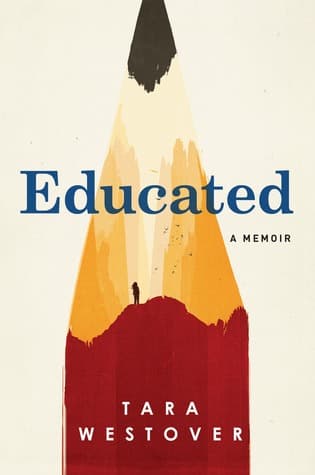
- Educated
Tara Westover
4.5 (796k) average on GoodreadsBiographyRaised in the Idaho mountains by fundamentalist survivalists, a young woman forges her own path to education, battling fierce family loyalty and personal demons to discover a world beyond her isolated upbringing.
- The Poisonwood Bible
Barbara Kingsolver
4.1 (659k) average on GoodreadsLiterary FictionA zealous missionary's rigid faith clashes with the Belgian Congo's wilderness and people, unraveling his family through the eyes of his five unforgettable women.
- Siddhartha
Hermann Hesse
4.0 (583k) average on GoodreadsHistorical FictionSiddhartha leaves a life of privilege and piety, embracing asceticism, wealth, and love to find enlightenment not in dogma, but in the whispers of a river and the unity of all existence.





Enjoyed the summary?
A summary gives you the shape of the book. The book itself has the detail, the examples and the voice.
Find The Story of B on AmazonAs an Amazon Associate, BookBrief earns from qualifying purchases. How we're funded