

Synopsis
Covers the whole plot, including the ending.
- Difficulty
- Easy
- Pacing
- Moderate
- Mood
- Humorous, Touching, Hopeful, Realistic
- Read it if
- You enjoy heartfelt, funny, and sometimes poignant stories told from a child's unique perspective, exploring themes of family, friendship, and resilience.
- Skip it if
- You prefer fantasy or complex plots over character-driven contemporary stories.
The Story of Tracy Beaker Plot Summary
Covers the whole plot, including the ending.
Introducing the Dumping Ground
Tracy Beaker, a spirited and imaginative ten-year-old, introduces herself and her life at 'The Dumping Ground,' a children's home. She describes the other children and carers, especially her rivalry with Justine Littlewood, a bossy girl she often fights with. Tracy describes her daily life, filled with arguments, games, and the constant hope of being fostered or adopted. She often exaggerates her past and present to make her life sound more exciting or tragic, hinting at a complicated relationship with truth and a deep desire for attention and love. She often talks about her 'famous film star' mother, who she believes will return for her.
Cam Lawson Enters the Scene
A new visitor arrives at The Dumping Ground: Cam Lawson, a young writer. Cam is researching for a book and chooses Tracy as her subject, spending time with her, listening to her stories, and recording her thoughts. Tracy is wary at first but quickly likes Cam, seeing her as a potential friend and even a mother figure. She enjoys the attention and the chance to share her elaborate tales and fantasies, especially about her glamorous mother. Cam, however, gently encourages Tracy to be more honest about her feelings and experiences. This leads to a growing bond between them that goes beyond their professional relationship.
Justine's Jealousy and Tracy's Fantasies
Justine Littlewood, Tracy's rival, becomes increasingly jealous of the attention Tracy gets from Cam. This jealousy leads to more frequent arguments and attempts to undermine Tracy. Meanwhile, Tracy continues to tell elaborate stories about her mother, claiming she is an international film star constantly on location, which explains her absence. She creates a vivid fantasy world where her mother sends her postcards and gifts, detailing these imagined interactions. Cam listens patiently, trying to understand the truth behind the stories, recognizing them as a way Tracy copes with her deep longing for a family and a sense of belonging.
A Day Out with Cam
Cam takes Tracy out for a special day, treating her to activities like going to the cinema and having ice cream. These are experiences Tracy rarely has. This outing is important for Tracy, as it gives her a glimpse into a more normal family life and strengthens her emotional connection to Cam. She feels special and loved, increasing her hope that Cam might become her foster parent. During their time together, Tracy opens up more, sharing some true vulnerabilities amidst her usual tough talk. Cam, in turn, sees beyond Tracy's tough exterior, understanding the lonely and longing child beneath.
The Postcard Incident
Tracy's elaborate fantasy about her film star mother is challenged when she 'receives' another postcard. This time, the postcard is found to be one she wrote herself, forging her mother's signature. This discovery leads to public embarrassment for Tracy at The Dumping Ground, especially when Justine Littlewood mocks her. Tracy is deeply upset, not just by being caught, but by the shattering of her carefully built fantasy. Cam comforts her, understanding that the lies come from pain and longing rather than malice. She gently encourages Tracy to confront her true feelings about her mother's absence.
Cam's Foster Application
To Tracy's great delight and surprise, Cam Lawson begins the process of applying to foster her. This news fills Tracy with joy and anticipation. She starts imagining her new life with Cam, planning their future and picturing a stable, loving home. This is a huge turning point for Tracy, offering real hope that her dreams of a family might finally come true. She begins to see Cam not just as a friend, but as a genuine prospect for a forever family, and her behavior shows her excitement and desire to make a good impression.
The First Trial Period
Tracy moves in with Cam for a trial fostering period. This experience is a mix of excitement and challenges. Tracy enjoys having her own room and Cam's full attention, but also struggles with adapting to a new routine and the responsibilities of living in a 'normal' home. She occasionally misbehaves, tests boundaries, and struggles with sharing Cam's attention with her work. Despite these difficulties, Tracy feels a deep sense of belonging and happiness, appreciating the small, everyday moments of family life she had always wanted. Cam, in turn, learns about the realities of caring for a child with Tracy's complex needs.
Tracy's Mother Returns (Briefly)
An unexpected event occurs: Tracy's biological mother, whom she has idealized for so long, makes a brief appearance. Tracy is overjoyed at first, believing her fantastical stories have come true. However, her mother is not the glamorous film star Tracy imagined; she is somewhat disheveled and clearly struggling. The reunion is short-lived and leaves Tracy feeling confused and disappointed, as her mother quickly leaves again, unable to commit to raising her. This experience is a harsh dose of reality for Tracy, forcing her to confront the truth about her mother's inability to care for her and the fragility of her long-held fantasies.
Disappointment and Understanding
Following her mother's departure, Tracy is left with sadness, anger, and a new understanding. The fantasy she had held onto for so long is shattered, and she must accept the reality that her mother is not coming back for her in the way she imagined. Cam provides much-needed comfort and support during this difficult time, helping Tracy process her emotions. This experience, though painful, marks a significant step in Tracy's emotional growth. She begins to let go of her idealized past and focus on her present and future with Cam, acknowledging the love and stability Cam offers.
A New Beginning
Despite the emotional turmoil, Tracy eventually settles into her new life with Cam. She still has her moments of mischief and drama, but there is a new sense of security and belonging. While she might still occasionally exaggerate or dream of grand adventures, she now has a stable home and a loving adult who genuinely cares for her. The book ends with Tracy looking towards the future with optimism, having found a place where she feels truly wanted and understood. Her relationship with Cam is solidifying, providing the foundation she needs to grow and thrive, leaving The Dumping Ground behind.
Principal Figures
Tracy Beaker
Protagonist
A spirited, imaginative, and often mischievous ten-year-old living in a children's home.
Tracy is a vibrant and complex child, known for her vivid imagination, quick wit, and a tendency to embellish the truth. She often projects a tough, confident exterior, but beneath it lies a deep vulnerability and an intense longing for a stable family and a mother's love. She is fiercely independent and prone to dramatic outbursts, often clashing with other children and carers. Her elaborate fantasies about her 'famous film star mother' are a coping mechanism for her feelings of abandonment and her desire for a special identity. She is fiercely loyal to those she cares about, but also prone to jealousy and rivalry.
Relationships: Cam Lawson (Writer and eventual foster mother; a source of stability and love.); Justine Littlewood (Rival and nemesis at The Dumping Ground.); Elaine the Pain (Caring but often exasperated social worker.); Tracy's Mother (Absent biological mother, subject of Tracy's elaborate fantasies.)
Cam Lawson
Supporting
A kind and understanding writer who develops a bond with Tracy.
Cam Lawson is a young, empathetic aspiring writer who initially visits The Dumping Ground to research for a book. She is patient, observant, and possesses a quiet strength that allows her to connect with Tracy. Unlike many adults, Cam doesn't dismiss Tracy's stories outright but tries to understand the underlying emotions. She is genuinely interested in Tracy's well-being and, over time, develops a deep affection for her. Cam represents stability, understanding, and unconditional love, offering Tracy a glimpse of a different future. She is thoughtful and reflective, often trying to navigate Tracy's complex personality with grace and care.
Relationships: Tracy Beaker (Subject of her book, eventually her foster daughter; a deep, evolving bond of love and care.)
Justine Littlewood
Supporting
Tracy's main rival and a fellow resident at The Dumping Ground.
Justine is another resident at The Dumping Ground and Tracy's primary antagonist. She is bossy, manipulative, and often seeks to undermine Tracy, especially when Tracy receives positive attention. Justine's jealousy and competitive nature are often a source of conflict and drama in Tracy's life. While she appears confident and self-assured, her actions often stem from her own insecurities and desire for attention within the home. She represents a foil to Tracy, highlighting Tracy's own flaws and strengths, and often acts as a catalyst for Tracy's dramatic reactions and elaborate schemes.
Relationships: Tracy Beaker (Bitter rivals, constantly clashing and competing for attention.)
Elaine the Pain
Supporting
Tracy's social worker, often exasperated but ultimately caring.
Elaine, affectionately nicknamed 'Elaine the Pain' by Tracy, is Tracy's social worker. She is responsible for Tracy's welfare and placement. Elaine is generally kind and well-meaning but often appears overwhelmed and somewhat weary by the demands of her job and Tracy's antics. She tries to be fair and supportive, but her professional demeanor can sometimes come across as detached to Tracy. Despite Tracy's complaints, Elaine consistently works towards finding Tracy a suitable foster family, demonstrating her underlying commitment to Tracy's well-being. She represents the bureaucratic yet caring side of the social services system.
Relationships: Tracy Beaker (Social worker and client; a professional but often strained relationship.)
Peter Ingham
Supporting
A shy and often bullied boy at The Dumping Ground whom Tracy sometimes protects.
Peter is a younger, quieter boy at The Dumping Ground, often the target of bullying from children like Justine. He is shy, sensitive, and struggles to stand up for himself. Tracy, despite her own boisterous nature, sometimes takes Peter under her wing, showing a surprising protective side. Peter serves as a contrast to Tracy's outgoing personality and highlights her capacity for empathy and kindness, even if she expresses it in her own unique way. His vulnerability often brings out a softer, more nurturing side of Tracy that she rarely shows to others, particularly adults.
Relationships: Tracy Beaker (Fellow resident; Tracy often acts as his protector.)
Tracy's Mother
Mentioned
Tracy's absent biological mother, whose idealized image drives much of Tracy's fantasy life.
Tracy's mother is largely an imagined figure for most of the book, a 'famous film star' in Tracy's elaborate fantasies. This idealized image provides Tracy with a sense of self-worth and hope, explaining away her abandonment. When she briefly appears, she is revealed to be far from the glamorous figure Tracy created. She is clearly struggling and unable to provide the care Tracy needs, leading to a painful but necessary confrontation with reality for Tracy. Her brief presence is crucial for Tracy's character development, forcing her to let go of her most cherished fantasy.
Relationships: Tracy Beaker (Biological mother; an absent figure whose idealized image is central to Tracy's emotional life.)
Themes & Insights
The Power of Imagination and Fantasy
Tracy uses her imagination and elaborate fantasies, especially about her 'famous film star mother,' to cope with her difficult reality. These stories give her a sense of control, identity, and hope in a life where she often feels powerless and unwanted. For example, her detailed descriptions of her mother's 'postcards' and 'gifts' (which she often invents) show her longing for love and attention. While these fantasies offer comfort, the book also explores the pain and disappointment that happen when fantasy meets reality, as seen when her real mother makes a brief, underwhelming appearance.
“I often tell terrible fibs and sometimes I believe them myself.”
The Search for Belonging and Family
At its core, the story is Tracy's desperate search for a 'real' family and a place where she truly belongs. Living in a children's home, Tracy constantly wants the stability, love, and individual attention that a family provides. Her initial doubt about Cam, followed by her strong attachment and hope, clearly shows this deep longing. Every interaction, every outing, every kind word from Cam is examined by Tracy for signs that she might finally be wanted. Cam's eventual fostering of Tracy resolves this search, offering Tracy the secure attachment she has always wanted.
“I want a proper mum and dad. I want a proper home.”
Identity and Self-Perception
Tracy's identity is heavily influenced by her circumstances and her coping methods. She presents herself as tough, mischievous, and unique, often using her dramatic flair to get attention. Her self-perception is tied to her fantasies; believing her mother is famous makes her feel special, even in a children's home. The book's journey shows Tracy gradually shedding some of these fabricated layers as she faces the truth about her past and begins to build a more authentic identity based on her real relationship with Cam. This growth allows her to see herself as truly loved, not just as a character in her own elaborate story.
“I'm Tracy Beaker. This is a book all about me. I'd read it if I were you. It's the most incredible dynamic heart-rending story. Honest.”
The Challenges of the Care System
The book offers a clear look into life within the children's care system, often called 'The Dumping Ground' by Tracy. It highlights the challenges faced by children in care, including feelings of abandonment, rivalry among residents (like with Justine), and the constant hope and disappointment linked to potential fostering. While carers like Elaine are shown as well-meaning, the institutional setting cannot fully provide the individual attention and emotional security of a family home. The narrative subtly critiques the system's limits by emphasizing Tracy's deep need for a personal, loving connection beyond its structured environment.
“The Dumping Ground is what we call it. It's not a real home.”
Plot Devices & Literary Techniques
First-Person Narrative (Child's Voice)
The story is told entirely from Tracy Beaker's perspective.
This device immediately immerses the reader in Tracy's unique world, allowing direct access to her thoughts, feelings, and often unreliable interpretations of events. Her distinctive voice, filled with slang, exaggerations, and emotional honesty, makes her a highly engaging and memorable character. It emphasizes her subjectivity and her coping mechanisms, particularly her use of fantasy and storytelling to make sense of her life. The reader experiences the children's home and the adults through her eyes, highlighting her perspective on the care system and her longing for a family, making her journey deeply personal and relatable.
Unreliable Narrator
Tracy often embellishes or fabricates events, particularly about her mother.
Tracy's narration is deliberately unreliable. She frequently exaggerates, tells 'fibs,' and creates elaborate fantasies, especially concerning her 'famous film star mother.' This serves multiple purposes: it highlights her vivid imagination, her deep-seated desire for attention and a special identity, and her coping mechanisms for dealing with abandonment. The reader is encouraged to read between the lines, understanding that Tracy's stories, while untrue in a literal sense, reveal deeper emotional truths about her pain and longing. This device adds depth to her character and makes her emotional journey more compelling when she finally confronts reality.
The 'Book Within a Book' Concept
Cam is writing a book about Tracy, mirroring the structure of the novel itself.
Cam Lawson's project to write a book about Tracy functions as a meta-narrative device. It provides a plausible reason for Cam to spend time with Tracy and listen to her stories, directly facilitating their bond. More subtly, it reflects the very act of the reader engaging with 'The Story of Tracy Beaker,' implying that Tracy's life is indeed worthy of being documented and understood. This device also allows for moments of self-awareness, where Tracy comments on being a 'character' in Cam's book, blurring the lines between fiction and reality within the story and emphasizing Tracy's perspective as the central focus.
Rivalry and Conflict (Justine Littlewood)
The ongoing feud between Tracy and Justine drives much of the immediate plot.
The constant rivalry between Tracy Beaker and Justine Littlewood serves as a significant plot device, providing immediate conflict and drama within the confines of The Dumping Ground. Their squabbles, insults, and attempts to one-up each other create tension and often reveal aspects of both girls' personalities – Tracy's quick wit and Justine's jealousy. This rivalry often acts as a distraction from Tracy's deeper emotional struggles, but also highlights her need for connection, even if it's through conflict. It grounds the story in the everyday realities of communal living for children and adds a layer of relatable, childish antagonism.
The Story of Tracy Beaker Quotes
“I'm Tracy Beaker. I'm a an expert on everything.”
“They call it a children's home but it's not a home. It's just a house full of children.”
“My mum's coming to get me one day. She just has to sort things out first.”
“I'm not a pest. I'm just a bit... lively.”
“Sometimes I pretend I'm a princess and this is my castle. But it's not.”
“Just because you live in a children's home doesn't mean you're not a proper person.”
“I can do anything if I put my mind to it. Except maybe fly.”
“It's hard to make friends when you keep moving.”
“I hate being told what to do. Especially by someone who's not even grown up properly yet.”
“My mum's a film star. Or a supermodel. Or a secret agent.”
“I'm going to be famous one day. Everyone will know my name.”
“Sometimes I wish I could just disappear. But then who would cause all the trouble?”
“You have to be tough to survive in a place like this.”
“I drew a picture of my mum. She looked a bit like a queen, but with curlier hair.”
Quiz
10 questions on the plot and the characters. Each answer comes with a short explanation.
Question 1
What is the name of the children's home where Tracy Beaker lives at the beginning of the story?
- The Grange
- The Dumping Ground
- Elm Tree House
- Orchard House
Show answer
B. The Dumping Ground Tracy Beaker lives in a children's home she often refers to as 'The Dumping Ground' because she feels unwanted there.
Question 2
What is Tracy's biggest wish throughout the book?
- To become a famous actress
- To live with her birth mother
- To get a pet dog
- To move to a different children's home
Show answer
B. To live with her birth mother Tracy constantly talks about her mother and dreams of living with her, often exaggerating her mother's glamorous life.
Question 3
Who is Tracy's social worker who tries to help her find a foster family?
- Elaine the Pain
- Cam Lawson
- Miss Edwards
- Jackie Wilson
Show answer
A. Elaine the Pain Tracy nicknames her social worker 'Elaine the Pain' due to her perceived annoying nature, though Elaine genuinely tries to help her.
Question 4
What hobby does Cam Lawson encourage Tracy to pursue?
- Painting
- Writing
- Playing a musical instrument
- Photography
Show answer
B. Writing Cam Lawson, a children's author, encourages Tracy to write her own story, which becomes the book itself.
Question 5
Why does Tracy often get into trouble at the children's home?
- She steals food from the kitchen.
- She deliberately breaks rules to get attention.
- She bullies the younger children.
- She refuses to do her homework.
Show answer
B. She deliberately breaks rules to get attention. Tracy's mischievous behavior is often a cry for attention and a way to cope with her feelings of being unwanted.
Question 6
What is the primary reason Tracy struggles to form lasting bonds with potential foster families?
- They are always too strict with her.
- She idealizes her birth mother too much.
- She prefers living at the children's home.
- The foster families are never kind to her.
Show answer
B. She idealizes her birth mother too much. Tracy's constant longing for and idealized image of her birth mother makes it difficult for her to accept new families, as she sees them as temporary substitutes.
Question 7
Which specific item does Tracy keep hidden and considers her most prized possession, believing it to be from her mother?
- A photograph of her mother.
- A small, sparkly brooch.
- A diary given to her by her mother.
- A faded teddy bear.
Show answer
B. A small, sparkly brooch. Tracy cherishes a small, sparkly brooch, believing it to be a gift from her glamorous mother, symbolizing her connection to her.
Question 8
What is the significance of Tracy's narrative style in the book?
- It presents a completely objective account of her life.
- It highlights her unreliable narration and imaginative coping mechanisms.
- It demonstrates her advanced writing skills for her age.
- It focuses primarily on the perspectives of the adults around her.
Show answer
B. It highlights her unreliable narration and imaginative coping mechanisms. Tracy's first-person narrative is often exaggerated and embellished, revealing her imaginative way of dealing with her difficult reality and her longing for a better life.
Question 9
How does Tracy's relationship with Cam Lawson evolve throughout the story?
- It remains strictly professional, client and social worker.
- Cam initially tries to foster Tracy, but then gives up on her.
- Cam becomes a trusted friend and eventually a potential foster parent.
- Tracy becomes increasingly hostile towards Cam as the story progresses.
Show answer
C. Cam becomes a trusted friend and eventually a potential foster parent. Cam starts as a temporary visitor, but through her patience and encouragement, she builds a strong bond with Tracy, eventually offering her a home.
Question 10
Which of the following best describes the overall tone of 'The Story of Tracy Beaker'?
- Consistently melancholic and depressing.
- Lighthearted and purely comedic.
- Hopeful and humorous, despite underlying sadness.
- Angry and resentful towards the care system.
Show answer
C. Hopeful and humorous, despite underlying sadness. While Tracy faces many challenges and expresses sadness, her resilience, humor, and the eventual bond with Cam provide an overall hopeful tone, characteristic of Wilson's writing.
The Story of Tracy Beaker FAQ
What is the central premise of 'The Story of Tracy Beaker'?
'The Story of Tracy Beaker' follows ten-year-old Tracy Beaker, an imaginative and often challenging resident of a children's home, as she navigates daily life, friendships, rivalries, and her persistent dream of being adopted by a loving family, particularly her elusive mother. The narrative is presented entirely from Tracy's first-person perspective, offering a unique insight into her thoughts and feelings.
Who are the main characters besides Tracy Beaker?
Key characters include Justine Littlewood, Tracy's arch-rival at the children's home; Louise Golder, Tracy's best friend; Peter Ingham, a kind but often bullied boy; Elaine the care worker, who tries to understand Tracy; and Cam Lawson, a writer who initially comes to the home to interview Tracy and later becomes a significant figure in her life. Each character plays a role in Tracy's emotional development and her journey.
What is Tracy's relationship with her mother like, as she perceives it?
Tracy idolizes her glamorous, film-star mother, whom she believes is away filming in Hollywood and will eventually return to take her home. She constantly invents elaborate stories about her mother's life and reasons for absence, holding onto a deep-seated hope that her mother will rescue her from the children's home and provide the perfect family she craves.
How does the book explore the theme of family?
The book explores various facets of family, from the traditional nuclear family Tracy yearns for, to the 'family' formed by the children and care workers in the children's home. It highlights Tracy's desperate search for belonging and unconditional love, contrasting her idealized vision of her mother with the realities of her situation, and eventually suggesting that family can be found in unexpected places.
What role does Cam Lawson play in Tracy's life?
Cam Lawson initially visits the children's home as a writer interviewing Tracy for a story. Over time, she develops a genuine connection with Tracy, becoming a trusted adult figure who offers support, understanding, and a glimpse of a stable, loving relationship. Cam represents a potential future for Tracy outside the confines of the children's home.
Are there any subtle hints about Tracy's mother's true situation?
Yes, while Tracy maintains her elaborate fantasies, the narrative subtly suggests that her mother is not a glamorous film star and is unlikely to return. Elaine the care worker often tries to gently bring Tracy back to reality, and the lack of any actual contact or evidence of her mother's existence hints at a more mundane and perhaps sadder truth about her absence.
What is the significance of Tracy's drawings and stories?
Tracy's drawings and stories are crucial as they serve as her primary coping mechanism, allowing her to escape her reality and express her inner world. They are a window into her vivid imagination, her desires, and her anxieties, often depicting her idealized mother and her dreams of a perfect life, while also sometimes reflecting her frustrations with her current situation.
How does Tracy's rivalry with Justine Littlewood reflect deeper themes?
Tracy's intense rivalry with Justine Littlewood goes beyond simple childhood squabbles; it reflects their shared insecurities and competition for attention and affection within the children's home. Both girls are vying for a sense of importance and belonging, often projecting their own fears and frustrations onto each other in their constant battles.
Is there a hidden meaning behind Tracy's constant desire for 'chips'?
Tracy's frequent mention of wanting chips can be seen as a simple child's craving, but it also subtly represents a desire for comfort, routine, and perhaps a small indulgence that she associates with a 'normal' family life. It's a tangible, simple pleasure that she often looks forward to amidst the instability of her life in care.
How does Tracy's attachment style manifest throughout the book?
Tracy exhibits characteristics of an anxious-preoccupied attachment style, stemming from her early experiences of abandonment and inconsistent care. She desperately seeks closeness and reassurance, often becoming overly dependent on adults like Cam, while simultaneously fearing rejection and reacting strongly to perceived slights, as seen in her interactions with care workers and other children.
What psychological impact does living in a children's home have on Tracy?
Living in a children's home profoundly impacts Tracy, fostering a deep-seated fear of abandonment and a constant yearning for a stable family. This environment contributes to her defensive behaviors, such as her aggressive outbursts, her need for attention, and her elaborate fantasies, which serve as coping mechanisms against the emotional instability and lack of personal control she experiences.
How does Tracy use her imagination as a psychological defense mechanism?
Tracy's vivid imagination is her primary psychological defense mechanism, allowing her to construct an alternative reality where her mother is a glamorous film star and she is destined for a perfect life. This elaborate fantasy shields her from the painful truth of her abandonment and provides a sense of hope and control in a situation where she has very little of either.
What does Tracy's relationship with Peter Ingham reveal about her empathy?
Tracy's relationship with Peter Ingham reveals a surprising depth of empathy beneath her tough exterior. While she often teases him, she also defends him against bullies and offers him comfort, demonstrating that despite her own struggles and defensive behaviors, she possesses the capacity for kindness and understanding towards those she perceives as vulnerable or in need.
Is Tracy a reliable narrator? Why or why not?
Tracy is an unreliable narrator because her perspective is heavily influenced by her desires, fantasies, and emotional state. While her feelings are genuine, her interpretations of events, particularly concerning her mother, are often embellished or entirely fabricated to protect herself from painful truths, making her account a subjective and emotionally driven one.
What is the ultimate message about hope and resilience in the book?
The book conveys a powerful message about hope and resilience, showing Tracy's unwavering spirit despite her difficult circumstances. Despite setbacks, disappointments, and her often challenging behavior, Tracy never gives up on her dream of finding a loving family and a place where she truly belongs, illustrating the enduring strength of the human spirit.
How does the open ending contribute to the book's impact?
The open ending, where Tracy is about to go and live with Cam, contributes significantly to the book's impact by leaving her future hopeful but uncertain. It suggests that while a new chapter is beginning, Tracy's journey is ongoing, mirroring the complexities of real life and allowing readers to imagine her continued growth and the challenges she might still face, rather than providing a simplistic 'happily ever after.'
Does the book critique the care system, or simply portray it?
The book primarily portrays the care system through Tracy's eyes, highlighting both its limitations and the genuine efforts of some care workers like Elaine. While it doesn't offer an explicit critique, Tracy's experiences—her longing for a family, the institutional feel, and her struggles within the system—implicitly raise questions about how children in care are supported and the emotional challenges they face.
What makes Tracy Beaker such an enduring and relatable character for young readers?
Tracy Beaker is enduring and relatable because her raw emotions, fierce independence, and vivid imagination resonate with young readers. Despite her difficult circumstances, her aspirations for love and belonging, her frustrations, and her humorous perspective on life are universally understood, allowing children to see parts of themselves in her struggles and triumphs.
About the author

Jacqueline Wilson is a British author known for her engaging children's fiction. Her notable works include "The Story of Tracy Beaker," "Double Act," "The Illustrated Mum," "Hetty Feather," "Queenie," and "Diamond." Wilson's stories often explore themes of friendship, family, and personal growth, resonating with young readers.
Similar books
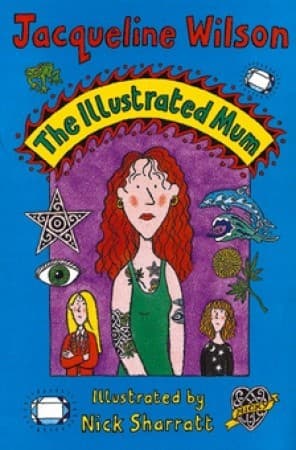
- The Illustrated Mum
Jacqueline Wilson
3.8 (14k) average on GoodreadsPsychologyExplores complex family dynamics and childhood perspectives with a similar emotional depth.
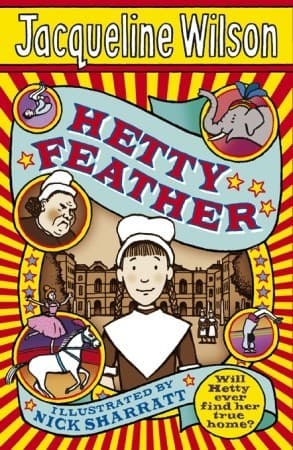
- Hetty Feather
Jacqueline Wilson
4.2 (7k) average on GoodreadsChildren'sFeatures a strong, spirited female protagonist navigating life in an institution, yearning for a family.
- Harry Potter and the Sorcerer's Stone
J.K. Rowling
4.5 (7M) average on GoodreadsFantasyRescued from a miserable life under the stairs, an orphaned boy discovers he's a wizard destined for a magical school, where he uncovers a dangerous secret tied to the dark wizard who murdered his parents.
- The Hobbit, or There and Back Again
J.R.R. Tolkien
4.3 (2.9M) average on GoodreadsFantasyA comfort-loving hobbit named Bilbo Baggins is whisked away by a mischievous wizard and a band of dwarves on an unexpected journey to reclaim stolen treasure from a fearsome dragon, discovering courage and a magical ring along the way.
- Harry Potter and the Goblet of Fire
J.K. Rowling
4.6 (2.6M) average on GoodreadsFantasyA bewildered Harry Potter, underage and thrust into a deadly Triwizard Tournament, must brave dragons, mermaids, and a resurgent dark magic to survive a year that will forever alter the wizarding world.
- Harry Potter and the Order of the Phoenix
J.K. Rowling
4.5 (2.5M) average on GoodreadsFantasyIn a year of oppressive secrets and the threat of Voldemort, Harry Potter and Dumbledore's Army secretly train for war, shown through Jim Kay and Neil Packer's dark illustrations.




Enjoyed the summary?
A summary gives you the shape of the book. The book itself has the detail, the examples and the voice.
Find The Story of Tracy Beaker on AmazonAs an Amazon Associate, BookBrief earns from qualifying purchases. How we're funded