

Synopsis
Covers the whole plot, including the ending.
- Difficulty
- Medium
- Pacing
- Moderate
- Mood
- Emotional, Romantic, Healing, Intimate
- Read it if
- You enjoy contemporary romance with a strong psychological element, character development, and a focus on overcoming past trauma.
- Skip it if
- You prefer light, low-angst romances or are uncomfortable with themes of past trauma and detailed discussions of intimacy.
The Sun and the Moon Plot Summary
Covers the whole plot, including the ending.
A Chance Encounter at the Coffee Shop
Amelia Vance, a meticulous lawyer, is late for court and needs coffee. She stops at 'The Daily Grind' and meets Noah, a charming barista with green eyes and golden curls. Despite her usual professional manner, Amelia feels flustered by Noah's confidence and flirtatious style. Their first interaction mixes Amelia's strictness with Noah's relaxed charm, hinting at a dynamic that will challenge her structured world. Amelia, initially annoyed by the delay, is also intrigued by Noah, who is different from her usual structured life.
The First Date and Rule Breaking
Noah, persistent, gets Amelia's number and asks her out. Their first date is casual, different from Amelia's usual high-end expectations, but Noah's genuine interest starts to break down her walls. Amelia, who lives by strict personal 'Rules' to maintain control and emotional distance, finds herself drawn to Noah's spontaneity. His easygoing nature and open communication challenge her need for order, making her question her self-imposed limits.
Intimacy and Confronting Rule #9
As Amelia and Noah's relationship grows, their physical intimacy increases. However, Amelia has a strict 'Rule Number 9: No dirty talking,' from a past trauma. When Noah, in his natural way, uses suggestive language, Amelia pulls back, creating a barrier. This reaction confuses and hurts Noah, who does not know why she is upset. Amelia must confront the fear and shame from her past, realizing her 'Rules' are not just about control, but also about protecting herself from vulnerability and pain.
Unveiling the Past
After the tension over Rule Number 9, Amelia realizes she must tell Noah about her past if their relationship is to continue. She tells him about a traumatic sexual experience from her youth, where an older man shamed her with vulgar language. This incident led her to create her rigid 'Rules' to regain control and protect herself from future harm. Noah listens with empathy, his reaction different from the judgment she experienced years ago, beginning to heal her emotional wounds.
Noah's Patience and Support
After Amelia reveals her past, Noah is a patient, understanding, and supportive partner. He does not pressure or judge her, instead offering her the space and reassurance she needs to heal. He gently encourages her to explore her boundaries and gradually challenge her 'Rules,' especially Rule Number 9. Noah's consistent kindness creates a safe environment for Amelia, allowing her to slowly dismantle her protective walls. His presence helps her emotional growth and self-discovery, showing her a different kind of male intimacy.
Challenging the Rules
Inspired by Noah's support and her growing feelings, Amelia begins to tentatively challenge her 'Rules.' This is clear in their intimate moments, where she starts to explore the boundaries she had set. With Noah's gentle guidance, she slowly allows herself to experience pleasure and intimacy without the fear and shame that had controlled her. Each small step outside her comfort zone is a victory, showing her willingness to trust Noah and reclaim parts of herself she had suppressed. She discovers that vulnerability can lead to deeper connection, not just pain.
Professional and Personal Overlap
Amelia's demanding legal career, once a shield, feels less fulfilling as her personal life with Noah grows. She questions the intense focus and emotional detachment she applied to her work. The two worlds sometimes overlap, challenging her ability to keep them separate. Noah, with his carefree spirit, often reminds her to find balance and joy outside her professional life. This forces Amelia to re-evaluate her priorities and her career's role in her happiness, prompting her to consider a life that includes both ambition and emotional connection.
A Setback and Self-Doubt
Despite her progress, Amelia experiences moments of self-doubt and fear. An incident, perhaps triggered by stress or insecurity, causes her to retreat into old patterns of emotional guardedness. She pushes Noah away, convinced she is not worthy of his love or that she will hurt him. This setback tests their relationship, making Noah wonder if he can break through her defenses. It forces Amelia to confront the fragility of her healing and the lingering power of her past trauma.
Noah's Commitment and Reassurance
During Amelia's moment of doubt, Noah does not give up. He confronts her with unwavering love and patience, reiterating his commitment and reassuring her that he understands her fears. He reminds her of her progress and emphasizes that he sees her, flaws and all, and loves her unconditionally. This powerful display of devotion helps Amelia finally let go of her deepest insecurities and fully trust in Noah and their relationship. She realizes that true love does not demand perfection, but embraces vulnerability and supports healing.
Embracing Vulnerability
Having overcome her final major hurdle, Amelia completely sheds her self-imposed 'Rules.' She realizes that these rules, once protection, have become a cage, preventing her from true happiness and intimacy. With Noah, she embraces vulnerability, allowing herself to feel and express emotions freely. She discovers the liberating power of authentic connection and the joy of a relationship built on trust. This transformation extends beyond her romantic life, impacting her professional outlook and her overall sense of self, leading to a more balanced and fulfilling existence.
A New Chapter
In the final stages, Amelia and Noah solidify their bond, ready for a new chapter. Amelia, no longer defined by her past trauma or 'Rules,' is a transformed woman, more confident, open, and genuinely happy. Noah, a steadfast and loving partner, has helped her discover her true self. Their relationship shows the power of love, empathy, and healing. They envision a future where they grow together, supporting each other, with Amelia understanding that true safety comes from within and from the love she shares, not from a list of rules.
Principal Figures
Amelia Vance
Protagonist
A high-powered, rule-bound lawyer who is emotionally repressed due to past trauma.
Amelia is a successful, ambitious lawyer who meticulously plans every aspect of her life, both professional and personal. She lives by a strict set of 'Rules' designed to maintain control and emotional distance, a coping mechanism stemming from a traumatic sexual experience in her past. Initially, she is cynical, guarded, and believes her rules keep her safe and happy, though in reality, she is depressed and repressed. Her sharp intellect is often overshadowed by her emotional unavailability and fear of vulnerability.
Relationships: Noah (Her romantic partner, who helps her confront her past and break her rules.); Her Colleagues (Professional acquaintances, often observing her rigid demeanor.)
Noah
Protagonist/Love Interest
A charming, laid-back barista who helps Amelia heal from her past.
Noah is the antithesis of Amelia: easygoing, confident, emotionally open, and deeply empathetic. He works as a barista but possesses a wisdom and patience that belies his seemingly casual demeanor. With his green eyes and golden surfer curls, he is undeniably attractive. He is genuinely interested in Amelia, seeing past her tough exterior to the vulnerable woman beneath. His laid-back alpha male style is disarming and challenges Amelia's preconceived notions of relationships and masculinity. He is a steadfast and supportive partner, offering unconditional love and understanding.
Relationships: Amelia Vance (His romantic partner, whom he deeply loves and helps to heal.); His Customers (Casual, friendly interactions at the coffee shop.)
The 'Older Man'
Antagonist/Mentioned
The unnamed individual responsible for Amelia's past trauma.
This character is not directly present in the narrative but is a pivotal figure in Amelia's backstory. He represents the source of her deep-seated trauma, having exploited and shamed her during a formative experience. His actions directly led to Amelia creating her elaborate system of 'Rules' as a defense mechanism against future pain and vulnerability, particularly Rule Number 9 concerning 'dirty talk.' He embodies the destructive power of betrayal and emotional abuse.
Relationships: Amelia Vance (The perpetrator of her past trauma.)
Amelia's Rules
Supporting/Metaphorical Antagonist
The strict personal guidelines Amelia created to protect herself, which ultimately hinder her happiness.
While not a character in the traditional sense, 'Amelia's Rules' function as a powerful internal antagonist. These are a meticulously crafted set of personal guidelines Amelia lives by, designed to maintain control, avoid vulnerability, and prevent emotional pain, especially in relationships and intimacy. Rule Number 9, 'No dirty talking,' is particularly significant as it directly relates to her past trauma. These rules, initially a coping mechanism, become a self-imposed prison, preventing her from experiencing genuine connection and happiness. The journey of the story is largely about Amelia recognizing and dismantling these rules.
Themes & Insights
Healing from Trauma
The novel explores healing from past trauma, specifically sexual exploitation and emotional shame. Amelia's rigid 'Rules' result from her past, and the story details her journey of confronting and overcoming this trauma. Noah's patient support creates a safe space for Amelia to heal, allowing her to dismantle her defenses and reclaim her sense of self. The narrative shows that healing is not linear but possible with trust and support, as seen when Amelia tells Noah about her past after the conflict over Rule #9.
“Okay, I wasn’t happy. Depressed and repressed is more like it. But am I ready for Mister Barista to obliterate every Rule in my book?”
The Power of Vulnerability
A central theme is the power of vulnerability in building genuine connections. Amelia initially sees vulnerability as a weakness and danger, leading her to build emotional walls with her 'Rules.' However, as she allows herself to be vulnerable with Noah, sharing her fears and past pain, she finds it is key to true intimacy and happiness. The story illustrates that embracing vulnerability, though scary, leads to emotional growth and freedom from self-imposed limits, as evidenced by her willingness to give up all her rules.
“I’d been so secure in my own little world. One with Rules about what I do—and what I definitely do NOT do.”
Control vs. Freedom
The conflict between the desire for control and the yearning for freedom drives Amelia's character arc. Her 'Rules' are an attempt to control her emotions and experiences, stemming from a past where she felt powerless. However, this control costs her the freedom to experience joy and deep connection. Noah represents the freedom that comes from letting go and embracing life's uncertainties. Amelia's journey is about realizing that true freedom is not in rigid control, but in the courage to release it and trust in love, as she does by gradually breaking her rules.
“My Rules kept me safe and happy. Okay, I wasn’t happy. Depressed and repressed is more like it.”
Unconditional Love and Acceptance
Noah's character shows unconditional love and acceptance. Despite Amelia's guardedness, past trauma, and emotional outbursts, Noah consistently meets her with patience, understanding, and affection. He does not try to change her but supports her in becoming her authentic self. His acceptance creates a safe space for Amelia to heal and grow, showing that true love looks beyond flaws and past hurts, offering reassurance and a foundation for trust. This is clear in his empathetic reaction when she reveals her trauma.
“He didn’t expect his particular brand of laid-back alpha male style. I’d been so secure in my own little world.”
Plot Devices & Literary Techniques
Amelia's 'Rules'
A literal list of personal guidelines serving as both a defense mechanism and a narrative obstacle.
Amelia's 'Rules' are a central plot device, meticulously detailed and referred to throughout the story. They function as a visible manifestation of her psychological defenses and past trauma. Each rule, especially Rule Number 9, represents a specific emotional barrier that Noah must help her overcome. The breaking of each rule signifies a step in Amelia's healing and growth, driving the romantic and psychological progression of the plot. They create clear, tangible goals for her character arc and provide a framework for understanding her internal conflict.
The Coffee Shop Setting
A casual, public space that facilitates an unexpected encounter and symbolizes a departure from the protagonist's structured world.
The coffee shop, 'The Daily Grind,' serves as a symbolic setting. It's an everyday, public space that contrasts sharply with Amelia's highly structured and formal legal environment. It's where she encounters Noah, a figure completely outside her usual social sphere. The informal, relaxed atmosphere of the coffee shop, and Noah's role as a barista, immediately signals a shift from Amelia's controlled world, setting the stage for the disruption of her routine and her carefully constructed life. It represents a neutral ground where vulnerability can begin to unfold.
The 'Dirty Talk' Trigger
A specific intimate act that directly triggers Amelia's past trauma and forces her to confront it.
The specific act of 'dirty talk' functions as a crucial plot device. It is directly linked to Amelia's Rule Number 9 and is the immediate catalyst for her emotional breakdown and subsequent revelation of her past trauma to Noah. This trigger provides a concrete, visceral manifestation of her internal conflict and the lingering effects of her past. It forces both Amelia and Noah to confront the deepest wounds, pushing their relationship beyond superficiality and into a realm of profound emotional intimacy and healing, giving the story its core conflict.
The Sun and the Moon Quotes
“It was as if the universe had decided to knit our souls together, thread by agonizing thread.”
“We are all just fractured mirrors, reflecting fragments of the people we want to be, and the people we fear becoming.”
“Love isn't about finding someone who completes you. It's about finding someone who accepts your incompleteness, and still chooses to stand by your side.”
“The quietest battles are often fought within the loudest minds.”
“Some silences are heavier than any words, bearing the weight of unspoken truths and unfulfilled desires.”
“He was the sun, burning bright and undeniable, and I was the moon, forever orbiting, reflecting his light even in my darkest phases.”
“To truly heal, you must first acknowledge the depth of the wound, not just the scar it leaves behind.”
“We chase after what we think we need, only to discover what we truly yearned for was there all along, hidden in plain sight.”
“The heart has its own logic, a wild and untamed thing that often defies reason and expectation.”
“Every person is a universe unto themselves, filled with stars and shadows, light-years of history, and the potential for new galaxies.”
“Sometimes the greatest act of love is letting go, not because you stop caring, but because you start caring more about their peace than your own possession.”
“Our pasts are not prisons, but foundations. We can choose to build upon them or let them crumble, but they are always there.”
“The most profound connections aren't always loud or dramatic; sometimes they're woven into the quiet comfort of shared presence.”
“He didn't just see me; he saw the potential of me, the version of myself I was too afraid to acknowledge.”
Quiz
10 questions on the plot and the characters. Each answer comes with a short explanation.
Question 1
What is the protagonist's profession?
- Doctor
- Teacher
- Lawyer
- Accountant
Show answer
C. Lawyer The protagonist explicitly states, 'hard-charging lawyers like me require caffeine to survive court battles.'
Question 2
What is the protagonist's primary motivation for going to the coffee shop?
- To meet new people
- To get a cup of coffee
- To escape her daily routine
- To find a new romance
Show answer
B. To get a cup of coffee The opening line states, 'I just wanted a freaking cup of coffee.'
Question 3
What physical features are used to describe the 'unbelievably hot guy' behind the counter?
- Blue eyes and dark hair
- Brown eyes and short hair
- Green eyes and golden surfer curls
- Hazel eyes and dreadlocks
Show answer
C. Green eyes and golden surfer curls The text describes him as 'all green eyes and golden surfer curls.'
Question 4
What is the protagonist's general emotional state before meeting the barista?
- Content and fulfilled
- Excited and optimistic
- Depressed and repressed
- Angry and defiant
Show answer
C. Depressed and repressed She admits, 'Okay, I wasn’t happy. Depressed and repressed is more like it.'
Question 5
What is 'Rule Number 9' of the protagonist's personal rules?
- No dating coworkers
- No dirty talking
- Always be on time
- Never mix business with pleasure
Show answer
B. No dirty talking The protagonist explicitly mentions, 'Rule Number 9? No dirty talking?'
Question 6
How does the protagonist initially perceive her 'Rules'?
- As oppressive and limiting
- As keeping her safe and happy
- As a challenge to be broken
- As irrelevant to her life
Show answer
B. As keeping her safe and happy She states, 'my Rules kept me safe and happy.' Although she immediately contradicts the 'happy' part.
Question 7
What type of 'alpha male style' does the barista possess?
- Aggressive and demanding
- Quiet and mysterious
- Laid-back
- Intellectual and reserved
Show answer
C. Laid-back The protagonist describes his 'particular brand of laid-back alpha male style.'
Question 8
The protagonist's description of herself as 'stuck-up' is immediately followed by what clarification?
- That she is also very kind
- That her rules kept her safe and happy (though not truly happy)
- That she is secretly longing for adventure
- That she is misunderstood by others
Show answer
B. That her rules kept her safe and happy (though not truly happy) She says, 'I may be stuck-up, but my Rules kept me safe and happy. Okay, I wasn’t happy. Depressed and repressed is more like it.'
Question 9
What is the central conflict hinted at by the protagonist's internal monologue?
- Her struggle to balance work and personal life
- Her reluctance to let go of her rigid personal rules and embrace change
- Her inability to find good coffee in the city
- Her fear of commitment in relationships
Show answer
B. Her reluctance to let go of her rigid personal rules and embrace change The core of her internal struggle is expressed in the question, 'But am I ready for Mister Barista to obliterate every Rule in my book?'
Question 10
The phrase 'tilt my world' suggests what immediate impact of the barista on the protagonist?
- He literally caused her to stumble
- He made her feel dizzy and unwell
- He introduced an unexpected and significant disruption to her established reality
- He physically moved her into a different position
Show answer
C. He introduced an unexpected and significant disruption to her established reality To 'tilt one's world' is an idiom meaning to dramatically alter one's perspective or situation, which aligns with her surprise and the potential for her rules to be 'obliterated.'
The Sun and the Moon FAQ
What is the central conflict in 'The Sun and the Moon'?
The central conflict revolves around the protagonist, a high-strung lawyer with a strict set of personal 'Rules,' encountering a laid-back barista who challenges her rigid worldview and repressed emotions. She is torn between maintaining her controlled, safe existence and embracing the vulnerability and passion he offers.
Who is the protagonist of the story, and what is her profession?
The protagonist is an unnamed, hard-charging lawyer who describes herself as 'stuck-up' and 'depressed and repressed.' Her demanding legal career requires intense focus and adherence to her personal 'Rules,' which she believes keep her safe.
Describe the barista character. What makes him appealing to the protagonist?
The barista is portrayed as an 'unbelievably hot guy' with 'green eyes and golden surfer curls,' possessing a 'laid-back alpha male style.' His appeal lies in his ability to challenge her preconceived notions and offer a stark contrast to her structured life, hinting at a freedom and passion she lacks.
What is 'Rule Number 9' and why is it significant?
Rule Number 9 is 'No dirty talking,' which the protagonist initially dismisses as something she would never want. This rule is significant because it represents her deep-seated aversion to vulnerability and raw intimacy, making its potential obliteration by the barista a major turning point in her psychological journey.
What does the title 'The Sun and the Moon' likely symbolize in relation to the main characters?
The title 'The Sun and the Moon' likely symbolizes the stark contrast between the two main characters: the protagonist, perhaps representing the rigid, cool, and controlled 'Moon,' and the barista, embodying the warm, vibrant, and free 'Sun.' Their coming together suggests a celestial balance or an eclipse where one influences the other.
How does the coffee shop setting play a role beyond just introducing the characters?
The coffee shop setting acts as a neutral ground, a mundane daily ritual that unexpectedly becomes a catalyst for profound personal change. It represents a break from the protagonist's structured legal world and serves as the initial point of contact where her 'Rules' begin to unravel, simply over 'a freaking cup of coffee.'
What does the protagonist mean by being 'stuck-up, but my Rules kept me safe and happy'?
She means that while her strict adherence to personal 'Rules' might make her appear arrogant or unapproachable to others, she genuinely believes these rules are essential for her emotional security. The 'happy' part is quickly contradicted by her later admission of being 'depressed and repressed,' revealing a self-deception about her true emotional state.
How might the protagonist's legal profession influence her personal 'Rules'?
Her legal profession, which demands precision, control, and adherence to laws and precedents, likely reinforces her need for personal 'Rules.' The high-stakes environment of court battles could lead her to seek similar rigid control in her personal life, viewing emotional vulnerability as a weakness.
What kind of psychological journey can readers expect the protagonist to undergo?
Readers can expect the protagonist to undergo a journey from repression and emotional stagnation to self-discovery and vulnerability. She will likely confront the underlying reasons for her 'Rules,' challenge her fear of intimacy, and learn to embrace a more authentic, less controlled version of herself, potentially finding genuine happiness.
How does the barista's 'laid-back alpha male style' challenge the protagonist's personality?
The barista's 'laid-back alpha male style' directly challenges the protagonist's need for control and predictability. His relaxed confidence and ability to 'tilt her world' suggest he operates outside her rigid framework, forcing her to confront her own insecurities and the limitations of her 'Rules' when faced with genuine, unscripted attraction.
What is implied by the protagonist's statement, 'I didn’t expect my life to change'?
This statement implies a deep-seated resistance to change and a comfort in her established, albeit unhappy, routine. It foreshadows a significant transformation, suggesting that the encounter with the barista will not be a fleeting one but a pivotal moment that fundamentally alters her perception of herself and her future.
Is the protagonist's initial dismissal of 'dirty talking' a sign of prudishness or something deeper?
While it might appear as prudishness, her dismissal of 'dirty talking' is likely a symptom of something deeper: her general repression and discomfort with raw, uninhibited emotional and physical intimacy. It suggests a fear of losing control and exposing a vulnerable side of herself that she has meticulously guarded.
How might the 'green eyes' of the barista be symbolically significant?
Green eyes are often associated with nature, growth, renewal, and even envy or desire. For the protagonist, they could symbolize the natural, untamed life she has suppressed, or represent a tempting, fresh perspective that promises to revitalize her 'depressed and repressed' existence, guiding her towards emotional growth.
What does the phrase 'obliterate every Rule in my book' suggest about the relationship's potential impact?
This phrase suggests that the relationship with the barista will not be a gentle persuasion but a forceful dismantling of her carefully constructed defenses. It implies a profound, potentially disruptive, but ultimately liberating transformation where her entire system of self-protection will be challenged and potentially destroyed.
Could the protagonist's 'Rules' be a defense mechanism against past trauma or disappointment?
Yes, it is highly plausible that her 'Rules' serve as a defense mechanism against past trauma, heartbreak, or disappointment. Her declaration that they 'kept me safe' suggests a history where vulnerability led to pain, prompting her to build emotional walls to prevent future hurt, even at the cost of genuine happiness.
What is the likely significance of the barista being 'unbelievably hot' and having 'surfer curls'?
His physical attractiveness and 'surfer curls' are likely significant because they represent a natural, carefree, and unconventional appeal that stands in stark contrast to her own rigid, professional image. This aesthetic contrast underscores the fundamental differences between them and highlights the powerful, almost primal, attraction that transcends her logical 'Rules.'
How might the story explore themes of authenticity versus societal expectations?
The story will likely explore themes of authenticity by contrasting the protagonist's 'stuck-up' persona, possibly shaped by societal expectations of a successful lawyer, with her repressed true self. The barista, embodying a more authentic, laid-back lifestyle, will challenge her to shed these external pressures and embrace her genuine desires, regardless of societal norms.
What role does the protagonist's internal monologue play in establishing her character?
Her internal monologue, characterized by self-deprecating humor ('I just wanted a freaking cup of coffee'), self-awareness of her flaws ('I may be stuck-up'), and candid admissions ('depressed and repressed'), is crucial. It immediately establishes her as complex, intelligent, and conflicted, allowing readers direct access to her psychological state and the struggle she faces.
Similar books
- It Ends with Us
Colleen Hoover
4.4 (212k) average on GoodreadsYoung AdultFeatures a strong female protagonist dealing with past trauma and a complex romantic relationship.
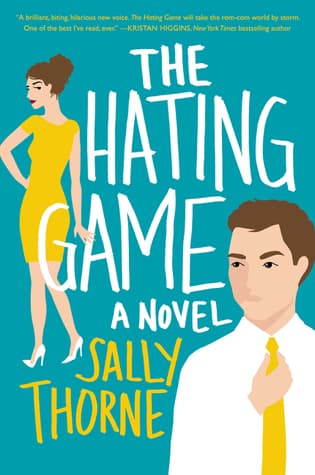
- The Hating Game
Sally Thorne
4.1 (146k) average on GoodreadsRomanceFocuses on a professional woman navigating a new relationship that challenges her preconceived notions.
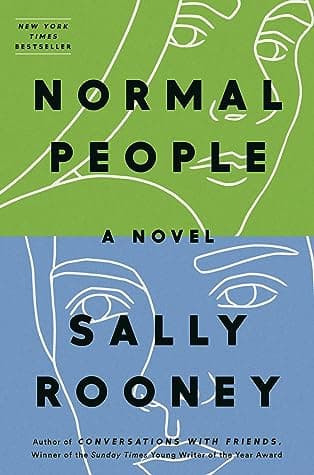
- Normal People
Sally Rooney
3.9 (405k) average on GoodreadsLiterary FictionRooney's novel explores psychological depth through class differences, communication failures, and the push-pull of a long-term entanglement, with intimacy struggles stemming from ingrained anxieties rather than explicit self-imposed rules. McAdam's book offers a more direct exploration of consciously breaking self-constructed emotional frameworks.
- The Perks of Being a Wallflower
Stephen Chbosky
4.2 (1.3M) average on GoodreadsPsychologyThrough letters, a shy high school freshman learns to navigate first love, trauma, and self-discovery, stepping off the sidelines and into life.
- Eleanor Oliphant Is Completely Fine
Gail Honeyman
4.3 (708k) average on GoodreadsLiterary FictionA lonely woman's structured life changes when an IT guy and an elderly man help her learn to open her heart.
- One Flew Over the Cuckoo's Nest
Ken Kesey
4.2 (631k) average on GoodreadsPsychologyIn a mind-bending asylum, the boisterous Randle McMurphy wages a defiant war against the tyrannical Nurse Ratched, inspiring his fellow inmates, including the seemingly catatonic Chief Bromden, to reclaim their lost humanity.




Enjoyed the summary?
A summary gives you the shape of the book. The book itself has the detail, the examples and the voice.
Find The Sun and the Moon on AmazonAs an Amazon Associate, BookBrief earns from qualifying purchases. How we're funded