

Synopsis
Covers the whole plot, including the ending.
- Difficulty
- Medium
- Pacing
- Moderate
- Mood
- Introspective, Melancholy, Resilient, Hopeful
- Read it if
- You enjoy Victorian novels with strong female protagonists and a critical look at societal norms, featuring romance born from mutual respect and overcoming adversity.
- Skip it if
- You prefer fast-paced plots or lighthearted stories, or are sensitive to detailed depictions of marital abuse and alcoholism.
The Tenant of Wildfell Hall Plot Summary
Covers the whole plot, including the ending.
Gilbert Markham's Curiosity
The novel starts with letters from Gilbert Markham to his friend, Jack Halford, describing events from several years before. Gilbert, a young gentleman farmer, lives a quiet life until the mysterious Mrs. Helen Graham and her young son, Arthur, arrive at the run-down Wildfell Hall. Her private nature, reserved manner, and refusal to join local society immediately catch Gilbert's attention and fuel village gossip. Despite social disapproval and his own early doubts, Gilbert feels increasingly drawn to Helen, intrigued by her sad beauty and the secrecy around her past. He struggles with his feelings, especially as he suspects Frederick Lawrence, Helen's landlord and a frequent visitor, is a rival.
Initial Encounters and Growing Affection
Gilbert's efforts to talk to Helen and spend time with her slowly break down some of her defenses. He sees her dedication to her son and her skill as a painter, which she uses to earn a living. Despite her warnings that she is not right for him and a relationship is impossible, Gilbert's admiration for Helen grows. He defends her against local gossip and openly shows his growing affection, even confronting Mr. Lawrence, whom he wrongly believes is a romantic rival. Helen, while grateful for his honesty, remains firm in her refusal to tell him about her past, creating a frustrating barrier between them.
The Confrontation and the Diary's Revelation
A major misunderstanding happens when Gilbert, driven by jealousy and local rumors, publicly confronts Helen about her supposed relationship with Mr. Lawrence. Offended and hurt by his lack of trust, Helen withdraws. To finally explain her situation and her secluded life, she gives Gilbert her private diary. This act of trust marks a turning point in their relationship. Gilbert, now able to understand her, begins to read the detailed account of her life, which makes up most of the novel's central story, shifting from Gilbert's letters to Helen's first-person journal entries.
Helen's Youth and Courtship of Huntingdon
Helen's diary takes the reader back to her youth at Ashby Park, living with her aunt and uncle. She describes her innocent, sheltered upbringing and her early attraction to the charming, handsome, but ultimately corrupt, Arthur Huntingdon. Despite warnings from her aunt and her brother, Frederick Lawrence, about Huntingdon's questionable character and bad habits, Helen, blinded by love and a romantic idea of changing him, agrees to marry him. Her diary entries show her youthful hope and her belief that her love and influence can change him, setting the stage for the tragic failure of her marriage.
Life at Grassdale Manor
After their marriage, Helen and Arthur move to Grassdale Manor. At first, there are brief happy times, but Huntingdon's true character soon appears. He is a selfish, uncontrolled, and unfaithful husband, often absent and indulging in heavy drinking and gambling with his equally corrupt friends, including Lord Lowborough, Mr. Hattersley, and the manipulative Walter Hargrave. Helen's attempts to change him are met with indifference, ridicule, and cruelty. Her hopes for a loving partnership are systematically crushed as Huntingdon openly shows his infidelity and brings his corrupting influence into their home, making her life miserable.
The Decline and Despair
Huntingdon's behavior becomes worse. He openly flirts with Lady Lowborough and later, more seriously, with Annabella Wilmot, who becomes his mistress. He uses his power as her husband to control her money and isolate her. The final blow comes when Huntingdon starts to corrupt their young son, Arthur, teaching him to drink and swear. Horrified by the idea of her son following in his father's footsteps, Helen realizes she must act. She secretly begins to sell her paintings and save money, planning to escape with her son to protect him from his father's destructive influence, an illegal and scandalous act for a woman at that time.
Escape to Wildfell Hall
Carrying out her carefully planned escape, Helen manages to leave Grassdale Manor with young Arthur, finding shelter at Wildfell Hall, which belongs to her brother, Frederick Lawrence. To avoid being found and the legal trouble of leaving her husband, she uses the name Helen Graham. She supports herself and her son by painting, living a solitary and simple life. This act of defiance and self-reliance shows her strength and determination to protect her child, even at the cost of her reputation and social standing. Her new life at Wildfell Hall is one of constant caution and quiet strength, until Gilbert Markham arrives.
Huntingdon's Illness and Death
The story returns to Gilbert's viewpoint as he finishes reading the diary. Soon after, Helen receives news that Arthur Huntingdon is seriously ill. Despite years of abuse and her hard-won freedom, Helen feels a moral duty to return to Grassdale Manor to care for him in his final days. She endures his continued accusations and childishness, even as he lies dying, refusing to admit his own fault. Helen remains firm, providing care until his death. This act of self-sacrifice shows her deep sense of duty and compassion, even towards those who hurt her most deeply. After his death, she is finally free.
Reconciliation and New Beginnings
With Huntingdon dead, Helen inherits his estate, making her a wealthy widow. She returns to her brother Frederick Lawrence's home, Staningley, now free from the legal and social limits that bound her. Gilbert, having read her diary and understood her immense suffering, is filled with renewed admiration and respect. He regrets his earlier jealousy and distrust. Their paths cross again, and their relationship, now free of secrets and social judgment, begins to grow. Helen is no longer the private tenant, but a woman of means and independence, and Gilbert is no longer a naive admirer.
A Future Together
After a time of courtship, during which Gilbert proves his steady love and devotion, Helen agrees to marry him. Their marriage is one of deep affection, mutual respect, and understanding, a strong contrast to her first, disastrous marriage. They settle down, raise young Arthur, and eventually have children of their own. The novel ends with Gilbert reflecting on their happy life together, highlighting the deep love and companionship they share, a testament to Helen's strength and the power of true affection to overcome past suffering and social expectations. Their story becomes an example of true partnership and a rejection of their society's superficiality.
The Tenant of Wildfell Hall Characters
Helen Graham (Huntingdon, nee Lawrence)
Protagonist
A strong-willed artist who flees her abusive husband to protect her son.
Helen is the fiercely independent and morally upright protagonist. She is an accomplished painter, intelligent, and deeply principled. Driven by a profound sense of duty and a protective love for her son, Arthur, she defies societal norms by leaving her dissolute husband. Despite her reserved exterior and melancholic demeanor, she possesses immense inner strength and resilience. Her experiences have made her wary and guarded, but she retains a capacity for deep affection and loyalty.
Relationships: Gilbert Markham (Second husband, initially admirer, then loving and respectful partner.); Arthur Huntingdon (First husband, abusive, dissolute, and manipulative.); Arthur (son) (Beloved son, whom she strives to protect from corrupting influences.); Frederick Lawrence (Brother, supportive and protective.)
Gilbert Markham
Narrator and Protagonist
A young, earnest farmer who falls in love with Helen Graham and champions her.
Gilbert is a respectable, if somewhat impetuous, young gentleman farmer. He is initially prone to jealousy and quick judgments but possesses a sincere heart and a strong sense of justice. His initial attraction to Helen Graham evolves into deep admiration and love as he learns the truth of her past. He is persistent, loyal, and ultimately proves himself worthy of Helen's trust and affection, serving as the primary narrator through his letters to Jack Halford.
Relationships: Helen Graham (Wife, object of his initial curiosity, then deep love and respect.); Jack Halford (Friend and recipient of his letters.); Eliza Millward (Brief flirtation, then friend's wife.)
Arthur Huntingdon
Antagonist
Helen's first husband, a charming but depraved and abusive rake.
Arthur Huntingdon is Helen's first husband, a man whose initial charm masks a deeply selfish, dissolute, and cruel character. He is an alcoholic, a gambler, and a serial adulterer who delights in tormenting Helen and corrupting their son. He represents the worst excesses of the Victorian rake, with no moral compass or sense of responsibility. His actions drive Helen to desperation and ultimately to flee their marriage.
Relationships: Helen Graham (Abused wife, whom he constantly torments.); Arthur (son) (Son, whom he attempts to corrupt.); Annabella Wilmot (Lowborough) (Mistress, whom he openly flaunts.)
Frederick Lawrence
Supporting
Helen's supportive and protective older brother.
Frederick is Helen's kind and protective older brother. He is a quiet, reserved gentleman who cares deeply for his sister. He warns Helen against marrying Huntingdon and later provides her with the sanctuary of Wildfell Hall when she flees. He is often misunderstood by others due to his reserved nature, but he is steadfast in his loyalty and support for Helen, acting as her confidant and protector throughout her ordeal.
Relationships: Helen Graham (Sister, whom he deeply cares for and protects.); Arthur Huntingdon (Brother-in-law, whom he despises for his treatment of Helen.)
Young Arthur Huntingdon (Helen's son)
Supporting
Helen's beloved son, whose welfare drives her actions.
Young Arthur is Helen's only child, a sweet and intelligent boy whom she adores. He is a central figure in Helen's decision to leave her husband, as she fears his father's corrupting influence will ruin him. He is a vulnerable character whose innocence highlights the depravity of his father and the heroism of his mother's sacrifice. He eventually grows into a good young man under Helen and Gilbert's care.
Relationships: Helen Graham (Devoted mother, his protector and guide.); Arthur Huntingdon (Biological father, a negative influence whom he is saved from.); Gilbert Markham (Step-father, a positive paternal figure.)
Annabella Wilmot (Lady Lowborough)
Supporting
A flirtatious and manipulative woman who becomes Huntingdon's mistress.
Annabella Wilmot, later Lady Lowborough, is a superficial and immoral woman who embodies the worst of Victorian society's hypocrisy. She is a close friend of Helen's during her marriage to Huntingdon but secretly engages in a scandalous affair with him. Her manipulative nature and lack of scruples contribute significantly to Helen's suffering and isolation at Grassdale. She is a foil to Helen's moral integrity.
Relationships: Arthur Huntingdon (Lover, with whom she has a public affair.); Helen Graham (Acquaintance, whose trust she betrays.); Lord Lowborough (Husband, whom she openly disrespects.)
Mr. Grimsby
Mentioned
One of Huntingdon's dissolute friends.
Mr. Grimsby is one of Arthur Huntingdon's primary companions in dissipation. He is a cynical, amoral man who encourages Huntingdon's worst behaviors and contributes to the toxic atmosphere at Grassdale Manor. He is a symbol of the corrupting influence of Huntingdon's social circle, participating in their drunken revelries and crude conversations, further isolating Helen.
Relationships: Arthur Huntingdon (Friend and drinking companion.); Helen Graham (Antagonist by association, part of her suffering.)
Walter Hargrave
Supporting
A suitor to Helen who is rejected due to his questionable character.
Walter Hargrave is a handsome and initially charming man who courts Helen during her marriage to Huntingdon. While not as overtly depraved as Huntingdon, he reveals a manipulative and self-serving nature, attempting to entice Helen into an affair. He represents another form of male entitlement and predatory behavior, though less brutal than Huntingdon. Helen sees through his superficiality and rejects his advances.
Relationships: Helen Graham (Unwanted suitor, whom she rejects.); Arthur Huntingdon (Acquaintance, often present in the same social circles.)
Jack Halford
Mentioned
Gilbert Markham's friend and the recipient of his letters.
Jack Halford is the implied recipient of Gilbert Markham's letters, through which the majority of the story is told. While not an active participant in the plot, his presence as the listener allows Gilbert to recount the complex narrative of Helen Graham. He represents the 'audience' for Gilbert's story, allowing for the epistolary structure.
Relationships: Gilbert Markham (Close friend and confidant.)
The Tenant of Wildfell Hall Themes
Female Independence and Autonomy
This theme is central to the novel. It challenges Victorian social rules that limited women to the home and denied them legal and financial independence. Helen's choice to leave her husband, earn her living by painting, and raise her son alone is a radical act of self-assertion. Her struggle highlights the severe limits placed on women, and her success shows how important it is for a woman to control her own life. She refuses to be a victim and actively protects herself and her child, eventually inheriting her own wealth.
“'I will not be a slave to his caprices, a victim to his vices!'”
The Corrupting Influence of Vice
The novel clearly shows the destructive power of uncontrolled behavior, cheating, and moral corruption, mainly through Arthur Huntingdon. His alcoholism, gambling, and repeated infidelity not only ruin his own life but also cause great suffering to Helen and threaten to corrupt their son. The story carefully details how vice destroys character, encourages cruelty, and leads to isolation and ruin, affecting not just the person but everyone connected to them, as seen in the decline of Grassdale Manor and the moral decay of Huntingdon's social group.
“'Oh, Arthur, what a wreck you have made of your life!'”
The Nature of True Love and Marriage
Brontë compares Helen's two marriages to explore what makes a healthy relationship. Her first marriage to Huntingdon, based on infatuation and a naive hope for change, becomes a hell of abuse and disappointment. In contrast, her relationship with Gilbert Markham, which grows from early curiosity and misunderstanding into deep respect, trust, and shared values, represents a more mature and lasting love. The novel argues that true marriage needs equality, mutual respect, and shared moral principles, not just passion or social expectation, as shown by the deep understanding Gilbert gains from reading Helen's diary.
“'My heart is with you, wherever you are – my love, my hope, my life, my treasure, my joy!'”
Social Hypocrisy and Gossip
The novel criticizes the superficial and judgmental nature of Victorian society, especially through the constant gossip and blame directed at Helen Graham. The local community quickly judges her private life and speculates about her past, without understanding the deep suffering she has endured. This theme shows how social expectations and appearances often hid deeper moral failures. 'Respectable' society tolerated the vices of men like Huntingdon but rejected a woman who dared to defy convention for her own survival and her child's well-being, as seen in Helen's initial rejection at Wildfell Hall.
“'They say she is a widow, and she lives at Wildfell Hall; and she is very proud and very unsociable.'”
The Role of Art as Sustenance and Expression
Helen's skill as a painter is not just a hobby; it is a vital source of income and emotional release. Her art allows her to support herself and her son independently, providing a way to escape her husband's control and reclaim her independence. It is also a form of self-expression, helping her process her experiences and keep her identity despite hardship. Secretly selling her paintings is a crucial step in her plan for freedom, showing art's practical and spiritual value.
“'If I had but a little money, I would take my boy and leave him.'”
Plot Devices & Literary Techniques
Epistolary Narrative
The story is primarily told through letters and a diary.
The novel employs an epistolary format, opening with letters from Gilbert Markham to his friend Jack Halford. This allows for a subjective, first-person account of events, building suspense around Helen's mysterious past. The most significant use of this device is the inclusion of Helen's diary, which forms a substantial portion of the book. This shifts the narrative perspective, providing an intimate, unvarnished account of her suffering and motivations, allowing readers direct access to her inner world and validating her experiences, effectively giving voice to a marginalized woman.
The Diary within the Novel
Helen's personal journal reveals her past directly to the reader and Gilbert.
Helen's diary is a crucial plot device. It serves as the primary means by which the truth of her past marriage is revealed, both to Gilbert Markham and the reader. This device allows Brontë to present Helen's experiences directly, unfiltered by external judgment, and provides a powerful, authentic voice for her suffering and resilience. It also functions as a moment of profound trust between Helen and Gilbert, marking a turning point in their relationship and enabling Gilbert to fully understand and respect her, dissolving his earlier prejudices and misunderstandings.
Wildfell Hall as a Symbol
The dilapidated mansion reflects Helen's isolated and guarded state.
Wildfell Hall, the decaying, isolated mansion where Helen Graham resides, functions as a powerful symbol. Its dilapidated state and remoteness reflect Helen's own emotional and social isolation, her guarded nature, and the 'ruin' of her past. It is a place of refuge but also a visible sign of her ostracization from conventional society. As Helen's life begins to mend and she finds happiness with Gilbert, the Hall itself, or at least her connection to its solitary nature, begins to recede, symbolizing her emergence from her past confinement.
The 'Fallen Woman' Trope (Subverted)
Challenges the Victorian archetype of a woman ruined by her past.
The novel intentionally subverts the prevalent Victorian 'fallen woman' trope. While Helen has left her husband and is living independently, a scandalous act, she is not depicted as morally corrupt or ruined. Instead, her actions are portrayed as courageous and morally justified, driven by self-preservation and maternal love. Brontë redefines what it means to be a 'fallen woman,' arguing that true moral decay lies with the abusive husband and the hypocritical society, not with the woman who seeks freedom and dignity, thus challenging contemporary perceptions of female morality and agency.
The Tenant of Wildfell Hall Quotes
“I am not an angel, and I will not pretend to be one.”
“A man's heart is a wondrous thing, Helen; but it is not a diamond; it has its flaws, and it is not always easy to polish them out.”
“If you would have your children more religious, yourself be more religious. If you would have them moral, yourself be moral. If you would have them amiable, yourself be amiable.”
“It is better to be alone than in bad company.”
“To forgive and forget is a divine maxim, but it is not always a human possibility.”
“The greatest blessing in life is to have a good character, and the greatest curse is to have a bad one.”
“I will not be a slave to any man, nor will I suffer my son to be one.”
“There is a secret in this house that I must not reveal.”
“Love is not a feeling to be trifled with, nor is it a thing to be bought or sold.”
“A man who cannot govern himself cannot govern others.”
“I wish I were a man, or that I had power to make myself independent of the world.”
“He that will not hear the counsel of the wise, shall fall into the hands of the foolish.”
“The heart of man is deceitful above all things, and desperately wicked: who can know it?”
“It is not the eye, it is not the voice, it is not the outward appearance that wins the heart, but the mind, the soul, the character.”
Quiz
10 questions on the plot and the characters. Each answer comes with a short explanation.
Question 1
What is the pseudonym Helen Graham adopts when she moves into Wildfell Hall?
- Mrs. Huntingdon
- Mrs. Lawrence
- Mrs. Maxwell
- Mrs. Graham
Show answer
C. Mrs. Maxwell Helen adopts the name Mrs. Maxwell to conceal her true identity and past as Helen Huntingdon.
Question 2
Who is the primary narrator of the novel, to whom Helen's diary is addressed?
- Frederick Lawrence
- Gilbert Markham
- Arthur Huntingdon
- Reverend Millward
Show answer
B. Gilbert Markham The novel is primarily framed as a series of letters from Gilbert Markham to his friend, Halford, recounting his experiences and Helen's story, which he learns through her diary.
Question 3
What is Helen's profession or means of earning a living after leaving her husband?
- Governess
- Writer
- Painter
- Seamstress
Show answer
C. Painter Helen supports herself and her son by painting and selling her artwork, a skill she developed earlier in life.
Question 4
What is the primary reason Helen decides to leave her husband, Arthur Huntingdon?
- He physically abused her regularly.
- He threatened to harm their son, Arthur.
- His dissolute lifestyle, infidelity, and corrupting influence on their son.
- He squandered all of her inheritance.
Show answer
C. His dissolute lifestyle, infidelity, and corrupting influence on their son. Helen leaves Arthur due to his rampant alcoholism, infidelity, and, most critically, his attempts to teach their young son to drink and swear, thus corrupting his morals.
Question 5
Which character initially spreads malicious gossip about Helen in the village of Linden-Car?
- Eliza Millward
- Rose Markham
- Mr. Grimsby
- Walter Hargrave
Show answer
A. Eliza Millward Eliza Millward is one of the main instigators of the gossip and speculation surrounding Helen's arrival and mysterious past, fueled by jealousy and curiosity.
Question 6
What significant legal or social obstacle did Helen face by leaving her husband in Victorian England?
- She could not legally divorce him without his consent.
- She had no legal right to her son or her earnings.
- She would be imprisoned for desertion.
- She would be excommunicated from the church.
Show answer
B. She had no legal right to her son or her earnings. Under coverture laws of the time, a married woman's legal identity was subsumed by her husband's. She had no legal right to her children, her property, or her earnings if she left him, making her act of independence extremely radical and precarious.
Question 7
How does Lord Lowborough, Arthur Huntingdon's friend, react to Helen's concerns about Arthur's behavior?
- He immediately supports Helen and condemns Arthur.
- He dismisses her concerns as oversensitivity and defends Arthur's 'manly' pursuits.
- He advises Helen to seek legal counsel for a separation.
- He tries to mediate between Helen and Arthur.
Show answer
B. He dismisses her concerns as oversensitivity and defends Arthur's 'manly' pursuits. Lord Lowborough, despite being a somewhat respectable figure, embodies the patriarchal attitudes of the era, dismissing Helen's concerns and upholding the double standard that excused Arthur's profligacy as typical male behavior.
Question 8
What is the specific nature of the 'marriage settlement' that Helen and Arthur sign before their wedding, and how does it play a crucial role later?
- It ensures Helen inherits all of Arthur's estate upon his death, regardless of his will.
- It allows Helen to retain control over a portion of her own inheritance, which becomes vital for her independence.
- It stipulates that Arthur must reform his ways within five years or Helen can legally divorce him.
- It grants Helen full custody of any children, overriding Arthur's paternal rights.
Show answer
B. It allows Helen to retain control over a portion of her own inheritance, which becomes vital for her independence. The marriage settlement, insisted upon by Helen's uncle, allows her to retain control over a sum of her own money (a small inheritance), which is crucial for her to be able to support herself and her son independently after leaving Arthur.
Question 9
How does the novel challenge the traditional Victorian ideal of the 'angel in the house' for women?
- By portraying Helen as a rebellious artist who rejects domesticity entirely.
- By showing a woman who actively chooses self-preservation and moral integrity over remaining in a destructive marriage for appearances' sake.
- By depicting Helen as a woman who never marries and lives a completely independent life from the start.
- By suggesting that women should have equal political rights to men.
Show answer
B. By showing a woman who actively chooses self-preservation and moral integrity over remaining in a destructive marriage for appearances' sake. The 'angel in the house' ideal demanded that women be submissive, pure, and self-sacrificing within the domestic sphere. Helen directly defies this by abandoning her marriage to protect her son and her own moral compass, prioritizing her principles over social conventions and her husband's 'rights'.
Question 10
What is the ultimate fate of Arthur Huntingdon?
- He reforms his ways and becomes a loving father.
- He dies from the consequences of his dissolute lifestyle, specifically a fall from his horse while drunk.
- He runs away to the continent and is never heard from again.
- He is imprisoned for his debts and dies in jail.
Show answer
B. He dies from the consequences of his dissolute lifestyle, specifically a fall from his horse while drunk. Arthur Huntingdon dies as a result of a fall from his horse, exacerbated by his already weakened constitution due to years of heavy drinking and dissipation. Helen returns to nurse him in his final illness.
The Tenant of Wildfell Hall FAQ
What is the central premise of 'The Tenant of Wildfell Hall'?
The novel tells the story of Helen Graham, a mysterious new tenant at Wildfell Hall, who is ostracized by the local gentry. Through a series of diary entries revealed to Gilbert Markham, she recounts her disastrous marriage to Arthur Huntingdon and her desperate flight to protect her son, Arthur, from his father's corrupting influence and debauched lifestyle.
Who is Helen Graham and why is she living alone at Wildfell Hall?
Helen Graham is the protagonist, a refined and intelligent woman who has fled her abusive, alcoholic husband, Arthur Huntingdon. She lives at Wildfell Hall under the assumed name of Graham to hide her true identity and protect herself and her young son, Arthur Huntingdon Jr., from her husband's legal claim and the societal repercussions of her separation.
Who is Gilbert Markham and what is his role in the story?
Gilbert Markham is a young, respectable farmer who becomes infatuated with Helen Graham. His letters to his friend, Mr. Halford, frame the narrative, detailing his observations of Helen and her eventual confession of her past through her diary, which he reads to understand her mysterious behavior and true circumstances.
What kind of marriage does Helen have with Arthur Huntingdon?
Helen's marriage to Arthur Huntingdon quickly devolves into a nightmare. He is an unfaithful, alcoholic, and abusive man who squanders his fortune, brings his mistresses into their home, and attempts to corrupt their young son. Helen endures years of emotional torment and public humiliation before making the radical decision to leave him.
How does Anne Brontë challenge Victorian societal norms in the novel?
Brontë directly challenges the legal and social constraints placed upon Victorian women, particularly their lack of rights within marriage. Helen's act of leaving her husband and earning her own living was scandalous and illegal at the time, highlighting Brontë's critique of a system that offered women little protection from abusive spouses.
What is the significance of Helen's painting career?
Helen's painting career is crucial for her independence and survival. It provides her with a means to support herself and her son after leaving Huntingdon, demonstrating a woman's capacity for self-sufficiency outside of marriage. It also reflects her artistic talent and provides an outlet for her emotional expression.
Are there any parallels between Arthur Huntingdon's friends and real-life figures or common archetypes?
Arthur Huntingdon's circle of friends, such as Lord Lowborough, Mr. Hattersley, and Walter Hargrave, represent the dissolute, often cruel, gentry of the era. They embody various vices like gambling, excessive drinking, and misogyny, serving as a collective antagonist that reinforces Huntingdon's destructive behavior and the corrupting influence of his lifestyle.
How does the structure of the novel, particularly the use of Helen's diary, contribute to its impact?
The epistolary structure, primarily through Gilbert's letters and Helen's extensive diary, allows for a deeply personal and immediate account of Helen's suffering and strength. It provides direct access to her thoughts and experiences, offering an intimate perspective that builds empathy and allows the reader to witness her ordeal firsthand, rather than through a secondary narrator.
What role does Frederick Lawrence play in Helen's life, and what is his relationship to her?
Frederick Lawrence is Helen's brother and a steadfast source of support. He provides her with the financial means to escape Huntingdon and a safe haven at Wildfell Hall, despite the legal risks to himself. His unwavering loyalty and protection are vital to Helen's ability to forge a new life for herself and her son.
Analyze Helen's decision to return to her dying husband. What does this reveal about her character?
Helen's decision to return to Arthur Huntingdon on his deathbed, despite his past abuses, showcases her profound sense of Christian duty, compassion, and forgiveness. It reveals her commitment to her marriage vows, even when one-sided, and her desire to ensure his soul's salvation, demonstrating a deep moral fortitude rather than a weakness.
How does Gilbert Markham's initial jealousy and possessiveness evolve throughout the narrative?
Gilbert's initial jealousy towards Frederick Lawrence and his possessive nature towards Helen are indicative of typical male attitudes of the era. However, as he reads Helen's diary, he gains a deeper understanding of her suffering and resilience, leading him to mature and develop a more respectful and compassionate love, transcending his earlier, more superficial affections.
Discuss the psychological impact of Arthur Huntingdon's behavior on Helen.
Arthur Huntingdon's constant infidelity, alcoholism, and emotional abuse inflict severe psychological trauma on Helen. She experiences profound isolation, despair, and a loss of hope, leading her to make a desperate choice to escape. His attempts to corrupt their son also cause immense fear and a fierce determination to protect him from moral ruin.
How does the novel portray the psychological effects of excessive indulgence and idleness on characters like Arthur Huntingdon?
The novel vividly illustrates how excessive indulgence and idleness corrupt characters like Arthur Huntingdon, leading to moral decay and self-destruction. Without purpose or discipline, Huntingdon descends into alcoholism and debauchery, demonstrating how unchecked privilege can destroy not only the individual but also those around them, particularly his family.
Is 'The Tenant of Wildfell Hall' a feminist novel? Why or why not?
Yes, it is widely considered a proto-feminist novel. Brontë's explicit critique of women's legal powerlessness within marriage, Helen's radical act of desertion, her economic independence through painting, and the novel's unflinching portrayal of domestic abuse all align with feminist themes. It advocates for women's autonomy and protection from marital tyranny.
How does Brontë use the theme of education, particularly for young Arthur, to convey her message?
Brontë uses the education of young Arthur to highlight the critical importance of a moral upbringing and the dangers of bad influence. Helen's desperate efforts to shield her son from his father's corrupting lessons emphasize her belief that a child's character is shaped by their environment and that a mother has a right to guide her child's moral development, even against the father's wishes.
Compare Helen Graham's character to other Bronte heroines like Jane Eyre or Catherine Earnshaw.
Helen Graham shares the strong will and moral conviction of Jane Eyre but possesses a more explicitly rebellious spirit in her actions against societal norms. Unlike Catherine Earnshaw, whose passion leads to self-destruction, Helen's passion is channeled into self-preservation and protecting her child, making her a more self-controlled and morally guided figure despite her intense suffering.
What is the significance of the novel's ending, particularly Helen and Gilbert's eventual marriage?
The ending, with Helen and Gilbert's marriage, signifies a hard-won triumph for Helen, representing a second chance at happiness and a union built on mutual respect and understanding, rather than infatuation. It provides a hopeful resolution, showing that love can endure and flourish even after immense suffering, and that a woman can find a partner who truly values her independence and strength.
How did the novel's reception differ from its initial publication to modern interpretations?
Upon its initial publication, the novel was considered shocking and 'coarse' due to its frank depiction of domestic abuse, alcoholism, and a woman leaving her husband. Critics found it too realistic and morally questionable. Modern interpretations, however, praise its realism, its progressive feminist themes, and its courageous social commentary, recognizing it as a pioneering work.
About the author
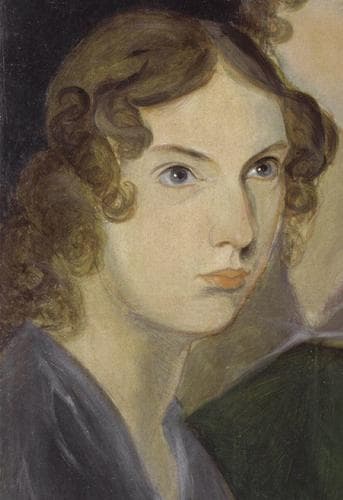
Anne Brontë was an English novelist and poet, and the youngest member of the Brontë literary family.
Similar books
- Jane Eyre
Charlotte Brontë
4.1 (1.6M) average on GoodreadsHistorical FictionFeatures a strong, independent governess protagonist navigating societal constraints and a complex romance.
- Wuthering Heights
Emily Brontë
3.9 (1.3M) average on GoodreadsHistorical FictionExplores passionate, often troubled relationships within a rural English setting, with a focus on character depth.
- Tess of the D'Urbervilles
Thomas Hardy
3.8 (238k) average on GoodreadsHistorical FictionA tragic tale of a woman defying societal expectations and facing harsh judgments in Victorian England.
- Middlemarch
George Eliot
4.0 (136k) average on GoodreadsHistorical FictionWildfell Hall is more intensely focused on the immediate, visceral experience of domestic abuse and a woman's active rebellion against it. While Middlemarch examines societal constraints and disillusioned idealism (e.g., Dorothea Brooke's marriage), Brontë's novel presents a more direct and defiant act of survival against outright cruelty, making its proto-feminist message more explicit and confrontational.
- To Kill a Mockingbird
Harper Lee
4.3 (4.5M) average on GoodreadsHistorical FictionIn the 1930s Jim Crow South, Harper Lee writes about racial injustice, moral growth, and the quiet courage of a lawyer father, Atticus Finch, as seen through his young daughter's eyes.
- The Great Gatsby
F. Scott Fitzgerald
3.9 (3.8M) average on GoodreadsHistorical FictionIn the opulent Roaring Twenties, a mysterious millionaire's lavish parties hide his desperate, tragic pursuit of a lost love, exposing the emptiness within the American Dream.




Enjoyed the summary?
A summary gives you the shape of the book. The book itself has the detail, the examples and the voice.
Find The Tenant of Wildfell Hall on AmazonAs an Amazon Associate, BookBrief earns from qualifying purchases. How we're funded