

Synopsis
Covers the whole plot, including the ending.
- Difficulty
- Medium
- Pacing
- Moderate
- Mood
- Satirical, Absurdist, Witty, Experimental
- Read it if
- You enjoy literary parodies and want to see Hemingway's early, experimental, and satirical side.
- Skip it if
- You prefer straightforward narratives, serious literary fiction, or are not familiar with the authors Hemingway is parodying.
The Torrents of Spring Plot Summary
Covers the whole plot, including the ending.
The Arrival at the Waterworks
Yogi Johnson, a contemplative war veteran and aspiring writer, arrives at the American Cafe and Waterworks in Petoskey, Michigan, a popular hangout for local artists and intellectuals. He is immediately struck by the cafe's atmosphere and the eccentric characters within, particularly the waitresses. Yogi, who has recently returned from the war, feels unfulfilled and longs for something, though he isn't quite sure what it is. He observes the mundane yet significant events unfolding around him, seeking inspiration for his writing and a connection that transcends the ordinary. His internal monologue reveals his struggle with creativity and his desire to find an American voice in literature.
Enter Diana, the Waitress
Yogi becomes infatuated with Diana, one of the waitresses at the American Cafe. Diana, an intellectual who prides herself on her literary knowledge and French phrases, is equally drawn to Yogi's quiet intensity. Their courtship is unusual, marked by a shared sense of existential weariness and a mutual appreciation for the absurd. They discuss literature, life, and the meaninglessness of it all, often speaking in a stilted, overly dramatic manner that parodies the literary styles of the era. Their conversations are filled with pronouncements and self-conscious artistic posturing, highlighting the pretentious nature of the literary scene Hemingway aims to satirize. Yogi proposes to Diana, driven by a desire for stability and a muse for his writing.
The Arrival of Scripps O'Neil
Scripps O'Neil, a fellow war veteran and writer, arrives at the American Cafe and Waterworks. Like Yogi, Scripps searches for inspiration and deeper meaning in life, but he is more overtly cynical and prone to grand pronouncements. He immediately notices Diana and is also smitten by her, creating an unspoken rivalry with Yogi. Scripps’s arrival introduces a new dynamic to the cafe, as he brings with him a different kind of artistic pretension and a more aggressive pursuit of his desires. He sees Diana as a potential subject for his stories, a muse that could ignite his dormant creativity. His presence further complicates the unusual relationships forming within the cafe.
Scripps's Infatuation with Mandy
Despite his initial interest in Diana, Scripps quickly transfers his affections to Mandy, another waitress at the cafe. Mandy is captivated by Native American culture and speaks of it with a romanticized, almost mystical reverence. Scripps, ever the opportunist for new material, finds her fascination intriguing and sees it as a unique angle for his writing. Their interactions are a further parody of shallow intellectualism, as Mandy's pronouncements about 'the passing of a great race' and Scripps's eager absorption of them highlight the superficiality of their artistic pursuits. This sudden shift in Scripps's affections illustrates the fickle nature of artistic inspiration and romantic attachment within the narrative.
The Native American Presence
Mandy's romanticized discussions about Native American culture, particularly her lament for 'the passing of a great race,' manifest in the literal appearance of several Native American characters at the American Cafe. These characters are portrayed in a highly stereotypical and almost absurd manner, reflecting the superficial understanding and appropriation of their culture by the white characters. They are often silent, stoic figures who observe the antics of the writers and waitresses with an air of detached wisdom, or sometimes, bemused indifference. Their presence highlights the shallowness of Mandy's and Scripps's intellectualizations, bringing a bizarre reality to their abstract discussions and further emphasizing the satirical elements of the story.
Yogi's Struggle and Diana's Departure
Yogi continues to grapple with his creative block, finding it difficult to produce meaningful work. His attempts at writing are often interrupted by his internal musings and his observations of the cafe's peculiar inhabitants. Diana, growing impatient with Yogi's artistic stagnation and his inability to provide her with the intellectual stimulation she craves, eventually leaves him. She departs with a British writer, a caricature of the sophisticated European artist, who promises her a more exciting and intellectually fulfilling life. Diana's departure shows the superficiality of her initial attraction to Yogi and the transient nature of their shared artistic aspirations, leaving Yogi to confront his creative solitude once more.
Scripps's 'Great Race' Obsession
Scripps's infatuation with Mandy and his interest in Native American culture deepen, becoming an obsession. He sees Mandy as a living embodiment of the 'great race' he believes is fading, and he attempts to incorporate this theme into his own writing. His interactions with the actual Native American characters become increasingly bizarre, as he tries to extract some profound wisdom or artistic inspiration from them, often with comically misguided results. Scripps's pursuit of this theme highlights the novel's central parody of Sherwood Anderson's *Dark Laughter*, particularly its romanticized and simplistic portrayal of indigenous cultures and the search for authentic American experience. He believes he is on the verge of a literary breakthrough.
The Search for Authenticity
Both Yogi and Scripps, despite their differing approaches, continue their earnest yet often absurd quests for artistic authenticity and an American voice in literature. Yogi remains introspective, grappling with his inner demons and the elusive nature of inspiration. Scripps actively seeks out external stimuli, believing he can find profundity in the exotic or the 'authentic' experiences of others. Their individual journeys are marked by a series of comically misguided attempts to capture the essence of life and art, further emphasizing the satirical intent of the novel. They both believe they are on the cusp of creating something truly great, despite the superficiality of their methods.
The Return of the Indians
The Native American characters, who had periodically appeared and disappeared, return to the American Cafe in a more prominent and symbolic manner. Their presence becomes increasingly surreal, culminating in a scene where they participate in a ritualistic dance or gathering that is observed by the white characters with a mix of fascination and misunderstanding. This scene further accentuates the novel's critique of cultural appropriation and the romanticized notions of the 'noble savage.' The Native Americans remain largely enigmatic, their true thoughts and feelings unvoiced, serving as a mirror to the white characters' projections and preconceived notions about them. Their return marks a turning point in the satirical narrative.
The Grand Finale and Unresolved Endings
The novel culminates in a series of unresolved and comically ambiguous endings for its main characters. Yogi is left alone, still searching for his muse and struggling with his writing, his journey for artistic fulfillment seemingly endless. Scripps, still obsessed with Mandy and the 'great race,' finds himself in increasingly absurd situations, his literary aspirations remaining unfulfilled despite his fervent belief in his own genius. Diana's fate with the British writer is left open, implying that her pursuit of intellectual stimulation may be as fleeting as her previous relationship. The novel concludes without definitive resolutions, reinforcing its satirical nature and its critique of the pretentious literary world it parodies. Life, and art, continue in their chaotic and often meaningless fashion.
Principal Figures
Yogi Johnson
Protagonist
A war veteran and aspiring writer searching for authentic experience and literary inspiration.
Yogi Johnson is a contemplative and somewhat melancholic war veteran who has returned to Petoskey, Michigan, with a burning desire to become a great American writer. He is introspective, constantly observing his surroundings and engaging in internal monologues about the nature of art, life, and authenticity. Despite his earnestness, he is often prone to self-doubt and artistic stagnation. He seeks a muse and a deeper meaning, often getting lost in philosophical musings rather than actual writing. He represents the earnest but often misguided artist, grappling with the weight of literary tradition and the search for a unique voice.
Relationships: Diana (Brief, intellectual courtship; she becomes his muse before leaving him.); Scripps O'Neil (Fellow writer, unspoken rival, a foil to his more introspective nature.)
Scripps O'Neil
Protagonist/Antagonist
Another war veteran and writer, more cynical and opportunistic, who seeks inspiration in exoticism.
Scripps O'Neil is a more outwardly cynical and aggressive writer compared to Yogi. He is an opportunist, constantly on the lookout for new material and dramatic experiences to fuel his stories. He is less concerned with authentic introspection and more with external validation and the romanticization of 'exotic' cultures, particularly Native American life. Scripps is a caricature of the shallow intellectual, quick to adopt fashionable ideas and grand pronouncements without truly understanding them. He represents the kind of writer Hemingway sought to lampoon, particularly Sherwood Anderson, with his sentimental and often superficial portrayal of American life.
Relationships: Mandy (Infatuation and muse, based on her interest in Native American culture.); Yogi Johnson (Fellow writer, unspoken rival, a foil to his more externalized approach.)
Diana
Supporting
A waitress at the American Cafe, an intellectual who seeks a stimulating artistic partner.
Diana is one of the waitresses at the American Cafe, initially captivating Yogi Johnson with her intellectual pretensions and literary interests. She prides herself on her knowledge of French and her artistic sensibilities, often speaking in a stilted, overly dramatic manner. Diana desires a partner who can match her intellectual fervor and provide her with a muse-like presence. Her affections are somewhat fickle, driven by the need for artistic stimulation and a romanticized view of the creative life. She represents the superficiality of intellectual women in the literary circles Hemingway satirizes, more interested in the *idea* of art than its genuine creation.
Relationships: Yogi Johnson (Brief intellectual and romantic partner, whom she later abandons.); British Writer (New romantic and intellectual partner after leaving Yogi.)
Mandy
Supporting
Another waitress who is obsessed with Native American culture and the 'passing of a great race'.
Mandy is another waitress at the American Cafe, notable for her intense, romanticized obsession with Native American culture. She frequently laments 'the passing of a great race,' a direct parody of themes found in contemporary literature, particularly Sherwood Anderson's *Dark Laughter*. Mandy's understanding of Native American culture is superficial and stereotypical, serving as a vehicle for the novel's satire of cultural appropriation and sentimentalism. She becomes a muse for Scripps O'Neil, who sees her fascination as a rich source for his own writing. Her character underscores the novel's critique of writers who exploit cultures for artistic gain.
Relationships: Scripps O'Neil (Object of his infatuation and his artistic muse regarding Native American themes.)
The Native Americans
Mentioned/Supporting
A group of silent, stoic figures who appear in response to Mandy's discussions.
The Native Americans in *The Torrents of Spring* are not fully developed characters but rather symbolic figures who appear almost magically in response to Mandy's discussions about 'the passing of a great race.' They are portrayed in a highly stereotypical manner—silent, stoic, and often observing the white characters with an air of detached wisdom or bemusement. Their literal appearance serves as a direct parody of the romanticized and often inaccurate portrayals of indigenous peoples in the literature Hemingway was satirizing. They highlight the superficiality and cultural appropriation inherent in the white characters' intellectual pursuits, bringing an absurd reality to their abstract discussions.
Relationships: Mandy (Object of her romanticized fascination.); Scripps O'Neil (Source of his artistic inspiration and cultural appropriation.)
The British Writer
Mentioned
An unnamed, sophisticated European writer who takes Diana away from Yogi.
The British Writer is an unnamed character who appears towards the end of the novella, serving as a catalyst for Diana's departure from Yogi. He is portrayed as a sophisticated, worldly European intellectual, a caricature of the kind of 'cultured' artist that American writers often looked up to or felt inferior to. His arrival and Diana's subsequent departure with him underscore the fleeting nature of Diana's affections and her constant search for a more stimulating artistic environment. He represents the perceived superiority of European literary traditions and the sometimes superficial allure they held for American artists of the era.
Relationships: Diana (New romantic and intellectual partner after she leaves Yogi.)
Themes & Insights
The Absurdity of Literary Ambition
The novella relentlessly satirizes the earnest yet often misguided aspirations of writers, particularly those obsessed with finding a 'great American novel' or a unique 'voice.' Yogi and Scripps, despite their differing approaches, engage in pretentious pronouncements and self-conscious artistic posturing, often failing to produce any meaningful work. Their intellectual discussions are filled with clichés and borrowed ideas, highlighting the superficiality of their literary ambitions. For example, Yogi's constant internal debates about authenticity often prevent him from actually writing, while Scripps eagerly latches onto Mandy's romanticized notions of Native American culture as a shortcut to profundity.
“What did it mean? What did it all mean? Nothing. Absolutely nothing. But it had to mean something. Everything had to mean something.”
Parody of Sherwood Anderson and Sentimentalism
A central theme is the direct parody of Sherwood Anderson's writing style, particularly his novel *Dark Laughter*. Hemingway mocks Anderson's romanticized and simplistic portrayal of American life, his use of 'primitive' or 'authentic' characters, and his sentimental prose. Mandy's obsession with 'the passing of a great race' and Scripps's eager adoption of this theme are direct jabs at Anderson's work. The exaggerated dialogue, the sudden shifts in affection, and the overall narrative structure mimic and then deflate Anderson's style, arguing against what Hemingway saw as a soft and uncritical approach to literature. The literal appearance of Native Americans in response to Mandy's pronouncements further emphasizes this satirical intent.
“And the great race, the red race, what of them? Were they passing? Was it true that they were passing?”
Superficiality of Intellectualism and Art
The novella critiques the superficiality in certain intellectual and artistic circles. Characters like Diana, with her French phrases and literary pretensions, and Scripps, with his quick adoption of fashionable ideas, embody this theme. Their discussions about literature and life are often shallow, relying on clichés and borrowed wisdom rather than genuine insight. Hemingway suggests that much of what passes for intellectualism in these circles is merely posturing. The characters' rapid changes in romantic interest, often driven by a search for a 'muse' rather than genuine connection, further highlight this superficiality. The American Cafe itself, a hub for these 'artists,' is a stage for these shallow performances.
“She was an intellectual, she was. And she knew French, she did. It was all very intellectual, very French, very advanced.”
The Elusiveness of Authenticity
Both Yogi and Scripps are on a quest for authenticity, whether in life or in their art, but it constantly eludes them. Yogi seeks it through introspection and a 'true' American voice, while Scripps looks for it in exotic experiences and the 'primitive' wisdom of others. However, their attempts are often misguided or fall into cliché. The Native American characters, intended by Mandy and Scripps to represent 'authenticity,' remain largely enigmatic, highlighting the difficulty, or perhaps impossibility, of truly understanding or appropriating another's experience. The novel suggests that the earnest search for authenticity can itself become a form of inauthenticity when pursued with self-conscious artistic ambition.
“He wanted to write, he did. He wanted to write something true, something real, something American. But what was true? What was real?”
Plot Devices & Literary Techniques
Parody
The primary literary device, used to mock specific authors and literary trends.
Parody is the overarching device of *The Torrents of Spring*. Hemingway uses it to directly lampoon the writing style, themes, and characters of Sherwood Anderson, particularly his novel *Dark Laughter*. He exaggerates Anderson's sentimentalism, his romanticization of 'primitive' cultures, and his often simplistic psychological insights. Beyond Anderson, the novel parodies the broader literary scene of the 1920s, including pretentious intellectualism, the search for 'authentic' American experience, and the self-importance of aspiring writers. The exaggerated dialogue, the absurd plot developments, and the stereotypical characters all serve to create a humorous, critical imitation of these literary targets.
Caricature
Exaggerated portrayal of characters for satirical effect.
Caricature is employed extensively to create the novel's characters. Yogi Johnson, with his earnest but often unproductive introspection, and Scripps O'Neil, with his cynical opportunism and quick shifts in artistic obsession, are exaggerated representations of aspiring writers. Diana, the intellectually pretentious waitress, and Mandy, with her romanticized obsession with Native American culture, are likewise caricatures of certain types of women in literary circles. Even the Native American characters are caricatures, serving as a satirical reflection of how indigenous peoples were often portrayed in contemporary literature. These exaggerated traits highlight the superficiality and absurdity that Hemingway observed in the literary world.
Metafiction
The novel self-consciously comments on its own nature as a work of fiction.
While not as overt as some metafictional works, *The Torrents of Spring* subtly engages in metafiction by constantly drawing attention to its own artificiality and its purpose as a literary critique. The characters are writers themselves, frequently discussing the craft of writing, the nature of inspiration, and the search for an 'American voice.' The plot often feels deliberately constructed to serve the parody, with events unfolding in a way that highlights the absurdity of literary conventions rather than striving for realism. The narrator's tone often feels like a running commentary on the story itself, further reinforcing the idea that the reader is engaging with a self-aware literary experiment rather than a straightforward narrative.
Stream of Consciousness (Parodied)
A satirical take on the internal monologues common in modernist literature.
Hemingway parodies the stream-of-consciousness technique, a popular modernist device, by presenting Yogi Johnson's internal monologues as rambling, often repetitive, and ultimately unproductive. While seemingly profound, Yogi's thoughts frequently circle back to the same anxieties about writing, authenticity, and his personal failings, without leading to any significant breakthroughs. This satirical use highlights the potential for such internal monologues to become self-indulgent and to obscure genuine insight rather than reveal it. It critiques writers who use the technique to appear profound without truly delving into complex psychological or philosophical depths, making Yogi's internal world a source of humor rather than deep empathy.
The Torrents of Spring Quotes
“They were all in accord, however, that the spring was beautiful.”
“He had never been able to understand why people liked the movies.”
“It was a good thing to be in love with spring.”
“The trouble with women was that they were always wanting to be loved for themselves.”
“He felt that he had to write a story about something.”
“War was a thing that happened to other people.”
“He wondered if he would ever be able to write anything again.”
“Spring was the time for love and for writing.”
“The rain had stopped and the sun was out.”
“He knew that he had to make a decision.”
“It was a very American spring.”
“He was a man who loved to read.”
“The wind was blowing hard.”
“He felt a great peace come over him.”
Quiz
10 questions on the plot and the characters. Each answer comes with a short explanation.
Question 1
What is the primary genre of 'The Torrents of Spring'?
- Tragedy
- Romance
- Parody/Satire
- Historical Fiction
Show answer
C. Parody/Satire 'The Torrents of Spring' is subtitled 'A Romantic Novel in Honor of the Passing of a Great Race', but it is primarily a parody and satire, particularly of Sherwood Anderson's 'Dark Laughter'.
Question 2
Which author's style and work is 'The Torrents of Spring' primarily a parody of?
- F. Scott Fitzgerald
- Gertrude Stein
- Sherwood Anderson
- Ezra Pound
Show answer
C. Sherwood Anderson Hemingway wrote 'The Torrents of Spring' as a direct parody of Sherwood Anderson's novel 'Dark Laughter', mocking his style and themes.
Question 3
What is the name of the main character who works at the pump factory?
- Yogi Johnson
- Scrooge Nelson
- Leroy Jenkins
- Bill Gorton
Show answer
A. Yogi Johnson The primary protagonist of the story is Yogi Johnson, who works at a pump factory in Petoskey, Michigan.
Question 4
What is Yogi Johnson's initial marital status at the beginning of the novella?
- Married to Diana
- A bachelor
- Widowed
- Engaged to Mandy
Show answer
B. A bachelor Yogi Johnson begins the story as a bachelor, though he soon encounters Diana and eventually marries her.
Question 5
What peculiar habit does Diana, one of the main female characters, have regarding her teeth?
- She polishes them with sand.
- She removes them at night.
- She dyes them green.
- She has gold caps on all of them.
Show answer
B. She removes them at night. Diana's most notable physical characteristic, often highlighted in the text, is her habit of removing her false teeth at night.
Question 6
What causes Yogi Johnson to abandon Diana and pursue Mandy?
- Diana's lack of interest in literature.
- He falls in love with Mandy's poetry.
- Mandy enters the restaurant with a British accent.
- Diana suggests a ménage à trois.
Show answer
C. Mandy enters the restaurant with a British accent. Yogi is instantly smitten with Mandy when she enters the restaurant speaking with a British accent, leading him to abandon Diana.
Question 7
What natural phenomenon is frequently mentioned in the novella, symbolizing the 'torrents' of spring and the flow of inspiration?
- Blizzards
- Droughts
- Rain and melting snow
- Tidal waves
Show answer
C. Rain and melting snow The title itself, 'The Torrents of Spring,' refers to the melting snow and spring rains, which are used metaphorically to represent the gushing, often uncontrolled, nature of artistic inspiration and narrative in the book.
Question 8
What is the ultimate fate of Yogi Johnson and Mandy at the end of the story?
- They settle down and have children.
- They are last seen in the restaurant, contemplating their future.
- They both leave Petoskey for Paris.
- They are eaten by a lion.
Show answer
B. They are last seen in the restaurant, contemplating their future. The story ends with Yogi and Mandy in the restaurant, unsure of their next steps, reflecting the open-ended and somewhat absurd nature of the parody.
Question 9
What specific literary technique does Hemingway employ extensively to mock other writers, particularly Sherwood Anderson?
- Stream of consciousness
- Minimalism and understatement
- Repetitive, overly poetic language and absurd plot developments
- Strict adherence to classical narrative structure
Show answer
C. Repetitive, overly poetic language and absurd plot developments Hemingway uses exaggerated, repetitive language, often with a faux-profound tone, and introduces increasingly absurd plot elements (like the Native American hunting story) to ridicule the perceived pretentiousness and meandering style of writers like Anderson.
Question 10
The novella's subtitle, 'A Romantic Novel in Honor of the Passing of a Great Race,' primarily refers to what?
- The decline of Native American tribes.
- The supposed fading of American literary giants or a certain type of 'great' writing.
- The extinction of a specific animal species.
- The end of the British Empire.
Show answer
B. The supposed fading of American literary giants or a certain type of 'great' writing. This subtitle is part of the satire, likely mocking the perceived 'passing' of a certain kind of profound or romantic literature, or perhaps even a self-deprecating jab at the 'great race' of writers that Hemingway saw himself as part of or challenging.
The Torrents of Spring FAQ
What is the primary premise of 'The Torrents of Spring'?
The novella follows two main characters, Yogi Johnson and Scripps O'Neil, who work in a pump factory in Michigan. Both are writers struggling with inspiration and love, with Yogi seeking a 'natural' woman and Scripps grappling with his own artistic block and romantic entanglements, all while parodying the literary styles and themes of contemporary authors, particularly Sherwood Anderson.
Who are the main characters and what are their primary motivations?
Yogi Johnson, a veteran, is searching for a truly 'natural' woman, eventually finding Diana, a waitress. Scripps O'Neil, another writer, is married to Mandy and struggles with writer's block and the perceived artificiality of modern life, often feeling overshadowed by Yogi's simple pursuits and Diana's unpretentious nature.
How does the setting of the Michigan pump factory contribute to the novella's themes?
The pump factory serves as a mundane, industrial backdrop that contrasts sharply with the characters' artistic aspirations and romantic yearnings. It highlights the perceived disconnect between the 'real world' of labor and the often-pretentious world of writers, emphasizing the artificiality Hemingway critiques.
What role does the character Diana play in the story, particularly in relation to Yogi?
Diana is presented as the epitome of the 'natural' woman Yogi seeks. She is unpretentious, unburdened by intellectualism, and embodies a simple, direct approach to life and love. Her relationship with Yogi is a key element in the novella's exploration of authentic connection versus artificiality.
What is the significance of the subtitle, 'A Romantic Novel in Honor of the Passing of a Great Race'?
The subtitle is a direct parody of literary pretension, specifically referencing titles and themes popular at the time, and a jab at authors like Sherwood Anderson who explored themes of 'primitivism' and the decline of certain American ideals. Hemingway uses it to mock the overly serious and often self-important tone of contemporary literature.
Beyond Sherwood Anderson, are there other authors or literary movements parodied in the novella?
While Sherwood Anderson's 'Dark Laughter' is the primary target, Hemingway also subtly mocks elements of the 'Lost Generation' writers and certain romanticized notions of art and nature prevalent in the early 20th century. The general atmosphere of literary self-importance and the pursuit of 'deep' meaning are broadly satirized.
What specific stylistic elements does Hemingway employ to achieve his parody?
Hemingway utilizes exaggerated dialogue, overly descriptive passages that border on the absurd, and a meandering plot structure that mimics the stream-of-consciousness style of some of his contemporaries. He also frequently breaks the fourth wall, directly addressing the reader with mock-serious pronouncements about literature and life.
Are there any subtle allusions or inside jokes related to Hemingway's own life or literary circle?
The novella is rife with veiled references to Hemingway's frustrations with his publisher, Boni & Liveright, and their perceived favoritism towards Sherwood Anderson. The entire book can be seen as a declaration of independence from Anderson's influence, allowing Hemingway to secure a new publishing deal with Scribner's.
How does the abrupt ending contribute to the satirical nature of the work?
The sudden, unresolved ending, with characters left in ambiguous situations, is a deliberate subversion of traditional narrative closure. It parodies the often-unsatisfying or overly symbolic endings of other modernist works, highlighting the pointlessness of searching for profound meaning where none exists, according to Hemingway.
How does Scripps O'Neil's struggle with writer's block reflect a deeper psychological conflict?
Scripps's inability to write stems from his intellectualization of life and his detachment from authentic experience. His psychological conflict lies in his desire to create art while simultaneously being unable to connect genuinely with the 'natural' world, a contrast to Yogi's simpler, more instinctive approach.
What psychological motivations drive Yogi Johnson's pursuit of a 'natural' woman?
Yogi's quest is driven by a deep-seated rejection of what he perceives as the artificiality and complexity of modern women and society. He longs for a primal, uncomplicated connection, seeking a partner who embodies instinct and simplicity, a reaction against intellectual pretense.
In what ways do the characters' romantic relationships reveal their psychological vulnerabilities?
Scripps's relationship with Mandy and his subsequent attraction to Diana expose his need for validation and his deep-seated insecurities about his masculinity and artistic talent. Yogi's immediate connection with Diana, conversely, highlights his desire for unadulterated passion and his aversion to emotional complexity, revealing a vulnerability to idealized simplicity.
How does the novella comment on the psychological state of post-WWI America or the 'Lost Generation'?
While primarily a literary parody, the underlying current of disillusionment with traditional values and the search for new meaning, or the rejection of overly intellectualized meaning, subtly reflects the psychological landscape of the 'Lost Generation.' It critiques the various coping mechanisms, including artistic pretension, that emerged in the wake of the war.
Is 'The Torrents of Spring' a successful parody, or does it fall short in its satirical aims?
This is debatable. Many critics argue it's a brilliant, if niche, parody that effectively skewers Anderson's style and the pretensions of the era. Others find it overly specific, dated, or simply not as enduring as Hemingway's more serious works, arguing its humor relies too heavily on knowing the specific targets.
How should readers interpret Hemingway's seemingly contradictory use of satire in his first major work?
Readers can interpret this as Hemingway's way of clearing the artistic slate. By ruthlessly parodying the styles he wished to move beyond, he was defining his own voice and what he stood against. It's an aggressive declaration of independence, establishing his minimalist aesthetic by rejecting its verbose predecessors.
What is the lasting legacy or significance of 'The Torrents of Spring' within Hemingway's bibliography?
Its primary legacy is as a pivotal stepping stone that allowed Hemingway to break free from his previous publisher and secure a deal with Scribner's, leading directly to 'The Sun Also Rises.' It also serves as a fascinating, albeit atypical, example of his early prose and his willingness to use humor and satire.
Could the novella be read as more than just a parody, perhaps containing genuine insights into human nature?
Despite its satirical intent, some argue that the novella inadvertently offers genuine, albeit exaggerated, insights into the human search for authenticity, love, and artistic expression. The characters' struggles, even when parodied, touch upon universal themes of desire, frustration, and the quest for meaning in a complex world.
How does the novella's use of seemingly nonsensical or absurd elements contribute to its overall message?
The pervasive absurdity and nonsensical events, such as the sudden appearance of Native Americans or the characters' often illogical internal monologues, are central to the message. They highlight the chaotic and often meaningless nature of existence, and by extension, the absurdity of trying to impose overly profound or artificial meaning onto it, particularly through literature.
About the author

Ernest Miller Hemingway was an American novelist, short-story writer, and journalist. His economical and understated style—which included his iceberg theory—had a strong influence on 20th-century fiction, while his adventurous lifestyle and public image brought him admiration from later generations. Hemingway produced most of his work between the mid-1920s and the mid-1950s, and he was awarded the 1954 Nobel Prize in Literature. He published seven novels, six short-story collections, and two nonfiction works. Three of his novels, four short-story collections, and three nonfiction works were published posthumously. Many of his works are considered classics of American literature.
Similar books
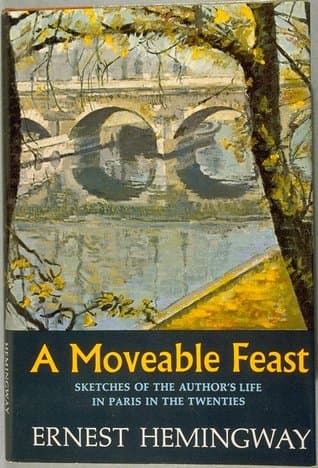
- A Moveable Feast
Ernest Hemingway
4.0 (118k) average on GoodreadsLifestyleOffers insight into Hemingway's views on writing and other authors, albeit more directly.
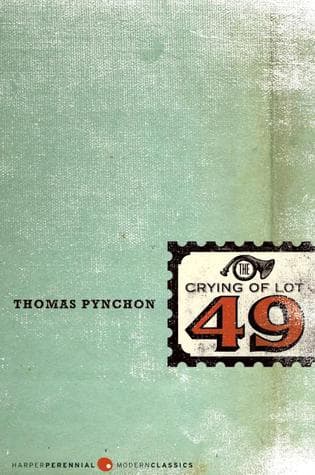
- The Crying of Lot 49
Thomas Pynchon
3.7 (71k) average on GoodreadsLiterary FictionShares a similar absurdist, satirical tone and a critique of American culture.
- The Sun Also Rises
Ernest Hemingway
3.8 (366k) average on GoodreadsHistorical FictionPublished in the same year, The Sun Also Rises stands in stark contrast to The Torrents of Spring. While Torrents is a chaotic, experimental parody, The Sun Also Rises exemplifies Hemingway's mature style, demonstrating his 'iceberg theory' of writing with understated emotion and profound thematic depth. The Sun Also Rises explores the disillusionment of the 'Lost Generation,' masculinity, and the search for meaning in a post-war world with a coherent narrative and well-developed characters, whereas Torrents intentionally subverts narrative and character development for satirical effect. Torrents is a stylistic exercise in deconstruction; The Sun Also Rises is a masterwork of construction.
- A Farewell to Arms
Ernest Hemingway
3.8 (263k) average on GoodreadsHistorical FictionCompared to A Farewell to Arms (1929), The Torrents of Spring highlights Hemingway's range from satirical burlesque to profound tragedy. A Farewell to Arms is a poignant exploration of love, war, and loss, told with the characteristic restraint and emotional power that defined Hemingway's best work. Its narrative is focused, its characters deeply realized, and its themes universal. Torrents, on the other hand, is deliberately superficial, its characters are caricatures, and its primary aim is to mock. The contrast underscores that while Torrents was a necessary step for Hemingway to define himself against his contemporaries, A Farewell to Arms solidified his voice as a serious, impactful novelist.
- Nineteen Eighty-Four
George Orwell
4.2 (5.5M) average on GoodreadsFictionWinston Smith dreams of truth and rebellion in a world where Big Brother watches all, but he confronts the terrifying power of a regime that controls not just actions, but thoughts.
- The Frozen River
Ariel Lawhon
4.4 (600k) average on GoodreadsFictionIn 1789 Maine, a heroic midwife's diary helps her expose a murder and get justice in a town that wants to silence her.




Enjoyed the summary?
A summary gives you the shape of the book. The book itself has the detail, the examples and the voice.
Find The Torrents of Spring on AmazonAs an Amazon Associate, BookBrief earns from qualifying purchases. How we're funded