

Synopsis
Covers the whole plot, including the ending.
- Difficulty
- Medium
- Pacing
- Moderate
- Mood
- Satirical, Darkly Humorous, Provocative, Unsettling
- Read it if
- You enjoy thought-provoking literary fiction that explores themes of class, immigration, privilege, and the American Dream with a satirical edge.
- Skip it if
- You prefer stories with clear-cut heroes and villains, or find social commentary that highlights stark inequalities to be too bleak.
The Tortilla Curtain Plot Summary
Covers the whole plot, including the ending.
The Collision and its Aftermath
One morning, Delaney Mossbacher, a liberal nature writer, accidentally hits Cándido Rincón, an undocumented Mexican day laborer, with his car in Topanga Canyon. Cándido, who was looking for food, is thrown and suffers minor injuries. Delaney, worried, offers Cándido twenty dollars as hush money, fearing legal trouble and disruption to his life. Cándido, desperate, takes the money and leaves before Delaney can fully process what happened. This small collision starts a series of events that will connect the two men and their families, despite their different social and economic statuses. Delaney feels uneasy and vaguely responsible, which he tries to dismiss.
Struggles in the Canyon
Cándido and his pregnant wife, América Rincón, live a difficult life in a makeshift camp in a Topanga Canyon ravine. They are undocumented immigrants from Mexico, constantly struggling with hunger, poor sanitation, and the fear of deportation. Cándido, despite his injuries, continues to look for day labor, often facing exploitation and hostility. América tries to make their camp livable and save their few resources, all while dealing with pregnancy and the constant threat of being discovered. Their hopes for a better life in America are challenged daily by their harsh reality, making every day a fight for survival.
The Gated Community and Its Concerns
Delaney's wife, Kyra Mossbacher, a successful real estate agent, worries about crime and 'undesirables' entering their wealthy, new gated community, Arroyo Blanco Estates. She supports building a large, expensive wall around the community, believing it will protect their property values and security. Kyra sees the wall as necessary to preserve their lifestyle, unaware of the deeper social and economic forces at play. Her desire for order and control shows the community's wish to separate itself from the perceived chaos outside, especially from the people struggling nearby.
The Search for Work and a New Camp
Cándido's attempts to find work face constant setbacks. He experiences wage theft, racial discrimination, and a lack of jobs. The twenty dollars from Delaney quickly runs out, and their hunger worsens. Their secluded camp in the ravine is discovered and destroyed by a local watchman, forcing Cándido and América to move. They keep looking for new, hidden spots for shelter, facing the same challenges of concealment, lack of resources, and the threat of discovery. América's pregnancy makes these moves harder, adding to their desperation.
Delaney's Environmental Crusade
While Kyra focuses on the wall, Delaney, an environmentalist, becomes absorbed in the fate of local wildlife. He writes articles about habitat destruction from development and obsesses over a lone coyote he often sees near his property. He views the coyote as a symbol of nature under threat and dedicates himself to its protection. His concerns, though well-intentioned, often overshadow the human struggles happening nearby, showing his selective empathy and the gap between his environmental ideals and the social realities around him. He believes he is protecting nature but remains blind to the human suffering at his doorstep.
Escalating Tensions and Vandalism
As the wall debate grows, the Mossbachers' home is vandalized with graffiti and a 'wetback' sign. This incident, along with other small crimes and perceived threats, strengthens Kyra's resolve to build the wall and increases the residents' fear of outsiders. Delaney, though bothered, first tries to explain away the events, but even he starts to feel paranoid. The vandalism solidifies the division between the wealthy community and the unseen, struggling population outside, leading to more calls for security and separation, rather than any attempt to understand the cause of the tension.
Birth and Desperation
América goes into labor early while they are hiding in a remote part of the canyon. Without medical help, she gives birth to a fragile baby boy they name Socorro. The birth intensifies Cándido's desperation to provide for his family. Overwhelmed by hunger and the baby's cries, Cándido steals food from a supermarket, an act that shows their extreme poverty. This theft, born from a father's love and a family's need to survive, further highlights the gap between the two worlds, where one family's basic needs drive them to break the law, while the other lives in comfort.
The Fire and its Aftermath
A devastating brush fire, likely from a discarded cigarette, starts in Topanga Canyon, quickly spreading and threatening both the wealthy homes of Arroyo Blanco and the hidden camps in the ravines. The fire forces an evacuation. The Mossbachers are terrified for their home, which is partly damaged. The Rincóns, with nowhere to go, are caught in the fire's path, their few possessions destroyed, and their lives again in chaos. The fire shows nature's uncontrollable power, affecting rich and poor alike, and exposing the fragility of their lives.
Confrontation at the Creek
Amid the fire's chaos, Delaney, trying to save his property and the environment he loves, finds Cándido by the creek. Misunderstanding Cándido's actions and driven by fear, prejudice, and a desire to protect his territory, Delaney confronts him. The encounter quickly becomes a violent struggle, with both men fighting for their lives and their ways of survival. Cándido, having just lost his son Socorro to the elements and fire, is in deep grief and desperation. This brutal fight removes the pretense of civility, revealing the raw forces of class, race, and survival that have been present throughout the story.
A Bitter End
As the fire dies down, both families assess the damage. The Mossbachers' home is damaged but repairable, and their material world, though shaken, is mostly intact. However, their sense of security is broken, and their illusions of control are gone. For Cándido and América, the tragedy is much greater. They have lost their baby, Socorro, to the elements and the fire, and their few possessions are gone. They are left with only grief and the desperate hope of starting over, their American Dream seemingly further away than ever. The novel ends with Cándido, now alone, moving toward an uncertain future, while Delaney, having survived the physical fight, must confront the moral implications of his actions and the human cost of his privileged life.
The Tortilla Curtain Characters
Delaney Mossbacher
Protagonist
A liberal nature writer consumed by environmentalism and his own selective empathy.
Delaney is a freelance nature writer, an ardent environmentalist, and a self-proclaimed liberal. He lives in the affluent Arroyo Blanco Estates with his wife, Kyra, and her son, Jordan. Delaney prides himself on his progressive views and his connection to nature, but he is often blind to the human suffering around him, particularly that of the undocumented immigrants. He is well-intentioned but ultimately self-absorbed, his concerns for a coyote often outweighing his empathy for his fellow humans. He struggles with a sense of emasculation in his marriage and often seeks validation through his writing and environmental activism.
Relationships: Kyra Mossbacher (Husband, often feeling overshadowed and emasculated.); Jordan (Stepfather, with a distant and somewhat strained relationship.); Cándido Rincón (Accidental victim, then perceived threat, leading to a violent confrontation.)
Kyra Mossbacher
Protagonist
An ambitious and driven real estate agent obsessed with security and property values.
Kyra is Delaney's wife and a highly successful real estate agent. She is pragmatic, ambitious, and deeply concerned with maintaining her family's affluent lifestyle and property values. She spearheads the campaign to build a wall around Arroyo Blanco Estates, believing it will protect her community from crime and perceived threats, particularly from the undocumented immigrants. Kyra is less outwardly liberal than Delaney, but shares his underlying desire for control and order. She is a strong, dominant personality who often takes charge, leaving Delaney feeling somewhat inadequate. Her focus is on the tangible and the material, often at the expense of understanding broader social issues.
Relationships: Delaney Mossbacher (Wife, often the more dominant and pragmatic partner.); Jordan (Mother, protective and somewhat detached.); Frank Gee (Business associate and community activist.)
Cándido Rincón
Protagonist
An undocumented Mexican immigrant struggling for survival and the American Dream.
Cándido is an undocumented Mexican immigrant who has come to America with his pregnant wife, América, in search of a better life. He is hardworking, resilient, and deeply devoted to his family. Despite facing constant discrimination, exploitation, and extreme poverty, Cándido clings to the hope of achieving the American Dream. He is often the victim of circumstances, but never gives up. His journey is a testament to the human spirit's endurance in the face of overwhelming adversity. He is driven by the primal need to provide for his family, even if it means resorting to desperate measures.
Relationships: América Rincón (Husband, deeply loving and protective.); Socorro Rincón (Father, tragically loses his infant son.); Delaney Mossbacher (Accidental victim, then perceived aggressor, leading to a violent confrontation.)
América Rincón
Protagonist
Cándido's pregnant wife, who endures immense hardship and loss with quiet resilience.
América is Cándido's young, pregnant wife, who accompanies him on their perilous journey to America. She is quieter and perhaps more fragile than Cándido, but possesses an incredible inner strength and resilience. She endures extreme hunger, exposure, and the emotional toll of their precarious existence. Her primary focus is the well-being of her unborn child and the hope for a stable future. She represents the silent suffering and the profound hopes of many undocumented immigrants. Her experiences highlight the specific vulnerabilities faced by women in such situations.
Relationships: Cándido Rincón (Wife, deeply reliant on and supportive of each other.); Socorro Rincón (Mother, tragically loses her infant son.)
Jordan
Supporting
Kyra's teenage son, who represents the privileged youth of Arroyo Blanco.
Jordan is Kyra's teenage son from a previous marriage and Delaney's stepson. He is a typical American teenager, somewhat rebellious and detached from the adult concerns of his parents. He represents the next generation of the affluent community, largely oblivious to the social and economic struggles outside his immediate world. His interactions with Delaney are often strained, and he sometimes challenges his stepfather's liberal views, though more out of teenage contrariness than deep conviction. He occasionally has encounters with the coyote, mirroring Delaney's interest in nature, but without the same intellectual depth.
Relationships: Kyra Mossbacher (Son, sometimes rebellious.); Delaney Mossbacher (Stepson, with a somewhat distant and strained relationship.)
Frank Gee
Supporting
A fellow Arroyo Blanco resident and Kyra's ally in the wall construction.
Frank Gee is a resident of Arroyo Blanco Estates and a vocal proponent of building the wall. He is a pragmatic, business-minded individual who aligns with Kyra in her efforts to secure the community. He represents the more overtly conservative and protectionist segment of the affluent residents, often expressing his fears and prejudices more openly than Delaney. He is a key figure in organizing community support for the wall, acting as a direct counterpoint to any dissenting voices regarding the community's insularity.
Relationships: Kyra Mossbacher (Business associate and community activist, allied in the wall project.)
Jack Jardine
Supporting
An older, prejudiced resident of Arroyo Blanco, embodying the community's xenophobia.
Jack Jardine is an older, more overtly prejudiced resident of Arroyo Blanco. He is openly hostile towards undocumented immigrants and expresses xenophobic views, often referring to them with derogatory terms. He represents the extreme end of the community's fear and resentment, and his comments often make Delaney uncomfortable, even as Delaney struggles with his own latent prejudices. Jardine is a caricature of a certain type of wealthy, entitled American who feels his way of life is under threat from outsiders, and he acts as a catalyst for some of the community's more aggressive actions.
Relationships: Delaney Mossbacher (Neighbor, with conflicting views, though Delaney often tries to avoid him.)
Socorro Rincón
Mentioned
Cándido and América's infant son, a symbol of lost hope.
Socorro is the infant son born to Cándido and América in the wilderness of Topanga Canyon. His name, meaning 'help' or 'succor,' highlights the desperate circumstances of his birth and his parents' yearning for a better life. He symbolizes the fragile hopes and dreams of the undocumented immigrants, as well as the profound human cost of their struggles. His short life and tragic death underscore the harsh realities and extreme vulnerabilities faced by families like the Rincóns, making their story even more poignant and heartbreaking.
Relationships: Cándido Rincón (Son, tragically lost.); América Rincón (Son, tragically lost.)
The Tortilla Curtain Themes
The Illusion of the American Dream
The novel contrasts the American Dream with the harsh realities for undocumented immigrants. Cándido and América come to the U.S. hoping for prosperity and safety, but instead find extreme poverty, discrimination, and constant danger. Their journey is a continuous struggle for basic survival, far from the promised opportunities. This theme is clear in their constant search for food and shelter, their exploitation by employers, and the tragic loss of their child, Socorro, which shatters their hopes.
“He knew it for a fact: the world was not a fair place, and he was not a lucky man.”
Class and Social Divide
The novel shows the vast gap between the wealthy residents of Arroyo Blanco and the poor, marginalized undocumented workers in the canyon. The proposed wall symbolizes this division, also seen in the characters' views and interactions. Delaney's initial twenty-dollar payment to Cándido highlights the economic difference and his attempt to avoid responsibility. The Mossbachers' worries about property values and security contrast sharply with the Rincóns' struggle for food and shelter, showing how wealth creates a bubble that blinds one group to the struggles of another.
“He was a liberal, an environmentalist, a humanitarian. He knew he was. But there was a limit.”
Hypocrisy and Selective Empathy
Delaney Mossbacher shows hypocrisy. As a self-proclaimed liberal and nature writer, he supports environmental causes and animal rights, yet he lacks empathy for the human suffering happening nearby. His obsession with protecting a coyote, while largely ignoring Cándido and América's struggles, highlights his selective compassion. His internal thoughts show his attempts to rationalize his discomfort and keep his progressive self-image, even as his actions and thoughts reveal a deeper prejudice and self-interest. This theme challenges readers to examine their own biases.
“He wanted to do the right thing, to be sure, but what was the right thing when you were talking about a wetback?”
Fear and Xenophobia
Fear, especially xenophobia, drives the novel. The residents of Arroyo Blanco, led by Kyra and others, are consumed by fear of 'outsiders' and a perceived threat to their security and lifestyle. This fear appears in their desire to build a wall, their suspicion of anyone different, and their tendency to blame undocumented immigrants for community problems. The vandalism of the Mossbachers' home increases this paranoia, leading to an 'us vs. them' mentality that prevents understanding across the social divide. This theme explores how fear can justify prejudice and exclusion.
“It was them, wasn't it? The illegals. They were everywhere.”
Man vs. Nature
Topanga Canyon's natural environment is both a refuge and a hostile force. Delaney, a nature writer, sees nature romantically, but the novel shows its indifferent, brutal reality. The canyon is where Cándido and América try to survive, exposed to its dangers, ending in a devastating brush fire that affects everyone. This theme highlights humanity's vulnerability to nature's power, regardless of social status, and contrasts Delaney's intellectual appreciation of nature with the Rincóns' raw, physical struggle against it for survival.
“The canyon was alive, teeming, indifferent. It took no sides.”
Plot Devices & Literary Techniques
The Tortilla Curtain (The Wall)
A physical and symbolic barrier representing class, racial, and social division.
The proposed and eventually constructed wall around Arroyo Blanco Estates serves as the central plot device. Physically, it's meant to keep 'undesirables' out and protect property values. Symbolically, it embodies the growing social, economic, and racial divide between the affluent residents and the undocumented immigrants. It represents the desire for isolation, security, and the refusal to acknowledge the human struggles on the other side. Its construction drives much of the community conflict and highlights the themes of xenophobia and class stratification.
The Coyote
A recurring animal symbol representing wildness, nature, and selective empathy.
The coyote frequently appears throughout the novel, particularly in Delaney's observations. For Delaney, it symbolizes the wild, untamed nature he champions and seeks to protect. However, its presence also highlights Delaney's selective empathy, as he often expresses more concern for the animal's welfare than for the human beings struggling in the same environment. The coyote acts as a mirror, reflecting Delaney's intellectualized environmentalism versus the Rincóns' primal battle for survival in the wilderness.
The Brush Fire
A natural disaster that acts as a catalyst for chaos and a great equalizer.
The massive brush fire that engulfs Topanga Canyon late in the novel functions as a powerful plot device. It is a force of nature that indiscriminately destroys property and displaces both the rich and the poor, stripping away their illusions of control. It acts as a great equalizer, forcing both the Mossbachers and the Rincóns into direct, desperate confrontation with the elements and ultimately, with each other. The fire brings the simmering tensions and conflicts to a violent, tragic climax, exposing the raw survival instincts of all characters.
The Twenty Dollars
A symbolic gesture of payment and a representation of guilt and economic disparity.
The twenty dollars Delaney gives Cándido after the car accident is a crucial symbolic device. For Delaney, it's a quick way to assuage his guilt and avoid legal trouble, a small price to pay to make the problem disappear. For Cándido, it's a desperately needed sum, but also a humiliating exchange that underscores his vulnerability and the vast economic chasm between the two men. It represents Delaney's attempt to buy off responsibility and Cándido's immediate need for survival, setting the tone for their unequal relationship.
The Tortilla Curtain Quotes
“America. It was a nation of immigrants, after all, and the melting pot was still bubbling, wasn't it?”
“It wasn't a question of right or wrong, but of us and them, and that was the way of the world.”
“The wall was a symbol, a declaration, a line drawn in the sand.”
“He wanted to be good. He really did. But sometimes the world just wouldn't let him.”
“They were invisible, a part of the landscape, like the brush and the rocks and the coyotes.”
“Money was the great divider, the thick wall that separated one life from another.”
“The good intentions paved the road to hell, and he was taking the express lane.”
“Every day was a battle, a desperate scramble for survival.”
“You couldn't escape your past, no matter how far you ran, no matter how many borders you crossed.”
“The irony of it all, the rich getting richer and the poor getting poorer, right on their doorstep.”
“What did it mean to be a citizen? A piece of paper? A birthright? Or something more profound?”
“Nature, red in tooth and claw, was everywhere, even in the manicured lawns of Arroyo Blanco.”
“He felt like a man walking on a tightrope, with the abyss yawning on either side.”
“It was the price of progress, the inevitable friction when two worlds collided.”
“The American Dream, he thought, was a different dream for everyone.”
Quiz
10 questions on the plot and the characters. Each answer comes with a short explanation.
Question 1
What is Delaney Mossbacher's profession at the beginning of the novel?
- Real estate agent
- Nature writer
- Environmental lawyer
- Park ranger
Show answer
B. Nature writer Delaney Mossbacher is described as a 'sensitive nature writer' who contributes to a magazine called 'Wilderness!'.
Question 2
How do Cándido Rincón and Delaney Mossbacher first come into 'intimate contact'?
- Delaney accidentally hits Cándido with his car.
- Cándido attempts to rob Delaney's home.
- Delaney discovers Cándido's camp in the ravine.
- They meet at a community meeting about illegal immigration.
Show answer
A. Delaney accidentally hits Cándido with his car. Their first encounter is a 'freak accident' where Delaney, distracted, hits Cándido with his car, leaving him injured.
Question 3
What is the primary reason Cándido and América Rincón are living in a makeshift camp in the ravine?
- They prefer to live off the grid and close to nature.
- They are undocumented immigrants experiencing poverty and lack of housing.
- They are hiding from authorities after committing a crime.
- They are conducting environmental research for a university.
Show answer
B. They are undocumented immigrants experiencing poverty and lack of housing. Cándido and América are 'Mexican illegals' who 'desperately cling to their vision of the American Dream as they fight off starvation in a makeshift camp deep in the ravine,' highlighting their socio-economic precarity.
Question 4
What kind of community do Delaney and Kyra Mossbacher live in?
- An open, bohemian artist colony.
- A newly gated hilltop community.
- A bustling urban apartment complex.
- A remote, isolated cabin in the wilderness.
Show answer
B. A newly gated hilltop community. The description states they live in 'a newly gated hilltop community,' emphasizing their desire for security and separation.
Question 5
Which character is described as an 'obsessive realtor'?
- Delaney Mossbacher
- Cándido Rincón
- Kyra Mossbacher
- América Rincón
Show answer
C. Kyra Mossbacher Kyra Mossbacher is explicitly identified as 'an obsessive realtor,' contrasting with her husband's nature writing profession.
Question 6
What symbolic act do Delaney and Kyra engage in that highlights their 'Los Angeles liberal' lifestyle?
- Attending weekly protests against gentrification.
- Maintaining a 'sushi-and-recycling existence'.
- Volunteering at a local soup kitchen.
- Donating regularly to immigrant aid organizations.
Show answer
B. Maintaining a 'sushi-and-recycling existence'. Their ordered existence is characterized by 'sushi-and-recycling,' which symbolizes their superficial engagement with liberal ideals.
Question 7
The novel is described as a 'tragicomedy of error and misunderstanding.' What is the primary source of this tragicomedy?
- A natural disaster that affects both couples equally.
- The language barrier preventing communication between the couples.
- The clashing perspectives and socio-economic realities of the two couples.
- A shared secret that both couples are trying to keep hidden.
Show answer
C. The clashing perspectives and socio-economic realities of the two couples. The 'tragicomedy' arises from the gradual intersection of 'these four and their opposing worlds,' driven by their vastly different socio-economic statuses, cultural backgrounds, and interpretations of events.
Question 8
What is the significance of the title, 'The Tortilla Curtain,' in the context of the novel's themes?
- It refers to a physical barrier built by the Mossbachers to keep out animals.
- It symbolizes the invisible yet impenetrable divide between wealthy American residents and impoverished Mexican immigrants.
- It is a metaphor for the culinary divide between the two cultures depicted.
- It describes a specific piece of art found in Kyra's real estate listings.
Show answer
B. It symbolizes the invisible yet impenetrable divide between wealthy American residents and impoverished Mexican immigrants. The title 'The Tortilla Curtain' is a play on 'The Iron Curtain,' symbolizing the socio-economic and cultural barrier, often invisible to the privileged, that separates the lives of the wealthy Californians from the struggling Mexican immigrants.
Question 9
How does Delaney's initial liberal perspective evolve throughout the novel, particularly concerning immigration?
- He becomes more actively involved in advocating for immigrant rights.
- His 'liberal' views are increasingly challenged and often give way to fear and prejudice.
- He maintains his unwavering support for open borders and cultural exchange.
- He becomes completely indifferent to the issue, focusing solely on his own life.
Show answer
B. His 'liberal' views are increasingly challenged and often give way to fear and prejudice. Delaney, initially a 'sensitive nature writer' with liberal leanings, finds his ideals eroded by fear and perceived threats to his property and lifestyle, leading to increasingly prejudiced reactions towards the Rincóns and other immigrants.
Question 10
What is a central theme explored through the juxtaposition of the Mossbachers' and Rincóns' lives?
- The importance of community gardening and sustainable living.
- The universal pursuit of happiness regardless of socio-economic status.
- The stark disparities in wealth, opportunity, and privilege in modern America.
- The challenges of interfaith marriage in contemporary society.
Show answer
C. The stark disparities in wealth, opportunity, and privilege in modern America. The novel explicitly pits the 'opposing worlds' of the wealthy Mossbachers and the impoverished Rincóns, making the vast disparities in 'wealth, opportunity, and privilege' a central and critical theme.
The Tortilla Curtain FAQ
What is the central premise of 'The Tortilla Curtain'?
'The Tortilla Curtain' explores the collision of two vastly different couples in Topanga Canyon: the affluent, liberal Delaney and Kyra Mossbacher, and the undocumented Mexican immigrants Cándido and América Rincón. A hit-and-run accident involving Delaney and Cándido sparks a series of escalating encounters, highlighting the stark socio-economic divide and cultural misunderstandings between them. The narrative unfolds as their lives become increasingly intertwined, leading to tragicomic consequences.
Who are Delaney and Kyra Mossbacher, and what do they represent?
Delaney Mossbacher is a nature writer who espouses liberal ideals but struggles with practical empathy, while Kyra is an ambitious real estate agent obsessed with property values and security. They represent the well-meaning but often hypocritical affluent class, whose desire for an idyllic, controlled environment clashes with the harsh realities of poverty and immigration. Their actions, though sometimes well-intentioned, often exacerbate the Rincóns' struggles.
Who are Cándido and América Rincón, and what are their aspirations?
Cándido and América Rincón are undocumented Mexican immigrants living in a makeshift camp in a ravine, struggling daily for survival. They represent the desperate pursuit of the American Dream, enduring starvation, prejudice, and violence in hopes of a better life for themselves and their unborn child. Their resilience and determination are constantly tested by the harsh realities of their situation.
How does the initial accident involving Delaney and Cándido set the tone for the book?
The initial accident, where Delaney hits Cándido with his car and offers him twenty dollars to avoid legal trouble, immediately establishes the themes of class disparity and the devaluation of immigrant lives. It highlights Delaney's superficial liberalism and Cándido's vulnerability, setting in motion a chain of events driven by misunderstanding, fear, and escalating resentment between the two couples.
What is the significance of the coyote and other wildlife in Delaney's narrative?
The coyote, initially a symbol of wild nature that Delaney romanticizes, becomes a recurring motif representing both the untamed wilderness encroaching on human civilization and, implicitly, the 'otherness' of the Rincóns. As the story progresses, Delaney's perception of nature shifts from admiration to fear and a desire for control, mirroring his evolving, often hostile, feelings towards the undocumented immigrants.
How do the physical barriers, like the Mossbachers' new gate, function as a metaphor?
The physical barriers, particularly the new gate around the Mossbachers' development, serve as a potent metaphor for the societal divisions and the attempts of the privileged to wall themselves off from perceived threats. While intended to provide security, these barriers only heighten the sense of separation and fuel resentment, ultimately proving ineffective against the deeper societal forces at play.
Are there any subtle allusions to historical events or figures within the narrative?
While not explicitly stated, the novel subtly alludes to historical anxieties surrounding immigration, particularly in California, and the often-conflicted liberal response to it. The 'tortilla curtain' itself evokes the physical and metaphorical barriers along the U.S.-Mexico border, reflecting ongoing national debates about immigration policy and cultural integration.
How does Delaney's profession as a nature writer ironically contrast with his actions?
Delaney's profession as a nature writer, someone who ostensibly appreciates the natural world and its inhabitants, ironically contrasts sharply with his increasing intolerance and hostility towards Cándido and América. He can empathize with animals and environmental causes but struggles to extend genuine compassion to fellow humans who disrupt his idealized vision of Topanga Canyon, revealing his superficial liberalism.
Analyze Kyra Mossbacher's psychological motivations behind her obsession with property and security.
Kyra Mossbacher's obsession with property values, renovations, and gated communities stems from a deep-seated need for control and status. Psychologically, these external markers of success and security serve as a defense mechanism against perceived chaos and threats, both economic and social. Her actions are driven by a desire to maintain her affluent lifestyle and protect her investment, often at the expense of others.
How does América's pregnancy influence her psychological state and her perception of the American Dream?
América's pregnancy significantly amplifies her hopes and fears, making the pursuit of the American Dream both more urgent and more terrifying. Psychologically, her unborn child becomes the ultimate symbol of their aspirations for a better life, pushing her to endure unimaginable hardships. However, it also deepens her vulnerability and despair when faced with the harsh realities of their existence, as she fears for her child's future.
Discuss Cándido's internal conflict between pride and desperation.
Cándido is constantly torn between his pride as a man and provider, and the crushing desperation of his circumstances. He initially attempts to maintain dignity and self-sufficiency, but the relentless struggle for food and shelter forces him into humiliating situations. This internal conflict often manifests as anger and frustration, as he grapples with his inability to adequately protect and provide for América.
Is the novel primarily a critique of American liberalism or of the American Dream itself?
The novel functions as a critique of both, but perhaps more pointedly targets the performative aspects of American liberalism. It exposes the hypocrisy of individuals like Delaney and Kyra, who espouse progressive ideals but fail to apply them in their interactions with the marginalized. Simultaneously, it deconstructs the idealized American Dream, revealing its harsh and often unattainable reality for undocumented immigrants like the Rincóns.
To what extent is the ending of the novel ambiguous, and what might it signify?
The ending of the novel, with the wildfire consuming Topanga Canyon and the ambiguous fate of Cándido and América, is highly ambiguous. It signifies the destructive consequences of the collision of these two worlds and the cyclical nature of disaster. It suggests that neither wealth nor poverty can ultimately control the forces of nature or societal upheaval, leaving the reader to ponder the lasting impact of the characters' choices and the unresolved tensions.
How does the novel use tragicomedy to convey its message?
The novel uses tragicomedy by juxtaposing genuinely heartbreaking situations faced by the Rincóns with the often absurd, self-absorbed antics of the Mossbachers. This blend of tragedy and dark humor highlights the profound disconnect between the characters' realities and allows Boyle to critique societal issues without resorting to pure didacticism. The comedic elements often arise from the Mossbachers' obliviousness, making their struggles seem trivial next to the Rincóns'.
Could the character of Delaney be seen as a sympathetic figure despite his flaws?
While Delaney is deeply flawed and often hypocritical, some readers might find him partially sympathetic due to his internal struggles and moments of genuine, albeit fleeting, self-awareness. He is a product of his environment and privilege, grappling imperfectly with complex social issues. His journey, though often misguided, reflects a common human tendency to rationalize one's own comfort and biases, making him a complex rather than purely villainous character.
What is the significance of the title 'The Tortilla Curtain'?
The title 'The Tortilla Curtain' is a play on the 'Iron Curtain,' signifying a powerful, often invisible, barrier separating two distinct worlds. It refers to the socio-economic and cultural divide between the affluent American residents and the impoverished Mexican immigrants in Topanga Canyon. It highlights the segregation and lack of understanding that exists, much like a physical border, between these two communities.
How does the author use sensory details to immerse the reader in both worlds?
Boyle masterfully uses stark sensory details to differentiate and immerse the reader in both worlds. For the Mossbachers, there are descriptions of gourmet food, expensive wines, and the clean scent of their home. For the Rincóns, the reader experiences the stench of garbage, the taste of meager scraps, the feel of rough ground, and the constant sounds of rustling in the bushes, vividly portraying their contrasting realities.
How do the character's names, like 'América' and 'Cándido', contribute to the novel's themes?
The names 'América' and 'Cándido' are highly symbolic. 'América' directly references the American Dream, embodying the hopes and struggles associated with it. 'Cándido' means 'pure' or 'innocent,' ironically contrasting with the harsh realities he faces and the desperate actions he is forced to take. These names subtly underscore the novel's themes of aspiration, disillusionment, and the often-corrupting influence of extreme poverty.
What role does the natural environment of Topanga Canyon play as a character in itself?
The natural environment of Topanga Canyon acts as a powerful character, initially a romanticized backdrop for Delaney, but quickly becoming a source of danger and unpredictability. It provides refuge for the Rincóns, yet also exposes them to harsh elements and wildlife. Ultimately, the wildfires represent nature's indifference and destructive power, overwhelming human constructs and highlighting the fragility of both wealth and poverty in its path.
About the author
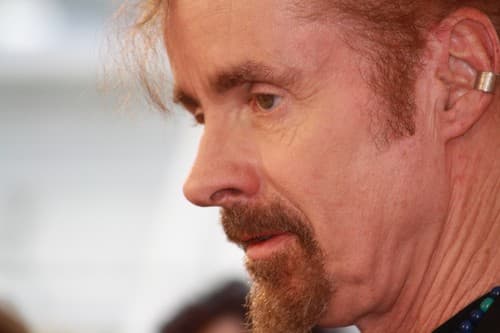
T. Coraghessan Boyle is an American author known for his fiction that often explores themes of culture and society. His notable works include "The Tortilla Curtain," which addresses issues of immigration, "Drop City," set in a 1970s commune, and "The Women," a fictional portrayal of the life of architect Frank Lloyd Wright. Boyle's writing is characterized by its rich narrative style and social commentary.
Similar books
- The Grapes of Wrath
John Steinbeck
4.0 (750k) average on GoodreadsHistorical FictionDepicts the struggles of an impoverished family seeking a better life amidst societal indifference and hardship.
- American Dirt
Jeanine Cummins
4.3 (176k) average on GoodreadsLiterary FictionFocuses on the perilous journey and desperation of Mexican immigrants, though from a different perspective.
- A Good Scent from a Strange Mountain
Robert Olen Butler
4.0 (8k) average on GoodreadsLiterary FictionButler's collection of short stories (1992) also deals with the immigrant experience in America, specifically Vietnamese refugees. However, Butler's approach is more empathetic and intimate, focusing on the internal lives, cultural adjustments, and personal memories of his characters, often employing magical realism. Boyle, in contrast, uses a broader, more satirical brush, highlighting the external conflicts and socioeconomic clashes between established residents and new arrivals, with less emphasis on the immigrants' internal cultural landscape and more on their struggle for basic survival.
- The Old Man and the Sea
Ernest Hemingway
3.8 (831k) average on GoodreadsLiterary FictionA Cuban fisherman's long struggle with a giant marlin becomes a story of endurance and dignity, now retold for young adults with illustrations, phonetic guides, and writing prompts in Traditional Chinese.
- One Hundred Years of Solitude
Gabriel García Márquez
4.1 (753k) average on GoodreadsLiterary FictionThrough the multi-generational story of the Buendía family, a mythical town deals with the repeating patterns of time, love, and solitude, as the extraordinary mixes with the ordinary.
- The Goldfinch
Donna Tartt
3.9 (720k) average on GoodreadsLiterary FictionHaunted by a tragic explosion and clutching a stolen Dutch masterpiece, a young orphan navigates the opulent drawing rooms of New York and the gritty underbelly of the art world, desperately seeking connection and redemption amidst a life spiraling into crime and obsession.



Enjoyed the summary?
A summary gives you the shape of the book. The book itself has the detail, the examples and the voice.
Find The Tortilla Curtain on AmazonAs an Amazon Associate, BookBrief earns from qualifying purchases. How we're funded