
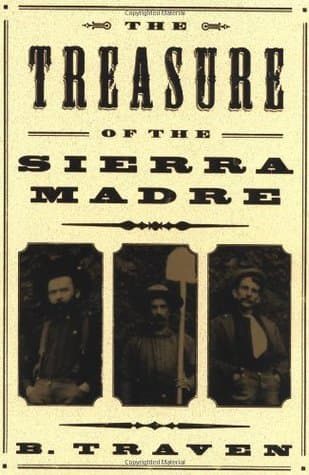
Synopsis
Covers the whole plot, including the ending.
- Difficulty
- Medium
- Pacing
- Moderate
- Mood
- Gritty, Cynical, Suspenseful, Ironic, Adventurous
- Read it if
- You enjoy classic adventure stories with a dark, cynical edge and a profound exploration of human nature under the corrupting influence of greed.
- Skip it if
- You prefer optimistic narratives or stories where protagonists achieve clear, positive outcomes.
The Treasure of the Sierra Madre Plot Summary
Covers the whole plot, including the ending.
A Chance Encounter in Tampico
Fred C. Dobbs, a drifter in Tampico, Mexico, struggles to find work and food. He repeatedly asks a wealthy American, McCormick, for money, who eventually gives him a small sum. Dobbs shares a flophouse with Curtin, another American equally poor. They both take odd jobs, including construction work for a dubious American contractor. One evening, an old, experienced prospector named Howard arrives at their flophouse. Howard, a veteran of the goldfields, tells Dobbs and Curtin tales of gold prospecting, warning them of the hardships but also hinting at great rewards. His stories ignite hope and greed in the two men, who are desperate to escape poverty.
The Lottery Ticket and the Proposition
Dobbs and Curtin, after more grueling and unpaid labor for the contractor, finally receive their promised wages, which are barely enough to survive. However, luck changes their fortunes dramatically: Dobbs wins a significant sum in the Mexican national lottery. Excited, he shares his winnings with Curtin, who had also contributed to buying the ticket. With this unexpected money, they approach Howard with a proposition to form a partnership and prospect for gold in the Sierra Madre mountains. Howard, initially skeptical of their inexperience, is convinced by their determination and financial backing. They agree to an equal three-way split of any gold found.
Journey into the Sierra Madre
The three partners, Dobbs, Curtin, and Howard, pool their resources to buy supplies, tools, and pack animals for their expedition. They travel by train and then by mule into the rugged Sierra Madre mountains. The journey is hard, marked by extreme heat, treacherous terrain, and constant bandit threats. As they go deeper into the wilderness, their initial camaraderie begins to show cracks. Dobbs, especially, becomes more paranoid and suspicious, fueled by the harsh environment and the pressure of their shared venture. Howard, with his experience, guides them, teaching them about prospecting and survival in the wild.
Striking Gold and Rising Tensions
After weeks of searching and digging, their efforts pay off. Howard, using his expert knowledge, finds a promising vein, and soon they begin to unearth significant quantities of gold dust and nuggets. The initial excitement is immense, but it quickly gives way to growing tension and distrust. Dobbs, consumed by avarice, becomes increasingly suspicious of Curtin and Howard, believing they might try to cheat him out of his share. He constantly watches them, meticulously weighing his gold, and makes subtle accusations. Howard, observing Dobbs's deteriorating mental state, tries to maintain order, but the lure of gold proves too powerful for Dobbs's fragile mind.
The First Bandit Encounter
While working their claim, the three men are suddenly confronted by a group of heavily armed Mexican bandits led by Gold Hat. The bandits try to rob them of their gold. Howard, with quick thinking, devises a strategy to intimidate the bandits, pretending they are more numerous and better armed than they are. After a tense standoff and a brief exchange of gunfire, the bandits retreat, believing they are outmatched. This encounter, while repelled, deeply rattles the prospectors and further fuels Dobbs's paranoia, making him even more possessive of their gold and distrustful of his partners.
Howard's Departure and Curtin's Injury
As their gold grows, so does Dobbs's obsession. One day, local indigenous people approach their camp, seeking Howard's medical help for a severely ill child. Howard, showing his humanitarian side, agrees to go, leaving Dobbs and Curtin to guard the camp and the gold. While Howard is away, a puma attacks Curtin, inflicting severe wounds. Dobbs, instead of immediately helping Curtin, hesitates, driven by his growing desire to eliminate his partner and claim his share of the gold. He eventually provides some aid, but his reluctance is clear, revealing his descent into madness and greed.
Dobbs's Betrayal and Curtin's Survival
After Howard's return and Curtin's slow recovery, the tension between Dobbs and Curtin reaches a breaking point. Dobbs, consumed by paranoia and greed, decides to act. During a night watch, he ambushes Curtin, shooting him and leaving him for dead. Dobbs then flees with all the gold, convinced he has eliminated his rival. However, Curtin, though gravely wounded, survives the attack. He struggles to crawl away and is eventually discovered by the indigenous villagers, who tend to his injuries and provide him with shelter, showing their compassion and respect for Howard.
The Pursuit and Dobbs's End
Howard, realizing Dobbs's treachery and Curtin's survival, immediately sets out with Curtin to track Dobbs and recover the stolen gold. Meanwhile, Dobbs, alone and increasingly deranged, wanders through the desert with the heavy sacks of gold. He encounters Gold Hat and his bandits again. The bandits, recognizing Dobbs's vulnerability and his suspicious cargo, attack him. They kill Dobbs, taking his donkeys and the sacks of what they believe to be gold. In their ignorance, they discard the gold dust, believing it to be worthless sand, only keeping the sacks themselves.
The Wind and the Lost Treasure
Howard and Curtin eventually find Dobbs's lifeless body, stripped and abandoned. They also discover the discarded sacks, now empty, scattered by the wind. A strong gust of wind blows away the last remnants of the gold dust, carrying it back into the desert. The irony is profound: the treasure they risked everything for, and which drove Dobbs to madness and murder, is now gone, dispersed by nature. Howard and Curtin are left with Dobbs's demise and the bitter realization of their ultimate failure to secure the gold.
Howard's New Path
Despite the tragic loss of the gold, Howard is approached by the indigenous villagers who had previously sought his help. Impressed by his wisdom and medical skills, they offer him a respected position as a healer and advisor within their community. Howard, having witnessed greed's destructive power, accepts this new path, finding contentment and purpose in helping others. He finds a different kind of 'treasure' in the respect and belonging offered by the villagers, a stark contrast to the fleeting pursuit of material wealth. Curtin, still recovering, prepares to return to civilization, forever changed by his harrowing experience.
The Treasure of the Sierra Madre Characters
Fred C. Dobbs
Protagonist/Antagonist
A down-on-his-luck American drifter consumed by greed and paranoia.
Dobbs is a cynical and opportunistic American drifter in Tampico, Mexico. Initially, he is merely desperate for money and a way out of poverty, but as soon as he tastes success with the lottery win and then finds gold, his latent selfishness and distrust rapidly escalate into full-blown paranoia and homicidal greed. He is quick to suspect others, slow to trust, and utterly self-absorbed. His lack of moral compass and his inability to control his avarice make him the tragic figure of the story, ultimately leading to his downfall.
Relationships: Curtin (Initially a partner, later a victim of Dobbs's attempted murder due to greed.); Howard (Initially a respected elder partner, later an adversary due to Dobbs's betrayal.)
Curtin
Protagonist/Supporting
A naive but ultimately resilient American seeking fortune, who endures Dobbs's betrayal.
Curtin is another American drifter, initially as poor and desperate as Dobbs. He is more idealistic and less cynical than Dobbs, initially believing in the partnership and the shared dream of finding gold. He is more compassionate and less prone to suspicion, often trying to mediate between Dobbs and Howard. Despite his initial naiveté, he demonstrates remarkable resilience and a strong will to survive after Dobbs's brutal attack, proving to be a more grounded and morally sound character than his treacherous partner.
Relationships: Dobbs (Partner turned attempted murderer.); Howard (Respected mentor and ally.)
Howard
Supporting/Mentor
An experienced, wise, and pragmatic old prospector.
Howard is a seasoned gold prospector, much older and far more experienced than Dobbs and Curtin. He is pragmatic, wise, and understands the true nature of the wilderness and the human heart. He is not immune to the lure of gold but is tempered by years of experience and a strong sense of self-preservation and fairness. He acts as a mentor figure to the younger men, teaching them the ropes of prospecting and trying to maintain order and reason within the partnership. He also possesses a humanitarian side, willingly helping the local indigenous people.
Relationships: Dobbs (Partner, whose descent into madness Howard observes and tries to mitigate.); Curtin (Partner and protégé, whom Howard protects and guides.)
Gold Hat
Antagonist
The leader of a ruthless band of Mexican bandits.
Gold Hat is the cunning and dangerous leader of a group of Mexican bandits who roam the Sierra Madre. He is opportunistic, violent, and represents an external threat to the prospectors' lives and treasure. He is driven by immediate gain and has little regard for human life beyond his own and his gang's survival. His ignorance about the true value of the gold dust, which he mistakes for sand, serves as a powerful ironic twist at the climax of the story, highlighting the arbitrary nature of wealth and the folly of human greed.
Relationships: Dobbs (Victim of Gold Hat's robbery and murder.); Curtin (Antagonist, but their paths diverge after Dobbs's death.); Howard (Antagonist, but their paths diverge after Dobbs's death.)
McCormick
Mentioned
A wealthy American who occasionally gives Dobbs money in Tampico.
McCormick is a minor character who appears briefly at the beginning of the story. He is a seemingly wealthy American businessman or tourist in Tampico, whom Dobbs repeatedly accosts for money. He is somewhat annoyed by Dobbs's persistent begging but eventually gives him some coins, demonstrating a fleeting act of charity. He represents the kind of privileged individual Dobbs and Curtin aspire to be, a stark contrast to their destitution.
Relationships: Dobbs (A wealthy stranger who gives Dobbs handouts.)
The American Contractor
Mentioned
A disreputable employer who exploits Dobbs and Curtin.
The American Contractor is a dishonest employer in Tampico who hires Dobbs and Curtin for arduous construction work, promising them wages he repeatedly delays and almost fails to pay. He represents the exploitative side of capitalism and the desperation faced by the impoverished drifters. His unethical practices contribute to Dobbs's and Curtin's initial frustration and desperation, pushing them towards the more extreme venture of gold prospecting.
Relationships: Dobbs (Employer who exploits Dobbs.); Curtin (Employer who exploits Curtin.)
The Treasure of the Sierra Madre Themes
The Corrupting Power of Greed
The novel shows how pursuing wealth can degrade human character. Dobbs, initially just desperate, quickly descends into paranoia, suspicion, and murder once he finds gold. His obsession with his share and his distrust of his partners lead him to betray those he once shared a dream with. The gold, rather than bringing happiness, becomes a curse that strips him of his humanity, ending in his violent death and the ironic loss of the treasure he killed for. This theme is central to the entire narrative, showing how material desire can destroy bonds and souls.
“Gold is a devilish sort of thing. It's got a power over men that's stronger than love or hate.”
The Illusion of Wealth vs. True Value
The story contrasts gold's perceived value with other forms of wealth and fulfillment. While Dobbs and Curtin initially believe gold is the ultimate solution, Howard, with his experience, understands its fleeting and dangerous nature. The irony of the gold being scattered by the wind and mistaken for sand by the bandits highlights its inherent worthlessness outside of human constructs. Howard's eventual decision to embrace a life of service and respect among the indigenous people, finding 'treasure' in community and purpose, shows that true value lies beyond material possessions.
“Most men are not to be trusted when it comes to gold.”
Survival and the Harshness of Nature
The Sierra Madre mountains are not just a backdrop but an active character, constantly challenging the prospectors. The hard journey, extreme heat, lack of resources, and threat of wild animals (like the puma attacking Curtin) test physical and mental endurance. Nature acts as a crucible, stripping away civilization's veneer and exposing the men's raw instincts. It is an indifferent force that ultimately reclaims the gold, mocking human efforts to control or possess its riches. The harsh environment worsens the existing tensions among the men, pushing them to their breaking points.
“The mountain doesn't give up its gold easily. It makes you earn it with sweat and blood.”
Trust and Betrayal
The story explores the fragility of trust, especially when immense wealth is involved. The initial partnership between Dobbs, Curtin, and Howard is built on a shared dream and a verbal agreement, but it quickly erodes under the weight of gold. Dobbs's escalating paranoia and eventual attempt to murder Curtin represent the ultimate betrayal, destroying camaraderie. Howard's steadfastness and Curtin's eventual survival highlight the resilience of some, while Dobbs's actions serve as a cautionary tale about suspicion and selfishness's destructive power in the face of temptation.
“A partner is a partner, as long as there ain't no gold. But once there's gold, a partner ain't no partner anymore.”
Plot Devices & Literary Techniques
Foreshadowing
Hints and warnings about future events or character developments.
The novel uses foreshadowing extensively, particularly through Howard's early warnings about the corrupting influence of gold and the dangers of prospecting. His initial reluctance to partner with Dobbs and Curtin, and his observations about men's behavior around wealth, subtly hint at the betrayals and conflicts to come. Dobbs's early paranoia and quick temper also foreshadow his eventual descent into madness and violence, preparing the reader for his tragic actions.
Dramatic Irony
A situation where the audience knows more than the characters.
The most significant instance of dramatic irony occurs at the end when Gold Hat and his bandits kill Dobbs for his gold but then discard the gold dust, believing it to be worthless sand. The audience knows the immense value of the 'sand,' while the bandits remain blissfully ignorant. This creates a powerful moment of tragicomic irony, highlighting the futility of Dobbs's greed and the arbitrary nature of what humans deem valuable.
The MacGuffin
An object or device that serves merely as a trigger for the plot.
The gold itself functions as a MacGuffin. While it is the central object of desire and the catalyst for all the conflict, its actual possession is less important than the journey it forces the characters to undertake and the changes it brings about in them. The fact that it is ultimately lost to the wind and mistaken for dirt by the bandits reinforces its role as a plot driver rather than an end in itself, emphasizing the thematic focus on human nature over the material object.
The Anti-Hero
A protagonist who lacks conventional heroic attributes.
Fred C. Dobbs is a quintessential anti-hero. He is driven by selfish desires, lacks a strong moral compass, and descends into villainy. He is not admirable or virtuous, yet the narrative largely follows his perspective and his journey, making him the central figure despite his deeply flawed character. This device allows the author to explore the darker aspects of human nature and the destructive consequences of unchecked greed through a relatable, albeit morally compromised, protagonist.
The Treasure of the Sierra Madre Quotes
“I know what gold does to men. Makes 'em mad.”
“Bad luck, that's what it is. Just plain bad luck.”
“The more gold you have, the more you want. It's a curse.”
“We've wounded this mountain, and she's bleeding gold.”
“You think you can trust a man with gold in his pocket? Think again.”
“Gold is a fiend, a devil, a worker of damnation.”
“We're not here to make friends, we're here to make money.”
“A man's got to eat. And a man's got to live. And a man's got to have some gold.”
“The gold changes everything. It changes you.”
“There are no friends in the mountains when there's gold involved.”
“This whole business is a lottery, and we've got the winning ticket.”
“A wise man knows when to quit. A fool keeps digging.”
“It's all in the mind, this gold fever. It drives men mad.”
Quiz
10 questions on the plot and the characters. Each answer comes with a short explanation.
Question 1
Which city do Dobbs and Curtin initially find themselves in, struggling to find work before meeting Howard?
- Mexico City
- Tampico
- Veracruz
- Guadalajara
Show answer
B. Tampico Dobbs and Curtin are in Tampico, Mexico, at the beginning of the story, experiencing severe poverty and unemployment.
Question 2
What is the name of the old prospector who guides Dobbs and Curtin into the Sierra Madre?
- Cody
- Gold Hat
- Howard
- Pat McCormick
Show answer
C. Howard Howard is the experienced old prospector who joins Dobbs and Curtin, using his knowledge to lead them to the gold.
Question 3
What ultimately happens to the gold dust the three men painstakingly extracted from the mountain?
- It is successfully transported out of Mexico and invested.
- It is stolen by bandits and scattered in the wind.
- It is confiscated by the Mexican government.
- They bury it and are unable to find it again.
Show answer
B. It is stolen by bandits and scattered in the wind. After Dobbs' demise, the bandits steal the gold sacks, only to later mistake the gold dust for sand and scatter it in the wind, symbolizing the futility of the men's greed.
Question 4
What is the primary psychological effect the discovery of gold has on Dobbs?
- It makes him more generous and trusting.
- It fills him with a deep sense of contentment.
- It makes him increasingly paranoid and violent.
- It inspires him to help the local indigenous people.
Show answer
C. It makes him increasingly paranoid and violent. Dobbs' character deteriorates significantly with the acquisition of gold, becoming increasingly paranoid about his partners trying to steal his share, leading to violence.
Question 5
What specific item do the men use to carry their gold dust out of the mountains?
- Leather satchels
- Canvas bags
- Burlap sacks
- Metal chests
Show answer
C. Burlap sacks The men carefully store their gold dust in burlap sacks, which become heavy and cumbersome during their journey.
Question 6
How does Howard manage to secure a significant amount of money even after the initial gold is lost?
- He had secretly hidden a portion of his gold elsewhere.
- He successfully treats an ailing indigenous boy and is rewarded by the village.
- He finds a new gold vein on his own after separating from Dobbs and Curtin.
- He collects a bounty for helping the authorities capture the bandits.
Show answer
B. He successfully treats an ailing indigenous boy and is rewarded by the village. Howard, using his medical knowledge, treats a sick indigenous boy, earning him the respect and a substantial reward from the grateful village, which allows him to restart his life.
Question 7
What is the fate of Dobbs?
- He escapes with his share of the gold and lives a comfortable life.
- He dies of thirst in the desert after being abandoned by his partners.
- He is murdered by the bandits who later scatter the gold.
- He is arrested by the Mexican authorities for his violent behavior.
Show answer
C. He is murdered by the bandits who later scatter the gold. Dobbs, after shooting Curtin and fleeing, is ambushed and killed by the bandits led by Gold Hat. The bandits then take his gold sacks.
Question 8
The novel explores the corrupting influence of gold. Which of the following best describes the ultimate outcome for the three prospectors regarding their wealth?
- All three men become rich and live out their days in luxury.
- Only Howard manages to retain a significant portion of his wealth.
- Despite their efforts, none of them ultimately benefit from the gold they found.
- They lose the gold but gain invaluable life experience and friendship.
Show answer
C. Despite their efforts, none of them ultimately benefit from the gold they found. The central irony of the story is that despite all their greed, suffering, and violence, the gold is ultimately lost and scattered, leaving none of the men to truly benefit from it, highlighting the futility of their pursuit.
Question 9
At one point, the men are forced to hide their gold. Where do they initially conceal it to prevent discovery?
- Buried under their campfire
- Inside hollowed-out tree trunks
- Under rocks, camouflaged with brush
- In a cave they discovered nearby
Show answer
C. Under rocks, camouflaged with brush The men meticulously hide their gold sacks under rocks and camouflage them with brush to protect them from potential thieves, demonstrating their growing paranoia and secrecy.
Question 10
What philosophical statement does the novel make about the nature of humanity when faced with immense wealth and hardship?
- Adversity strengthens bonds and reveals true character.
- Greed can corrupt even the most decent individuals, leading to betrayal and destruction.
- True wealth lies in the journey and the camaraderie, not the destination.
- Nature always provides for those who work hard and respect it.
Show answer
B. Greed can corrupt even the most decent individuals, leading to betrayal and destruction. The novel is a stark exploration of how the pursuit of wealth, especially in isolation and hardship, can utterly corrupt human nature, turning once-ordinary men into paranoid, violent individuals who betray each other for a material gain that ultimately eludes them.
The Treasure of the Sierra Madre FAQ
What is the core premise of 'The Treasure of the Sierra Madre'?
The novel follows three American prospectors—Dobbs, Curtin, and Howard—who are down on their luck in Tampico, Mexico, during the 1920s. They pool their meager resources to venture into the treacherous Sierra Madre mountains in search of gold, hoping to strike it rich and escape their destitute circumstances.
Who are the three main characters and what are their initial motivations?
Dobbs is a cynical, increasingly paranoid drifter primarily motivated by greed and a desire to escape poverty. Curtin is younger, initially more idealistic but easily influenced, seeking a fresh start. Howard is the experienced, older prospector, wise to the ways of the mountains and human nature, and driven by a lifelong passion for prospecting.
How does the discovery of gold impact the relationship between Dobbs, Curtin, and Howard?
The discovery of gold rapidly erodes their trust and camaraderie. Dobbs becomes consumed by paranoia and suspicion, constantly fearing that Curtin and Howard will try to steal his share. This growing distrust leads to bitter arguments, accusations, and ultimately, violence, as the gold corrupts their initial partnership.
What role do the bandidos, led by Gold Hat, play in the narrative?
The bandidos, particularly Gold Hat's group, represent an external threat that highlights the fragility of civilization and the constant danger in the wilderness. They serve as a catalyst for moments of cooperation, like the initial shootout, but also as a looming menace that ultimately contributes to the tragic downfall and loss of the gold.
What is the ultimate fate of the gold the prospectors found?
In a cruel twist of fate, after Dobbs is murdered by Gold Hat's band, the sacks of gold dust are mistaken for ordinary sand and scattered by the wind. Howard and Curtin eventually find Dobbs's body and the empty sacks, realizing the treasure they endured so much for is irrevocably lost, returning to the earth from which it came.
What is the significance of Howard's repeated warnings about the corrupting nature of gold?
Howard, having seen human nature tested by greed before, repeatedly cautions Dobbs and Curtin that gold doesn't just buy things, but corrupts the soul and destroys trust. His warnings, initially dismissed, prove prophetic as Dobbs succumbs to paranoia and violence, confirming gold's power to degrade human character.
How does the novel subtly comment on the American Dream through the prospectors' journey?
The novel critiques the myth of easy riches inherent in the American Dream, showing how the pursuit of wealth, especially through exploitative means like gold prospecting, can lead to moral decay and ruin rather than prosperity. The characters' initial hope for a better life is tragically inverted by their own greed and the harsh realities of their environment.
What is the symbolic meaning behind the wind scattering the gold dust at the end?
The wind scattering the gold dust symbolizes the ultimate futility and ephemerality of human greed and material possessions. It represents nature's indifference to human endeavors and the idea that true wealth cannot be hoarded or possessed, returning the 'treasure' to its elemental form and mocking the sacrifices made for it.
How does the isolation of the Sierra Madre influence the characters' psychological states?
The intense isolation of the Sierra Madre exacerbates the characters' psychological vulnerabilities. Without the societal checks and balances, Dobbs's latent paranoia and greed are amplified, leading him to fully distrust his companions. Curtin and Howard also experience psychological strain, but their responses differ based on their inherent character.
Analyze Dobbs's descent into paranoia and madness. What triggers it?
Dobbs's descent is triggered by the accumulation of gold, coupled with the isolation and the inherent distrust among prospectors. His past experiences of poverty and exploitation make him hyper-vigilant and suspicious, interpreting every action by Curtin and Howard as a potential threat to his share, ultimately leading to delusional thinking and violence.
How does Curtin's character evolve psychologically throughout the gold hunt?
Curtin begins as a relatively naive and trusting individual but is deeply shaken by Dobbs's increasing hostility and the near-fatal shooting. He learns to be more cautious and self-reliant, recognizing the darker aspects of human nature under pressure. His recovery from the gunshot wound also represents a psychological rebirth, free from the corrupting influence of the gold.
What psychological insight does Howard offer regarding human nature and wealth?
Howard provides a grounded psychological perspective, understanding that wealth often reveals and amplifies existing character flaws rather than creating new ones. He observes Dobbs's deterioration with a weary acceptance, having witnessed similar patterns of greed and paranoia in others, demonstrating an astute understanding of the human psyche when confronted with immense temptation.
Is 'The Treasure of the Sierra Madre' primarily a critique of capitalism, human nature, or both?
The novel can be interpreted as a critique of both, but primarily human nature within a capitalist framework. While the pursuit of wealth is a capitalist drive, the story emphasizes how individual greed, distrust, and moral decay are inherent human flaws that are exacerbated and brought to the forefront by the intense pressures and temptations of accumulating capital.
How does the novel's ending, with Howard and Curtin laughing, contribute to its overall message?
The laughter of Howard and Curtin at the end, after realizing the gold is lost, is deeply ironic and complex. It signifies a liberation from the corrupting burden of the treasure, a recognition of the cosmic joke played on their greed. It suggests that true freedom and peace might lie in detachment from material possessions, even if gained through tragic loss.
Could Dobbs's actions be seen as a tragic consequence of his past exploitation and poverty, rather than pure evil?
Yes, Dobbs's actions can be viewed tragically. His past experiences of being exploited and living in abject poverty likely instilled a deep-seated fear of returning to destitution, making him excessively possessive and paranoid once he finally acquired wealth. This perspective suggests his 'evil' is a desperate, twisted manifestation of self-preservation.
What is the significance of the indigenous people and their interactions with Howard?
The indigenous people represent a contrast to the avarice of the prospectors, living in harmony with the land and valuing community over individual wealth. Howard, due to his wisdom and respect, is integrated into their community, finding a place and purpose beyond gold, suggesting an alternative, more fulfilling way of life than the one pursued by Dobbs and Curtin.
How does the novel's setting in Mexico contribute to its themes?
Mexico, particularly the untamed Sierra Madre, serves as a harsh, unforgiving backdrop that strips away societal veneers, exposing raw human nature. The lawlessness of the remote regions, the presence of bandidos, and the vast, indifferent landscape amplify the dangers and isolation, making it a crucible for the prospectors' moral and psychological unraveling.
About the author
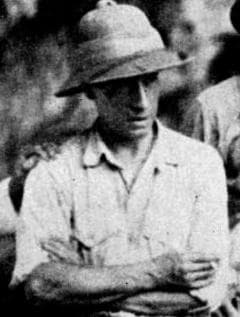
B. Traven was a prolific writer known for his adventure novels, most famously "The Treasure of the Sierra Madre." His works often explore themes of greed, exploitation, and the human condition in remote, often dangerous settings. Traven's anonymity and mysterious life added to the intrigue surrounding his impactful fiction.
Similar books
- Lord of the Flies
William Golding
3.7 (2.3M) average on GoodreadsYoung AdultExplores the breakdown of civility and rise of savagery when isolated individuals are left to their own devices.
- Heart of Darkness
Joseph Conrad
3.4 (415k) average on GoodreadsHistorical FictionA journey into a remote, wild setting that reveals the dark aspects of human nature and the corrupting power of desire.
- Treasure Island
Robert Louis Stevenson
A classic adventure focused on a hunt for treasure, though 'Sierra Madre' offers a much darker take on the consequences.
- The Call of the Wild
Jack London
3.9 (341k) average on GoodreadsChildren'sWhile London's novel also explores primal instincts and the allure of gold in a wilderness setting, Traven's work focuses more intensely on the psychological and moral decay among humans caused by greed, rather than the adaptation and survival of an animal.
- To Kill a Mockingbird
Harper Lee
4.3 (4.5M) average on GoodreadsHistorical FictionIn the 1930s Jim Crow South, Harper Lee writes about racial injustice, moral growth, and the quiet courage of a lawyer father, Atticus Finch, as seen through his young daughter's eyes.
- The Great Gatsby
F. Scott Fitzgerald
3.9 (3.8M) average on GoodreadsHistorical FictionIn the opulent Roaring Twenties, a mysterious millionaire's lavish parties hide his desperate, tragic pursuit of a lost love, exposing the emptiness within the American Dream.





Enjoyed the summary?
A summary gives you the shape of the book. The book itself has the detail, the examples and the voice.
Find The Treasure of the Sierra Madre on AmazonAs an Amazon Associate, BookBrief earns from qualifying purchases. How we're funded