

Synopsis
Covers the whole plot, including the ending.
- Difficulty
- Easy
- Pacing
- Fast
- Mood
- Humorous, Witty, Ironic, Lighthearted
- Read it if
- You enjoy clever twists on classic tales, humorous retellings, and stories that challenge perspective.
- Skip it if
- You prefer traditional fairy tales without subversion or don't appreciate dark humor in children's books.
The True Story of the 3 Little Pigs Plot Summary
Covers the whole plot, including the ending.
A. Wolf's Side of the Story
The story begins with Alexander T. Wolf, or Al, introducing himself as a mild-mannered wolf who has been framed by the media. He claims the entire story of 'The Three Little Pigs' is made up, insisting he was simply in the wrong place at the wrong time, suffering from a bad cold. He wants to set the record straight, stating that the true story is about a sneeze and a sugar craving, not a mean attack. Al says he is not the big, bad wolf everyone believes him to be, and that his reputation has been unfairly hurt.
The First Pig and the Sugar Crisis
Al explains that on the day of the incident, he was baking a cake for his granny and had run out of sugar. He decided to ask his neighbor, the first little pig, for a cup of sugar. When he arrived at the pig's straw house, he had a terrible sneeze because of his cold. The sneeze was so powerful it blew the straw house down, killing the pig inside. Al, seeing a perfectly good meal go to waste, decided to eat the pig, thinking it would be rude to leave a dead pig lying around.
The Second Pig and the Stick House
Still needing sugar, Al continued to the house of the second little pig, which was made of sticks. He knocked on the door, but the pig inside was rude and would not answer. Al's cold caused another mighty sneeze, which, to his surprise, blew down the stick house. The second little pig also died in the collapse. Again, Al felt it would be a shame to waste a good meal, so he ate the second pig. He says he never meant for the houses to fall or for the pigs to die; it was merely a series of unfortunate accidents combined with his severe cold.
The Third Pig and the Brick House
Desperate for sugar, Al arrived at the third little pig's brick house. He explained his problem and asked for sugar, but this pig was even ruder, shouting insults from inside. Al, feeling a sneeze coming, warned the pig, but the pig continued to tease him. The sneeze came, and though it was mighty, the brick house stood firm. However, the police and reporters arrived immediately after the sneeze, having heard the noise. They found Al huffing and puffing, trying to get into the house, and the rest, as Al claims, is history, distorted by the media.
The Media Circus and Al's Incarceration
Al recounts how the media instantly sensationalized the story, portraying him as the 'Big Bad Wolf' who deliberately blew down houses and ate pigs. He complains that no one listened to his side of the story or considered his bad cold and his simple need for a cup of sugar. The reporters focused on the huffing and puffing, ignoring the sneezes and the accidental nature of the events. This media frenzy led to his arrest and the widespread belief in the traditional, villainous tale of the Three Little Pigs, which Al strongly denies.
Principal Figures
Alexander T. Wolf (Al)
Protagonist/Narrator
A wolf who claims innocence, presenting his side of the infamous story.
Al is the self-proclaimed victim of a misunderstanding, a wolf with a severe cold and a craving for sugar. He presents himself as polite, even considerate, when he describes eating the dead pigs as an act of not letting good food go to waste. He is articulate and attempts to logically explain away the 'big bad wolf' persona, blaming his sneezes and the media for his predicament. His primary motivation is to clear his name and correct the historical record, portraying himself as a sympathetic figure rather than a villain.
Relationships: First Little Pig (Unintentional victim of Al's sneeze, then eaten); Second Little Pig (Unintentional victim of Al's sneeze, then eaten); Third Little Pig (Rude, surviving pig who called the police); Granny (Al's beloved grandmother, for whom he was baking a cake); Reporters (Antagonistic figures who twisted Al's story)
The First Little Pig
Supporting/Victim
The pig living in a straw house, the first to be accidentally killed and eaten.
This pig builds his house out of straw, a choice Al attributes to laziness. He is the first victim of Al's powerful sneeze, which demolishes his flimsy home. According to Al, he dies instantly in the collapse, leading Al to consume him out of a sense of practical economy, not malice. His fate sets the pattern for Al's subsequent encounters, emphasizing Al's 'accidental' culpability.
Relationships: Alexander T. Wolf (Victim of an accidental house collapse and subsequent meal)
The Second Little Pig
Supporting/Victim
The pig living in a stick house, also accidentally killed and eaten by Al.
This pig builds his house out of sticks, slightly sturdier than straw but still no match for Al's sneezes. Al describes him as rude for not answering the door when asked for sugar. Like the first pig, he perishes when his house collapses due to Al's uncontrollable sneeze. Al again justifies eating him, reinforcing his narrative of unfortunate circumstances rather than intentional harm.
Relationships: Alexander T. Wolf (Victim of an accidental house collapse and subsequent meal)
The Third Little Pig
Supporting/Antagonist
The pig in the brick house, who survives Al's sneeze and calls the authorities.
This pig is portrayed by Al as particularly rude and insulting, shouting from behind his sturdy brick walls. He is the only pig to survive Al's sneezes, as his brick house withstands the force. His actions, specifically calling the police and reporters, directly lead to Al's arrest and the widespread dissemination of the 'Big Bad Wolf' legend. He serves as the primary antagonist in Al's version of the story, responsible for Al's downfall.
Relationships: Alexander T. Wolf (Antagonistic, survivor, key accuser)
Granny
Mentioned
Al's grandmother, the innocent reason for his sugar quest.
Granny is never seen but plays a crucial role as Al's motivation. He claims he was baking her a birthday cake, which is why he needed a cup of sugar in the first place. This detail is intended to humanize Al and establish his good intentions, contrasting with the 'big bad wolf' image. Her existence supports Al's narrative of being a caring, family-oriented individual, rather than a predatory monster.
Relationships: Alexander T. Wolf (Grandson, whom she loves)
Reporters
Supporting/Antagonists
Journalists who twist Al's story, creating the 'Big Bad Wolf' myth.
The reporters arrive at the third pig's house and immediately jump to conclusions, sensationalizing the events. Al blames them for distorting the truth, focusing on his 'huffing and puffing' rather than his sneezes and his good intentions. They represent the biased media that perpetuates stereotypes and prevents Al's true story from being heard, ultimately leading to his incarceration and public vilification.
Relationships: Alexander T. Wolf (Antagonistic, responsible for his public image)
Themes & Insights
Perspective and Point of View
The entire book is a re-telling of a classic fairy tale from the antagonist's perspective. Al's narrative challenges the reader to consider that there are always two sides to a story. By hearing Al's version, the reader is prompted to question established truths and acknowledge how a change in perspective can completely alter understanding. The familiar story is turned on its head, showing the subjectivity of truth and the power of narrative control.
“But I'll let you in on a little secret. Nobody knows the real story, because nobody ever heard my side of the story.”
Media Bias and Misinformation
Al frequently blames the media for his troubles, claiming they sensationalized events and twisted his story to create a more exciting, villainous narrative. He argues that the reporters only focused on the 'huffing and puffing' and ignored his cold and his genuine need for sugar. This theme explores how information can be manipulated and how public perception is shaped by what is reported, often without a full understanding of the facts. It critiques the tendency to create dramatic narratives over factual accuracy.
“The rest, as they say, is history. They railroaded me. The newspapers blew up the whole thing.”
The Nature of Good and Evil
The book challenges the simple portrayal of good and evil found in traditional fairy tales. Al, the supposed 'Big Bad Wolf,' presents himself as a victim of bad luck, a polite individual with a bad cold and a sugar craving. He argues his actions were accidental and practical (eating the dead pigs). This forces the reader to consider whether Al is truly evil or simply misunderstood, blurring the lines between hero and villain and suggesting that 'evil' might sometimes be a matter of perspective or unfortunate events.
“I'm a pretty calm fellow myself. And I certainly wouldn't hurt a fly.”
Accident vs. Intent
A central argument in Al's defense is that his actions were entirely accidental. He attributes the collapse of the pigs' houses to his severe sneezes, not intentional huffing and puffing. He also claims he only ate the pigs because they were already dead, and it would be wasteful not to. This theme explores the difference between unintended consequences and deliberate malice, suggesting that the perception of guilt often depends on whether actions are seen as purposeful or merely unfortunate occurrences.
“And the next thing you knew, the whole darn straw house fell down. And right in the middle of the pile of straw was the first little pig – dead as a doornail.”
Plot Devices & Literary Techniques
Unreliable Narrator
The story is told entirely from the perspective of the wolf, whose version of events contradicts the established fairy tale.
Alexander T. Wolf serves as an unreliable narrator. He presents a detailed, seemingly logical account of events, but his self-serving justifications (e.g., eating the pigs because it would be a 'shame to let a good pig go to waste') and his continuous blaming of his cold and the media make his innocence questionable. The reader is left to decide whether to believe his version or the traditional story, highlighting the subjective nature of truth when filtered through a biased lens.
Fractured Fairy Tale
A classic fairy tale is retold with a significant twist in perspective and plot.
This book is a prime example of a fractured fairy tale. It takes the well-known story of 'The Three Little Pigs' and deliberately alters its core narrative by shifting the point of view to the supposed villain. This subverts reader expectations and encourages critical thinking about familiar stories. By challenging the original, it invites readers to question the simplistic moral lessons often found in traditional tales and explore more nuanced interpretations of characters and events.
Irony
Dramatic and situational irony are used to create humor and highlight the wolf's self-deception.
Irony is prevalent throughout the narrative. Situational irony arises from Al's earnest attempts to portray himself as a victim, despite his actions resulting in the death and consumption of two pigs. Dramatic irony is present as the reader, familiar with the original story, knows the 'truth' even as Al tries to convince them otherwise. This creates humor, as Al's justifications often sound absurd in light of the traditional tale, underscoring the gap between his self-perception and his public image.
Anthropomorphism
Animals are given human characteristics and abilities, enabling the narrative.
The story relies on anthropomorphism, depicting pigs who build houses and a wolf who bakes cakes, wears glasses, and speaks eloquently. This device is fundamental to the fairy tale genre and allows for the complex narrative and character motivations to be explored. By attributing human traits to animals, the book can explore themes like justice, perspective, and media bias in an accessible and engaging way for young readers, while still retaining the charm of a fable.
The True Story of the 3 Little Pigs Quotes
“I don't know how this whole Big Bad Wolf thing got started, but it's all wrong.”
“It seemed like a shame to leave a perfectly good ham dinner lying there in the straw.”
“I was feeling a little better. But I still didn't have my cup of sugar.”
“The guy was a little rude, but I'm a wolf. I'm not a monster.”
“So I huffed and I snuffed and I sneezed a great sneeze.”
“And you know what? That whole 'huff and puff' thing? That was just a bad cold.”
“The real story is about a sneeze and a cup of sugar.”
“I was framed!”
“But the pigs' houses were so shoddy, they fell down with one little sneeze.”
“Maybe you should think twice before you believe everything you read.”
“I was just trying to borrow a cup of sugar for my dear old granny's birthday cake.”
“And that's the true story. At least, as true as I can remember.”
“The pigs made up that 'Big Bad Wolf' stuff to cover up their own bad building.”
“It's not easy being a wolf. Everyone thinks you're up to no good.”
Quiz
10 questions on the plot and the characters. Each answer comes with a short explanation.
Question 1
Who is the narrator of 'The True Story of the 3 Little Pigs'?
- The first little pig
- The wolf, Alexander T. Wolf
- A neutral third-party observer
- The second little pig
Show answer
B. The wolf, Alexander T. Wolf The entire story is told from the perspective of Alexander T. Wolf (also known as 'Al'), who claims the traditional version of events is unfair and presents his side of the story.
Question 2
According to Alexander T. Wolf, what was his original reason for visiting the pigs' houses?
- To eat them for dinner
- To borrow a cup of sugar for his granny's birthday cake
- To sell them wolf-proof building materials
- To warn them about a storm coming
Show answer
B. To borrow a cup of sugar for his granny's birthday cake Alexander claims he was simply trying to borrow a cup of sugar to make a birthday cake for his dear old granny, which contradicts the traditional motive of wanting to eat the pigs.
Question 3
What happens when Alexander sneezes at the first pig's straw house?
- The house remains standing but the pig gets scared
- The house blows down and accidentally kills the pig
- The pig invites him in for tea
- The pig runs away to his brother's house
Show answer
B. The house blows down and accidentally kills the pig Alexander claims he had a terrible sneezing cold, and when he sneezed at the straw house, it blew down. He found the pig dead inside and didn't want to waste good ham, so he ate it.
Question 4
Why does Alexander claim he went to the second pig's stick house after the first incident?
- To apologize for destroying the first house
- He still needed sugar and thought the second pig might have some
- To warn the second pig about building with sticks
- To ask for directions to the store
Show answer
B. He still needed sugar and thought the second pig might have some Alexander maintains that his original goal was borrowing sugar for the cake. After the first house blew down, he still needed sugar, so he went to the next house hoping the second pig could help.
Question 5
What is Alexander's explanation for why the third pig's brick house didn't blow down?
- The third pig used magic bricks
- Alexander's sneezing fit had ended by then
- Brick houses are too sturdy to be blown down by a sneeze
- The third pig reinforced it with steel
Show answer
C. Brick houses are too sturdy to be blown down by a sneeze Alexander admits that even with his terrible sneezing cold, a brick house is too solid to be destroyed by a sneeze, which is why he couldn't blow it down like the straw and stick houses.
Question 6
How does Alexander describe the third little pig's behavior when he comes to the brick house?
- Friendly and welcoming, offering sugar immediately
- Rude and insulting, calling Alexander names
- Too scared to answer the door
- Confused and asking for identification
Show answer
B. Rude and insulting, calling Alexander names Alexander portrays the third pig as rude and provocative, shouting insults like 'And your old granny can sit on a pin!' which made Alexander angry and led to the huffing and puffing.
Question 7
What key theme does this book explore through its fractured fairy tale approach?
- The importance of building strong houses
- Perspective and how stories can change depending on who tells them
- The dangers of talking to strangers
- Why wolves should avoid pigs
Show answer
B. Perspective and how stories can change depending on who tells them The book is a classic example of a fractured fairy tale that challenges the traditional narrative by presenting the wolf's perspective, highlighting how point of view and bias can shape storytelling.
Question 8
According to Alexander, what was the real reason the police came to arrest him?
- For destroying property (the houses)
- For disturbing the peace with his loud sneezing
- For eating the first two pigs
- For trespassing on pig property
Show answer
C. For eating the first two pigs Alexander admits that while the house destruction was accidental, eating the pigs afterward is what got him in trouble with the law, leading to his arrest and the 'big bad wolf' reputation.
Question 9
What literary device is primarily used when Alexander claims the traditional story got things wrong because reporters 'jazzed up the story with all that huff and puff'?
- Foreshadowing
- Unreliable narrator
- Alliteration
- Onomatopoeia
Show answer
B. Unreliable narrator Alexander serves as an unreliable narrator—he tells the story from his biased perspective, blaming media sensationalism ('jazzed up') for the traditional version, making readers question whose account to believe.
Question 10
In the context of the book, what does Alexander mean when he says the pigs' deaths were 'a shame to leave a perfectly good ham dinner lying there'?
- He's expressing regret for killing them
- He's justifying eating them as practical rather than malicious
- He's criticizing the pigs for being wasteful
- He's complimenting their cooking skills
Show answer
B. He's justifying eating them as practical rather than malicious This line is key to Alexander's defense—he frames eating the pigs not as predatory intent, but as a practical decision to avoid waste after their accidental deaths, which helps maintain his 'innocent' narrative.
The True Story of the 3 Little Pigs FAQ
What is 'The True Story of the 3 Little Pigs' about?
The book retells the classic fairy tale from the wolf's perspective, Alexander T. Wolf, who claims he was simply trying to borrow a cup of sugar from the pigs when his sneezes accidentally blew down their houses. He argues the media sensationalized the events, portraying him as a villain when he was just a victim of circumstance and bad allergies.
Why should I read 'The True Story of the 3 Little Pigs'?
It offers a humorous and thought-provoking twist on a familiar story, teaching children about perspective, bias in storytelling, and critical thinking. The witty narrative and Lane Smith's distinctive illustrations make it engaging for both kids and adults, sparking discussions about truth and fairness.
What is the background/setting of 'The True Story of the 3 Little Pigs'?
The story is set in a whimsical, fairy-tale world similar to the original, but with modern touches like newspapers and media coverage. It unfolds in the pigs' neighborhood, where the wolf visits their houses made of straw, sticks, and bricks, leading to the infamous encounters.
What are the most memorable quotes?
Key quotes include the wolf's opening line: 'Everybody knows the story of the Three Little Pigs. Or at least they think they do.' and his defense: 'I was framed!' Another notable one is: 'It seemed like a shame to leave a perfectly good ham dinner lying there in the straw.'
What writing style does the author use?
Jon Scieszka uses a first-person narrative from the wolf's point of view, with a conversational and persuasive tone that mimics a defendant pleading his case. The language is witty, ironic, and accessible for children, blending humor with subtle social commentary on storytelling and truth.
What minor details add significant meaning?
Details like the wolf mentioning he had a 'bad cold' and needed sugar for his 'dear old granny's birthday cake' humanize him, suggesting innocence. The illustrations show exaggerated media headlines (e.g., 'Big Bad Wolf!') that highlight how public perception can distort facts.
What are some subtle foreshadowing moments?
Early on, the wolf casually mentions his 'terrible sneezing fit,' which foreshadows the destruction of the pigs' houses. His comment about the first pig being 'dead as a doornail' after the house falls hints at the darker, unintended consequences of his actions, setting up his defensive narrative.
What unexpected character connections exist?
The wolf connects himself to the pigs as a neighbor just trying to borrow sugar, contrasting with the traditional enemy dynamic. He also references his granny, adding a familial element that contrasts with the pigs' solitary portrayals, subtly questioning who the real victim is in the story.
What are unspoken character motivations?
The wolf's unspoken motivation may be self-preservation and a desire to clear his name, as he carefully crafts his story to appear sympathetic. The pigs' motivations are implied to be fear and self-defense, but from the wolf's view, they are portrayed as rude and uncooperative, refusing to help a neighbor in need.
What psychological complexities do characters exhibit?
Alexander T. Wolf exhibits cognitive dissonance, rationalizing his actions (like eating the pigs) as unavoidable or justified due to waste. The pigs, though not deeply explored, represent innocence and vulnerability, but from the wolf's perspective, they might be seen as paranoid or antisocial, adding layers to their traditional roles.
What are the major emotional turning points?
Key emotional turns include the wolf's frustration when the first pig ignores him, leading to the accidental sneeze and death; his shock at being labeled a villain; and the climax where he's arrested, evoking sympathy or amusement depending on the reader's interpretation of his reliability as a narrator.
How do relationship dynamics evolve?
The dynamic shifts from a simple predator-prey relationship in the original tale to a more complex one where the wolf positions himself as a misunderstood neighbor. His interactions with the pigs go from attempted courtesy to accidental violence, ultimately leading to his vilification and imprisonment, highlighting themes of miscommunication and bias.
Which parts remain ambiguous or open-ended?
The biggest ambiguity is whether the wolf is telling the truth or manipulating the story to seem innocent. Details like his casual mention of eating the pigs 'dead as a doornail' leave room for doubt, allowing readers to debate his reliability and the true nature of the events.
What are controversial scenes or decisions?
Controversial moments include the wolf eating the pigs after they die, which he justifies as not letting food go to waste, and his arrest at the end, which some see as unfair if his story is true. These scenes spark discussions about morality, justice, and the ethics of storytelling.
'The True Story of the 3 Little Pigs' ending explained: how it ends & what it means
The story ends with the wolf in jail, claiming he was 'framed' by the media's sensationalized version of events. This ending emphasizes themes of perspective and truth, suggesting that stories can be biased and that there are always two sides to every tale, encouraging readers to question what they're told.
About the author
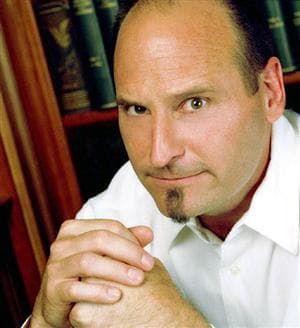
Jon Scieszka is an American author known for his contributions to children's literature. He is the creator of popular works such as "The True Story of the 3 Little Pigs," "The Stinky Cheese Man and Other Fairly Stupid Tales," and "Math Curse," which blend humor and creativity to engage young readers. His storytelling often incorporates playful twists on traditional narratives.
Similar books
- Harry Potter and the Sorcerer's Stone
J.K. Rowling
4.5 (7M) average on GoodreadsFantasyRescued from a miserable life under the stairs, an orphaned boy discovers he's a wizard destined for a magical school, where he uncovers a dangerous secret tied to the dark wizard who murdered his parents.
- The Hunger Games
Suzanne Collins
4.3 (6.4M) average on GoodreadsFantasyIn a future where children fight to the death on live television, Katniss Everdeen volunteers for the arena, turning a death sentence into a fight for survival and a spark of rebellion.
- 1984
George Orwell
4.2 (3.1M) average on GoodreadsPoliticsIn a future where surveillance and thought control are absolute, a man's search for truth clashes with the Party, showing that hope can be a form of rebellion.
- Divergent
Veronica Roth
4.2 (2.9M) average on GoodreadsFantasyIn a society divided by virtues, a sixteen-year-old's difference from the norm starts a rebellion that threatens her world.
- The Hobbit, or There and Back Again
J.R.R. Tolkien
4.3 (2.9M) average on GoodreadsFantasyA comfort-loving hobbit named Bilbo Baggins is whisked away by a mischievous wizard and a band of dwarves on an unexpected journey to reclaim stolen treasure from a fearsome dragon, discovering courage and a magical ring along the way.
- Animal Farm
George Orwell
4.0 (2.7M) average on GoodreadsPoliticsA farm animals' rebellion against humans turns into a pig-led dictatorship, showing how power corrupts and revolutionary ideals are betrayed.






Enjoyed the summary?
A summary gives you the shape of the book. The book itself has the detail, the examples and the voice.
Find The True Story of the 3 Little Pigs on AmazonAs an Amazon Associate, BookBrief earns from qualifying purchases. How we're funded