
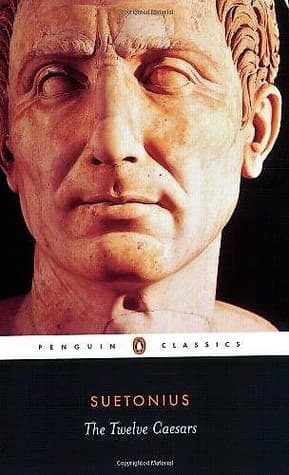
Core Idea
- Difficulty
- Medium
- Read it if
- You are fascinated by Roman history, enjoy detailed biographical accounts (including the salacious and scandalous), and want to understand the personal lives and political machinations of the early Roman emperors beyond just their military conquests.
- Skip it if
- You prefer a purely academic or analytical history, are turned off by extensive gossip and anecdotal evidence, or find graphic descriptions of violence and debauchery unsettling.
Key Takeaways from The Twelve Caesars
The Perils of Absolute Power
Unchecked authority inevitably corrupts, often leading to paranoia, cruelty, and self-destruction.
Suetonius documents how the immense power held by the Caesars, especially those less stable or virtuous, consistently led to moral decay and tyrannical behavior. Figures like Caligula and Nero, perhaps initially showing promise, quickly became depraved, paranoid, and extremely cruel once their authority became absolute. This was not just a personal failing but a systemic result of a political structure that put one individual beyond accountability. The narrative suggests that even well-intentioned leaders could be changed by constant flattery, fear, and lack of opposition in the imperial system, showing a basic tension between individual character and the corrupting force of unchecked power. The book is a warning about the dangers of concentrating too much authority in one person's hands.
“He was addicted to every form of luxury and extravagance, and his private life was scandalous in the extreme. He committed incest with his sister Drusilla, and was even suspected of having relations with all his other sisters.”
In the book: Caligula's reign, marked by his declaration of himself as a god, his cruel games, incestuous relationships, and execution of perceived rivals, epitomizes this descent. Nero's matricide, his artistic pretensions overriding state affairs, and the Great Fire of Rome followed by his persecution of Christians, further illustrate the depths of imperial depravity.
Try this: Modern governance systems must incorporate robust checks and balances, independent oversight, and clear lines of accountability to prevent the concentration of power that historically led to tyranny. Cultivate a culture where dissent is not only tolerated but encouraged, and where leaders are regularly reminded of their fallibility and public service.
Related ideas: absolute-power, tyranny, corruption, unaccountability
The Public vs. Private Persona
The Caesars often meticulously crafted a public image that starkly contrasted with their scandalous private lives.
Suetonius is exceptional in his willingness to show the gap between an emperor's carefully built public image and their often-shocking private lives. While figures like Augustus carefully presented themselves as virtuous, dedicated servants of Rome, their personal lives often included infidelity, extravagance, and even perversion. This duality shows the performative nature of power, where maintaining popular support or avoiding assassination often required a carefully managed appearance. Suetonius's access to court gossip and private records allows him to reveal the human, flawed individuals beneath the imperial robes. This tension between 'what is seen' and 'what is known' is a repeated theme, suggesting that true character often stays hidden behind the demands of public office.
“Augustus, though accused by Antony of almost every kind of sexual depravity, was in fact a man of exceptional continence in public, yet in private, he was not above indulging in certain vices.”
In the book: Augustus's public image as a restorer of traditional Roman values contrasted with accusations (detailed by Suetonius) of orgies and sexual impropriety. Tiberius, publicly a stern administrator, retreated to Capri for years, indulging in grotesque sexual practices, details of which Suetonius relays with a certain relish.
Try this: Critically analyze public figures, recognizing that their presented image may not reflect their true character. Seek out diverse sources of information to form a complete picture, and be wary of narratives that are too perfect or too one-dimensional.
Related ideas: public-image, hypocrisy, political-performance, private-life
The Role of Omens and Superstition
Even the most powerful men were deeply influenced by omens, prophecies, and supernatural beliefs.
Despite their unparalleled power and often rational strategic minds, the Roman emperors, from Julius Caesar to Domitian, were very superstitious. Suetonius often includes accounts of omens, dreams, portents, and prophecies that greatly influenced imperial decisions and worries. This shows a society deeply connected with supernatural belief, where the line between natural and divine intervention was blurred, even at the highest levels of power. These beliefs brought both comfort and terror, influencing everything from military campaigns to succession planning. It shows that even in a highly organized and technologically advanced (for its time) empire, human psychology remained open to the unknown, and leaders sought validation or warnings in the mystical, reminding us that rationality often exists uncomfortably with deeply ingrained cultural beliefs.
“Caesar never embarked on a journey or battle without first consulting the omens.”
In the book: Julius Caesar's disregard for the auguries on the Ides of March, and the subsequent assassination, is presented almost as divine retribution. Vespasian's belief in his healing touch, and numerous accounts of comets, lightning strikes, or animal sacrifices preceding significant events (like Nero's death or Domitian's assassination) are scattered throughout the text.
Try this: Recognize the powerful influence of belief systems, both rational and irrational, on decision-making, even in modern contexts. Develop critical thinking skills to differentiate between evidence-based reasoning and superstitious or unfounded beliefs, while also understanding their psychological and cultural impact.
Related ideas: superstition, omens, prophecy, roman-culture
Succession: A Constant Source of Instability
The lack of a clear, institutionalized succession process perpetually destabilized the empire.
A striking pattern from 'The Twelve Caesars' is the ongoing crisis of imperial succession. Unlike a clear hereditary monarchy or a democratic election, the Roman system often relied on adoption, military support, or sheer force, leading to constant intrigue, assassination, and civil war. This instability meant that an emperor's greatest threat often came from within his own family or court. The lack of a formal, universally accepted way to transfer power after an emperor's death or inability created a breeding ground for ambition, paranoia, and violence. Suetonius shows how this systemic flaw undermined even strong reigns and repeatedly plunged the empire into chaos, highlighting the importance of stable political institutions for long-term governance.
“The problem of succession was one that haunted every emperor, and many met their end because of it.”
In the book: The rapid succession after Nero's death, with the 'Year of Four Emperors' (Galba, Otho, Vitellius, Vespasian), is a prime example of the chaos. Domitian's paranoia about potential rivals and his eventual assassination, driven by those who feared for their own lives, also demonstrates this continuous threat.
Try this: Support and advocate for clear, democratic, and institutionalized processes for leadership transitions in all organizations and governments. Understand that ambiguous succession plans can lead to internal power struggles, inefficiency, and potential collapse.
Related ideas: succession-crisis, political-instability, civil-war, imperial-politics
The Spectacle of Power
Public games, triumphs, and displays of generosity were crucial tools for maintaining imperial authority and popular support.
The Caesars understood that governing Rome was not just about administration and military strength, but also about spectacle. Suetonius often details the lavish games, triumphal processions, and public distributions of money or food (the 'bread and circuses') that emperors used to win and keep popular favor. These were not just entertainment; they were sophisticated tools of propaganda and social control, designed to awe the populace, distract them from political complaints, and reinforce the emperor's divine right and generosity. The ability to provide grand spectacles was a direct measure of an emperor's power and legitimacy, and failing to do so could lead to unrest. This shows the lasting human need for story and performance in leadership, and how public relations have always been a critical part of power.
“He provided spectacles of every kind: gladiatorial shows, naval battles, and mock cavalry engagements, at such lavish expense and with such frequency that the populace could scarcely contain their delight.”
In the book: Augustus's numerous games and public works. Caligula's extravagant, often cruel, spectacles. Nero's obsession with artistic performances and his building projects after the Great Fire, aimed at rebuilding public favor.
Try this: Recognize how modern leaders and institutions use public events, media, and charitable acts to shape public perception and maintain legitimacy. Be discerning about the 'show' and look for substance behind the spectacle.
Related ideas: bread-and-circuses, propaganda, public-relations, imperial-legitimacy
The Fragility of Life at Court
Life for those close to the emperor was precarious, marked by paranoia, suspicion, and sudden, violent ends.
Suetonius portrays the extreme danger faced by anyone near the emperor. The court was a place of intrigue, where a misunderstood word, a perceived insult, or simply being too successful could lead to exile, forced suicide, or execution. Emperors, especially the more tyrannical and paranoid, saw potential rivals everywhere, making loyalty a constantly changing and unreliable thing. This atmosphere of fear and suspicion created flattery and betrayal, as individuals tried to protect themselves by accusing others. The narrative shows the psychological cost of living under such conditions, where even the most powerful courtiers were ultimately at the mercy of a single, often unstable, individual, illustrating the profound human cost of autocratic rule.
“No one was safe, neither his closest friends nor his own family, from the emperor's sudden rages and suspicions.”
In the book: Tiberius's purges, particularly through his Praetorian Prefect Sejanus, who himself was eventually executed. Domitian's reign of terror, where numerous senators and even members of his own household were put to death on flimsy pretexts, driven by his deep-seated paranoia.
Try this: Foster environments of psychological safety and transparency in leadership. Understand that fear and paranoia in leadership lead to poor decision-making and a breakdown of trust within an organization or society.
Related ideas: court-intrigue, paranoia, autocracy, political-violence
The Enduring Human Element
Despite their divine pretensions, the Caesars were deeply human, driven by relatable desires, fears, and flaws.
Perhaps the most lasting lesson from Suetonius is the raw humanity he gives these legendary figures. Far from being unchanging, god-like rulers, the Caesars are presented as deeply flawed individuals: driven by ambition, lust, fear, vanity, and insecurity, just like ordinary people. Suetonius enjoys listing their physical quirks, personal habits, sexual details, and moments of both deep wisdom and complete madness. This humanization makes them relatable, despite their extraordinary power, and keeps them from becoming mere historical caricatures. It reminds us that even at the top of power, the basic drivers of human behavior remain constant, and that understanding these personal dimensions is important for understanding their political actions and historical impact.
“He was a man of contrasts, capable of both great cruelty and surprising generosity, often at the whim of the moment.”
In the book: Augustus's stomach ailments and baldness, Tiberius's reclusiveness and skin problems, Caligula's obsession with his horse Incitatus, Nero's artistic aspirations, and Domitian's fear of lightning are all meticulously detailed, painting a picture of deeply human individuals.
Try this: Approach historical figures and contemporary leaders with an understanding of their inherent humanity and complexity. Avoid hero-worship or demonization, and instead seek to understand the full spectrum of their character and motivations.
Related ideas: human-nature, flaws, personality, leadership-psychology
The Power of Biography and Anecdote
Detailed personal anecdotes offer profound insights into character and the true nature of power.
Suetonius's skill is in his masterful use of anecdote. While he documents major political events, his real strength is his focus on the personal, often scandalous, details of the emperors' lives. These seemingly minor stories – Caligula making his horse a consul, Nero performing on stage, Vespasian's earthy humor – are not just gossip; they are important insights into the psychology of power. They reveal character, expose hypocrisy, and show how a ruler's personal whims could have deep political consequences. This approach demonstrates that history is not just about grand narratives but is deeply shaped by the individual personalities and quirks of those in charge, confirming the power of biographical detail in understanding broader historical forces.
“It is through these small, telling details that we truly come to know a man, especially one who holds such immense power.”
In the book: The story of Caligula's horse Incitatus being considered for consulship, Nero's insistence on performing as an actor and charioteer, and Vespasian's pragmatic (and crude) approach to taxation, all reveal character far more effectively than lists of legislative achievements.
Try this: When evaluating leaders or historical figures, pay attention to their personal habits, off-the-cuff remarks, and how they treat those around them, as these often reveal more about their true character and potential impact than formal speeches or policy papers.
Related ideas: biography, anecdote, character-study, historical-method
The Emperor as a Moral Compass (or Lack Thereof)
The moral character of the emperor directly influenced the ethical climate and stability of the entire empire.
Suetonius implies that the emperor served as the moral guide for the entire Roman world. When emperors like Augustus or Vespasian showed temperance, diligence, and public service, society had stability and order. In contrast, the reigns of depraved emperors like Caligula or Nero led to widespread corruption, fear, and moral decay throughout the court and often into the provinces. The book illustrates how a ruler's personal faults were not just private matters but had deep public consequences, creating an environment of flattery, betrayal, or terror. This highlights the immense responsibility that comes with ultimate power and the ripple effects of a leader's ethical choices on a society's well-being.
“The example set by the ruler, whether for good or ill, inevitably permeated the entire fabric of society.”
In the book: The contrast between Augustus's efforts to restore traditional Roman virtues (even if his private life was complex) and the moral collapse under Nero, whose excesses encouraged similar behavior among the elite, and whose tyranny led to widespread fear and denunciations.
Try this: Demand high ethical standards from leaders in all sectors. Recognize that a leader's moral integrity (or lack thereof) profoundly shapes the culture and values of the organization or society they govern. Support leaders who prioritize virtue and accountability.
Related ideas: moral-leadership, ethical-governance, societal-impact, leadership-responsibility
The Cycle of Rise, Excess, and Fall
The lives of the Caesars often followed a predictable pattern of ascent, indulgence, and eventual downfall.
A repeated narrative throughout 'The Twelve Caesars' is the cyclical pattern of rise, excessive indulgence, and eventual, often violent, downfall. Many emperors began their reigns with promise, only to be corrupted by the absolute power they held. This corruption appeared in various forms: paranoia, extravagance, cruelty, or neglect of duties. This excess then led to alienation from the Senate, the military, or the populace, ending in assassination, civil war, or forced suicide. This pattern suggests a tragic inevitability, where the very nature of imperial power contained the seeds of its own destruction. Suetonius presents a powerful, almost fatalistic, view of history, where human nature, when combined with unchecked authority, tends towards a destructive path, highlighting the challenge of keeping power without giving in to its temptations.
“Few who grasped such power managed to retain their sanity, let alone their lives, to a peaceful end.”
In the book: The trajectories of Caligula, Nero, and Domitian perfectly illustrate this cycle. Each began with a period of relative calm or even popularity, descended into extreme tyranny and vice, and met a violent end orchestrated by those closest to them, often due to their own excesses.
Try this: Be wary of leaders who show signs of unchecked power, growing arrogance, or increasing isolation. Understand that historical patterns suggest a need for constant vigilance and mechanisms to prevent leaders from becoming too insulated or powerful.
Related ideas: power-corrupts, historical-cycles, tragedy, imperial-decline
The Twelve Caesars Quotes
“He found Rome of brick, and left it of marble.”
“I wish the Roman people had but one neck!”
“Let them hate so long as they fear.”
“Et tu, Brute?”
“On his deathbed, he is said to have exclaimed, 'Alas, I think I am becoming a god.'”
“He was so fond of his wife that he used to say he would endure anything for her sake, even if she were to poison him.”
“The die is cast!”
“He never pardoned anyone for any offence.”
“His habits were so modest that he lived in the same house he had occupied before his elevation to the principate.”
“He was a man of so great a memory that he never forgot a face, a name, or a place.”
“He would frequently say that the only good ruler was one who could govern himself.”
“He was the first to introduce the practice of having his decrees published daily.”
“He never wore any clothing but what his wife and sister made at home.”
“He had a passion for chariot racing that bordered on madness.”
“He was so extravagant that he served a banquet to a thousand guests, at which he had them eat nothing but pheasants' brains and nightingales' tongues.”
Quiz
10 questions on the main ideas. Each answer comes with a short explanation.
Question 1
Which of the following Caesars was famously assassinated on the Ides of March?
- Augustus
- Tiberius
- Julius Caesar
- Nero
Show answer
C. Julius Caesar Suetonius details the assassination of Julius Caesar on March 15th, 44 BC, by a group of senators, a pivotal event in Roman history.
Question 2
According to Suetonius, what was one of Emperor Augustus's notable physical characteristics?
- A remarkably tall stature
- Extremely curly dark hair
- Short stature, with slightly bent knees and a body full of blemishes
- A distinctive facial scar from battle
Show answer
C. Short stature, with slightly bent knees and a body full of blemishes Suetonius provides detailed physical descriptions, noting Augustus's short stature, slight build, and various bodily marks, including moles and a birthmark.
Question 3
Which emperor is famously quoted by Suetonius as saying, 'I found Rome of clay, and leave her to you of marble'?
- Tiberius
- Augustus
- Caligula
- Vespasian
Show answer
B. Augustus This quote is attributed to Augustus by Suetonius, reflecting his extensive building programs and restoration efforts in Rome.
Question 4
Suetonius portrays Emperor Caligula's reign as marked by extreme cruelty and extravagance. Which of the following is an example of his reported eccentric behavior?
- He built a massive library accessible to all citizens.
- He attempted to deify his favorite horse, Incitatus, and make him a consul.
- He personally led legions in several successful foreign campaigns.
- He abolished all public games and gladiatorial contests.
Show answer
B. He attempted to deify his favorite horse, Incitatus, and make him a consul. Suetonius describes Caligula's erratic behavior, including his intention to make his horse, Incitatus, a consul, as a testament to his contempt for the Senate.
Question 5
What was the primary method Suetonius used to gather information for 'The Twelve Caesars'?
- Extensive travel and personal interviews with foreign dignitaries.
- Access to imperial archives and eye-witness accounts, facilitated by his position as Hadrian's private secretary.
- Analysis of existing philosophical treatises on leadership.
- Archaeological excavations and deciphering ancient inscriptions.
Show answer
B. Access to imperial archives and eye-witness accounts, facilitated by his position as Hadrian's private secretary. The book description explicitly states that Suetonius, as private secretary to Emperor Hadrian, gained access to imperial archives and used them along with eye-witness accounts.
Question 6
Suetonius details Emperor Claudius's physical infirmities and initial public perception. Which of the following was NOT one of his reported physical characteristics or initial challenges?
- A weak voice and stammer
- A limp and trembling head
- Being considered a dull-witted embarrassment by his family
- Exceptional athletic prowess and military leadership from a young age
Show answer
D. Exceptional athletic prowess and military leadership from a young age Suetonius describes Claudius as suffering from various physical ailments and being largely dismissed by his family as unfit for public life, making him an unlikely emperor.
Question 7
The reign of which emperor, according to Suetonius, was marked by the Great Fire of Rome and accusations of him 'fiddling while Rome burned'?
- Domitian
- Titus
- Nero
- Galba
Show answer
C. Nero Suetonius vividly describes the Great Fire of Rome during Nero's reign and the widespread rumors that Nero himself was responsible, playing his lyre while the city burned.
Question 8
Suetonius frequently incorporates rumors and scandalous anecdotes into his biographies. What is the most likely reason for this stylistic choice, given the context of his work?
- To provide a purely objective, unvarnished historical record devoid of personal bias.
- To entertain his audience and provide a 'vividly drawn — and all too human — individuals' portrait of the emperors, reflecting common perceptions and whispered truths.
- To subtly criticize the current emperor Hadrian through veiled historical parallels.
- To offer deep philosophical insights into the nature of power and morality.
Show answer
B. To entertain his audience and provide a 'vividly drawn — and all too human — individuals' portrait of the emperors, reflecting common perceptions and whispered truths. The book description highlights Suetonius's 'masterpiece of anecdote, wry observation and detailed physical description,' aiming for a gallery of 'vividly drawn — and all too human — individuals,' suggesting his use of anecdote is to capture the personal and perceived character.
Question 9
Which of the following emperors, according to Suetonius, was known for his extreme parsimony and even taxed urine, famously remarking, 'Pecunia non olet' (Money does not stink)?
- Titus
- Vespasian
- Domitian
- Nerva
Show answer
B. Vespasian Suetonius attributes the famous quote 'Pecunia non olet' and the tax on public urinals to Vespasian, illustrating his pragmatic and sometimes unconventional approach to finances.
Question 10
Suetonius's biographical approach in 'The Twelve Caesars' differs from a purely chronological historical account. What is a key characteristic of his method?
- He prioritizes detailed military campaigns and battle strategies above all else.
- He structures each emperor's life thematically, discussing their public acts, private life, character traits, and physical appearance in separate sections.
- He exclusively focuses on the economic policies and reforms of each emperor.
- He presents a strictly linear, day-by-day narrative of each reign, avoiding any thematic digressions.
Show answer
B. He structures each emperor's life thematically, discussing their public acts, private life, character traits, and physical appearance in separate sections. Suetonius organizes his biographies thematically, often dividing sections for public life, private life, omens, physical appearance, and death, rather than a strict chronological narrative of events.
The Twelve Caesars FAQ
What is 'The Twelve Caesars' about?
'The Twelve Caesars' is a biographical work by Suetonius, chronicling the public careers and private lives of the Roman emperors from Julius Caesar and Augustus, through to Nero and his successors. It offers a vivid look into the men who held absolute power over Rome.
Who was Suetonius and why is his work significant?
Gaius Suetonius Tranquillus was a Roman historian and biographer who served as Emperor Hadrian's private secretary, granting him access to imperial archives. His work is significant for its detailed, often anecdotal, and highly personal accounts of the emperors, providing unique insights into their characters and reigns.
Does 'The Twelve Caesars' work as a reliable historical source?
While 'The Twelve Caesars' offers unparalleled insights into the personalities and daily lives of the emperors, it's important to note that Suetonius often prioritized colorful anecdotes and moral judgments. Modern historians typically corroborate his accounts with other primary sources for a comprehensive understanding.
What kind of details does Suetonius include about the emperors?
Suetonius includes a wide range of details, from political achievements and military campaigns to personal habits, physical descriptions, vices, virtues, and even rumors. He delves into their private lives, often revealing scandalous or quirky aspects of their character.
How is Robert Graves's translation different from other versions?
Robert Graves's translation is highly celebrated for its ability to capture the wit, immediacy, and colorful language of Suetonius's original Latin. Sensitively revised by Michael Grant, it aims to make the ancient text accessible and engaging for modern readers while retaining its historical flavor.
Which Roman emperors are covered in 'The Twelve Caesars'?
The book covers the lives of Julius Caesar, Augustus, Tiberius, Gaius (Caligula), Claudius, Nero, Galba, Otho, Vitellius, Vespasian, Titus, and Domitian. These figures collectively span the foundational period of the Roman Empire and its early imperial dynasties.
Is 'The Twelve Caesars' suitable for new readers of Roman history?
Yes, 'The Twelve Caesars' is often recommended for new readers of Roman history due to its engaging biographical style and focus on individual personalities rather than complex political theory. It provides an accessible entry point to understanding the early Roman Empire through its leaders.
What is the primary appeal of 'The Twelve Caesars' today?
The primary appeal lies in its vivid character portrayals, scandalous anecdotes, and the humanizing of figures who held immense power. It offers a unique window into the personal lives and eccentricities of the Roman emperors, making history feel immediate and relatable.
About the author
Suetonius was a Roman historian and biographer active during the early 2nd century AD. He is best known for his work "The Twelve Caesars," which provides detailed biographies of the first twelve emperors of Rome, offering insights into their lives and reigns. His writings are significant for their historical value and influence on later biographical literature.
Similar books
- Meditations
Marcus Aurelius
4.2 (124k) average on GoodreadsLeadershipOffers an introspective look into the mind of a Roman emperor, contrasting Suetonius's external observations.
- 1984
George Orwell
4.2 (3.1M) average on GoodreadsPoliticsIn a future where surveillance and thought control are absolute, a man's search for truth clashes with the Party, showing that hope can be a form of rebellion.
- Animal Farm
George Orwell
4.0 (2.7M) average on GoodreadsPoliticsA farm animals' rebellion against humans turns into a pig-led dictatorship, showing how power corrupts and revolutionary ideals are betrayed.
- Freakonomics: A Rogue Economist Explores the Hidden Side of Everything
Steven D. Levitt
4.0 (709k) average on GoodreadsBusinessThis book uses economic principles to reveal the surprising incentives behind everything from drug dealing and real estate to cheating teachers and the decline of crime.
- I Am Malala: The Story of the Girl Who Stood Up for Education and Was Shot by the Taliban
Malala Yousafzai
4.1 (419k) average on GoodreadsPoliticsA teenage girl from a Taliban-controlled valley refuses to give up her books, becoming a global voice for education even after an assassination attempt.
- Atlas Shrugged
Ayn Rand
3.7 (354k) average on GoodreadsPoliticsIn a dystopian America where innovators vanish, a brilliant heiress races to uncover the truth behind the disappearing industrialists and the enigmatic John Galt, who vows to stop the world's progress.





Enjoyed the summary?
A summary gives you the shape of the book. The book itself has the detail, the examples and the voice.
Find The Twelve Caesars on AmazonAs an Amazon Associate, BookBrief earns from qualifying purchases. How we're funded