

Synopsis
Covers the whole plot, including the ending.
- Difficulty
- Hard
- Pacing
- Slow
- Mood
- Surreal, Disorienting, Anxious, Dreamlike, Absurdist
- Read it if
- You enjoy highly experimental, dreamlike narratives that explore themes of memory, identity, and the burden of expectation, and are comfortable with ambiguity and a lack of clear resolution.
- Skip it if
- You prefer linear plots, clear character motivations, realistic settings, or find surrealism and protracted, repetitive dialogue frustrating.
The Unconsoled Plot Summary
Covers the whole plot, including the ending.
Arrival in an Unfamiliar City
Ryder, a famous concert pianist, arrives in a constantly dim and rainy Central European city. A nervous young man named Stefan, who claims to be his son, and a woman named Sophie, who claims to be his wife, meet him. Ryder remembers neither of them, nor agreeing to perform a concert in this city. The hotel manager, Gustav, is overly polite and constantly reminds Ryder of the high expectations the city has for him. Ryder is immediately overwhelmed by many demanding requests and the strange, dreamlike logic of his surroundings, where conversations wander and time seems to stretch and change.
The Proposal and Mr. Brodsky's Demands
Ryder attends a meeting where he meets the city's important people, including its aging and increasingly unstable conductor, Mr. Brodsky. It becomes clear that Ryder's visit is not just for a concert, but to somehow 'fix' the city's cultural problems, especially Mr. Brodsky's decline. Brodsky is obsessed with his failures and his difficult relationship with his daughter, whom he believes has given up her musical dreams. Ryder finds himself caught in Brodsky's personal dramas, expected to mediate and give advice, all while his own concert preparations are constantly put off or interrupted by these strange, increasing demands.
Sophie's Past and the Search for Stephan
Sophie shares details of their past, which Ryder still struggles to remember. She talks about their life together, their son Stephan, and the pressures that led to their separation. Ryder tries to connect with Stephan, who is often distant and upset. Their attempts to spend time together are constantly stopped by the city's odd residents and Ryder's growing duties. One particularly complex sequence involves Ryder trying to find Stephan, leading him through a series of absurd encounters with various citizens, each with their own requests or stories, further delaying his goal.
Miss Collins and the Hotel Staff
Ryder discovers that Miss Collins, a woman from his past, is also staying at the hotel. Their reunion is awkward, full of unspoken resentments and missed chances. Miss Collins is now in a relationship with a hotel porter, and Ryder finds himself in uncomfortable conversations with both of them, reflecting on his own past relationships and career choices. The hotel staff, especially the manager Gustav, are overly involved in Ryder's life, constantly watching and commenting, adding to the suffocating atmosphere of expectation and responsibility that fills Ryder's stay.
The Porter's Story and the Dog
The hotel porter, who is with Miss Collins, tells Ryder about his life and his deep bond with his dog, Boris. He expresses worries about his future and his perceived shortcomings. Ryder, despite his own growing pressures, tries to offer advice and comfort, finding himself acting as an impromptu therapist. The porter's dog appears often, often at bad times, and its well-being becomes another unexpected concern Ryder is expected to handle among the city's other demands. This interaction further shows Ryder's inability to escape the personal dramas of those around him.
The Trip to the Sanatorium
In a particularly confusing sequence, Ryder is tasked with going with Mr. Brodsky to a sanatorium. The journey takes an inexplicably long time and involves many detours. During the trip, Mr. Brodsky talks about his life, his regrets, and his artistic struggles, seeing Ryder as a confessor and a potential savior. The sanatorium itself is a strange, almost empty place, further blurring the lines between reality and dream. Ryder's attempts to guide Brodsky are often useless, as the conductor remains lost in his own world of past complaints and worries, making the journey's purpose seem increasingly pointless.
The City's Expectations and the Unseen Audience
As the concert day nears, the pressure on Ryder grows sharply. Everyone he meets, from the hotel staff to casual acquaintances, speaks of the concert as a major event, a turning point for the city's mood and cultural standing. Ryder is constantly reminded of his 'duty' and the 'hopes' he carries. Yet, he rarely gets a chance to practice, constantly pulled away by the personal crises and demands of others. The audience for his concert remains a largely unseen, abstract group, but its collective expectation is a strong, almost suffocating force throughout his stay.
Stephan's Performance and Ryder's Absence
Ryder promises Stephan he will attend his school performance, an important event for the boy. However, just as he is about to leave, he is stopped by a series of urgent, seemingly unavoidable demands from various citizens. These demands, often involving obscure errands or long, rambling conversations, delay him until he misses Stephan's performance. The incident shows Ryder's deep inability to control his own schedule or prioritize his personal relationships amid the overwhelming, almost conspiratorial, pressures of the city.
The Day of the Concert
On the concert day, Ryder is still unprepared. He is met by a final, desperate series of requests and encounters. Mr. Brodsky's condition seems to worsen, and Ryder is again drawn into his dramatic statements. Sophie and Stephan are also present, their own hopes and worries adding to the chaos. Ryder struggles to find a moment of peace to focus on his music, constantly pulled in different directions, his concentration broken by the never-ending stream of personal dramas and expectations that have defined his entire visit to the city. The concert itself remains an abstract goal, overshadowed by the immediate, overwhelming present.
The Concert Hall and the Final Drive
Ryder finally reaches the concert hall, a grand but somewhat rundown building. The atmosphere is tense with anticipation. However, before he can even begin his performance, another unexpected event occurs. He is suddenly driven away in a car by an unfamiliar person, on what seems to be another urgent, unexplained errand. The concert, the peak of his entire visit, is again put off or perhaps entirely missed, leaving Ryder confused and resigned as the car speeds through the city's familiar, yet still alien, streets.
The Car Ride and the Past
During this final, long car ride, Ryder is with a new group of characters who seem to represent parts of his past. The conversations are fragmented and dreamlike, touching on his career, his relationships, and his sense of personal responsibility. He faces the possibility that his entire experience in the city is a manifestation of his own worries and unresolved issues. The journey becomes a metaphorical exploration of his life, his successes, and his failures, all seen through the distorting lens of the city's unique reality. The destination remains unclear, mirroring his own uncertain future.
The Journey Continues
The novel ends with Ryder still in the car, traveling through the city and beyond. The journey seems endless, a continuous movement without a clear destination or resolution. He watches the passing landscapes, the faces of his companions, and reflects on his stay. He remains 'unconsoled,' unable to find peace or closure for the many personal and professional demands that have consumed him. The car ride symbolizes his constant state of being pulled along by outside forces and his internal worries, leaving the reader with a sense of ongoing, unresolved struggle.
The Unconsoled Characters
Ryder
Protagonist
A renowned concert pianist plagued by memory loss and an inability to control his circumstances.
Ryder is a world-famous pianist who arrives in an unnamed city with no memory of scheduling a concert there. He is characterized by his passivity and his constant state of bewilderment as he is pulled into the personal dramas and overwhelming expectations of everyone he meets. Despite his fame, he lacks agency, unable to prioritize his own needs or even practice for his crucial performance. He tries to be polite and helpful, but his attempts often lead to further entanglement. His internal world is a fog of forgotten memories and anxieties about his professional and personal life.
Relationships: Sophie (Claims to be his estranged wife); Stephan (Claims to be his son); Mr. Brodsky (A demanding, troubled conductor he is expected to 'fix'); Miss Collins (A former lover); Gustav (Overly deferential and demanding hotel manager)
Sophie
Supporting
A woman who identifies as Ryder's estranged wife, seeking reconciliation.
Sophie presents herself as Ryder's wife, from whom he is estranged, and the mother of his son, Stephan. She is often distressed and emotional, recounting details of their shared past that Ryder cannot remember. She hopes for reconciliation and for Ryder to play a more active role in Stephan's life. Her presence grounds some of the narrative in a semblance of personal history, though even her memories are subject to the novel's shifting reality. She represents the personal obligations and past relationships Ryder has neglected or forgotten.
Stephan
Supporting
A young, sensitive boy who claims to be Ryder's son and longs for his attention.
Stephan is a young boy who appears to be Ryder's son. He is sensitive, often quiet, and deeply longs for his father's attention and presence. He is frequently disappointed by Ryder's inability to keep promises or prioritize their time together due to the relentless demands of others. Stephan's vulnerability highlights Ryder's profound disconnection and the emotional cost of his professional life and fragmented memory. His school performance is a key missed event that underscores Ryder's passivity.
Mr. Brodsky
Supporting/Antagonistic Force
An aging, troubled conductor whose personal and professional crises consume Ryder's time.
Mr. Brodsky is an elderly, once-renowned conductor whose career and personal life are in decline. He is deeply insecure, prone to long, rambling monologues about his past failures, his daughter's perceived abandonment of music, and his artistic struggles. He views Ryder as a messianic figure who can somehow 'fix' his problems and the city's cultural slump. His demands are incessant and self-centered, constantly pulling Ryder away from his own preparations and contributing significantly to Ryder's overwhelming schedule. He embodies the crushing weight of expectation.
Relationships: Ryder (Sees Ryder as a confessor and potential savior); His Daughter (Estranged relationship, a source of his anguish)
Gustav
Supporting
The hotel manager, obsessed with Ryder's success and the city's reputation.
Gustav is the meticulously deferential but ultimately demanding hotel manager. He is acutely aware of the city's expectations for Ryder and constantly reminds the pianist of the importance of his visit. Gustav facilitates many of the bizarre encounters and delays Ryder experiences, often acting as a gatekeeper or an enabler of the city's collective demands. He embodies the oppressive, almost conspiratorial, pressure that prevents Ryder from focusing on his own work. His politeness barely conceals his intense anxiety about the concert's outcome.
Relationships: Ryder (Manager to his guest, but also a demanding figure)
Miss Collins
Supporting
A woman from Ryder's past, now involved with a hotel porter, who confronts him with his romantic history.
Miss Collins is a former lover of Ryder's who he encounters unexpectedly in the hotel. Her presence forces Ryder to confront aspects of his romantic past and the choices he made. She is now involved with a hotel porter, and their relationship creates an awkward dynamic with Ryder. She represents the personal lives and romantic entanglements that Ryder has seemingly moved on from or forgotten, but which still hold emotional weight. Her interactions with Ryder are tinged with unresolved emotions and unspoken grievances.
Relationships: Ryder (Former lover); The Porter (Current romantic partner)
The Porter (with Boris the dog)
Supporting
A hotel employee who confides his insecurities and attachment to his dog to Ryder.
The hotel porter is a seemingly minor character who becomes unexpectedly significant. He is Miss Collins' current partner and a figure of quiet anxiety, concerned about his career and his deep bond with his dog, Boris. He confides his fears and hopes to Ryder, adding another layer of personal demand to the pianist's already overwhelming schedule. His story, particularly his attachment to Boris, serves as a poignant counterpoint to Ryder's own emotional detachment and the novel's surreal atmosphere.
Relationships: Miss Collins (Romantic partner); Ryder (Confidante); Boris (His beloved dog)
Leo
Supporting
A young, aspiring musician who looks up to Ryder and seeks his guidance.
Leo is a young man, a fellow pianist and student, who admires Ryder immensely and seeks his mentorship and approval. He is eager to learn from Ryder and offers his assistance, but also contributes to the web of expectations. His youthful idealism and musical aspirations stand in contrast to the jaded and troubled figures like Mr. Brodsky. Leo represents the next generation of artists and the hope for the city's musical future, further burdening Ryder with a sense of responsibility for their dreams.
Relationships: Ryder (Admirer and aspiring student)
The Unconsoled Themes
The Nature of Memory and Identity
Ryder's deep memory loss and his inability to recall his past, his family, or even agreeing to the concert, is central to the novel. His identity is constantly being shaped by those around him, as they share 'memories' he doesn't have. This theme explores how much of our identity is linked to our past, and what happens when that past is broken or unreachable. The city itself feels like forgotten memories, with its familiar yet strange qualities. Ryder's struggle to put his life back together reflects a common human worry about self-knowledge and being true to oneself.
“Perhaps I should have started by mentioning that I had no memory of ever agreeing to perform in this city.”
The Burden of Expectation and Responsibility
Ryder is constantly bombarded by the expectations of the entire city, from the hotel manager Gustav to the troubled Mr. Brodsky, and even his 'family.' Everyone sees him as a savior, a solution to their personal and collective problems. This creates an overwhelming sense of responsibility that paralyzes Ryder, stopping him from focusing on his own purpose (the concert) or even his personal relationships. The novel exaggerates this burden to show how outside pressures can consume a person, leading to a loss of control and self. The city's collective anxiety becomes Ryder's personal burden.
“It was as though the entire city were holding its breath, waiting for me to provide the necessary inspiration.”
Loss of Control and Agency
Throughout the novel, Ryder is a passive receiver of events, constantly pulled in different directions by others' demands and stories. His schedule is never his own, his plans are always thwarted, and his attempts to take control are useless. This theme explores the feeling of being carried along by forces beyond one's command, whether they are outside pressures, internal worries, or the surreal logic of a dream-like existence. Ryder's inability to even practice for his own concert highlights a deep lack of control, mirroring a common modern experience of feeling overwhelmed and powerless.
“I was being carried along, like a leaf in a stream, by forces I barely understood.”
Artistic Integrity vs. Public Demands
Ryder, as a famous artist, is expected to give a great musical performance, yet he is constantly prevented from preparing for it. The city's residents treat him less as an artist and more as a problem-solver, a symbol, or a confessor. This tension between the artist's need for creative space and the public's often superficial or practical demands is central. Mr. Brodsky's own decline and his daughter's giving up music further explore the pressures and compromises in a life dedicated to art, especially when faced with overwhelming outside expectations and personal failures. The true purpose of art is blurred by the city's desperate needs.
“They were not interested in the music itself, it seemed, so much as what it represented.”
The Dreamlike and Surreal Nature of Reality
The entire novel works with a logic that resembles a dream: time and space are distorted, conversations loop and wander, characters appear and disappear, and situations become absurdly complex without clear reason. This widespread surrealism reflects Ryder's confused state of mind and the subjective nature of his experience. It blurs the line between internal anxiety and external reality, suggesting that the city and its residents might be projections of Ryder's own subconscious. This theme invites the reader to question the very nature of reality and how perception shapes our understanding of the world.
“It was a conversation that seemed to have no beginning and no end, only a perpetually shifting middle.”
Plot Devices & Literary Techniques
Unreliable Narrator
Ryder's memory loss and subjective perception make him an unreliable guide to the events.
Ryder's persistent memory loss and his bewildered, passive reactions to the unfolding events establish him as an unreliable narrator. The reader experiences the surreal and confusing world of the city solely through his fragmented perception, making it difficult to discern what is 'real' versus what might be a manifestation of his internal state. This device immerses the reader in Ryder's disorientation, creating a sense of unease and forcing them to question the veracity of the narrative and the nature of the reality presented.
Dream Logic/Surrealism
The narrative operates under a non-linear, often absurd, and disorienting internal consistency.
The novel's events unfold with a pervasive dream logic where time and space are fluid, conversations are circular, and actions lack conventional cause-and-effect. Characters often appear and disappear without explanation, and situations escalate into bizarre complexity. This surrealism reflects Ryder's fragmented mental state and creates a sense of profound disorientation, mirroring the feeling of being trapped in a dream. It prevents the reader from finding solid footing, emphasizing the protagonist's lack of control and the elusive nature of reality.
Foreshadowing (of missed opportunities)
Subtle hints and recurring patterns suggest Ryder's ultimate failure to achieve his goals.
Throughout the novel, Ryder's repeated inability to focus on his concert, his constant detours, and his broken promises to Stephan subtly foreshadow his ultimate failure to perform or reconcile. Each missed practice session or delayed meeting forges a chain of events that makes the final outcome feel inevitable, even if the specific mechanism of failure remains surprising. This device builds a sense of mounting dread and emphasizes the theme of loss of control, showing how small, seemingly insignificant interruptions cumulatively lead to a larger, unavoidable disappointment.
Symbolism of the Unnamed City
The city represents Ryder's subconscious, his past, and the collective anxieties of his life.
The unnamed Central European city itself functions as a major symbolic device. Its perpetually dim, rain-swept atmosphere, its labyrinthine streets, and its demanding, intrusive inhabitants can be interpreted as a manifestation of Ryder's own subconscious mind, his forgotten past, and the overwhelming anxieties of his professional and personal life. The city is less a physical place and more a psychological landscape, where every encounter and every demand serves to illuminate Ryder's internal struggles and his 'unconsoled' state. It embodies the pressures and unresolved issues he carries within him.
The Unconsoled Quotes
“I will tell you something else. I do not play to win. I play to make music.”
“But you see, there are times when one has to do certain things, even if one doesn't feel up to them. For the sake of others.”
“Perhaps I should have been more careful, more precise, more… I don't know, more like myself.”
“It was as if some vital part of me had been left behind, somewhere back along the road, and I had been too distracted to notice its absence.”
“The feeling that I was constantly on the verge of remembering something crucial, something that would explain everything, but it always eluded me.”
“We are all, in our own way, trying to find our way back to something, aren't we?”
“Sometimes the most important things are the ones we can't quite grasp, the ones that slip through our fingers just as we reach for them.”
“It's always the same, isn't it? The further you go, the more you realize you're still in the same place.”
“Perhaps it's not so much about what you play, but how you play it. The intention behind the notes.”
“The past is never really past, is it? It just keeps coming back in different guises.”
“There was a certain logic to the illogic, if one only looked hard enough.”
“It was as if the entire town was holding its breath, waiting for something to happen, or perhaps for something not to happen.”
“I was trying to remember what it was I was supposed to be doing, and why I was here at all.”
“Sometimes, you have to pretend you know what you're doing, even when you haven't the faintest idea.”
“The world was full of echoes, and sometimes it was hard to tell which voice was your own.”
Quiz
10 questions on the plot and the characters. Each answer comes with a short explanation.
Question 1
Upon his arrival in the unnamed Central European city, what is Ryder's initial memory regarding the concert he is scheduled to perform?
- He distinctly remembers the date and time, but not the venue.
- He recalls agreeing to perform a specific, complex piece of music.
- He has no memory of ever agreeing to give the concert.
- He believes he is there to conduct, not to perform as a pianist.
Show answer
C. He has no memory of ever agreeing to give the concert. From the very beginning, Ryder is disoriented, arriving for a concert he cannot remember agreeing to give, setting the tone for the novel's dreamlike and uncertain narrative.
Question 2
Who is Stephan, the young boy who frequently appears and is introduced as Ryder's son?
- He is a child prodigy pianist whom Ryder is meant to mentor.
- He is the son of the hotel manager, mistaken for Ryder's child.
- He is Ryder's actual son, though Ryder struggles to fully acknowledge him.
- He is a figment of Ryder's imagination, representing his lost youth.
Show answer
C. He is Ryder's actual son, though Ryder struggles to fully acknowledge him. Stephan is presented as Ryder's son, a fact that Ryder seems to slowly and reluctantly accept, reflecting his fragmented personal life and responsibilities.
Question 3
What is the primary characteristic of the city Ryder finds himself in, regarding its inhabitants' interactions with him?
- They are consistently hostile and suspicious of his presence.
- They are all strangely familiar with him and have elaborate expectations.
- They are indifferent to his arrival and his celebrity status.
- They believe he is someone else entirely, mistaking him for a local.
Show answer
B. They are all strangely familiar with him and have elaborate expectations. Everyone Ryder encounters, from hotel staff to strangers, seems to know him and has an agenda or a problem they expect him to solve, creating an overwhelming sense of obligation.
Question 4
What recurring theme is explored through Ryder's constant attempts to meet with people or attend events, only to be sidetracked?
- The joy of spontaneity and unplanned adventures.
- The futility of human ambition and the desire for fame.
- The overwhelming nature of responsibility and the inability to control one's own time.
- The importance of networking in the classical music world.
Show answer
C. The overwhelming nature of responsibility and the inability to control one's own time. Ryder is continually diverted by the demands and expectations of others, symbolizing the burden of responsibility and a loss of personal agency, a core theme of the novel.
Question 5
Who is Sophie, the woman who claims to be Ryder's wife?
- She is a local journalist attempting to get an exclusive interview.
- She is his estranged wife, with whom he has a complicated history.
- She is a fan who has become deluded and believes they are married.
- She is the hotel owner's daughter, trying to arrange a marriage.
Show answer
B. She is his estranged wife, with whom he has a complicated history. Sophie presents herself as Ryder's wife, and their interactions suggest a past relationship marked by neglect and unfulfilled promises, adding another layer to Ryder's personal entanglements.
Question 6
What is unique about the narrative structure and the passage of time in 'The Unconsoled'?
- It follows a strict chronological order, detailing Ryder's every hour.
- Time is fluid and elastic, often stretching or compressing in illogical ways.
- The story is told in reverse chronological order, revealing events backward.
- Each chapter is a self-contained flashback to Ryder's childhood.
Show answer
B. Time is fluid and elastic, often stretching or compressing in illogical ways. The novel is famously dreamlike, with time and space often behaving illogically. Ryder can spend hours on a short walk or find himself in a completely different location without explanation, contributing to the surreal atmosphere.
Question 7
What does the repeated failure of characters to properly communicate or achieve their goals signify?
- A satire of the inefficiency of bureaucracy.
- The inherent human condition of isolation and the struggle for connection.
- A commentary on the decline of artistic standards in modern society.
- The triumph of chaos over order in a postmodern world.
Show answer
B. The inherent human condition of isolation and the struggle for connection. Despite their earnest efforts, characters often fail to truly connect, understand each other, or resolve their issues, highlighting themes of isolation, miscommunication, and the burden of unfulfilled expectations.
Question 8
What is the significance of the many long, rambling monologues delivered by various characters to Ryder?
- They are crucial for providing clear exposition of the plot.
- They demonstrate the characters' deep understanding of Ryder's personal history.
- They reveal the characters' anxieties, grievances, and hopes, often placing burdens on Ryder.
- They are merely filler, contributing little to the novel's overall meaning.
Show answer
C. They reveal the characters' anxieties, grievances, and hopes, often placing burdens on Ryder. The monologues are central to the novel's structure, as characters unload their life stories and problems onto Ryder, expecting him to be a savior or a solution, further illustrating his role as the 'unconsoled' recipient of others' burdens.
Question 9
What is the prevailing mood or atmosphere that Ishiguro establishes throughout the novel?
- Lighthearted and comedic, despite the underlying seriousness.
- Tense and suspenseful, building towards a dramatic climax.
- Dreamlike, anxious, and deeply unsettling.
- Nostalgic and melancholic, reflecting on a lost past.
Show answer
C. Dreamlike, anxious, and deeply unsettling. The novel is renowned for its pervasive dreamlike quality, where events unfold with an unsettling logic and Ryder's constant anxiety about his responsibilities creates a deeply disorienting and often frustrating atmosphere for the reader.
Question 10
How does Ryder's profession as a world-renowned pianist function thematically within the narrative?
- It provides a clear path for his redemption and success.
- It is a symbol of his past failures and lack of talent.
- It is the source of the overwhelming expectations and demands placed upon him, isolating him from genuine connection.
- It is merely a background detail with no deeper significance to the plot.
Show answer
C. It is the source of the overwhelming expectations and demands placed upon him, isolating him from genuine connection. Ryder's fame as a pianist is the very reason everyone in the city places their hopes and burdens on him. His artistry, instead of being a source of personal fulfillment, becomes the catalyst for his overwhelming responsibilities and isolation.
The Unconsoled FAQ
What is the core premise of 'The Unconsoled'?
The novel follows Ryder, a celebrated pianist, as he arrives in an unnamed Central European city for a crucial concert. He finds himself immediately entangled in the townspeople's anxieties and expectations, particularly those of the Strangs and the Hofmanns, all while struggling with a profound sense of disorientation and a rapidly accelerating, dreamlike reality.
Who are some of the key characters Ryder encounters early in the novel?
Ryder's initial encounters include Herr Hoffmann, the hotel porter who seems to know him intimately and has a distressed daughter named Sophie, and Mr. Brodsky, the hotel manager who constantly pressures Ryder about his schedule. He also meets the Strangs, including the elderly Miss Strang and her nephew, who seem to have a deep, unspoken connection to Ryder's past.
What is the significance of Ryder's concert in the narrative?
The concert serves as the central, looming deadline and a constant source of anxiety for both Ryder and the townspeople. It is presented as a pivotal event that will somehow save the city or validate its cultural standing, despite Ryder's inability to recall agreeing to it or preparing for it, highlighting his loss of control and the town's desperate projections.
How does Ryder's perceived fame and skill contrast with his actual state?
Ryder is universally revered as a brilliant, world-renowned pianist, with everyone expecting him to deliver a masterful performance. However, he is constantly plagued by memory gaps, self-doubt, and an inability to focus on his music, revealing a profound disconnect between his public persona and his internal disarray.
What role does Sophie play in Ryder's journey?
Sophie, Herr Hoffmann's young daughter, quickly attaches herself to Ryder, referring to him as 'Papa.' She seems to embody an innocent, yet demanding, version of familial obligation, pulling Ryder into domestic scenes and responsibilities he barely comprehends, further blurring the lines between his professional obligations and personal life.
What is the nature of the 'dream logic' that pervades the novel?
The narrative unfolds with a pervasive dream logic where time is fluid, places shift inexplicably, and characters appear and disappear without clear explanation. Ryder's conversations are often disjointed, and events spiral into absurd, yet deeply felt, situations, mirroring the fragmented and associative nature of dreams.
Are there any clues about the true identity or purpose of the city Ryder visits?
The city remains unnamed and geographically ambiguous, serving more as a psychological landscape than a real place. Its inhabitants seem to represent various aspects of Ryder's past and anxieties, suggesting the city is a projection of his own subconscious or a symbolic representation of his internal conflict, rather than a literal location.
How does Ryder's relationship with Miss Strang evolve, and what does it reveal?
Ryder feels an inexplicable connection to Miss Strang, who seems to recognize him deeply and holds a quiet, almost mournful, presence. Their interactions hint at a shared past, possibly a romantic one, and her subtle guidance suggests she understands the nature of his predicament better than he does, perhaps representing a lost love or a path not taken.
What is the significance of the recurring theme of 'performance' beyond the concert?
Beyond the actual concert, many characters are constantly performing roles or trying to live up to expectations, whether it's Herr Hoffmann's desperate attempts to prove his worth or Mr. Brodsky's managerial bluster. This pervasive theme highlights the pressures Ryder faces to perform not just musically, but in his personal relationships and memory, often failing to meet these 'performances.'
How does Ishiguro use unreliable narration in 'The Unconsoled'?
Ishiguro employs Ryder's perspective as the sole lens, making Ryder an unreliable narrator due to his memory loss, disorientation, and inability to grasp reality. The reader experiences the world through Ryder's distorted perception, forcing them to question the veracity of events and the motivations of other characters, mirroring Ryder's own confusion.
What might the 'unconsoled' title refer to?
The title likely refers to the pervasive sense of unresolved grief, regret, and unfulfilled expectations that afflicts Ryder and many characters. They are 'unconsoled' because they cannot find peace or resolution for their past mistakes, lost opportunities, or the demands placed upon them, reflecting a deep emotional void.
Is there a specific moment where Ryder gains clarity or understanding?
Ryder never truly gains full clarity or understanding in the conventional sense. Instead, he experiences fleeting moments of recognition or emotional resonance, often tied to a sense of regret or longing, but these are quickly subsumed by the surreal logic of the narrative, leaving him perpetually disoriented and searching.
How does the novel explore themes of memory and identity?
Memory is central, as Ryder's fragmented recollections and the townspeople's insistent 'memories' of him constantly shape his identity. He struggles to reconcile who he is perceived to be with his own internal chaos, suggesting that identity is a fluid construct influenced by external projections and an unreliable internal narrative.
What is the significance of the various detours and delays Ryder experiences?
Ryder's journey is characterized by constant, often absurd, detours and delays that prevent him from reaching his concert. These symbolize his inability to take direct action, his avoidance of responsibility, and the way his past and present anxieties continually pull him off course, illustrating a life spiraling out of his control.
How does the book's ending contribute to its overall impact?
The ending, like the rest of the novel, remains ambiguous and unresolved, with Ryder embarking on another journey, still seemingly lost and without true resolution. This open-endedness reinforces the dreamlike quality and the novel's core themes of endless searching, unfulfilled potential, and the perpetual state of being 'unconsoled.'
What literary devices does Ishiguro primarily use to create the novel's atmosphere?
Ishiguro primarily uses a highly subjective, first-person narration combined with extensive internal monologue to convey Ryder's disorientation. He also employs repetition, often of character names and anxieties, and a deliberate lack of concrete detail about setting and time, all contributing to the pervasive, unsettling dreamlike atmosphere.
Is there a political or social commentary embedded in the narrative?
While not overtly political, the novel can be interpreted as a commentary on the pressures of celebrity, the burden of expectations, and the anxieties of a society clinging to past glories or cultural figures for validation. The unnamed city's desperate reliance on Ryder reflects a deeper societal insecurity and yearning for meaning.
How does the novel challenge traditional narrative structures?
The novel radically departs from traditional narrative structures by abandoning linear time, consistent character development, and clear cause-and-effect relationships. It prioritizes psychological realism over external logic, creating a disorienting, immersive experience that mirrors the protagonist's fragmented mental state.
About the author
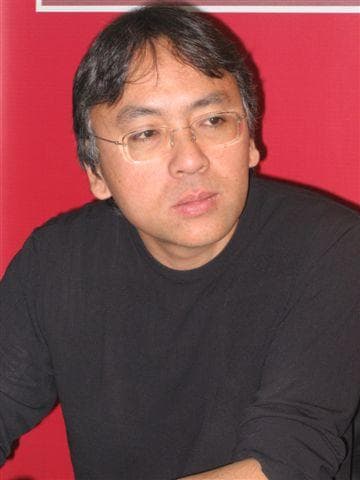
Sir Kazuo Ishiguro is a Japanese-born British novelist, screenwriter, musician, and short-story writer. He is one of the most critically acclaimed and praised contemporary fiction authors writing in English, having been awarded the 2017 Nobel Prize in Literature. In its citation, the Swedish Academy described Ishiguro as a writer "who, in novels of great emotional force, has uncovered the abyss beneath our illusory sense of connection with the world".
Similar books
- The Trial
Franz Kafka
4.0 (235k) average on GoodreadsLiterary FictionFeatures a protagonist caught in a bureaucratic, dreamlike nightmare with an inescapable sense of guilt and undefined accusation.
- The Master And Margarita
Mikhail Bulgakov
4.3 (243k) average on GoodreadsFantasyCombines realism with the fantastical and absurd, exploring social critique through surreal events and characters.
- Malone Dies
Samuel Beckett
3.9 (4k) average on GoodreadsLiterary FictionExplores existential themes, stream of consciousness, and a protagonist's fragmented reality with a sense of futility.
- The Remains of the Day
Kazuo Ishiguro
4.1 (200k) average on GoodreadsLiterary FictionWhile both novels feature an unreliable narrator and explore themes of memory and identity, The Remains of the Day offers a more focused, emotionally resonant narrative with a clear historical context. Its ambiguity serves to reveal character and regret, whereas The Unconsoled's ambiguity constructs an entire surreal reality, making it less accessible and more abstract.
- One Hundred Years of Solitude
Gabriel García Márquez
4.1 (753k) average on GoodreadsLiterary FictionBoth novels utilize elements of the fantastic and a sprawling narrative structure. However, Marquez's work, rooted in magical realism, often feels vibrant, culturally specific, and epic in scope, charting generations. The Unconsoled, while equally surreal, is intensely psychological, claustrophobic, and singularly focused on the protagonist's internal, bewildering journey, lacking the vibrant external world-building of Marquez.
- The Old Man and the Sea
Ernest Hemingway
3.8 (831k) average on GoodreadsLiterary FictionA Cuban fisherman's long struggle with a giant marlin becomes a story of endurance and dignity, now retold for young adults with illustrations, phonetic guides, and writing prompts in Traditional Chinese.





Enjoyed the summary?
A summary gives you the shape of the book. The book itself has the detail, the examples and the voice.
Find The Unconsoled on AmazonAs an Amazon Associate, BookBrief earns from qualifying purchases. How we're funded