

Synopsis
Covers the whole plot, including the ending.
- Difficulty
- Hard
- Pacing
- Slow
- Mood
- Bleak, Absurdist, Introspective, Melancholy
- Read it if
- You are fascinated by stream-of-consciousness, philosophical exploration of death, and the limits of language, or you appreciate experimental, minimalist prose that delves into the human condition.
- Skip it if
- You prefer traditional plot-driven narratives, clear character arcs, or an optimistic outlook on life and death.
Malone Dies Plot Summary
Covers the whole plot, including the ending.
Malone's Confined Existence and the Impulse to Write
Malone, an old man confined to a bed in what might be a hospital or asylum, begins to narrate his condition. He is alone, stripped of most possessions, and unsure of his exact location or the people who occasionally attend to him. His primary companions are a pencil stub and an exercise book, which he uses to record his thoughts and stories to pass the time before his death. He describes his physical decay, his failing senses, and his mental state, which moves between lucidity and confusion. He needs to write, to fill the void with words, even as he doubts the meaning or purpose of his endeavor. He decides to tell stories about himself and others, believing it will help him 'die' more quickly or perhaps understand the process.
The Story of Sapo and Macmann: Childhood and Early Life
Malone begins his first story, introducing a character he initially calls Sapo (later Macmann). Sapo is a young boy living with his parents, Mr. and Mrs. Louis, in a rural setting. Malone describes Sapo's mundane life, his interactions with his family, his schooling, and his early experiences with nature. Sapo is a detached and isolated child, observing the world around him with quiet intensity. Malone intersperses Sapo's narrative with his own reflections on storytelling, his memory, and his physical discomfort. He struggles with the details of Sapo's life, often correcting himself or admitting his lack of knowledge, showing the arbitrary nature of his creation.
Sapo's Adolescence and the Arrival of Moll
As Sapo ages, Malone renames him Macmann, signaling a shift in the character's life and perhaps a deeper connection to Malone himself. Macmann is a solitary adult, living in an institution or asylum, much like Malone's own suspected predicament. He is elderly, infirm, and largely passive. Malone introduces Moll, an equally old and infirm woman, who is assigned to care for Macmann. Their initial interactions have a strange mixture of hostility and dependence. Moll is described with grotesque detail, her physical ailments like Macmann's. Their relationship, though without conventional affection, becomes a central focus of Malone's narrative, exploring companionship in extreme old age and infirmity.
Macmann and Moll's Peculiar Relationship
Malone describes the daily lives of Macmann and Moll. Moll, despite her own physical limitations, tends to Macmann's basic needs, feeding and cleaning him. Their communication is minimal, often consisting of grunts, sighs, and the occasional, almost ritualistic exchange of insults. Malone describes their shared room, the mundane objects within it, and the repetitive routines that govern their existence. He speculates on their inner lives, their pasts, and their desires, often projecting his own feelings of isolation and despair onto them. The relationship between Macmann and Moll, though bleak, is an exploration of human connection, however fractured, in the face of decay and death.
The Institution and the Other Inmates
Malone broadens his focus to describe the institution where Macmann and Moll reside, and the other inhabitants. He mentions names like Lemuel, the sadistic attendant, and the various groups of inmates, often categorizing them by their perceived madness or infirmity. These descriptions are fragmented and often contradictory, reflecting Malone's own decaying memory and unreliable narration. The institution itself is a bleak, oppressive place, a waiting room for death. Malone's observations of the other inmates emphasize isolation, suffering, and the absurdity of human existence at its end. He notes the sounds and smells, creating a disturbing sensory experience.
The Excursion and Lemuel's Cruelty
Malone recounts an excursion organized by the institution, where Macmann, Moll, and other inmates are taken to an island. This outing is overseen by Lemuel, a cruel and indifferent attendant. Lemuel's interactions with the inmates are marked by casual brutality and a complete lack of empathy. During the excursion, the inmates endure various indignities and discomforts. Malone describes the island, its sparse vegetation, and the general atmosphere of despair that pervades the outing. The events on the island culminate in a violent act by Lemuel, further showing the dehumanizing conditions of the institution and the suffering of its inhabitants.
Malone's Deterioration and Dissolution of Narrative
As Malone continues to write, his own physical and mental deterioration becomes evident in his narrative. His ability to maintain a coherent storyline falters. He frequently loses his train of thought, forgets details, and struggles to distinguish between his own reality and the stories he is inventing. The boundaries between Malone, Sapo/Macmann, and even Moll blur. He describes his failing eyesight, his inability to hold his pencil, and the encroaching darkness of his room and mind. The narrative becomes a stream of consciousness, filled with non-sequiturs, repetitions, and raw expressions of his suffering and impending demise. Writing becomes a struggle against the inevitable silence.
The Final Moments of Macmann and Moll
Malone's narrative returns to Macmann and Moll on the island, though his descriptions are now highly fragmented and unreliable. He describes their final moments, or what he imagines them to be, often with a sense of merging their fate with his own. The precise details become obscured by Malone's failing consciousness. There are hints of violence, of Lemuel's continued brutality, and of the inmates' eventual demise. The narrative does not offer a clear resolution for Macmann and Moll, but rather a fading into oblivion, mirroring Malone's own process. Their story, like Malone's life, dissolves into the general chaos of existence, ending not with a bang, but a whimper.
Malone's Last Words and the End of Writing
In the very final passages, Malone's narrative breaks down almost entirely. His sentences become shorter, syntax unravels, and words are repeated or left incomplete. He loses control of his pencil, and his descriptions of his surroundings and his characters become indistinguishable from his own failing perceptions. The last words are a series of fragmented phrases, hints of movement, and a final, halting attempt to articulate something, anything, before silence. The story of Malone, and his creations, ends not with a grand conclusion, but with the quiet, inevitable cessation of thought and language, leaving the reader with the raw, unvarnished depiction of a mind succumbing to death.
Principal Figures
Malone
Protagonist
An old, dying man confined to bed, narrating his final days and inventing stories.
Malone is the central narrator and protagonist, an elderly man lying in bed, possibly in an asylum or hospital, awaiting death. He is physically decrepit, with failing senses and a body that is slowly giving out. Mentally, he oscillates between lucidity and confusion, driven by an urgent need to write and tell stories. He attempts to impose order on his final days through narrative, but his own deteriorating condition constantly bleeds into and disrupts his creations. He is deeply introspective, philosophical, and often self-deprecating, questioning the meaning of his existence and the act of writing itself.
Relationships: Sapo/Macmann (Malone's fictional alter ego/creation); Moll (Malone's fictional creation, Macmann's companion); Lemuel (Malone's fictional creation, the cruel attendant)
Sapo / Macmann
Malone's Fictional Creation
A character invented by Malone, initially a young boy, later an old, infirm man in an institution.
Sapo is the initial name Malone gives to his primary fictional character, a young boy from a rural background. As the story progresses, Sapo ages and is renamed Macmann, becoming an old, infirm man confined to an institution, mirroring Malone's own situation. Macmann is largely passive, suffering from physical ailments and a profound sense of isolation. His existence is defined by routine, discomfort, and the peculiar companionship of Moll. He serves as a vehicle for Malone to explore themes of aging, institutionalization, and the search for meaning in a decaying body.
Relationships: Malone (Macmann is a creation of Malone); Moll (Macmann's companion and caretaker in the institution); Lemuel (Macmann's cruel attendant)
Moll
Malone's Fictional Creation
An old, grotesque woman who cares for Macmann in the institution.
Moll is another character invented by Malone, an old woman of formidable, almost grotesque appearance, assigned to care for Macmann in the institution. She is as infirm as Macmann, but possesses a strange resilience and a gruff, often hostile demeanor. Despite her physical limitations, she performs her duties, and her relationship with Macmann, though devoid of conventional warmth, becomes a strange form of companionship. Moll represents the raw, unvarnished reality of old age and the complex, often uncomfortable, nature of human connection in the face of suffering.
Relationships: Malone (Moll is a creation of Malone); Macmann (Moll is Macmann's companion and caretaker); Lemuel (Moll is also under Lemuel's care/supervision)
Lemuel
Malone's Fictional Creation
A cruel and indifferent attendant in the institution where Macmann and Moll reside.
Lemuel is a minor but significant character created by Malone, serving as an attendant in the institution where Macmann and Moll are housed. He is characterized by his casual cruelty, indifference, and a general lack of empathy towards the inmates. He is responsible for supervising the patients, including during the ill-fated excursion to the island, where his brutality is particularly evident. Lemuel embodies the dehumanizing aspects of institutional care and the arbitrary nature of suffering inflicted by others.
Relationships: Malone (Lemuel is a creation of Malone); Macmann (Lemuel is Macmann's cruel attendant); Moll (Lemuel is Moll's cruel attendant)
The Louis Family (Mr. and Mrs. Louis)
Malone's Fictional Creation (Supporting)
Sapo's parents, briefly described in Malone's early narrative.
Mr. and Mrs. Louis are the parents of Sapo, the young boy character Malone initially invents. They are briefly described in the early sections of Malone's narrative, providing a domestic, rural setting for Sapo's childhood. They are largely unremarkable, serving as background figures to Sapo's early life. Malone struggles to imbue them with much personality, often admitting his lack of inspiration or knowledge about them, highlighting the arbitrary and often unconvincing nature of his storytelling.
Relationships: Malone (They are creations of Malone); Sapo (They are Sapo's parents)
The Old Woman
Supporting (Malone's Reality)
A shadowy figure who occasionally attends to Malone.
The Old Woman is a figure from Malone's own immediate reality, who occasionally enters his room to bring food or attend to his needs. Her presence is fleeting and her identity is vague, often indistinguishable from other vague figures in his memory or imagination. She represents the minimal human contact Malone experiences, a reminder of his confinement and dependence. Her interactions with Malone are brief and functional, devoid of personal connection.
Relationships: Malone (She is Malone's intermittent caretaker)
The Other Inmates
Mentioned (Malone's Fictional World)
Unnamed individuals in the institution alongside Macmann and Moll.
The other inmates are a collection of unnamed and largely undifferentiated individuals who inhabit the institution with Macmann and Moll. Malone describes them in groups, often focusing on their physical infirmities or perceived madness. They serve to flesh out the bleak environment of the asylum and emphasize the collective suffering and dehumanization within such a setting. Their brief appearances, particularly during the excursion, highlight the general atmosphere of despair and the arbitrary nature of their existence.
Relationships: Macmann (Fellow inmates); Moll (Fellow inmates); Lemuel (Under Lemuel's supervision)
Themes & Insights
The Absurdity and Futility of Existence
The book explores the meaninglessness of life and the human condition. Malone's storytelling is a futile attempt to impose order on chaos, a way to 'kill time' before death. His own narratives are fragmented, contradictory, and ultimately dissolve, like the perceived lack of inherent purpose in life. The suffering of Macmann, Moll, and the other inmates, their confined and decaying existence, emphasizes the bleak and absurd nature of human being, where actions and words ultimately lead nowhere.
“I shall be reduced to laying myself bare, which is an experience I have not yet had. For up to now I have merely suffered, for sport, not for truth. I have been a spectator, and I have not seen. I have been seen, and I have not been known.”
The Dissolution of Self and Identity
Malone struggles with his own identity, questioning who he is and whether his past selves truly belong to him. This theme is explored through the blurring of boundaries between Malone, Sapo, and Macmann. As Malone's mind deteriorates, his sense of self fragments, and his characters begin to merge with his own reality. The constant renaming of characters (Sapo to Macmann) and Malone's inability to maintain a consistent narrative reflect an instability of identity, suggesting that the self is an elusive, unknowable construct that disintegrates with the body and mind.
“I shall be called Malone, then I shall be no more.”
The Act and Failure of Storytelling
The novel is a metafictional exploration of narration. Malone's primary activity is writing, but he constantly doubts its purpose, validity, and his ability to control it. He struggles with memory, invents details, and frequently interrupts his stories with self-reflexive commentary on the difficulty of writing. The narrative ultimately breaks down, like Malone's own decay. This shows the limitations of language and narrative to capture or make sense of reality, especially in the face of death. Storytelling becomes a desperate, yet futile, gesture against silence.
“I shall be content to rot, like the others, and to know that I am rotting, and to say, for the sake of form, I am rotting, before I go. But I must say something.”
Aging, Decay, and Death
The main theme of the novel is physical and mental decay and the inevitability of death. Malone's own body is failing, his senses dimming, and his mind fragmenting. His characters, Macmann and Moll, are also in states of extreme infirmity and old age. The descriptions of their physical ailments, the squalor of the institution, and the general atmosphere of decline are unflinching. The entire narrative is framed by Malone's wait for death, transforming the book into an extended meditation on mortality and the final dissolution of the human being.
“I shall not go to the end, I shall not go to the end, I shall not go to the end.”
Plot Devices & Literary Techniques
Unreliable Narrator
Malone's deteriorating mental state and self-contradictions make his account untrustworthy.
Malone is a profoundly unreliable narrator. His memory is failing, he frequently contradicts himself, admits to inventing details, and struggles to distinguish between his own reality and his fictional creations. This unreliability is not merely a stylistic choice but central to the novel's themes, highlighting the subjective nature of perception, the fragility of memory, and the difficulty of constructing a coherent narrative, especially for a mind in decay. The reader is constantly forced to question the truth of what Malone presents, mirroring the character's own uncertainty.
Metafiction / Self-Reflexive Narrative
The narrative constantly draws attention to its own construction and the act of writing.
The novel is highly metafictional, with Malone frequently interrupting his stories to comment on the process of writing, his struggles with language, and the arbitrary nature of his creations. He discusses his choice of words, his inability to remember details, and his desire to finish his narrative before he dies. This self-reflexivity blurs the line between author and character, and between fiction and reality, making the act of storytelling itself a central subject of the novel rather than merely a vehicle for plot.
Stream of Consciousness
The narrative mimics the unfiltered flow of Malone's thoughts, often disjointed and associative.
The narrative employs a stream of consciousness technique, particularly as Malone's condition worsens. Thoughts, observations, memories, and fictional inventions flow together without strict logical or chronological order. Sentences become fragmented, syntax breaks down, and associations rather than linear progression dictate the narrative's movement. This style immerses the reader directly into Malone's deteriorating mind, conveying his confusion, despair, and the gradual dissolution of his cognitive faculties.
The Double / Alter Ego
Malone creates characters (Sapo/Macmann) who mirror aspects of his own existence.
Malone's creation of Sapo, who later becomes Macmann, serves as a literary 'double' or alter ego. Macmann's confined, decaying existence in an institution closely parallels Malone's own suspected situation. Malone projects his own anxieties, physical ailments, and philosophical ponderings onto Macmann, creating a parallel narrative that allows him to explore his own condition from a slight remove, yet also blurs the boundaries between himself and his creation. This device emphasizes the theme of identity's dissolution and the self-referential nature of artistic creation.
Malone Dies Quotes
“I am in my mother's room. It's I who live there now. I don't know how I got there.”
“I shall soon be quite dead at last in spite of all.”
“Nothing is more real than nothing.”
“I am calm. I am calm, I am calm, I am calm.”
“The sun shone, having no alternative, on the nothing new.”
“I am not dead, but I am not alive either.”
“I have nothing to say and I am saying it.”
“The silence is not so bad once you have succumbed.”
“I am alone, I am always alone, I have always been alone.”
“To be is to be perceived, but I perceive nothing.”
“I tell myself stories to pass the time, but the time passes anyway.”
“The end is in the beginning and yet you go on.”
“I am not unhappy, I am merely not anything.”
“Words are all I have, and they are not enough.”
Quiz
10 questions on the plot and the characters. Each answer comes with a short explanation.
Question 1
What is the primary activity Malone engages in while on his deathbed?
- Writing letters to family members
- Telling stories to pass the time
- Reflecting on philosophical treatises
- Listening to music recordings
Show answer
B. Telling stories to pass the time Malone explicitly states he is 'wiling away the time with stories' as he lies on his deathbed, which forms the central narrative structure of the book.
Question 2
How does the book describe Malone's narrative style regarding his condition?
- Consistent and chronological
- Intermittent and contradictory
- Poetic and metaphorical
- Scientific and analytical
Show answer
B. Intermittent and contradictory The text states Malone's account is 'intermittent and contradictory, shifting with the vagaries of the passing days,' reflecting Beckett's exploration of unreliable narration and fragmented consciousness.
Question 3
What sound does Malone say he liked best?
- Church bells ringing in the distance
- The barking of dogs at night
- The wind through the trees
- Silence in his room
Show answer
B. The barking of dogs at night Malone specifically mentions: 'The sound I liked best had nothing noble about it. It was the barking of the dogs, at night, in the clusters of hovels up in the hills.'
Question 4
How is Malone's character contrasted with Molloy in the description?
- More melancholic and elegiac
- Wittier, jauntier, and capable of wilder rages
- More socially engaged and talkative
- Less introspective and philosophical
Show answer
B. Wittier, jauntier, and capable of wilder rages The text states Malone is 'wittier, jauntier, and capable of wilder rages than Molloy,' highlighting differences between Beckett's characters while maintaining their shared existential themes.
Question 5
Where does Malone say he lies while hearing the dogs bark?
- In a house in the plain
- In a hospital in the city
- In a hut in the hills
- In a monastery cell
Show answer
A. In a house in the plain Malone describes the sound coming down to him 'where I lay, in the house in the plain,' establishing his isolated setting as he awaits death.
Question 6
What profession is associated with the people living in the hills where the dogs bark?
- Farmers
- Fishermen
- Stone-cutters
- Blacksmiths
Show answer
C. Stone-cutters The text specifies the barking comes from 'clusters of hovels up in the hills, where the stone-cutters lived, like generations of stone-cutters before them,' suggesting themes of tradition and labor.
Question 7
How does the book describe the emotional tone of Malone's account?
- With mellowness and elegiacs
- Without mellowness, without elegiacs
- With romantic nostalgia
- With bitter resentment
Show answer
B. Without mellowness, without elegiacs The text explicitly states Malone's account is 'without mellowness, without elegiacs,' reflecting Beckett's stark, unsentimental approach to death and existence.
Question 8
What does Malone imply about the dogs' barking from the valley compared to those in the hills?
- It is more musical and harmonious
- It is wild and soft at the limit of earshot
- It is a gross bay all fangs and jaws and foam
- It is completely silent and unheard
Show answer
C. It is a gross bay all fangs and jaws and foam Malone contrasts the hills' dogs' barking as 'wild and soft' with the valley dogs' response: 'The dogs of the valley replied with their gross bay all fangs and jaws and foam,' highlighting sensory and thematic contrasts.
Question 9
What literary technique is primarily demonstrated through Malone's shifting and contradictory narrative?
- Stream of consciousness
- Magical realism
- Epistolary form
- Allegory
Show answer
A. Stream of consciousness Malone's 'intermittent and contradictory' account, as he tells stories on his deathbed, exemplifies stream of consciousness, a technique Beckett uses to explore fragmented thought and existential uncertainty.
Question 10
What theme is most directly explored through Malone's focus on the barking dogs and his isolated deathbed setting?
- The beauty of nature
- Human connection and community
- The alienation and solitude of existence
- The triumph of the human spirit
Show answer
C. The alienation and solitude of existence Malone's isolation in 'the house in the plain,' listening to distant dogs, underscores Beckett's theme of existential alienation and solitude, as the character confronts death alone with only fragmented stories.
Malone Dies FAQ
What is 'Malone Dies' about?
The novel follows the octogenarian Malone as he lies on his deathbed, passing time by writing stories and reflecting on his life. His narrative is fragmented, contradictory, and shifts with his deteriorating condition, blending his present state with invented tales and memories without sentimentality.
Why should I read 'Malone Dies'?
It offers a profound exploration of mortality, consciousness, and the nature of storytelling through Beckett's distinctive minimalist style. The novel's dark humor, philosophical depth, and experimental narrative structure make it a landmark of 20th-century literary fiction.
What is the background/setting of 'Malone Dies'?
The setting is sparse and ambiguous, primarily Malone's room where he is confined to his deathbed. References to external elements like the 'house in the plain' and 'clusters of hovels up in the hills' where stone-cutters live create a vague, almost mythical landscape that mirrors his mental state.
What are the most memorable quotes?
Key quotes include Malone's opening line: 'Malone is what I am called now,' and his reflection on sound: 'The sound I liked best had nothing noble about it. It was the barking of the dogs, at night... wild and soft, at the limit of earshot, soon weary.' These capture the novel's themes of identity and fleeting perception.
What writing style does the author use?
Beckett employs a minimalist, fragmented, and self-reflexive style characterized by sparse prose, dark humor, and contradictions. The narrative shifts between Malone's present condition and his invented stories, creating a blur between reality and fiction that mirrors his decaying mind.
What minor details add significant meaning?
Details like the barking of dogs in the hills symbolize Malone's connection to a distant, fading world, while the stone-cutters represent generations of labor and mortality. These elements underscore themes of isolation and the passage of time without explicit commentary.
What are some subtle foreshadowing moments?
Malone's intermittent and contradictory account foreshadows his impending death, as his narrative becomes increasingly disjointed. References to sounds 'at the limit of earshot' and things 'soon weary' subtly hint at the erosion of his senses and vitality.
What unexpected character connections exist?
Malone's invented characters in his stories often mirror aspects of himself, blurring the line between his identity and fiction. This creates a meta-narrative where his tales serve as fragmented reflections of his own life and psyche.
What are unspoken character motivations?
Malone's primary unspoken motivation is to stave off the terror of death through storytelling, using narrative as a means to assert control and meaning in his final moments. His rage and wit mask a deep-seated fear of oblivion.
What psychological complexities do characters exhibit?
Malone exhibits contradictions between his 'wilder rages' and moments of jauntiness, reflecting a psyche grappling with denial and acceptance of death. His shifting narratives reveal a mind in decay, clinging to coherence through invention.
What are the major emotional turning points?
Key emotional shifts occur when Malone transitions from detached observation to moments of raw rage or wistfulness, such as when describing the dogs' barking. These punctuate his gradual surrender to mortality and loss of narrative control.
How do relationship dynamics evolve?
Malone's relationship with his own stories evolves from playful invention to desperate reliance, mirroring his isolation. External relationships are minimal, but his references to others like the stone-cutters highlight his alienation from the living world.
Which parts remain ambiguous or open-ended?
The distinction between Malone's reality and his stories remains ambiguous, as does the exact nature of his past and identity. The novel's ending leaves his death uncertain, emphasizing the elusiveness of truth in his narrative.
What are controversial scenes or decisions?
Some readers find Beckett's extreme minimalism and lack of plot controversial, as it challenges conventional storytelling. Malone's contradictory accounts and bleak outlook can be divisive, with debates over whether it offers nihilism or profound insight.
'Malone Dies' ending explained: how it ends & what it means
The novel ends ambiguously with Malone's narrative trailing off, suggesting his death but leaving it unresolved. This reflects Beckett's theme of the impossibility of definitive endings, emphasizing the fragmented nature of existence and storytelling.
About the author

Samuel Barclay Beckett was an Irish novelist, dramatist, short story writer, theatre director, poet, and literary translator. His literary and theatrical work features bleak, impersonal and tragicomic experiences of life, often coupled with black comedy and nonsense. His work became increasingly minimalist as his career progressed, involving more aesthetic and linguistic experimentation, with techniques of repetition and self-reference. He is considered one of the last modernist writers, and one of the key figures in what Martin Esslin called the Theatre of the Absurd.
Similar books
- Molloy
Samuel Beckett
4.1 (6k) average on GoodreadsLiterary FictionExplores similar themes of physical decay, existential musing, and narrative fragmentation in a two-part structure.
- The Unnamable
Samuel Beckett
4.0 (2k) average on GoodreadsPhilosophyContinues the exploration of an isolated, disembodied narrator grappling with identity and the impossibility of language.
- Waiting for Godot
Samuel Beckett
3.8 (160k) average on GoodreadsPhilosophyShares an absurdist tone and a focus on characters enduring a seemingly meaningless existence while waiting.
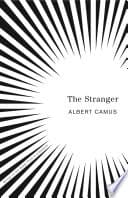
- The Stranger
Albert Camus
4.1 (3k) average on GoodreadsFantasyWhile both explore existential alienation, Camus's The Stranger offers a more accessible narrative with a clear plot and societal context for Meursault's detachment. Beckett's Malone Dies is far more abstract, stripping away external reality to focus purely on internal collapse and the futility of narration.
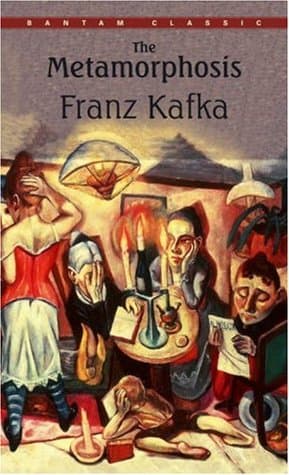
- The Metamorphosis
Franz Kafka
3.8 (643k) average on GoodreadsFantasyKafka's The Metamorphosis also depicts isolation and grotesque transformation but retains a more traditional narrative structure and a tangible (albeit absurd) external world. Gregor Samsa's anxieties are relatable. Beckett's Malone exists in a far more abstract and solipsistic realm, where the act of storytelling itself is failing, pushing the boundaries of interiority much further.
- The Old Man and the Sea
Ernest Hemingway
3.8 (831k) average on GoodreadsLiterary FictionA Cuban fisherman's long struggle with a giant marlin becomes a story of endurance and dignity, now retold for young adults with illustrations, phonetic guides, and writing prompts in Traditional Chinese.



Enjoyed the summary?
A summary gives you the shape of the book. The book itself has the detail, the examples and the voice.
Find Malone Dies on AmazonAs an Amazon Associate, BookBrief earns from qualifying purchases. How we're funded